• 검색 결과가 없습니다.

Association between Polymorphism of Oncostatin M Receptor and Obesity in Korean Population

N/A
N/A
Protected

Academic year: 2021

Share "Association between Polymorphism of Oncostatin M Receptor and Obesity in Korean Population"

Copied!
6
0
0

로드 중.... (전체 텍스트 보기)

전체 글

(1)

Corresponding author: Seung-Ae Yang, Department of Nursing Sciences, College of Nursing, Sungshin Women's University, 249-1 Dongseon-dong 3-ga, Seongbuk-gu, Seoul 136-742, Korea Tel: +82-2-920-7728, E-mail: [email protected] Received November 15, 2012, Revised November 15, 2012 Accepted December 10, 2012

Association between Polymorphism of Oncostatin M Receptor and Obesity in Korean Population

Department of Nursing Sciences, College of Nursing, Sungshin Women's University, Seoul, Korea

Seung-Ae Yang

Oncostatin M receptor (OSMR) is responsible of signal transduction of oncostatin M (OSM) that might have associations with cancer, obesity, and type 2 diabetes, but few studies have examined this association in population. Our aim was to investigate that whether single nucleotide polymorphisms (SNPs) of the OSMR gene were associated with obesity in a Korean population.

We genotyped 16 SNPs of the OSMR gene in 206 overweight/obesesubjects and 152 control subjects using the Affymetrix Targeted Genotyping chip array. One SNP (rs7709749) revealed association with overweight/obese subjects (p=0.029, log-additivemodel; p=0.042, recessive model). Furthermore, we examined the association between haplotypes built from 16 SNPs and overweight/obesity. The TC haplotype in block 2 (rs2367704 and rs647194) was also associated with overweight/obese (p=0.041). Our results suggest that the OSMR gene may be a possible risk factor in obesity. (Korean J Str Res 2012;20:303∼

308)

Key Words: Association, Obesity, Oncostatin M receptor, Polymorphism

INTRODUCTION

Stress is certainly one of the most key to the many health problems and is thought to be a major cause of obesity (Foss et al., 2011). Obesity is the primary metabolic disorder in industrialized countries and is well known to play a key role in the development of a number of metabolic abnormalities and predict the development of type 2 diabetes (Pi-Sunyer, 2002).

Obesity increases the risk of many diseases including type 2

diabetes mellitus, hypertension, and cancer (Foss et al.,2011).

Obesity is characterized by an increased adipose tissue mass with

increased size and number of mature adipocytes. The etiology of

obesity is an imbalance between energy intake and energy

expenditure. The residue energy is stored in fat cells that enlarge

and increase in number. The situation results in elevated secretion

of free fatty acids and numerous peptides (Bray, 2004). In recent

study, adipose tissue mass could be regulated through the

vasculature (Rupnick et al., 2002). In similar study, adipocyte

differentiation is dependent on angiogenesis in adipose tissue

(Fukumura et al., 2003). Another study shows that vascular

endothelial growth factor (VEGF) is induced by the interleukin6

(IL6) and oncostatin M (OSM) in human adipose tissue in vitro

and in murine adipose tissue in vivo (Rega et al., 2007). The

oncostatin M receptor (OSMR) is responsible of the signal

(2)

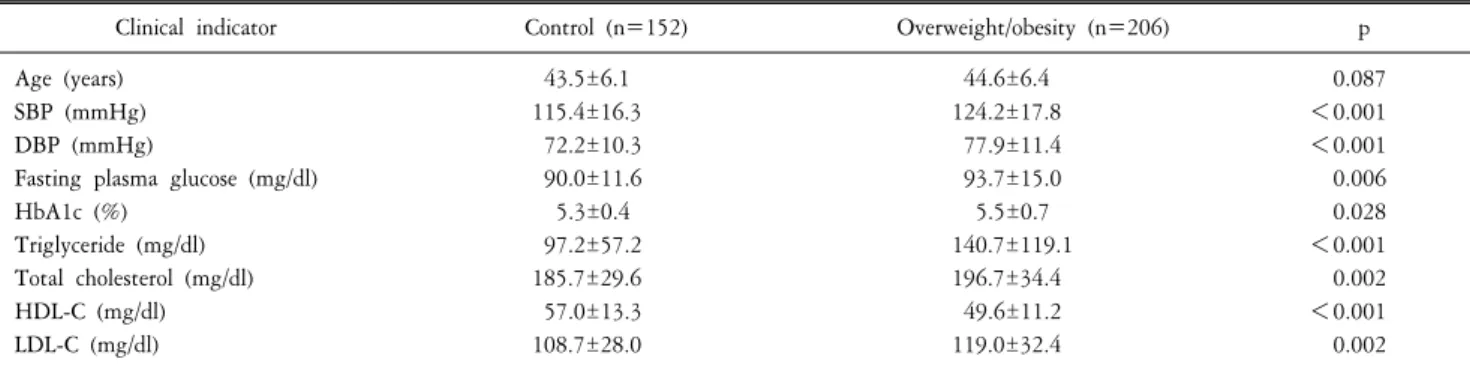
Table 1. Clinical data of participants included in the study (mean±SD).

Clinical indicator Control (n=152) Overweight/obesity (n=206) p

Age (years) SBP (mmHg) DBP (mmHg)

Fasting plasma glucose (mg/dl) HbA1c (%)

Triglyceride (mg/dl) Total cholesterol (mg/dl) HDL-C (mg/dl) LDL-C (mg/dl)

43.5±6.1 115.4±16.3

72.2±10.3 90.0±11.6 5.3±0.4 97.2±57.2 185.7±29.6 57.0±13.3 108.7±28.0

44.6±6.4 124.2±17.8 77.9±11.4 93.7±15.0 5.5±0.7 140.7±119.1 196.7±34.4 49.6±11.2 119.0±32.4

0.087

<0.001

<0.001 0.006 0.028

<0.001 0.002

<0.001 0.002 SBP: systolic blood pressure, DBP: diastolic blood pressure, HbA1c: glycated hemoglobin, HDL-C: high-density lipoprotein cholesterol, LDL-C:

low-density lipoprotein cholesterol. Bold numbers mean significant association.

transduction of OSM (Boing et al., 2006).

In recent, it has been investigated about loss of OSMR beta in metastatic melanoma cells (Lacreusette et al., 2007), OSMR-mediated signal transduction (Stross et al., 2006), and localization of OSMR beta in the adult and developing central nervous system (Tamura et al., 2003). Despite continued studies about OSMR, no study has been investigated the association between genetic polymorphisms of the OSMR gene andover- weight/obesity. Our aim was to examine whether OSMR polymorphism was associated with obesity in Korean population.

We searched for the genetic variation in OSMR by downloading the singlenucleotide polymorphisms (SNPs) from the HapMap database and the SNP database, and selected 16 SNPs. They were not investigated a genetic association with obesity in Korean population. Thus, we examined the association between SNPs of the OSMR gene and overweight/obesity in Korean population.

MATERIALS AND METHODS

1. Subjects and DNA samples

The body mass index (BMI) was calculated from height and weight using the formula: BMI=body weight/(height)

2

in kg/m

2

. In the World Health Organization guidelines for Asians, individuals with a BMI≥23 kg/m

2

are classified as overweight and those with a BMI ≥25 kg/m

2

are defined as obese (Consultation, 2004). We recruited case group (n=206) that comprised overweight and obese subjects (BMI≥23) and control subjects (n=152) with normal weights (BMI 18.0∼22.9) at Kyung Hee University Medical Center and Keimyung University

Dongsan Medical Center. Blood samples were drawn for biochemical measurements: systolic blood pressure (SBP), diastolic blood pressure (DBP), fasting plasma glucose, glycated hemoglobin (HbA1c), triglyceride (TG), total cholesterol, high-density lipoprotein cholesterol (HDL-C), and low-density lipoprotein cholesterol (LDL-C). The clinical characteristics of the subjects are summarized (Table 1). DNA was isolated from peripheral blood using the G-DEX

TM

IIb Genomic DNA Extraction Kit (iNtRON Biotechnology, Seongnam, Korea). All subjects gave written informed consent before entering the study.

This study was approved by the Institutional Review Board of Kyung Hee University Medical Center.

2. SNP selection and genotyping

Initially, we selected 16 tagging SNPs within the OSMR gene: 15 SNPs (rs3805558, rs357287, rs17361490, rs3805560, rs7709749, rs6865980, rs1846983, rs2367704, rs647194, rs10941411, rs1604399, rs1897140, rs12234097, rs610912, and rs7724222) in introns, and 1 SNP (rs2278329,missense SNP Asp553Asn) in exon, using the following criteria: (1) tagging SNPs selected using the program Tagger (http://www.broad.mit.edu/mpg/tagger/); (2) minor allele frequency (MAF)>0.05; and (3) reported validation (http://www.hapmap.org). The genotyping was performed using the Affymetrix Targeted Genotyping Chip array (Affymetrix, CA, USA), according to the manufacturer’s protocol. The image was analyzed using GCOS software (Affymetrix).

3. Statistical analysis

For the case-control association study, Hardy-Weinberg

(3)

Fig. 1. Linkage disequilibrium (LD) blocks in single nucleotide polymor- phisms (SNPs) of the oncostatin M receptor (OSMR) gene. Block 1 was consisted of rs7709749 and rs6865980.

Block 2 was consisted of rs2367704 and rs647194. Block 3 was consisted of 5 SNPs (rs1604399, rs1897140, rs1223- 4097, rs610912, and rs2278329).

Table 2. Genotypeanalysis of OSMR polymorphism in overweight/obesity and control subjects.

SNP Genotype Control Overweight/obesity

Model OR (95% CI) p

n (%) n (%)

rs7709749 -5156G>T


G/G G/T T/T G T

71 (37.6) 96 (50.8) 22 (11.6) 238 (63.8) 150 (36.2)

42 (29.2) 74 (51.4) 28 (19.4) 158 (54.9) 130 (45.1)

Dominant Recessive Log-additive

1.45 (0.91∼2.31) 1.88 (1.02∼3.46) 1.44 (1.04∼1.99)

1 1.31 (0.96∼1.78)

0.12 0.042 0.016

0.09 OSMR: oncostatin M receptor, SNP: single nucleotide polymorphism, OR: odds ratio, CI: confidence interval. Bold numbers mean significant association.

equilibrium for all SNPs was assessed using SNPStats (Sole et al., 2006). The genetic models (log-additive, dominant, and recessive models) were applied (Cho AR et al., 2012).

A linkage disequilibrium (LD) block of polymorphisms was tested using Haploview 4.2 (Barrett et al., 2005) with Gabriel method (Gabriel et al., 2002). Multiple logistic regression models were calculated for the odds ratio (OR), 95 % confidence interval (CI), and corresponding p values, controlling for age and gender as covariables. Clinical characteristics were compared between control and overweight/obese subjects, using Student’s t-test. For all of the statistical tests, the level of significance was set at 0.05.

RESULTS

We investigated whether 16 SNPs in the OSMR gene were associated with overweight/obesity in Korean population. No significant deviation from Hardy–Weinberg equilibrium was observed in all polymorphisms in the control group (p>0.05, data not shown). The clinical and biochemical characteristics of overweight/obesity and control groups are presented in Table 1.

All measured data had significant differences (p<0.05) between

two groups, except age (p=0.087). The genotype of one SNP

(rs7709749) of the 16 SNPs showed difference in the

(4)

Table 3. Haplotypes analysis of the three LD blocks.

  Haplotype Overweight/

obesity Control χ

2

p

Block 1

Block 2

Block 3 Ht1 Ht2 Ht3 Ht4 Ht5 Ht6 Ht7 Ht8 Ht9 Ht10 Ht11

GT TC CG TC CC CCGAG TTTGA CTGAG TTGGG CTGGG TTGAG

0.574 0.415 0.672 0.244 0.081 0.467 0.334 0.094 0.066 0.018 0.008

0.526 0.474 0.713 0.181 0.106 0.473 0.314 0.109 0.048 0.033 0.017

1.665 2.443 1.395 4.175 1.299 0.024 0.322 0.471 1.103 1.673 0.998

0.197 0.118 0.238 0.041 0.254 0.878 0.570 0.492 0.294 0.196 0.318 LD: linkage disequilibrium, Ht: haplotype. Bold number means significant association.

overweight/obesity group and the control group (GG:GT:TT, 37.6%: 50.8%:11.6% versus 29.2%:51.4%:19.4%) (Table 2). The SNP (rs7709749) was associated with an increased risk for overweight/obesity and in both log-additive model (GG versus GT versus TT, OR=1.44, 95% CI=1.04-1.99, p=0.016) and recessive model (GG and GT versus TT, OR=1.88, 95%

CI=1.88, p=0.042) (Table 2). However, the other 15 SNPs did not showedstatistically significant association with overweight/

obesity (data not shown).

We estimated the LD block using Haploview 4.2. Three LD blocks were made between nineOSMRSNPs (rs7709749, rs6865980, rs2367704, rs647194, rs1604399, rs1897140, rs12234097, rs610912, and rs2278329). Three LD blocks in OSMR were determined as following: block 1 consisted of rs7709749 and rs6865980, block 2: rs2367704 and rs647194, and block 3:

rs1604399, rs1897140, rs12234097, rs610912, and rs2278329 (Fig. 1). Haplotype analysis of these LD blocks showed that the TC (Ht4) haplotype in block 2 was associated with overweight/obesity (chi square=4.175, p=0.041) (Table 3).

DISCUSSION

Previous studies reported that obesity maybe in relation with OSMR (Rupnick et al., 2002; Fukumura et al., 2003; Bray, 2004;

Boing et al., 2006; Rega et al., 2007). In other study, Hattori et al.(2004) reported that VEGF in adipocyte increases with rebound weight-gain after diet-restriction. In an investigation by Rega et al.(2005) human preadipocytes, adipocytes of subcutaneous, and visceral adipose tissues expressed OSMR. OSM upregulates VEGF in cardiac myocytes, astroglioma cells, and human airway smooth muscle cells (Repovic et al., 2003; Weiss et al., 2003; Faffe et al., 2005). OSM on adipose tissue could increase serum levels of VEGF in obese patients (Weisberg et al., 2003; Xu et al., 2003).

Overall things suggest that OSMR may upregulated the adipose tissue mass through inducing VEGF.

To summarize results, we genotyped 16 selected SNPs of the OSMR in 206 obesity and overweight subjects and 152 control subjects. The SNPs were selected by the tagging algorithm implemented in Haploview to cover the whole gene and all SNPs conformed to Hardy-Weinberg equilibrium. 1) Through, individually, investigated association of the 16 SNPs with

overweight/obesity, we found that one SNP (rs7709749) of the 16 SNPs was associated with an increased risk for overweight/obesity.

2) It was found that the major allele of rs7709749 in recessive model is associated with increased HbA1c level. 3) In haplotypes, Ht4 was associated with a risk of obesity and overweight (p=0.041, permutation based).

In conclusion, we found that 1 SNP (rs7709749) among 16 SNPs of the OSMR gene was associated with overweight/obesity in Korean population. A haplotype was also associated with overweight/obesity. Our results indicate that OSMR may berelated to the development of obesity.

REFERENCES

Barrett JC, Fry B, Maller J et al. (2005) Haploview: analysis and vis- ualization of LD and haplotype maps. Bioinformatics 21:263-265.

Boing I, Stross C, Radtke S et al. (2006) Oncostatin M-induced acti- vation of stress-activated MAP kinases depends on tyrosine 861 in the OSM receptor and requires Jak1 but not Src kinases. Cell Signal 18:50-61.

Bray GA (2004) Medical consequences of obesity. J Clin Endocrinol Metab 89:2583-2589.

Cho AR, Lee SM, Kang SW et al. (2012) Assessment between

Dopamine Receptor (DRD2) polymorphisms and schizophrenia in

Korean Population. Clinical Psychopharmacology and Neuroscience

10:88-93.

(5)

Consultation WE (2004) Appropriate body-mass index for Asian pop- ulations and its implications for policy and intervention strategies. Lancet 363:157-163.

Faffe DS, Flynt L, Mellema M et al. (2005) Oncostatin M causes VEGF release from human airway smooth muscle: synergy with IL-1beta. Am. J. Physiol Lung Cell Mol. Physiol. 288:L1040-L1048.

Foss B, Dyrstad SM (2011) Stress in obesity: cause or consequence?

Med Hypotheses 77:7-10.

Fukumura D, Ushiyama A, Duda DG et al. (2003) Paracrine regu- lation of angiogenesis and adipocyte differentiation during in vivo adipogenesis. Circ. Res. 93:e88-e97.

Gabriel SB, Schaffner SF, Nguyen H et al. (2002) The structure of haplotype blocks in the human genome. Science 296:2225-2229.

Hattori K, Sumi T, Yasui T et al. (2004) VEGF mRNA in adipocytes increase with rebound weight-gain after diet-restriction. Int. J.

Mol. Med. 13:395-399.

Lacreusette A, Nguyen JM, Pandolfino MC et al. (2007) Loss of on- costatin M receptor beta in metastatic melanoma cells. Oncogene 26:881-892.

Pi-Sunyer FX (2002) The obesity epidemic: pathophysiology and con- sequences of obesity. Obe.s Res. 10 Suppl 2:97S-104S.

Rega G, Kaun C, Demyanets S et al. (2007) Vascular endothelial growth factor is induced by the inflammatory cytokines inter- leukin-6 and oncostatin m in human adipose tissue in vitro and in murine adipose tissue in vivo. Arterioscler. Thromb. Vasc. Biol.

27:1587-1595.

Rega G, Kaun C, Weiss TW et al. (2005) Inflammatory cytokines

interleukin-6 and oncostatin m induce plasminogen activator in- hibitor-1 in human adipose tissue. Circulation 111:1938-1945.

Repovic P, Fears CY, Gladson CL et al. (2003) Oncostatin-M in- duction of vascular endothelial growth factor expression in as- troglioma cells. Oncogene 22:8117-8124.

Rupnick MA, Panigrahy D, Zhang CY et al. (2002) Adipose tissue mass can be regulated through the vasculature. Proc. Natl. Acad.

Sci. U S A 99:10730-10735.

Sole X, Guino E, Valls J et al. (2006) SNPStats: a web tool for the analysis of association studies. Bioinformatics 22:1928-1929.

Stross C, Radtke S, Clahsen T et al. (2006) Oncostatin M re- ceptor-mediated signal transduction is negatively regulated by SOCS3 through a receptor tyrosine-independent mechanism. J.

Biol. Chem. 281:8458-8468.

Tamura S, Morikawa Y, Senba E (2003) Localization of oncostatin M re- ceptor beta in adult and developing CNS. Neuroscience 119:991-997.

Weisberg SP, McCann D, Desai M et al. (2003) Obesity is associated with macrophage accumulation in adipose tissue. J. Clin. Invest.

112:1796-1808.

Weiss TW, Speidl WS, Kaun C et al. (2003) Glycoprotein 130 li- gand oncostatin-M induces expression of vascular endothelial growth factor in human adult cardiac myocytes. Cardiovasc Res.

59:628-638.

Xu H, Barnes GT, Yang Q et al. (2003) Chronic inflammation in

fat plays a crucial role in the development of obesity-related in-

sulin resistance. J. Clin. Invest. 112:1821-1830.

(6)

= 국문초록 =

Oncostatin M receptor (OSMR)는 oncostatin M (OSM)의 신호전달에 중요한 역할을 한다. 또한 OSM은 암, 비만, 2형 당뇨 와 연관이 있으나 아직까지 연구된 것이 많지 않다. 본 연구에서는 OSMR 유전자의 단일염기다형성(single nucleotide polymorphisms, SNPs)과 한국인 비만에서의 상관관계를 연구하였다. OSMR 유전자에서 총 16개의 SNP을 선정하였고, 206명의 과체중/비만 그룹과 152명의 정상 그룹을 Affymetrix chip을 이용하여 분석하였다. 실험 결과, 한 개의missense SNP (rs7709749)이 과체중/비만 그룹과 유의성을 보였다(log-additive model, p=0.029; recessive model, p=0.042). 또한 haplotype 분석결과 Block 2 (rs2367704와 rs647194)의 TC haplotype이과체중/비만 그룹과 연관이 있는 것으로 나타났다 (p=0.041). 이상의 결과로, OSMR 유전자는 한국인 비만과 유전적 연관이 있을 것으로 생각한다.

중심단어: 연관, 비만, Oncostatin M receptor, 다형성

수치

Table  1.  Clinical  data  of  participants  included  in  the  study  (mean±SD).
Fig.  1.  Linkage  disequilibrium  (LD)  blocks  in  single  nucleotide   polymor-phisms  (SNPs)  of  the  oncostatin  M  receptor  (OSMR)  gene
Table  3.  Haplotypes  analysis  of  the  three  LD  blocks.   Haplotype Overweight/ obesity Control χ 2 p Block  1 Block  2 Block  3 Ht1Ht2Ht3Ht4Ht5Ht6 Ht7 Ht8 Ht9 Ht10 Ht11 GTTCCGTCCC CCGAGTTTGACTGAG TTGGGCTGGGTTGAG 0.5740.4150.6720.2440.0810.4670.3340.0

참조

관련 문서

This is the first pilot study performed to investigate associations of mitochondrial single nucleotide polymorphisms (mtSNPs) and hap- lotypes with BD in a Korean population...

The present study investigated the association between KD and single nucleotide polymorphisms (SNPs) in the candidate gene early B cell factor 2 (EBF2), which is associated

Previous studies have reported significant single nucleotide polymorphisms (SNPs) by applying a genome-wide association study (GWAS) on Hb levels and Hct values

Toll-like receptors (TLRs) single nucleotide polymorphisms (SNPs) were analyzed in patients with papillary thyroid cancer (PTC; n = 133) and their clinicopathologic features and

The adiponectin gene contains 3 exons and 16 single nucleotide polymorphisms (SNPs) localized on chromosome 3q27. 10 Some reports suggest the possible relationship

The aim of this study was to investigate whether the PTPN22 gene +1858 C>T single nucleotide polymorphism is associated with susceptibility to generalized vitiligo in a

For a possible relation of the genetic polymorphism of ETV6 with overweight/obesity, we genotyped fifty-five single nucleotide polymorphisms (SNPs) of ETV6 using

In this study, we investigated whether single nucleotide polymorphisms (SNPs) in the coding region of the CREBBP gene were associated with the level of blood