• 검색 결과가 없습니다.

Association between Interleukin 31 Receptor A Gene Polymorphism and Schizophrenia in Korean Population

N/A
N/A
Protected

Academic year: 2022

Share "Association between Interleukin 31 Receptor A Gene Polymorphism and Schizophrenia in Korean Population"

Copied!
5
0
0

로드 중.... (전체 텍스트 보기)

전체 글

(1)

205

ABBREVIATIONS: CI, confidence interval; HWE, Hardy-Weinberg equilibrium; LD, linkage disequilibrium; IL31RA, interleukin 31 receptor A; OR, odds ratio; SNP, single nucleotide polymorphism.

Corresponding to: Corresponding to: Jong Woo Kim, Department of Neuropsychiatry, School of Medicine, Kyung Hee University, 1, Hoegi-dong, Dongdaemun-gu, Seoul 130-701, Korea. (Tel) 82-2-958- 8543, (Fax) 82-2-968-0560, (E-mail) [email protected], psyjong@

khmc.or.kr

*These first authors contributed equally to this article.

Association between Interleukin 31 Receptor A Gene Polymorphism and Schizophrenia in Korean Population

Ju Yeon Ban

1

*, Su Kang Kim

1

*, Hak-Jae Kim

1

, Joo-Ho Chung

1

, Tae Kim

2

, Jin Kyung Park

2

, Hyun-Kyung Park

1,3

, and Jong Woo Kim

2

1

Kohwang Medical Research Institute,

2

Departments of Neuropsychiatry,

3

Department of Emergency Medicine, School of Medicine, Kyung Hee University, Seoul 130-701, Korea

Recently, Sun et al (2008) reported that the IL6R polymorphism is associated with schizophrenia.

Therefore, to detect the association between polymorphisms of interleukin 31 receptor A (IL31RA) and schizophrenia, we genotyped 9 SNPs [rs9292101 (intron 1), rs1009639 (exon 2, Pro43Pro), rs2161582 (intron 2), rs68761890 (intron 5), rs16884629 (intron 6), rs11956465 (intron 12), rs12153724 (intron 12), and rs16884641 (intron 14)] using the Golden Gate assay on Illumina BeadStation 500 GX. Two hundred eighteen patients with schizophrenia and 379 normal subjects were recruited. Patients with schizophrenia were diagnosed according to DSM-IV, and control subjects without history of psychiatric disorders were selected. W e used SNPStats, Haploview, HapAnalyzer, SNPAnalyzer, and Helixtree programs for the evaluation of genetic data. Of nine polymorphisms, three SNPs (rs9292101, rs1009639, and rs11956465) were associated with schizophrenia. The rs9292101 and rs11956465 showed significant associations with the risk of schizophrenia in the codominant [rs9292101, odds ratio (OR)=0.74, 95%

confidence interval (CI)=0.58∼ 0.95, p=0.017] and recessive (rs11956465, OR=0.64, 95% CI=0.42∼ 0.96, p=0.034) models, respectively. The rs1009639 also was statistically related to schizophrenia in both codominant (OR=0.76, 95% CI=0.60∼ 0.97, p=0.025) and dominant (OR=0.66, 95% CI=0.44∼ 0.98, p=0.035) models. Two linkage disequilibrium (LD) blocks were made. In the analysis of haplotypes, a haplotype (GCT) in block 1 and a haplotype (CCACAG) in block 2 showed significant associations between schizophrenia and control groups (haplotype GCT, frequency=0.509, chi square=4.199, p=0.040;

haplotype CCACAG, frequency=0.289, chi square=5.691, p=0.017). The results suggest that IL31RA may be associated with risk of schizophrenia in Korean population.

Key Words: Interleukin 31 receptor A, Haplotype, Linkage disequilibrium, Schizophrenia, Single nucleo- tide polymorphism

INTRODUCTION

Despite vigorous investigations on the pathophysiology of schizophrenia for many years, the etiology of schizophrenia is still unknown. It has been reported that schizophrenia is associated with abnormalities in the immune system (Muller et al, 2000; Lang et al, 2007), and genetic factor of cytokine genes have been implicated, because of immune dysfunction in patients with schizophrenia. Therefore, sev- eral studies showed the association of interleukin (IL) 1 be- ta gene polymorphism with schizophrenia (Shirts et al, 2006; Papiol et al, 2007; Hanninen et al, 2008). IL3 (Chen et al, 2007; Chen and Kendler, 2008), and IL2 and IL4 gene polymorphisms (Schwarz et al, 2006) are related to schizo- phrenia. Recently, Sun et al (2008) reported the association between IL6R gene polymorphism and schizophrenia.

IL31 receptor A (IL31RA; Aliases, CRL3, GLM-R, CRL, Glmr) is related to gp130, the common receptor subunit for IL6-type cytokines. IL31RA and oncostatin M receptor (OSMR) make a heterodimeric receptor on IL31 signal (http://www.ncbi.nlm.nih.gov/entrez). Expressions of IL31RA and OSMR mRNAs are induced in activated monocytes, and both mRNAs are constitutively expressed in epithelial cells (Dillon et al, 2004). IL31RA gene contains 15 exons and 732 amino acids. Amino acid residues from 20 to 519 comprise extracellular, 520 to 540 transmembrane, and 541 to 732 cytoplasmic domains (UniProt, http://beta.uniprot.org;

SwissProt, http://www.expasy.org). The protein also con- tains a cleavable signal peptide domain comprising from 1 to 19 amino acid residues (MMWTWALWMLPSLCKFSLA).

Diveu et al (2003) reported that the intron/exon organ-

ization of IL31RA is a pattern similar to IL6 signal trans-

ducer (IL6ST), its neighbor on chromosome 5q11.2. However,

genetic association of IL31RA on schizophrenia is not yet

known. In this study, we examined the association between

(2)

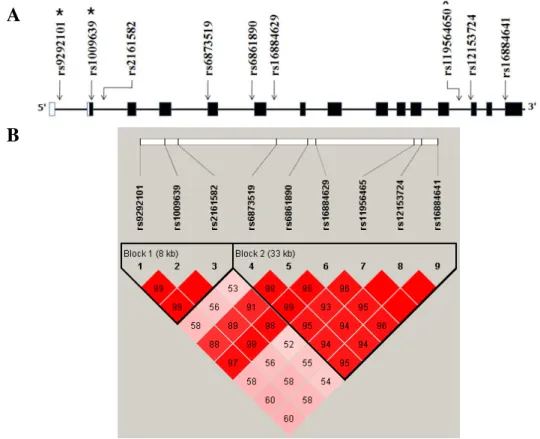
Fig. 1. Gene map and linkage disequilibrium (LD) in interleukin 31 receptor A (IL31RA) gene. (A) Gene map of single nucleotide polymorphisms (SNPs) in IL31RA. Exons are marked with box. The coding region is black-boxed and untranslated regions are white- boxed.

Asterisk (*) indicates a significant SNP. Arrow indicates the location of each SNP. (B) LD coefficient (│D'│) and LD blocks among SNPs of IL31RA. Block 1 consists of rs9292101, rs1009639, and rs2161582. Block 2 comprises rs6873519, rs6861890, rs16884629, rs11956465, rs12153724, and rs16884641.

IL31RA gene polymorphisms and schizophrenia.

METHODS Study participants

Two hundred eighteen schizophrenia subjects (120 males, mean age 41.40 years; 98 females, 42.95 years) and 379 healthy individuals (191 males, 44.46 years; 188 females, 44.29 years) with no clinical evidence of any other disorder were recruited at Kyung Hee University Medical Center.

Schizophrenic patients were subjected to medical history taking and clinical interviews. Symptoms of patients were rated according to DSM-IV criteria (American Psychiatric Association, 1994) by well-trained two psychiatrists. This study was approved by the Ethics Committee of the Medical Research Institute, College of Medicine, Kyung Hee Uni- versity. Informed written consent was obtained from each subject. DNA was extracted using a commercially available Qiagen DNA Extraction kit (Qiagen, Tokyo, Japan), and stored at 20

o

C before use.

SNP selection and genotyping

In the IL31RA gene region, nine SNPs [rs9292101 (intron 1), rs1009639 (exon 2, Pro43Pro), rs2161582 (intron 2), rs68761890 (intron 5), rs16884629 (intron 6), rs11956465

(intron 12), rs12153724 (intron 12), and rs16884641 (intron 14)] were selected using human SNP websites (http://www.

ensembl.org; www.ncbi.nlm.nih.gov/SNP). The SNPs with unknown heterozygosity and minor allele frequency (below 5%) were excluded. SNP genotyping was performed using the Golden Gate assay on an Illumina BeadStation 500 GX (Illumina Inc., San Diego, USA), according to the protocol supplied. Each oligonucleotide (bead type) represents a spe- cific SNP locus. Each Golden Gate genotyping represents the mean intensity of 30 replicates, resulting in accuracy call rates (all >99%).

Statistical analysis

We analyzed Hardy-Weinberg equilibrium (HWE) and genotype frequencies by using SNPStats (http://bioinfo.iconcologia.

net/index.php). A linkage disequilibrium (LD) block of poly- morphisms was tested using Haploview 3.32. The hap- lotypes and their frequencies were calculated by the EM algorithm. We used SNPStats, SNPAnalyzer (ISTECH Inc., Goyang, Korea), and Helixtree (Golden Helix Inc., MT, USA) for analyzing odds ratio (OR), 95% confidence interval (CI), and p value (Jung et al, 2008a; 2008b). Logistic re- gression analysis controlling age and gender as covariables in three analysis models (codominant, dominant, and re- cessive models) were employed to show alternative effects of the variants. For all statistical tests, the significant level was set at 0.05.

A

B

(3)

Table 1. Logistic regression analysis and genotype frequency of interleukin 31 receptor A (IL31RA) polymorphisms in patients with schizophrenia and controls

SNP Genotype Schizophrenia Control Codominant

p Dominant

p Recessive

Locus n=218 (%) n=379 (%) OR (95% CI) OR (95% CI) OR (95% CI) p

rs9292101 G/G 49 (23.2) 110 (30.1) 0.74 (0.58∼0.95) 0.017 0.68 (0.46∼1.01) 0.053 0.67 (0.45∼1.00) 0.051 Intron 1 G/T 105 (49.8) 182 (49.7)

T/T 57 (27.0) 74 (20.2)

rs1009639 C/C 47 (21.8) 110 (29.1) 0.76 (0.60∼0.97) 0.025 0.66 (0.44∼0.98) 0.035 0.74 (0.50∼1.08) 0.120 Exon 2 C/T 108 (50.0) 182 (48.1)

(Pro43Pro) T/T 61 (28.2) 86 (22.8)

rs2161582 T/T 56 (26.1) 108 (29.8) 0.82 (0.65∼1.05) 0.120 0.81 (0.55∼1.19) 0.290 0.73 (0.48∼1.10) 0.140 Intron 2 C/T 107 (49.8) 185 (51.0)

C/C 52 (24.2) 70 (19.3)

rs6873519 A/A 75 (34.6) 118 (31.1) 1.20 (0.94∼1.53) 0.140 1.16 (0.81∼1.65) 0.430 1.48 (0.94∼2.35) 0.088 Intron 4 A/C 111 (51.1) 183 (48.3)

C/C 31 (14.3) 78 (20.6)

rs6861890 C/C 73 (33.8) 154 (40.6) 0.80 (0.62∼1.02) 0.076 0.74 (0.52∼1.06) 0.095 0.75 (0.47∼1.22) 0.250 Intron 5 C/T 109 (50.5) 176 (46.4)

T/T 34 (15.7) 49 (12.9)

rs16884629 G/G 113 (53.3) 167 (47.4) 1.27 (0.95∼1.70) 0.110 1.23 (0.87∼1.73) 0.250 2.05 (0.86∼4.86) 0.086 Intron 6 A/G 92 (43.4) 160 (45.5)

A/A 7 (3.3) 25 (7.1)

rs11956465 C/C 46 (22.4) 96 (27.1) 0.78 (0.60∼1.00) 0.052 0.81 (0.54∼1.22) 0.300 0.64 (0.42∼0.96) 0.034 Intron 12 C/T 105 (51.2) 192 (54.2)

T/T 54 (26.3) 66 (18.6)

rs12153724 G/G 65 (30.5) 92 (25.6) 1.15 (0.89∼1.47) 0.290 1.28 (0.88∼1.88) 0.200 1.09 (0.71∼1.67) 0.690 Intron 12 A/G 107 (50.2) 191 (53.1)

A/A 41 (19.2) 77 (21.4)

rs16884641 T/T 63 (29.2) 92 (24.3) 1.20 (0.94∼1.52) 0.140 1.28 (0.88∼1.88) 0.200 1.26 (0.84∼1.88) 0.270 Intron 14 G/T 108 (50.0) 190 (50.3)

G/G 45 (20.8) 96 (25.4)

Genotype distributions are shown as number (%). Odds ratio (OR), 95% confidence interval (CI), and p-values were from logistic regression analysis with codominant, dominant, and recessive models controlling age and gender as covariates. Total number of each SNP is different, because genotypes of some SNPs are unreadable. SNP, single nucleotide polymorphism.

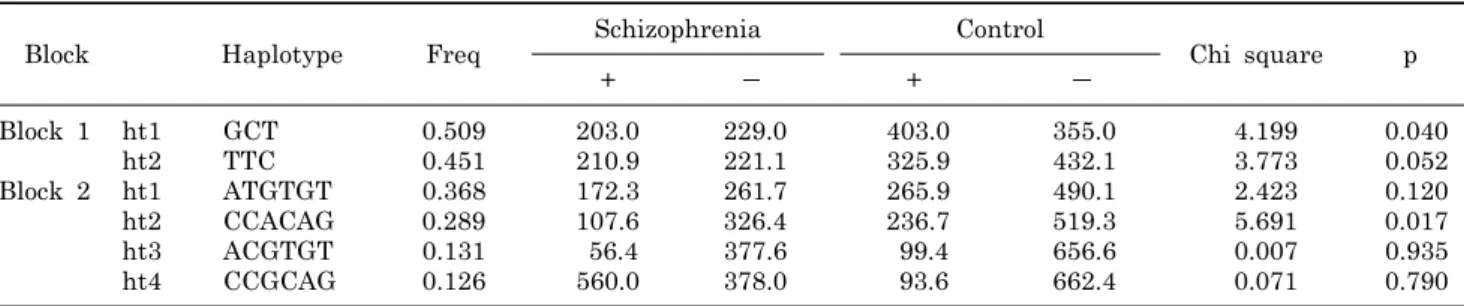
Table 2. Haplotype analysis of interleukin 31 receptor A (IL31RA) polymorphisms in patients with schizophrenia and controls

Block Haplotype Freq Schizophrenia Control

Chi square p

+ +

Block 1 ht1 GCT 0.509 203.0 229.0 403.0 355.0 4.199 0.040

ht2 TTC 0.451 210.9 221.1 325.9 432.1 3.773 0.052

Block 2 ht1 ATGTGT 0.368 172.3 261.7 265.9 490.1 2.423 0.120

ht2 CCACAG 0.289 107.6 326.4 236.7 519.3 5.691 0.017

ht3 ACGTGT 0.131 56.4 377.6 99.4 656.6 0.007 0.935

ht4 CCGCAG 0.126 560.0 378.0 93.6 662.4 0.071 0.790

Each haplotype with a frequency of more than 0.1 is shown. p-values of haplotype association were calculated using Haploview 3.32. ht, haplotype; Freq, frequency.

RESULTS

To evaluate whether IL31RA is associated with schizo- phrenia in Korean population, we genotyped the 9 SNPs selected. In the IL31RA gene containing various SNPs, the 9 SNPs selected included rs9292101 (intron 1), rs1009639 (exon 2, Pro43Pro), rs2161582 (intron 2), rs68761890 (intron 5), rs16884629 (intron 6), rs11956465 (intron 12), rs12153724 (intron 12), and rs16884641 (intron 14). Locations of 9

SNPs on the IL31RA gene region are shown in Fig. 1A.

The logistic analysis of codominant, dominant, and re- cessive models show that there were significant differences between patients with schizophrenia and controls.

The genotype distributions of IL31RA gene polymor-

phisms in the schizophrenia and control groups are shown

in Table 1. No deviation of HWE in genotype distributions

of any polymorphisms was found, between schizophrenia

and controls (data not shown). Of the nine SNPs, three pol-

(4)

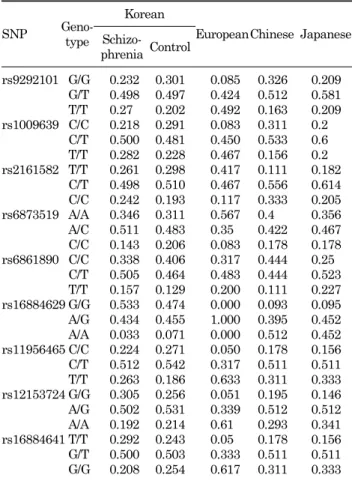
Table 3. Genotype frequencies of interleukin 31 receptor A (IL31RA) polymorphisms in each population

SNP Geno-

type

Korean

EuropeanChinese Japanese Schizo- Control

phrenia

rs9292101 G/G 0.232 0.301 0.085 0.326 0.209 G/T 0.498 0.497 0.424 0.512 0.581 T/T 0.27 0.202 0.492 0.163 0.209 rs1009639 C/C 0.218 0.291 0.083 0.311 0.2

C/T 0.500 0.481 0.450 0.533 0.6 T/T 0.282 0.228 0.467 0.156 0.2 rs2161582 T/T 0.261 0.298 0.417 0.111 0.182

C/T 0.498 0.510 0.467 0.556 0.614 C/C 0.242 0.193 0.117 0.333 0.205 rs6873519 A/A 0.346 0.311 0.567 0.4 0.356 A/C 0.511 0.483 0.35 0.422 0.467 C/C 0.143 0.206 0.083 0.178 0.178 rs6861890 C/C 0.338 0.406 0.317 0.444 0.25

C/T 0.505 0.464 0.483 0.444 0.523 T/T 0.157 0.129 0.200 0.111 0.227 rs16884629 G/G 0.533 0.474 0.000 0.093 0.095 A/G 0.434 0.455 1.000 0.395 0.452 A/A 0.033 0.071 0.000 0.512 0.452 rs11956465 C/C 0.224 0.271 0.050 0.178 0.156 C/T 0.512 0.542 0.317 0.511 0.511 T/T 0.263 0.186 0.633 0.311 0.333 rs12153724 G/G 0.305 0.256 0.051 0.195 0.146 A/G 0.502 0.531 0.339 0.512 0.512 A/A 0.192 0.214 0.61 0.293 0.341 rs16884641 T/T 0.292 0.243 0.05 0.178 0.156 G/T 0.500 0.503 0.333 0.511 0.511 G/G 0.208 0.254 0.617 0.311 0.333 From SNP database (http://www.ncbi.nlm.nih.gov/sites/entrez).

ymorphic SNPs (rs9292101, OR=0.74, 95% CI=0.58∼0.95, p=0.017 in the codominant model; rs1009639, OR=0.76, 95% CI=0.60∼0.97 p=0.025 in the codominant model and OR=0.66, 95% CI=0.44∼0.98, p=0.035 in the dominant model; rs11956465, OR=0.64, 95% CI=0.42∼0.96, p=0.034 in the recessive model, respectively) were associated with the risk of schizophrenia. The frequencies of GG, GT, and TT genotypes for rs9292101 were 30.1%, 49.7%, and 20.2%

in the control group, 23.2%, 49.5%, and 27.0% in schizo- phrenia groups, respectively. The frequencies of CC, CT, and TT genotypes for rs1009639 were 29.1%, 48.1%, and 22.8% in the control group, and 21.8%, 50.0%, and 28.2%

in schizophrenia groups, respectively. The frequencies of CC, CT, and TT genotypes for rs11956465, were 27.1%, 54.2%, and 18.6% in the control group, whereas 22.4%, 51.2%, and 26.3% in schizophrenia groups, respectively.

The rare allele of rs9292101 (rare allele, T), rs1009639 (rare allele, T), and rs11956465 (rare allele, T) increased the risk of schizophrenia. The rest of the SNPs (rs2161582, rs6873519, rs6861890, rs16884629, rs12153724, and rs16884641) were not statistically associated with schizophrenia (Table 1).

Pair-wise comparisons among the nine polymorphisms revealed strong LD. We identified two LD blocks by the Gabriel method (Fig. 1B). Block 1 consisted of rs9292101, rs1009639, and rs2161582, and block 2 comprised rs6873519, rs6861890, rs16884629, rs11956465, rs12153724, and rs16884641.

Two haplotypes in block 1 and four haplotypes in block 2 had frequencies greater than 0.1, and all were used for hap- lotype association analysis. Analysis for the haplotype asso- ciation was performed using Haploview 3.32. On the hap- lotype association test, the haplotype (GCT) in block 1 and haplotype (CCACAG) in block 2 had significant associations between schizophrenia and control groups (haplotype GCT, frequency=0.509, chi square=4.199, p=0.040; haplotype CCACAG, frequency=0.289, chi square=5.691, p=0.017) (Table 2).

DISCUSSION

Schizophrenia is a complex genetic disorder and affects approximately 1% of the population around the world.

However, etiology of schizophrenia is still unclear. Cyto- kines may be implicated in its etiology and pathology (Nawa et al, 2000). Genetic evidence has revealed the rela- tionship between polymorphisms of ILs and schizophrenia.

Especially, Sun et al (2008) reported that IL6R poly- morphism (rs8192284, exon 9) was associated with schizo- phrenia in Chinese population. In this study, we inves- tigated whether IL31RA gene polymorphisms are related to schizophrenia in Korean population., and found that three SNPs (rs9292101, rs1009639, and rs11956465) were significantly associated with schizophrenia, suggesting that IL31RA may be related to the development of schizophrenia. However, these results need to be replicated in other populations, because of its limited sample size, The rs9292101 is located on intron 1. The GG, GT, and TT genotype frequencies were reported to be 0.085, 0.424, and 0.492 in European, 0.326, 0.512, and 0.163 in Chinese, and 0.209, 0.581, and 0.209 in Japanese, respectively (http://www.ncbi.nlm.nih.gov/SNP) (Table 3). The GG, GT, and TT genotype frequencies in Korean population were found to be 0.301, 0.497, and 0.202, which are similar to those in Chinese. The rs1009639 (Pro43Pro) is located at the coding of exon 2. The synonymous rs1009639 (Pro43Pro) is the SNP with known heterozygosity in the coding SNPs

of IL31RA gene region. The CC, CT, and TT genotype fre- quencies are reported to be 0.083, 0.450, and 0.467 in European, 0.311, 0.533, and 0.156 in Chinese, and 0.200, 0.600, and 0.200 in Japanese, respectively. IL31RA protein (Q8NI17) consists of 732 amino acid residues and the mo- lecular mass of IL31RA is 82,954 Da. Amino acid residues from 20 to 519 comprise extracellular, 520 to 540 trans- membrane, and 541 to 732 cytoplasmic domain (UniProt, http://beta.uniprot.org; SwissProt, http://www.expasy.org).

Extracellular domain also consisted of fibronectin type-Ⅲ 1 (22 to 116), 2 (121 to 222), 3 (223 to 315), 4 (319 to 416), and 5 (421 to 512) domains. The CC, CT, and TT genotype frequencies in Korean population were 0.291, 0.481, and 0.228, respectively. The rs11956465 is located on intron 12.

The CC, CT, and TT genotype frequencies are reported to be 0.050, 0.317, and 0.633 in European, 0.178, 0.511, and 0.311 in Chinese, and 0.156, 0.511, and 0.333 in Japanese, respectively. The CC, CT, and TT genotype frequencies in Korean population were 0.271, 0.541, and 0.186, respec- tively. Therefore, ethnic differences are present in these SNPs.

In conclusion, the results suggest that IL31RA gene may

be associated with susceptibility of schizophrenia in Korean

population. Further biological and/or functional evidence is

needed to confirm the suggested associations of IL31RA

polymorphisms with the risk of schizophrenia in Korean

(5)

population.

ACKNOWLEDGEMEMT

This Research was supported by the Program of Kyung Hee University for the Young Researcher in Medical Science (KHU-20071468).

REFERENCES

American Psychiatric Association. Diagnostic and statistical manual of mental disorders. 4th ed. American Psychiatric Press, Washington DC, 1994

Chen X, Kendler KS. Interleukin 3 and schizophrenia. Am J Psy- chiatry 165: 13−14, 2008

Chen X, Wang X, Hossain S, O'Neill FA, Walsh D, van den Oord E, Fanous A, Kendler KS. Interleukin 3 and schizophrenia: the impact of sex and family history. Mol Psychiatry 12: 273−282, Dillon SR, Sprecher C, Hammond A, Bilsborough J, Rosenfeld- 2007

Franklin M, Presnell SR, Haugen HS, Maurer M, Harder B, Johnston J, Bort S, Mudri S, Kuijper JL, Bukowski T, Shea P, Dong DL, Dasovich M, Grant FJ, Lockwood L, Levin SD, LeCiel C, Waggie K, Day H, Topouzis S, Kramer J, Kuestner R, Chen Z, Foster D, Parrish-Novak J, Gross JA. Interleukin 31, a cytokine produced by activated T cells, induces dermatitis in mice. Nat Immunol 5: 752−760, 2004

Diveu C, Lelievre E, Perret D, Lak-Hal AH, Froger J, Guillet C, Chevalier S, Rousseau F, Wesa A, Preisser L, Chabbert M, Gauchat JF, Galy A, Gascan H, Morel A. GPL, a novel cytokine receptor related to GP130 and leukemia inhibitory factor receptor. J Biol Chem 278: 49850−49859, 2003

Hanninen K, Katila H, Saarela M, Rontu R, Mattila KM, Fan M, Hurme M, Lehtimaki T. Interleukin-1 beta gene polymorphism

and its interactions with neuregulin-1 gene polymorphism are associated with schizophrenia. Eur Arch Psychiatry Clin Neurosci 258: 10−15, 2008

Jung KH, Ban JY, Kim HJ, Park HJ, Uhm YK, Kim SK, Kim BS, Kim YJ, Koh IS, Chung J-H. Genetic association study of THRβ polymorphisms with obesity in Korean population. MCT 4:

2008a, in press

Jung MY, Kim BS, Kim YJ, Koh IS, Chung JH. Assessment between Fyn-related kinase gene polymorphisms and over- weight/obesity in Korean population. Korean J Physiol Phar- macol 12: 83−87, 2008b

Lang UE, Puls I, Muller DJ, Strutz-Seebohm N, Gallinat J.

Molecular mechanisms of schizophrenia. Cell Physiol Biochem 20: 687−702, 2007

Muller N, Riedel M, Gruber R, Ackenheil M, Schwarz MJ. The immune system and schizophrenia. An integrative view. Ann N Y Acad Sci 917: 456−467, 2000

Nawa H, Takahashi M, Patterson PH. Cytokine and growth factor involvement in schizophrenia--support for the developmental model. Mol Psychiatry 5: 594-603, 2000

Papiol S, Molina V, Rosa A, Sanz J, Palomo T, Fananas L. Effect of interleukin-1beta gene functional polymorphism on dorsolateral prefrontal cortex activity in schizophrenic patients.

Am J Med Genet B Neuropsychiatr Genet 144B: 1090−1093, 2007

Schwarz MJ, Kronig H, Riedel M, Dehning S, Douhet A, Spellmann I, Ackenheil M, Moller HJ, Muller N. IL-2 and IL-4 poly- morphisms as candidate genes in schizophrenia. Eur Arch Psychiatry Clin Neurosci 256: 72−76, 2006

Shirts BH, Wood J, Yolken RH, Nimgaonkar VL. Association study of IL10, IL1beta, and IL1RN and schizophrenia using tag SNPs from a comprehensive database: suggestive association with rs16944 at IL1beta. Schizophr Res 88: 235−244, 2006 Sun S, Wang F, Wei J, Cao LY, Qi LY, Xiu MH, Chen S, Li XH,

Kosten TA, Kosten TR, Zhang XY. Association between interleukin-6

receptor polymorphism and patients with schizophrenia. Schi-

zophr Res 126: 346−347, 2008

수치

Fig. 1. Gene map and linkage disequilibrium (LD) in interleukin 31 receptor A (IL31RA) gene
Table 2. Haplotype analysis of interleukin 31 receptor A (IL31RA) polymorphisms in patients with schizophrenia and controls
Table 3. Genotype frequencies of interleukin 31 receptor A  (IL31RA) polymorphisms in each population

참조

관련 문서

This study was conducted under the hypothesis that a group art therapy program may increase emotional expression and decrease life event stress in patients with

The Relationship between Physical Activities and Health-related Quality of Life in Korean Adults with Diabetes

In this study, we found that Pin1 plays a pivotal role in insulin- induced AP-1 activation through its interaction with p70S6K and prolongs activity of

Prevalence of Undiagnosed Diabetes and Related Factors in Korean Postmenopausal Women:.. The 2011-2012 Korean National Health and

• Theory can extent to molten polymers and concentrated solutions.. The single-molecule bead spring models.. a)

Objective: The purpose of this study is to use it as a basis for the health care guidelines for the muscle mass and cardiovascular disease of Korean population by

In conclusion, as the TDRD7 gene expression levels of the cataract patients found in the test conducted for 70 objects living in local region in this

• A Study on the Integrated Support for Childcare and Early Childhood Education Services in Rural Areas with a Sparsely Populated Infant and Toddler Population • Policy