• 검색 결과가 없습니다.

Time Course of Ventricular Remodeling after Atrial Septal Defect Closure in Adult Patients

N/A
N/A
Protected

Academic year: 2021

Share "Time Course of Ventricular Remodeling after Atrial Septal Defect Closure in Adult Patients"

Copied!
8
0
0

로드 중.... (전체 텍스트 보기)

전체 글

(1)

JCS

Journal of Chest Surgery

Clinical Research Time Course of Ventricular Remodeling after Atrial Septal Defect Closure in Adult Patients

Yo Han Bae, M.D. 1 , Woo Sung Jang, M.D., Ph.D. 1 , Jin Young Kim, M.D. 2 , Yun Seok Kim, M.D., Ph.D. 1

Departments of

1

Thoracic and Cardiovascular Surgery and

2

Radiology, Keimyung University Dongsan Hospital, Keimyung University College of Medicine, Daegu, Korea

ARTICLE INFO Received July 16, 2020 Revised September 9, 2020 Accepted October 5, 2020 Corresponding author Woo Sung Jang Tel 82-52-258-7966 Fax 82-53-258-4783 E-mail [email protected] ORCID

https://orcid.org/0000-0003-1576-9472

Background: Atrial septal defect (ASD) is the most common congenital heart disease.

However, the details of cardiac chamber remodeling after surgery are not well known, although this is an important issue that should be analyzed to understand long-term out- comes.

Methods: Between November 2017 and January 2019, cardiac magnetic resonance im- aging was performed preoperatively, at a 1-month postoperative follow-up, and at a 1-year postoperative follow-up. Cardiac chamber volume, valve regurgitation volume, and ejec- tion fraction were measured as functions of time.

Results: Thirteen patients (10 men and 3 women) were included. The median age at surgery was 51.4 years. The preoperative median ratio of flow in the pulmonary and systemic circulation was 2.3. The preoperative mean right ventricular (RV) end-diastolic volume index (EDVi) and RV end-systolic volume index (ESVi) had significantly decreased at the 1-month postoperative follow-up (p<0.001, p=0.001, respectively). The decrease in the RVEDVi (p=0.085) and RVESVi (p=0.023) continued until the postoperative 1-year fol- low-up, although the rate of decrease was slower. Tricuspid valve regurgitation had also decreased at the 1-month postoperative follow-up (p=0.022), and continued to decrease at a reduced rate (p=0.129). Although the RVEDVi and RVESVi improved after ASD closure, the RV volume parameters were still larger than the left ventricular (LV) volume parameters at the 1-year follow-up (RVEDVi vs. LVEDVi: p=0.016; RVESVi vs. LVESVi: p=0.001).

Conclusion: Cardiac remodeling after ASD closure is common and mainly occurs in the early postoperative period. However, complete normalization does not occur.

Keywords: Atrial heart septal defects, Cardiac magnetic resonance imaging, Congenital heart disease

Copyright © The Korean Society for Thoracic and Cardiovascular Surgery. 2021. All right reserved.

This is an Open Access article distributed under the terms of the Creative Commons Attribution Non-Commercial License (http://creativecommons.org/licenses/

Introduction

Atrial septal defect (ASD) is the most common congeni- tal heart disease, accounting for approximately 10%–15%

of all cases of congenital heart disease [1]. Quantifying the ratio of flow in the pulmonary (Qp) and systemic circula- tion (Qs) is essential for detecting the amount shunted from the left to right side of the atrium, and a Qp/Qs over 1.5 indicates enlargement of the right ventricle (RV) and predicts symptoms including exercise intolerance, fatigue, dyspnea, and palpitation [2]. Thus, interventional closure or corrective surgical surgery should be considered to treat ASD.

Long-term outcomes after ASD closure are favorable, al- though there remains a risk of arrhythmia with concomi- tant neurological events after ASD closure [3]. For this rea- son, cardiac chamber remodeling after surgery is an important issue after ASD closure that should be analyzed to understand the long-term outcomes. However, the ex- tent and time course of cardiac remodeling after ASD clo- sure have not been thoroughly characterized. Thus, the aim of this study was to evaluate the time course of ven- tricular remodeling by cardiac magnetic resonance imag- ing (CMR).

https://doi.org/10.5090/kjtcs.20.098

pISSN: 2765-1606 eISSN: 2765-1614

J Chest Surg. 2021;54(1):45-52

(2)

https://doi.org/10.5090/kjtcs.20.098

JCS

Methods

Study population

This study protocol was approved by the Institutional Review Board of Keimyung University Dongsan Hospital (IRB approval no., 2017-10-024), and all procedures were performed in accordance with our institutional guidelines for the protection of patient confidentiality.

Between November 2017 and January 2019, among the patients who underwent surgical ASD closure, 13 patients (10 women and 3 men) who had consented to the CMR protocol were included. Informed consent was obtained from all patients.

Data collection

Data on demographics, clinical and laboratory findings, and treatment outcomes were obtained with data collection forms from patients’ electronic medical records. The de- mographic data included age, sex, body weight, predefined comorbidities (hypertension, diabetes, coronary artery dis- ease, chronic obstructive pulmonary disease, and chronic kidney disease), and symptoms (chest discomfort, dyspnea, and palpitation). Laboratory data included N-terminal pro- brain natriuretic peptide (NT proBNP).

The CMR data included the right ventricular end-dia- stolic volume index (RVEDVi), right ventricular end-sys- tolic index (RVESVi), right ventricular ejection fraction (RVEF), tricuspid valve regurgitation (TVR), left ventricu- lar end-diastolic volume index (LVEDVi), left ventricular end-systolic index (LVESVi), left ventricular ejection frac- tion (LVEF), and mitral valve regurgitation (MVR). In ad- dition, late gadolinium enhancement (LGE) images were also obtained. CMR was performed 3 times: preoperatively and at 1-month and 1-year postoperative follow-up visits.

The NT proBNP level was also checked at the same time as CMR.

Cardiac magnetic resonance imaging protocol

All subjects underwent CMR with a 3T scanner (Ingenia CX; Philips Medical Systems, Best, the Netherlands). An 18-element body matrix coil and a spine matrix coil array were used. Cine images were acquired in the short-axis plane orientation by using a retrospectively echocardiogra- phy-gated balanced steady-state free precession sequence with the following parameters: repetition time (TR)/echo time (TE), 3/1.52 ms; flip angle (FA), 45°; slice thickness

(ST), 8 mm; slice gap, 8 mm; matrix, 172×159 pixels; and field of view (FOV), 340×340 mm

2

. Gadolinium contrast agent (Uniary; Dongkook Life Science, Seoul, Korea) was intravenously administered at 0.2 mmol/kg. LGE CMR im- ages were acquired 15 minutes after contrast injection by using a magnitude- and phase-sensitive inversion-recov- ery-prepared sequence with inversion time adjusted to null, thus representing the normal myocardium. These LGE im- ages were obtained along the same axis plane covering the whole left ventricle (LV) (TR, 6.1 ms; TE, 3 ms; FOV, 350×350 mm

2

; ST, 8 mm; acquisition matrix, 220×161 pix- els; nonselective inversion recovery FA, 25°; and band- width, 236.7 Hz/pixel). The appropriate inversion time pri- or to LGE MR was determined using a fast low-angle shot sequence with varying inversion times (from 150 to 650 ms to null).

Cardiac magnetic resonance imaging image analysis

Ventricular end-diastolic and end-systolic volumes were obtained by delineating the endocardial borders of the LV and RV in all slices of the short-axis stack. All ventricular volumes were indexed to body surface area. We obtained

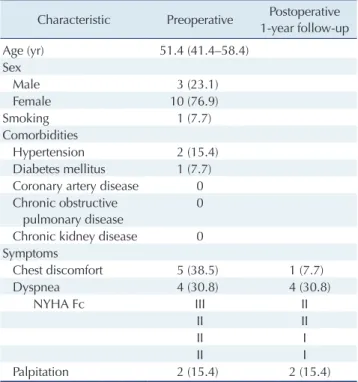
Table 1. Preoperative patient characteristics

Characteristic Preoperative Postoperative 1-year follow-up

Age (yr) 51.4 (41.4–58.4)

Sex

Male 3 (23.1)

Female 10 (76.9)

Smoking 1 (7.7)

Comorbidities

Hypertension 2 (15.4)

Diabetes mellitus 1 (7.7) Coronary artery disease 0 Chronic obstructive

pulmonary disease

0 Chronic kidney disease 0 Symptoms

Chest discomfort 5 (38.5) 1 (7.7)

Dyspnea 4 (30.8) 4 (30.8)

NYHA Fc III II

II II

II I

II I

Palpitation 2 (15.4) 2 (15.4)

Values are presented as median (interquartile range) or number (%), unless otherwise stated.

NYHA Fc, New York Heart Association functional class.

(3)

Yo Han Bae, et al. Ventricular Remodeling after ASD Closure JCS

both the ventricular ejection fraction and the shunt ratio between pulmonary and aortic flow (Qp/Qs). The shunt volume per heartbeat was calculated from the difference in flow per heartbeat between the pulmonary trunk and aor- ta. We measured the TVR and MVR volumes.

Surgical techniques

All surgical procedures were performed using a standard sternotomy or right thoracotomy approach. In patients with tricuspid annular dilatation greater than 40 mm based on preoperative echocardiography, we performed tricuspid valve annuloplasty.

Statistical analysis

All continuous variables are expressed using median val- ues with interquartile ranges (IQRs), as appropriate. We made no assumptions about missing data. Categorical vari- ables are expressed as frequencies and percentages. The paired t-test was used to compare differences in CMR pa- rameters across different time intervals. A p-value of less than 0.05 was considered to indicate statistical significance.

All analyses were performed using IBM SPSS ver. 26.0 (IBM Corp., Armonk, NY, USA).

250

200

150

100

50

3.5

R VEDV i

Qp/Qs 1.0 1.5 2.0 2.5 3.0

A

p=0.001 r=0.862

120 100 80 60 40 20

3.5

R VESV i

Qp/Qs 1.0 1.5 2.0 2.5 3.0

B

p=0.004 r=0.784

60 50 40 30 20 10 0

3.5

TVR

Qp/Qs 1.0 1.5 2.0 2.5 3.0

C

p=0.105 r=0.515

62.5 60.0 57.5 55.0 52.5 50.0

3.5

R VEF

Qp/Qs 1.0 1.5 2.0 2.5 3.0

D p=0.443

r= 0.259

90

80

70

60

50

3.5

L VEDV i

Qp/Qs 1.0 1.5 2.0 2.5 3.0

E p=0.834

r= 0.072

40 35 30 25 20 15

3.5 Qp/Qs

1.0 1.5 2.0 2.5 3.0

F p=0.593

r=0.182

L VESV i

20 15

10

5

0

3.5

MVR

Qp/Qs 1.0 1.5 2.0 2.5 3.0

G

p=0.114 r=0.505

70 65 60 55 50 45

3.5

L VEF

Qp/Qs 1.0 1.5 2.0 2.5 3.0

H p=0.246

r= 0.382

Fig. 1. Preoperative relationships between Qp/Qs and other cardiac parameters obtained by cardiac magnetic resonance imaging. There

were positive correlations between Qp/Qs and the right ventricular size parameters. Qp/Qs, the ratio of flow in the pulmonary and

systemic circulation; RVEDVi, right ventricular end-diastolic volume index; RVESVi, right ventricular end-systolic volume index; TVR,

tricuspid valve regurgitation; RVEF, right ventricular ejection fraction; LVEDVi, left ventricular end-diastolic volume index; LVESVi, left

ventricular end-systolic volume index; MVR, mitral valve regurgitation; LVEF, left ventricular ejection fraction.

(4)

https://doi.org/10.5090/kjtcs.20.098

JCS

Results

Clinical outcomes

The patients’ median age and body weight at the time of surgery were 51.4 years (IQR, 41.4–58.4 years) and 62.2 kg (IQR, 52–71.3 kg), respectively. As preoperative comorbidi- ties, 2 patients (15.4%) had hypertension and 1 patient (7.7%) had diabetes. Their preoperative symptoms were chest discomfort in 5 patients (38.5%), dyspnea in 4 patients (30.8%), and palpitation in 2 patients (15.4%). No patients had atrial fibrillation on preoperative electrocardiography.

We performed ASD patch closure in 12 patients (92.3%) and ASD primary closure in 1 patient (7.7%). Associated procedures included tricuspid valve annuloplasty in 1 pa- tient (7.7%). There were no early or late deaths related to

the operations. There was no surgery-related morbidity. At the 1-year follow-up, chest discomfort and dyspnea at the preoperative period had improved in 4 patients (80%, 4 of 5 patients) and 3 patients (75%, 3 of 4 patients), respective- ly. However, the 2 patients with palpitations in this study did not show symptom improvement at follow-up (Table 1).

The preoperative median NT proBNP level (83.0 pg/mL;

IQR, 46.0–162.0 pg/mL) showed an increasing tendency at the 1-month postoperative follow-up (167.0 pg/mL; IQR, 113.0–342.5 pg/mL; p=0.059). However, the NT proBNP level then showed a decreasing tendency based on the lev- els at the 1-year postoperative follow-up (105.5 pg/mL; IQR, 75.3–154.5 pg/mL; p=0.118).

70 65 60 55 50 45

90 30 40 50 60 70

A

p=0.224 r= 0.362

70 65 60 55 50 45

40 LVESVi

15 20 25 30 35

B p=0.004

r= 0.743 C

D 60

50 40 30 20 10 0

250 RVEDVi

50 100 150 200

E p=0.087

r=0.539 F

L VEDV i

RVEDVi

G p=0.167

r=0.585 H

L VEF

80

L VEF

65 60 55 50 45 40 35

250 RVEDVi

50 100 150 200

p=0.274 r= 0.328

R VEF

60 50 40 30 20 10 0

120 RVESVi

20 40 60 80 100

p=0.079 r=0.551

TVR

LVEDVi

TVR

65 60 55 50 45 40 35

120 RVESVi

20 40 60 80 100

p=0.022 r= 0.626

R VEF

40 35 30 25 20 15

120 RVESVi

20 40 60 80 100

p=0.144 r=0.640

L VESV i

90 80 70 60 50 40 30

250

50 100 150 200

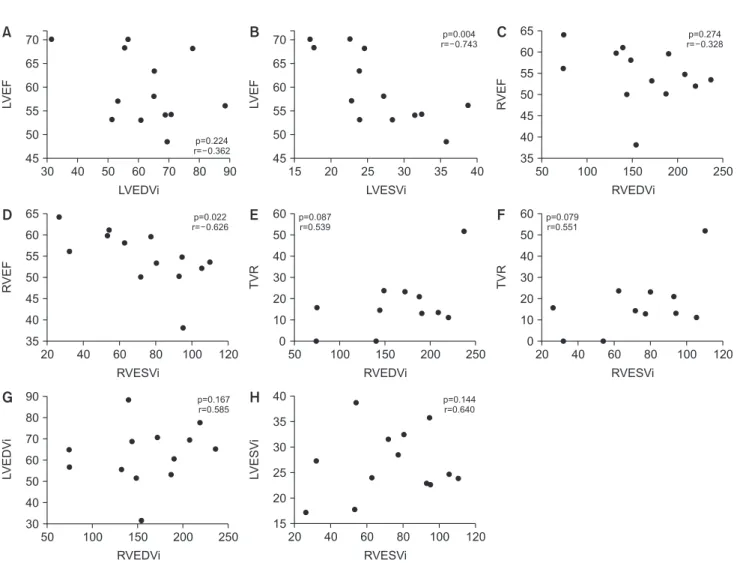
Fig. 2. Relationships between cardiac magnetic resonance imaging parameters. The ejection fraction showed a negative correlation with the ventricular end systolic volume index. LVEF, left ventricular ejection fraction; LVEDVi, left ventricular end-diastolic volume index;

LVESVi, left ventricular end-systolic volume index; RVEF, right ventricular ejection fraction; RVEDVi, right ventricular end-diastolic vol-

ume index; RVESVi, right ventricular end-systolic volume index; TVR, tricuspid valve regurgitation.

(5)

Yo Han Bae, et al. Ventricular Remodeling after ASD Closure JCS

Correlations of cardiac magnetic resonance imaging parameters

The preoperative median Qp/Qs was 2.3 (IQR, 1.7–2.8).

There was a positive correlation between RV size parame- ters and preoperative Qp/Qs (RVEDVi: r=0.862, p=0.001;

RVESVi: r=0.784, p=0.004). However, there were no statis- tically significant correlations between LV size parameters and the preoperative Qp/Qs (LVEDVi: r=−0.072, p=0.834;

LVESVi: r=0.593, p=0.593) (Fig. 1).

The RVEF and LVEF were negatively correlated with RVESVi (r=−0.626, p=0.022) and LVESVi (r=−0.743, p=0.004), respectively. However, there was no meaningful correlation between the RVEF and LVEF and RVEDVi and

LVEDVi, respectively (RVEDVi–RVEF: r=−0.328, p=0.274;

LVEDVi–LVEF: r=−0.362, p=0.224). Although there was no significant difference, the amount of TVR was correlat- ed with RVEDVi (r=0.539, p=0.087) and RVESVi (r=0.551, p=0.079) (Fig. 2). There were no significant correlations between NT proBNP levels and any of the CMR parame- ters (p>0.05 for all).

Time course of ventricular remodeling after atrial septal defect closure

Cardiac magnetic resonance imaging parameters The preoperative mean RVEDVi and RVESVi had sig- nificantly decreased at the postoperative follow-up at 1

1-yr FU

B C

D E F

G H

200 180 160 140 120 100 80

A

R VEDV i (mL/m )

2

1-mo FU

Preop Postop 1-yr FU

p<0.001 p=0.085 90

80 70 60 50 40 30

R VESV i (mL/m )

2

1-mo FU Preop Postop

p=0.001 p=0.023

60 58 55 53 50 48

R VEF (%)

1-mo FU Preop Postop

p=0.071 p=0.636

80

70

60

50

L VEDV i (mL/m )

2

1-mo FU Preop Postop

p=0.004 p=0.813

32.5 30.0 27.5 25.0 22.5

L VESV i (mL/m )

2

Preop Postop p=0.128 p=0.459

1-mo FU

65.0 62.5 60.0 57.5 55.0

L VEF (%)

Preop Postop p=0.952 p=0.223

1-mo FU

I

30

20

10

0

TVR (%)

1-mo FU Preop Postop

p=0.022 p=0.129 15

10

5

0

5

MVR (%)

1-mo FU Preop Postop

p=0.208 p=0.191

350 300 250 200 150 100 NT -proBNP (pg/mL) 50

1-mo FU Preop Postop

p=0.059 p=0.118

1-yr FU 1-yr FU

1-yr FU 1-yr FU 1-yr FU

1-yr FU 1-yr FU

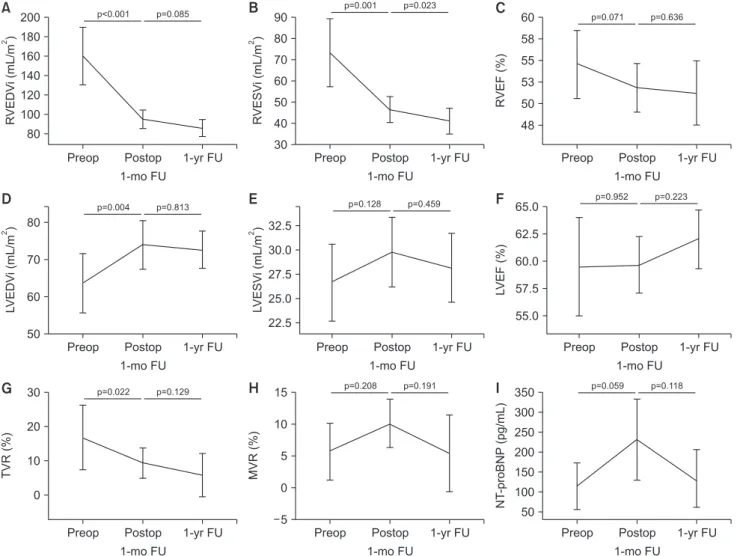
Fig. 3. Ventricular remodeling during FU on cardiac magnetic resonance imaging. Preop, preoperative; Postop, postoperative; FU,

follow-up; RVEDVi, right ventricular end-diastolic volume index; RVESVi, right ventricular end-systolic volume index; RVEF, right ven-

tricular ejection fraction; LVEDVi, left ventricular end-diastolic volume index; LVESVi, left ventricular end-systolic volume index; LVEF,

left ventricular ejection fraction; TVR, tricuspid valve regurgitation; MVR, mitral valve regurgitation; NT-proBNP, N-terminal pro-brain

natriuretic peptide.

(6)

https://doi.org/10.5090/kjtcs.20.098

JCS

month (p<0.001, p=0.001, respectively). The RVEDVi (p=0.085) and RVESVi (p=0.023) continued to decrease until the postoperative follow-up at 1 year, although the rate of decrease slowed. TVR had also decreased at the 1-month postoperative follow-up (p=0.022), and the TVR decrease continued, albeit more slowly (p=0.129). The pre- operative mean LVEDVi and LVESVi had increased at the 1-month postoperative follow-up (p=0.004 and p=0.128, respectively) and then remained unchanged at the 1-year postoperative follow-up (p=0.813 and p=0.459, respective- ly). There was no significant change in the ejection fraction at either follow-up (p>0.05 for all) (Fig. 3).

Although RVEDVi and RVESVi improved after ASD closure, the RV volume parameters were still larger than the LV volume parameters at the 1-year follow-up (RVEDVi versus LVEDVi: p=0.016; RVESVi versus LVESVi:

p=0.001). In addition, the RVEF was lower than the LVEF at the 1-year postoperative follow-up (p<0.001) (Table 2).

Late gadolinium enhancement

LGE was detected in 12 patients (92.3%) on preoperative CMR at the RV basal septum insertion point. This LGE re- solved in 1 patient (7.7%), was maintained with a slight de- crease in 4 patients (30.8%), and was maintained in 7 pa- tients (53.8%) at the 1-year postoperative follow-up (Fig. 4).

Discussion

In this study, patients’ RV volume had considerably de- creased at the 1-month postoperative follow-up and showed a steady decrease until the 1-year follow-up. Thus, RV ad- aptation occurred rapidly and gradual RV remodeling con- tinued until 1 year postoperatively. This ventricular adap- tation is similar to the results reported in other studies on ASD patients [4-7]. The cause of early rapid RV adaptation

may have been the disappearance of the left-to-right shunt.

However, we found that the RV volume was larger than the LV volume at the 1-year postoperative follow-up, despite the statistically significant decrease in RV volume. In this study, patients’ median age of 51.5 years combined with their median Qp/Qs of 2.3 may have been responsible for long-term RV volume overload, because Qp/Qs and RVED- Vi showed a positive correlation. A relatively long period of RV volume overload may affect RV remodeling. In another report, 20% of children with a median age of 7.5 years had a larger RV volume than LV volume after surgical ASD closure. Thus, ASD closure in early life does not guarantee a complete normalization of the heart chamber size [8].

In this study, we found that the RVEF had been main- tained in a nearly below-normal state at the 1-year postop- erative follow-up. Some reports have explained persistent RV dysfunction for up to several years by the trauma of operation, the use of a cardioplegic solution, and adverse inflammatory responses [9-13]. These exacerbating factors may have contributed to the persistent RV dysfunction ob- served in follow-up in this study. However, we found that

A B

Fig. 4. (A, B) Late gadolinium enhancement at the right ventricle basal septum insertion point on cardiac magnetic resonance im- aging. The arrow indicates fibrosis.

Table 2. Cardiac magnetic resonance imaging parameters during FU

Variable Preoperative Postoperative FU at 1 month Postoperative FU at 1 year

RVEDVi (mL/m

2

) 154.0 (139.6–190.3) 97.1 (84.9–103.9) 81.5 (72.3–97.2)

RVESVi (mL/m

2

) 77.1 (54.1–94.3) 48.1 (42.9–50.3) 39.5 (36.1–45.6)

RVEF (%) 54.7 (52.0–59.5) 51.6 (51.0-55.0) 51.0 (49.9–54.7)

LVEDVi (mL/m

2

) 64.8 (55.3–69.2) 72.5 (67.0–79.2) 68.8 (66.7–74.2)

LVESVi (mL/m

2

) 24.6 (22.8–31.5) 29.3 (26.8–33.7) 27.9 (23.7–29.8)

LVEF (%) 57.0 (54.0–68.0) 60.2 (57.5–63.0) 63.0 (58.8–65.2)

TVR (%) 14.1 (11.7–21.8) 8.3 (4.5–14.4) 0 (0–8.9)

MVR (%) 3.0 (0–10.7) 11.3 (6.9–13.7) 0 (0–9.32)

Values are presented as median (interquartile range).

FU, follow-up; RVEDVi, right ventricular end-diastolic volume index; RVESVi, right ventricular end-systolic volume index; RVEF, right ventricular

ejection fraction; LVEDVi, left ventricular end-diastolic volume index; LVESVi, left ventricular end-systolic volume index; LVEF, left ventricular

ejection fraction; TVR, tricuspid valve regurgitation; MVR, mitral valve regurgitation.

(7)

Yo Han Bae, et al. Ventricular Remodeling after ASD Closure JCS

LGE at the RV basal septum insertion point was detected in 92.3% of patients in this study, but only completely re- solved in one patient. The other patients had partial resolu- tion or no change. The sources of persistent LGE may in- duce RV strain and cause RV dysfunction in adult patients.

The patients who had palpitation during the preoperative period did not show symptom improvement during fol- low-up in this study. Several reports have stated that atrial remodeling is less effective than ventricular remodeling and is associated with atrial arrhythmia. The right atrial stretch in ASD may cause electrophysiological alterations, and these permanent structural atrial abnormalities may be a cause of atrial arrhythmia in affected patients [14,15].

Although we unfortunately did not measure atrial changes in this study, the lack of improvement in the patients’ ar- rhythmic symptoms may be related to atrial remodeling.

In this study, the preoperative median amount of TVR was 14.1%. We only performed tricuspid valve repair in 1 patient who had tricuspid valve annular dilatation with more than a moderate degree of TVR. The post-ASD clo- sure TVR was resolved at the 1-year postoperative fol- low-up. In 1 report, the resolution of TVR was described as a result of RV restoration and not of structural changes in the tricuspid valve annulus [6]. Although we did not mea- sure the tricuspid valve annulus diameter on CMR, we suspect that RV volume resolution may affect TVR resolu- tion.

There are several limitations of this study. First, we did not perform exercise cardiopulmonary function testing.

Thus, we did not find any correlation between RV volume and the results of exercise tests. Second, the sample size was small because of the cost of CMR, resulting in limited statistical power.

In conclusion, RV adaptation after ASD closure occurred rapidly and gradual RV remodeling continued for 1 year.

However, RV remodeling did not reach complete normal- ization. In addition, LGE was detected and showed partial resolution or no change after ASD closure in almost all pa- tients.

Conflict of interest

No potential conflict of interest relevant to this article was reported.

Funding

This work was supported by a National Research Foun- dation of Korea (NRF) grant funded by the Korean gov-

ernment (No. 2017R1C1B5076818).

ORCID

Yo Han Bae: https://orcid.org/0000-0001-7054-1898 Woo Sung Jang: https://orcid.org/0000-0003-1576-9472 Jin Young Kim: https://orcid.org/0000-0001-6714-8358 Yun Seok Kim: https://orcid.org/0000-0002-2817-557X

References

1. Hoffman JI, Kaplan S, Liberthson RR. Prevalence of congenital heart disease. Am Heart J 2004;147:425-39.

2. Baumgartner H, Bonhoeffer P, De Groot NM, et al. ESC guidelines for the management of grown-up congenital heart disease (new ver- sion 2010). Eur Heart J 2010;31:2915-57.

3. Kutty S, Hazeem AA, Brown K, et al. Long-term (5- to 20-year) out- comes after transcatheter or surgical treatment of hemodynamically significant isolated secundum atrial septal defect. Am J Cardiol 2012;

109:1348-52.

4. Thilen U, Persson S. Closure of atrial septal defect in the adult: car- diac remodeling is an early event. Int J Cardiol 2006;108:370-5.

5. Teo KS, Dundon BK, Molaee P, et al. Percutaneous closure of atrial septal defects leads to normalisation of atrial and ventricular vol- umes. J Cardiovasc Magn Reson 2008;10:55.

6. Schoen SP, Kittner T, Bohl S, et al. Transcatheter closure of atrial septal defects improves right ventricular volume, mass, function, pulmonary pressure, and functional class: a magnetic resonance im- aging study. Heart 2006;92:821-6.

7. Pascotto M, Santoro G, Cerrato F, et al. Time-course of cardiac re- modeling following transcatheter closure of atrial septal defect. Int J Cardiol 2006;112:348-52.

8. Roos-Hesselink JW, Meijboom FJ, Spitaels SE, et al. Excellent sur- vival and low incidence of arrhythmias, stroke and heart failure long- term after surgical ASD closure at young age: a prospective fol- low-up study of 21-33 years. Eur Heart J 2003;24:190-7.

9. Ascione R, Lloyd CT, Underwood MJ, Lotto AA, Pitsis AA, Angeli- ni GD. Inflammatory response after coronary revascularization with or without cardiopulmonary bypass. Ann Thorac Surg 2000;69:1198- 204.

10. Tarnok A, Hambsch J, Emmrich F, et al. Complement activation, cy- tokines, and adhesion molecules in children undergoing cardiac sur- gery with or without cardiopulmonary bypass. Pediatr Cardiol 1999;

20:113-25.

11. Zahler S, Massoudy P, Hartl H, Hahnel C, Meisner H, Becker BF.

Acute cardiac inflammatory responses to postischemic reperfusion during cardiopulmonary bypass. Cardiovasc Res 1999;41:722-30.

12. Breisblatt WM, Stein KL, Wolfe CJ, et al. Acute myocardial dys-

function and recovery: a common occurrence after coronary bypass

(8)

https://doi.org/10.5090/kjtcs.20.098

JCS

surgery. J Am Coll Cardiol 1990;15:1261-9.

13. Chaturvedi RR, Lincoln C, Gothard JW, et al. Left ventricular dys- function after open repair of simple congenital heart defects in in- fants and children: quantitation with the use of a conductance cathe- ter immediately after bypass. J Thorac Cardiovasc Surg 1998;115:77- 83.

14. Kort HW, Balzer DT, Johnson MC. Resolution of right heart enlarge- ment after closure of secundum atrial septal defect with transcatheter technique. J Am Coll Cardiol 2001;38:1528-32.

15. Morton JB, Sanders P, Vohra JK, et al. Effect of chronic right atrial

stretch on atrial electrical remodeling in patients with an atrial septal

defect. Circulation 2003;107:1775-82.

수치

Table 1. Preoperative patient characteristics
Fig. 1. Preoperative relationships between Qp/Qs and other cardiac parameters obtained by cardiac magnetic resonance imaging
Fig. 2. Relationships between cardiac magnetic resonance imaging parameters. The ejection fraction showed a negative correlation with  the ventricular end systolic volume index
Fig. 3. Ventricular remodeling during FU on cardiac magnetic resonance imaging. Preop, preoperative; Postop, postoperative; FU,  follow-up; RVEDVi, right ventricular end-diastolic volume index; RVESVi, right ventricular end-systolic volume index; RVEF, rig
+2

참조

관련 문서

• The supply and demand curves cross at the equilibrium price and quantity.. • You can read off approximate equilibrium values

Osteomyelitis in the right distal femur with surrounding

성공적인 모금을 위해 모금단체 의 구성원 중 가장 적합한(Right) 요청자가 적합한(Right) 잠재기부자에게 적절한 (Right) 기부액과 프로젝트를 적절한(Right)

정밀농업의 기본개념은 적절성, 적시성, 위치적합성(Doing the right treatment, at the right times, in the right places)을 기본 개념으로 하며 비 료, 농약, 물

Unique members represent the cumulative number of members that have borrowed on the SoFi platform or opened a financial services account through SoFi Money, SoFi Invest, SoFi

what ultimately matters in this course is not so much where you end up relative to your classmates but where. you end up relative to yourself

Starting the Jungyun, the Jungsayou(正思惟, right thinking), the Jungeo(正語, right speech), the Jungup(正業, right conduct), the Jungmyung(正命, right

core exercise program showed not only increasing peak torque of the right leg, left leg in Hip Extension of exercise group but also increasing peak torque of the right leg, left