INTRODUCTION
Prostate cancer (PCa) is the second most common cancer and the fifth leading cause of cancer-related death worldwide [1]. In Korea, the incidence of PCa is
increasing rapidly [2]. Currently, there are established risk factors for diagnosing PCa [3]. Family history, in- creased age, and ethnicity are established risk factors for PCa diagnosis, while among many other potential risk factors, benign prostatic hyperplasia (BPH) and
Received: Oct 12, 2019 Revised: Dec 26, 2019 Accepted: Jan 9, 2020 Published online Feb 5, 2020 Correspondence to: Jae Young Joung https://orcid.org/0000-0003-2954-1663
Department of Urology, Urological Cancer Center, National Cancer Center, 323 Ilsan-ro, Ilsandong-gu, Goyang 10408, Korea.
Tel: +82-31-920-1628, Fax: +82-31-920-1600, E-mail: [email protected] Correspondence to: Whi-An Kwon https://orcid.org/0000-0002-7833-5981
Department of Urology, Myongji Hospital, Hanyang University College of Medicine, 55 Hwasu-ro 14beon-gil, Deogyang-gu, Goyang 10475, Korea.
Tel: +82-31-810-5443, Fax: +82-31-810-5400, E-mail: [email protected] Copyright © 2021 Korean Society for Sexual Medicine and Andrology
Impact of Benign Prostatic Hyperplasia and/or Prostatitis on the Risk of Prostate Cancer in Korean Patients
Sung Han Kim1 , Whi-An Kwon2 , Jae Young Joung1
1Department of Urology, Urological Cancer Center, National Cancer Center, 2Department of Urology, Myongji Hospital, Hanyang University College of Medicine, Goyang, Korea
Purpose:
Purpose: We evaluated the impact of benign prostatic hyperplasia (BPH) and prostatitis on the risk of prostate cancer (PCa) in patients using nationally representative data of the Korean population from the National Health Insurance Service.
Materials and Methods:
Materials and Methods: A total of 5,580,495 Korean men, aged >20 years, who had undergone health screening in 2009 were followed-up for 9 years until 2017. Multivariate adjusted Cox regression analysis was conducted to determine the haz- ard ratio (HR) and 95% confidence interval (CI) for the association between BPH and/or prostatitis and PCa. The HR for PCa according to the presence of BPH and/or prostatitis was stratified by a combination of BPH and prostatitis in multivariable- adjusted models.
Results:
Results: The HR for PCa significantly increased in patients with BPH and prostatitis than in patients without BPH and prostati- tis (adjusted HR, 1.626; 95% CI, 1.567–1.688 and adjusted HR, 1.557; 95% CI, 1.500–1.618, respectively). In particular, for the combination of BPH and prostatitis, the adjusted HR was 1.856 (95% CI, 1.743–1.976), which was the highest when a diagnosis of both BPH and prostatitis was made.
Conclusions:
Conclusions: BPH and/or prostatitis are associated with an increased incidence for PCa in Korean patients, which is likely associated with similar effects to prostate-specific antigen (PSA) screening, so care must be taken in the interpretation. How- ever, if follow-up survival studies demonstrate differences between the two groups (BPH and prostatitis vs. general), it could be one of the evidence for the introduction of PSA screening in Korea.
Keywords:
Keywords: Benign prostatic hyperplasia; Incidence; Prostate cancer; Prostatitis
This is an Open Access article distributed under the terms of the Creative Commons Attribution Non-Commercial License (http://creativecommons.org/licenses/by-nc/4.0) which permits unrestricted non-commercial use, distribution, and reproduction in any medium, provided the original work is properly cited.
pISSN: 2287-4208 / eISSN: 2287-4690 World J Mens Health 2021 Apr 39(2): 358-365 https://doi.org/10.5534/wjmh.190135
prostatitis would be one cause [4].
BPH is a noncancerous increase in the prostate size caused by proliferation [5], a common aging disorder observed in 70% of men aged ≥70 years [6], and can be a cumbersome and potentially serious condition; it not only causes lower urinary tract symptoms and low- ers the quality of life of patients, but is also associated with certain types of male urological cancers, such as PCa and bladder cancer [7,8]. The association between BPH and urological cancer is not fully understood, al- though metabolic syndrome, hormones, and inflamma- tion may play a role in BPH and PCa [9].
Inflammation is thought to play a role in PCa by causing cell and gene damage, thereby causing in- creased cellular proliferation [10]. Prostatitis is defined as inflammation of the prostate gland, and the inci- dence of prostatitis is 8.2% (range, 2.2%–9.7%) [11]. The high prevalence of prostatitis might contribute to the onset of PCa. However, the association between prosta- titis and PCa is controversial.
To date, although many epidemiologic studies have revealed a link among prostatitis, BPH, and PCa, these findings are contradictory [12,13]. One of the main is- sues is high prevalence of prostatitis, BPH, and urolog- ical cancer. So studies about the relevance of these dis- eases are of high public health and clinical importance.
The link among BPH, prostatitis and PCa will help clinicians improve the effectiveness of cancer screening and treat cancer early by adopting general prevention strategies for BPH, prostatitis, and PCa [9,14].
Nonetheless, there were few studies dealt with the relationship of BPH, prostatitis, and PCa among Ko- rean population. Therefore, we performed a related analysis of patients with prostatitis, BPH, and PCa us- ing national data from the National Health Insurance Service (NHIS), representative of the Korean popula- tion.
MATERIALS AND METHODS
1. Ethics statement
This study was approved by the Myongji Hospital Bioethics Committee (No. 2019-06-004). Preliminary patient consent was not acquired because anonymized data were used for analysis. To protect patient’s per- sonal information, the subject and unique number were anonymized. The Institutional Review Board waived the written consents because of the anonymized data
from the NHIS.
2. Data sources
This study used data from the NHIS in Korea (www.
nhis.co.kr), which provides comprehensive health in- surance coverage for all Koreans citizens who paid Korean governmental taxes [15]. NHIS provided a time- limiting population-based cohort brought out by the NHIS in Korea during a certain period of time which was named the National Health Insurance Service- National Sample Cohort (NHIS-NSC) and used in this study with a total of 5,580,495 Korean screening men in 2009, aged over 20 years and followed-up for 9 years until 2017.
3. Study design
PCa was defined using the International Classifica- tion of Diseases, Tenth Revision, Clinical Modification (ICD-10-CM) code C61. BPH and prostatitis were iden- tified by searching for each code in the 10th edition International Classification of Diseases (ICD-10), i.e., N40 and (EB451 or E7050 or EY521 or EY522) and N41, respectively. The definition of the measurement was also retrieved using ICD-10-CM.
Hypertension (HTN) (I10–13, I15) with a with a blood pressure (BP) of ≥140/90 mmHg or a history of taking antihypertensive drugs; diabetes mellitus (DM) (E11–14) with self-reporting of taking diabetes drugs with a fasting blood glucose level of ≥126 mg/dL; dyslipidemia (E78) with the use of a self-reported lipid-lowering agent or by a previous diagnostic code of E78 with a total cholesterol level of ≥240 mg/dL.
Body mass index (BMI) was defined as the body weight in kilograms divided by the height in square meters. The BMI range was according to the recom- mendations of the Obesity Society, as follows: normal weight (18.5–22.9 kg/m2), overweight (23–24.9 kg/m2), and obesity (>25 kg/m2) [16]. BP was measured after the subject took rest for 5 minutes. The serum glucose, to- tal cholesterol, high-density lipoprotein cholesterol, and low-density lipoprotein cholesterol levels were mea- sured by taking a blood sample after overnight fasting.
Smokers are classified into three groups: non-smokers;
current smokers, those who smoked >100 cigarettes a day or more; and ex-smokers, those who smoked in the past but quit smoking. Drinking status was divided into three groups: people who did not drink, people who drank two or three times a month, and people who
drank weekly. Exercise status was divided into two groups: high intensity exercise: exercise for more than 3 days a week; and regular exercise: exercise for more than 5 days a week.
4. Statistical analysis
Statistical analysis was performed using SAS ver. 9.4 (SAS Institute, Carrie, NC, USA), and the data were expressed as mean±standard error and as percentages for continuous and categorical variables, respectively.
The incidence between PCa risk and BPH and/or pros- tatitis was calculated per 1,000 people.
Multivariate adjusted Cox regression analysis was
performed, and the associated hazard ratio (HR) and 95% confidence interval (CI) for PCa and BPH and/or prostatitis were analyzed. Among the available vari- ables (factors) in the database, clinical considerations were taken into consideration. Among them, a model without statistical multicollinearity problem was se- lected. Calculations were made after adjusting for age, income, BMI, smoking status, exercise status, DM, HTN, dyslipidemia, systolic and diastolic BP, choles- terol levels, and glucose levels. The chi-square test was used for category variables and one-way ANOVA test was used for continuous variables. The meaning of the corresponding p-value for each variable is “the distri-
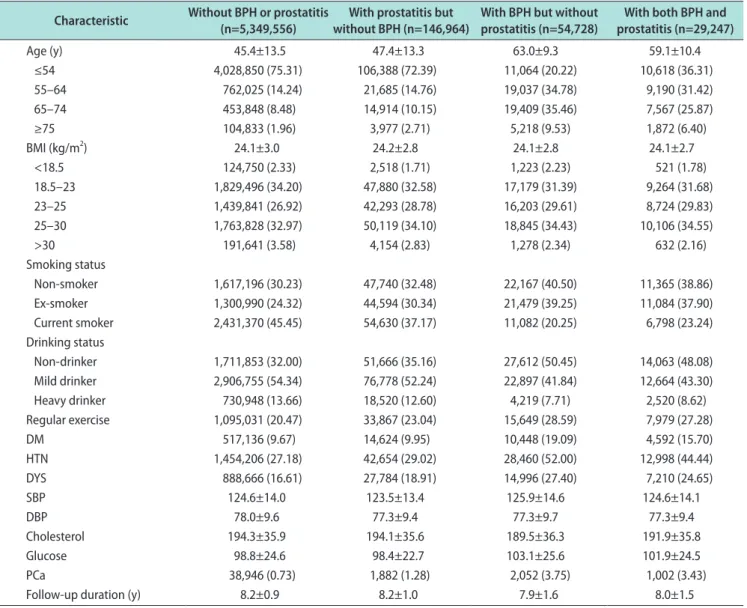
Table 1. Baseline characteristics of the patients***
Characteristic Without BPH or prostatitis
(n=5,349,556) With prostatitis but
without BPH (n=146,964) With BPH but without
prostatitis (n=54,728) With both BPH and prostatitis (n=29,247)
Age (y) 45.4±13.5 47.4±13.3 63.0±9.3 59.1±10.4
≤54 4,028,850 (75.31) 106,388 (72.39) 11,064 (20.22) 10,618 (36.31)
55–64 762,025 (14.24) 21,685 (14.76) 19,037 (34.78) 9,190 (31.42)
65–74 453,848 (8.48) 14,914 (10.15) 19,409 (35.46) 7,567 (25.87)
≥75 104,833 (1.96) 3,977 (2.71) 5,218 (9.53) 1,872 (6.40)
BMI (kg/m2) 24.1±3.0 24.2±2.8 24.1±2.8 24.1±2.7
<18.5 124,750 (2.33) 2,518 (1.71) 1,223 (2.23) 521 (1.78)
18.5–23 1,829,496 (34.20) 47,880 (32.58) 17,179 (31.39) 9,264 (31.68)
23–25 1,439,841 (26.92) 42,293 (28.78) 16,203 (29.61) 8,724 (29.83)
25–30 1,763,828 (32.97) 50,119 (34.10) 18,845 (34.43) 10,106 (34.55)
>30 191,641 (3.58) 4,154 (2.83) 1,278 (2.34) 632 (2.16)
Smoking status
Non-smoker 1,617,196 (30.23) 47,740 (32.48) 22,167 (40.50) 11,365 (38.86)
Ex-smoker 1,300,990 (24.32) 44,594 (30.34) 21,479 (39.25) 11,084 (37.90)
Current smoker 2,431,370 (45.45) 54,630 (37.17) 11,082 (20.25) 6,798 (23.24)
Drinking status
Non-drinker 1,711,853 (32.00) 51,666 (35.16) 27,612 (50.45) 14,063 (48.08)
Mild drinker 2,906,755 (54.34) 76,778 (52.24) 22,897 (41.84) 12,664 (43.30)
Heavy drinker 730,948 (13.66) 18,520 (12.60) 4,219 (7.71) 2,520 (8.62)
Regular exercise 1,095,031 (20.47) 33,867 (23.04) 15,649 (28.59) 7,979 (27.28)
DM 517,136 (9.67) 14,624 (9.95) 10,448 (19.09) 4,592 (15.70)
HTN 1,454,206 (27.18) 42,654 (29.02) 28,460 (52.00) 12,998 (44.44)
DYS 888,666 (16.61) 27,784 (18.91) 14,996 (27.40) 7,210 (24.65)
SBP 124.6±14.0 123.5±13.4 125.9±14.6 124.6±14.1
DBP 78.0±9.6 77.3±9.4 77.3±9.7 77.3±9.4
Cholesterol 194.3±35.9 194.1±35.6 189.5±36.3 191.9±35.8
Glucose 98.8±24.6 98.4±22.7 103.1±25.6 101.9±24.5
PCa 38,946 (0.73) 1,882 (1.28) 2,052 (3.75) 1,002 (3.43)
Follow-up duration (y) 8.2±0.9 8.2±1.0 7.9±1.6 8.0±1.5
Values are presented as mean±standard deviation or number (%).
BPH: benign prostatic hyperplasia, BMI: body mass index, DM: diabetes mellitus, HTN: hypertension, DYS: dyslipidemia, SBP: systolic blood pres- sure, DBP: diastolic blood pressure, PCa: prostate cancer.
***The asterisk indicates a statistically significant difference (p<0.001).
bution of variables (average in case of continuous type) is different in at least one stage among four stages (if significant).”
A p-value of <0.05 was considered statistically sig- nificant. The cumulative incidence probability analysis was performed using Kaplan–Meier curves with log- rank tests for patients with prostatitis but without BPH, those with BPH but without prostatitis, and those with both BPH and prostatitis.
RESULTS
1. Comparison of clinical characteristics according to the diagnosis of benign prostatic hyperplasia and prostatitis
Table 1 summarizes the general characteristics of the study population and subgroups. Among a total of 5,580,495 participants, 5,349,556 (95.86%) were di- agnosed without BPH or prostatitis. A total of 2.63%
(146,964/5,580,495), 0.52% (29,247/5,580,495), and 0.98%
(54,728/5,580,495) patients were diagnosed with pros- tatitis but without BPH, with BPH but without pros- tatitis, and with both BPH and prostatitis. There were significant differences among the groups in all the variables including age.
2. Risk of prostate cancer according to the diagnosis of benign prostatic hyperplasia and prostatitis
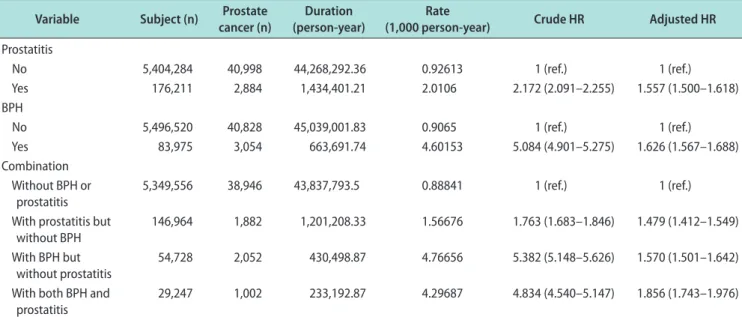
Table 2 shows the HR for PCa according to the di- agnosis of BPH and prostatitis. We performed the analysis after correction for age, income, BMI, smoking status, drinking status, exercise, DM, HTN, dyslipid- emia, systolic and diastolic BP, cholesterol, and glucose.
The patients with BPH had a higher risk of PCa than the patients without BPH did, among all the patients (HR, 1.626; 95% CI, 1.567–1.688). Furthermore, the pa- tients with prostatitis had a higher risk of PCa than the patients without prostatitis did, among all the pa- tients (HR, 1.557; 95% CI, 1.500–1.618). In the patients with BPH and prostatitis, the adjusted HR was 1.479 (95% CI, 1.412–1.549) when diagnosed without BPH or prostatitis, and the adjusted HR was 1.570 (95% CI, 1.501–1.642) when patients were diagnosed with BPH but without prostatitis. The adjusted HR was 1.856 (95%
CI, 1.743–1.976), which was the highest when patients were diagnosed with both BPH and prostatitis. In ad- dition, the risk of PCa of each other factors according to the presence of BPH and/or prostatitis are demon- strated (Supplement Table 1–3).
Table 2. Risk of PCa according to the presence of prostatitis, BPH, or both Variable Subject (n) Prostate
cancer (n)
Duration (person-year)
Rate
(1,000 person-year) Crude HR Adjusted HR Prostatitis
No 5,404,284 40,998 44,268,292.36 0.92613 1 (ref.) 1 (ref.)
Yes 176,211 2,884 1,434,401.21 2.0106 2.172 (2.091–2.255) 1.557 (1.500–1.618)
BPH
No 5,496,520 40,828 45,039,001.83 0.9065 1 (ref.) 1 (ref.)
Yes 83,975 3,054 663,691.74 4.60153 5.084 (4.901–5.275) 1.626 (1.567–1.688)
Combination Without BPH or
prostatitis
5,349,556 38,946 43,837,793.5 0.88841 1 (ref.) 1 (ref.)
With prostatitis but without BPH
146,964 1,882 1,201,208.33 1.56676 1.763 (1.683–1.846) 1.479 (1.412–1.549) With BPH but
without prostatitis
54,728 2,052 430,498.87 4.76656 5.382 (5.148–5.626) 1.570 (1.501–1.642) With both BPH and
prostatitis 29,247 1,002 233,192.87 4.29687 4.834 (4.540–5.147) 1.856 (1.743–1.976)
Adjusted for age, income, body mass index, smoking status, drinking status, exercise, diabetes mellitus, hypertension, dyslipidemia, systolic blood pressure, diastolic blood pressure, cholesterol, and glucose.
PCa: prostate cancer, BPH: benign prostatic hyperplasia, HR: hazard ratio, ref.: reference.
3. Incidence probability of prostate cancer according to the diagnosis of benign prostatic hyperplasia and prostatitis
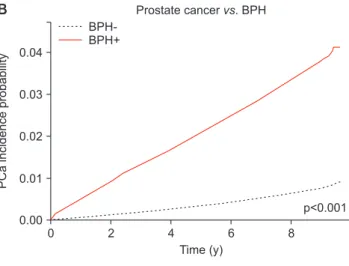
The results of the cumulative incidence probability curves showed significant differences among patients with prostatitis but without BPH, those with BPH but without prostatitis, and those with both BPH and pros- tatitis (p<0.001; Fig. 1).
DISCUSSION
The controversial issue on the relationship between BPH, prostatitis and PCa has been dealt in many pre- vious studies that some showed a positive relationship but others did not [10,12,13,17]. This population-based study supported the HR for PCa significantly increased in patients with BPH and prostatitis than in patients without BPH and prostatitis (HR, 1.626; 95% CI, 1.567–
1.688 and HR, 1.557; 95% CI, 1.500–1.618, respectively). In particular, this study showed the combination of BPH and prostatitis had the highest adjusted HR of 1.856 (95% CI, 1.743–1.976) for the increased incidence of PCa.
A few years ago, an article published in the data ob- tained from the universal National Health Insurance of Taiwan found that men with PCa have strong asso- ciation with prostatitis and/or BPH [18]. However, most of the past study has been mainly about the practice of single disease and PCa, but this study dealt with BPH and prostatitis at the same time, and the results are also remarkable. This study has great clinical sig- nificance because it is a large-population based study conducted on a single ethnic group in East Asia, espe- cially in Korea, where the incidence of PCa is rapidly increasing [19].
A causal relationship between inflammatory disease and other tumor has been established in hepatocellu- lar and hepatitis [20], cervical and cervicitis, anal and proctitis, genital carcinoma and sexually transmitted diseases [21], and gastric cancer and gastritis [22], simi- lar to this study. Previous epidemiology and biology studies of prostatitis have already shown that inflam- matory mediators could promote PCa through multiple signaling pathways, such as the suppression of apopto- sis, cell growth promotion, and induction of the loss of
0 2 4 6 8
0.020
0.015
0.010
0.005
0.000
PCaincidenceprobability
Time (y)
A
C
BPH-/Prostatitis- BPH-/Prostatitis+
BPH+/Prostatitis- BPH+/Prostatitis+
p<0.001 Prostate cancervs. Prostatitis
Prostatitis- Prostatitis+
0 2 4 6 8
0.04
0.03
0.02
0.01
0.00
PCaincidenceprobability
Time (y)
p<0.001 Prostate cancervs. BPH
BPH- BPH+
B
0 2 4 6 8
0.04
0.03
0.02
0.01
0.00
PCaincidenceprobability
Time (y)
p<0.001 Prostate cancervs. Combination
Fig. 1. Kaplan–Meier estimates of prostate cancer (PCa) incidence probability in patients (A) with and without prostatitis; (B) with and without benign prostatic hyperplasia (BPH); and (C) with and without a combination of BPH and prostatitis. Log-rank test; p<0.001.
tumor suppressor genes [23].
However, Schenk et al [13] found no significant as- sociation between BPH and the incidence of PCa. The Scheck’s analysis was based on the low quality of gen- eralized results owing to restrictions implemented in a highly selected population. Another study by Ørsted and Bojesen [14] found a contradictory finding with a positive association between BPH and PCa incidence as well as mortality in the largest population-based cohort study with a minimized potential influence of detection bias. Another study with meta-analysis study showing the association between BPH and PCa risk also with a considerable heterogeneity between studies partly ow- ing to racial differences, and the risk of PCa was much greater in Caucasians than in Asians [24].
Hormones, inflammation, and metabolic syndrome played an important role in the development of BPH and PCa [9,25,26]. Homeostasis between prostate cell proliferation and apoptosis is often interrupted in patients with BPH, supported by the effects of dihy- drotestosterone and estrogen [27]. Given the differences in the revalence, prognosis, and survival among Asian and Caucasian patients with PCa [6,28], it is reasonable to assume that the mechanisms by which BPH contrib- utes to PCa can vary across ethnicities.
An important limitation of our study is the BPH and prostatitis detection bias in patients for PCa risk. This is related to the fact that unmeasured clinical practice might affect PCa detection in patients with BPH and prostatitis. For example, physicians may perform more intensive examinations, such as prostate-specific anti- gen (PSA) tests, Digital Rectal Examination, imaging procedures, and additional markers. It has been found that increased disease recognition in BPH patients might increase the likelihood of being diagnosed with PCa [29]. Second, because there is no information about not only pathological findings but also clinical stage or prognosis, it is not possible to coordinate disease as- sessments or arrange them hierarchically. Finally, the diagnosis of BPH and prostatitis was made with the NHIS diagnostic code, which would be different from the actual clinical diagnosis. For example, prostatitis is a combination of both acute and chronic prostatitis.
Despite the many limitations, the strength of the current study is that, to the best of our knowledge, it was the first and most comprehensive study about BPH, prostatitis, and the risk of PCa among Korean population. A thorough investigation of the latest liter-
ature was conducted to include the best observational studies. Moreover, the total number of participants who contributed to the analysis of the data is much higher than that used in previous studies on this sub- ject. This allowed us to perform a stratified analysis to investigate potential influential factors.
CONCLUSIONS
BPH and/or prostatitis are associated with an in- creased incidence of PCa in Korean patients. In par- ticular, it was highest in the combination of BPH and prostatitis, which is likely associated with similar ef- fects to PSA screening, so care must be taken in the interpretation. However, if follow-up survival studies demonstrate differences between the two groups (BPH and prostatitis vs. general), it could be one of the evi- dence for the introduction of PSA screening in Korea.
ACKNOWLEDGEMENTS
This study was supported by the 2018 Research Grant of the Korean Prostate Society. This work was supported by the National Cancer Center, Korea (NCC 1810021-2). This study used NHIS-NSC data (NHIS- 2018-1-301) made by NHIS. The authors declare no con- flict of interest with NHIS.
Conflict of Interest
The authors have nothing to disclose.
Author Contribution
Conceptualization: JYJ, WAK. Data curation: SHK, WAK.
Formal analysis: SHK, WAK. Funding acquisition: JYJ. Investi- gation: JYJ, WAK. Methodology: JYJ, SHK. Project administra- tion: JYJ, WAK. Resources: JYJ, SHK. Software: SHK, WAK.
Supervision: all authors. Validation: all authors. Visualization:
JYJ, SHK. Writing – original draft: SHK, WAK. Writing – re- view & editing: SHK, WAK.
Supplementary Materials
Supplementary materials can be found via https://doi.
org/10.5534/wjmh.190135.
Data Sharing Statement
The data analyzed for this study have been deposited in HARVARD Dataverse and are available at https://doi.
org/10.7910/DVN/9WRB5M.
REFERENCES
1. Roehrborn CG, Black LK. The economic burden of prostate cancer. BJU Int 2011;108:806-13.
2. Park SK, Sakoda LC, Kang D, Chokkalingam AP, Lee E, Shin HR, et al. Rising prostate cancer rates in South Korea. Pros- tate 2006;66:1285-91.
3. Heidenreich A, Bastian PJ, Bellmunt J, Bolla M, Joniau S, van der Kwast T, et al. EAU guidelines on prostate cancer. part 1:
screening, diagnosis, and local treatment with curative intent- update 2013. Eur Urol 2014;65:124-37.
4. Jiang J, Li J, Yunxia Z, Zhu H, Liu J, Pumill C. The role of prostatitis in prostate cancer: meta-analysis. PLoS One 2013;
8:e85179.
5. Chapple C. Medical treatment for benign prostatic hyperpla- sia. BMJ 1992;304:1198-9.
6. McVary KT. BPH: epidemiology and comorbidities. Am J Manag Care 2006;12:S122-8.
7. Tseng CH. Benign prostatic hyperplasia is a significant risk factor for bladder cancer in diabetic patients: a population- based cohort study using the National Health Insurance in Taiwan. BMC Cancer 2013;13:7.
8. Ørsted DD, Bojesen SE, Nielsen SF, Nordestgaard BG. As- sociation of clinical benign prostate hyperplasia with prostate cancer incidence and mortality revisited: a nationwide cohort study of 3,009,258 men. Eur Urol 2011;60:691-8.
9. Alcaraz A, Hammerer P, Tubaro A, Schröder FH, Castro R. Is there evidence of a relationship between benign prostatic hy- perplasia and prostate cancer? Findings of a literature review.
Eur Urol 2009;55:864-73.
10. Sfanos KS, De Marzo AM. Prostate cancer and inflammation:
the evidence. Histopathology 2012;60:199-215.
11. Krieger JN, Lee SW, Jeon J, Cheah PY, Liong ML, Riley DE.
Epidemiology of prostatitis. Int J Antimicrob Agents 2008;31 Suppl 1:S85-90.
12. Chokkalingam AP, Nyrén O, Johansson JE, Gridley G, McLaughlin JK, Adami HO, et al. Prostate carcinoma risk subsequent to diagnosis of benign prostatic hyperplasia: a population-based cohort study in Sweden. Cancer 2003;98:
1727-34.
13. Schenk JM, Kristal AR, Arnold KB, Tangen CM, Neuhouser ML, Lin DW, et al. Association of symptomatic benign pros-
tatic hyperplasia and prostate cancer: results from the pros- tate cancer prevention trial. Am J Epidemiol 2011;173:1419- 28.
14. Ørsted DD, Bojesen SE. The link between benign prostatic hyperplasia and prostate cancer. Nat Rev Urol 2013;10:49-54.
15. Song SO, Jung CH, Song YD, Park CY, Kwon HS, Cha BS, et al. Background and data configuration process of a na- tionwide population-based study using the Korean national health insurance system. Diabetes Metab J 2014;38:395-403.
16. Bonkhoff H, Berges R. The evolving role of oestrogens and their receptors in the development and progression of pros- tate cancer. Eur Urol 2009;55:533-42.
17. Wagenlehner FM, Elkahwaji JE, Algaba F, Bjerklund-Johan- sen T, Naber KG, Hartung R, et al. The role of inflammation and infection in the pathogenesis of prostate carcinoma. BJU Int 2007;100:733-7.
18. Hung SC, Lai SW, Tsai PY, Chen PC, Wu HC, Lin WH, et al.
Synergistic interaction of benign prostatic hyperplasia and prostatitis on prostate cancer risk. Br J Cancer 2013;108:1778- 83.
19. Lee HY, Kim DK, Doo SW, Yang WJ, Song YS, Lee B, et al.
Time trends for prostate cancer incidence from 2003 to 2013 in South Korea: an age-period-cohort analysis. Cancer Res Treat 2020;52:301-8.
20. Yu MW, Chen CJ. Hepatitis B and C viruses in the develop- ment of hepatocellular carcinoma. Crit Rev Oncol Hematol 1994;17:71-91.
21. Backes DM, Kurman RJ, Pimenta JM, Smith JS. Systematic review of human papillomavirus prevalence in invasive penile cancer. Cancer Causes Control 2009;20:449-57.
22. Terzić J, Grivennikov S, Karin E, Karin M. Inflammation and colon cancer. Gastroenterology 2010;138:2101-14.e5.
23. Lonkar P, Dedon PC. Reactive species and DNA damage in chronic inflammation: reconciling chemical mechanisms and biological fates. Int J Cancer 2011;128:1999-2009.
24. Dai X, Fang X, Ma Y, Xianyu J. Benign prostatic hyperplasia and the risk of prostate cancer and bladder cancer: a meta- analysis of observational studies. Medicine (Baltimore) 2016;
95:e3493.
25. MacLennan GT, Eisenberg R, Fleshman RL, Taylor JM, Fu P, Resnick MI, et al. The influence of chronic inflammation in prostatic carcinogenesis: a 5-year followup study. J Urol 2006;
176:1012-6.
26. Ozden C, Ozdal OL, Urgancioglu G, Koyuncu H, Gokkaya S, Memis A. The correlation between metabolic syndrome and prostatic growth in patients with benign prostatic hyperpla- sia. Eur Urol 2007;51:199-203; discussion 204-6.
27. Hendriksen PJ, Dits NF, Kokame K, Veldhoven A, van
Weerden WM, Bangma CH, et al. Evolution of the androgen receptor pathway during progression of prostate cancer. Can- cer Res 2006;66:5012-20.
28. Kimura T. East meets West: ethnic differences in prostate can- cer epidemiology between East Asians and Caucasians. Chin
J Cancer 2012;31:421-9.
29. Solvang M, Elnegaard S, Jarbøl DE. Urological symptoms among 23,240 men in the general Danish population - con- cerns about symptoms, their persistence and influence on pri- mary care contacts. Scand J Prim Health Care 2018;36:227-36.