• 검색 결과가 없습니다.

Association between Exonic SNPs of TLR5 and Benign Prostate Hyperplasia in Korean Population

N/A
N/A
Protected

Academic year: 2021

Share "Association between Exonic SNPs of TLR5 and Benign Prostate Hyperplasia in Korean Population"

Copied!
7
0
0

로드 중.... (전체 텍스트 보기)

전체 글

(1)

Corresponding author: Joo-Ho Chung, Kohwang Medical Research Institute, School of Medicine, Kyung Hee University, 26 Kyungheedae-ro, Dongdaemun-gu, Seoul 130-701, Korea Tel: +82-2-961-0281, E-mail: [email protected] Received November 15, 2013, Revised November 15, 2013 Accepted December 15, 2013

This work was carried out with the support of “Cooperative Research Program for Agriculture Science & Technology Development (Project No.

PJ009558)” Rural Development Administration, Republic of Korea.

Association between Exonic SNPs of TLR5 and Benign Prostate Hyperplasia in Korean Population

*Kohwang Medical Research Institute, School of Medicine, Kyung Hee University,

Department of Internal Medicine, College of Oriental Medicine, Seoul,

Development of Ginseng and Medical Plants Research Institute, Rural Administration, Eumseong, Korea

Hosik Seok*, Byung-Cheol Lee

, Young Ock Kim

, Joo-Ho Chung*

Benign prostatic hyperplasia (BPH) is prevalent in aging male, and it is increasing in Korean male. Factors affecting BPH development include family history. Toll-like receptor (TLR) 5 is a major part of innate immune, and it may contribute to the immunologic responses linked to the BPH pathophysiology. To investigate the genetic effect of the TLR5 polymorphisms on the development and clinical features of BPH, three missense single nucleotide polymorphisms (SNPs) of TLR5 (rs5744168, rs5744174, rs2072493) were tested in 219 BPH and 211 control subjects. The SNPs were genotyped and statistically analysed in multiple logistic regression analysis. rs5744174 was significantly associated with BPH in genotype analysis (codominant2, OR=9.60, p=0.005; recessive, OR=9.15, p=0.001; and log-additive, OR=1.56, p=0.018). rs2072493 was significantly associated with BPH (codominant1, OR=0.65, p=0.042; dominant, OR=0.63, p=0.022; log-additive, OR=0.69, p=0.018; and allele frequencies, OR=0.70, p=0.02). In conclusion, we suggest that TLR5 polymorphisms may be associated with BPH, and that rs5744174 and rs2072493 may be associated with the development of BPH. This study has some limitation, therefore further studies with larger sample size and other populations will be needed to verify our results. (Korean J Str Res 2013;21:331∼337)

Key Words: Benign prostatic hyperplasia, TLR5, Single nucleotide polymorphism

INTRODUCTION

BPH may cause severe stress in aged male (Cohen, 2009). The lifestyles in Korean male are westernized in recent decades, and incidence of BPH is reported to be increasing. However,

susceptibility to BPH contributed by each of risk factors may be heterogeneous in individuals, and genetic effect may contribute to such differences (Qi et al., 2013).

In the majority of individuals, androgen levels tend to decrease along with ageing (Cohen, 2009). Decrease of androgen level may influence the immune system including the innate responses (Lai et al., 2012), and innate immune responses to the prostate (Quintar et al., 2012). And in the chronic lower urinary tract symptom (LUTS) patients, it was implicated that some bacterial species including E. coli may influence the symptoms (Khasriya et al., 2013).

Toll-like receptors (TLRs) are member of TLR family, which

plays a role in activation of innate immune in response to

(2)

detected pathogens. In the TLR family, TLR4 was suggested to be associated with the body responses correlated with androgen (Card et al., 2006; Leimgruber et al., 2013). TLR5 was known to be recognizing flagellin of bacteria. And the recognition in some organ may contribute to the systemic effect. Microbial flora in the gastrointestinal system is recognized by TLR5, however, its expression was correlated with metabolic changes demonstrating features of metabolic syndrome (Vijay-Kumar et al., 2010).

Features of metabolic syndrome are associated with BPH development (Park YW et al., 2012), along with many other risk factors for cardiovascular disease (Moyad et al., 2008).

Signals of TLRs may affect adipocyte functions to be secreting more cytokines, and which may be linked to insulin resistance (Kopp et al., 2009). Intake of fatty acids and lipid metabolism are major factors for the development and symptoms of BPH (Tewari et al., 2012). Moreover, obesity may increase the inflammatory responses by TLR5 signal (Kim SJ et al., 2012). TLR5 is associated with IL6 and IL8 productions. Such ILs are responsible for the proinflammatory signals in pathophysiologic mechanisms of BPH (McLaren et al., 2011).

The previous reports may suggest that pathophysiologic process of BPH may be contributed from TLR5 which is involved in the metabolism and immune system. However, there has been no study of association between TLR5 and BPH. Therefore, we investigated whether missense polymorphisms of TLR5 may affect development and clinical features of BPH.

MATERIALS AND METHODS

1. Subjects

Two-hundred and nineteen male subjects, from the Kyung Hee University Medical Center between January 2002 and December 2007 for LUTS complaints were enrolled in the study. 211 Healthy age-matched controls were recruited from the participants of routine health checkup program visitors in the hospital. This study conformed to the guidelines of the Helsinki Declaration, and was approved by the ethics review committee of Medical Research Institute and Institutional Review Board of Kyung Hee Medical Center, Collage of Medicine, Kyung Hee University. Informed consents were obtained from all of each subject.

Clinical symptoms were scored with the international prostate symptom score (IPSS) system, and the prostate size was measured using transrectal ultrasonography (TRUS). Patients with a serum PSA>4 ng/ml were examinated by TRUS-guided prostate biopsy to rule out prostate cancer. Exclusion criteria for study subjects were: prostate cancer, neurogenic bladder, urethral stricture, acute/chronic prostatitis, urinary tract infection, uncontrolled diabetes mellitus, previous pelvic surgery, and cardiovascular diseases. Patients in BPH group were divided into two groups based on the each of following: low (0∼19) vs high (≥20) IPSS, low (<1.5 ng/ml) vs high (≥1.5 ng/ml) PSA, and small (<30 g) vs large (≥30 g) prostate volume (Kaplan et al., 2006; Siami et al., 2007).

2. SNP selection and genotyping

In the TLR5 gene region, three SNPs were selected (rs5744168, Arg392STOP; rs5744174, Phe616Leu; rs2072493, Asn592Ser). SNPs in exon region were selected and with unknown heterozygosity and minor allele frequencies below 5%

were excluded (http://www.ncbi.nlm.nih.gov/SNP, BUILD 130).

Peripheral blood samples were collected in EDTA tubes, and genomic DNA were extracted using the Qiagen DNA Extraction kit (Qiagen, Tokyo, Japan). PCRs including regions for each of the three SNPs were performed (rs5744168, sense 5’-CTCCC- TGAACTCACGAGTCTTT-3’, antisense 5’-ATAAGTGGATGA- GGTTCGCTGT-3’; rs5744174, sense 5’-ACCAGCTCCTAGCT- CCTAATCC-3’, antisense 5’-CTTTGTGACTGTGAGGATGG- TC-3’; rs2072493, sense 5’-ACTAAGCCTCAACTCCAACA- GG-3’, antisense 5’-TGGTCATGAGGAACAGAGTCAG-3’) and genotyped with direct sequencing using an ABI Prism 377 sequencer (Applied Biosystems, Foster City, CA, USA) and SeqManII software (DNASTAR, Madison, WI, USA).

3. Statistical analysis

For the case-control association study, Hardy-Weinberg equili-

brium for all SNPs was assessed using SNPStats (Sole et al., 2006)

and analysis of genetic models using multiple logistic regression

analyses (log-additive, dominant, and recessive models) were

applied (Cho AR et al., 2012). SPSS 20.0 (SPSS, Chicago, IL,

USA) were used to obtain odds ratios (ORs), 95% confidence

intervals (CIs) and corresponding p values with controlling for age

(3)

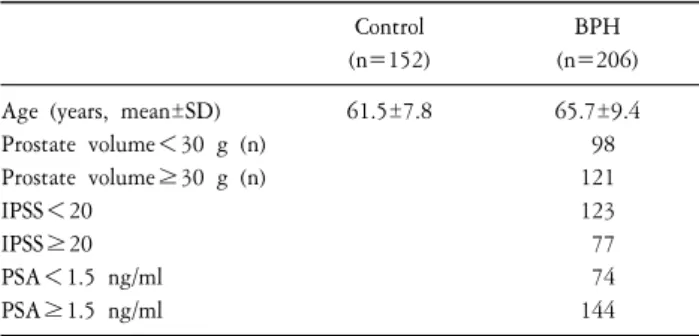
Table 1. Clinical data of participantsincluded in the study.

Control (n=152)

BPH (n=206) Age (years, mean±SD)

Prostate volume<30 g (n) Prostate volume≥30 g (n) IPSS<20

IPSS≥20 PSA<1.5 ng/ml PSA≥1.5 ng/ml

61.5±7.8 65.7±9.4

98 121 123 77 74 144 IPSS: international prostate symptom score, BPH: benign prostatic hyperplasia, PSA: prostate specific antigen.

Table 2. Genotype analysis of TLR5 polymorphisms in the controls and BPH subjects.

SNP Genotype/allele n (%)

Models OR (95% CI) p

Control BPH

rs5744168 Arg392STOP rs5744174 Phe616Leu

rs2072493 Asn592Ser

C/C T/C T/T T/C C/C

T C A/A A/G G/G

A G

203 (96.2) 8 (3.8) 154 (73) 55 (26.1) 2 (1.0)

363 (86.0) 59 (14.0) 99 (46.9) 93 (44.1) 19 (9.0)

291 (69.0) 131 (31.0)

213 (97.3) 6 (2.7) 149 (68) 58 (26.5) 12 (5.5)

356 (81.3) 82 (18.7) 127 (58) 79 (36.1) 13 (5.9)

333 (76.0) 105 (24.0)

Codominant1

Codominant1 Codominant2 Dominant Recessive Log-additive

Codominant1 Codominant2 Dominant Recessive Log-additive

0.80 (0.27∼2.38)

1.17 (0.75∼1.84) 9.60 (1.96∼47.15) 1.40 (0.91∼2.15) 9.15 (1.88∼44.61) 1.56 (1.07∼2.27)

1 1.42 (0.98∼2.04) 0.65 (0.43∼0.99) 0.54 (0.25∼1.16) 0.63 (0.43∼0.94) 0.64 (0.30∼1.37) 0.69 (0.51∼0.95)

1 0.70 (0.52∼0.95)

0.69

0.48 0.005 0.12 0.001 0.018 0.06 0.042 0.11 0.022 0.25 0.022

0.02 BPH: benign prostatic hyperplasia, TLR5: Toll-like receptor 5, SNP: single nucleotide polymorphism, OR: odds ratio, CI: confidence interval. Bold numbers mean significant association.

Fig. 1. Linkage disequilibrium (LD) block of the tested single nucleotide polymorphisms (SNPs) in the toll-like receptor 5 (TLR5) gene, consisted of rs5744174 and rs2072493.

as a covariable. Haploview 4.2 (Whitehead Institute for Biome- dical Research, Cambridge, MA, USA) was used in estimating linkage disequilibrium (LD) block of polymorphisms. p<0.05 was considered significant.

RESULTS

All of three SNPs included in this study were in HWE (p>

0.05, data not shown). The clinical characteristics of the 229 BPH patients are shown in Table 1. There was no difference in mean age between the BPH and control groups (p>0.05).

Table 2 shows the genotype and allele frequencies of the control and BPH group. rs5744168 was not significantly different among the controls and BPH. The genotypes of rs5744174 were significantly different between controls and BPH in codominant2 (OR=9.60, 95% CI 1.96∼47.15, p=0.005), recessive (OR=

9.15, 95% CI 1.88∼44.61, p=0.001), and log-additive (OR=

1.56, 95% CI 1.07∼2.27, p=0.018). However, allele frequencies

of rs5744174 were not significantly different (OR=1.42, 95% CI

0.98∼2.04, p=0.06). The genotypes of rs2072493 were signifi-

cantly different between controls and BPH in codominant1

(OR=0.65, 95% CI 0.43∼0.99, p=0.042), dominant (OR=

(4)

Table 3. Haplotypes analysis of LD block consisted by rs5744174 and rs2072493.

Haplotype Frequency Control BPH

Chi square p

+ − + −

TA TG CA

56.2%

27.4%

16.4%

232 131 59

190 291 363

251 105 82

187 333 356

0.47 5.40 3.52

0.49 0.02 0.06 LD: linkage disequilibrium, Ht: haplotype. Bold number means significant association.

0.63, 95% CI 0.43∼0.94, p=0.022), log-additive (OR=0.69, 95% CI 1.07∼2.27, p=0.018). And it was significantly different in allele frequencies (OR=0.70, 95% CI 0.52∼0.95, p=0.02).

Fig. 1 shows the estimated LD block consisted by rs5744174 and rs2072493 (D’=1.0, r2=0.074). The haplotypes were TA (56.2%), TG (27.4%), and CA (16.4%), and only TG haplotype was associated with the development of BPH (p=0.02) (Table 3).

Clinical feature analyses were done based on the groups divided by clinical features (prostate volume, PSA, and IPSS), however, none of the tested SNPs were associated with tested parameters.

DISCUSSION

TLRs may act as receptors for damage-associated molecular patterns. Although TLR5 was not considered as important damage-associated molecule receptor (Piccinini et al., 2010; Cunha et al., 2012), however, TLR5 may affect the disease process of inflammatory bowel disease, which is autoimmune inflammation in which damage reception of self-induced molecules may modulate inflamed tissues (Pisetsky, 2011). Additionally, TLR5 is located on the chromosomal position 1q41-q42 and the locus was associated with systemic lupus erythematosus, and other autoimmune diseases (Hawn et al., 2005). Moreover, patients featuring LUTS may have been influenced by bacterial infections (Khasriya et al., 2013), and flagellin recognizing function and immune activating features of TLR5 may also have contributed to the pathophysiology of BPH (Carvalho et al., 2011). Expressions of TLR5 were studied in the aspects of metabolic syndrome (Vijay-Kumar et al., 2010), of which roles of inflammatory cytokines linked were importantly reported (Vijay-Kumar et al., 2010; Povel et al., 2011; Feng et al., 2013). And such cytokines are in the relationship with TLR5 and BPH pathophysiology

(Abu-Maziad et al., 2010; Lorenz et al., 2011; Vignozzi et al., 2012).

Genetic variations of the TLR5 gene have been studied in the aspects of andrology and urology. TLR5 single nucleotide polymorphisms (SNPs) including a synonymous SNP rs1053954 and a missense SNP rs5744174 were tested in the prostate cancer population, however, they were not significant (Stark et al., 2009).

Missense polymorphisms of TLR5 including rs1053954, rs78098893, rs5744174, and rs45528236 were tested in urinary tract infections, however, they were not significantly associated, but only rs5744168 was associated with cystitis in adult woman (Hawn et al., 2009). rs5744174 was associated with higher IFN- γ production in chronic HBV-infected patients (Wu et al., 2012), and in the responses to measles vaccine (Dhiman et al., 2008). Additionally, rs5744174 was associated with helicobacter pylori infection and risk of gastric cancer (Zeng et al., 2011).

Focusing on the three tested SNPs in this study (rs5744168,

rs5744174, and rs2072493), rs5744168 was associated with

bacterial infection (Zhang et al., 2013) and obesity (Al-Daghri et

al., 2013). Such features may accord with this study because

LUTS in BPH may be related with bacterial infections (Khasriya

et al., 2013) and obesity is related with the development of BPH

(Wang et al., 2012), however, results of rs5744168 in this study

did not show any significant association with BPH. rs5744174

was reported in previously mentioned studies, and associations

were shown to be affecting the systemic effects induced by

recognition of bacterial components in some organ (Sheridan et

al., 2013). And rs5744174 was significantly associated with the

development of BPH. We observed that the study result are

converging with previous reports, however, the allele frequencies

of rs5744174 are not significantly different between cases and

controls. On the other hand, rs2072493 was associated with the

development of BPH in the genotypes and allele frequencies.

(5)

rs2072493 was mentioned in two previous studies. It was tested between the cases of posterior longitudinal ligament of the spine and controls, however, not significant along with other TLR5 polymorphisms (Chung WS et al., 2011). And rs2072493 was tested in rheumatoid arthritis patients and in anti-tumour necrosis factor (TNF) treatment of RA, however none of them were significantly associated (Coenen et al., 2010). Our study result may show some differences compared to previous studies, because the genotypes and allele frequencies were significantly associated with BPH development in rs2072493.

In conclusion, we suggest that TLR5 polymorphisms may be associated with BPH, and that rs5744174 and rs2072493 may be associated with the development of BPH. This study has some limitation, therefore further studies with larger sample size and other populations will be needed to verify our results.

REFERENCES

Abu-Maziad A, Schaa K, Bell EF et al. (2010) Role of polymorphic variants as genetic modulators of infection in neonatal sepsis.

Pediatr. Res. 68:323-329.

Al-Daghri NM, Clerici M, Al-Attas O et al. (2013) A nonsense polymorphism (R392X) in TLR5 protects from obesity but predisposes to diabetes. J. Immunol. 190:3716-3720.

Card JW, Carey MA, Bradbury JA et al. (2006) Gender differences in murine airway responsiveness and lipopolysaccharide-induced inflammation. J. Immunol. 177:621-630.

Carvalho FA, Aitken JD, Gewirtz AT et al. (2011) TLR5 activation induces secretory interleukin-1 receptor antagonist (sIL-1Ra) and reduces inflammasome-associated tissue damage. Mucosal Immunol.

4:102-111.

Cho AR, Lee SM, Kang SW et al. (2012) Assessment between Dopamine Receptor (DRD2) polymorphisms and schizophrenia in Korean Population. Clinical Psychopharmacology and Neuroscience 10:88-93.

Chung WS, Nam DH, Jo DJ et al. (2011) Association of toll-like receptor 5 gene polymorphism with susceptibility to ossification of the posterior longitudinal ligament of the spine in Korean population. J. Korean Neurosurg Soc. 49:8-12.

Coenen MJ, Enevold C, Barrera P et al. (2010) Genetic variants in toll-like receptors are not associated with rheumatoid arthritis susceptibility or anti-tumour necrosis factor treatment outcome.

PLoS One 5:e14326.

Cohen PG (2009) Benign prostatic hypertrophy. Andrologia 41:269.

Cunha C, Carvalho A, Esposito A et al. (2012) DAMP signaling in

fungal infections and diseases. Front Immunol. 3:286.

Dhiman N, Ovsyannikova IG, Vierkant RA et al. (2008) Associations between SNPs in toll-like receptors and related intracellular signaling molecules and immune responses to measles vaccine:

preliminary results. Vaccine 26:1731-1736.

Feng RN, Niu YC, Sun XW et al. (2013) Histidine supplementation improves insulin resistance through suppressed inflammation in obese women with the metabolic syndrome: a randomised controlled trial. Diabetologia 56:985-994.

Hawn TR, Scholes D, Li SS et al. (2009) Toll-like receptor polymor- phisms and susceptibility to urinary tract infections in adult women. PLoS One 4:e5990.

Hawn TR, Wu H, Grossman JM et al. (2005) A stop codon polymorphism of Toll-like receptor 5 is associated with resistance to systemic lupus erythematosus. Proc. Natl. Acad. Sci. U S A 102:10593-10597.

Kaplan SA, McConnell JD, Roehrborn CG et al. (2006) Combination therapy with doxazosin and finasteride for benign prostatic hyperplasia in patients with lower urinary tract symptoms and a baseline total prostate volume of 25 ml or greater. J. Urol.

175:217-220.

Khasriya R, Sathiananthamoorthy S, Ismail S et al. (2013) Spectrum of bacterial colonization associated with urothelial cells from patients with chronic lower urinary tract symptoms. J. Clin.

Microbiol. 51:2054-2062.

Kim SJ, Choi Y, Choi YH et al. (2012) Obesity activates toll-like receptor-mediated proinflammatory signaling cascades in the adipose tissue of mice. J. Nutr. Biochem. 23:113-122.

Kopp A, Buechler C, Neumeier M et al. (2009) Innate immunity and adipocyte function: ligand-specific activation of multiple Toll-like receptors modulates cytokine, adipokine, and chemokine secretion in adipocytes. Obesity (Silver Spring) 17:648-656.

Lai JJ, Lai KP, Zeng W et al. (2012) Androgen receptor influences on body defense system via modulation of innate and adaptive immune systems: lessons from conditional AR knockout mice.

Am. J. Pathol. 181:1504-1512.

Leimgruber C, Quintar AA, Garcia LN et al. (2013) Testosterone abrogates TLR4 activation in prostate smooth muscle cells contributing to the preservation of a differentiated phenotype. J.

Cell Physiol. 228:1551-1560.

Lorenz J, Zahlten J, Pollok I et al. (2011) Legionella pneumo- phila-induced IkappaBzeta-dependent expression of interleukin-6 in lung epithelium. Eur. Respir. J. 37:648-657.

McLaren ID, Jerde TJ, Bushman W (2011) Role of interleukins, IGF and stem cells in BPH. Differentiation 82:237-243.

Moyad MA, Lowe FC (2008) Educating patients about lifestyle modifications for prostate health. Am. J. Med. 121:S34-42.

Park YW, Min SK, Lee JH (2012) Relationship between Lower

(6)

Urinary Tract Symptoms/Benign Prostatic Hyperplasia and Metabolic Syndrome in Korean Men. World J. Mens Health 30:183-188.

Piccinini AM, Midwood KS (2010) DAMPening inflammation by modulating TLR signalling. Mediators Inflamm. pii:672395. Epub 2010 Jul 13.

Pisetsky D (2011) Cell death in the pathogenesis of immune- mediated diseases: the role of HMGB1 and DAMP-PAMP complexes. Swiss Med. Wkly 141:w13256.

Povel CM, Boer JM, Reiling E et al. (2011) Genetic variants and the metabolic syndrome: a systematic review. Obes. Rev. 12:952-967.

Qi J, Tian L, Chen Z et al. (2013) Genetic variants in 2q31 and 5p15 are associated with aggressive benign prostatic hyperplasia in a Chinese population. Prostate 73:1182-1190.

Quintar AA, Leimgruber C, Pessah OA et al. (2012) Androgen depletion augments antibacterial prostate host defences in rats.

Int. J. Androl. 35:845-859.

Sheridan J, Mack DR, Amre DK et al. (2013) A non-synonymous coding variant (L616F) in the TLR5 gene is potentially associated with Crohn's disease and influences responses to bacterial flagellin. PLoS One 8:e61326.

Siami P, Roehrborn CG, Barkin J et al. (2007) Combination therapy with dutasteride and tamsulosin in men with moderate-to-severe benign prostatic hyperplasia and prostate enlargement: the CombAT (Combination of Avodart and Tamsulosin) trial rationale and study design. Contemp. Clin. Trials 28:770-779.

Sole X, Guino E, Valls J et al. (2006) SNPStats: a web tool for the analysis of association studies. Bioinformatics 22:1928-1929.

Stark JR, Wiklund F, Gronberg H et al. (2009) Toll-like receptor signaling pathway variants and prostate cancer mortality. Cancer Epidemiol. Biomarkers Prev. 18:1859-1863.

Tewari R, Rajender S, Natu SM et al. (2012) Diet, obesity, and prostate health: are we missing the link? J. Androl. 33:763-776.

Vignozzi L, Cellai I, Santi R et al. (2012) Antiinflammatory effect of androgen receptor activation in human benign prostatic hyperplasia cells. J. Endocrinol. 214:31-43.

Vijay-Kumar M, Aitken JD, Carvalho FA et al. (2010) Metabolic syndrome and altered gut microbiota in mice lacking Toll-like receptor 5. Science 328:228-231.

Wang S, Mao Q, Lin Y et al. (2012) Body mass index and risk of BPH: a meta-analysis. Prostate Cancer Prostatic. Dis. 15:265-272.

Wu JF, Chen CH, Ni YH et al. (2012) Toll-like receptor and hepatitis B virus clearance in chronic infected patients: a long-term prospective cohort study in Taiwan. J. Infect Dis.

206:662-668.

Zeng HM, Pan KF, Zhang Y et al. (2011) Genetic variants of toll-like receptor 2 and 5, helicobacter pylori infection, and risk of gastric cancer and its precursors in a chinese population.

Cancer Epidemiol. Biomarkers Prev. 20:2594-2602.

Zhang F, Gao XD, Wu WW et al. (2013) Polymorphisms in toll-like

receptors 2, 4 and 5 are associated with Legionella pneumophila

infection. Infection 41:941-948.

(7)

= 국문초록 =

양성 전립선 비대증(BPH)은 가족력이 있는 경우가 많으며 이로부터 유전적 성질이 발병에 관여할 수 있음을 추측된 다. Toll-like receptor (TLR) 5는 자연면역 체계의 한 주축이며, 이 유전자에 의한 면역반응은 BPH의 발병에 연관될 수 있다. 본 연구에서는 TLR5 유전자의 단일염기다형성(single nucleotide polymorphisms, SNPs)들과 한국인에서의 BPH 와의 상관관계를 연구하였다. 총 3개의 SNP을 선정하였고, 219명의 BPH그룹과 211명의 비 환자 그룹에서 유전형을 분석하였다. 실험 결과, 두 개의 missense SNP (rs5744174, rs2072493)이 BPH발병과 유의성을 보였다. 이상의 결과로, TLR5 유전자는 한국인 비만과 유전적 연관이 있을 것으로 생각되며, 이에 대한 추가적인 큰 집단에 대한 연구가 이뤄질 필요성이 있을 것으로 생각된다.

중심단어: 양성 전립선 비대증, Toll-like receptor 5, 단일염기다형성

수치

Table  2.  Genotype  analysis  of  TLR5  polymorphisms  in  the  controls  and  BPH  subjects.
Table  3.  Haplotypes  analysis  of  LD  block  consisted  by  rs5744174  and  rs2072493.

참조

관련 문서

Plasmakinetic TUERP for large volume benign prostatic hyperplasia is associated with greater resection chip weight and resection ratio, more improvement in

High complication rate in locking plate fixation of lower periprosthetic distal femur fractures in patients with total knee arthroplasties.. Management and

For my study, this being diagnosed with prostate cancer receiving treatment in patients with complementary and alternative therapies for their experience

3) ACC/AHA/ESC 2006 Guidelines for the Management of Patients with Atrial Fibrillation: a report of the American College of Cardiology/American Heart

Basic aspects of AUTOSAR architecture and methodology Safety mechanisms supported by AUTOSAR.. Technical safety concepts supported by AUTOSAR Relationship to ISO

GDP impact of COVID-19 spread, public health response, and economic policies. Virus spread and public

Prevention of coronary and stroke events with atorvastatin in hypertensive patients who have average or lower-than-average cholesterol concentrations, in

The results showed that male bladder cancer patients with urinary diversion experienced various symptoms at the same time, and the identified symptom clusters affected