• 검색 결과가 없습니다.

Serum CCL11 Levels in Benign Prostatic Hyperplasia and Prostate CancerKyu-Shik Kim, Hong-Sang Moon, Sung-Yul Park, Hwan-Sik Hwang

N/A
N/A
Protected

Academic year: 2021

Share "Serum CCL11 Levels in Benign Prostatic Hyperplasia and Prostate CancerKyu-Shik Kim, Hong-Sang Moon, Sung-Yul Park, Hwan-Sik Hwang"

Copied!
6
0
0

로드 중.... (전체 텍스트 보기)

전체 글

(1)

Original Article Urogenit Tract Infect 2016;11(3):103-108

http://crossmark.crossref.org/dialog/?doi=10.14777/uti.2016.11.3.103&domain=pdf&date_stamp=2016-12-25

Serum CCL11 Levels in Benign Prostatic Hyperplasia and Prostate Cancer

Kyu-Shik Kim, Hong-Sang Moon, Sung-Yul Park, Hwan-Sik Hwang

1

, Jung-Hyun Kim

2

, Sang-Su Kim

2

, Ik-Hwan Han

2

, Ki-Jun Kim

2

, Chang-Suk Noh

3

, Jae-Sook Ryu

2

Department of Urology, Departments of

1

Family Medicine and

2

Environmental Biology and Medical Parasitology, Hanyang University College of Medicine,

3

Department of Internal Medicine, Seoul Seonam Hospital, Seoul, Korea

Purpose: CC-chemokine ligand 11 (CCL11; eotaxin-1), an eosinophil chemoat- tractant chemokine, has been proposed as a serum marker for prostate cancer (PCa) by two research groups. We investigated the usefulness of CCL11 in diagnosing prostatic diseases, such as benign prostatic hyperplasia (BPH) and PCa.

Materials and Methods: CCL11 was measured in the sera of 139 men with BPH, 44 men with PCa, and 45 control men attending an outpatient health-screening clinic. A commercial enzyme-linked immunosorbent assay kit was used to measure CCL11.

Results: CCL11 concentrations were significantly higher in men with BPH and PCa than in normal men (72.9±3.15 and 80.0±4.91 pg/ml vs. 57.6±8.24). In addition, a receiver operating characteristic (ROC) analysis of serum CCL11 levels showed that the areas under the ROC curves were 0.661 (p=0.001) and 0.654 (p=0.012) for BPH and PCa, respectively, compared with normal men.

Conclusions: CCL11 may be helpful in diagnosing prostatic diseases, such as BPH and PCa.

Keywords: Chemokine CCL11; Prostatic hyperplasia; Prostatic neoplasms

Copyright 2016, Korean Association of Urogenital Tract Infection and Inflammation. All rights reserved.

This is an open access article distributed under the terms of the Creative Commons Attribution Non-Commercial License (http://creativecommons.org/licenses/by-nc/4.0) which permits unrestricted non-commercial use, distribution, and reproduction in any medium, provided the original work is properly cited.

Received: 7 September, 2016 Revised: 8 November, 2016 Accepted: 23 November, 2016

Correspondence to: Jae-Sook Ryu
http://orcid.org/0000-0001-9145-7900 Department of Environmental Biology and Medical Parasitology, Hanyang University College of Medicine, 222 Wangsimni-ro, Seongdong-gu, Seoul 04763, Korea Tel: +82-2-2220-0683, Fax: +82-2-2281-6519 E-mail: [email protected]

INTRODUCTION

Eotaxin-1, also known as CC-chemokine ligand 11 (CCL11), is a protein expressed in various organs, such as the heart, central nervous system, and cerebrospinal fluid. Moreover, it is involved in immunoregulatory and inflammatory pro- cesses and acts as a selective eosinophil chemo-attractant [1].

Chemokines are a large family of structurally homologous cytokines that are secreted by a variety of cells, including structural cells and leukocytes of the immune system. They bind to specific 7-transmembrane G protein-coupled recep- tors, initiating a variety of downstream signals, notably ones that modulate polymerization of the actin cytoskeleton, ulti- mately driving cellular motility. Excessive or inappropriate

release of chemokines is observed in many inflammatory diseases [2].

Agarwal et al. [3] and Heidegger et al. [4] have both reported that serum CCL11 may be a new diagnostic marker for prostate cancer (PCa). However, there were conflicting results; for PCa, one of them reported increased CCL11, while the other reported decreased CCL11. Such difference is likely due to different measurement methods.

In order to examine the possibility of using CCL11 as

a diagnostic marker for prostatic diseases, the CCL11 levels

were measured by enzyme-linked immunosorbent assay

(ELISA) in individuals with benign prostatic hyperplasia

(BPH) and PCa and compared with the levels in normal

men.

(2)

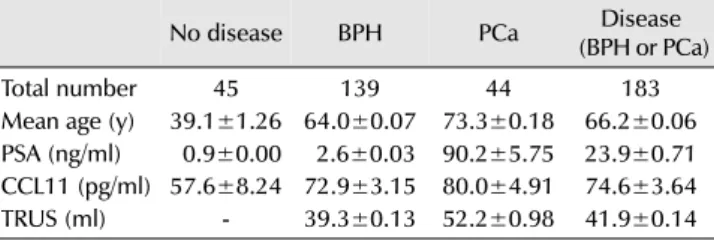
Table 1. Patient demographic, clinical and CCL11 data

No disease BPH PCa Disease

(BPH or PCa)

Total number 45 139 44 183

Mean age (y) 39.1±1.26 64.0±0.07 73.3±0.18 66.2±0.06 PSA (ng/ml) 0.9±0.00 2.6±0.03 90.2±5.75 23.9±0.71 CCL11 (pg/ml) 57.6±8.24 72.9±3.15 80.0±4.91 74.6±3.64

TRUS (ml) - 39.3±0.13 52.2±0.98 41.9±0.14

All the data are expressed as means±standard errors except for total numbers. PSA differed significantly between the three group (Kruskal- Wallis test, p<0.0001). Forty-four with prostate cancer included 8 patients with Gleason scores (GS) <6, 17 patients with GS of 7 and 19 patients with GS of 8 or more.

CCL11: CC-chemokine ligand 11, BPH: benign prostatic hyperplasia, PCa: prostate cancer, PSA: prostate-specific antigen, TRUS: transrectal ultrasonography.

MATERIALS AND METHODS

1. Patient Population and Specimen Collection Between October 2013 and November 2014, a total of 183 men undergoing treatment in the Department of Urology at Hanyang University Seoul Hospital and Guri Hospital were enrolled in this study. Among them, there were 139 men with BPH (mean age, 64.0±0.07 years) and 44 men with PCa (mean age, 73.3±0.18 years).

The inclusion criteria for BPH were as follows: (1) A score of 8 or more according to the International Prostate Symptom Scores; (2) <4 ng/ml of prostate-specific antigen (PSA); (3) >20 ml of prostate volume (measured by transrectal ultrasonography; TRUS); and (4) >4 ng/ml of PSA and no evidence of malignant tumor on TRUS biopsy.

Moreover, PCa patients were only selected if they had undergone a radiologic evaluation to determine their TNM clinical stage. A radiologic evaluation was carried out via chest computed tomography (CT), abdominal CT, prostate magnetic resonance imaging, and whole body bone scan.

The sera were obtained from 139 patients with BPH, 44 with PCa, and 45 male volunteers (mean age, 39.1±1.26 years) who visited Hanyang University International Hospital Health Promotion Center without any history of prostatic disease. Blood samples of 7 ml were collected, and plasma was stored at -70

o

C.

This study was approved by the local Institutional Review Board of Hanyang University, and written informed consent was obtained from all participants (IRB no. HYUH 2013-04-028-006).

2. CCL11 Measurement

The levels of CCL11 were determined with a human CCL11 ELISA kit (R&D Systems, Minneapolis, MN, USA) in accordance with the manufacturer's instructions. For the ELISA experiments, 96-well ELISA plates were coated with 5 g/ml of diluted capture antibody (2 g/ml) and incubated overnight at room temperature. The plates were washed thrice with phosphate-buffered saline (PBS)-Tween 20 (0.05% Tween 20 in PBS [pH 7.0]) followed by the addition of 200 l/well of blocking buffer (reagent diluent). After incubation at room temperature for 1 h, the plates were again washed 3× with PBS-Tween 20, and 80 l of serum was added to each well. After incubation for 2 h at room temperature, the plates were washed thirce with PBS-Tween

20. Following the incubation with 100 l/well of detection antibody (0.2 g/ml) for 2 h at room temperature, the plates were washed 3× with PBS-Tween 20. Streptavidin- HRP (1:200) was added, and the plates were incubated at room temperature for 20 min and washed 3× with PBS-Tween 20. The color was developed by adding 100

l/well of substrate solution (TMB Microwell Peroxidase Substrate System; KPL, Gaithersburg, MD, USA) at room temperature for 20 min. The absorbance was measured with an ELISA reader (Bio-Rad, Hercules, CA, USA) at 450 nm after a 20 min incubation with stop solution (2.5 M H2SO4).

3. Statistical Analysis

IBM SPSS Statistics ver. 21.0 (IBM Co., Armonk, NY, USA) was used for statistical analysis. Differences between the two groups (no disease vs. prostate disease) were analyzed using a Mann-Whitney U test. The differences between the three groups (no disease, BPH, PCa) were analyzed using a Kruskal-Wallis test. The correlation between PSA and CCL11 were analyzed using a Pearson correlation test. The p-values of less than 0.05 were set to be statistically significant. Receiver operator characteristic (ROC) analyses were performed to examine the sensitivity and specificity of CCL11 as a predictor of prostate diseases and to calculate the areas under the curves (AUCs) and confidence intervals. The data are presented as the means±

SEMs, unless otherwise specified.

RESULTS

The study population consisted of 228 subjects; 45

(3)

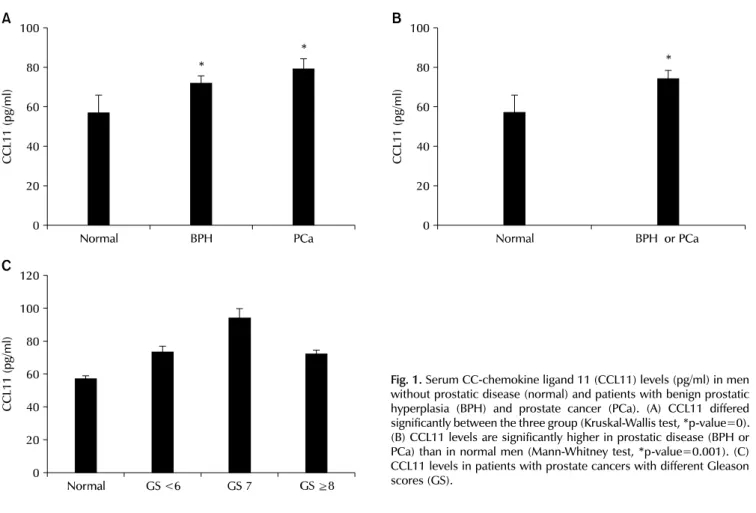
Fig. 1. Serum CC-chemokine ligand 11 (CCL11) levels (pg/ml) in men without prostatic disease (normal) and patients with benign prostatic hyperplasia (BPH) and prostate cancer (PCa). (A) CCL11 differed significantly between the three group (Kruskal-Wallis test, *p-value=0).

(B) CCL11 levels are significantly higher in prostatic disease (BPH or PCa) than in normal men (Mann-Whitney test, *p-value=0.001). (C) CCL11 levels in patients with prostate cancers with different Gleason scores (GS).

controls without prostatic disease (PSA<1 ng/ml), 139 patients with BPH, and 44 with PCa, including 8 patients with Gleason scores (GS) <6, 17 patients with GS of 7, and 19 patients with GS of 8 or more (Table 1).

We enquired if serum CCL11 levels were different between prostatic disease (PCa and BPH) patients and individuals without prostatic disease. The serum CCL11 levels for men without prostatic disease averaged 57.6 pg/ml, whereas those for men with BPH and PCa averaged 72.9 and 80.0 pg/ml, respectively (Table 1, Fig. 1). The CCL11 levels were significantly higher in PCa patients (p=0.012) and in BPH patients (p=0.001) than in healthy participants (Fig. 1A); however, there was no significant difference between the BPH (72.9 pg/ml) and PCa (80.0 pg/ml) levels (Fig. 1A, B).

We also investigated if CCL11 is a predictor of PCa aggressiveness. Thus, we measured CCL11 in PCa patients with different GS, and found that the CCL11 levels in men with GS 6 and with GS 8 or higher were similar: 73.1 pg/ml and 76 pg/ml, respectively. The level measured in patients with GS 7 scores was 94.4 pg/ml, which was actually higher than that measured in patients with GS 6 and GS

8. Therefore, we conclude that CCL11 levels do not differ between individuals with low, intermediate, and high risks of PCa (Fig. 1C).

Moreover, we performed a ROC analysis of serum CCL11 levels to test whether CCL11 might be a marker for distinguishing between prostatic tumors (BPH, PCa) and disease-free prostates. The areas under the ROC curves were 0.661 (p=0.001) and 0.654 (p=0.012) for BPH and PCa, respectively, compared with normal men (Fig. 2).

Additionally, AUC was 0.659 for prostate disease compared with normal men. This suggests that CCL11 can distinguish between prostatic tumorous conditions (BPH, PCa) and normal individuals without prostatic disease. Three AUC levels were ranged from 0.6 to 0.7, which indicate poor accuracy. Further study is required to distinguish the methods between normal and prostate disease.

We note that the PSA levels differed significantly between

the three groups (normal, BPH & PCa), but there was no

correlation between CCL11 and serum PSA levels (by

Pearson correlation).

(4)

Fig. 2. Receiver operating characteristic (ROC) curves for CC-chemokine ligand 11 (CCL11). (A) ROC curves distinguishing between benign prostatic hyperplasia (BPH) and no disease. The optimal cutoff of the CCL11 levels for distinguishing BPH from control (no disease) was determined as 53.1955 using the ROC curve (sensitivity=0.691, 1-specificity=0.422). Area under the curve (AUC) was 0.661, and 95%

confidence interval (CI) was 0.560-0.762, p=0.001. (B) ROC curve distinguishing between prostate cancer (PCa) and no disease. The optimal cutoff of the CCL11 levels for distinguishing PCa from control (no disease) was determined as 52.6195 using the ROC curve (sensitivity=0.659, 1-specificity=0.467). AUC was 0.654, and 95% CI was 0.540-0.768, p=0.012. (C) ROC curve distinguishing between prostatic disease and no disease. The optimal cutoff of the CCL11 levels for distinguishing prostatic diseases from no disease was determined as 53.1955 using the ROC curve (sensitivity=0.683, 1-specificity=0.422).

AUC was 0.659, and 95% CI was 0.562-0.757, p=0.001.

DISCUSSION

BPH, a condition involving the abnormal progressive proliferation of prostatic stromal tissue and the cause lower urinary tract syndrome, is common in elderly men [5,6].

PCa is the second leading cause of cancer deaths in many western countries and accounted for more than 28,000 deaths in the United States in 2013 [7]. However, key questions remain about how best to diagnose this cancer.

Numerous pro-inflammatory cytokines play a major role in inflammatory disease and carcinogenesis.

Inflammation of the prostate, including activation of inflammatory cells and production of cytokines, appears to be an important causal factor in BPH and PCa [8,9].

Thus, various cytokines such as interleukin (IL)-8, IL-1, IL-6, tumor necrosis factor-, CXCL5, CXCL12 have been tried as biomarkers for prostatic diseases [10-12].

Very little is known regarding the potential role(s) of CCL11 in prostate pathology. CCL11 is known as a chemotactic factor that binds to the CCR3 receptor, activates

the mitogen-activated protein kinase pathway, and stimulates cellular invasion by regulating the expression of matrix metalloproteinase-3 [13]. CCL11 has been proposed by two research groups to be a serum marker for PCa; Agarwal et al. [3] suggested that serum CCL11 may be a useful diagnostic tool to help distinguish between prostatic enlargement and PCa among men demonstrating low, but detectable, serum PSA value; Heidegger et al. [4] reported that CCL11 may serve as a diagnostic marker to distinguish between disease-free prostate condition and PCa.

However, most PCa are first found during screening with

a PSA blood test, alone or in combination with a digital

rectal exam, followed by a diagnostic biopsy and potentially

imaging if there is a suspicion of cancer spread. When

PCa is diagnosed, PSA levels are used in tumor staging

and for tracking cancer progression [14]. PSA screening is

associated with a significant decline in prostate cancer-

specific mortality in the US over the past two decades [15,16],

although the recommendation by the United States Pre-

ventive Services Task Force does imply that low serum PSA

(5)

values alone do not reliably predict clinically significant prostate tumors. Therefore, there is a critical need to develop, validate, and determine the utility of other serum transcripts and protein markers as diagnostic markers for PCa [3].

Several markers, including prostate-specific membrane antigen, hepsin, a-methylacyl-coenzyme A racemase, telomerase, serine protease TMPRSS2, d-catenin, and prostate-specific non-coding RNA called prostate cancer gene 3 (PCA3, formerly known as DD3), have been identified and tested to date; these markers, when used alone or in combination with serum PSA, have been determined to be variously useful as diagnostic or prognostic markers of PCa [17-20].

CCL11 is a ligand for the G-protein coupled receptor, CCR3, which is expressed on eosinophils, basophils, and Th2 helper T-cells [21-23]. In addition to its role as a chemo-attractant, CCL11 has been implicated in different eosinophilic inflammatory diseases, such as atopic dermatitis, allergic rhinitis, sinusitis, asthma, ulcerative colitis, and in several other gastrointestinal disorders, as well as in parasitic infections [24-28]. Moreover, the levels of serum or plasma CCL11 as diagnostic or prognostic cancer markers have been described in high-grade renal cell carcinomas, high-risk neuroblastoma, as well as in head and neck small cell carcinomas [29-31].

In this study, BPH and PCa showed a significantly increased CCL11 concentration than normal prostate. In addition, CCL11 of PCa is higher than that of BPH, although there is not a significant difference between the two group. The CCL11 levels do not differ between individuals with low, intermediate, and high risks of PCa classified by the GS.

However, the CCL11 plasma level was reported to increase with age in humans [32,33]. A limitation of our study is that the age of normal men (control group) without prostatic diseases is younger than that of prostatic diseases. The reason for this is that it is difficult to get a serum from prostatic diseases-free men of old age. CCL11 of the normal group showed lower levels than that of prostatic diseases, and the lower levels of CCL11 in normal men would be partially explained by young age. Further study is required to compare the CCL11 levels between prostatic tumor and control men of similar age to get a better understanding of using CCL11 as a biomarker for PCa. Taken together, this result suggested that CCL11 may be a supplementary diagnostic tool to differentiate between normal prostate

and prostate tumor.

CONCLUSIONS

CCL11 may be helpful in distinguishing between normal disease-free prostate and prostatic diseases, such as BPH and PCa.

CONFLICT OF INTEREST

No potential conflict of interest relevant to this article was reported.

ACKNOWLEDGMENTS

This work was supported by the research fund of Hanyang University (HY-2012) and by the National Research Foundation of Korea (NRF) funded by the Korean Govern- ment (MSIP) (NRF-2014R1A2A2A01005449).

REFERENCES

1. Matthews AN, Friend DS, Zimmermann N, Sarafi MN, Luster AD, Pearlman E, et al. Eotaxin is required for the baseline level of tissue eosinophils. Proc Natl Acad Sci U S A 1998;95:6273-8.

2. Solari R, Pease JE, Begg M. Chemokine receptors as therapeutic targets: why aren't there more drugs? Eur J Pharmacol 2015;746:363-7.

3. Agarwal M, He C, Siddiqui J, Wei JT, Macoska JA. CCL11 (eotaxin-1): a new diagnostic serum marker for prostate cancer.

Prostate 2013;73:573-81.

4. Heidegger I, Hofer J, Luger M, Pichler R, Klocker H, Horninger W, et al. Is Eotaxin-1 a serum and urinary biomarker for prostate cancer detection and recurrence? Prostate 2015;75:1904-9.

5. Bianchi-Frias D, Vakar-Lopez F, Coleman IM, Plymate SR, Reed MJ, Nelson PS. The effects of aging on the molecular and cellular composition of the prostate microenvironment. PLoS One 2010;5. doi: 10.1371/journal.pone.0012501.

6. Wei JT, Calhoun E, Jacobsen SJ. Urologic diseases in America project: benign prostatic hyperplasia. J Urol 2005;173:1256-61.

7. Siegel R, Naishadham D, Jemal A. Cancer statistics, 2012. CA Cancer J Clin 2012;62:10-29.

8. St Sauver JL, Jacobsen SJ. Inflammatory mechanisms associated with prostatic inflammation and lower urinary tract symptoms.

Curr Prostate Rep 2008;6:67-73.

9. Sfanos KS, De Marzo AM. Prostate cancer and inflammation:

the evidence. Histopathology 2012;60:199-215.

10. Penna G, Mondaini N, Amuchastegui S, Degli Innocenti S,

(6)

Carini M, Giubilei G, et al. Seminal plasma cytokines and chemokines in prostate inflammation: interleukin 8 as a predic- tive biomarker in chronic prostatitis/chronic pelvic pain synd- rome and benign prostatic hyperplasia. Eur Urol 2007;51:

524-33.

11. Bouraoui Y, Ricote M, Garcia-Tunon I, Rodriguez-Berriguete G, Touffehi M, Rais NB, et al. Pro-inflammatory cytokines and prostate-specific antigen in hyperplasia and human prostate cancer. Cancer Detect Prev 2008;32:23-32.

12. Macoska JA, Begley LA, Dunn RL, Siddiqui J, Wei JT, Sarma AV.

Pilot and feasibility study of serum chemokines as markers to distinguish prostatic disease in men with low total serum PSA.

Prostate 2008;68:442-52.

13. Zhu F, Liu P, Li J, Zhang Y. Eotaxin-1 promotes prostate cancer cell invasion via activation of the CCR3-ERK pathway and upregulation of MMP-3 expression. Oncol Rep 2014;31:2049- 54.

14. Kelly RS, Vander Heiden MG, Giovannucci E, Mucci LA.

Metabolomic biomarkers of prostate cancer: prediction, diag- nosis, progression, prognosis, and recurrence. Cancer Epidemiol Biomarkers Prev 2016;25:887-906.

15. Collin SM, Martin RM, Metcalfe C, Gunnell D, Albertsen PC, Neal D, et al. Prostate-cancer mortality in the USA and UK in 1975-2004: an ecological study. Lancet Oncol 2008;9:445-52.

16. Miller DC, Hollenbeck BK. Missing the mark on prostate- specific antigen screening. JAMA 2011;306:2719-20.

17. Cazares LH, Drake RR, Esquela-Kirscher A, Lance RS, Semmes OJ, Troyer DA. Molecular pathology of prostate cancer. Cancer Biomark 2010;9:441-59.

18. Martin NE, Mucci LA, Loda M, Depinho RA. Prognostic determinants in prostate cancer. Cancer J 2011;17:429-37.

19. Netto GJ, Cheng L. Emerging critical role of molecular testing in diagnostic genitourinary pathology. Arch Pathol Lab Med 2012;136:372-90.

20. Salami SS, Schmidt F, Laxman B, Regan MM, Rickman DS, Scherr D, et al. Combining urinary detection of TMPRSS2:ERG and PCA3 with serum PSA to predict diagnosis of prostate cancer. Urol Oncol 2013;31:566-71.

21. Gerber BO, Zanni MP, Uguccioni M, Loetscher M, Mackay CR, Pichler WJ, et al. Functional expression of the eotaxin receptor CCR3 in T lymphocytes co-localizing with eosinophils. Curr Biol 1997;7:836-43.

22. Uguccioni M, Mackay CR, Ochensberger B, Loetscher P, Rhis S,

LaRosa GJ, et al. High expression of the chemokine receptor CCR3 in human blood basophils. Role in activation by eotaxin, MCP-4, and other chemokines. J Clin Invest 1997;100:1137-43.

23. Sallusto F, Mackay CR, Lanzavecchia A. Selective expression of the eotaxin receptor CCR3 by human T helper 2 cells. Science 1997;277:2005-7.

24. Levina V, Nolen BM, Marrangoni AM, Cheng P, Marks JR, Szczepanski MJ, et al. Role of eotaxin-1 signaling in ovarian cancer. Clin Cancer Res 2009;15:2647-56.

25. Waddell A, Ahrens R, Tsai YT, Sherrill JD, Denson LA, Stein- brecher KA, et al. Intestinal CCL11 and eosinophilic inflamma- tion is regulated by myeloid cell-specific RelA/p65 in mice. J Immunol 2013;190:4773-85.

26. Nolen BM, Lokshin AE. Targeting CCL11 in the treatment of ovarian cancer. Expert Opin Ther Targets 2010;14:157-67.

27. Chao PZ, Chou CM, Chen CH. Plasma RANTES and eotaxin levels are correlated with the severity of chronic rhinosinusitis.

Eur Arch Otorhinolaryngol 2012;269:2343-8.

28. Geiger SM, Jardim-Botelho A, Williams W, Alexander N, Diemert DJ, Bethony JM. Serum CCL11 (eotaxin-1) and CCL17 (TARC) are serological indicators of multiple helminth infec- tions and are driven by Schistosoma mansoni infection in humans. Trop Med Int Health 2013;18:750-60.

29. Byers LA, Holsinger FC, Kies MS, William WN, El-Naggar AK, Lee JJ, et al. Serum signature of hypoxia-regulated factors is associated with progression after induction therapy in head and neck squamous cell cancer. Mol Cancer Ther 2010;9:

1755-63.

30. Johrer K, Zelle-Rieser C, Perathoner A, Moser P, Hager M, Ramoner R, et al. Up-regulation of functional chemokine recep- tor CCR3 in human renal cell carcinoma. Clin Cancer Res 2005;11:2459-65.

31. Egler RA, Li Y, Dang TA, Peters TL, Leung E, Huang S, et al. An integrated proteomic approach to identifying circulating biomarkers in high-risk neuroblastoma and their potential in relapse monitoring. Proteomics Clin Appl 2011;5:532-41.

32. Shurin GV, Yurkovetsky ZR, Chatta GS, Tourkova IL, Shurin MR, Lokshin AE. Dynamic alteration of soluble serum biomarkers in healthy aging. Cytokine 2007;39:123-9.

33. Villeda SA, Luo J, Mosher KI, Zou B, Britschgi M, Bieri G, et al.

The ageing systemic milieu negatively regulates neurogenesis

and cognitive function. Nature 2011;477:90-4.

수치

Table 1. Patient demographic, clinical and CCL11 data
Fig. 1. Serum CC-chemokine ligand 11 (CCL11) levels (pg/ml) in men  without prostatic disease (normal) and patients with benign prostatic  hyperplasia (BPH) and prostate cancer (PCa)
Fig. 2. Receiver operating characteristic (ROC) curves for CC-chemokine ligand 11 (CCL11)

참조

관련 문서

11:20 Preliminary Study on Conceptual Design Analysis of PCCS for SMART Hae Seong Lee, Soon Joon Hong, Yeon Joon Choo, and Jeong Hee Ha(FNC Tech.) Chun Tae Park, Young In Kim,

In the current study, I investigated the association between vascular risk factors as chronic ischemia of the prostate and BPH by conducting experiments to elucidate

Chang Je Park, Kwoen Ho Kang, Sang Ho Na, Young Hee Kim, Ho Jin Ryu, Geun Il Park, and Kee Chan Song (KAERI). Geun-Suk Choi and

Sang-Keun Woo, Yong Jin Lee, WonHo Lee, Min Hwan Kim, Ji Ae Park, In Ok Ko, Jin Su Kim, Jong Guk Kim, Young Hoon Ji, Joo Hyun Kang, Gi Jeong Cheon, Chang Woon Choi, Sang Moo

Min Seok Ko, Bo An Lee, Sung Yong Lee, Yeong Jun Jang, Yoon Jeong Hong, and Sin Kim(JNU) TR-PIV Performance Test for a Flow Field Measurement in a Single Rod Test Section Ju

The aim of this study was to determine the serum levels of the prohormone form of hepcidin, pro-hepcidin, and its relations with iron status and its

Serum uric acid levels and risk for vascular disease in patients with metabolic syndrome... Prevalence if the metabolic syndrome in a Turkish

For my study, this being diagnosed with prostate cancer receiving treatment in patients with complementary and alternative therapies for their experience