Ⅰ. 서 론
뇌성마비는 미성숙한 뇌 병변으로 인하여 운동능력과 자 세조절능력에 장애가 나타나는 비진행성 질환으로(Hong, 2007), 운동조절, 자세조절, 근육 운동 조절을 포함한 다양 한 장애가 나타난다(Stanley, Blair, & Albermann, 2000). 특히 손을 포함한 상지의 기능은 일상생활활동에 참
여하고 작업수행에 있어 필수적이기 때문에 매우 중요하다 (Kim, 1994).
뇌성마비 아동은 발달 초기에 하지에 비해 상지에서 높은 기능적인 수행능력을 보이지만, 균형능력 저하 등으로 인해 점차적으로 상지에서 높은 경직성이 나타난다(Yoo, Chang, Yoon, & Kim, 1999). 또한 편마비 장애가 나타나는 뇌성마 비 아동의 경우 상지기능에서 마비, 근력약화, 감각 저하, 그리고 운동조절의 저하로 인해 하지보다 기능적 회복이 느
교신저자: 박영주([email protected]) ∥*이 연구는 2018년도 세한대학교 연구 지원에 의해 이루어졌음.
접수일: 2018.07.31. ∥ 심사일: (1차: 2018.08.17. / 2차: 2018.09.04.) ∥ 게재확정일: 2018.09.13.
대한감각통합치료학회지 제16권 2호
The Journal of Korean Academy of Sensory Integration 2018 Vol. 16, No. 2
http://dx.doi.org/10.18064/JKASI.2018.16.2.064
국내 뇌성마비 아동의 상지기능 향상을 위한 중재효과에 대한 고찰
박영주
세한대학교 작업치료학과 조교수
국문초록
목적 : 뇌성마비 아동의 상지기능을 향상시키기 위해 국내에서 사용되고 있는 중재방법의 종류와 그 효과를 체계적 고찰방 법을 사용하여 국내에서 사용되는 치료경향을 제시하고자 한다.
연구방법 : 연구 대상은 2008년 이후로 국내학회지에 게재된 연구를 대상으로 하였다. 누리미디어(DBpia), 스콜라 (Scholar), 한국사회과학데이터(KSDC), 학술연구정보서비스(RISS), 그리고 한국학술정보(KISS)의 데이터베이스를 사용하여 ‘뇌성마비’, ‘상지 기능’, ‘손 기능’의 검색어를 사용하였다. 총 12개의 연구로 근거의 질적 수준, 방법론적 질적 수준으로 분석한 후 대상자(Patient), 중재(Intervention), 대조(Comparison), 결과(Outcome)의 PICO로 제시 하였다.
결과 : 분석에 포함된 연구에서 근거기반 실행의 질적 수준은 수준 Ⅳ와 수준 Ⅴ가 가장 많았고, 방법론적 질적 수준은
‘우수’의 연구가 가장 많았다. 대상자는 편마비 아동을 대상으로 한 연구가 가장 많았고, 실험설계는 단일대상연구 및 사례연구가 높았다. 중재의 종류는 강제유도운동치료가 가장 많았고, 평가는 젭슨테일러 손기능 검사 빈도가 높았다.
총 11개의 연구에서 뇌성마비 아동의 상지기능에서 유의한 향상 또는 긍정적인 효과가 나타났다.
결론 : 국내에서 뇌성마비 아동의 상지기능을 향상시키기위해 다양한 중재방법이 시행되어 왔다. 앞으로 마비 유형별에 따른 중재방법에 대한 연구와 근거의 질적수준이 높은 연구가 지속적으로 이루어져야 할 것이다.
주제어 : 뇌성마비, 상지기능, 손 기능, 중재, 체계적 고찰
리게 나타난다(Carr & Shepherd, 2003).
상지와 손의 기능에 장애가 있는 아동은 주변환경이나 활 동경험에 대한 참여가 제한되어 활동을 통해 다양한 감각정 보를 받아들이는 경험이 부족하게 된다. 따라서 상지기능의 제한은 손의 기능뿐만 아니라 아동의 탐색활동이나 놀이, 일 상생활활동, 그리고 학교생활에서도 제한을 받게 된다 (Case-Smith, 2004). 그러므로 뇌성마비 아동에게 있어서 상지기능의 사용 제한은 기능적인 장애뿐만 아니라 역할 수 행과 사회적 참여에 이르기까지 광범위한 제약을 받게 된다.
국내에서 뇌성마비 아동의 상지기능을 향상시키기 위해 다양한 중재방법이 이루어져 왔다. 중재는 상기기능에 영향 을 미치는 체간 근력강화운동(Choi, Park, Lee, & Kim, 2013), 수중에서 치료적 운동을 제공하는 수중 운동치료 (Ko, Oh, Han, Yu, & Jeong, 2008), 환측상지의 움직임 회피현상을 극복하고 환측의 사용을 최대화시키기 위한 강 제유도운동치료(constrained induced movement therapy; CIMT)(Bang & Jang, 2017), 보조도구를 사용하 여 자세교정의 효과로 상기기능을 향상시키는 모듈형 자세 보조도구의 적용(Kong, 2014), 실제 운동참여가 어려운 뇌 성마비 아동의 신체기능을 향상시키는 대안운동 프로그램으 로 가상현실기반 양손활동(bilateral training using virtual reality)중재(Park, Jo, & Lee, 2015)가 제공되었 다. 그리고 감각적인 측면이 강조된 촉각자극 강화 프로그램 (active tactile stimulation reinforcement)(Lee & Song, 2009), 정서적 안정과 능동적인 참여를 촉진하기위해 다양 한 감각을 제공하는 의도적인 다감각환경(snoezelen) 프로 그램(Hwang & Jeong, 2011) 뿐만 아니라, 양측협응을 증 진시키기 위한 상호작용식 메트로놈(interactive metronome) (Jung & Kim, 2013)이 중재로 사용되었다.
최근 작업치료에 영역에서도 임상에 적용가능한 체계적 고찰연구가 많이 증가하고 있다(Bennett, Hoffmann, McCluskey, Coghlan, & Tooth, 2013). 근거 중심의 임상 중재는 체계적인 연구에서부터 외부적 임상근거뿐만 아니라 개인적인 전문 기술을 통합하는데 그 의미가 있기 때문에 (Law & Baum, 1998), 작업치료사는 중재를 선택할 때, 이 전의 연구를 통해 임상적 근거를 확보하는 것이 매우 중요하 다(Law, 2002). 체계적 고찰연구는 임상가들에게 특정 주 제에 대하여 사용 가능한 높은 질적인 근거(high-quality evidence)를 제공한다(Hackett et al., 2014). 그러므로 임 상에서 근거기반 중재를 제공하고자 할때 체계적 고찰연구
를 바탕으로 중재를 실시하는 것은 시간적·경제적으로 도 움이 된다.
뇌성마비 아동을 대상으로 운동기능과 기술에 대한 국외 고찰연구에서 상지기능을 향상시키기 위해 다양한 중재방법 과 그 효과가 제시되었다(Tinderholt Myrhaug, Østensjø, Larun, Odgaard-Jensen, & Jahnsen, 2014). 국내에서 도 뇌성마비 아동을 위한 중재방법에 대한 고찰연구가 이루 어져왔다. 그러나 이러한 고찰연구들은 뇌성마비 아동의 특 정 마비 유형에 대한 중재방법의 효과에 대해 보고하였거나, 특정 중재 효과에 대한 고찰연구가 주로 이루어져왔다 (Hong & Kim, 2012: Kim & Choi, 2013: Park & Hong, 2016). 그러나 뇌성마비 아동의 상지기능을 향상시키기 위 해 국내에서 사용된 중재경향에 대한 전반적인 연구는 최근 10년 동안 이루어지지 않았다. 상지기능은 기능적인 제한 뿐 만 아니라 일상적인 생활 수행에 있어서도 큰 장애 원인 작용 한다(Cauraugh, Light, Kim, Thigpen, & Behrman, 2000). 뇌성마비에서 특정 마비 유형에 따른 중재방법이나, 특정 중재방법에 대한 연구도 필요하지만 국내에서 뇌성마 비 아동을 대상으로 이루어지는 중재에서 전반적인 마비유 형을 파악하고 중재의 빈도를 통해 국내 연구경향을 알아보 는 고찰이 필요하다.
그러므로 본 연구에서는 뇌성마비 아동의 상지기능을 향 상시키기 위해 최근 10년간 국내에서 시행하고 있는 중재방 법의 종류와 그 효과를 제시하고자 한다. 이를 통해 현재 국 내 임상적 중재 경향에 대한 근거를 제시하고, 뇌성마비 아 동의 상지 기능을 향상시키기 위한 근거기반실행 (evidence-based practice)에 대한 기초자료를 제시하고자 한다.
Ⅱ. 연구 방법
1. 검색전략
분석에 사용될 연구를 선정하기 위해 최근 10년간 게재된 연구를 대상으로 하였고, 자료를 수집한 기간은 2018년 1월 부터 2018년 3월 31일까지로 하였다. 검색에 사용된 데이터 베이스는 누리미디어(DBpia), 스콜라(Scholar), 한국사회 과학데이터(KSDC), 학술연구정보서비스(RISS), 그리고 한
국학술정보(KISS)이었다. 검색에 사용된 키워드는 ‘뇌성마 비’, ‘상지 기능’, ‘손 기능’이었고, 최근 10년 동안 게재된 연 구는 연구검색 기간을 기점으로 2008년 1월부터 2018년 3 월까지 게재된 연구를 연구대상으로 하였다.
검색전략에 따라 본 연구의 저자와 체계적 고찰연구 경험 이 있는 작업치료사 1인이 각각 독립적으로 연구 제목과 초 록을 검토하였고, 필요에 따라 원문보기를 실시하여 포함기 준과 배제기준을 토대로 대상 연구를 선정하였다. 본 연구에 서 포함연구를 과학적 방법으로 선택하기위한 질문의 방식 으로 PICO(Patient, Intervention, Comparison, Outcome)를 사용하고, 그에 따른 결과를 제시하고자 한다.
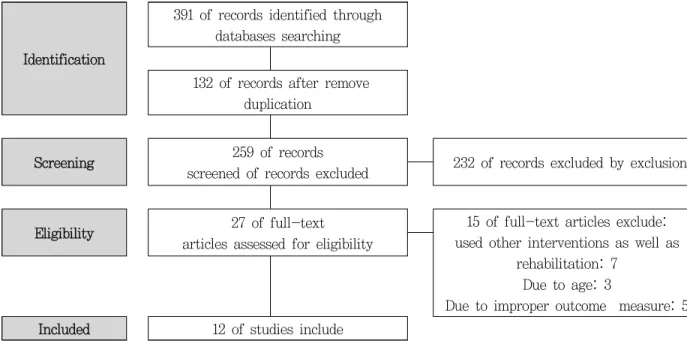
그리고 체계적 고찰방법의 연구절차 및 연구결과를 논리적 으로 기술하기위해 Preferred Reporting Items for Systematic Reviews and Meta-Analyses(PLISMA)의 가이드라인에 따라 진행하였다(Moher, Liberati, Tetzlaff,
& Altman, 2009). 연구에 대한 생명 윤리 위원회의 승인은 필요하지 않았다(Figure 1).
2. 연구대상
본 연구에서 분석에 사용될 대상연구의 포함기준과 배제
기준은 다음과 같다. 포함기준은 (1) 뇌성마비로 진단받은 18 세 이하의 아동을 대상으로 한 연구, (2) 손기능을 포함한 상지기능 향상에 대한 중재를 사용한 연구, (3) 국내에서 중 재가 제공된 연구, (4) 최근 10년 안에 게재된 연구이었다.
배제기준은 (1) 연구대상자가 뇌성마비 이외의 진단을 복합 적으로 받은 경우, (2) 상지기능이외의 운동능력에 대한 중 재를 받은 경우, (3) 외과적 수술이나 약물치료에 대한 연구, (4) 평가도구 신뢰도 타당도 연구, (5) 상관관계 연구, (6) 미술치료 및 음악치료 연구이었다. 그리고 대상연구의 질적 수준을 위해 국내 등재후보지 이상의 연구를 대상으로 분석 하였다.
2. 분석방법
1) 근거의 질적 수준(Level of evidence)
본 연구의 질적 수준을 평가하기 위해 Arbesman, Scheer와 Lieberman(2008)이 제시한 근거기반 실행을 위 한 근거의 계층적 수준(hierarchy of levels of evidence for evidence-based practice)을 사용하였다. 근거수준은 수준 Ⅰ에서 수준 Ⅴ로 계층화 되어있고, 수준 Ⅰ은 체계적 고찰, 메타분석, 무작위 대조군 연구를 포함하고 있다.
Identification
391 of records identified through databases searching
132 of records after remove duplication
Screening 259 of records
screened of records excluded 232 of records excluded by exclusion
Eligibility 27 of full-text articles assessed for eligibility
15 of full-text articles exclude:
used other interventions as well as rehabilitation: 7
Due to age: 3
Due to improper outcome measure: 5 Included 12 of studies include
Figure 1. Diagram on process about searching process in this study
2) 방법론적 질적 수준(Methodological quality)
본 연구의 방법론적 질적 수준을 분석하기위해 Downs &
Black Criteria를 사용하였다(Downs & Black, 1998).
Downs & Black Criteria는 26개의 항목이 5개의 하위범주 (sub-scales)로 나누어져 있다. 연구결과를 이해하는데 충 분한 정보가 제공되었는지를 알아보는 보고(reporting) 10 문항, 연구결과를 일반화 시킬 수 있는지 알아보는 외적 타 당도(external validity) 3문항, 중재와 결과측정 및 연구대 상자에 대한 내적 타당도(internal validity) 13문항, 그리고 파워(power) 1문항으로 구성되어 있다. 점수는 파워는 0∼5 점, 보고에서 1 항목이 0∼5점, 그 외 항목은 0∼1점으로 측 정된다. 결과는 총점이 26점 이상일 때 ‘완벽’, 20∼25점일 경우 ‘우수’, 15점∼19점일 경우 ‘보통’, 그리고 0∼14점일 경 우는 ‘나쁨’(Strong, Jutai, Elizabeth, & Evans, 2008)으 로 나타난다.
Ⅲ. 연구 결과
1. 연구근거의 질적 수준
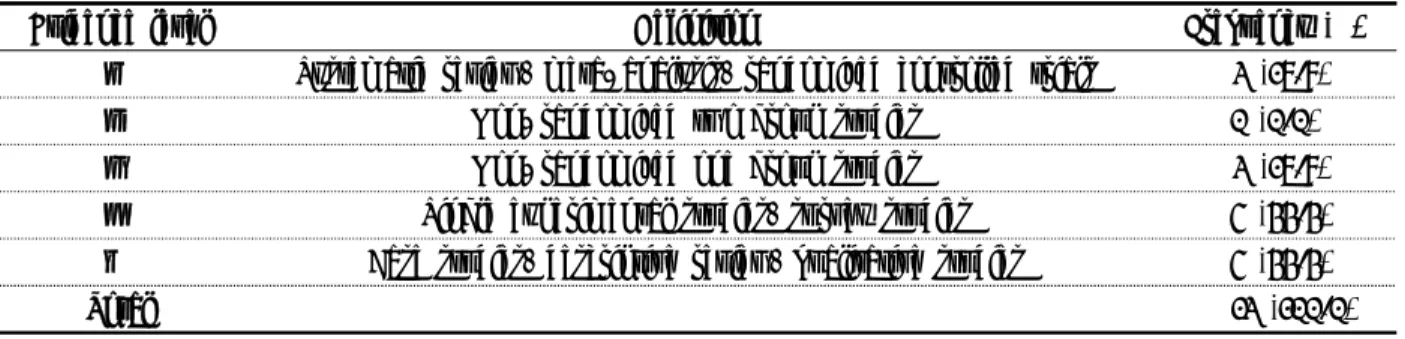
본 고찰연구에서 연구결과 분석에 사용된 연구는 총 12개 이었다. 근거기반실행으로 근거의 수준을 살펴보았을 때, 수 준 Ⅰ이 2개, 수준 Ⅱ가 0개, 수준 Ⅲ이 2개, 수준 Ⅳ가 4개, 그리고 수준 Ⅴ가 4개이었다. 본 연구에서 실험설계는 사례 연구와 단일대상연구가 각각 33.3%로 가장 높았고, 무작위 실험 대조군 연구와 한그룹 전후 비교 연구가 각각 약 16.7%
이었다(Table 1).
2. 연구근거의 질적 수준과 방법론적 질적 수준
뇌성마비 아동을 대상으로 상지기능 향상에 대한 중재 연
구에 대한 최근 10년 간의 경향을 살펴본 결과 총 12개의 논문이 연구대상으로 선정되었다. 자료 수집 시작 년도인 2008년 이후로 해마다 비슷한 수의 연구가 진행되어 왔다.
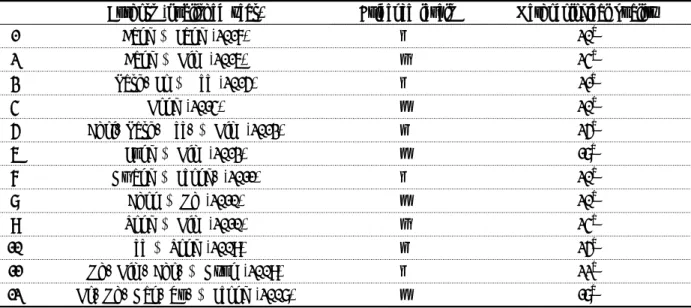
각 연구의 질적 수준을 살펴보았을 때 수준 Ⅰ은 2009년과 2013년에, 수준 Ⅲ은 2010년과 2016년에 이루어졌고, 가장 최근인 2017년에 수준 Ⅴ의 연구가 진행되었다(Table 2). 연 구의 방법론적 질적 수준은 Downs & Black Criteria로 분 석하였다. 그 결과 ‘우수’ 연구는 10개, ‘보통’ 연구는 2개로 나타났다(Table 2).
3. 연구 설계 및 연구대상자
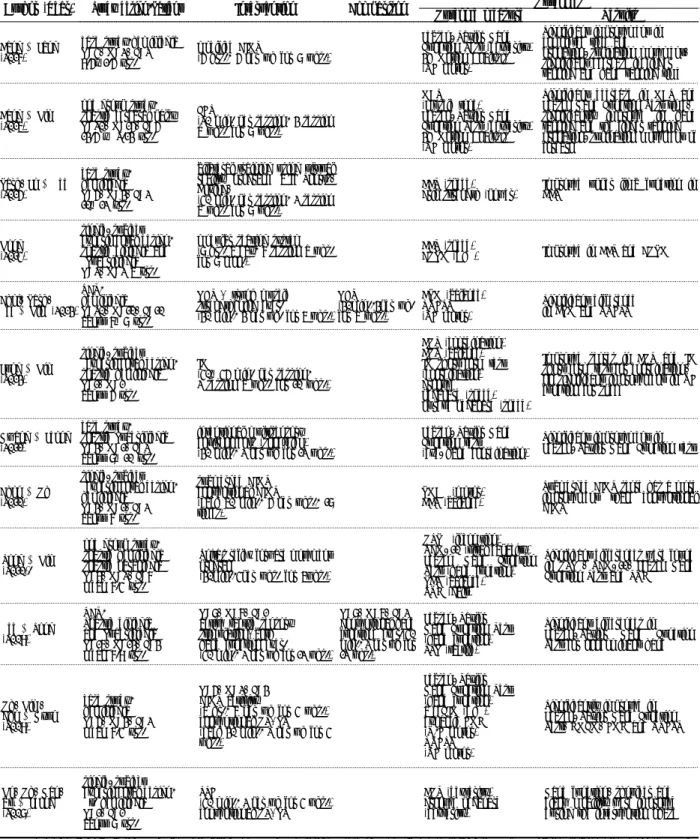
본 연구에서 연구 설계와 연구대상자는 다음과 같다. 연구 설계는 사례연구가 4개, 단일대상연구가 4개로 가장 많았고, 무작위 대조군 실험 연구가 2개, 한 그룹 전후 비교연구가 2개이었다. 연구대상자는 모두 뇌성마비를 진단받은 아동으 로 마비 유형은 경직형 편마비가 8개 연구에서 나타나 가장 높은 빈도를 보였고(66.7%), 그 외 경직형 사지마비, 경직형 양하지마비 이었다. 대상 아동의 평균연령은 8∼10세 사이 가 가장 많았다(66.7%)(Table 3).
4. 상지기능을 향상시키기 위한 중재와 결과측정
본 연구에서 대상자들은 상지기능을 향상시키기 위해 다 양한 치료적 중재를 받았다. 중재는 강제유도 운동치료가 가 장 높은 빈도를 보였고, 다음으로 수중치료, 그 외 가상현실 기반 양손활동, 의도적인 다감각환경(스노즐렌), 상호작용식 메트로놈, 능동적 촉각자극 훈련, 체간근력강화운동, 보이타 의 반사적 전진이동운동, 기능적 전기자극, 그리고 자세보조 도구가 사용되었다. 연구에서 사용된 중재기간은 4주에서 최대 8개월로, 연구방법이나 대상자에 따라 중재 기간은 다
Table 1. Hierarchy of levels of evidence for evidence-based practice
Evidence level Definition Frequency (%)
Ⅰ Systematic review, meta-analysis, randomized controlled trials 2 (16.7)
Ⅱ Non-randomized two group studies 0 (0.0)
Ⅲ Non-randomized one group studies 2 (16.7)
Ⅳ Single experimental studies, survey studies 4 (33.3)
Ⅴ Case studies, descriptive review, qualitative studies 4 (33.3)
Total 12 (100.0)
Table 2. Evidence level and methodological quality of included studies
Authors (published year) Evidence levels Methodological quality
1 Bang & Jang (2017) Ⅴ 20a
2 Bang & Kim (2016) Ⅲ 24a
3 Park, Jo & Lee (2015) Ⅴ 21a
4 Kong (2014) Ⅳ 20a
5 Choi, Park, Lee, & Kim (2013) Ⅰ 25a
6 Jung & Kim (2013) Ⅳ 18a
7 Hwang & Jeong, (2011) Ⅴ 20a
8 Chon & Oh (2010) Ⅳ 20a
9 Song & Kim (2010) Ⅲ 24a
10 Lee & Song (2009) Ⅰ 25a
11 Oh, Kim, Cho, & Hyun (2009) Ⅴ 22a
12 Ko, Oh, Han, Yu, & Jeong (2008) Ⅳ 18a
a
Dawn & Black's criteria
양하게 나타났다.
결과측정을 위해 여러 가지 평가도구가 사용되었다. 상지기 능의 변화를 측정하는 평가도구로, 젭슨테일러 손기능 검사 (Jebsen-Taylor Hand Function test)가 가장 높은 빈도 로 사용되었고(6개), 브로닉스-오세레츠키 운동 적합성 검 사(Bruininks-Oseretsky test of motor proficiency;
BOT)가 3개, 그루브드 페그보드검사(Grooved pegboard test)와 3차원 동작분석(3D Motion Analysis), 상자와 나 무토막 검사(Box and block test; BBT)가 각각 2개 연구에 서 사용되었다. 그 외에도 상기기능의 향상을 측정하기위해 상지기능 검사(Quality of upper extremity skills test;
QUEST), 퍼뷰 페그보드검사(Purdue pegboard), 소아 운 동 활동 측정(Pediatric motor activity log; PMAL)등이 사용되었다. 중재결과 대부분의 연구에서 협응, 속도, 근력, 기능적인 사용면에서 각각 유의한 효과라는 긍정적인 결과 를 보였다. 그러나 Jung과 Kim의 연구(2013)에서는 협응에 서는 유의한 향상을 보였으나 수행속도에서는 효과가 나타 나지 않았다(Table 3).
Ⅳ. 고 찰
본 연구에서는 뇌성마비 아동의 상지기능을 향상시키기
위하여 최근 10년 동안 국내에서 시행되는 중재방법을 알아 보고, 그 효과를 제시하기 위하여 체계적으로 고찰하였다.
문헌을 고찰하는 것은 그 주제의 깊이에 빠르게 접근할 수 있으므로, 체계적 고찰은 문헌을 엄격하게 통합하는 중요한 연구방법이다(Mulrow, Cook, & Davidoff, 1997). 본 연구 에서 대상연구를 선정할 때 과학적인 질문방식의 도구로 PICO를 사용하였고, 그에 따라 대상자, 중재방법, 대조군, 결과 순으로 연구결과를 제시하였다. 그리고 연구결과를 논 리적으로 기술하기위해 본 연구에서는 PLISMA를 사용하였 다. PLISMA는 체계적 고찰 연구를 보고하는 방법에 대하여 가이드라인을 제시해주고, 전반적인 연구 흐름에 있어서 필 요한 사항을 확인하도록 도와주는 템플릿이다. PLISMA 체 크리스트를 통해 체계적 고찰 연구를 작성할 때 포함해야 할 항목을 확인할 수 있다(Moher et al., 2009).
일반적으로 체계적 고찰에서 대상연구를 높은 수준의 무 작위 대조군 실험 설계를 선호한다. 그러나 국내에서 아동을 집단으로 연구하기에 임상적으로 어려울 뿐만 아니라(Lee, Park, & Kim, 2000), 다양한 환경적 제약으로 비무작위 실험설계 연구에 대한 평가도 필요하다. 그러므로 본 연구에 서는 근거기반 실행(evidence-based practice)으로 근거의 질적 수준을 평가하였고(Arbesman et al., 2008), Downs
& Black Criteria로 방법론적 질적 수준을 평가하였다.
Downs & Black Criteria는 무작위 실험설계뿐만 아니라 비무작위 실험설계에서 방법론적 질적 수준을 평가하기 위
Table 3. Summary of included studies
Author (Year) Study design/Patient Intervention Comparison Outcomes
Outcome measure Results
Bang & Jang (2017)
case study/hemiplegia N=4, M=2, F=2 9.5±1.5 yrs.
modified CIMT
(5 hrs./ 5 per wk for 8 wks.)
Jebsen-Taylor Hand Function Test (dexterity) 3D Motion Analysis (UE motor)
Significant improvement in completed time and
pronation-supination movement, significant decrease in finger tapping and hand tapping time
Bang & Kim (2016)
one group study/
spastic cerebral palsy N=20, M=15, F=5 13.5 ± 2.13 yrs.
FES
(20 min. per session/ 3 session a wks. for 8 wks.)
MAS (muscle tone) Jebsen-Taylor Hand Function Test (dexterity) 3D Motion Analysis (UE motor)
Significant decrease in MAS and Jebsen Hand Function Test time, significantly improved in hand tapping and the finger tapping pronation-supination movement of forearm
Park, Jo & Lee (2015)
case study/
hemiplegia N=5, M=3, F=2 10∼12 yrs.
bilateral training using virtual reality program: WII Sports, Boxing,
(40 min. per session/ 2 session a wks. for 8 wks.)
BBT (speed)
grip strength (power) Improved upper limb function in BBT
Kong (2014)
single-subject experimental design/
spastic diplegia and quadriplegia N=2, M=2 6 yrs.
modular seating system (8 hrs. a day/ 7 session a wks.
for 8 mon.)
BBT (speed)
COPM (ADL) Improved in BBT and COPM
Choi, Park, Lee & Kim (2013)
RCT/ hemiplegia N=20, M=10, F=10 about 7∼8 yrs.
NDT + trunk muscle strengthening exer.
(30 min./ 3 per wk. for 6 wks.) NDT
(30min./3per wk.
for 6 wks.)
BPM (balance) QUEST (UE motor)
Significant difference in BPM and QUEST
Jung & Kim (2013)
single-subject experimental design/
spastic hemiplegia N=1, M=1 about 5 yrs.
IM (40∼45 min. per session/
2 session a wks. for 10 wks.)
BOT (coordination) BOT (balance) IM short form test (coordination) grooved pegboard (speed) purdue pegboard (speed)
Improved scores in BOT and IM short form test for coordination, no significant improvement in UE function for speed
Hwang & Jeong (2011)
case study/
spastic quadriplegia N=3, M=1, F=2 about 8∼10 yrs.
intentional multisensory environments (snoezelen) (30 min./ 2 per wk for 12 wks.)
Jebsen-Taylor Hand Function test (eye-hand coordination)
Significant improvement in Jebsen-Taylor Hand Function test
Chon & Oh (2010)
single-subject experimental design/
hemiplegia N=3, M=1, F=2 about 7 yrs.
submerged CIMT conventional CIMT
(each 60 min./ 5 per wks./ 18 times)
PMAL (motor) BBS (balance)
Submerged CIMT score has a more improvement than conventional CIMT
Song & Kim (2010).
one group study/
spastic hemiplegia spastic paraplegia N=9, M=2, F=7 mean 7.4 yrs.
Vojta's reflex forward movement program
(30min./4per wks. for 6wks.)
OSPL (locomtion) VCM-10 (vital capacity) Jebsen Hand Function Test (hand function) PBS (balance) TUG (gait)
Significant differences were found in OSPL, VCM-10, Jebsen Hand Function Test and TUG
Lee & Song (2009)
RCT/
Spastic diplegia and quadriplegia N=16, M=13, F=3 mean 7.9 yrs.
N=8, M=7, F=1 active tactile sensory stimulation+both hand function exer.
(40 min./ 2 per wk for 12 wks.)
N=8, M=6, F=2 Conventional hand function exer.(40 min./ 2 per wk for 12 wks.)
Jebsen-Taylor Hand Function Test (hand function) SSP (tactile)
Significant differences in Jebsen-Taylor Hand Function Test for nondominant hand
Oh, Kim, Cho & Hyun (2009)
case study/
hemiplegia N=5, M=3, F=2 mean 7.4 yrs.
N=5, M=2, F=3 CIMT activity
(6 hr./ 7 per wk for 4 wks.) conventional OT+PT (each 30 min./ 2 per wk for 4 wks.)
Jebsen-Taylor Hand Function Test (hand function) WeeFIM (ADL) dynamic EMG (U/E motor) QUEST (UE motor)
Significantly improved in Jebsen-Taylor Hand Function Test, GMFM, EMG and QUEST
Ko, Oh, Han, Yu & Jeong (2008)
single-subject experimental design/
Lt. hemiplegia N=1, F=1 about 8 yrs.
SSE
(40 min./ 2 per wk for 4 wks.) conventional OT+PT
BOT (dexterity) grooved pegboard (dexterity)
Hand function, shoulder and elbow mobility were improved during the intervention phase
ADL: Activities of daily living, BBT: box and block test, BOT: Bruininks-Oseretsky test of motor proficiency, BPM: Balance performance monitor, CIMT:
Constrained induced movement therapy, COPM: Canadian occupational performance measure, EMG: electromyogram, exer.: exercises, F: Female, FES:
Functional electrical stimulation, FIM: Functional independence measure, GMFM: Gross motorfunction measure, hr.: hour, hrs.: hours, IM: Interactive metronome, M: Male, MAS: Modified ashworth scale, min.: minute, mon.: month, NDT: Neurodevelopmental treatment, N: Number, , OSPL: Ontogenesis spontaneous pathologic locomotion, OT: Occupational therapy, PBS: Pediatric Berg’s balance scale, PICO: patient intervention comparison outcome, PMAL:
pediatric motor activity log, PT: Physical therapy, QUEST: Quality of upper extremity skills test, RCT: Randomized controlled trials, SSE: submerged
symmetrical exercise, SSP: short sensory profile, TUG: Time up and go test, UE: upper extremity, wk.: week, wks.: weeks, yrs.: years
해 개발된 체크리스트로 유용하게 사용되고 있다(Downs et al., 1998). 본 연구에서는 연구저자와 체계적 고찰 연구 경 험이 있는 1인의 저자가 분석할 대상연구를 선정하여 편향 (bias)을 최소화 하기위하여 노력하였다. 대상연구를 선정하 는 과정에서 서로간의 이견이 있을 경우 충분한 논의와 분석 을 하였고 최종적으로 포함된 연구는 총 12개이었다.
국내에서 뇌성마비 아동의 상지기능을 향상시키기 위한 다양한 중재방법이 사용되었다. 근력을 강화시키는 교정적 인 접근에서 환경수정이나, 보조도구, 기능적 전기자극을 사 용하는 적응적 접근뿐만 아니라, 전형적인 재활치료 이외의 미술치료와 음악치료에 이르기까지 다양한 중재방법이 소개 되었다. 본 연구에서는 선정기준을 재활치료의 영역에서 치 료사가 사용할 수 있는 중재방법을 중심으로 분석하고자 하 였다. 본 연구에서 실험설계는 단일대상연구(33.3%)와 사례 연구(33.3%)가 가장 높게 나타났다. 국내에서 아동에 대한 집단연구는 실시하기 어려운 환경과, 개별 아동에 따른 중재 효과를 밝혀내기에는 단일대상연구가 적합한 연구방법이기 때문에(Lee, et al, 2000) 이와 같은 결과가 나타난 것으로 보인다. 뇌성마비 아동의 자세조절 향상에 대한 국내 고찰연 구에서 대상자의 마비유형은 경직성 양하지 마비의 비율이 가장 높게 나타난 반면(Park et al., 2016), 본 연구에서는 편마비 아동이 가장 높은 비율을 차지하였다(66.7%). 이는 연구주제가 다르고 연구 대상자 모집과정에서 연구참여에 동의한 자의 비율 차이로 인한 것으로 보인다.
본 연구에서 상기기능 향상을 위해 제공된 중재는 강제유 도 운동치료와 수중치료를 비롯하여 가상현실기반 양손활 동, 의도적인 다감각환경(스노즐렌), 상호작용식 메트로놈, 능동적 촉각자극 훈련 등 다양한 중재방법이 사용되었다. 국 외 뇌성마비 아동의 손기능 향상에 대한 고찰연구에서 주로 사용된 중재는 강제유도 운동치료로 본 연구와 동일한 연구 결과를 보였고, 그 외에도 집중적인 신경발달치료(NDT)와 보조기사용(casting)이 이었다. 연구의 결과측정을 위해 다 양한 상지기능 평가도구가 사용되었다. 본 연구에서는 젭슨 테일러 손기능 검사가 가장 높은 빈도로 사용되었고, 그 외 브로닉스-오세레츠키 운동 적합성 검사(BOT), 그루브드 페 그보드검사, 3차원 동작분석(3D Motion Analysis), 상자와 나무토막 검사(BBT), 상지기능 검사(QUEST), 퍼뷰 페그보 드검사, 소아 운동 활동(PMAL) 측정등이 사용되었다. 국외 고찰연구에서는 브로닉스-오세레츠키 운동 적합성 검사 (BOT), 상자와 나무토막 검사(BBT), 상지기능 검사
(QUEST), 소아 운동 활동(PMAL) 측정등은 동일하게 사용 되었으나, 젭슨테일러 손기능 검사의 사용은 매우 낮았고, 그 밖에 피바디운동평가도구(Peabody developmental motor scale; PDMS)를 사용하여 평가하였다(Tinderholt Myrhaug et al., 2014). 아동의 경우 상지기능을 평가하기 위한 다양한 평가도구가 있다. 몇몇 평가도구의 사용빈도에 서 차이가 나타나는 이유는 치료적 환경뿐만 아니라, 문화적 차이 및 치료사의 성향등의 차이에 따른 것으로 사료된다.
본 연구의 제한점은 다음과 같다. 첫째, 뇌성마비 아동에 대한 전반적인 상지기능 향상에 대한 중재를 제시하여 마비 유형별에 따른 중재방법 근거가 부족하였다. 편마비 아동을 대상으로 한 연구비중이 높아 연구 결과를 모든 뇌성마비 아 동에게 일반화하기에는 제한점이 있다. 둘째, 분석된 논문의 수가 적은 반면 다양한 중재가 사용되어 특정 중재방법에 대 한 프로토콜을 제시하기에는 어려움이 있었다. 셋째, 연구에 포함된 연구들 중에 높은 근거수준의 연구가 부족하였다. 따 라서 본 연구 결과로 현재의 임상분야의 중재형태를 일반화 하기에는 다소 제한점이 있다. 체계적 고찰의 경우 기술적으 로 가장 근거 수준이 높은 무작위 임상 실험설계를 분석논문 으로 채택할 때 높은 임상적 근거를 가지게 된다(Hong et al., 2012). 앞으로 국내 임상에서 근거기반 중재를 사용하 기 위해 연구의 근거 수준이 높아져야 할 것이다.
Ⅴ. 결 론
본 연구는 뇌성마비 아동의 상지기능 향상을 위해 국내에 서 사용되고 있는 중재방법의 종류와 그 효과를 제시하여 임 상에서 근거기반으로 사용할 수 있도록 도움을 주고자 하였 다. 최근 10년 동안 국내에서 사용된 연구를 기반으로 살펴 본 결과 근거 수준은 Ⅳ, Ⅴ가 가장 빈번하게 사용되었다.
방법론적 질적 수준은 ‘우수’가 가장 높았고, 다음으로 ‘보통’
순이었다. 중재에 사용된 실험설계는 사례연구와 단일대상 연구가 가장 높게 사용되었고, 대상자 유형은 편마비 아동이 가장 높은 비중을 차지하였다. 중재방법으로는 강제유도 운 동치료가 가장 빈번하게 사용되었고, 결과측정에서는 상지 기능의 민첩성에 대한 평가가 높았고, 연구결과 많은 연구에 서 상지기능에서 향상을 나타내었다.
앞으로 마비 유형별 상지기능 향상을 위한 중재방법에 대
한 연구가 진행되어야 할 것이다. 그리고 뇌성마비 아동에 대한 양적인 연구뿐만 아니라 근거 수준이 높은 연구가 지속 적으로 이루어져야 할 것이다.
참고문헌
Arbesman, M., Scheeler, J., & Lieberman, D. (2008).
Using AOTA's critically appraised topic (CAT) and critically appraised paper (CAP) series to link evidence to practice. OT practice, 13(5), 18-22.
Bang, H. S., & Jang, S. H. (2017). The effects of modified constraint-induced movement therapy on hand functions of children with hemiplegic cerebral palsy. Journal of Korean Society of Community Based Occupational Therapy, 7(1), 25-35.
http://dx.doi.org/10.18598/kcbot.2017.07.01.04 Bang, H. S., & Kim, D. H. (2016). The effects of
functional electrical stimulation on hand function of children with spastic cerebral palsy.
Journal of Korean Academy of Sensory Integration, 14(2), 1-10.
Bennett, S., Hoffmann, T., McCluskey, A., Coghlan, N., & Tooth, L. (2013) Systematic reviews informing occupational therapy. American Journal of Occupational Therapy, 67(3), 345–
354.
Carr, J., & Shepherd, R. (2003). Stroke rehabilitation:
Guidelines for exercise and training to optimize motor skill. London: Elsevier Science.
Case-Smith, J. (2004). Occupational therapy for children. St. Louis: Mosby.
Cauraugh, J., Light, K., Kim, S., Thigpen, M., &
Behrman, A. (2000). Chronic motor dysfunction after stroke: Recovering wrist and finger extension by electromyography-triggered neuromuscular stimulation. Stroke, 31(6), 1360-1364.
Choi, Y. C., Park, S. J., Lee, M. H., & Kim, J. S.
(2013). The effects of trunk muscle strengthening exercises on balance performance of sitting posture and upper extremity function of children with spastic diplegic cerebral palsy.
Journal of the Korean Society of Physical Medicine, 8(1), 117-125. http://dx.doi.org/10.0000/
kspm.2013.8.1.117
Chon, S. C., & Oh, D. W. (2010). The effects of dubmerged constraint-induced movement therapy on upper limb function and activities of daily living for children with hemiplegic cerebral palsy. Journal of Korean Society of Occupational Therapy, 18(2), 121-131.
Downs, S. H., & Black, N. (1998). The feasibility of creating a checklist for the assessment of the methodological quality both of randomized and non-randomized studies of health care interventions. Journal of Epidemiology Community Health, 52, 377-384.
Hackett, K., Newton, J., Rapley, T., Deane, K., Deary, V., & Ng, W. (2014). Systematic reviews of occupational therapy interventions: Summarizing research evidence and highlighting the gaps.
British Journal of Occupational Therapy, 77(9), 479-482.
Hong, J. S. (2007). Cerebral palsy treatment ideas from normal development. Seoul: Koonja Publishing, Inc.
Hong, S. Y., & Kim, K. M. (2012). A systematic review of modified constraint-induced movement therapy in children with hemiplegic cerebral palsy. Journal of Academy of Sensory Integration, 10(2), 11-22.
Hwang, K. C., & Jeong, J. S. (2011). Effects of intentional multisensory environments (snoezelen) on eye-hand coordination in children with cerebral palsy. Journal of Korean Society of Occupational Therapy, 19(1), 69-81.
Jung, J. H., & Kim, S. K. (2013). The effects of interactive metronome on bilateral coordination,
balance, and upper extremity function for children with hemiplegic cerebral palsy:
Single-subject research. Journal of Korean Society of Occupational Therapy, 21(2), 37-48.
Kim, E. J., & CHoi, Y. I. (2013). A systematic review and meta-analysis of sensory integration intervention studies in children with cerebral palsy. Journal of Digital Convergence, 11(4), 383-389.
Kim, M. Y. (1994). A study of manual functional test for CVA. Journal of Korean Society of Occupational Therapy, 2(1), 19-26.
Ko, M. S., Oh, D. W., Han, S. W., Yu, B. K., &
Jeong, J. H. (2008). Effect of submerged upper limb symmetrical exercise on the functionality of upper limb in hemiplegic cerebral palsy. Journal of Korean Society of Occupational Therapy, 16(1), 67-76.
Kong, J. Y. (2014). The effect of modular seating system to hand function and occupational performance. Journal of Rehabilitation Research, 18(1), 379-395.
Law. M. (2002). Introduction to evidence-based practice. In M. Law (Ed.), Evidence-based rehabilitation: A guide to practice (pp.3-12).
Thorofare, NJ:SLACK.
Law. M., & Baum, C. (1998). Evidence-based occupational therapy. Canadian Journal of Occupational Therapy, 65, 131-135.
Lee, N. H., & Song, B. H. (2009). The effect of active tactile stimulation reinforcement on hand function of the children with cerebral palsy.
Korean Journal of Physical and Multiple Disabilities, 52(3), 1-17.
Lee, S. H., Park, E. H., & Kim, Y. T. (2000). Single subject research in educational and clinical settings. Seoul: Hakjisa.
Moher, D., Liberati, A., Tetzlaff, J., & Altman, D. G.
(2009). Preferred reporting items for systematic reviews and meta-analyses: The PRISMA
statement. Physical Therapy, 89, 870-880.
Mulrow, C. D, Cook, D. J, & Davidoff, F. (1997).
Systematic reviews: Critical links in the great chain of evidence. Annals of Internal Medicine, 126(5), 389-391.
Oh, J. L., Kim, C. S., Cho, B. J, & Hyun, G. S.
(2009). The effect of constraint-induced exercise therapy for upper extremity muscle function in hemiplegic cerebral palsy. Journal of Sport and Leisure Studies, 35(2), 1003-1010.
Park, G. T., Jo, G. R., & Lee, Y. H. (2015). The effects of bilateral training using virtual reality program on children with cerebral palsy. Korean Journal of Adapted Physical Activity, 23(3), 103-117.
Park, Y. J., & Hong, E, K. (2016). Effects of exercise interventions on postural control for children with cerebral palsy in Korea: A systematic review. Journal of Korean Academy of Sensory Integration, 14(2), 46-57.
Song, C. H., & Kim, H. J. (2010). The effect of vojta’s reflex forward movement on the ontogenesis spontaneous pathologic locomotion, vital capacity, hand function, balance and gait in children with spastic cerebral palsy. Journal of Special Education & Rehabilitation Science, 49(1), 89-111.
Stanley, F. J., Blair, E., & Albermann, E. (2000).
Cerebral palsies: Epidemiology and causal pathways (Vol. 151). New York: Cambridge university Press.
Strong, J. G., Jutai, J. W., Elizabeth, R. M., & Evans, M. (2008). Driving and low vision: An evidence-based review of rehabilitation. Journal of Visual Impairment and Blindness, 102, 410-419.
http://dx.doi.org/10.5014/ajot.2013.005660.
Tinderholt Myrhaug, H., Østensjø, S., Larun, L., Odgaard-Jensen, J., & Jahnsen, R. (2014).
Intensive training of motor function and functional skills among young children with
cerebral palsy: A systematic review and meta-analysis. BMC Pediatrics, 14(292), 1-19.
http://dx.doi.org/10.1186/s12887-014-0292-5.
Yoo, E. Y., Chang, K. Y., Yoon, H. S., & Kim, S. A.
(1999). The effect of hip flexion positioning on hand function in children with cerebral palsy.
Journal of Korean Society of Occupational Therapy, 7(1), 38-45.
Abstract
Effects of Therapeutic Interventions on Upper Extremity Function Among Children With Cerebral Palsy in Domestic: A Systematic Review
Park, Young-Ju, Ph.D. O.T.
Dept. of Occupational Therapy, Sehan University
Objective : The purpose of this study is to examine the effects of therapeutic interventions on upper extremity function of children with cerebral palsy using systematic review methods and to suggest intervention trends in Korea.
Methods : The subjects of the study were the researches published in the Korean Journal since 2008. Total 12 studies were selected through Korean research database engine such as DBpia, Scholar, KSDC, KISS and RISS for the systematic review. Key words were ‘cerebral palsy’, ‘upper extremity function’ and ‘hand function’.
The results of this study were analyzed by qualitative level and methodological quality level of evidence, and the results of each study were analyzed according to the PICO approach, that is Patient, Intervention, Comparison and Outcome.
Results : For the level of evidence, Grade Ⅳ and Ⅴ were most frequent. In terms of methodological quality, majority of the studies showed ‘Fair’ level. The subjects were the children with hemiplegia, and Single-subjects designs and case studies were frequent experimental design. Constraint-induced movement therapy (CIMT) was most frequently conducted among the intervention studies, and Jebsen-Taylor Hand Function Test was most frequently used evaluation tool. Eleven studies showed that the upper limb functions were significantly improved or were positively effective.
Conclusion : Various intervention methods have been implemented to improve the upper limb functions of children with cerebral palsy. In the future, studies on intervention methods based on the type of paralysis and studies with high quality of evidence should be conducted in Korea.
Key words : cerebral palsy, hand function, intervention, systematic review, upper extremity function