I. Introduction
Temporomandibular joint ankylosis (TMJA), arising as a result of fibrous or bony fusion of the condylar head to the glenoid fossa, is a formidable problem for the patient and a challenge to the surgeon 1 . This disorder is characterized by the restriction of mandibular movements resulting in dif- ficulties in chewing, speech impairment, facial deformity, airway compromise, and psychosocial problems, especially
in younger individuals 2 . Trauma and infection are the lead- ing causes; however, TMJA can also occur following TMJ surgery and systemic diseases, like rheumatoid arthritis 3 . The mainstay of treatment for TMJA across the world is surgery;
however, the choice of technique and sequence of manage- ment vary among surgeons and institutions. The objectives of this review are:
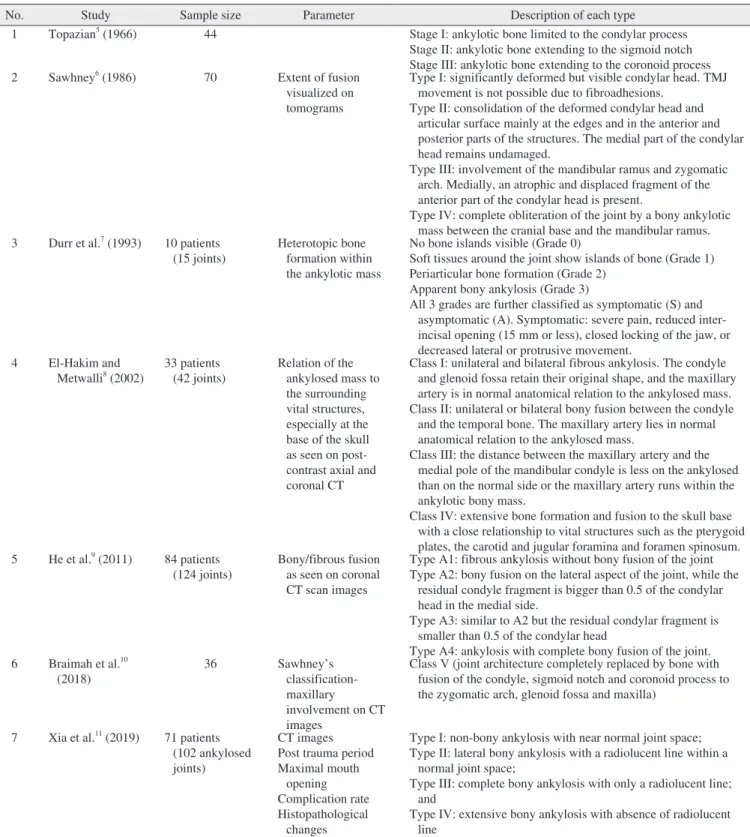
1) To review the existing classification systems proposed for TMJA.
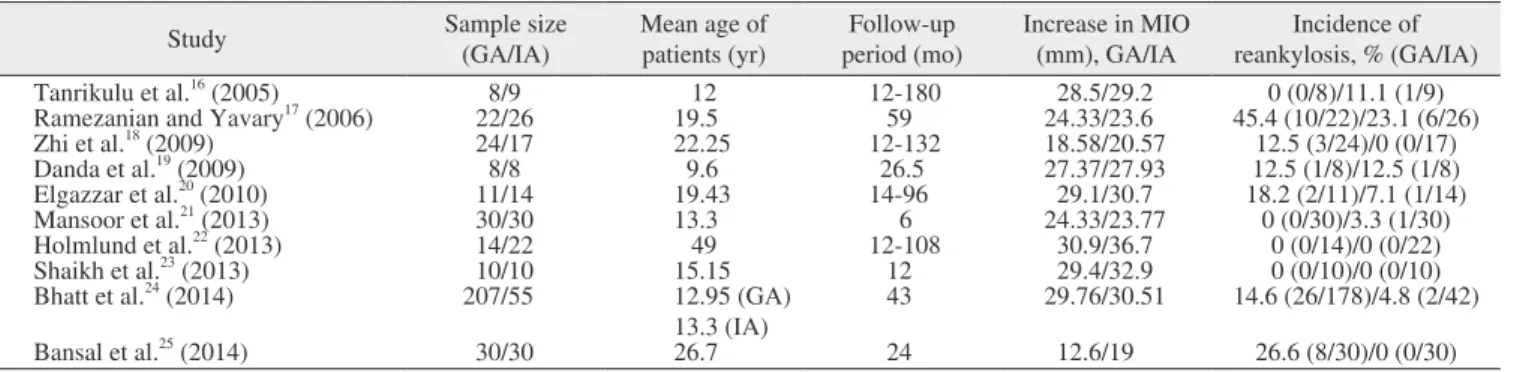
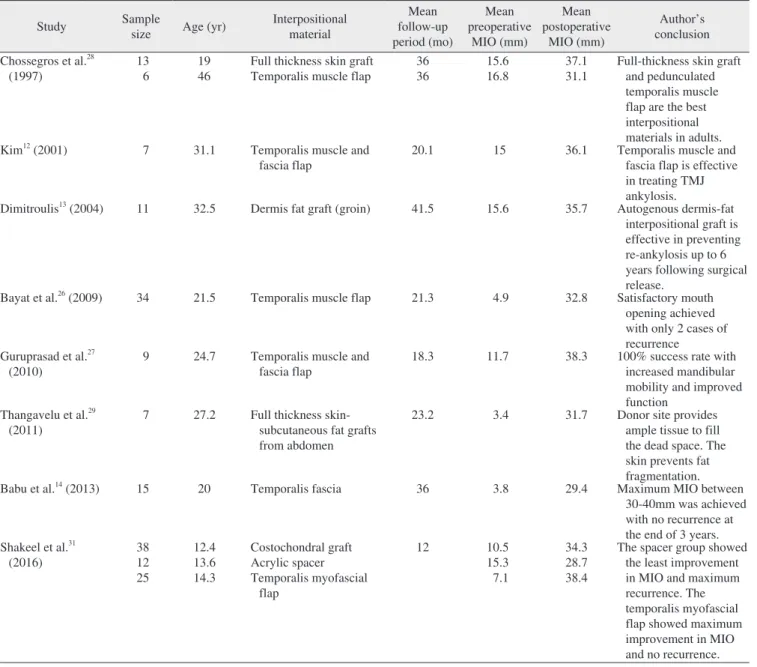
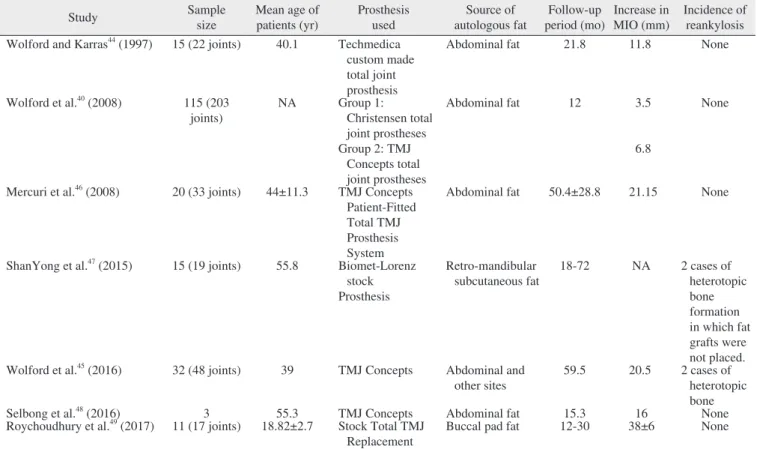
2) To compare the postoperative maximal incisal opening (MIO) distance between the upper and lower incisal edges during maximal opening and the recurrence rates of gap ar- throplasty (GA) – the creation of a gap between the ramus and glenoid fossa following the resection of the ankylotic mass, interpositional arthroplasty (IA) – interpositioning an autogenous/alloplastic material in the gap created following GA to prevent contact between the bony surfaces, and joint reconstruction methods.
This is an open-access article distributed under the terms of the Creative Commons Attribution Non-Commercial License (http://creativecommons.org/
licenses/by-nc/4.0/), which permits unrestricted non-commercial use, distribution, and reproduction in any medium, provided the original work is properly cited.
CC