• 검색 결과가 없습니다.

Gomisin A Ameliorates Endoplasmic Reticulum Stress-induced Hepatic Steatosis

N/A
N/A
Protected

Academic year: 2021

Share "Gomisin A Ameliorates Endoplasmic Reticulum Stress-induced Hepatic Steatosis"

Copied!
8
0
0

로드 중.... (전체 텍스트 보기)

전체 글

(1)

Gomisin A Ameliorates Endoplasmic Reticulum Stress-induced Hepatic Steatosis

Ye-Rang Yun

1,2

and Myeong Ho Jung

1,2

*

1

Division of Longevity and Biofunctional Medicine, School of Korean Medicine, Pusan National University, Yangsan 626-870, Korea

2

Healthy Aging Korean Medical Research Center, School of Korean Medicine, Pusan National University, Yangsan 626-870, Korea Received December 29, 2016 /Revised January 12, 2017 /Accepted January 12, 2017

Previously, we have shown that Schisandra chinensis (Turcz.) Baill. (S. chinensis) has a protective effect against endoplasmic reticulum (ER) stress-induced hepatic steatosis. Gomisin A is a bioactive phytoes- trogen derived from S. chinensis. In the present study, the in vitro and in vivo effects of gomisin A on ER stress and hepatic steatosis were investigated. We quantified the expression of markers of ER stress, including glucose regulated protein 78 (GRP78), C/EBP homolog protein (CHOP), and X-box- binding protein-1 (XBP-1), in HepG2 cells treated with tunicamycin or palmitate. Tunicamycin treat- ment in HepG2 cells induced the expression of markers of ER stress, including GRP78, CHOP, and XBP-1c. However, treatment with gomisin A reduced the expression of markers of ER stress. These inhibitory effects were also observed in palmitate-incubated HepG2 cells. The in vivo inhibitory effects of gomisin A were assessed in mice injected with tunicamycin or fed with a high fat diet (HFD). Gomisin A reduced the expression of markers of ER stress and decreased triglyceride levels in the livers of mice after tunicamycin injection or HFD feeding. Furthermore, gomisin A decreased the expression of inflammatory genes in palmitate-incubated HepG2 cells and the liver of HFD-fed obese mice. These results suggest that gomisin A inhibits ER stress and ameliorates hepatic steatosis induced by ER stress.

Key words : Endoplasmic reticulum (ER) stress, gomisin A, hepatic steatosis, high fat diet, inflammation

*Corresponding author

*Tel : +82-51-510-8468, Fax : +82-51-510-8437

*E-mail : [email protected]

This is an Open-Access article distributed under the terms of the Creative Commons Attribution Non-Commercial License (http://creativecommons.org/licenses/by-nc/3.0) which permits unrestricted non-commercial use, distribution, and reproduction in any medium, provided the original work is properly cited.

Journal of Life Science 2017 Vol. 27. No. 2. 233~240 DOI : https://doi.org/10.5352/JLS.2017.27.2.233

Introduction

The endoplasmic reticulum (ER) plays critical roles in the synthesis of secreted and membrane proteins by mediating protein folding, production of lipids and sterols, and the storage of intracellular Ca

2+

[22]. However, pathological fac- tors that disrupt ER homeostasis lead to the accumulation of unfolded protein in the ER lumen, provoking ER stress.

Cells usually survive early stress by attenuating protein translation, removing unfolded proteins, and upregulating protein chaperons via the unfolded protein response (UPR) [22]. However, prolonged ER stress can lead to cell death and cause several diseases including ischemia/reperfusion injury, heart disease, and diabetes [1, 3, 23, 26]. Recent stud- ies show that hepatic ER stress is observed in metabolic dis- eases such as obesity and diabetes [1, 3, 23, 26]. ER stress contributes to development of insulin resistance and hepatic steatosis in non-alcoholic fatty liver disease (NAFLD) [2, 17,

18, 20].

NAFLD is a common hepatic disorder that is charac- terized by excessive lipid accumulation in the liver. The first stage consists of hepatic steatosis caused by triglyceride (TG) accumulation in hepatocytes. Symptoms range from simple hepatic steatosis to steatohepatitis, fibrosis, and hep- atocarcinoma[7]. Because the prevalence of NAFLD is in- creasing, it is necessary to develop agents that can prevent hepatic lipid accumulation and treat NAFLD-associated hep- atic disorders. It has been reported that ER stress is an im- portant pathological factor in this pathological process [2, 17, 20]. Thus, an agent that can attenuate ER stress may be a good therapeutic option for the treatment of NAFLD.

The fruit of S. chinensis has been used as a traditional herbal medicine in China, Korea, Japan, and Russia. Several studies have demonstrated the diverse pharmacological ac- tivities of S. chinensis, which include anti-oxidant, anti-tu- mor, anti-obesity, anti-inflammatory, and cardioprotective effects [4-6, 15, 19]. In addition, hepatoprotective activities of S. chinensis have also been reported [8, 9, 14, 25]. S. chi- nensis contains various bioactive constituents, including li- gnans, triterpenoids, polysaccharides, and sterols [10].

Lignans such as deoxyschizandrin, gomisin A, and gomisin N are the main functional constituents of S. chinensis.

Gomisin A was reported to possess hepatoprotective, anti-

(2)

Table 1. List of primers for q-PCR 1. Human

Gene Forward primer Reverse primer

hGRP78 hCHOP hXBP-1 hTNF-α hIL-6 hMCP-1

ATGATGCTGAGAAGTTTGCTGA AGGGAGAACCAG GAAACG TGCTGAGTCCGCAGCAGGTG TGCTTGTTCCTCAGCCTCTT ACTCACCTCTTCAGAACGAAT CCCCAGTCACCTGCTGTTAT

GGAAAGTTTACCTCCCAGCTTT TCC TGC TTG AGC CGT TCA TTC GCTGGCAGGCTCTGGGGAAG ATGGGCTACAGGCTTGTCACT CCATCTTTGGAAGGTTCAGGTTG TGGAATCCTGAACCCACTTC

2. Mouse

Gene Forward primer Reverse primer

mGRP78 mCHOP mXBP-1 mTNF-α mIL-6 mMCP-1

GAAAGGATGGTTAATGATGCTGAG CAGTCATGGCAGCTGAGTCC GAG TCC GCA GCA GGT G CCCTCACACTCAGATCATCTTCT TAGTCCTTCCTACCCCAATTTCC GCATCCACGTGTTGGCTCA

GTCTTCAATGTCCGCATCCTG TAGGTGCCCCCAATTTCATC GTG TCA GAG TCC ATG GGA GCTACGACGTGGGCTACAG TTGGTCCTTAGCCACTCCTTC CTCCAGCCTACTCATTGGGATCA oxidative, and anti-inflammatory effects [11, 13, 16, 24].

In the present study, we investigated the in vitro and in vivo inhibitory effect of gomisin A on ER stress and ER stress-induced hepatic steatosis. The in vitro inhibitory ef- fects were examined in HepG2 cells treated with pharma- ceutical (tunicamycin) or physiological (palmitate) stress inducers. The in vivo protective effects of gomisin A were investigated in tunicamycin-injected mice or high fat diet (HFD) obese mice.

Materials and Methods

Reagents and cell culture

Gomisin A was purchased from ChemFaces (Wuhan, China). Tunicamycin and palmitate were purchased from Sigma-Aldrich (St. Louis, MO, USA). The human hep- atocellular carcinoma cell line HepG2 was obtained from the American Type Culture Collection (Manassas, VA, USA).

HepG2 cells were cultured in Dulbecco’s Minimum Eagle’s Essential Medium (DMEM, Hyclone, South Logan, UT, USA) supplemented with 10% heat-inactivated fetal bovine serum (FBS), 20 U/ml penicillin, and 20 μg/ml streptomycin.

Quantitative PCR (qPCR)

Total RNA was isolated from the liver of the experimental mice and HepG2 cells with TRIzol

TM

(Invitrogen, Darmstadt, Germany). cDNA was synthesized using the GoScript Reverse Transcription System (Promega, Madison, Wiscon-

sin, USA) according to the manufacturer’s protocol. The pri- mers (Cosmo Genetech, Seoul, Korea) used in this study are listed in Table 1.

Animal study

C57BL/6 mice (8 weeks of age) were purchased form

Central Lab. Animal Inc. (Seoul, Korea). They were ran-

domly divided into 4 groups (n=5): no treatment group,

treatment with tunicamycin alone, treatment with tunicamy-

cin and a low dose of gomisin A (5 mg/kg body weight),

and treatment with tunicamycin and a high dose of gomisin

A (20 mg/kg body weight). Gomisin A was administered

orally for 4 days. On Day 4, tunicamycin (1 mg/kg body

weight) was administered intraperitoneally for 24 hr via

injection. On Day 5, gomisin A was again administered for

24 hr. To see the protective effects of gomisin A against

HFD-induced hepatic steatosis, C57BL/6 mice were fed a

normal diet (ND) or an HFD for six weeks. Then, the

HFD-fed mice were randomly divided into the following

three groups (n=6 per group): an HFD (distilled water-treat-

ed) group, HFD+low-dose gomisin A (5 mg/kg of body

weight) group, and HFD+high-dose gomisin A (20 mg/kg

of body weight) group. The experimental diets were the

AIN93G-based on the High-fat diet containing 60% kcal fat

and the control diet containing 10% kcal fat. Animal experi-

ments were approved by the Pusan National University

Animal Experiment Ethics Committee and were conducted

in accordance with the institutional guidelines for the care

(3)

A

B

Fig. 1. Gomisin A inhibits ER stress in HepG2 cells. (A) q-PCR analysis of markers of ER stress in tunicamycin-treated HepG2 cells. HepG2 cells were pre-incubated in the absence or presence of gomisin A (10, 50, or 100 μM) for 16 hr prior to addition of tunicamycin (2 μg/ml) for 6 hr. TM; tunicamycin, GA; gomisin A. (B) q-PCR analysis of markers of ER stress in palmitate-in- cubated HepG2 cells. HepG2 cells were pre-incubated in the absence or presence of gomisin A (10, 50, or 100 μM) for 16 h prior to adding palmitate (400 μM) for 24 hr. PA; palmitate, GA; gomisin A. Values are expressed as the mean ± SEM (n=3) independent experiments).

#

p <0.05,

##

p<0.01 vs. untreated control. *p <0.05, **p<0.01 vs. tunicamycin or palmi- tate-treated control.

and use of laboratory animals (ED-PNU2015-0010).

Oil Red O (ORO) staining

Liver specimens were sectioned in blocks and fixed in 10% formalin. After fixation, tissues were dehydrated with a graded series of ethanol and xylene, embedded in paraffin, cut into 3 μm sections. Liver slides were washed with 60%

isopropanol for 5 min and stained with Oil-red O working solution (1.5 mg/ml Oil-red O/60% isopropanol) for 15 min at RT. The slides were washed with distilled water and pho- tographed under a light microscope (Carl Zeiss, DE/Axio Imager A1, Germany).

Biochemical analysis

Serum aspartate aminotransferase (AST) and alanine ami- notransferase (ALT) levels were determined using a com- mercial kit (AM 101-K, Asan Pharmaceutical, Korea).

Hepatic lipids were extracted from the liver according to the following procedure: Briefly, liver tissues were homo- genized in a chloroform-methanol solution (2:1, v/v), and then incubated for 1 hr at room temperature and centrifuged (3,000 rpm, 10 min). The obtained bottom layer (organic phase) was dried overnight. After dissolving in ethanol, hep- atic TG and total cholesterol (TC) were determined using a TG and TC kit (AM 157S-K and AM 202-K, Asan

Pharmaceutical, Korea) and normalized to the protein concentration.

Statistical analysis

Data were expressed as the mean ± SEM. Statistically sig- nificant differences were determined by one-way ANOVA followed by Duncan’s multiple-range tests. For all statistical analyses, p values below 0.05 were considered significant.

Results

Gomisin A inhibits ER stress in HepG2 cells An MTT assay revealed that gomisin A was not cytotoxic to HepG2 cells at a concentration of 100 μM, (data not shown). Then, we investigated the inhibitory effect of gomi- sin A on ER stress in HepG2 cells treated with tunicamycin.

As shown in Fig. 1A, tunicamycin alone increased tran-

scription of markers of ER stress, including GRP78, CHOP,

and XBP-1. In contrast, gomisin A suppressed this induced

transcription in a dose-dependent manner. We then repeated

our investigation of the inhibitory effects of gomisin A

against ER stress in HepG2 cells with palmitate, because tu-

nicamycin is not a physiological inducer of ER stress. As

shown in Fig. 1B, palmitate incubation increased tran-

scription of markers of ER stress such as GRP78, CHOP, and

(4)

A

B

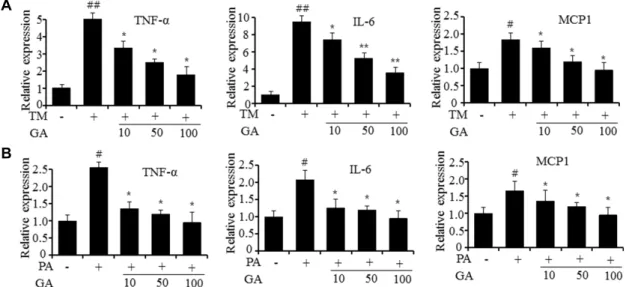
Fig. 2. Gomisin A represses the expression of inflammatory genes in HepG2 cell. (A) qPCR of TNF-α, IL-6 and MCP-1 in tunicamy- cin-treated HepG2 cells. TM; tunicamycin, GA; gomisin A. (B) qPCR of TNF-α, IL-6 and MCP-1 in palmitate-treated HepG2 cells. PA; palmitate, GA; gomosin A. Values are expressed as the mean ± SEM (n=3 independent experiments).

#

p<0.05,

##

p<0.01 vs. untreated control. *p<0.05, **p<0.01 vs. tunicamycin or palmitate-treated control.

XBP-1. Gomisin A suppressed palmitate-induced markers of ER stress. Taken together, these results demonstrated that gomisin A inhibits ER stress in HepG2 cells treated with tunicamycin or palmitate.

Gomisin A downregulates the expression of in- flammatory genes in HepG2 cells

It has been previously reported that ER stress correlates with inflammation[21]. Tunicamycin increased pro-in- flammatory cytokine production in an animal model.

Therefore, we further determined the role of gomisin A in ER stress-induced inflammation by measuring the ex- pression of inflammatory genes in HepG2 cells treated with tunicamycin or palmitate. The expression of the in- flammatory genes including tumor necrosis factor(TNF)-α, interleukin(IL)-6 and monocyte chemoattractant protein (MCP)-1 increased by treatment with tunicamycin (Fig. 2A) or palmitate (Fig. 2B). However, gomisin A was found to block the increased expression of these genes in tunicamycin (Fig. 2A) or palmitate (Fig. 2B)-treated HepG2 cells. These results suggest that gomisin A inhibits ER stress-related inflammation.

Gomisin A alleviates tunicamycin-induced hepatic ER stress and TG accumulation in mice

We next investigated the inhibitory effects of gomisin A on hepatic ER stress and TG accumulation in mice injected with tunicamycin intraperitoneally. The protective effect of

gomisin A against hepatic steatosis was investigated by ORO staining and measurement of hepatic TG levels. Tunicamy- cin injection increased ORO staining in the liver, but gomisin A significantly decreased the staining (Fig. 3A). Hepatic TG levels were markedly increased after tunicamycin injection.

However, gomisin A prevented this increase in TG levels (Fig. 3B). These results indicate that gomisin A improves hepatic steatosis that is induced by ER stress. We next exam- ined whether gomisin A ameliorates tunicamycin-induced hepatic toxicity by measuring serum AST and ALT levels.

As shown in Fig. 3C, tunicamycin injection increased the lev- els of AST and ALT, whereas gomisin A efficiently reduced the levels of both.

We examined the expression of markers of ER stress in livers to determine whether improvement of hepatic stea- tosis by gomisin A is associated with a reduction in hepatic ER stress. As shown in Fig. 3D, tunicamycin injection in- creased the expression of markers of ER stress, whereas go- misin A administration repressed this effect. Taken together, these findings indicate that gomisin A can prevent ER stress-induced hepatic steatosis and improve hepatic injury in mice.

Gomisin A inhibits hepatic ER stress and hepatic steatosis in HFD obese mice

Then, we verified the in vivo inhibitory effects of gomisin

A on hepatic steatosis in HFD obese mice. ORO staining

showed that HFD feeding elevated TG in mouse livers, but

(5)

A

B C

D

Fig. 3. Gomisin A inhibits ER stress and decreases TG accumulation in the livers of tunicamycin-injected mice. C57BL/6 mice were orally administrated gomisin A (5 or 20 mg/kg body weight) for 4 days and tunicamycin (1 mg/kg body weight) was intraperitoneally injected on Day 5. (A) Oil red O staining. (B) Measurement of hepatic TG levels. (C) Measurement of serum AST and ALT levels. (D) q-PCR analysis of markers of ER stress. TM; tunicamycin, GA; gomisin A. Values are expressed as the mean ± SEM (n=6 mice per group).

#

p<0.05,

##

p<0.01 vs. untreated control. *p<0.05, **p<0.01 vs. tunicamycin-treated control.

gomisin A treatment blocked the elevation of hepatic TG (Fig. 4A). Consistent with this, gomisin A significantly re- duced HFD-induced hepatic TG levels (Fig. 4B). These re- sults suggest that gomisin A inhibits hepatic steatosis in HFD obese mice. We next examined whether gomisin A ameliorates HFD-induced hepatic toxicity by measuring se- rum GOT and GPT levels. As shown in Fig. 4C, HFD in- creased the levels of GOT and GPT, whereas gomisin A effi- ciently reduced the levels of both.

We then examined the expression of markers of ER stress in livers of HFD obese mice. As shown in Fig. 4D, HFD increased the expression of markers of ER stress, whereas gomisin A administration repressed this effect. These results suggest that gomisin A inhibits ER stress and ameliorates hepatic steatosis in HFD-induced obese mice.

Gomisin A downregulates the expression of in- flammatory genes in the liver of HFD obese mice

Finally, we examined inflammation by measuring the ex- pression of inflammatory genes in the livers of HFD obese

mice. As shown in Fig 5, the mRNA levels of the in- flammatory genes such as TNF-α, IL-6 and MCP-1 were markedly increased in the livers of HFD obese mice com- pared to lean control mice. However, gomisin A significantly inhibited the this increase of inflammatory genes in the liver of HFD obese mice. These results indicate that gomisin A inhibits inflammation in the liver of HFD obese mice.

Discussion

Previously, we found that S. chinensis extract inhibited ER stress and prevented the development of hepatic steatosis [12]. This supports the hypothesis that S. chinensis extract can be used as a potential therapeutic agent for treatment of ER stress-induced diseases, including hepatic steatosis.

Our study demonstrated that gomisin A, a bioactive phy- toestrogen derived from S. chinensis, inhibits ER stress and prevents the development of ER stress-induced NAFLD.

Tunicamycin and thapsigargin are pharmaceutical ER

stress inducers, whereas palmitate is a physiological ER

(6)

A

B C

D

Fig. 4. Gomisin A ameliorates hepatic steatosis in high-fat diet (HFD)-induced obese mice. C57BL/6 mice were fed a ND or HFD for six weeks, and gomisin A was administered to the HFD-fed mice for an additional eight weeks (n=6 mice per group).

(A) Oil red O staining. (B) Measurement of hepatic TG levels. (C) Measurement of serum GOT and GPT levels. (D) q-PCR analysis of markers of ER stress. Values are expressed as mean ± SEM (n=6).

#

p<0.05,

##

p<0.01 vs. ND group. *p<0.05, **p<0.01 vs. HFD group.

Fig. 5. Gomisin A inhibits the expression of inflammatory genes in the liver of HFD obese mice. The expression of TNF-α, IL-6 and MCP-1 was measured by qPCR. GA; gomosin A. Values are expressed as the mean ± SEM (n=6).

##

p<0.01 vs. ND group. **p<0.01 vs. HFD group.

stress inducer. We demonstrated the protective effects of go- misin A against ER stress in HepG2 cells treated with both pharmaceutical (tunicamycin) and physiological (e.g. palmi- tate) inducers. mRNA levels of GRP78, CHOP, and XBP-1 were used as markers of ER stress. Our data showed that gomisin A repressed mRNA levels of GRP78, CHOP, and XBP-1 in palmitate-treated HepG2 cells as well as in tunica- mycin-treated HepG2 cells. This indicates that gomisin A has a protective effect against pharmaceutical and physiological

inducers of ER in liver cells. An adaptive response known as the UPR is induced under pathological conditions [22].

UPR is characterized by the activation of three distinct signal

transduction pathways mediated by three transmembrane

proteins. They include protein kinase RNA-activated (PKR)-

like ER kinase (PERK)-CHOP, inositol-requiring enzyme

(IRE) 1-XBP-1-pJNK, and activating transcription factor

(ATF)-6-GRP78. These three branches of the UPR attenuate

protein synthesis, increase protein-folding capability, and

(7)

degrade terminally unfolded and misfolded proteins within the ER. According to our current results, gomisin A inhibited the expression of GRP78, CHOP, and XBP-1. These proteins are representative of signaling mediators of the three branch- es of the UPR, suggesting that gomisin A has an inhibitory effect on all three branches.

To confirm the protective effect of gomisin A against ER stress-induced hepatic steatosis in vivo, a low dose or high dose of gomisin A was pre-administered into C57BL6J mice, followed by injection with tunicamycin. Tunicamycin in- creased markers of ER stress and TG level in the mouse liver.

However, pre-administration of both low and high doses of gomisin A efficiently blocked increases in hepatic markers of ER stress and TG accumulation. In addition, gomisin A reduced tunicamycin-mediated elevation in levels of the bio- markers of liver injury, AST and ALT. Taken together, these results suggest that gomisin A attenuates ER stress and ameliorates ER stress-induced NAFLD and liver injury in vivo. The protective effects of gomisin A against hepatic stea- tosis were further confirmed in HFD-induced obese mice.

HFD induced hepatic steatosis in mice, which was charac- terized by increased hepatic lipid accumulation; however, gomisin A treatment efficiently blocked hepatic lipid accumulation.

Furthermore, we investigated the effect of gomisin A on inflammation in ER stress-induced HepG2 cells. It has been previously reported that ER stress correlates with in- flammation[21]. The expressions of TNF-α, IL-6 and MCP-1 were measured in HepG2 cells treated with tunicamycin or palmitate in the absence or presence of gomisin A. Our data showed that gomisin A reduced the levels of TNF-α, IL-6 and MCP-1 that were induced by incubation with tunicamy- cin or palmitate. The anti-inflammatory effects were also confirmed in the liver of HFD obese mice. These results in- dicated that gomisin A inhibits inflammation by attenuation of ER stress.

In conclusion, gomisin A efficiently attenuated ER stress and thus halted the development of NAFLD. Thus, gomisin A is a promising lead compound for future drug devel- opment.

Acknowledgment

This work was supported by a 2-Year Research Grant of Pusan National University.

References

1. Araki, E., Oyadomari, S. and Mori, M. 2003. Endoplasmic reticulum stress and diabetes mellitus. Intern. Med. 42, 7-14.

2. Ashraf, N. U. and Sheikh, T. A. 2015. Endoplasmic retic- ulum stress and oxidative stress in the pathogenesis of Non-alcoholic fatty liver disease. Free Radic. Res. 49, 1405- 1418.

3. Cao, S. S. and Kaufman, R. J. 2013. Targeting endoplasmic reticulum stress in metabolic disease. Expert Opin. Ther.

Targets 17, 437-448.

4. Choi, M. S., Kwon, K. J., Jeon, S. J., Go, H. S., Han, S. H., Shin, K. H. and Ko, C. Y. 2009. Schizandra chinensis alkaloids inhibit lipopolysaccharide-induced inflammatory responses in BV2 microglial cells. J. Biomol. Tech. 17, 47-56.

5. Choi, Y. W., Takamatsu, S. and Khan, S. I. 2006. Schisan- drene, a dibenzocyclooctadiene lignan from Schisandra chi- nensis structure-antioxidant activity relationships of di- benzocyclooctadiene. J. Nat. Prod. 69, 356-359.

6. Chun, J. N., Cho, M., So, I. and Jeon, J. H. 2014. The pro- tective effects of Schisandra chinensis fruit extract and its lignans against cardiovascular disease: a review of the mo- lecular mechanisms. Fitoterapia 97, 224-233.

7. Farrell, G. C. and Larter, C. Z. 2006. Nonalcoholic fatty liver disease: from steatosis to cirrhosis. Hepatology 43, S99-S112.

8. Hikino, H., Kiso, Y., Taguchi, H. and Ikeya, Y. 1984. Antihe- patotoxic actions of lignoids from Schizandra chinensis fruits. Planta Med. 50, 213-218.

9. Hwang, I. S., Kim, J. E., Lee, Y. J., Kwak, M. H., Choi, Y.

H. and Hwang, D. Y. 2013. Protective effects of gomisin A isolated from Schisandra chinensis against CCl(4)-induced hepatic and renal injury. Int. J. Mol. Med. 31, 888-898.

10. Ikeya, Y., Taguchi, H., Yosioka, I. and Kobayashi, H. 1979.

The constituents of Schizandra chinensis Baill. I. Isolation and structure determination of five new lignans, Gomisin A, B, C, F and G, and the absolute structure of schizandrin.

Chem. Pharm. Bull. (Tokyo) 27, 1383-1394.

11. Iwata, H., Tezuka, Y. and Kadot, S. 2004. Identification and characterization of potent CYP3A4 inhibitors in Schisandra fruit extract. Drug Metab. Dispos. 32, 1351-1358.

12. Jang, M. K., Nam, J. S., Kim, J. H., Yun, Y. R. and Jung, M. H. 2016. Schisandra chinensis extract ameliorates non- alcoholic fatty liver via inhibition of endoplasmic reticulum stress. J. Ethnopharmacol. 185, 96-104.

13. Kim, D. H., Hung, T. M. and Bae, K. H. 2006. Gomisin A improves scopolamine-induced memoy impairment in mice.

Eur. J. Pharmacol. 542, 129-135.

14. Kim, S. H., Kim, Y. S., Kang, S. S., Bae, K., Hung, T. M.

and Lee, S. M. 2008. Anti-apoptotic and hepatoprotective effects of gomisin A on fulminant hepatic failure induced by D-galactosamine and lipopolysaccharide in mice. J.

Pharmacol. Sci. 106, 225-233.

15. Min, H. Y., Park, E. J., Hong, J. Y., Kang, Y. J., Kim, S. J.

and Lee, S. K. 2008. Antiproliferative effects of dibenzocy-

clooctadiene lignans isolated from Schisandra chinensis in hu-

man cancer cells. Bioorg. Med. Chem. Lett. 18, 523-526.

(8)

초록:Gomisin A의 비알코올성 지방간 보호효과

윤예랑

1,2

․정명호

1,2

*

(

1

부산대학교 한의학과,

2

부산대학교 건강노화 한의과학 연구센터)

본 연구는 소포체스트레스(endoplasmic reticulum stress)에 의해 유발되는 지방간(hepatic steatosis)에 대한 오 미자추출물(Schisandra chinensis)의 주요성분인 gomisin A의 지방간 보호 효능에 대하여 연구하였다. 이를 위해 HepG2 세포에 소포체스트레스 유도물질인 tunicamycin 또는 palmitate을 처리하여 세포에서의 지방간 모델을 만들어 실험을 진행 하였으며, 소포체스트레스 표지자(marker)인 GRP78, CHOP, XBP-1의 발현을 측정하였다.

Tunicamycin 처리한 세포에서는 GRP78, CHOP, XBP-1의 발현이 증가되었으나, gomisin A를 처리 한 세포에서는 이들의 발현 증가가 억제됨을 확인하였다. 이는 palmitate를 처리한 HepG2 세포에서도 palmitate에 의해 증가하 는 소포체스트레스 표지자들이 gomisin A을 처리한 세포에서 발현이 감소함을 확인하였다. 이러한 결과에 의해, gomisin A는 소포체스트레스를 억제함을 알 수 있었다. 다음으로 gomisin A가 in vivo에서 소포체스트레스 및 지방간에 대한 보호효과가 있는지 확인하기 위해, tunicamycin과 고지방(high fat diet)으로 식이 한 쥐에서 소포 체스트레스와 지방간의 보호효능에 대해 실험을 진행하였다. Tunicamycin과 고지방식이을 한 쥐의 간에서 중성 지방이 증가하였으나, gomisin A를 처리한 쥐의 간에서 중성지방의 수준이 유의적으로 감소함을 확인하였다. 소 포체스트레스 표지자들 역시 tunicamycin이나 고지방식이을 한 쥐에서 증가되나 gomisin A를 처리한 쥐에서 감 소됨을 확인하였다. Gomisin A의 염증 반응에서의 조절기능을 확인하기 위하여 TNF-α, IL-6 그리고 MCP1과 같 은 염증관련 유전자들의 발현을 분석한 결과, tunicamycin이나 고지방식이을 한 쥐에서 염증유전자들의 발현이 증가하였으나 gomisin A를 처리한 쥐에서는 유의적으로 감소하였다. 종합적으로 본 연구 결과에 의하면, gomsin A는 소포체스트레스를 억제하여 지방간의 생성을 저해함을 알 수 있었다.

16. Oh, S. Y., Kim, Y. H., Bae, D. S., Um, B. H., Pan, C. H., Kim, C. Y., Lee, H. J. and Lee, J. K. 2010. Anti-inflammatory effects of gomisin N, gomisin J, and schisandrin C isolated from the fruit of Schisandra chinensis. Biosci. Biotechnol.

Biochem. 74, 285-291.

17. Pagliassotti, M. J. 2012. Endoplasmic reticulum stress in nonalcoholic fatty liver disease. Annu. Rev. Nutr. 21, 17-33.

18. Park, E., Kim, G. H., Yun, S. H., Lim, H. L., Hong, Y., Kwon, S. O., Kwon, J., Chung, Y. H. and Kim, S. I. 2012. Analysis of the endoplasmic reticulum subproteome in the livers of type 2 diabetic mice. Int. J. Mol. Sci. 13, 17230-17243.

19. Park, H. J., Cho, J. Y., Kim, M. K., Koh, P. O., Cho, K. W.

and Kim, C. H. 2012. Anti-obesity effect of Schisandra chi- nensis in 3T3-L1 cells and high fat diet-induced obese rats.

Food Chem. 134, 227-234.

20. Passos, E., Ascensão, A., Martins, M. J. and Magalhães, J.

2015. Endoplasmic reticulum stress response in non-alco- holic steatohepatitis: The possible role of physical exercise.

Metabolism 64, 780-792.

21. Ren, F., Zhou, L., Zhang, X., Wen, T., Shi, H., Xie, B., Li, Z., Chen, D., Wang, Z. and Duan, Z. 2015. Endoplasmic re- ticulum stress-activated glycogen synthase kinase 3β ag- gravates liver inflammation and hepatotoxicity in mice with acute liver failure. Inflammation 38, 1151-1165.

22. Schröder, M. and Kaufman, R. J. 2005. The mammalian un- folded protein response. Annu. Rev. Biochem. 4, 739-789.

23. Tajiri, S., Oyadomari, S., Yano, S., Morioka, M., Gotoh, T., Hamada, J. I., Ushio, Y. and Mori, M. 2004. Ischemia-in- duced neuronal cell death is mediated by the endoplasmic reticulum stress pathway involving CHOP. Cell Death Differ.

11, 403-415.

24. Teraoka, R., Shimada, T. and Aburada, M. 2012. The molec- ular mechanisms of the hepatoprotective effect of Gomisin A against oxidative stress and inflammatory response in rats with carbon tetrachloride-induced acute liver injury. Biol.

Pharm. Bull. 35, 171-177.

25. Xue, Y., Li, X., Du, X., Li, X., Wang, W., Yang, J., Chen, J., Pu, J. and Sun, H. 2015. Isolation and anti-hepatitis B virus activity of dibenzocyclooctadiene lignans from the fruits of Schisandra chinensis. Phytochemistry 116, 253-261.

26. Yamaguchi, O., Higuchi, Y., Hirotani, S., Kashiwase, K., Nakayama, H., Hikoso, S., Takeda, T., Watanabe, T., Asahi, M., Taniike, M., Matsumura, Y., Tsujimoto, I., Hongo, K., Kusakari, Y., Kurihara, S., Nishida, K., Ichijo, H., Hori, M.

and Otsu, K. 2003. Targeted deletion of apoptosis signal-reg- ulating kinase 1 attenuates left ventricular remodeling. Proc.

Natl. Acad. Sci. USA 100, 15883-15888.

수치

Table  1.  List  of  primers  for  q-PCR 1.  Human
Fig.  1.  Gomisin  A  inhibits  ER  stress  in  HepG2  cells.  (A)  q-PCR  analysis  of  markers  of  ER  stress  in  tunicamycin-treated  HepG2  cells
Fig.  2.  Gomisin  A  represses  the  expression  of  inflammatory  genes  in  HepG2  cell
Fig.  3.  Gomisin  A  inhibits  ER  stress  and  decreases  TG  accumulation  in  the  livers  of  tunicamycin-injected  mice
+2

참조

관련 문서

In the region of Auerbach’s plexus (AP) of small intestine, the staining intensity of the ICC-IR cells was reduced in the HFD group compared to the control group.. The numbers

The present study was designed to investigate the role in intracellular calcium mobilization of two representative endoplasmic reticulum (ER) proteins, STIM1

The purpose of this study was to investigate how the 8-week aerobic exercise program affects the physical strength and stress of obese women in the

[r]

This study was conducted to investigate the effects of a 12-week swimming exercise program on body composition, blood lipids and inflammatory indicators in

Suppression of epithelial apoptosis and delayed mammary gland involution in mice with a conditional knockout of Stat3 Genes Dev.. Microarray analysis of

In conclusion, the data acquired in this study demonstrate that pinosylvin can inhibit LPS-induced expression of pro-inflammatory mediators, and the

The associations of hepatic steatosis and fibrosis using fatty liver index and BARD score with cardiovascular outcomes and mortality in patients with new‑onset type 2