Journal of Forest and Environmental Science
Journal of Forest and Environmental Science Vol. 32, No. 1, pp. 55-67, February, 2016 http://dx.doi.org/10.7747/JFES.2016.32.1.55
Deforestation and Forest land Use in Côte d'Ivoire: Policy and Fiscal Instruments
Wadjamsse Beaudelaire Djezou*
University of Bouaké/Ivorian Center for Economic and Social Research (CIRES), 08 PO Box 1295 Abidjan, Côte d'Ivoire
Abstract
This paper investigated policies that drive the sustainable management of Ivorian forest which disappear at an annual rate of 250000 hectares. Based on an inter-temporal model for optimum allocation of forest land to three competing uses, the article found that sustainability depends on the incentive structure, of which forest taxes and fees are a key, though obviously not the sole, component. The study proposed to increase the area fee level by accounting for environmental externalities generated by forest harvesters and farmers. The paper showed that the area fee is a decreasing function of the forest natural rate of regeneration and the reconversion rate of agricultural surfaces. Finally, at the given forest natural rate of regeneration and the reconversion rate of agricultural surfaces, the model argued that the area fee need to be progressive (arithmetic progression) in the context of ecological equilibrium break while it should remain constant in normal situation.
Key Words: fiscal policy, area fee, opportunity cost, land allocation model, optimal control
Received: October 25, 2014. Revised: September 9, 2015. Accepted: September 21, 2015.
Corresponding author: Wadjamsse Beaudelaire Djezou
University of Bouaké/Ivorian Center for Economic and Social Research (CIRES), 08 PO Box 1295 Abidjan, Côte d'Ivoire Tel: (225) 22482100, Fax: (225) 22440829, E-mail: [email protected]
Introduction
The situation of the forest sector in Côte d’Ivoire has be- come extremely worrying. Indeed, the economic develop- ment of Côte d'Ivoire is linked to its forest exploitation which, in addition to the quality of its wood provided re- quired land and climatic conditions for agricultural devel- opment (Coulibaly 1998). This latter sector represented in average of about 30% of its gross domestic product (GDP) from 2000 to 2010, 75% of non-oil export revenues and employed 46% of working population (Ministry of Planning and Development 2012). Since 1918, wood based industry and agriculture provided significant financial sup- port to ensure the economic development qualified in the 1960s as economic miracle.
Unfortunately, this agricultural policy has neglected the
environmental aspect on which is depend as shifting culti- vation, over exploitation of timber and the disproportionate firewood gathering are resulting to deforestation (FAO 2003). According to Osseni et al. (1998), the Ivorian rain- forest which covered about 16 million hectares (ha) at the beginning of last century, represented only about 2.8 mil- lion ha in 2007 (Ministry of Planning and Development 2012). Indeed, in the short run, production can increase by increasing the surfaces but in long run, deforestation exerts negative impacts on agricultural productivity. Besides, de- forestation is followed by flood, dryness and season dis- turbance phenomena. The situation is more alarming as the reforestation rate (5,000 ha/year) remains low compared to the rate of deforestation (250,000 ha/year). In addition, there is a poor control of the urbanization process, corruption, poor implementation of the forest legislation, among others.
The Ivorian government also adopted in 1995 a reform of the forest sector, that affects both forestry and wood proc- essing industries with concrete measures including: reduc- tion in the number of forest concessions (from 3,000 to 300) and logging (from 755 to 150), reforestation (150 to 250 m3), setting the tax rate at 0.25 m3/ha/year and espe- cially reformed forestry taxation. In addition, in 1990, the government reformed the forest tax to encourage a more ra- tional exploitation of existing forest resources by increasing the cost of licensing as well as introducing the sale of stand- ing trees by competitive bidding allowing him to get a great part of the value of trees. Especially, the fiscal reform has in- creased both the area fee from 0.02 to 0.1$ (which is even still below the floor price 1.95$ in Cameroun and far from the recommended level of 4$ proposed by World Bank Institute in central and western Africa) and the stumpage fees for more than 200% in average. But, instead of giving incentives to forest investors to behave in the sustainable way, the tax reform resulted in government revenue raising.
For example, in 1990, it resulted in an increase in govern- ment revenue of 30 million $ representing a rise of 35%
compared to 1989 and more than 7% on average over the period 1990 to 1999 (FAO 2001). As result, the tax reform did not change harvesters' behaviour, whose activities con- tinued as usual with destructive methods and low refor- estation rate. Therefore, this situation raises the following questions. Is the fiscal instrument optimally assessed? Does it give incentives to farmers and harvesters to behave in a sustainable way? If not, how to achieve ecological, economic and social equilibrium as sustainable development purpose.
In the literature, debates have taken place on the role of forest taxation in forest management and its potential as a component of public policies. Many reasons are considered especially the poor capture of the economic rent (Gillis 1992; D' Silva et al. 1993; Barbone et al. 2000; Karsenty 2010). Indeed, to be efficient, the level of tax/fee should be as close as possible to the value of the full economic rent and an appropriate structure of the taxation system should also be determined. However, the capture of the total economic rent requires an accurate evaluation of the optimal level of tax (Pirard 2008) which is rarely done in the studies under- taken so far on tropical forest taxation. Moreover, to the best of the author’s knowledge, no study had derived fiscal instruments from formal analysis of the socially optimal al-
location of tropical forest land between competing uses es- pecially in Cote d’Ivoire. In this regards, this paper try to fill the gap by investigating strategies about the level of tax and the tax structure that ensure the sustainable manage- ment of Ivorian rainforest.
The rest of the paper is structured as follows: the follow- ing section 2 dealt with the literature review. The section 3 shows the methodology while the section 4 presents the re- sults of the study and the last section concludes it by for- mulating recommendations.
Literature Review
Sustainable management of tropical forest has become a great challenge for the international community as the rate of deforestation continues to rise in the context of climate change. To this end, they are seeking the criteria and reli- able indicators that can constitute a guideline. In this per- spective, many economists underlined the impact of forest economic rent on the development and the characteristics of wood industries. The risk is the inefficiency of the wood in- dustry encouraged by underpricing of timber through out- dated forest fees and taxes (D' Silva et al. 1993). This is the consequence of a poor capture of the forest economic rent by the government (Karsenty 2010) and gives opportunities to industrialists to supply their factories at low prices.
Indeed, a renewable natural resource (resources of the trop- ical forest) which is rare at the international level cannot be managed in a sustainable way if the access prices and uses do not reflect its increasing scarcity. These prices give an economic “signal” regarding the abundance or the scarcity of the resource. Thus, Gillis (1992) reported that the “rent capture” by the government is a means of limiting rent see- kers' propensity to act in the short run. In fact, many trop- ical forests are exploited by firms which have a short-term exploitation mentality. Their high propensity to move from one plot of forest land to the next is not consistent with the long run period required in forestry. Other authors argued that deforestation can be better controlled through market forces. According to them, market-based incentives could help control deforestation by internalizing negative ex- ternalities (Coase 1960).
Contrary to the Coase’s prescribed solution, Pigou (1920) proposed the use of the fiscal instrument to reduce
the difference between social and private damage cost by in- ternalizing the external effects. In the same view, Leruth et al. (2001) specify that if the tax is related to the damage, it plays an incentive role. The first function of forest taxation is to capture the economic rent but the existence of a poten- tial rent indicates that there are various ways to recreate it (Karsenty 2002). Specifically, deforestation is regarded as the consequence of an underpricing forest resource (Barbone et al. 2000). Indeed, this policy provides false economic signals regarding the real value of the resource and unfortunately leads to severe waste in harvesting and processing. In sum, low taxes/fees distort forest manage- ment decisions and encourage inefficiencies, not to mention their negative implications for government revenues. To ad- dress these problems, several researchers recommended the increase in taxes/fees level as close as possible to the value of economic rent. On this basis, some suggested various com- binations of forest fee (Schwidrowski et al. 2005; Karsenty 2010; Barua et al. 2010) and various methods for raising them. For example, the annual forest concession fees were recommended by Gray (1983, 1997) and Grut et al.
(1990), the stumpage fees by Gray (Op.cit) and the profit taxes by Gillis (1992).
However, does the increase in the cost of the resource through taxation result automatically in a sustainable man- agement of tropical forest? It’s not obvious since it came un- der serious criticism from many researchers. The oppo- nents of this principle stressed that not all fees and taxation systems promote sound forest management (Blakeney 1993; Meijerink 1997; Topa et al. 1998; Karsenty 1999;
Wibe et al. 2010). Indeed, some taxes raise government revenue without affecting the harvesters’ behavior while others may actually encourage unsound forest management practices. Topa et al. (1998) reported that simply raising forest taxes, especially, yield tax do not guarantee a sustain- able management of forest (Ruzicka 2010). In the same way, Leruth et al. (2001) show that the taxation on output does not necessarily provide incentives to improve forest management, limit waste and logging damage since it does not act as a pigouvian tax which primarily aims at the in- ternalization of the social cost of damage. According to these authors, on the contrary, it will lead to negative distor- tionary incentives. By reducing the profit, the tax reduces the future value of the tropical forest under exploitation.
Moreover, some researchers interested in forest taxation problems in Africa pointed to the poor collection of the for- est economic rent by the African governments on one hand and, the inadequate structure of the forest taxation system dominated by the duties and export taxes (Grut et al. 1991;
Gray 1997) on the other hand. Consequently, they propose upstream taxation policy, in particular the unique area fee which would be indexed on the value of trees contained in the license. Although, some findings indicate that the ad- vantages of area fees are less than has been assumed (Boscolo et al. 2007), it possess some desirable properties that can help in improving the management of the forest (Boscolo et al. 2007; Karsenty 2010). In this way, this study addresses the issue upstream by using the opportunity cost concept based on an allocation model of forest land and evaluate it since their accurate estimation is strategic (Pirard 2008). Indeed, when the area fee is too low or high, it has undesirable and indirect impacts and constitutes a higher risk for the forest industry (Karsenty 2010).
Materials and Methods
The exploitation of forest land raises the question of its optimal allocation to competing uses. Therefore, an inter- temporal model for allocation of forest land to competing activities is appropriate to deal with such issue. In the con- text of Cote d’Ivoire, the model of land allocation set by Djezou (2013) is appropriate as it deal with three main competing uses. These competing uses of land are land for agriculture x1, t, land for timber x2, t and land for forest con- servation x3, t along with afforestation/reforestation x4, t. We use this model in this study and adapted it to the context of forest management by focusing on taxation issues.
As the model is fully presented in Djezou (2013), we present here the general form.
The model in the form of dynamic optimization pro- gramme in discrete and finite time horizon can be presented as follows:
(1)
Subject to:
(2)
(3)
(4)
≥ (5)
(6)
≥ (7) Where r0 is the social discount rate and 1/(1+r0)t-1is the discount factor.
R1(x1, t) is the net revenue deriving from agricultural ac- tivity on surface x1, t at any period t.
R2(x2, t) is the net revenue deriving from timber extrac- tion on surface x2, t at any period t.
R3(x3, t) is the ecological net benefit of the standing forest on surface x3, t at any period t.
C(x4, t) is the instantaneous cost of the afforestation/re- forestation activity on a surface x4,t.
Equation (1) is the discounted social profit function;
Equation (2) indicates the change in total available land wt for the various uses;
Equation (3) indicates the instantaneous change in agri- cultural surface;
Equation (4) indicates the change in forest stock;
Equation (5) is an agro-ecological constraint;
Equation (6) presents initial conditions and equation (7) states non negativity conditions.
The parameters , and which respectively indicate the reconversion rate of agricultural surfaces, the shares of exploited forest area (under timber exploitation) converted to agriculture and the forest natural rate of regeneration.
Obviously, these rates vary between 0 and 1.
The problem is solved by the lagrangean method. For a question of fluidity, the details of the resolution (lagrangean formulation, first and second order conditions, initial con- ditions, binding conditions, transversality conditions and excluding relations) are presented in appendix 1 and the theoretical and empirical results are discussed in the follow- ing section.
Results and Discussion
Theoretical results and discussion
From the resolution of the model, we respectively de- rived an optimal rule of timber exploitation, agricultural ex- pansion and forest conservation.
Two different cases are considered according to whether
ecological balance is threatened or not.
✓First case where wt=0
This case describes the situation where the ecological constraint is satisfied as the national forest cover is not threatened.
From equations (13), (24), (9) and (13) in appendix, we derived the rule of optimal conversion of forest land to agriculture.
′
λ λ [26]
This equation states that forest land is converted to agri- culture up to the point where the discounted marginal bene- fits of agriculture are equal to its discounted marginal social opportunity costs. These costs are the marginal user cost of forest land (λ ) and the marginal cost of damage (externality in the form of abandoned agricultural land)
λ which is evaluated at the shadow value of ag- ricultural land (λ ). This opportunity cost is the max- imum forgone marginal benefice that could have been ob- tained elsewhere from the unit of land converted to agriculture. These results are consistent with the findings obtained by Barbier et al. (1997) and Hartwick (1992).
Imposing the full economic price (shadow price of forest land) to farmers will reduce, ceteris paribus, the demand of the land on the basis of the demand theory in the context of normal good where price (shadow price) and quantity are inversely related. Unfortunately, many of these environ- mental benefits or costs have no market and thus are gen- erally ignored in private and public land use decisions (Adu et al. 2012). However, the social opportunity cost of con- verting the forest land to agriculture ought to reflect both its value for marketed production as well as non-marketed environmental net benefits.
From equations [10] and [11] in appendix, we derived the rule of optimal allocation of forest land conversion to timber exploitation.
′
λ λ λ [27]
This equation states that, for an efficient intertemporal
1) There is an ecological equilibrium break since the recommended level is set to 20%.
allocation program, forest land is exploited for timber pro- duction up to the point where the discounted marginal ben- efits of timber are equal to its social marginal opportunity cost. This cost is composed of marginal user cost of forest land (λ ) and the marginal cost of damage (externality in the form of non-regenerating share of exploited forest land)
λ evaluated at the shadow value of forest land maintaining as forest (λ ). This marginal opportunity cost of forest land conversion to timber exploitation is noth- ing else than the forgone maximum marginal revenue that could have been earned elsewhere by converting an addi- tional unit of forest land to timber production in each period.
The higher the forest natural regeneration rate the lower the social marginal opportunity cost of timber production.
If timber providers pay the full economic price (shadow price) of the forest resource, they will manage their con- cession in a sustainable way. Note that the marginal benefit is composed of direct and indirect revenues. The second part of the total marginal benefit is derived from the con- version of forest land under timber production into agriculture. At the first stage, the surface is used for timber production and at the second stage it used for agricultural goods production.
✓Second case: wt>0,
In this case, national forest cover is threatened and the ecological constraint is questioned. This assumption de- scribes Côte d'Ivoire forest situation in the sense that the rate of its forest cover is approximately estimated at 14%
(AIFORT 2008)1). Equation [14] becomes:
λ λ ω→λ λ ∀ [28]
This result leads to major changes in the time path of the variables of interest especially a continuous decrease in opti- mal agricultural surfaces, optimal timber production surfa- ces from period to period. On the contrary, the optimal
stock of forest grows from period to period with refor- estation/afforestation activity since the preservation of an additional unit of forest positively affects the social welfare.
In practical terms, with a concave benefit function, any in- crease in revenue can be obtained from a reduction in the variable of interest. Thus, at the period t+1, equation [26]
becomes
′
λ λ and
∀ since λ λ . Similarly, at the period t+1, equation [27] leads to ∀. By the same principle, equation
′
λ at the period t+1 cannot hold without a decrease in the expression
′
. This can only be done by increasing the variable
at the next period t+1, so ∀.
Moreover, equation λ λ
′ at the period t+1 and leads to ∀ since the cost function is an increasing function of the variable . Empirical results and discussion
The deviations between the optimal and actual forest surface trends underlined earlier by Coulibaly (1996) partly confirm the forest taxation system inefficiencies in Côte d'Ivoire. Indeed, any resource whose extraction or accessi- bility cost is lower than its social exploitation cost leads to overexploitation (Pearce 1987). In other words, if there is no incentive to account for future user costs of the natural resource and externalities, there will be a tragedy of commons. To overcome this and ensure a sustainable man- agement of the resource, Pigou (1920) proposed to in- ternalize the externalities deriving from various forest har- vesters' activities through fiscal instrument. Therefore, the best solution for the sustainable management of the Ivorian forest is the implementation of an adequate tax system. In fact, taxes should lead in theory to a sustainable management of the resource if they set according to the efficiency criteria by giving the timber processor an incentive to invest in in- creasing the rate of wood recovery (Karsenty 2010; Schwi- drowski et al. 2005). Although, according to Karsenty et al.
(2008), a mixture of taxes as forest taxation regime is the most appropriate, we agree with Spratt and Crawford (2013) that in the context of weak forest service institution
2) Ecological revenue combines the carbon storage value, the existence value of biodiversity and the value of soil and water conservation.
For the details on the computation of the values of these variables see appendix B.
3) The main objective of SODEFOR (Forest Development Society) is to extend forest cover through reforestation of degraded surfaces.
4) The government has ownership right over the protected forests that cover a theoretical surface of 4,196,000 ha.
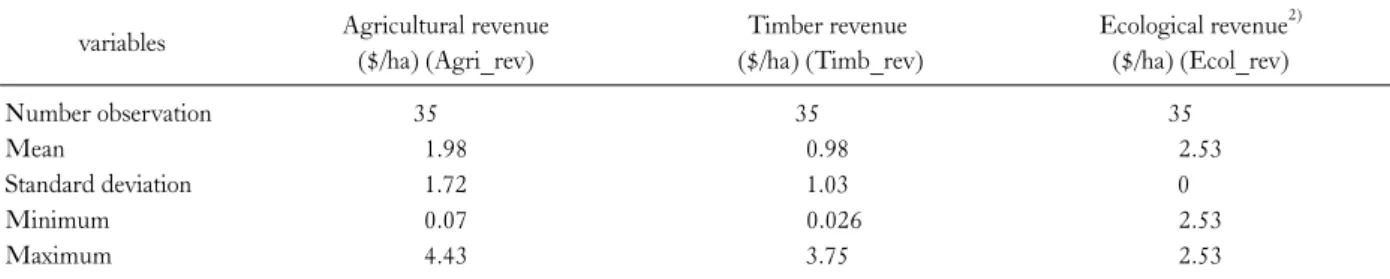
Table 1. Descriptive statistics of variables used in the study
variables Agricultural revenue ($/ha) (Agri_rev)
Timber revenue ($/ha) (Timb_rev)
Ecological revenue2) ($/ha) (Ecol_rev)
Number observation 35 35 35
Mean 1.98 0.98 2.53
Standard deviation 1.72 1.03 0
Minimum 0.07 0.026 2.53
Maximum 4.43 3.75 2.53
(corruption for example), area fee supplemented with sus- tainable management plan will be an efficient tool.
As a result, a tax reform in the forest field should account for the negative externalities generated by forest users as well as ecological conditions (Leruth et al. 2001; Adu et al.
2012). In accordance with our theoretical results, any forest land user (farmer, timber harvester) should pay an area fee depending both on the surface used and the amount of damages generated (Adu et al. 2012). These area fees act as eco taxes since they are a decreasing function of forest natu- ral rate of regeneration and the reconversion rate of agricul- tural land. Indeed, at a given forest natural rate of re- generation and the reconversion rate of agricultural land, the area fees are progressive in the sense of arithmetic pro- gression in the context of ecological equilibrium break while they are constant in normal situation.
This upstream taxation has not only some incentive ef- fects and a lowest management cost as supported by Ivers et al. (2003) and Gray (2000) but also it is easy to collect in the sense that there is greater transparency as mentioned in ear- lier studies (Contreras and Vargas 2002; Karsenty 2010;
Grut 2010). However, the level of area fee should be ad- equately set to avoid negative consequences as noted by some authors (Bourguignon 2010; Karsenty 2010;
Amacher et al. 2012).
Therefore, this study evaluates the optimal level of area
fees according to the opportunity cost concept and gives values that are in line with the reform recommended by the World Bank Institute especially in forest sector. To this end, time series data on timber revenue, agricultural revenue and ecological revenue from 1960 to 1994 from Ministry of Agriculture and Ministry of Economy and Finance are used to assess the fees of forest area. The descriptive sta- tistics are presented in Table 1. The assessment of area fee is done according both to ecological context and forest users (farmers and timber harvesters).
Ecological equilibrium context
We consider two categories of forest users especially farmers and timber harvesters.
Farmers: Farmers should pay an area fee of λ λ . Indeed, the poor reconversion of ag- ricultural land causes many damages in terms of environ- mental and ecological externalities. It is socially optimal to impose an area fee for the use of forest resource since taxing the raw material rather than the output gives the forest user an incentive to invest in increasing the rate of forest recovery. According to Karsenty (2010), such a change has been observed in Cameroon since 2001. In this case, the tax revenue will constitute a financial support for the refor- estation of the degraded agricultural land3)(Karsenty 1998).
This measure is relevant in the context of protected forest4) encroached by farmers. Indeed, in Côte d’Ivoire, about 30% of these forest surfaces are occupied by agriculture and more than 72,000 families live inside these forests (AIFORT 2008).
This area fee must be equal to the discounted social mar- ginal opportunity cost of agricultural land and is a decreas- ing function of the reconversion rate of agricultural surfaces
. As above written, the area fee has two components. A
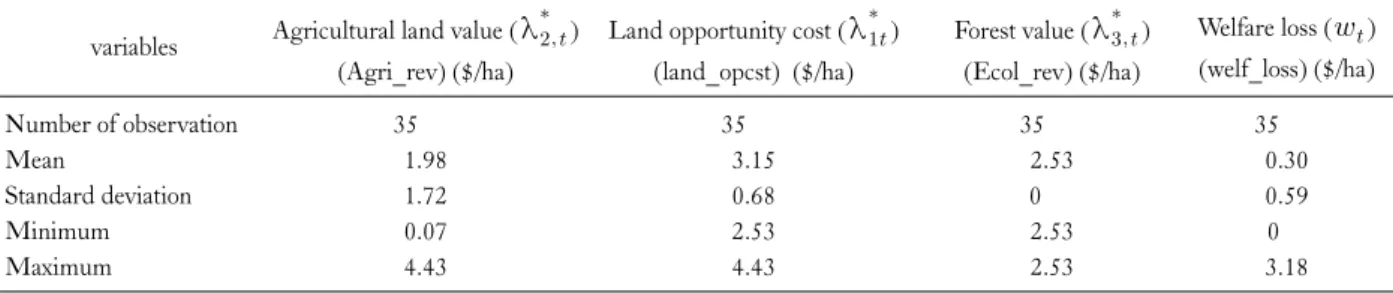
Table 2. Land opportunity cost, agricultural land value, forest value and welfare loss
variables Agricultural land value (λ ) (Agri_rev) ($/ha)
Land opportunity cost (λ ) (land_opcst) ($/ha)
Forest value (λ ) (Ecol_rev) ($/ha)
Welfare loss () (welf_loss) ($/ha)
Number of observation 35 35 35 35
Mean 1.98 3.15 2.53 0.30
Standard deviation 1.72 0.68 0 0.59
Minimum 0.07 2.53 2.53 0
Maximum 4.43 4.43 2.53 3.18
5) The principle of Pigouvian tax consists of imposing a per-unit tax on a good equal to the marginal externality (damage) at the socially efficient quantity. In other words, the tax is equal to the marginal ex- ternal cost which is the difference between the marginal social cost and the marginal private cost. According to the Pigouvian tax prin- ciple, setting the environmental tax equal to the external harm is optimal.
6) (http://www.wri.org/wri/governance/iffeforest.html)
first share which is fixed is related to the surface under farming and is evaluated at the marginal user cost of the forest land λ defined as being the highest revenue deriv- ing from its alternative use. In other words, λ
′ ′ ′ where
′
′ ′ are the marginal revenues (benefits) deriving from forest land use options. Using the data set, one obtained the Table 2 which gives the mean value of λ
as λ=3.15 $/ha/year.
The other part of the area fee is a decreasing function of the reconversion rate of agricultural land and is evaluated at the shadow value of converted agricultural land λ . By using the annual agricultural revenue mean as a proxy for marginal revenue of each activity, one obtain from Table 2 above the mean value of agricultural land as λ=1.98
$/ha/year. If one considers 0.8 as a reconversion rate of agri- cultural land, then the area fee to be imposed to farmers is
=3.55 $/ha/year and should be updated on a regular basis to reflect domestic inflation. This policy which is based on the pigouvian tax principle5) will introduce in- centives on those individuals making choices about forest land uses.
Forest harvesters: For timber harvesters, they should pay an area fees amount to λ λ . Indeed, timber production causes environmental damages for which one needs rehabilitation. For this purpose, one in-
troduces an area fee on these activities to support affor- estation programme (Karsenty 1998). This area fee must be equal to the social marginal opportunity cost of forest land converted to timber production as expressed above. The last term on the right hand side is the valuation of the dam- ages caused by forest harvesters (timber or wood energy) and represents a share of pigouvian tax derived from the in- ternalization of the externalities. The area fee valuation ac- counts for the forest natural rate of regeneration. It also has two components. The fixed share of the area fee is evaluated at the marginal user cost of forest land λ as defined previously. The remaining share of the area fee is evaluated at the shadow value of land maintained as forest λ . The mean value of this variable is λ=2.53 $/ha/year (Table 2).
Note that this last part of the area fee is a decreasing func- tion of forest natural rate of regeneration and will give in- centives to harvesters (timber or wood energy) to rationally exploit their concessions. This action will globally increase the forest natural rate of regeneration. Considering 0.15 as forest natural rate of regeneration, harvesters have to pay an area fee amounts to =5.30 $/ha/year and should be updated on a regular basis to reflect domestic inflation.
This area fee is in line with the one recommended by the World Bank Institute to central and west African countries which is 4 $/ha/year. In Addition, in 1997, logging compa- nies in Cameroon were willing to pay about 12 $/ha/year6) as area fee and even 17 $ in 2000 (Karsenty 2010).
Ecological equilibrium break situation
In the context of ecological crisis that the country is expe- riencing, the model argues that the area fee needs to be progressive. Indeed, when wt>0, λ λ ∀. As result, and become progressive. Indeed, the area
fee is
λ λ ∀ where w is the social welfare (profit) loss deriving from the con- version of one more unit of forest land at the period t.
Practically, in this study, the difference between the oppor- tunity cost of forest land and the agricultural revenue is used as a rough proxy for the social profit (welfare) loss (see Table 2) since the agriculture is the main land use option in Côte d’Ivoire. If one assumes a mean social welfare loss over the observed period, then the area fee gets an arith- metic progression form with the common difference
. In other words
∀.
Indeed, one get for each period where r=0.03 $/ha/ year, and =0.30 $/ha/year.
Applying this progressive taxation regime until the eco- logical equilibrium is restored then resort to the constant area fee as determined earlier in normal situation. This re- sult is consistent with the principle stating that to be effi- cient a fiscal reform should be progressive and view as such by those individuals making choices about forest land (Karsenty 2002). In this context, this will help restoring ecological equilibrium through the most rapid approach path (MRAP). However, in practice, it will be difficult to enforce this kind of measure. Therefore, we suggest that the government (with fund raised through REDD) subsidizes reforestation and afforestation of degraded and marginal lands in order to restore the ecological equilibrium and then apply the normal forest taxation regime as stated earlier.
Conclusion
A sustainable management of tropical forest land is a ma- jor challenge for governments in general in the context of greenhouse gas mitigation. Indeed, in Côte d'Ivoire, forest degradation at the current rate threatens the agricultural productivity on which the economy depends on. To mitigate these potential harmful effects and support the economic growth, this study (has tried) tries to seek the adequate strategies. For this purpose, we resorted to an intertemporal model for optimal allocation of forest land based on the op- timal control techniques. This analysis recommended a fis- cal reform both on the structure of the taxation system and the level of forest tax for a sustainable management of forest
resource. Thus, the study proposed an increase in area fees.
Indeed, the paper suggests that any forest land user (farmer, timber harvester) should pay an area fee depend- ing both on the surface used and the amount of damages generated. These area fees act as eco taxes since they are a decreasing function of forest natural rate of regeneration and the reconversion rate of agricultural land. This policy will introduce incentives to forest land users to act rationally. This principle ensures that the resource is ration- ally managed and constitutes a suitable guide in formulat- ing sustainable environmental policies. In specific terms, measures consist in:
- moving forest taxation upstream (especially area fee) since it has a positive impact regarding waste reduction and sustainability as it sends important signals of resource scar- city;
- setting the level of the area fee according to economic value and damage (based on opportunity cost) and not just a political instrument. This guarantee reduced area fee for those having certification of their forest concession;
- linking the area fee to the international price of tropical wood through the creation of a basket of forest products (logs, sawn wood, ply and sliced veneer, plywood) from dif- ferent species on which a wood price index updated yearly would be based. Indeed, having to pay a fixed annual area fee when a large part of the cash flow is determined by inter- national volatile prices exposes the concession holder to high risks when the market is down;
- restoring the ecological equilibrium through REDD+
initiatives.
- giving financial means to the forest service (SODEFOR) to undertake survey inventories aiming at providing accu- rate public information of the commercial potential of the resource to be leased;
- having a transferability of concession to sanction non- compliance with forestry rules.
However, for an efficiency goal, this fiscal reform must be supported by a reinforcement of forest control and be integrated into the general framework of sustainable development.
References
Adu G, Marbuah G, Mensah JT. 2012. Contribution of agri- culture to deforestation in the tropics: a theoretical investigation.
African Review of Economics and Finance 3: 1-12.
AIFORT. 2008. Atelier International sur les Innovations dans l'In- dustrie des Forêts Tropicales et des produits qui en sont issus, communication, Abidjan, Côte d'Ivoire.
Alemagi D, Nukpezah D. 2012. Assessing the performance of large-scale logging companies in countries of the Congo Basin.
Environ Nat Resour Res 2: 38-47.
Amacher GS, Ollikainen M, Koskela E. 2012. Corruption and for- est concessions. Journal of Environmental Economics and Management 63: 92-104.
Banque Mondiale. 1994. Revue du secteur agricole. Côte d'Ivoire, Document de travail, pp 107.
Barbier EB, Burgess JC. 1997. The economics of tropical forest land use options. Land Economics 73: 174-195.
Barbier EB. 1997. The economic determinants of land degradation in developing countries. Philos Trans R Sor Lond B Biol Sci 352: 891-899.
Barbone L, Zalduendo J. 2000. Forest taxes, government revenues and the sustainable exploitation of tropical forests. Africa Region Working Paper Series, No.5. World Bank, Washington DC.
Barua SK, Kuuluvainen J, Laturi J, Uusivuori J. 2010. Effects of forest taxation and amenity preferences on nonindustrial private forest owners. Eur J Forest Res 129: 163-172.
Barua SK, Uusivuori J, Kuuluvainen J. 2012. Impacts of car- bon-based policy instruments and taxes on tropical deforestation. Ecological Economics 73: 211-219.
Blakeney J. 1993. Performance deposit: An incentive for sustain- able forest management. In: Forestry Management for Sustainable Development (D'Silva EH, Appanah S, eds). World Bank, Washington DC, EDI Policy Seminar, Report No. 32.
Boscolo M, Vincent JR. 2000. Promoting Better Logging Practices in Tropical Forests: A Simulation Analysis Of Alternative Regulations. Land Economics 76: 1-14.
Boscolo M, Vincent JR. 2007. Area fees and logging in tropical timber concessions. Environment and Development Economics 12: 505-520.
Bourguignon H. 2010. A reform of fiscal policies in forested African countries. International Forestry Review 12: 165-171.
Brown J, Pearce DW. 1994. The economic value of carbon storage in tropical forests. In: The economics of project appraisal and the environment (Weiss J, ed). Edward Elgar, Cheltenham, pp 102-123.
Coase RH. 1960. The Problem of Social Cost. Journal of Law and Economics 3: 1-44.
Contreras-Hermosilla A, Vargas Riós MT. 2002. Social, environ- mental and economic dimensions of forest policy reforms in Bolivia. Forest Trends, Washington DC, and Center for International Forestry Research, Bogor, Indonesia.
Coulibaly N. 1998. Déforestation et Activités Agricoles en Côte d'Ivoire:
Recherche d'un nouvel équilibre. Thèse de doctorat. Université Laval, Québec, Canada.
D’silva EH, Appanah S. 1993. Forestry management for sustain-
able development. EDI Policy Seminar Report, n° 32, World Bank, Washington DC.
Dagusta PS, Heal G. 1986. Resource extraction and market structure. In: Lecture Notes in Economics and Mathematical Systems. (Beckman M, Kreller W, eds). Springer, Berlin, pp 76.
Djezou WB. 2013. Optimal Conversion of Forest Land to Agriculture: Evidence from Côte d’Ivoire. Journal of Agricul- tural Studies 1: 13-36.
Ehui SK, Hertel TW, Preckel PV. 1990. Forest resource depletion, soil dynamics and agricultural productivity in the tropics.
Journal of Environmental Economics and Management 18:
136-154.
Ehui SK, Hertel TW. 1989. Deforestation and agricultural pro- ductivity in Côte d'Ivoire. Am J Agr Econ 71: 703-711.
FAO. 2001. Global Forest Resources Assessment. Main Report.
FAO, Rome.
FAO. 2003. Les forêts africaines: Une vision pour 2020. Etude prospective du secteur forestier en Afrique.
FOSA. 2001. Rapport annuel Afrique de l'Ouest, Forest Outlook Study for Africa.
Gillis M. 1992. Forest concession management and revenue policies. In: Managing the World’s Forests (Sharma NP, ed).
Kendall/Hunt, Dubuque, Iowa.
Gray J. 1983. Forest Revenue Systems in Developing Countries.
Forestry Paper, 43. FAO/UN, Rome, Italy.
Gray J. 1997. Forest concession policies and sustainable forest man- agement of tropical forests. UNDP Workshop on Forest Policies and Sustainable Development, Brazil.
Gray JA. 2000. Forest Concessions: Experience and Lessons from Countries Around the World. Paper presented at IUFRO International Symposium Integrated Management of Neotro- pical Rain Forests by Industries and Communities. Belém, Pará, Brasil, December 4-7, 2000. p 20.
Grut M, Egli N, Gray J. 1990. Forest revenue systems and con- cession management policies for west and central african moist forests. World Bank, Washington DC.
Grut M, Gray JA, Egli N. 1991. Forest pricing and concession policies : managing the High Forests of West and Central Africa. World Bank Technical Paper, n° 143, Africa Technical department, Washington DC, World Bank.
Grut M. 2010. Bidding system for allocating forest concessions in Africa. International Forestry Review 12: 177-180.
Hartwick JM. 1992. Deforestation and national accounting.
Environmental and Resource Economics 2: 513-521.
Hotelling H. 1986. Resource Extraction and Market Structure.
In: Lecture Notes in Economics and Mathematical Systems (Beckman M, Kreller W, eds). Springer, Berlin, pp 76.
Hyde WF. 1998. Deforestation and forest land use: a reply. The World Bank Research Observer 13: 141-145.
Ivers L, Kishor N, Oksanen T, Steele P. 2003. Aide-mémoire on the international workshop on reforms of forest fiscal systems to promote growth, poverty reduction, and sustainable forest
management. In: Reforming Forest Fiscal Systems to Promote Poverty Reduction and Sustainable Forest Management. World Bank, Washington DC.
Karsenty A, Drigo IG, Piketty MG, Singer B. 2008. Regulating industrial forest concessions in central Africa and South America. Forest Ecology and Management 256: 1498-1508.
Karsenty A. 1998. The economic implications of reduced impact and conventional logging. In: Silvicultural research in a lowland mixed dipterocarp forest of East Kalimantan (Bertault JG, Kadir K, eds). CIRAD, Montpellier, pp 163-170.
Karsenty A. 1999. Les instruments économiques de la forêt tropicale: Le cas de l’Afrique centrale. Maison Neuve et Larose, Cirad, pp 128.
Karsenty A. 2002. Le rôle controversé de la fiscalité forestière dans la gestion des forêts tropicales: l’état du débat et les perspectives en Afrique centrale. Cahiers d’économie et sociologie rurales 64 : 6-36.
Karsenty A. 2010. Forest taxation regime for tropical forests: les- sons from central Africa. International Forestry Review 12:
121-129.
Leruth L, Paris R, Ruzicka I. 2001. The complier pays principle:
the limits of fiscal approaches toward sustainable forest manage- ment. IMF Staff Papers 48: 397-423.
Meijerink G. 1997. Incentives for tree growing and managing for- ests sustainably: more than just Carrots and Sticks. Werkdocu- ment IKC Natuurbeheer NR W-140. National Reference Centre for Nature Management, Wageningen.
Ministry of Planning and Development. 2012. Plan National de Développement 2012-2015. Abidjan, Côte d’Ivoire.
Osseni B, Diomandé M. 1998. Actes du 2ème Atelier OFRIC or- ganisé par le CIRES: Place de la Jachère dans l’Agriculture Ivoirienne. Projet OFRIC.
Panayotou T, Parasuk C. 1990. Land and forest: Protecting de- mand and managing encroachment. Thailand Development Research Institute, Bangkok.
Pearce David W. 1987. La gestion des ressources naturelles re- nouvelables et les incitations économiques. Organisation de co- opération et de développement économiques.
Pearce DW, Pearce CG. 2001. The value of forest ecosystems: A report to the secretariat convention on biological diversity.
Pigou AC. 1920. The Economics of Welfare. Macmillan, London,
pp 783.
Pindyck RS. 1978. The optimal exploration and production of non-renewable resources. Journal of Political Economy 86:
841-861.
Pirard R. 2008. Estimating opportunity costs of Avoided Deforestation (REDD): Application of a flexible stepwise ap- proach to the Indonesia pulp sector. International Forestry Review 10: 512-522.
Pontryagin LS. 1986. Resource Extraction and Market Structure. In:
Lecture Notes in Economics and Mathematical Systems (Beckmann M, Krelle W, eds). Springer, Berlin, pp 76.
Repetto R. 1988. The Forest for the Trees? Government Policies and Mis-Use of Forest Resources. World Resources Institute, Washington DC, pp 105.
Ruzicka I. 2010. Taxation of tropical forests: search for general- izations after half a century of trying. International Forestry Review 12: 181-186.
Schwidrowski A, Saji T. 2005. Forestry Taxation in Africa: The Case of Liberia. IMF working papers series, 05/156: 1-26.
SODEFOR. 1996. Plan d'aménagement de la forêt classée de Bouaflé. Ministère de l'agriculture et des ressources animales.
Abidjan, Côte d'Ivoire, pp 3-61.
Spratt S, Crawford G. 2013. Researching forest taxation and REDD+ in sub-Saharan Africa: a concept note and call for re- search partners. http://www.ictd.ac/sites/default/files/Files/Forest- Taxation%20and%20REDD%2Bin-sub-Saharan-Africa.pdf.
Accessed 7 Sep 2015.
Stiglitz J. 1974. Growth with exhaustible natural resources:
Efficient and optimal growth paths. Review of Economic Studies 41: 123-137.
Stiglitz JE. 1976. Monopoly and the rate of extinction of ex- haustible resources. American Economic Review 66: 655-661.
TDRI. 1990. TDRI Year End Conference; 1990 Dec 8-9;
Chonburi, Thailand. Bangkok: TDRI.
Topa G, Pendleton L. 1998. Policy and fiscal instruments for pro- duction forestry in humid tropical Africa. mimeo.
Wibe S, Gong P. 2010. Can forests save the world? Journal of Forest Economics 16: 177-178.
World Commission on Environment and Development. 1987. Our Common Future. Oxford University Press, New York.
Appendix 1: Lagrangean method Lagrangean, first and second conditions.
1. Lagrangean
∑
(8)
λ λ
λ λ
λ λ
ω
2. Necessary conditions
We expose respectively the first order conditions, transversality conditions, binding conditions and excluding relations.
Since the programme is concave, the necessary conditions are sufficient for optimality.
∂
∂
′
λ λ λ t=1,…,T-1 (9)
∂
∂
′
λ λ λ t=1,…,T-1 (10)
∂
∂
′
λ λ λ ω t=1,…,T-1 (11)
∂
∂
′
λ λ t=1,…,T-1 (12)
λ λ λ λ ω t=1,…,T-1 (13)
λ λ λ λ
′
λ t=1,…,T-1 (14)
λ λ λ λ
′
λ ω t=1,…,T-1 (15)
∂λ
∂ t=1,…,T-1 (16)
∂λ
∂ t=1,…,T-1 (17)
∂λ
∂ t=1,…,T-1 (18)
Initial Conditions
∂
∂ λ λ (19)
∂
∂ λ λ (20)
∂
∂ λ λ (21)
7) This assumption is due to the lack of data concerning wood energy revenue.
Transversality Conditions
λ ≥ , λ ≥ , λ ≥ et λ , λ , λ (22) Excluding relations
ω (23)
If ω ≥ (24)
If ω (25)
Appendix 2: Evaluation of forest area fees in Côte d'Ivoire
Three ecological functions of tropical forest are considered for area fees evaluation. These are the carbon storage value, the existence value of biodiversity and the value of soil and water conservation.
Carbon storage value
Along its growing period, the rainforest stores carbon. This carbon is a tradable commodity. Primary and secondary forests can store 284 tons of carbon per hectare (tc/ha) and 194 tc/ha respectively (Brown and Pearce 1994). On this basis and con- sidering that ivorian rainforest have already been disturbed to a great extent by human activities, one set the carbon storage ca- pacity in this study to 194 tc/ha. With the price of 10 dollars for a ton of carbon (Pearce& Pearce 2001), the carbon value of one hectare of rainforest is 1940 dollars.
The existence value of biodiversity
The existence value of biodiversity can be estimated at 220 dollars/ha (Panayotou and Parasuk 1990; Thongpan and Panayotou 1990).
The value of soil and water conservation
The value of soil and water conservation was estimated at USD 367/ha (Panayotou and Parasuk 1990; Thongpan and Panayotou 1990).
Total value or ecological value
The sum of the different value of forest resut in a total ecological value of 2527 $/ha.
If one consider that the rainforest can store the carbon during its lifetime which can be estimated at 1000 years, the eco- logical value will be 2.53 $/ha/year by expanding the total ecological value over this period and considering zero discount rate.
Opportunity cost and area fee calculation
From the data base used in this study, mean values of opportunity costs and various competing forest land uses values are com- puted (see Table 2). If we consider annual income mean as a rough proxy for marginal revenue of each activity and assuming that in average the revenues deriving from wood energy and timber production are equal7), one obtain λ=3.15 $/ha/year, λ=1.98
$/ha/year and λ=2.53 $/ha/year. In addition, the area fees imposed to farmers is and for wood energy and timber harvesters. Considering 0.15 as a natural forest rate of regeneration, wood en- ergy and timber harvesters should pay an area fee amounts to =5.30 $/ha/year in a normal ecological situation and farm- ers should pay =3.55 $/ha/year as area fee using 0.8 as reconversion rate of agricultural surfaces.
In the context of ecological equilibrium break, the area fee is progressive like for farmers and for forest harvesters. Moreover, if we assume as a mean of social welfare loss over the period of study, the area fee gets an arithmetic progression form with common difference . Indeed, knowing that at
period t for example, at the next period t+1, we have since . Consequently,
according to equation [14], and considering a mean of social welfare loss
, we get . Finally, we have or and .