Environmental Science
Vol. 36, No. 2, pp. 122-132, June, 2020 https://doi.org/10.7747/JFES.2020.36.2.122
Trend and Perception of Forest Revenue Generation in Akwa Ibom State, Nigeria
Imaobong Ufot Nelson, Daniel Etim Jacob and Enefiok Sunday Udo Forestry and Natural Environmental Management, University of Uyo, Uyo 520120, Nigeria
Abstract
The study examined revenue generation trend and perception of challenges facing it by forestry personnel in Akwa Ibom State, Nigeria. Data for the study was generated through primary and secondary sources. Primary sources involved the use of questionnaire which was administered to all Forest Officers and Uniformed Field Staff in all the 31 Forest Division and Headquarter in the state. Secondary sources involved collation of generated revenue from all the divisions for the study period. Data obtained were analyzed using descriptive and inferential statistics including Least square regression. The results indicated an increasing trend in forest revenue for the state statistically defined by the function y=45631x-900000000+e (p>0.05) with a coefficient of determination of 0.7492 or 74.92%. There was also a positive correlation (r=0.866) between generated revenue and year for the 20 years under review. The mean revenue was ₦4776247.00 with the highest generated revenue (₦9823550.00) in 2014. However, majority (55.13%) of the respondents perceived revenue generation in the state to be decreasing and attributed the decline majorly to lack of mobility (16.84%) and insufficient man power (15.79%). Attitude and level of offence in the study area was perceived to be fairly cooperative (62.81%) and high (43.80%), while recruitment of more personnel (11.05%) and provision of mobility (10.03%) was considered an effective means of improving revenue generation in the state. Also, educating the people and regular patrol by forest personnel was considered as the best ways of curtailing forest offences in the area. The study recommended increased allocation of funds to the sector in addition to tackling the challenges faced by the personnel.
Key Words: forest, revenue generation, deforestation, workforce, offences
Received: September 7, 2019. Revised: May 4, 2020. Accepted: May 10, 2020.
Corresponding author: Daniel Etim Jacob
Department of Forestry and Natural Environmental Management, University of Uyo, Uyo 520120, Nigeria Tel: +2347065235828, E-mail: [email protected]
Introduction
Forest Revenue System (FRS) as described by Gray (1997) is a mechanism put in place by government to set and collect charges on forest resources such as timber for the sustainable development of forestry in particular and the economy in general. According to Omoluabi et al.
(1993), FRS is a policy instrument that can be used effec- tively to ensure that a nation obtains maximum benefits from the management of its forest resources. It is a strong instrument for stimulating appropriate forest industrial de-
velopment and efficient wood utilization. The primary ob- jective in designing a FRS is to maximize forest revenues collected (Gray 1983). It can serve to complement forest management activities and thus as an instrument to forest and economic development policy, encourage utilization of currently under-utilized species, restrict over-logging, and achieve economic efficiency in the use of the forest re- sources management (Gray 1997; Olaseni et al. 2004).
The sale of forest resources is one of the major ways in which government interacts with the local people in terms of generation of economic, social and cultural activities
Fig. 1. Administrative and vegetative map of Akwa Ibom State, Nigeria.
Source: Nelson (2018).
(Federal Department of Forestry, Nigeria 2001; Nelson and Jacob 2017). These activities become a source of em- ployment to timber contractors, saw millers and gatherers of non-wood forest products. It is from this plethora of ac- tivities that government formulates policy for attaining spe- cific forestry goals and implementation of economic devel- opment activities.
An efficient forest revenue system is meant to check over-exploitation and encourage sustainable forest manage- ment, but in many states in Nigeria, the forestry services are forced to aim at targets that are not in tune with the tenet of good forest management practice (Olaseni et al. 2004). The nation’s forest revenue system is weak and therefore cannot maximize the range of benefits that could have been pro- duced from its forests (Nelson and Jacob 2017). The forest resources are characterized by low forest fees and collection rates (Gray 1997). Apart from the negative implication on government revenue, the low forest charges encourage in- efficiencies, distortion of forest management decisions which causes difficulties in forest management.
In Akwa Ibom State, sources of forest revenue include timber production fees, non-wood and minor forest prod- uct fees, Industry and enterprise fees and penalty fees (Nelson 2018). The timber production fees are collected for the removal of timber products such as poles, pulpwood, and fuelwood, while the non-wood and minor forest prod- uct fees included fees for the collection of leaves, tapping palm and making rafia wine, chewing sticks, ropes and fruits. Industry and enterprise fees include registration fees for timber contractors, holders of property hammers, in- dustry license renewal fees and registration fees for forest machinery. Hunting and recreational forest land-use fees comprised of hunting permit and farming fees. Also, rev- enue is generated from penalties for breaking the law such as fines and sale of confiscated forest products (Forestry Department 2013). According to Udo (1997), in Akwa Ibom State, on the average, 90 forest offences were commit- ted annually between 1988 and 1998, and on the average
₦17,994 was realized annually as compoundment fees. This study therefore examines the trend of forest revenue collec- tions in Akwa Ibom State from 1996 to 2015 to ascertain if it was increasing or decreasing and also identify the chal- lenges facing forest revenue collection in the State as per- ceived by forestry personnel.
Materials and Methods
Study area
The study was carried out in Akwa Ibom State, located in the southern part of Nigeria. It lies between latitudes 4°32' and 5°53' North and longitudes 7°25' and 8°25' East (Fig. 1). It is located within the tropical rainforest zone with a landmass of 8,412 km2 (Nelson 2015). Akwa Ibom State has a projected population of 5,671,223 persons for 2017 at a growth rate of 3.46% per year (NPC 2007). The state has 31 Local Government Areas with three gazetted forest re- serves namely; Stubbs Creek, Ogu Itu and Obot Ndom Forest Reserves and other protected forests in each local Government Area.
Akwa Ibom State has common borders with Cross River State to the East, Abia State to the North, Rivers State to the West, and the Atlantic Ocean to the South (Akwa Ibom Agricultural Development Programme (AKADEP 2006)).
The climate of the state is characterized by two seasons – rainy or wet season, which lasts for about 8 months (mid-March-November) and the dry season (December- early-March). The total annual average rainfall is about 2500 mm (Ekanem 2010). Temperatures are uniformly high throughout the year with slight variation between
Fig. 2. Trend in forest revenue generation in Akwa Ibom State, Nigeria.
26°C and 28°C. High range of relative humidity (75%- 95.6%) is common across the length and breadth of the State (Nelson 2015).
Sampling and data collection
The target population for the study was the Forest Officers (FOs) and Uniformed Field Staff (UFS) in the entire 31 Forestry Divisions and Forestry Directorate Headquarters in the study area. The nominal roll in the state forestry directorate was used to identify the number of forest officers and uniformed staff available in all the forest divisions in the state. A total of seventy-nine (79) forest offi- cers were recorded for the entire state, implying at least two forest officers per forest division. For the uniformed staff, a total of fifty-three (53) was recorded in the state.
The design that was adopted for selection of respondents (forest officers and uniformed field staff) for the study was complete enumeration (100% sampling) of the population in the study area as recommended by Gregersen et al.
(1999) and used by Nelson (2015) due to its small sam- pling population. The instruments used for data collection in the study included questionnaire, personal interviews, personal observation and documentary reviews.
The questionnaire was the main data collection instru- ment used in this study. Two sets of questionnaires with both opened and closed questions were developed and administered. The first set of questionnaire was ad- ministered to Forest Officers (FOs) that are responsible for management and collection of forest revenue in each division. This set of questionnaire focused on issue related to sources of forest revenue, collections of forest revenue and suggested way on how revenue collection could be improved. The second set was administered to Uniformed Field Staff (UFS). This set of questionnaire focused on the challenges faced by the UFS on revenue collection by the users of the forest and its products. Also, it was used to as- sess how often the UFS patrolled their charge for pro- tection of the forest in order to reduce the rate of illegal activities. A total of 132 copies of the questionnaire were ad- ministered to the respondents between July and September 2017 but only 121 (91.67%) copies of the questionnaire were retrieved and used data for analysis.
Data analysis
Data obtained were analyzed using descriptive statistics, least square regression and correlation as used by Jacob et al. (2018a, b). Descriptive statistics involved the use of fre- quency tables, percentages and means in displaying results, while Least Squares regression was used to determine the best fit line to the data using simple calculus and linear algebra. This was done to find the best fit straight line y=ax + b+e, where y is the revenue, a=coefficient of x, x=year, b=constant and e is the unexplained error. All these analy- ses were carried out using Microsoft Excel.
Correlation analysis was also performed to identify the strength of relationships between revenue and year. The correlation coefficient (r) usually varies between -1 and +1 where a perfect correlation is ±1 and 0 is the absence of correlations. Values of r between 0 and 1 reflect a partial correlation, which can be significant or not.
Results and Discussion
Trend in forest revenue collection for Akwa Ibom State
The result in figures 2 shows the trend line and least square composite graphs of the annual forest revenue for Akwa Ibom State. Trend analysis helps in estimating if the revenue is growing or declining. The result indicates that the state forest revenue followed an increasing pattern with each year’s revenue exceeding the previous year except for year 2001, 2004, 2007 and 2010. However, the result also indicates that the state was generating below its mean rev- enue of ₦4776247.00 between 1996-2005 and 2007, while in 2006 and between 2008 to 2015, its revenue exceeded the
Table 1. Trend in revenue generation by forest officers
Trend Frequency Percentage (%)
Increase 35 44.87
Decrease 43 55.13
Total 78 100.00
Source: Field data (2017).
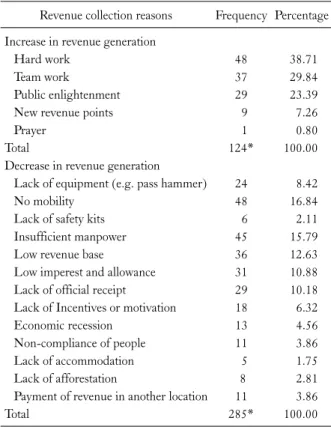
Table 2. Reasons for fluctuations in revenue collection Akwa Ibom State
Revenue collection reasons Frequency Percentage Increase in revenue generation
Hard work 48 38.71
Team work 37 29.84
Public enlightenment 29 23.39
New revenue points 9 7.26
Prayer 1 0.80
Total 124* 100.00
Decrease in revenue generation
Lack of equipment (e.g. pass hammer) 24 8.42
No mobility 48 16.84
Lack of safety kits 6 2.11
Insufficient manpower 45 15.79
Low revenue base 36 12.63
Low imperest and allowance 31 10.88
Lack of official receipt 29 10.18
Lack of Incentives or motivation 18 6.32
Economic recession 13 4.56
Non-compliance of people 11 3.86
Lack of accommodation 5 1.75
Lack of afforestation 8 2.81
Payment of revenue in another location 11 3.86
Total 285* 100.00
*Multiple response to the questions.
Source: Field data (2017).
mean annual revenue. The highest generated revenue of ex- penditure was in 2014 (₦9823550.00) followed by 2013 and 2016 with ₦9378300.00 and ₦9262370.00 respectively.
The least revenue was in 1996 amounting to ₦345952.00.
This increasing trend in forest revenue for the state is stat- istically defined by the function y=45631x- 900000000+e (p>0.05) with a coefficient of determination of 0.7492 or 74.92%. Also, there existed a strong correlation between the generated revenue and year (r=0.866). This is an in- dication that revenue in the state is directly influenced by the previous year revenue. This is in agreement with the ob- servations by Nelson (2018), Nelson and Jacob (2017) and Udo (1999), who reported that the preceding year’s rev- enue performance was usually used as determinant in set- ting subsequent year’s revenue target. Also, despite the low forest resource base in the study area, there was still an aver- age increase in yearly revenue generation which adversely affected the available forest resources.
Forest officers perceived trend of forest revenue generation
The perceived trend and reasons for the trend in forest revenue by the respondents are presented in Tables 1 and 2.
As indicated in Table 1, majority (55.13%) of the re- spondents perceived that the revenue they generated was decreasing from the ones generated the previous year, while 44.87% indicated that there was an increased in the revenue they generated from the previous year. Most (38.71%) of the respondents who perceived that the revenue they gen- erated was increasing from the previous year attributed the increase to hard work (Table 2). This agreed with Solkhe and Chaudhary (2011) observation that hard work and team work are used in an organization to motivate employ- ees to bring out the best skills in them in order to outshine his/her other colleagues.
According to Federal Department of Forestry, Nigeria (2001), team work strengthens the bond among the em- ployees and ensures that targets are met at a faster pace as the workload is shared among the officers and as in- dividuals feel motivated to perform better than his team members.
Increased public enlightenment programmes (23.39%) and the setting up of new revenue check points (7.26%) were also perceived as a factor for increased revenue trend.
According to Dykstra et al. (1996), proper sensitization and involvement of local communities helps in forest revenue collection, while new revenue check points was necessary to check logs illegally conveyed to avert revenue payment at designated check points. However, Federal Department of Forestry, Nigeria (2001) recommends that these new rev- enue collection posts be sited at specific routes mutually agreed upon by the Forestry Department and the resources exploiters.
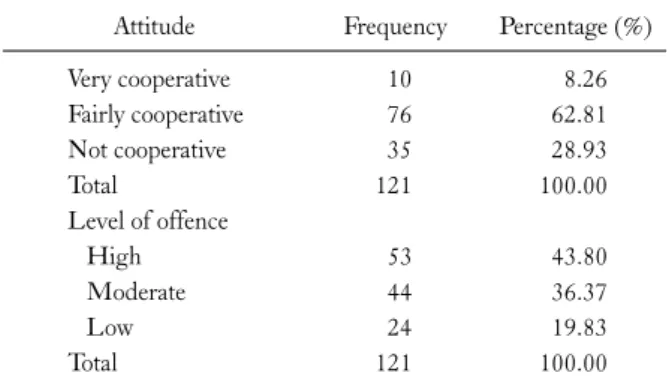
Table 3. Attitude and level of forestry offence in Akwa Ibom State Attitude Frequency Percentage (%)
Very cooperative 10 8.26
Fairly cooperative 76 62.81
Not cooperative 35 28.93
Total 121 100.00
Level of offence
High 53 43.80
Moderate 44 36.37
Low 24 19.83
Total 121 100.00
Source: Field data (2017).
As indicated in Table 2, about 16.84% of the respondents attributed the decrease in forest revenue generation to lack of mobility (vehicles and motorcycles). This was followed by insufficient manpower (15.79%) in the field, low rev- enue base (12.63%), low office imprest and allowances (10.88%), lack of official receipts to be issued at the point of collection (10.18%), lack of equipment (pass hammer) (8.42%) and lack of staff motivation (6.32%). The above factors agreed with Udo (1997), Federal Department of Forestry, Nigeria (2001), Ezebilo (2004), Agbogisi and Ofuoku (2009), Jacob et al. (2012), Akinsoji (2013) and Sule (2013) but contradicts the observation of Dykstra et al.
(1996) who stated that inability of the forestry sector to val- ue the forests and forest products in real financial and eco- nomic terms, poor policy of classifying forests into pro- tected (reserved) and unprotected (non-reserved) areas led to the loss of significant revenue through destruction or ille- gal exploitation of timber on farmlands which continued to supply large quantities of raw materials. Also, the in- adequacy of forestry departments to monitor forest resource exploitation also accounted for the low revenue.
Attitude and level of forestry offence
The result in Table 3 shows the attitude or level of coop- eration of the people in payment of their tariffs to the forest revenue collectors. Majority (71.07%) of the respondents reported having good cooperation with the people (fairly cooperative (62.81%) and very cooperative (8.26%)), while 28.93% reported the people as being non-cooperative in the payment of their revenue. Good cooperation of the people
in payment of their tariffs indicated the presence of a collab- orative management agreement between the people and the government. This approach usually addresses potential conflict between parties concerned in forest revenue collec- tion through the sharing of benefits accrued from revenue among stakeholders (Wells and Brandon 1993; Borrini- Feyerabend 1997). This result is also in accordance with Udo et al. (2009) reported that over 90% of the re- spondents in an earlier study indicated that they knew and understood the forest law and regulations operating in Akwa Ibom State with 93% claiming that they were aware of the penalties stipulated by law for forest offences, hence they were willing to pay their dues. However, the non-coop- erative attitude of the people reported by few of the forest personnel could be attributed to their perceived deprivation in resource rights and marginalization of their values and opinion in decision making processes which affects their livelihoods (Neumann 1998; Swanson and Johnston 1999;
Brockington 2002; Darkoh 2003; Adams and Hutton 2007). These therefore poses far reaching implications in- cluding land use conflicts, unsustainable environmental practices, environmental deterioration, increasing social and spatial inequalities and the associated conditions of pow- erlessness and disillusionment (Murphree 1997; Murphree 1999; Sen 1999; Sadan 2004; Cousins et al. 2005;
Chakravorty 2006; Mosetlhi 2012).
The results in Table 3 also shows that 43.80% of the re- spondents perceived the level of offence in the study area to be high, while 36.36% and 19.83% perceived it to be mod- erate and low respectively. This implies that almost all the forest areas in the state were severely threatened by illegal activities due inadequate penalties on offenders. This find- ing corroborated that of Adeyoju (1986), Udo (1997), Ozo-Eson (2001), Adeyoju (2001), Udo et al. (2009) and Oduntan et al. (2013) reports, who in their separate studies reported that some of the offenders did not commit such of- fences because of ignorance, but because of other reasons such as the urge to profiteer through corrupt practices in view of the low ethical standards of the society.
Consequently, large forest areas have been opened up by this indiscriminate exploitation of logs, especially areas where these trees grow very well (Ahmed et al. 2016).
According to Asia Indigenous Peoples Pact (2016), in- digenous people viewed forest as a common wealth of all,
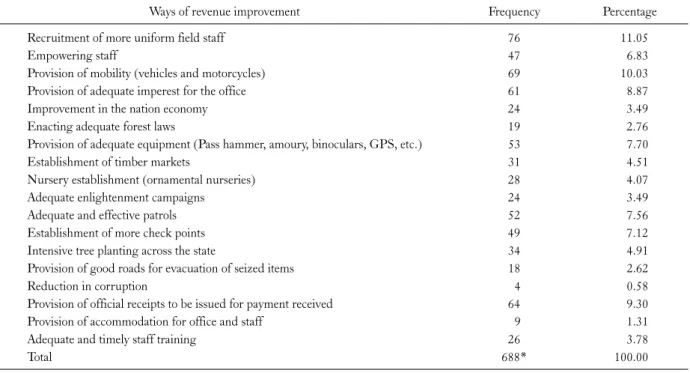
Table 4. Suggested ways of improving forest revenue collection in Akwa Ibom State
Ways of revenue improvement Frequency Percentage
Recruitment of more uniform field staff 76 11.05
Empowering staff 47 6.83
Provision of mobility (vehicles and motorcycles) 69 10.03
Provision of adequate imperest for the office 61 8.87
Improvement in the nation economy 24 3.49
Enacting adequate forest laws 19 2.76
Provision of adequate equipment (Pass hammer, amoury, binoculars, GPS, etc.) 53 7.70
Establishment of timber markets 31 4.51
Nursery establishment (ornamental nurseries) 28 4.07
Adequate enlightenment campaigns 24 3.49
Adequate and effective patrols 52 7.56
Establishment of more check points 49 7.12
Intensive tree planting across the state 34 4.91
Provision of good roads for evacuation of seized items 18 2.62
Reduction in corruption 4 0.58
Provision of official receipts to be issued for payment received 64 9.30
Provision of accommodation for office and staff 9 1.31
Adequate and timely staff training 26 3.78
Total 688* 100.00
*Multiple responses to the questions.
Source: Field data (2017).
which they might use and manage for their needs. This im- plied that the non-inclusion of the people in forest manage- ment decision making by the government coupled with the uncontrolled commercial values placed on forests by the government were among the reason for hostilities or non- cooperation of the people in revenue payment. Also, unfair access and benefits sharing system had in most cases trig- gered communal conflicts (Jacob 2008; Andrew-Essien and Bisong 2009; Jacob and Ogogo 2011; Jacob et al.
2013) and debates (Mosetlhi 2012).
Studies have also shown that areas within region or peo- ple deprived of effective resource governance, development and rural livelihoods but with a constantly increasing pop- ulation growth would exert a significant strain or pressure on the resources such that crisis conditions set in (Andrew- Essien and Bisong 2009; Jacob et al. 2013). These crises were prompted by the increasing social and environmental conflicts that persistently plague the world today, and which seldom were rampant in resource rich environments (Darkoh and Rwomire 2003; World Commission on Environment and Development (Kommissionen 1987).
Perceived ways of improving forest revenue collec- tion in Akwa Ibom State
The results in Table 4 indicate the various ways in which the respondents perceived forest revenue collection in the study area could be improved. Among the seventeen (17) ways mentioned, recruitment of more uniformed field staff had the highest frequency (11.05%). This implies that re- cruitment of more UFS will make for efficient patrol of the division as the area to be covered during routine monthly patrol will be less, thus resulting in high monthly revenue and low incidence of forest offences. This was followed in a decreasing order by provision of mobility (vehicles and mo- torcycles) for the various divisions (10.03%). Availability of vehicles and motorcycles would help in regular patrol and evacuation of seized forest produces which were illegally exploited. Prompt arrest, seizure and evacuation of illegally exploited forest products to the divisional offices of the for- estry department will ensure that no revenue is lost by ille- gal exploitation of forest resources.
Provision of official receipts which accounted for 9.30%
also affected revenue collection in the study area. The re- cent introduction of e-receipt in the state to ensure that all internally generated revenue in the state is harmonized is a serious setback to the forestry directorate in its bit to gen- erate revenue. With only one revenue payment point in the entire Local Government Area making up a Forestry Division, payment of revenue into the state coffers becomes tedious and cumbersome as the payer has to queue up in the line waiting for his/her turn before payment can be made.
Also, considering that most of the forestry check points were usually in remote areas implied that payment had to be effected in the Local Government Area Secretariat where the Treasury Offices was housed and the receipts collected and authenticated by the Forestry revenue collector before the forest produce would be conveyed out of the area. More worrisome was the fact that the transporter or owner of the forest produce exploited may be willing to pay the stipu- lated fees but there was no electricity to effect payment, hence the person had to revisit the office another day to con- duct payment. These scenarios had made it difficult for for- est revenues to be paid into the government coffers as the people seldom device means of averting payment in order not to be delayed, especially the transporters whose vehicles were involved in the process. Availability of payment re- ceipts being issued by the forest guard would ensure that all bureaucracies were removed and revenue was easily paid thereby encouraging the people to pay their levies without delays.
Other perceived ways of improving forest revenue in the state included; provision of adequate funds to run the offi- ces in each division, provision of adequate equipment (stamp hammer, etc), adequate and effective patrols and es- tablishment of more check points for the collection of rev- enue with, 8.87%, 7.70%, 7.56% and 7.12% respectively.
Others were empowerment of the staff (6.83%) through various motivation approaches, intensive tree planting (4.91%) to restore the degraded landscape, establishment of more timber markets in locations where there are few or no timber markets (4.51%), establishment of ornamental nurseries (4.07%) to cater for the increasing demand of or- namental plants and other horticultural plants in the study area, adequate and timely training of staff (3.78%) to pro- vide them with the needed capabilities for revenue collec- tion, adequate enlightenment of the populace (3.49%) on
the need to pay revenue of forest resources exploited and improvement in the nation’s economy (3.49%) as most of the business was slow due to low patronage. Review of the existing obsolete forest law and enactment of new laws had a low (2.76%) frequency followed by provision of office ac- commodation for divisions without befitting ones (1.31%), while the need for reduction in corrupt practices by the for- est officers and uniformed field staff (0.58%) was the least considered avenue for improving forest revenue collection in the study area.
The above-mentioned measures, as perceived by the re- spondents were in line with the observations of Dykstra and Heinrich (1996), Food and Agriculture Organization of the United Nations (1997), FAO (2003), Ezebilo (2004), Agbogisi and Ofuoku (2009), Jacob et al. (2012) and Akinsoji (2013) that human and financial capitals were needed to improve revenue generation in the study area.
According to Emeghara (2012), human resources are more important than physical and financial resources. Without the required human capital (skilled and unskilled), physical capital in the form of machines and other technologies would not give rise to desired outcome. However, econo- mists have tended in their analysis of Nigeria’s forest rev- enue woes to concentrate mainly on the difficulties arising from dearth of financial resources for forestry development.
Implicit in this line of argument is the assumption that if fi- nancial resources were available in sufficient quantities for forestry development, they would yield more revenue to the government. However, research, according to Emeghara (2006) had revealed that problems arising from shortage of manpower especially in the scientific, engineering, technical and managerial areas were indeed more critical and serious than those associated and connected with mere scarcity of capital.
Corruption, another symptom of weak forest sector gov- ernance was evident in the form of bribes, extortion, kick- backs, protection money and, most sinister of all, the ero- sion of institutions beyond the sector and across the econo- my with a debilitating and crippling effect on Nigeria’s overall forestry development (Emeghara 2012). More of- ten than not, it facilitated the occurrence of illegal acts, es- pecially large-scale illegal logging as about $5 billion per year was estimated to be lost globally due to uncollected tax- es and royalties on legally sanctioned timber harvests due to corruption (World Bank 2006). According to Emeghara
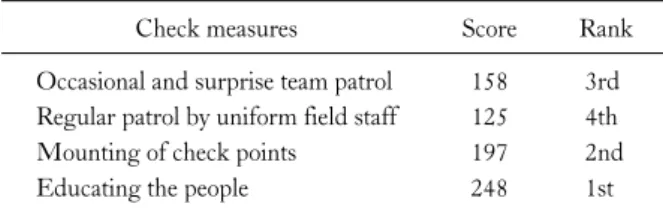
Table 5. Ranking of ways for checking forest offences by forest offi- cers in Akwa Ibom State
Check measures Score Rank
Occasional and surprise team patrol 158 3rd Regular patrol by uniform field staff 125 4th
Mounting of check points 197 2nd
Educating the people 248 1st
*Scores were obtained by summation of each check measures by the use of reverse scoring of respondents ranking i.e. 1st=4, 2nd=3, 3rd=2 and 4th=1.
(2012) the degree of corruption in the country was alarm- ing as it was almost institutionalized. As Njoku (2001) stat- ed, corruption was a pervasive cankerworm which had bur- rowed into the very foundation of the Nigerian society viru- lently, sapping its strength and vitality and leading to di- version of resources (especially funds) meant for forestry development into private use.
In addition to motivation, workers need a conducive working environment, skills and ability to do their job ef- fectively (Chandrasekar 2011). According to McCowan (2001), poor work environment is associated with reduced job satisfaction, absenteeism, somatic complaints, burnout and depression phenomena as most of the workers spent fifty
% of their lives within indoor environments (administrative staff), thereby influencing their mental status, actions, abil- ities and also their performance (Sundstrom et al. 1994).
Therefore, good results and increased output in revenue generation could be assumed to be the result of better work- place environment. Better physical environment of office will motivate the employees and ultimately improve their productivity (Carnevale 1992).
Perceived ways of checking forest offences
The ranking of the various ways for checking of forest offences in the study area as perceived by the forest person- nel in the study area is indicated in Table 5. The results showed that educating the people on the need to comply with the forest law in the state and pay their tariff was the most effective method as it was ranked first (1st) among oth- er methods. This was followed by mounting of check points across the length and breadth of each division and the use of occasional and surprise team patrol across the forest estate
which were ranked second and third respectively. However, regular patrol by uniformed field staff was considered the least effective method among the four methods as it was ranked the fourth (Table 5).
Educating the people was ranked first. This implied that if the public are made to understand the importance of the forest and how the forest resources could be utilized wisely, then the rate of unsustainable exploitation of forest resource would reduce. This could enhance good forest management which involves both scientific and traditional knowledge on how to manage forest resources sustainably. The effective- ness of education was in line with the observation by Kuhar et al. (2010) that people could not exhibit environmentally responsible behaviours if they had no knowledge of the en- vironment or lacked the understanding of what they could do to help. Accordingly, Hines et al. (1987) found small correlations (r=0.35) between knowledge/attitude and behaviour. Although they found a verbal commitment to be the most significant predictor of pro-environmental behav- iour, the two only moderately correlated (r=0.49). Also, studies in the field of behavioural change showed that a moderate to large intent to change behaviour was required to show a small to medium actual change in behaviour (Webb and Sheeran 2006), therefore, continued work with the community and schools was critical to encourage behav- ioural change in future generations.
Mounting of check points was ranked second. This im- plied that mounting of check points could help in reducing illegal trafficking of forest products. This is in line with the observation of Udo (1980) who reported that mounting of check-point has been a very recent innovation in Forestry Service to check illegal activities in Cross Rivers State. The consideration of regular patrol by uniformed field staff in the study area as the least measure for checking of forest of- fences can be attributed to shortage of uniformed field per- sonnel in the study area. This is in line with the observation of Kalu et al. (2009), Akinsoji (2013) and Sule (2013) that there exists shortage of uniformed field personnel in the country.
Conclusion and Recommendations
From the study, it can be concluded that annual forest revenue generation in Akwa Ibom State, Nigeria followed
an increasing pattern with a strong correlation between the revenue collected and year of collection. This trend was at- tributed to hard work and team work among the forestry personnel. However, despite the trend, majority of the per- sonnel still perceive it as decreasing as a result of their in- ability to meet up their yearly revenue target and the myriad of challenges facing the sector among them poor mobility and insufficient man power. The study also envisages that more effort should be put into educating the people on the need to pay their dues and obtaining permits before exploit- ing the forest resources would enhance revenue the revenue profile of the state. Also, regular patrolling of the forest es- tate by the forestry personnel will help in reducing the level of forest offence in the study area. The study therefore rec- ommends improved funding for forestry projects and pro- grammes to increase the status of forest in the state in addi- tion to creating a conducive working environment for its work force to achieve their set targets in revenue collection.
References
Adams WM, Hutton J. 2007. People, Parks and Poverty: Political Ecology and Biodiversity Conservation. Conservat Soc 5:
147-183.
Adeyoju K. 2001. Forestry for national development: a critique of the Nigerian situation. In: Forestry and national development:
proceedings of the 27th Annual Conference of the Forestry Association of Nigeria held in Abuja, FCT, 17th-21st Sept.
2001 (Popoola L, Abu JE, Oni PI, eds). Association, Conference Planning Committee and Editorial Board, Nigeria, pp 54-68.
Adeyoju SK. 1986. An appraisal of private sector participation in Nigerian Forestry regulation. Nigerian J For 16: 6-10.
Agbogidi OM, Ofuoku AU. 2009. Forestry extension: Implications for forest protection. Int J Biodivers Conserv 1: 98-104.
Ahmed YM, Oruonye ED, Ayuba HK. 2016. Socio-economic Impact of Commercial Production of Rosewood (P. erinaceus) in Taraba State, Nigeria. J Agric Ecol Res Int 7: 1-9.
Akinsoji A. 2013. Community-Based Forest Management in Buru, Taraba State, Nigeria. J Environ Earth Sci 3: 146-151.
Andrew-Essien E, Bisong F. 2009. Conflicts, Conservation and Natural Resource use in Protected Area Systems: An Analysis of Recurrent Issues. Eur J Sci Res 25: 118-129.
Asia Indigenous Peoples Pact 2016. Asia Indigenous People Pact Foundation (AIPP). https://www.forestpeoples.org/en/part- ner/asia-indigenous-peoples-pactfounda tion-aipp. Retrieved 31st March, 2018.
Borrini-Feyerabend G. 1997. Beyond fences seeking social sustain-
ability in conservation. 2 A resource book. Switzerland IUCN, Gland.
Brockington D. 2002. Fortress conservation: the preservation of the Mkomazi Game Reserve, Tanzania. Indiana University Press, Bloomington.
Carnevale DG. 1992. Physical Settings of Work: A Theory of the Effects of Environmental Form. Public Prod Manag Rev 15:
423-436.
Chakravorty S. 2006. Fragments of Inequality: Social, Spatial, and Evolutionary Analyses of Income Distribution. Routledge, New York, NY.
Chandrasekar K. 2011. Workplace Environment and Its Impact on Organisational Performance in Public Sector Organisations. Int J Enterp Comput Bus Syst 1.
Cousins B, Cousins T, Hornby D, Kingwill R, Royston L, Smit W.
2005. Will Formalizing Property Rights Reduce Poverty in South Africa’s "Second Economy"? Questioning the Mythologies of Hernando de Soto. No. 18.
Darkoh MBK. 2003. The nature, causes and consequences of de- sertification in the drylands of Africa. In: Human Impact on Environment and Sustainable Development in Africa (Darkoh MBK, Rwomire A, eds). Routledge, Abingdon, pp 199-236.
Darkoh MBK, Rwomire A. 2003. Introduction: Ideas on Human Impact on Environment and Prospects for a Sustainable Future in Afric. In: Human Impact on Environment and Sustainable Development in Africa (Darkoh MBK, Rwomire A, eds).
Routledge, Abingdon, pp 1-28.
Dykstra DP, Heinrich R. 1996. FAO model code of forest harvest- ing practice. FAO, Rome.
Dykstra DP, Kowero GS, Ofosu-Asiedu A, Kio P. 1996. Promoting Stewardship of Forests in the Humid Forest Zone of Anglophone West and Central Africa: Final Report of a collabo- rative research project undertaken by the UNEP and CIFOR.
Center for International Forestry Research (CIFOR), Jakarta.
Ekanem E. 2010. Climate Characteristics. In: Akwa Ibom State- A Geographical Perspective (Usoro E, Akpan P, eds). Immaculate Publications Limited, Enugu, pp 10-13.
Emeghara EE. 2006. The Anambra- Imo River Basin and Rural Development Authority (Airbrda) 1976-2001. Doctoral thesis.
University of Nigeria, Nsukka, Nigeria. (in English)
Emeghara EE. 2012. Forestry: A Veritable Tool for Sustainable Rural Development in Nigeria. Int J Agric Rural Dev 15:
953-957.
Etim JD, Umazi UA, Ufot IN. 2012. Awareness and Perception of Urban Forestry among Urban Dwellers in Sahel Savannah Region of Nigeria. J Biodivers Ecol Sci 2: 236-243.
Ezebilo EE. 2004. Threats to Sustainable forestry Development in Oyo State, Nigeria. MS thesis. Swedish University of Agricultural Sciences, Uppsala, Sweden. (in English)
FAO. 2003. EC-FAO Partnership Programme (2000-2003) EC Tropical Forestry Budget Line Project B7-6201/98-08/VIII/
FOR Project GCP/RAF/354/EC. FAO, Rome.
Federal Department of Forestry, Nigeria. 2001. The forest revenue system and government expenditure on forestry in Nigeria.
FAO, Rome.
Food and Agriculture Organization of the United Nations. 1997.
Aquaculture development. FAO, Rome.
Gray JA. 1997. Underpricing and Overexploitation of Tropical Forests: Forest Pricing in the Management, Conservation, and Preservation of Tropical Forests. J Sustain For 4: 75-97.
Gregersen HM, Arnold JEM, Lundgren AL, Contreras-Hermosilla A. 1999. Valuing forests: context, issues and guidelines. FAO, Rome.
Hines JM, Hungerford HR, Tomera AN. 1987. Analysis and syn- thesis of research on responsible environmental behavior: a meta-analysis. J Environ Educ 18: 1-8.
Jacob DE. 2008. Buffer Zone Management in Cross River National Park –Oban Division, Undergraduate Project, Department of Forestry and Wildlife, University of Uyo, Uyo, pp.47-49.
Jacob DE, Ogogo AU. 2011. Community participation in pro- tected area management: A case study of Cross River National Park. In: Forestry in the context of the millennium development goals: proceedings of the 34th Annual Conference of the Forestry Association of Nigeria held in Osogbo, Osun State, Nigeria (Popoola L, Ogunsanwo K, Idumah FO, eds). Forestry Association of Nigeria, Ibadan, pp 412-415.
Jacob DE, Onadeko SA, Nelson IU, Shotuyo ALA. 2018a.
Evaluation of Old Oyo National Park efficiency using DEA Approach. Econ Environ Stud 18: 193-210.
Jacob DE, Etuk IM, Nelson IU. 2018b. Assessment of an- ti-poaching effectiveness in old Oyo National Park, Nigeria. In:
Proceedings of 6th NSCB Biodiversity Conference Uniuyo 2018. Eniang EA, Umoh GS, Babalola F, eds. pp 422-429.
Jacob DE, Udoakpan UI, Nelson IU. 2013. Issues on conflict res- olution in cross river national park, southeastern Nigeria. In: 1st International Conference on Environmental Crisis and its Solutions; Kish Island, Iran; Feb 13-14, 2013. pp 76-82.
Jacob DE, Udoakpan UI, Nelson IU. 2013. Issues on conflict res- olution in cross river national park, southeastern Nigeria. In: 1st International Conference on Environmental Crisis and its Solutions; Kish Island, Iran; Feb 13-14, 2013. pp 76-82.
Kalu C, Ikpoba S, Okonta B. 2009. Evaluation of Staff Strength of Forestry Personnel, Edo State, Nigeria, from 1986-2008. Plant Sci Res 2: 1-5.
Kommissionen B. 1987. Our common future. Oxford University Press, Oxford.
Kuhar CW, Bettinger TL, Lehnhardt K, Tracy O, Cox D. 2010.
Evaluating for long-term impact of an environmental education program at the Kalinzu Forest Reserve, Uganda. Am J Primatol 72: 407-413.
McGowan B. 2001. Self-reported stress and its effects on nurses.
Nurs Stand 15: 33-38.
Mosetlhi BBT. 2012. The Influence of Chobe National Park on People’s Livelihoods and Conservation Behaviors. Doctoral
thesis. University of Florida, Gainesville, United States. (in English)
Murphree M. 1997. Congruent objectives, competing interests and strategic compromise: concepts and process in the evolution of Zimbabwe’s CAMPFIRE Programme. University of Manchester, Institute for Development Policy and Management, Manchester.
Murphree MW. 1999. Enhancing sustainable use: incentives, poli- tics and science. Institute of International Studies, University of California, Berkeley, CA.
National Population Commission. 2007. Details of the Breakdown of the National and State Provincial Population Totals 2006 Census. Federal Republic of Nigeria Official Gazette 94: 1-26.
Nelson IU. 2018. Assessment of Opportunities for Forest Revenue Generation and Management of Forest Resources in Akwa Ibom State, Nigeria. PhD Thesis, University of Uyo, Nigeria, 282pp.
Nelson IU, Jacob DE. 2017. An Assessment of Forest Revenue Generation in Akwa Ibom State, Nigeria. Mediterr J Basic Appl Sci 1: 221-230.
Nelson IU. 2015. Economic Analysis of Small Scale Ornamental Plant Production and Marketing in Akwa Ibom State, Nigeria.
MS thesis. University of Uyo, Uyo, Nigeria.
Neumann RP. 1998. Imposing wilderness: struggles over live- lihood and nature preservation in Africa. University of California Press, Berkeley, CA.
Njoku ON. 2001. Economic history of Nigeria: 19th and 20th centuries. Magnet Business Enterprises, Enugu.
Oduntan OO, Soaga JAO, Akinyemi AF, Ojo SO. 2013. Human activities, pressure and its threat on forest reserves in Yewa divi- sion of Ogun State, Nigeria. J Environ Res Manag 4: 260-267.
Olaseni O, Agbeja BO, Adeyoju SK. 2004. Dynamics of forest rev- enue system collections and forestry development in Ondo State, Nigeria, between 1991 and 2000. Food Agric Environ 2:
365-369.
Omoluabi AC, Ogundare LG, Akande JA. 1993. Forest revenue systems in Nigeria: structure and forms of barriers. In: In Proceedings of the Seminar on Forest Revenue System Development in Nigeria held at Benin City, Edo State 10-11 November; Benin City, Nigeria; Nov 10-11, 1993. pp 365-369.
Ozo-Eson PI. 2001. The socioeconomic effects of forests crime in Plateau State, Nigeria. In: Forestry and national development : proceedings of the 27th Annual Conference of the Forestry Association of Nigeria; Abuja, Nigeria; Sep 17-21, 2001. pp 267-274.
Sadan E. 2004. Empowerment and community planning. Tel Aviv, Hakibbutz Hameuchad Publishers.
Sen AK. 1999. Development as freedom. Knopf, New York, NY.
Solkhe A, Chaudhary N. 2011. HRD Climate and Job Satisfaction:
An Empirical Investigation. Int J Comput Bus Res 2.
Sule ID. 2013. Illegal logging thrives in Taraba. https://www.dailytrust.
com.ng/illegal-logging-thrives-in-taraba.html. Accessed 1 April
2017.
Sundstrom E, Town JP, Rice RW, Osborn DP, Brill M. 1994.
Office Noise, Satisfaction, and Performance. Environ Behav 26:
195-222.
Swanson TM, Johnston S. 1999. Global environmental problems and international environmental agreements: the economics of international institution building. Edward Elgar in association with UNCTAD, Cheltenham.
Udo ES. 1980. An economic analysis of the forest revenue sources of the Cross River State of Nigeria. MS thesis. University of lbadan, lbadan, Nigeria.
Udo ES. 1997. Forest offences as impediment to forest resources conservation in Akwa Ibom State. In: Environment and re- source development: proceedings of the 25th Annual Conference
of the Forestry Association of Nigeria; Ibadan, Nigeria; Sep 22-26, 1997.
Udo ES, Udofia SI, Olajide O. 2009. Timber Dealers’ Perception of their Knowledge of the Forest Law in Uyo Senatorial District of Akwa Ibom State, Nigeria. Afr Res Rev 3: 125-135.
Webb TL, Sheeran P. 2006. Does changing behavioral intentions engender behavior change? A meta-analysis of the experimental evidence. Psychol Bull 132: 249-268.
Wells MP, Brandon KE. 1993. The principles and practice of buf- fer zones and local participation in biodiversity conservation.
Ambio 22: 157-162.
World Bank. 2006. China- Guangxi Integrated Forestry Develop- ment and Conservation Project (English). World Bank, Washington, DC.