40(1), 7~13(2011) DOI: 10.3746/jkfn.2011.40.1.007
은행 잎, 종실 및 외종피 추출물의 항균활성
박샛별․조규성†
한경대학교 식품생물공학과, 식품생물산업연구소
Antimicrobial Activity of Extracts and Fractions of Ginkgo biloba Leaves, Seed and Outer Seedcoat
Saet-Byoul Park and Gyu-Seong Cho†
Dept. of Food Science and Biotechnology, Hankyong National University, Gyeonggi 456-749, Korea
Abstract
This study was conducted to investigate the antimicrobial activity of Ginkgo biloba L. leaves, seed and outer seedcoat against bacteria. Antimicrobial effects of Ginkgo biloba L. leaves (GBL), seed (GBS) and outer seedcoat (GBO) were examined by paper disc method and optical density method to determine minimum inhibition concen- tration (MIC), and observed by scanning electron microscope (SEM) to figure out the morphological change on the surface when Ginkgo biloba leaves extract was treated. The extracts of GBL, GBS and GBO were ex- tracted by solvents such as methanol, ethanol, water. The methanol extract of GBL and GBO showed the highest antimicrobial activity against Bacillus cereus , Bacillus subtilis , Klebsiella pneumoniae , Listeria monocytogenes , Salmonella Typhimurium, Staphylococcus aureus , Yersinia enterocolitica except Escherichia coli and thus was further fractionated. The MICs of the chloroform fraction of GBL methanol extract were 125 μg/mL against B. subtilis , and L. monocytogenes ; GBO methanol extract were 62.5 μg/mL against B. cereus and 125 μg/mL against B. subtilis , and L. monocytogenes . The microorganisms were treated with chloroform extracts (2000 μ g/mL) of GBL and GBO methanol extracts. It was observed by scanning electron microscope (SEM). The cells were expanded and a part of cell wall was completely destructed by GBL and GBO. Thus Ginkgo biloba L. leaves and outer seedcoat could be further developed into a natural antimicrobial agent.
Key words: antimicrobial activity, Ginkgo biloba L., ginkgo leaves, ginkgo seed, ginkgo seedcoat
†
Corresponding author. E-mail: [email protected]
†
Phone: 82-31-670-5153, Fax: 82-31-677-0990
서 론
식물에 존재하는 항균물질은 그 대부분이 alkaloid류, fla- vonoid류, terpenoid류, phenolic compound류, quinone류 및 volatile oil 등의 이차대사 산물이거나 또는 그 유도체들로 알려져 있다(1). 은행 외종피에서 살충효과가 있다고 보고 (2)된 bilobal, ginkgoic acid 등의 물질은 bacteria에 대해서 도 강한 항균작용을 보일 수 있을 것으로 판단된다. 은행나 무(
Ginkgo bilobaL.)는 암·수나무가 각각 다른 낙엽성 교목 으로 해충이나 공기오염에 대한 저항성이 강해 정원수나 가 로수로도 많이 이용되고 있다. 잎은 녹색으로 길이 4∼8 cm, 너비 5∼10 cm로 부채꼴 모양을 하고 있으며, 잎의 끝은 두 개로 갈라져 있고, 밑 부분은 쐐기 모양으로 엽맥(葉脈)은 평행하다. 은행 열매는 핵과(核果)의 모양으로 미끈미끈하 고 악취가 나는 노란색의 외종피와 딱딱하고 흰색이며 2개 의 자엽을 가진 내종피로 되어있다(3).
은행잎의 밝혀진 성분으로 flavonoids, diterpenes, ses- quiterpenes, polyprenol, 유기산 및 polysaccharides 등이 있
다. 은행잎 추출물의 약리작용은 flavonoid 성분에 의한 것으 로 알려져 있다(4,5). 은행잎에 들어있는 flavonoid는 유해 산소를 없애고 세포막을 보호하며 혈압을 내리는 등의 작용 을 하며, 특히 ginkgo flavone glycosides 성분은 혈액순환을 좋게 하고 혈전 방지 효과로 노화를 막을 뿐 아니라 신경계 질병 치료에도 효과가 있는 것으로 알려져 있다(6). 은행잎 의 항균효과에 연구는 Lee 등(7)의
Staphylococcus aureus에 대한 은행잎 에탄올 농도별 추출물의 항균효과를 검색, Sung(8)의 은행잎 추출물로부터
Escherichia coli,
Salmo- nellaTyphimurium,
Staphylococcus aureus,
Listeria monocytogenes등 식중독균에 대한 항균효과, Jung 등(9) 의 은행잎 추출물의
Bacillus cereus에 대한 항균효과, Huang 등(10)의 은행잎으로부터 GAFP라고 부르는 항진균 성 peptide 물질분리 등의 연구가 있다.
한편 은행 종실과 은행 외종피를 이용한 항균활성 비교 연구가 없으며, 특히 은행 외종피는 비식용부위로 고약한 냄새와 알레지 증상을 야기하기 때문에 대부분 폐기를 한다.
따라서 본 연구에서는 폐기되는 은행 외종피의 항균활성을
검색하여 항균제, 천연 보존료로써의 이용가치를 알아보고 자, 식중독세균에 대하여 은행잎, 종실 및 외종피의 용매별 추출물에 대한 항균효과를 조사하였다.
재료 및 방법
은행잎, 은행 종실, 은행 외종피 시료조제
실험에 사용된 은행나무 잎(
Ginkgo bilobaL. leaves, GBL), 은행(
Ginkgo bilobaseed, GBS), 은행 외종피 (
Ginkgo bilobaouter seedcoat, GBO)는 2008년 10월에 한경 대학교 부설농장에서 채취하였다. 은행잎은 열풍건조 후 분 쇄기(M20, IKA, Staufen, Germany)로 분쇄하여 50 mesh로 분말화한 것을 사용하였고, 은행 외종피는 동결건조 후 분쇄 기로 조분쇄한 것을 사용하였으며, 은행 종실은 동결건조 후 분쇄기로 분쇄하여 50 mesh로 분말화 한 것을 사용하였 다. 모든 시료는 -70
oC 냉동고(JP/MF-U50V, Sanyo Co., Osaka, Japan)에서 냉동 보관하면서 실험에 사용하였다.
공시 균주 및 배지
항균 활성 검색에 사용된 균은
Bacillus cereusKCCM 40935(MHA, 37
oC),
Bacillus subtilisKCCM 11315(MHA, 37
oC),
Listeria monocytogenesKCCM 40307(BHI, 37
oC),
Staphylococcus aureusATCC 6538(TSA, 37
oC) 등 Gram positive bacteria 4종과
Escherichia coliKCCM 11234 (TSA, 37
oC),
Klebsiella pneumoniaeKCCM 40890(MHA, 37
oC),
SalmonellaTyphimurium KCCM 11862(MHA, 37
oC),
Yersinia enterocoliticaKCCM 41657(MHA, 37
oC) 등 Gram negative bacteria 4종을 선택하여 한국미생물보존 센터(KCCM)에서 분양받아 활성화시켜 사용하였다.
용매별 시료의 추출물 조제
Methanol 추출물의 조제는 은행잎 분말, 은행 종실 분말, 조분쇄된 은행 외종피에 각각 99.0% methanol을 1:10(w/w) 의 비율로 가하여 실온에서 5시간 교반하여 1차 추출액을 얻었으며, 잔사는 3회 반복하여 추출액을 얻었다. 추출액은 감압여과(직경 0.45 μm membrane filter)한 후, 회전식 감압 농축기(N-1000S-W, Eyela Co., Tokyo, Japan)를 사용하여 감압농축한 다음, 동결건조기(FD-8515, Ilshin Co., Seoul, Korea)로 건조하여 methanol 추출물을 얻었다. 또한 95.0%
ethanol 추출물과 물 추출물도 위와 동일한 방법으로 추출, 농축, 건조하여 얻었으며, 모든 추출물은 -70
oC 냉동고에 보 관하면서 실험에 사용하였다. 시료 추출물의 추출률은 다음 과 같이 계산하였다.
Extraction yield (%) = Raw material (g, dry weight) Solid in extract (g) × 100
분획 추출물의 조제
은행잎과 은행외종피의 methanol 추출물에서 항균활성 이 양호한 결과를 보였기에 이들의 추출물을
n-hexane,
chloroform, ethyl acetate 및 butanol을 사용하여 순차적으 로 계통 분획·추출하여 추출물과 물 층을 얻고, 이들을 감압 농축한 후 동결건조 하여 분획 추출물을 얻었다. 이때 분획 추출물의 수율은 시료 추출물의 고형분 함량계산과 같은 방 법으로, 분획 추출물 1 mL을 취하여 105
oC에서 건조한 후 증발 잔사량으로 계산하여 추출수율을 조사하였다.
한천배지확산법(paper disc plate method)에 의한 항 균활성 검색
항균활성 검색은 한천배지확산법(11)으로 측정하였다. 미 리 조제된 Mueller Hinton Agar(MHA) 평판배지에 활성화 된 각 세균 배양액을 0.5 McFarland 표준 탁도(Cells×
10
6/mL)가 되게 희석하여 균일하게 도말한 후, 직경 8 mm의 멸균된 paper disc(Advantec, Tokyo, Japan)에 농도별 추출 물을 50 μL씩 흡수시킨 후 추출용매를 완전히 제거하여 평 판배지 위에 올려놓았다. 37
oC 항온기에서 24시간 배양한 후 형성된 paper disc 주변의 투명환(clear zone)의 직경 (mm)을 Caliper(Mitutoty, Tokyo, Japan)로 측정하여 항균 력을 검토하였으며, 첨가된 용매자체의 항균력을 배제하기 위하여 추출 용매만 paper disc에 첨가하여 대조구를 만들어 비교하였다.
최소저해농도(minimum inhibitory concentration, MIC) 측정
최소저해농도는 액체배지희석법(12)으로 측정하였다. 9.8 mL 액체배지에 농도별로 조제한 추출물을 0.1 mL 첨가한 후 optical density 값이 0.3이 되도록 희석한 균액을 0.1 mL 씩 접종하였다. 37
oC에서 24시간 배양한 후 배양액의 O.D.
값을 600 nm에서 Quartz cell(10 mm×10 mm×45 mm, Whatman, Clifton, NJ, USA)을 사용하여 UV spectropho- tometer(Genesys 6, Thermo electron Co., Boston, MA, USA)로 균의 생육억제효과를 측정하였으며, blank 실험은 각 세균 배양용 액체배지에 시료만 첨가여 균 증식이 나타나 지 않은 농도를 MIC로 결정하였다.
주사전자현미경을 통한 세균 세포 관찰
대수기까지 증식된 미생물 배양액을 원심분리(5,000×
g,
30 min)하여 상징액을 제거하여 균체를 회수한 후, 다시 균
체에 0.85% 멸균생리식염수 소량을 넣고 현탁하여 원심분
리 후 균체를 회수하는 과정을 3~4회 반복하였다. 회수된
균체에 0.05 M phosphate buffer를 첨가하여 희석하고 0.45
μ m membrane filter로 균체를 여과, 고정하고 5% glutal-
dehyde 용액에 균체를 고정한 membrane filter를 12시간 침
지한 후 멸균수로 1분간 세척하고, 30%, 60%, 90% ethanol
에 약 10초간 차례로 침지하여 탈수한 다음, 다시 isoamyl
acetate에 약 30분간 담구어 건조시킨 membrane filter를
stub에 고정한 뒤 ion spotter(E-1010, Hitachi, Tokyo,
Japan)에서 60초간(Au+Pd) 코팅한 것을 주사전자현미경
(SEM, S-3500N, Hitachi) 관찰시료로 하였으며, 관찰에 사
Table 1. Yield ratios of solvent extraction of Ginkgo biloba L. leaves, seed and outer seedcoat by methanol, ethanol and
water (Unit: %)
Sample
1)Solvent
Methanol
extract Ethanol
extract Water extract GBL GBS
GBO
22.7 6.8 67.2
14.9 4.4 16.5
31.4 17.1 57.8
1)
GBL: Ginkgo biloba L. leaves, GBS: Ginkgo biloba L. seed, GBO: Ginkgo biloba L. outer seedcoat.
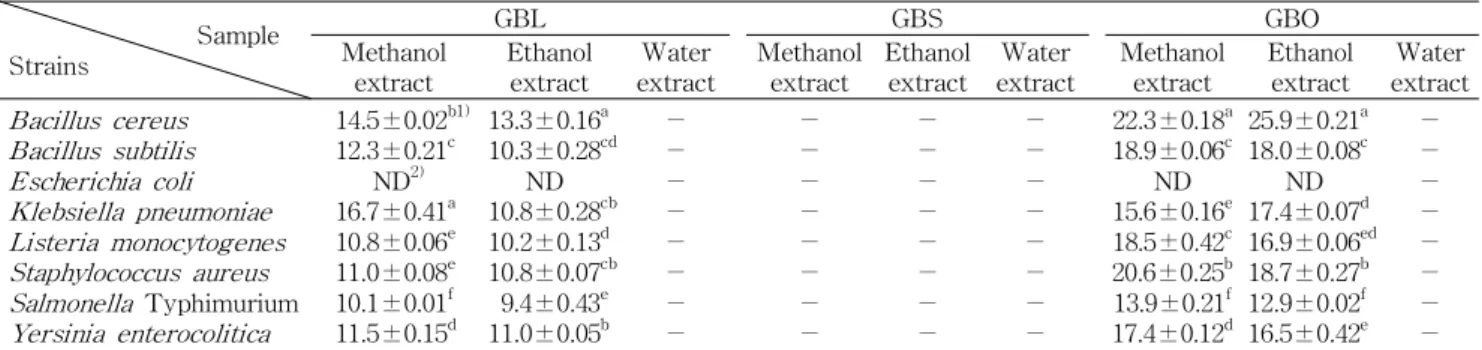
Table 2. Antimicrobial activity of the methanol, ethanol and water extracts from Ginkgo biloba L. leaves, seed and outer seedcoat
on several microorganisms (Unit: mm)
Sample Strains
GBL GBS GBO
Methanol
extract Ethanol
extract Water
extract Methanol
extract Ethanol extract Water
extract Methanol
extract Ethanol
extract Water extract Bacillus cereus
Bacillus subtilis Escherichia coli Klebsiella pneumoniae Listeria monocytogenes Staphylococcus aureus Salmonella Typhimurium Yersinia enterocolitica
14.5±0.02
b1)12.3±0.21
cND
2)16.7±0.41
a10.8±0.06
e11.0±0.08
e10.1±0.01
f11.5±0.15
d13.3±0.16
a10.3±0.28
cd10.8±0.28 ND
cb10.2±0.13
d10.8±0.07
cb9.4±0.43
e11.0±0.05
b- -
- -
- -
- -
- -
- -
- -
- -
- -
- -
- -
- -
- -
- -
- -
- -
22.3±0.18
a18.9±0.06
c15.6±0.16 ND
e18.5±0.42
c20.6±0.25
b13.9±0.21
f17.4±0.12
d25.9±0.21
a18.0±0.08
c17.4±0.07 ND
d16.9±0.06
ed18.7±0.27
b12.9±0.02
f16.5±0.42
e- -
- -
- -
- -
1)
Any means in the column followed by the different superscripts are significantly different (n=3, p<0.05) by Duncan's multiple range test.
2)
ND: not detected.
용된 주사전자현미경의 분석조건은 vaccum 15KV, magni- fication ×10,000 그리고 Au+Pd, 60 sec, 10 μm로 coating (ion spotter, E-1010, Hitachi) 하여 검경하였다(13).
통계처리
실험결과는 SAS package(release 8.01)를 이용하여 평균
± 표준편차로 표시하였고, 평균값의 통계적 유의성은 p<
0.05 수준에서 Duncan's multiple range test에 의해 검정하 였다(14).
결과 및 고찰
용매별 시료 추출물 수율
은행잎, 은행 종실 및 은행 외종피를 methanol, ethanol, 물을 용매로 하여 각각 추출한 수율은 Table 1과 같다. 은행 잎의 methanol, ethanol, 물 추출 수율은 각각 약 23%, 15%, 31%이었고, 은행 외종피의 methanol, ethanol, 물 추출 수율 은 약 67%, 17%, 58%로 나타났고, 은행 종실의 methanol ethanol, 물 추출 수율은 각각 약 7%, 4%, 17%로 나타났다.
은행잎 methanol 추출 수율 결과는 탈지하지 않은 은행잎 methanol 추출 수율이 24.35%라고 보고한 Sung(8)의 연구 결과와 유사하였다. 은행잎의 경우 물 추출 수율이 31%로 가장 좋았으며, 은행 외종피의 경우 methanol 추출 수율이 67%로 가장 높았고, 은행 종실의 경우 17%로 물 추출 수율 이 가장 높았다. 각 용매별 추출 수율을 보면 은행 외종피의
용매별 추출 수율이 가장 높았는데 methanol 추출물 67%, ethanol 추출물 17%, 물 추출물 58%의 수율을 보였다.
용매별 시료 추출물의 한천배지 확산법에 의한 항균활성 은행잎, 은행 종실, 은행 외종피에 대한 용매별 추출물의 항균활성 검색 결과는 Table 2와 같다. 조제한 용매별 시료 추출물을 0.5 mg/disc의 동일 농도 조건으로 항균활성을 검 색한 결과 은행잎, 은행 외종피의 methanol 추출물과 ethanol 추출물에서는 항균활성이 검색된 반면, 은행잎과 은행 외종 피의 물 추출물, 은행 종실의 모든 추출물에서는 항균활성이 검색되지 않았다. 은행잎의 경우 모든 균에 있어 methanol 추출물이 ethanol 추출물보다 강한 항균활성을 나타났으며, methanol 추출물은
K. pneumoniae와
B. cereus에서 강한 항균효과를 보였다. 은행 외종피의 경우 methanol 추출물은
B. cereus,
S. aureus, B. subtilis,
L. monocytogenes균에, ethanol 추출물은
B. cereus,
S. aureus, B. subtilis,
K.pneumoniae
균에서 강한 항균활성을 보였다.
E. coli의 경우 모든 용매별 추출물에서 항균력이 검색되지 않았는데, Sung (8)은 은행잎 methanol 추출물이
E. coli에 대한 항균효과가 있다고 하였으며, 이때
S. aureus,
Sal.Typhimurium,
L.monocytogenes
에서 보이는 생육저해환의 직경과 비슷한 항균효과를 나타내었다고 보고한 바 있다.
Methanol 추출물의 용매별 분획수율 및 항균활성
항균활성이 우수하였던 은행잎과 은행잎 외종피 meth-
anol 추출물을 용매별로 분획추출 한 결과는 Table 3과 같
다. 은행잎의 chloroform과 ethyl acetate의 수율은 각각
6.12%, 3.45%로 나타났으며, 은행 외종피 methanol 추출물
의 chloroform과 ethyl acetate의 분획물 추출수율은 1.75%,
2.45%로 10% 미만의 수율을 나타낸 반면, 은행잎 methanol
추출물의
n-hexane과 water 분획추출물의 수율은 각각
30.59%, 40.30%로 30% 이상의 수율을 보였으며, 은행 외종
피의 경우 methanol 추출물의 hexane 분획추출물의 수율은
약 30%, water 분획추출물의 수율은 약 60%로 가장 높은
수율을 나타냈다.
Table 3. Yield ratios of extraction of Ginkgo biloba L. leaves and outer seedcoat by fraction solvents (Unit: %)
Sample
1)Solvent
n-Hexane extract Chloroform extract Ethyl acetate extract Butanol extract Water extract GBO GBL 30.59
29.78 6.12
1.75 3.45
2.45 14.56
7.17 43.30
58.82
1)
GBL: Ginkgo biloba L. leaves, GBO: Ginkgo biloba L. outer seedcoat.
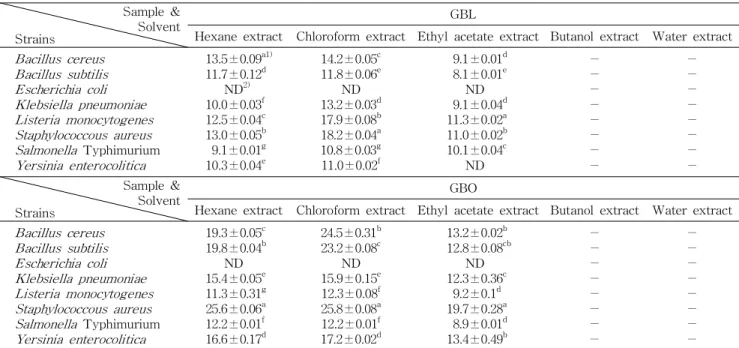
Table 4. Antimicrobial activity of fraction extracts of the MeOH extract from Ginkgo biloba leaves (GBL) and outer seedcoat
(GBO) on several microorganisms (Unit: mm)
Sample &
Solvent Strains
GBL
Hexane extract Chloroform extract Ethyl acetate extract Butanol extract Water extract Bacillus cereus
Bacillus subtilis Escherichia coli Klebsiella pneumoniae Listeria monocytogenes Staphylococcous aureus Salmonella Typhimurium Yersinia enterocolitica
13.5±0.09
a1)11.7±0.12
dND
2)10.0±0.03
f12.5±0.04
c13.0±0.05
b9.1±0.01
g10.3±0.04
e14.2±0.05
c11.8±0.06
e13.2±0.03 ND
d17.9±0.08
b18.2±0.04
a10.8±0.03
g11.0±0.02
f9.1±0.01
d8.1±0.01
e9.1±0.04 ND
d11.3±0.02
a11.0±0.02
b10.1±0.04
cND
- -
- -
-
- -
-
- -
- -
-
- -
- Sample &
Solvent Strains
GBO
Hexane extract Chloroform extract Ethyl acetate extract Butanol extract Water extract Bacillus cereus
Bacillus subtilis Escherichia coli Klebsiella pneumoniae Listeria monocytogenes Staphylococcous aureus Salmonella Typhimurium Yersinia enterocolitica
19.3±0.05
c19.8±0.04
b15.4±0.05 ND
e11.3±0.31
g25.6±0.06
a12.2±0.01
f16.6±0.17
d24.5±0.31
b23.2±0.08
c15.9±0.15 ND
e12.3±0.08
f25.8±0.08
a12.2±0.01
f17.2±0.02
d13.2±0.02
b12.8±0.08
cb12.3±0.36 ND
c9.2±0.1
d19.7±0.28
a8.9±0.01
d13.4±0.49
b-
- -
- -
- -
-
-
- -
- -
- -
-
1)
Any means in the column followed by the different superscripts are significantly different (n=3, p<0.05) by Duncan's multiple range test.
2)
ND: not detected.
은행잎과 은행 외종피의 methanol 추출물로부터 극성별 용매 분획하여 얻은 각각의 분획추출물(500 μg/mL)로 항균 활성을 검색한 결과는 Table 4와 같다. 은행잎, 은행 외종피 의 methanol 추출물 모두 hexane, chloroform, ethyl acetate 분획추출물에서 강한 항균활성을 보였으나 butanol과 water 분획추출물에서는 항균활성이 검색되지 않았다. 용매별 시 료 추출물의 항균검색 결과와 마찬가지로
E. coli에 대한 항 균력은 검색되지 않았으며, 나머지 7종 균주에 대한 항균력 검색 결과, 은행 외종피 methanol 추출물의 chloroform 분획 물에서 가장 우수한 항균력을 보였다. 은행잎과 은행 외종피 methanol 추출물의 용매분획물 모두 chloroform 분획추출 물에서 높은 항균효과를 보였다. Sung(8)은 은행잎 meth- anol 추출물의 butanol 용매분획추출물에서 4종의 식중독세 균(
E. coli,
Sal.Typhimurium,
S. aureus,
L. monocytogenes) 에 대한 항균활성이 가장 우수했다고 보고했는데, 본 실험 결과와는 약간의 차이가 있다. 이러한 차이는 시료 추출 및 처리 조건, 성분 조성 및 주요 항균 물질의 차이에서 비롯된 것으로 생각된다.
Methanol 추출물의 용매별 분획 추출물의 최소저해농 도 측정
은행잎과 은행 외종피의 methanol 추출물의 용매분획물 의 MIC를 측정한 결과는 Table 5와 같다. 은행잎의 meth- anol 추출물의 용매분획물의 경우 가장 우수한 항균효과를 보였던 chloroform 층에서 가장 낮은 MIC 값을 보였으며, butanol과 water 분획추출물은 한천배지확산법 측정 결과 와 마찬가지로 항균력을 보이지 않았다. 특히
B. subtilis와
L. monocytogenes에 대해서 chloroform 추출물이 125 μg/
mL로 가장 낮은 MIC를 보였으며,
E. coli에서는 MIC가 검 색되지 않았다. 은행 외종피 methanol 추출물의 용매분획물 MIC 측정 결과 hexane 분획물은 MIC가 검색되지 않은
E.coli
를 제외한 다른 균에 대하여 500 μg/mL 이하의 농도에서
는 항균력을 보이지 않았다. Ethyl acetate 분획물은
E. coli를 제외한 모든 균주에서 1000 μg/mL 이하에서 항균력을
나타내지 않았고, chloroform 분획물이
B. cereus에 대하여
62.5 μg/mL의 농도로 가장 낮은 MIC를 보였다. 또한 한천배
지확산법에서 보이는 항균력과 액체배지에서 보이는 항균
력의 차이는 Kang(15)의 결과와 유사하였다.
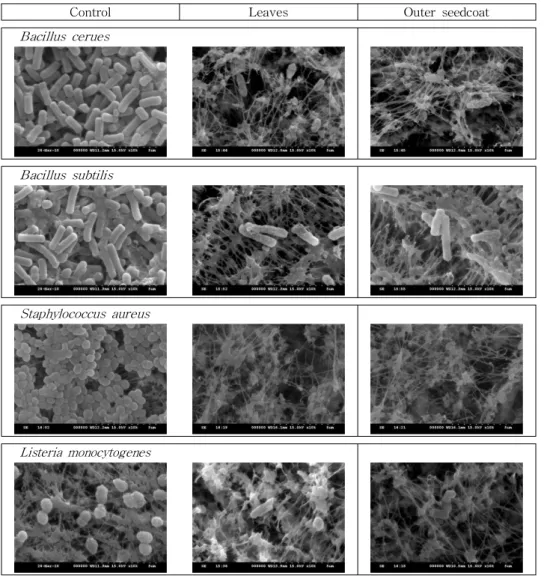
Control Leaves Outer seedcoat
Fig. 1. Scanning electron micro- graph of Gram positive bacteria.
Bacillus cerues
Bacillus subtilis
Staphylococcus aureus
Listeria monocytogenes
Table 5. Minimum inhibitory concentration (MIC) of the solvent fraction extracts of methanol extract of Ginkgo biloba L.
leaves and outer seedcoat against microorganisms (Unit: μg/mL)
Sample &
Solvent Strains
GBL Methanol extract.
Hexane extract Chloroform extract Ethyl acetate extract Butanol extract Water extract Bacillus cereus
Bacillus subtilis Escherichia coli Klebsiella pneumoniae Listeria monocytogenes Staphylococcous aureus Salmonella Typhimurium Yersinia enterocolitica
2500 1000 ND
1)1000 1000 1000 1000 1000
500 125 1000 ND 125 500 1000 1000
2500 1000 1000 ND 1000 1000 1000 1000
- -
- -
- -
- -
- -
- -
- -
- -
Sample &
Solvent Strains
GBO Methanol extract
Hexane extract Chloroform extract Ethyl acetate extract Butanol extract Water extract Bacillus cereus
Bacillus subtilis Escherichia coli Klebsiella pneumoniae Listeria monocytogenes Staphylococcous aureus Salmonella Typhimurium Yersinia enterocolitica
500 ND 500 500 500 500 1000 1000
62.5 ND 125 500 125 500 1000 500
1000 1000 ND 1000 1000 1000 1000 1000
-
- -
- -
-
- -
-
- -
- -
-
- -
1)
ND: not detected.
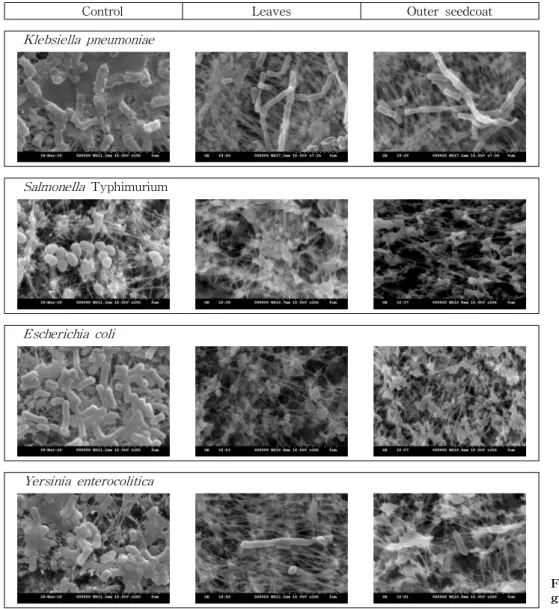
Control Leaves Outer seedcoat
Fig. 2. Scanning electron micro- graph of Gram negative bacteria.
Klebsiella pneumoniae
Salmonella Typhimurium
Escherichia coli
Yersinia enterocolitica
주사전자현미경(SEM)에 의한 세균세포 관찰
은행잎과 은행 외종피 추출물에 의한 미생물의 형태변화 를 관찰하기 위해서 각각의 균주를 2,000 μg/mL의 농도로 은행잎과 은행 외종피 methanol 추출물의 chloroform 용매 분획물을 처리한 것과 무처리한 대조구를 대수기까지 배양 하여 전자현미경으로 관찰한 결과는 Fig. 1, 2와 같다. 대부 분의 균의 경우 은행잎과 은행 외종피 추출물 처리구는 대조 구에 비해 세포수가 감소하고, 세포가 팽윤하거나 일부 세포 벽이 파괴된 것을 관찰할 수 있었다. 이것은 은행잎, 은행 외종피 추출물 처리에 의해 균체 세포벽 및 세포막이 손상을 입어 세포 내 성분 유출 등으로 균주의 생육이 억제된 것으 로 생각된다. 이러한 실험 결과는 Kang(15)이 갓 에탄올 추 출물을
E. coli와
S. aureus두 균주에 처리했을 때와 Kim 등(16)의
Lac. plantarum과
Leu. mesenteroides에 향신료 추출물을 처리한 경우 세균의 성장을 억제시킨다는 보고와 유사한 경향이다.
요 약
천연 항균 소재를 탐색하기 위한 목적으로 은행잎, 은행 종실 그리고 은행 외종피를 methanol, ethanol, water 추출 물을 얻은 후 8종의 세균에 대하여 항균효과를 검색하였다.
은행잎, 은행 외종피의 methanol 추출물과 ethanol 추출물에 서는 항균활성이 검색된 반면, 은행잎과 은행 외종피의 물 추출물, 은행 종실의 모든 추출물에서는 항균활성이 검색되 지 않았다. 은행잎의 경우 모든 균에 있어 methanol 추출물 이 ethanol 추출물보다 강한 항균활성을 나타냈으며, meth- anol 추출물은
K. pneumoniae와
B. cereus에서 강한 항균 효과를 보였다. 은행 외종피의 경우 methanol 추출물은
B.cereus
,
S. aureus,
B. subtilis,
L. monocytogenes균에, eth-
anol 추출물은
B. cereus,
S. aureus,
B. subtilis,
K. pneu- moniae균에서 강한 항균활성을 보였다. 항균성이 우수했던
은행잎과 은행 외종피의 methanol 추출물을 용매별로 순차
분획하여 항균효과를 검색한 결과 각각의 균주에 대해 hex-
ane, chloroform, ethyl acetate 분획추출물에서 항균효과가 검색되었으며, 특히 은행 외종피의 chloroform 분획추출물 에서 우수한 항균효과를 보였다. 또한 은행잎과 은행 외종피 의 methanol 추출물 용매분획물의 최소저해농도(MIC)를 측 정한 결과, 각각의 chloroform 분획에서 가장 낮은 MIC 값을 보였으며, 특히 은행 외종피의 chloroform 분획물은
B. cer- eus에 대해 62.5 μg/mL로 본 실험 내에서 가장 낮은 MIC를 보였다. 은행잎과 은행 외종피 methanol 추출물의 chloro- form 분획물(2,000 μg/mL)을 각 균주의 생육배지에 첨가하 여 배양한 결과 세포가 팽윤되거나 일부 세포벽이 완전히 파괴된 형태를 관찰할 수 있었다.
감사의 글
본 연구는 한경대학교 2009년도 학술연구조성비의 지원 에 의하여 수행되었기에 감사를 드립니다.
문 헌