Environmental Science
Vol. 34, No. 2, pp. 145-152, April, 2018 https://doi.org/10.7747/JFES.2018.34.2.145
Carbon Stock Variation in Different Forest Types of Western Himalaya, Uttarakhand
Mohommad Shahid*,† and Shambhu Prasad Joshi
Ecology Research Laboratory, Department of Botany, DAV (PG) College, Dehradun, Uttarakhand 248001, India
Abstract
Quantification of Carbon stock has become in the contest of changing climate and mitigation potential of forests. Two different forest types, Dry Shiwalik Sal Forest and Moist Shiwalik Sal Forest in Barkot and Lachchiwala of Doon Valley, Western Himalaya are selected for the study. Volume equations, destructive sampling and laboratory analysis are done to estimate the carbon stock in different carbon pools like trees, shrubs, herbs and soils. Considerable variations are observed in terms of carbon stocks in different forest types. In Dry Shiwalik Sal Forest, carbon stock density varied between 129.81 and 136.00 MgCha-1 while in Moist Shiwalik Sal Forest, carbon stock density ranged from 222.29 to 271.67 MgCha-1. Tree species like Shorea robusta, Syzigium cumini, Miliusa velutina, Acacia catechu, and Mallotus philippensis had significant role in carbon sequestration. Shorea robusta had contributed highest in carbon stock due to highest density. Total of 2,338,280.165 Mg carbon stock was estimated in all the forest types.
Key Words: carbon sequestration, doon valley, biomass, REDD+, climate change
Received: September 15, 2017. Revised: October 7, 2017. Accepted: October 30, 2017.
Corresponding author: Mohommad Shahid
Ecology Research Laboratory, Department of Botany, DAV (PG) College, Dehradun, Uttarakhand 248001, India Tel: +91-3592237328, Fax: +91-3592237415, E-mail: [email protected]
†Current address: GB Pant National Institute of Himalayan Environment and Sustainable Development, Sikkim Unit, Pangthang, Gangtok-737101, Sikkim, India
Introduction
Increasing concentration of atmospheric greenhouse gases has created a global issue of climate change. CO2 has been identified as one of the major greenhouses gas. Forests sequester CO2 from the atmosphere and store it as biomass in different pools namely above-ground biomass, be- low-ground biomass, leaf litter, dead wood and soil carbon (IPCC 2014; Sahu et al. 2016).Carbon sequestration from atmosphere can be advantageous from both environmental and socioeconomic perspectives.
Higher CO2 sequestration is reflected by the plants hav- ing a higher quantity of biomass (Jana et al. 2011). CO2 se- questration through forests depends on forest type, domi-
nant tree species and forest stand age. Forests are consid- ered as natural brake on the climate change due to their po- tential to absorb CO2 from the atmosphere (Rawat and Singh 2016). Significance of forest to mitigate climate change through CO2 sequestration has been well recog- nized in the Paris Agreement (UNFCCC 2016). Asse- ssment of carbon stock in different forest types has become essential to initiate the climate change mitigation pro- grammes like Reducing emission from deforestation and forest degradation; conservation of carbon stock, sustain- able management of forest and enhancement of carbon stock (REDD+). Climate change mitigation through for- ests also provides additional co-benefits relatively at lower costs (Singh et al. 2015). The quantification of carbon
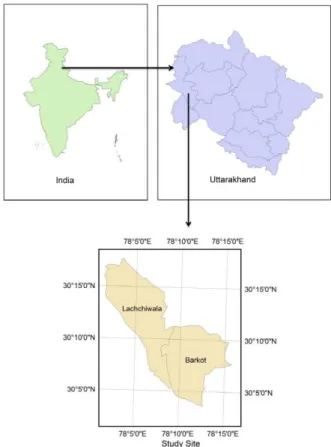
Fig. 1. Location of study sites. Fig. 2. Plot layout for carbon stock assessment.
stocks in the forests has become important as forests play an important role in global carbon cycle. Assessment of tempo- ral dynamics and spatial variations in forest carbon stock is important to define the relationship between carbon dis- tribution, trend and significant for forest management plan and designing the forest policy (Qing et al. 2010).
Species wise estimation of carbon stock will highlight the significance of tree species for achieving the additional car- bon sink of 2.5 to 3 billion tonnes of CO2 equivalent through additional forest and tree cover by 2030 as sub- mitted by India in its Intended Nationally Determined Contribution (ICFRE 2016). Ramachandran et al. (2007) have emphasized the significance of carbon databank for all types of forest in India to study carbon sequestration poten- tial for better management of forests. The present study fo- cuses on the Shorea robusta (Sal) Forests of Doon Valley.
The objectives of the study were : (1) to determine species composition, density, volume and (2) to estimate the carbon stocks in tree, shrub, herb and soils of different forest types
of Sal forests which can serve as reference level under REDD+ climate change mitigation progamme.
Materials and Methods
Study site
The study was conducted in Barkot and Lachchiwala Forest of Doon Valley (area ∼2,100 km2; 29°55’-30°30’N;
77°35’-78°24’; 600-800 m amsl). The climate of the valley is sub-tropical with average temperature varying between 13.8°C and 27.65°C and average annual rainfall of 2,025.43 mm (Fig. 1). The area receives most of the rainfall between June and September. Sal (Shorea robusta) is one of the most important timber tree species. In Doon Valley, 52% of the forest area is occupied by Sal Forest with high abundance of Sal >80% (Mukesh et al. 2014). Associates of Sal are Mallotus Philippensis as co-dominant species and Clerodendron viscosum as understory species. The other species found in the Sal forests are Anogeissus lat- ifolia, Terminalia bellirica, Albizia lebbeck, Ficus bengha- lensis, Ehretia laevis, etc. Champion and Seth (1968) have classified Sal Forests of Doon Valley into Moist Shiwalik Sal Forest, Dry Shiwalik Sal Forest and Moist Bhabhar-Dun Sal Forest. Moist Shiwalik Sal Forest (MSSF) and Dry Shiwalik Sal Forest (DSSF) of Doon Valley were selected to assess the carbon stock in different carbon pools.
Tree carbon density
Stratified random sampling approach was followed for
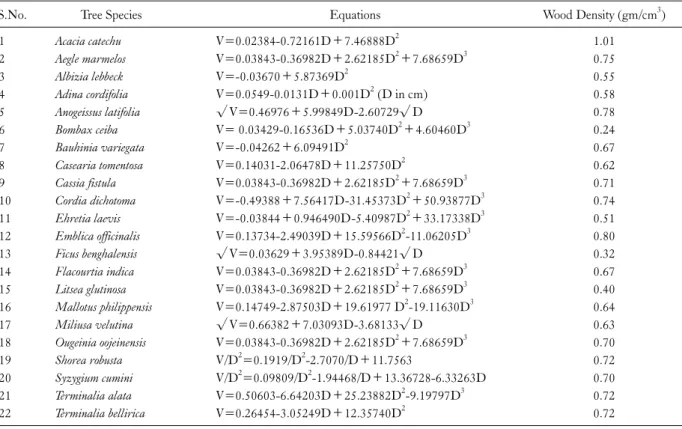
Table 1. Volume Equations and Wood Density of tree species present at various study sites
S.No. Tree Species Equations Wood Density (gm/cm3)
1 Acacia catechu V=0.02384-0.72161D+7.46888D2 1.01
2 Aegle marmelos V=0.03843-0.36982D+2.62185D2+7.68659D3 0.75
3 Albizia lebbeck V=-0.03670+5.87369D2 0.55
4 Adina cordifolia V=0.0549-0.0131D+0.001D2 (D in cm) 0.58
5 Anogeissus latifolia √V=0.46976+5.99849D-2.60729√D 0.78
6 Bombax ceiba V= 0.03429-0.16536D+5.03740D2+4.60460D3 0.24
7 Bauhinia variegata V=-0.04262+6.09491D2 0.67
8 Casearia tomentosa V=0.14031-2.06478D+11.25750D2 0.62
9 Cassia fistula V=0.03843-0.36982D+2.62185D2+7.68659D3 0.71
10 Cordia dichotoma V=-0.49388+7.56417D-31.45373D2+50.93877D3 0.74
11 Ehretia laevis V=-0.03844+0.946490D-5.40987D2+33.17338D3 0.51
12 Emblica officinalis V=0.13734-2.49039D+15.59566D2-11.06205D3 0.80
13 Ficus benghalensis √V=0.03629+3.95389D-0.84421√D 0.32
14 Flacourtia indica V=0.03843-0.36982D+2.62185D2+7.68659D3 0.67
15 Litsea glutinosa V=0.03843-0.36982D+2.62185D2+7.68659D3 0.40
16 Mallotus philippensis V=0.14749-2.87503D+19.61977 D2-19.11630D3 0.64
17 Miliusa velutina √V=0.66382+7.03093D-3.68133√D 0.63
18 Ougeinia oojeinensis V=0.03843-0.36982D+2.62185D2+7.68659D3 0.70
19 Shorea robusta V/D2=0.1919/D2-2.7070/D+11.7563 0.72
20 Syzygium cumini V/D2=0.09809/D2-1.94468/D+13.36728-6.33263D 0.70
21 Terminalia alata V=0.50603-6.64203D+25.23882D2-9.19797D3 0.72
22 Terminalia bellirica V=0.26454-3.05249D+12.35740D2 0.72
V, Volume; D, Diameter (m).
laying sample plots in different forest types for the estima- tion of structure, standing volume, biomass and carbon stocks. Sampling was conducted in all the layer i.e. trees, shrubs and herbs. A 10 m×10 m quadrat for trees, two 3 m×3 m quadrat for shrubs and four 1 m×1 m quadrat for herbs were laid at each sampling plot (Fig. 2). 15 sampling plots were laid in each of DSSF while 30 sampling plots were laid in each of MSSF. Thus, 90 sampling plots were laid to generate the data. Random number table was used to specify the geographical coordinates of the sampling quadrats. Latitude, longitude and altitude of each sampling quadrat were collected using Global Positioning System-Garmin 72H. The height and diameter at breast height (1.37 m above the ground) of all trees with Circumference at Breast Height (CBH) ≥30 cm were measured. Diameter and height of all trees were used to es- timate the standing volume in each forest type. The species specific volume equations were used to compute the volume of trees. General volume equation is used for the species
whose specific volume equation is not available (Table 1).
The estimated volume of each tree in sampling quadrat was multiplied by its wood density (Rajput et al. 1996) to drive the individual bole biomass. Bole biomass was further mul- tiplied by the biomass expansion factor (Haripriya 2000) to get the aboveground biomass. Aboveground biomass was used to calculate the below ground biomass by multiplying the value of aboveground biomass with the constant factor 0.26 (IPCC 2006). Above ground and belowground bio- mass was summed to get the total tree biomass. Carbon stock of each tree in a sampling quadrat was calculated by multiplying the total tree biomass with 0.50 (IPCC 2006).
Carbon stock of individual tree in a quadrat was averaged to get the mean carbon stock present in the sampling quadrat.
Total carbon stock was calculated by adding the entire com- ponent (tree, shrub, herb and soil) and extrapolated at hec- tare basis.
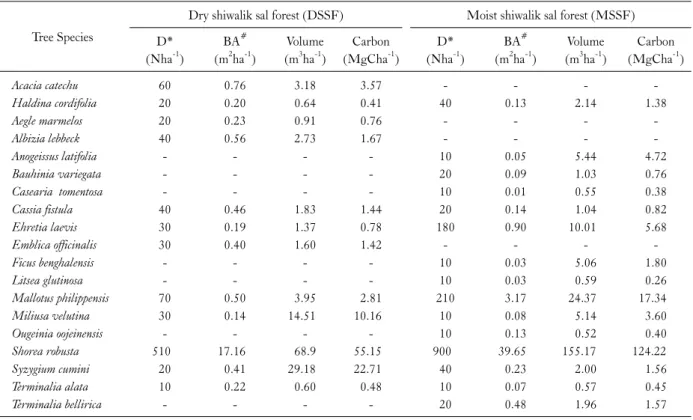
Table 2. Tree density, basal area, volume and carbon density in different forest types of barkot
Tree Species
Dry shiwalik sal forest (DSSF) Moist shiwalik sal forest (MSSF) D*
(Nha-1)
BA# (m2ha-1)
Volume (m3ha-1)
Carbon (MgCha-1)
D*
(Nha-1)
BA# (m2ha-1)
Volume (m3ha-1)
Carbon (MgCha-1)
Acacia catechu 60 0.76 3.18 3.57 - - - -
Haldina cordifolia 20 0.20 0.64 0.41 40 0.13 2.14 1.38
Aegle marmelos 20 0.23 0.91 0.76 - - - -
Albizia lebbeck 40 0.56 2.73 1.67 - - - -
Anogeissus latifolia - - - - 10 0.05 5.44 4.72
Bauhinia variegata - - - - 20 0.09 1.03 0.76
Casearia tomentosa - - - - 10 0.01 0.55 0.38
Cassia fistula 40 0.46 1.83 1.44 20 0.14 1.04 0.82
Ehretia laevis 30 0.19 1.37 0.78 180 0.90 10.01 5.68
Emblica officinalis 30 0.40 1.60 1.42 - - - -
Ficus benghalensis - - - - 10 0.03 5.06 1.80
Litsea glutinosa - - - - 10 0.03 0.59 0.26
Mallotus philippensis 70 0.50 3.95 2.81 210 3.17 24.37 17.34
Miliusa velutina 30 0.14 14.51 10.16 10 0.08 5.14 3.60
Ougeinia oojeinensis - - - - 10 0.13 0.52 0.40
Shorea robusta 510 17.16 68.9 55.15 900 39.65 155.17 124.22
Syzygium cumini 20 0.41 29.18 22.71 40 0.23 2.00 1.56
Terminalia alata 10 0.22 0.60 0.48 10 0.07 0.57 0.45
Terminalia bellirica - - - - 20 0.48 1.96 1.57
*D, Density Nha-1(number of individuals per hectare); #BA, Basal area.
Shrubs and herb carbon density
Trees species with CBH <30 cm were considered as shrubs. Destructive sampling approach in nested plot de- sign was adopted for the estimation of shrubs and herbs biomass. Plant species were identified using local flora (Babu 1997; Gaur 1999) and herbarium collection in Forest Research Institute and Botanical Survey of India-Dehradun. Shrubs and herbs were harvested at ground level from their respective sampling quadrats, packed in bags and fresh weight was measured at the time of sampling. The samples were oven dried at 72°C for 48 hr in laboratory to obtain the dry weight. Carbon stock in each layer was estimated by multiplying the biomass value with 0.5 (IPCC 2006). Mean value of carbon stock of all the lay- ers (trees, shrubs and herbs) was used to extrapolate the carbon stock per hectare basis.
Soil organic carbon density
Two soil samples were randomly collected from each of
the 10 m×10 m quadrat at a depth of 0-30.The weight of each sample was determined and soil bulk density was cal- culated (Wilde et al. 1964). Soil carbon was estimated (Walkley and Black 1934). Soil organic carbon pool per hectare basis was determined (IPCC 2003).
Total carbon stock
Carbon stock of the entire layer (trees, shrubs, herbs) and soil was summed to get the total carbon stock of Moist Shiwalik Sal Forest (MSSF) and Dry Shiwalik Sal Forest (DSSF) of Barkot and Lachchiwala in Doon Valley.
Results
The present study revealed that stem density ranged from 850 Nha-1 to 1,500 Nha-1. Stem density was highest in MSSF of Barkot and lowest (850 Nha-1) in DSSF of Lachchiwala. Shorea robusta had maximum basal area in all the forest types. Basal area was maximum (45.19 m2ha-1) in MSSF of Lachchiwala and minimum (18.74 m2ha-1) in
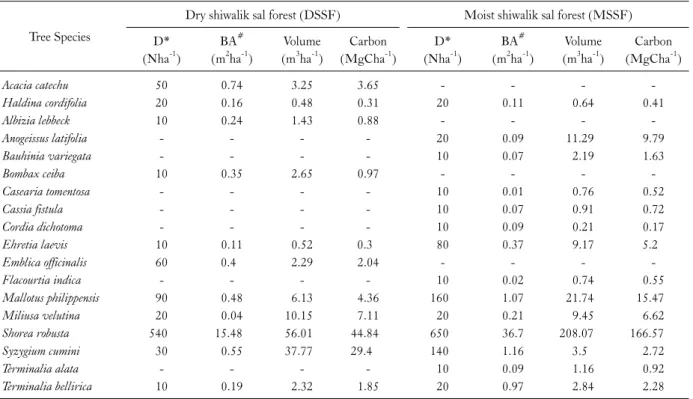
Table 3. Tree density, basal area, volume and carbon density in different forest types of lachchiwala
Tree Species
Dry shiwalik sal forest (DSSF) Moist shiwalik sal forest (MSSF) D*
(Nha-1)
BA# (m2ha-1)
Volume (m3ha-1)
Carbon (MgCha-1)
D*
(Nha-1)
BA# (m2ha-1)
Volume (m3ha-1)
Carbon (MgCha-1)
Acacia catechu 50 0.74 3.25 3.65 - - - -
Haldina cordifolia 20 0.16 0.48 0.31 20 0.11 0.64 0.41
Albizia lebbeck 10 0.24 1.43 0.88 - - - -
Anogeissus latifolia - - - - 20 0.09 11.29 9.79
Bauhinia variegata - - - - 10 0.07 2.19 1.63
Bombax ceiba 10 0.35 2.65 0.97 - - - -
Casearia tomentosa - - - - 10 0.01 0.76 0.52
Cassia fistula - - - - 10 0.07 0.91 0.72
Cordia dichotoma - - - - 10 0.09 0.21 0.17
Ehretia laevis 10 0.11 0.52 0.3 80 0.37 9.17 5.2
Emblica officinalis 60 0.4 2.29 2.04 - - - -
Flacourtia indica - - - - 10 0.02 0.74 0.55
Mallotus philippensis 90 0.48 6.13 4.36 160 1.07 21.74 15.47
Miliusa velutina 20 0.04 10.15 7.11 20 0.21 9.45 6.62
Shorea robusta 540 15.48 56.01 44.84 650 36.7 208.07 166.57
Syzygium cumini 30 0.55 37.77 29.4 140 1.16 3.5 2.72
Terminalia alata - - - - 10 0.09 1.16 0.92
Terminalia bellirica 10 0.19 2.32 1.85 20 0.97 2.84 2.28
*D, Density Nha-1(number of individuals per hectare); #BA, Basal area.
DSSF of Barkot. Volume varied between minimum of 123 m3ha-1 in DSSF of Barkot to maximum (272.67 m3ha-1) in MSSF of Lachchiwala. Aboveground tree carbon varied from 95.71 m3ha-1 in DSSF of Lachchiwala and 213.57 MgCha-1 in MSSF of Lachchiwala. Maximum con- tribution in Carbon storage was of Shorea robusta ranged from 44.84 MgCha-1 in DSSF of Lachchiwala to 166.57 MgCha-1 in MSSF of Lachchiwala. Shorea robusta was followed by Syzygium cumini (22.71 MgCha-1), Miliusa velutina (10.16 MgCha-1), Acacia catechu (3.57 MgCha-1) and Mallotus philippensis (2.81 MgCha-1) in DSSF of Barkot while in MSSF of Barkot, Shorea robusta was fol- lowed by Mallotus philippensis (17.34 MgCha-1), Ehretia laevis (5.68 MgCha-1), Anogeissus latifolia (4.72 MgCha-1) and Miliusa velutina (3.6 MgCha-1). Ficus ben- ghalensis, Haldina cordifolia, Bauhinia variegata, Terminalia bellirica and Syzygium cumini had very less role in carbon storage. In DSSF of Lachchiwala, Carbon stock trend was Shorea robusta>Syzigium cumini>Miliusa ve- lutina>Mallotus philippensis>Acacia catechu>Emblica officinalis and in MSSF, the trend was Shorea robusta>
Mallotus philippensis>Anogeissus latifolia>Miliusa ve- lutina>Ehretia laevis>Syzygium cumini>Terminalia bellirica (Table 2, 3).
Shrubs had also played significant role in carbon storage.
The shrub layer carbon was recorded to be of 1.83 MgCha-1 and 2.37 MgCha-1 in DSSF and MSSF re- spectively in Barkot while in Lachchiwala the shrubs con- tributed 1.72 MgCha-1 in DSSF and 2.2 MgCha-1 in MSSF. Maximum carbon stock (0.625 MgCha-1) was by Ardisia solanacea with 639 Nha-1 density in MSSF of Barkot and minimum was by Opuntia dillenii (0.10 MgCha-1) with 140 Nha-1 density in DSSF of Lachchiwala (Table 4). 0.9 MgCha-1 of Carbon stock was sequestered by all herbs in DSSF of Barkot while 1.1 MgCha-1 was carbon stock in MSSF of Barkot and in Lachchiwala carbon stor- age in herbs was 0.87 MgCha-1and 1.20 MgCha-1 in DSSF and MSSF respectively. Soil Organic Carbon varied from 25.72 MgCha-1 in DSSF to 53.87 MgCha-1 in MSSF in Barkot while in Lachchiwala Soil Organic Carbon was little higher 37.70 MgCha-1 in DSSF while MSSF had 54.70 MgCha-1 (Table 5).
Table 4. Shrub species density and carbon stock density in different forest types of study sites
Shrub species
Barkot Lachchiwala
DSSF MSSF DSSF MSSF
D*
(Nha-1)
Carbon (MgCha-1)
D*
(Nha-1)
Carbon (MgCha-1)
D*
(Nha-1)
Carbon (MgCha-1)
D*
(Nha-1)
Carbon (MgCha-1)
Adhatoda zeylanica 355 0.60 - - - - - -
Agave cantula - - - - - - 241 0.4
Ardisia solanacea 625 0.40 639 0.625 265 0.20 - -
Baliospermum solanifolium - - 156 0.20 - - - -
Calamus tenuis - - 352 0.35 - - - -
Carissa opaca - - - - - - 206 0.2
Clerodendrum cordatum 456 0.45 - - 487 0.62 - -
Colebrookea oppositifolia - - - - 384 0.30 - -
Desmodium gangeticum 328 0.15 - - - - 425 0.55
Flemingia paniculata - - 243 0.30 - - - -
Holarrhena pubescens - - - - 230 0.35 - -
Ipomoea carnea - - 428 0.55 - - - -
Opuntia dillenii - - - - 140 0.10 - -
Phlogacanthus thyrsiformis - - - - 145 0.15 - -
Randia uliginosa - - 235 0.35 - - - -
Rubus ellipticus - - - - - - 301 0.25
Salix tetrasperma - - - - - - 229 0.35
Urena lobata 247 0.225 - - - - 321 0.45
*D, Density Nha-1 (number of individuals per hectare).
Table 5. Variation in Carbon stock in different forest types of study sites
Site Forest type
Area (ha)
Tree carbon (MgCha-1)
Shrub carbon (MgCha-1)
Herb carbon (MgCha-1)
Soil carbon (MgCha-1)
Total carbon density (MgCha-1)
Total carbon stock (Mg)
Barkot DSSF 962 101.36 1.83 0.90 25.72 129.81 124,872.41
MSSF 3,623 164.94 2.38 1.10 53.87 222.29 805,338.55
Lachchiwala DSSF 845 95.71 1.72 0.87 37.70 136.00 114,920.00
MSSF 4,760 213.57 2.20 1.20 54.70 271.67 1,293,149.2
The total carbon stock was 124872.41 Mg in DSSF of Barkot with 129.81 MgCha-1 Carbon Density while MSSF in Barkot had 805,338.555 Mg with 22.29 MgCha-1 Carbon Density in 3,623 ha area. In Lachchiwala, DSSF is covered in 845 ha area and have 114,920 Mg car- bon stock with 136 MgCha-1 carbon density, while MSSF had 1,293,149.20 Mg carbon stock in 4,760 ha area. The total carbon stock was found to be 2,338,280.165 Mg (Table 5).
Discussion
The role of forests in harvesting atmospheric carbon has gained considerable importance and debate in recent years.
The significance of forests to mitigate the climate change is also recognized in Paris Agreement (UNFCCC 2016).
Total Carbon stock in different forest types of Doon Valley varied from 129.81 to 271.67 MgCha-1. Shorea robusta family Dipterocarpaceae covers 12 millionha of forests in India and represents 16% of the total forested area (Tewari 1995). Higher density of Shorea robusta contributes in
maximum carbon stock in both DSSF and MSSF of Barkot and Lachchiwala. Sal had the largest (101 MgCha-1) carbon stock (Kaul et al. 2010). In the present study, Sal contributes 46-77% of carbon stock in Doon Valley. Dipterocarpus forests have high rate of productivity (Devi et al. 2015) due to the young age of the forests.
Similar value of carbon stock is reported by various studies (Manhas et al. 2006; Sharma et al. 2010; Devi and Yadav 2015). Khum and Shrestha (2015) studied the carbon stock in community managed Sal forest and the carbon stock var- ied between 70 and 183 MgCha-1.
Soil Carbon is an essential component in forest ecosys- tem and can act as source or sink (Lal and Singh 2000).
Soil Carbon ranged between 25.72 and 54.70 MgCha-1, the present study revealed that carbon storage in soil is highest in MSSF. Moist nature of forest facilitates the accumu- lation of higher soil organic matter due to slow decom- position which restricts the CO2 emission from soil and re- sults in higher soil organic carbon (Negi et al. 2013).
Conclusion
Study conducted in different forest types of Doon Valley provide information about the variation of carbon stock in different carbon pool like tree, shrubs, herbs and soil. The results will be helpful to the policy makers to design the cli- mate change mitigation programmes like REDD+, Green India Mission. Contribution of species in carbon storage al- so highlights their significance so that significant species depending on carbon sequestration potential in particular region are selected to improve the forest and tree cover and enhance the carbon stock at local level and play role in glob- al Carbon cycle. The anthropogenic pressure like fuelwood collection, grazing, collection of medicinal plants, fire have caused in the low value of carbon in Barkot as compared to Lachchiwala. The villager demand and its consequences, the forests have been depleting at much faster rate.
Therefore, management practices need to be implemented to save these forests against various threats, so the carbon pools of these forests can be saved.
Acknowledgement
Authors are thankful to the Principal and Head,
Department of Botany, DAV (PG) College, Dehradun, Uttarakhand for their support during the study. Authors are also thankful to Dr. Venita Joshi for her valuable sug- gestions during field work and manuscript preparation.
References
Babu CR. 1977. Herbaceous flora of Dehra Dun. Publications &
Information Directorate, CSIR, New Delhi.
Champion HG, Seth SK. 1968. A revised survey of the forest types of India. Manager of Publications, Delhi.
Devi LS, Yadava PS. 2015. Carbon stock and rate of carbon se- questration in Dipterocarpus forests of Manipur, Northeast India. J For Res 26: 315-322.
Gaur RD. 1999. Flora of the district Garhwal, North West Himalaya:
with ethnobotanical notes. TransMedia, Srinagar (Garhwal), India.
Haripriya GS. 2000. Estimates of biomass in Indian forests. Bio Bio 19: 245-258.
ICFRE (Indian Council of Forestry Research and Education).
2016. Stocktaking of REDD+ in India. Indian Council of Forestry Research and Education, Dehradun, India.
IPCC (Intergovernmental Panel on Climate Change). 2003. Good Practice Guidance for Land Use, Land Use Change and Forestry, Institute for Global Environmental Strategies (IGES), Japan.
IPCC (Intergovernmental Panel on Climate Change). 2006. IPCC Guidelines for National Greenhouse Gas Inventories. Prepared by the National Greenhouse Gas Inventories Programme, Institute for Global Environmental Strategies (IGES), Japan.
IPCC (Intergovernmental Panel on Climate Change). 2014.
Climate Change 2014: Mitigation of Climate Change.
Contribution of Working Group III to the Fifth Assessment Report of the Intergovernmental Panel on Climate Change, Cambridge, Cambridge University Press.
Jana BK, Biswas S, Majumder M, Roy PK, Mazumdar A. 2009.
Carbon sequestration rate and aboveground biomass carbon po- tential of four young species. J Ecol Nat Environ 1: 15-24.
Kaul M, Mohren GMJ, Dadhwal VK. 2010. Carbon storage and sequestration potential of selected tree species in India. Mitig Adapt Strateg Glob Chang 15: 489-510.
Khum BTM, Shrestha BB. 2015. Carbon Stock in Community Managed Hill Sal (Shorea robusta) Forests of Central Nepal. J Sustain For 34: 483-501.
Lal M, Singh R. 2000. Carbon sequestration potential of Indian forests. Environ Monit Assess 60: 315-327.
Manhas RK, Negi JDS, Rajesh K, Chauhan PS. 2006. Temporal assessment of growing stock, biomass and carbon stock of Indian forests. Clim Change 74: 191-221.
Mukesh KG, Rajesh KM, Ashutosh KT. 2014. Plant species diver- sity in unmanaged moist deciduous forest of Northern India.
Curr Sci 106: 277-287.
Negi SS, Gupta MK, Sharma SD. 2013. Sequestered Organic Carbon Pool in the Forest Soils of Uttarakhand State, India. Int J Sci Environ Technol 2: 510-520.
Qing L, Tang LN, Ren Y. 2011. Temporal dynamics and spatial variations of forest vegetation carbon stock in Liaoning Province, China. J For Res 22: 519-525.
Rajput SS, Shukla NK, Gupta VK, Jain JD. 1996. Timber me- chanics: strength, classification and grading of timber. Indian Council of Forestry Research and Education, Dehradun.
Ramachandaran A, Jayakumar S, Haroon RM, Bhaskaran A, Arockiasamy DI. 2007. Carbon sequestration: estimation of car- bon stock in natural forests using geospatial technology in the Eastern Ghats of Tamil Nadu, India. Curr Sci 92: 323-331.
Rawat VRS, Singh TP. 2016. Forests under Paris Climate Agreement. Ind For 142: 513-514.
Sahu SC, Kumar M, Ravindranath NH. 2016. Carbon stocks in natural and planted mangrove forests of Mahanadi Mangrove Wetland, East Coast of India. Curr Sci 110: 2253-2260.
Singh TP, Rawat VRS, Rawat RS. 2015. Implementing REDD+
as a climate mitigation option in India. Indian For 141: 9-17.
Tewari DN. 1995. A Monograph on Sal, India, Vedam Publications.
UNFCCC (United Nations Framework Convention on Climate Change). 2016. Report of the Conference of the Parties on its twenty-first session, held in Paris from 30 November to 13 December 2015; 2015 Nov 30-Dec 13; Paris, France: UNFCCC.
Walkley A, Black IA. 1934. An examination of Degtjareff method for determining soil organic matter, and a proposed modification of the chromic acid titration method. Soil Sci 37: 29-38.
Wilde SA, Voigt GK, Iyer JG. 1964. Soil and Plant Analysis for Tree Culture. Oxford Publishing House, Calcutta, India.