ABSTRACT
Purpose: To investigate the causative allergens and clinical characteristics of Korean adult patients with food allergy (FA).
Methods: This retrospective, cross-sectional single-institutional study enrolled Korean adult patients (n = 812) suspected of having FA. For diagnosis, causality assessment history taking, ImmunoCAP specific immunoglobulin E measurement and/or skin prick test were performed. Results: Among 812 patients, 415 were diagnosed as having FA. The most common causative allergen was fruit, with a diagnosis of pollen food allergy syndrome (PFAS: 155, 37.3%), followed by crustaceans (111, 26.7%), wheat (63, 15.1%), fruits in patients without PFAS(43, 10.3%), buckwheat (31, 7.4%), peanut (31, 7.4%), walnut (25, 6.0%), red meat due to reaction to galactose-α-1,3-galactose (α-Gal) (8, 1.9%), and silkworm pupa (13, 3.1%). Allergy to egg, milk, fish, or shellfish was rare in Korean adults. One-third of patients with FA exhibited multiple FAs (238/415, 57.3%); the average number of causative allergens was 2.39. About 129 patients (31.0%) were diagnosed as having anaphylaxis; in these patients, wheat was the most frequent causative food. Twenty patients were further diagnosed with food-dependent exercise-induced anaphylaxis (FDEIA); all were due to wheat. In particular, crustaceans, wheat, PFAS, buckwheat, and red meat (α-Gal) were also frequent causes of anaphylaxis. Conclusions: Wheat, fruits with or without PFAS, and crustaceans are important and frequent causative allergens in Korean adult FA; these allergens differ from those found in childhood FA. It is notable that non-classic allergies, such as PFAS, FDEIA, and α-Gal allergy, are the important causes of anaphylaxis in Korean adult FA.
Keywords: Adults; food allergy; food allergen; anaphylaxis; Korea
INTRODUCTION
Food allergy (FA) is an emerging public health problem that affects up to 10% of the worldwide population.1 In Korea, with changes in dietary habits, the prevalence of allergic diseases has increased. Accordingly, public concern regarding FA is continuallygrowing.2-6
Original Article
Received: Feb 11, 2019 Revised: May 23, 2019 Accepted: Jun 3, 2019 Correspondence to Jung-Won Park, MD, PhD Division of Allergy and Immunology, Department of Internal Medicine, Severance Hospital, Yonsei University College of Medicine, 50-1 Yonsei-ro, Seodaemun-gu, Seoul 03477, Korea.Tel: +82-10-7389-3033 Fax: +82-2-2228-1966 E-mail: [email protected]
Copyright © 2019 The Korean Academy of Asthma, Allergy and Clinical Immunology • The Korean Academy of Pediatric Allergy and Respiratory Disease
This is an Open Access article distributed under the terms of the Creative Commons Attribution Non-Commercial License (https:// creativecommons.org/licenses/by-nc/4.0/) which permits unrestricted non-commercial use, distribution, and reproduction in any medium, provided the original work is properly cited.
ORCID iDs Sang Chul Lee
https://orcid.org/0000-0001-5318-6804 Sung-Ryeol Kim
https://orcid.org/0000-0001-7418-0049 Kyung Hee Park
https://orcid.org/0000-0003-3605-5364 Jae-Hyun Lee
https://orcid.org/0000-0002-0760-0071
Sang Chul Lee ,1,2,3 Sung-Ryeol Kim ,1,2 Kyung Hee Park ,1,2 Jae-Hyun Lee ,1,2
Jung-Won Park 1,2*
1 Division of Allergy and Immunology, Department of Internal Medicine, Yonsei University College of
Medicine, Seoul, Korea
2Institute of Allergy, Yonsei University College of Medicine, Seoul, Korea
3 Division of Pulmonology, Department of Internal Medicine, National Health Insurance Service Ilsan
Hospital, Goyang, Korea
Clinical Features and Culprit Food
Allergens of Korean Adult Food Allergy
Patients: A Cross-Sectional
Jung-Won Park
https://orcid.org/0000-0003-0249-8749 Disclosure
All authors have no potential conflicts of interest to disclose.
As common foods differ between Western and Eastern Asian countries, the causative food allergens may also differ. However, the prevalence of FA is about two times higher in adults than in children; the total number of adult FA patients outnumbers that of pediatric FA patients.7,8 Nonetheless, most studies on the prevalence of FA in Korea focus on pediatric patients. Therefore, improved understanding of current clinical features of Korean adult FA is important for the diagnosis of adult FA, patient and public education, and making public health regulations related to FA.4
FAs are primarily classified into immunoglobulin E (IgE)-mediated and non-IgE-mediated, based on the mechanism, and subordinate specific disorders can be diagnosed based on the clinical manifestations. Among IgE-mediated FAs, pollen food allergy syndrome (PFAS), food-dependent exercise-induced anaphylaxis (FDEIA), and galactose-α-1,3-galactose (α-Gal) allergy can be considered as special subtypes due to different clinical features and causative allergens.9,10 Previously, several studies revealed the epidemiology of adult FA in Korea.11-14 However, as the study sample was relatively small, their findings may not represent nationwide trends; moreover, patients differed by institution and region. Furthermore, specialized FA subtypes were not included. Accordingly, we aimed to analyze the common causative allergens of adult FA in a single tertiary university hospital in Korea, focusing on clinical manifestations and implications.
MATERIALS AND METHODS
Study design and patient selection
We retrospectively reviewed the medical records of 812 Korean adult patients with suspected FA and who visited the Allergy Asthma Center of a tertiary hospital in Korea from January 2014 to December 2018. Among the patients, we enrolled those who had plausible clinical features, adequate temporal relationships, causal specificity, reproducibility between specific food ingestion and symptom(s) occurrence, and confirmation of causative food allergen-specific IgE (sIgE) with immunologic tests, such as multiplex allergen specific immunoassays or skin prick test (SPT). Suspected culprit food allergens were double-checked using a singleplex sIgE test. A revised version of the Bradford and Hills criteria was applied to establish causality between causative food(s) and FA.15 This study was reviewed and approved by the Institutional Review Board of Severance Hospital (approval No. 2018-3109-001).
Food allergens
Seventy food items were evaluated as causative food allergen(s) (Table 1). Because of food allergen diversity, we grouped food allergens by their origins as per the food classifications from the Ministry of Health, Labour and Welfare of Japan. Some unique food allergens, such as doraji (balloon flower root), ginseng, ma (Chinese yam), and sseumbagui (Korean lettuce), which are frequently consumed in Korea, were also added to the allergen lists.
Severity classification
FA severity was classified as mild, moderate, or severe. Mild symptoms were defined as a single symptom that did not require medical intervention. Moderate symptoms were defined as symptoms requiring light medical intervention, such as oral medication or face-to-face medical advice. Severe symptoms were defined as anaphylaxis, which was diagnosed based on clinical features consistent with the World Allergy Organization anaphylaxis diagnosis guideline.16
Diagnostic studies
An SPT was routinely performed using commercial extracts (Allergopharma, Reinbek, Germany). A positive SPT reaction was defined when the mean wheal diameter of the allergen response was larger than 3 mm compared to that of a negative control.17 Some food items (silkworm pupa [chrysalis], common eel [Anguilla japonica], anchovy [Engraulis japonicus], squid [Todarodes pacificus], and mackerel [Scomber japonicus Houttuyn]) are not commercially available, but are frequently consumed food allergens; these were prepared at the Yonsei allergy institute. To manufacture new SPT reagents, allergen extracts were prepared as previously described.12 AdvanSure™ AlloScreen (LG Life Science, Seoul, Korea) assay was used for multiplex sIgE detection. Results of multiplex sIgE test using AlloScreen were classified into 7 levels ranging from classes 0 to 6. Reactions of class 2 (≥ 0.70 IU/mL) or higher were considered positive.18,19 Singleplex allergen-sIgE levels were measured using ImmunoCAP (Thermo Fisher Scientific/Phadia, Uppsala, Sweden); levels >0.35 kU/L were regarded as positive.13,20 All tests were carried out according to the standard instructions. There were several allergens, such as sunflower seed, sweet potato, lettuce, Makuwa melon, mushroom, and persimmon, for which immunoCAP testing could not be performed. For these allergens, FA was diagnosed by history taking and other immunologic tests (SPT or multiple allergen simultaneous test). For food items without any commercially available diagnostic test, such as doraji, ginseng, ma, and sseumbagui, FA was diagnosed according to clinical features based on revised Bradford and Hills criteria for establishing causality relation.15
Table 1. Food allergens classified by their origins
Class Type Group Food
Plant origin Cereal grains
and legumes LegumesCereal grains Peanut soybean, peaWheat, buckwheat, rice, barley grain, gluten Nuts and seeds Tree nuts Walnut, almond, cashew nut, sweet chest nut,
hazelnut
Seeds Sesame, pine nut, sunflower seed, cacao Other vegetables Potatoes Potato, sweet potato
Cruciferous veg Cabbage, broccoli Composite veg Lettuce Liliaceous veg Garlic Umbelliferous veg Carrot, celery Solanaceous veg Tomato
Cucurbitaceous veg Cucumber, watermelon, melon, Makuwa melon
Mushrooms Mushroom
Fruits Pome fruits Apple, pear
Citrus fruits Orange
Stone fruits Peach, plum, cherry
Grape Grape
Berries Strawberry
Assorted tropical
and subtropical fruits Kiwi, mango, persimmon, banana, avocado, pineapple Animal origin Terrestrial mammals Red meat Pork, beef
Poultry White-meat Chicken
Aquatic animals Fish Mackerel, codfish, herring, eel, anchovy, tuna, salmon Crustacean Crab, shrimp, lobster
Shellfish Clam, oyster
Cephalopod Squid
Eggs of poultry Egg
Milk and dairy products Milk, cheese
Miscellaneous Yeast, ginseng, silkworm pupa (chrysalis),
doraji (balloon flower root), ma (Chinese yam), sseumbagui (Korean lettuce)
Identifications of PFAS
Among the study subjects, comorbid PFAS was diagnosed if the following criteria were met: 1) presence of comorbid allergic rhinitis (AR), allergic conjunctivitis, and/or bronchial asthma; 2) sensitization to 1 or more trees, grasses, and/or weeds confirmed by immunologic tests, such as SPT, and singleplex or multiplex specific IgE test(s); 3) symptoms of rhinitis, conjunctivitis, and/or asthma worsened after exposure to sensitized inhalant allergen(s); and 4) oropharyngeal symptoms (itchiness or swelling of the mouth, face, lip, tongue, and throat during certain food ingestion) occurring after ingestion of fruits and vegetables for which a causal relationship of PFAS was already established. The food list contained common fruits and vegetables in South Korea, and it is described in Table 1. Patients who had fruit or vegetable allergy but whose symptoms did not satisfy the above criteria were diagnosed with true fruit or vegetable allergy. All diagnostic processes were conducted by allergy specialists.
Statistical analysis
The chi-squared test or Fisher's exact test was performed to evaluate the association between allergen groups. The Kruskal-Wallis one-way analysis of variance test was used to compare onset ages among different FA allergens. A P value of < 0.05 was considered statistically significant. Statistical analyses were performed using IBM SPSS software, version 23.0 (IBM Co., Armonk, NY, USA).
RESULTS
Demographics of the study population
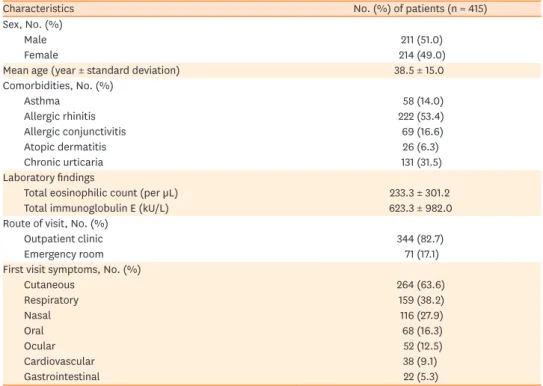
Among 812 screened patients, 415 were diagnosed as having FA (Table 2). The mean age of FA patients was 38.5 years (range, 18–88 years). Three hundred twenty-two (77.8%) FA patients had comorbid allergic diseases. Among the comorbid allergic diseases, allergic rhinitis was the most common, comprising 222 (53.4%) of all patients. Cutaneous symptoms were the most common, which resulted in an initial visit to the Allergy Asthma Center (264, 63.6%), and a majority of patients (344, 82.8%) visited the hospital via the outpatient clinic.
Clinical manifestations of FA
Skin manifestation (287, 69.1%) was the most common symptom of FA patients, followed by oral, cardiovascular, respiratory, gastrointestinal, and nasal symptoms. Most symptoms (394, 95.0%) occurred within 1 hour of exposure, but 21 (5.0%) patients showed a delayed response (at least 1 hour) after food ingestion. Among the FA patients, 155 (37.3%) were diagnosed with PFAS, 20 (3.4%) were diagnosed with FDEIA, and 8 (3.6%) were diagnosed with red meat (α-Gal) allergy (Fig. 1). All FDEIA cases were due to wheat allergy.
Of the FA patients with PFAS, 97 (62.9%) showed mild symptoms, and 20 (12.9%)
experienced anaphylactic symptoms. In FA patients without PFAS, 109/261 (41.7%) were also diagnosed as having anaphylaxis.
Number of causative food allergens and associations between causative
allergen groups
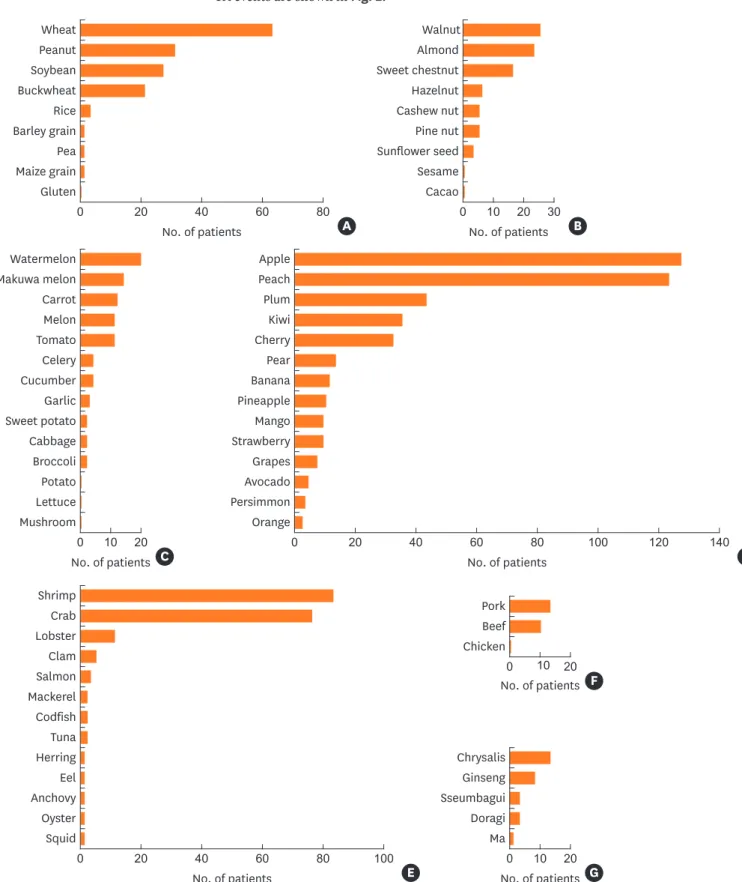
More than half of the total subjects exhibited multiple allergies to foods (238/415 cases, 57.3%), and the average number of causative allergens was 2.39. Sorted by categories, fruit (189 patients) was the most frequent causative food allergen group, followed by seafood (117 patients), grains and legumes (119 patients), and nuts and seeds (60 patients).Among fruits, apples, peaches, and
plums were the most common allergen causative allergens (163/189, 86.2%). Among seafood, allergic events due to crustaceans (111/117, 94.8%) were overwhelmingly higher than those due to other seafood; only 6 patients had both fish and shellfish allergies.
In other groups, wheat (63 patients), peanut (31 patients), soybean (27 patients), walnut (25 patients), almond (23 patients), watermelon (20 patients), milk (8 patients), and egg (6 patients) caused allergic events. Additionally, few allergic events to unique, Korean
food-Table 2. Clinical characteristics of study patients
Characteristics No. (%) of patients (n = 415)
Sex, No. (%)
Male 211 (51.0)
Female 214 (49.0)
Mean age (year ± standard deviation) 38.5 ± 15.0
Comorbidities, No. (%) Asthma 58 (14.0) Allergic rhinitis 222 (53.4) Allergic conjunctivitis 69 (16.6) Atopic dermatitis 26 (6.3) Chronic urticaria 131 (31.5) Laboratory findings
Total eosinophilic count (per µL) 233.3 ± 301.2
Total immunoglobulin E (kU/L) 623.3 ± 982.0
Route of visit, No. (%)
Outpatient clinic 344 (82.7)
Emergency room 71 (17.1)
First visit symptoms, No. (%)
Cutaneous 264 (63.6) Respiratory 159 (38.2) Nasal 116 (27.9) Oral 68 (16.3) Ocular 52 (12.5) Cardiovascular 38 (9.1) Gastrointestinal 22 (5.3) Total n = 415 Total n = 600 No. of patients 0 500 400 300 200 100
Red-meat allergy (α-Gal) FDEIA
PFAS
Classic food allergy 8 (1.9%) 20 (4.8%) 155 (37.3%) 232 (55.9%) Acute onset (≤ 1 hr) Delayed onset (> 1 hr) Cuataneous Oral Respiratory Cardiovascular Gastrointestinal Ocular Nasal 287 (35.3%) 181 (27.4%) 107 (16.2%) 51 (7.7%)26 (4.0%) 8 (1.2%)7 (1.1%) 394 (95.0%) 21 (5.0%) A B C
Fig. 1. Proportion of food allergy subtypes and symptom manifestations: (A) food allergy subtypes, (B) symptom manifestations, and (C) symptom onset.
α-Gal, galactose-α-1,3-galactose; FDEIA, food dependent exercise induced anaphylaxis; PFAS, pollen food allergy syndrome.
specific allergens (doraji, ginseng, and sseumbagui) were observed. The detailed results of the FA events are shown in Fig. 2.
Wheat 80 60 40 Peanut Soybean Buckwheat Rice Barley grain Pea Maize grain Gluten 20 0 A Salmon 80 100 60 40 Mackerel Codfish Tuna Shrimp Crab Lobster Clam Herring Eel Anchovy Oyster Squid 20 0 E Watermelon Makuwa melon Carrot Melon Tomato Celery Cucumber Garlic Sweet potato Cabbage Broccoli Potato Lettuce Mushroom 10 20 0 C Apple Peach Plum Kiwi Cherry Pear Banana Pineapple Mango Strawberry Grapes Avocado Persimmon Orange 60 80 100 120 140 20 40 0 D No. of patients No. of patients No. of patients Chrysalis Ginseng Sseumbagui Doragi Ma 10 20 0 G Pork Beef Chicken 10 20 0 F No. of patients No. of patients No. of patients Walnut Almond Sweet chestnut Hazelnut Cashew nut Pine nut Sunflower seed Sesame Cacao 30 10 20 0 B No. of patients
Fig. 2. Frequency of food allergens categorized by derivation: (A) grains and legumes, (B) nuts and seeds, (C) other vegetables, (D) fruits, (E) seafood, (F) meat, and (G) other.
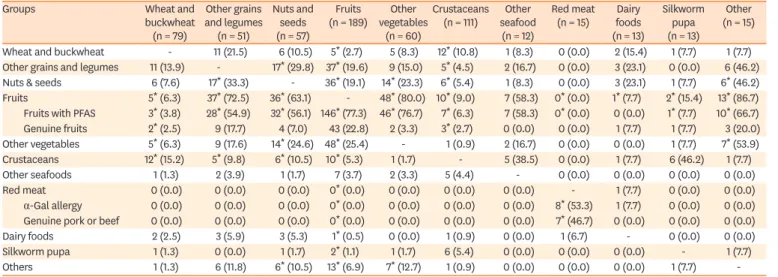
The associations between food allergen groups are described in Table 3. Of 79 FA patients who were allergic to wheat and buckwheat, 12 (10.8%) also exhibited crustacean allergy (P = 0.010). One-third of FA to other legumes and grain showed concurrent FA to nuts and seeds (P < 0.001). Most allergen groups were significantly associated with fruit allergy (P < 0.001).
Anaphylaxis proportion between allergen groups
Of 415 FA patients, 129 (31.0%) were diagnosed as having anaphylaxis. Wheat (39, 30.2%) was the most common causative allergen for anaphylaxis. The proportion of anaphylaxis occurrence was also the highest for wheat (39/63, 61.9%), followed by buckwheat (8/31, 25.8%), crustacean (34/111, 30.6%), and α-Gal allergy (4/8, 50.0%). The number of
anaphylaxis cases was high in fruits, but its proportion to total allergic cases (33/189, 17.4%) was lower compared to that of other groups (Fig. 3).
Difference in causative allergens based on age and sex
There was no sex difference in the majority of allergens, except wheat, buckwheat, red meat (α-Gal), and dairy foods. Wheat and buckwheat allergy were more frequently observed in male patients, whereas red meat and dairy allergy were more frequently observed in female patients. With regard to age, allergy to grains and legumes was significantly more frequent in younger patients. However, patients with red meat allergy due to α-Gal tended to be older than those with other allergies, with a mean age of 70.3 years (Table 4).
DISCUSSION
As there are few previous studies regarding Korean adult FA epidemiology, this study is important.11-14 Moreover, as commonly consumed foods and environmental factors are rapidly changing, previous epidemiologic studies do not necessarily represent the current status.1,21 Furthermore, country-specific patterns of food consumption widely differ; therefore, Western studies do not reflect actual causative allergens in Korean FA.5,22,23 For instance, buckwheat consumption is significantly higher in Eastern Asian populations than in Western
Table 3. Relationships between allergen groups
Groups Wheat and
buckwheat (n = 79) Other grains and legumes (n = 51) Nuts and seeds (n = 57) Fruits (n = 189) vegetables Other (n = 60) Crustaceans (n = 111) seafood Other (n = 12) Red meat (n = 15) foods Dairy (n = 13) Silkworm pupa (n = 13) Other (n = 15) Wheat and buckwheat - 11 (21.5) 6 (10.5) 5* (2.7) 5 (8.3) 12* (10.8) 1 (8.3) 0 (0.0) 2 (15.4) 1 (7.7) 1 (7.7) Other grains and legumes 11 (13.9) - 17* (29.8) 37* (19.6) 9 (15.0) 5* (4.5) 2 (16.7) 0 (0.0) 3 (23.1) 0 (0.0) 6 (46.2) Nuts & seeds 6 (7.6) 17* (33.3) - 36* (19.1) 14* (23.3) 6* (5.4) 1 (8.3) 0 (0.0) 3 (23.1) 1 (7.7) 6* (46.2) Fruits 5* (6.3) 37* (72.5) 36* (63.1) - 48* (80.0) 10* (9.0) 7 (58.3) 0* (0.0) 1* (7.7) 2* (15.4) 13* (86.7) Fruits with PFAS 3* (3.8) 28* (54.9) 32* (56.1) 146* (77.3) 46* (76.7) 7* (6.3) 7 (58.3) 0* (0.0) 0 (0.0) 1* (7.7) 10* (66.7) Genuine fruits 2* (2.5) 9 (17.7) 4 (7.0) 43 (22.8) 2 (3.3) 3* (2.7) 0 (0.0) 0 (0.0) 1 (7.7) 1 (7.7) 3 (20.0) Other vegetables 5* (6.3) 9 (17.6) 14* (24.6) 48* (25.4) - 1 (0.9) 2 (16.7) 0 (0.0) 0 (0.0) 1 (7.7) 7* (53.9) Crustaceans 12* (15.2) 5* (9.8) 6* (10.5) 10* (5.3) 1 (1.7) - 5 (38.5) 0 (0.0) 1 (7.7) 6 (46.2) 1 (7.7) Other seafoods 1 (1.3) 2 (3.9) 1 (1.7) 7 (3.7) 2 (3.3) 5 (4.4) - 0 (0.0) 0 (0.0) 0 (0.0) 0 (0.0) Red meat 0 (0.0) 0 (0.0) 0 (0.0) 0* (0.0) 0 (0.0) 0 (0.0) 0 (0.0) - 1 (7.7) 0 (0.0) 0 (0.0) α-Gal allergy 0 (0.0) 0 (0.0) 0 (0.0) 0* (0.0) 0 (0.0) 0 (0.0) 0 (0.0) 8* (53.3) 1 (7.7) 0 (0.0) 0 (0.0) Genuine pork or beef 0 (0.0) 0 (0.0) 0 (0.0) 0* (0.0) 0 (0.0) 0 (0.0) 0 (0.0) 7* (46.7) 0 (0.0) 0 (0.0) 0 (0.0)
Dairy foods 2 (2.5) 3 (5.9) 3 (5.3) 1* (0.5) 0 (0.0) 1 (0.9) 0 (0.0) 1 (6.7) - 0 (0.0) 0 (0.0)
Silkworm pupa 1 (1.3) 0 (0.0) 1 (1.7) 2* (1.1) 1 (1.7) 6 (5.4) 0 (0.0) 0 (0.0) 0 (0.0) - 1 (7.7)
Others 1 (1.3) 6 (11.8) 6* (10.5) 13* (6.9) 7* (12.7) 1 (0.9) 0 (0.0) 0 (0.0) 0 (0.0) 1 (7.7)
-Values are presented as number of cases (%). Overlapping cases among different allergen groups were measured and analyzed to compare their relevance. PFAS, pollen-food allergy syndrome; α-Gal, galactose-α-1,3-galactose.
*P < 0.05, P value was calculated using the χ2 test or Fisher's exact test. Asterisk means that patients who have sensitization to certain allergens tend to be
populations. In addition, there are several unique food materials that can provoke allergic hypersensitivity reactions; such foods include ginseng, silkworm pupa (chrysalis), and vegetables such as doraji, ma, and sseumbagui.
There were clear differences in causative foods based on previous results of the food sensitization pattern as determined using the SPT.12 Concerning fish allergens, a previous SPT survey revealed sensitivity ranging from 0.7% to 11.9%, but such patients were rare in the current study. Moreover, silkworm pupa, which previously showed the highest sensitization patterns, had a relatively low proportion among symptomatic patients, which suggests that skin testing for sensitivity to silkworm pupa has a high false-positive rate.24
47
32
No. of patients
Fruits Crustaceans
Wheat & buckwheatOther vegetables Nuts & seeds Other grains & legumes
Chrysalis Other seafoods
Ginseng Red meat (
α-Gal) Genuine beef or pork
Milk 0 250 200 150 100 50 Anaphylaxis (−) Anaphylaxis (+) 33 156 * * * 35 77 10 50 16 41 11 40 5 10 5 9 2 10 4 4 1 6 3 2
Fig. 3. Proportion of anaphylaxis among food allergy patients. α-Gal, galactose-α-1,3-galactose.
*P value < 0.05.
Table 4. Differences in causative allergens by age and sex
Allergen groups Male Female Total
< 30 yr 30–49 yr 50–69 yr ≥ 70 yr Total < 30 yr 30–49 yr 50–69 yr ≥ 70 yr Total
Wheat and buckwheat 11 (22.4) 19 (38.8) 14 (28.6) 5 (10.2) 49 (62.0) 7 (23.3) 18 (60.0) 5 (16.7) 0 (0.0) 30 (38.0) 79 Other grains and legumes 16 (61.5) 5 (19.2) 4 (15.3) 1 (3.8) 26 (50.9) 7 (28.0) 8 (32.0) 8 (32.0) 2 (8.0) 25 (49.1) 51* Nuts and seeds 17 (58.6) 10 (34.5) 2 (6.9) 0 (0.0) 29 (50.8) 10 (35.7) 12 (42.9) 5 (17.9) 1 (3.5) 28 (49.2) 57
Fruits 43 (46.7) 36 (39.1) 11 (12.0) 2 (2.2) 92 (48.6) 29 (29.9) 37 (38.1) 28 (28.9) 3 (3.1) 97 (51.4) 189*
Fruits with PFAS 33 (44.6) 30 (40.5) 10 (13.5) 1 (1.4) 74 (50.7) 23 (31.9) 28 (38.9) 20 (27.8) 1 (1.4) 72 (49.3) 146* Genuine fruits 10 (55.6) 6 (33.3) 1 (5.6) 1 (5.6) 18 (41.9) 6 (24.0) 9 (36.0) 8 (32.0) 2 (8.0) 25 (58.1) 43 Other vegetables 9 (37.5) 12 (50.0) 2 (8.3) 1 (4.2) 24 (40.0) 9 (25.0) 16 (44.4) 8 (22.2) 3 (8.3) 36 (60.0) 60 Crustaceans 16 (28.6) 33 (58.9) 6 (10.7) 1 (1.7) 56 (50.0) 18 (32.1) 26 (46.4) 11 (19.6) 1 (1.8) 56 (50.0) 112 Other seafood 2 (40.0) 1 (20.0) 2 (40.0) 0 (0.0) 5 (38.5) 1 (12.5) 5 (62.5) 2 (25.0) 0 (0.0) 8 (61.5) 13 Red meat 1 (16.7) 0 (0.0) 2 (33.3) 3 (50.0) 6 (40.0) 2 (22.2) 4 (44.4) 0 (0.0) 3 (33.3) 9 (60.0) 15* α-Gal allergy 0 (0.0) 0 (0.0) 1 (12.5) 3 (37.5) 4 (50.0) 0 (0.0) 1 (25.0) 0 (0.0) 3 (75.0) 4 (50.0) 8*
Genuine pork or beef 1 (50.0) 0 (0.0) 1 (50.0) 0 (0.0) 2 (28.6) 2 (40.0) 3 (60.0) 0 (0.0) 0 (0.0) 5 (71.4) 7
Dairy foods 2 (66.7) 0 (0.0) 1 (33.3) 0 (0.0) 3 (25.0) 2 (22.2) 5 (55.6) 2 (22.2) 0 (0.0) 9 (75.0) 12
Silkworm pupa 1 (16.7) 5 (83.3) 0 (0.0) 0 (0.0) 6 (46.1) 0 (0.0) 4 (57.1) 1 (14.3) 2 (28.6) 7 (53.9) 13*
Others 2 (33.3) 4 (66.7) 0 (0.0) 0 (0.0) 6 (40.0) 2 (22.2) 2 (22.2) 4 (44.4) 1 (11.1) 9 (60.0) 15
Values are presented as number of cases (%).
*P < 0.05, P value was calculated using the chi-squared test or Fisher's exact test. Asterisk means that food allergy frequencies have significant relationship with
age groups.
The precise diagnosis of FA requires a double-blind, placebo-controlled, food challenge (DBPCFC) test as a confirmatory test; however, there are difficulties in conducting DBPCFC clinically. Accordingly, in the present study, we used the revised version of the Bradford and Hills criteria, which is valuable for causality assessment in epidemiologic fields. Crucial evidence needed for diagnosis of adult FA should include plausible clinical manifestations, temporal relations between exposure and symptoms onset, and as well as specificity and reproducibility of clinical symptoms, and/or relationship between physical activities, and presence of suspected food specific IgE.25 These clues are more informative in adult patients than in pediatrics. In pediatric FA, it is difficult to judge the temporal relationship between de-challenge or re-challenge of causative food and symptom expression. In addition, the fluctuating nature of atopic dermatitis symptoms makes it difficult for clinicians to confirm the causative allergen.26,27 However, in adult FA, the main symptoms are urticaria, angioedema, itching sensation at the exposed area, and anaphylaxis. Therefore, it is easier to distinguish the causative food based on detailed history taking and laboratory testing. Generally, the management of adult FA encompasses the avoidance of causative allergens and prompt treatment of allergic reactions.28,29 In contrast, in pediatric FA, the allergy can be remitted naturally by avoiding the causative allergens; additionally, there are emerging treatments such as oral immunotherapy for specific FAs.30,31 However, in adults, FA remission is unusual, and FAs are considered long-lasting.32 Furthermore, the efficacy of oral immunotherapy in adult FA is ambiguous.33 Accordingly, clear identification of common causative food allergens is more meaningful in adults.
The spectrum of individual FA symptoms in adults is also variable and includes mild urticaria, itching, angioedema, and anaphylaxis. It is noteworthy that almost one-third of FA patients in the current study were diagnosed as having anaphylaxis, suggesting that food allergens are an important cause of anaphylaxis in Korean adults. Moreover, similar to the results of another study, our data showed that wheat and seafood (especially crustaceans) were a leading cause of food-induced anaphylaxis.11 However, seafood led to anaphylactic reactions less frequently than did wheat or buckwheat. The proportion of anaphylaxis induced by α-Gal allergy was also high. Therefore, patients who have allergies to crustaceans, wheat, buckwheat, and red meat more frequently experience severe allergic symptoms, including anaphylaxis. The most characteristic feature of IgE-mediated allergic reaction is immediate response without delay. However, in case of FDEIA or red meat allergy due to α-Gal allergy, allergic symptoms are usually delayed or occur concomitantly with a specific physical condition (e.g., exercise after meal). Consequently, specific and detailed questionnaires are needed to make an appropriate diagnosis.
Unlike other epidemiologic studies done in Korea, our study consisted of a large number of PFAS patients.11 One-third of FA patients had accompanying PFAS, which is believed to have been affected by the high coexistence of AR in the FA. Kim et al.14 previously reported that 96.2% cases of FA among birch pollinosis patients were PFAS. Our study also showed 94.8% of PFAS patients had accompanying AR. Among the PFAS patients, 85.8% of patients were sensitized to Fagales tree pollens, which include birch and oak trees, and they have strong cross-reactivity; this was followed by mugwort (38.3%), ragweed (37.0%), Hop Japanese (34.4%), and grass species (14.3% to 16.9%) (Supplementary Table 1).34 Common causative foods according to the pollen type were slightly different; apple (69.4%), peach (63.3%), plum (18.4%), kiwi (16.3%), peanut (14.3%), cherry (14.3%), pear (12.2%), almond (10.2%), watermelon (10.2%), and carrot (10.2%) were frequent causative allergens in tree pollen
sensitized PFAS patients. Furthermore, for these Fagales pollen-sensitized PFAS patients, we have described the sufficient effect of subcutaneous immunotherapy with Fagales pollen.35 The trends regarding causative foods of PFAS according to sensitized pollen were similar to a recent nationwide study in Korea that apple, peach, plum, and kiwi were the most common causative foods in PFAS with tree pollen sensitization (Supplementary Table 2).13
In addition, it is worth noting that more than half of the patients have multiple culprit allergens. The number of causative food allergens is one of the largest differences in FA between adults and children. Previous studies showed relatively lower percentages of multiple causative allergens in pediatric FA patients.36,37 Unlike pediatric FA patients, adult FA patients have a greater rate of PFAS and more specific subtypes of FA, such as red meat allergy due to α-Gal sensitization or crustaceans. In the clinical manifestation, overall symptoms of PFAS patients were mild; however, one-third of them initially visited the allergy clinic due to respiratory symptoms or anaphylaxis. Generally, PFAS is classified as a class II FA, which results from sensitization to cross-reacting aeroallergens, and symptoms are usually mild. However, our results suggest that 12% of FA patients with PFAS also experience anaphylaxis; hence, these conditions should be checked and managed carefully. In addition, when compared to classical (type I) FA patients, causative allergens of PFAS are multiple and are derived from a wider variety of fruits and vegetables. Hence, a detailed history taking of the presence of comorbid allergic disease is necessary. These factors may explain why our results showed a higher proportion of PFAS and fruit allergy rather than crustaceans or wheat as causative allergens, compared to a prior epidemiologic study.11
With respect to age, α-Gal allergy is more notable than other FAs. In the present study, all α-Gal allergy patients were at more than 50 years of age, which is similar to the findings of previous cohort studies.38,39 However, it is still unknown why older individuals tend to exhibit more allergies to α-Gal. Unlike other food allergens, IgE sensitization to α-Gal is associated with dietary habits and environmental factors, such as tick bite.40 These factors may differ by age; nonetheless, further research is needed.
This study is important because regulations should reflect the real situation rather than public opinion or perception. Every year, the Korea Food & Drug Administration (KFDA) publishes a guidebook of FA for educational purposes, and it lists chicken among the common causative food allergens. The KFDA also issued an announcement concerning labeling of food materials (KFDA announcement 2018-108); the announcement proclaimed that chicken and squid should be labeled on any manufactured food stuffs. However, in our study, no adult patients were allergic to chicken or squid; thus, revision of the regulation should be considered.
In addition, most literature regarding FA has focused on classic food allergens and on pediatric FA patients. Recently, there have been significant advances in understanding allergic mechanisms and causative allergens, especially those for FDEIA, PFAS, and α-Gal allergy. With improvements in molecular technology, component resolved diagnosis has emerged as a major breakthrough in FA diagnosis; this approach improves diagnostic accuracy without use of the laborious DBPCFC test. This may negate the consideration of previous epidemiologic studies regarding FA. The present study adopted recent advances, and there was a sufficient number of enrolled patients to conduct a cross-sectional study. Therefore, we believe that this study could serve as a reference for further FA epidemiologic studies in Korea.
There are several limitations to this study. There might be a selection bias with regard to disease severity, because this study was conducted in a single tertiary institute. This may explain the higher proportion of anaphylaxis compared to previous epidemiologic studies; hence, the severity of FA can vary among different practice settings.11,12 Another limitation may be that we did not conduct a DBPCFC test as recommended as an AAAAI/ACAAI allergy practice parameter for FA.25
In conclusion, clinical features and causative foods of adult FA in Korea are diverse and differ from those in children. Wheat, fruits, crustaceans, and red meat (α-Gal) may induce anaphylaxis more frequently in adults, and we suggest that more attention should be given to these differences.
ACKNOWLEDGMENTS
This research was supported by supported by a grant from the Korea Healthcare Technology R&D Project through Korean Health Industry Development Institute, which is funded by Republic of Korea's Ministry of Health, Welfare (HI14C1324).
SUPPLEMENTARY MATERIALS
Supplementary Table S1
Sensitization rate of pollen allergens in food allergy patients with pollen food allergy syndrome
Click here to view
Supplementary Table S2
Causative foods of pollen food allergy syndrome in pollen-sensitized patients
Click here to view
REFERENCES
1. Sicherer SH. Epidemiology of food allergy. J Allergy Clin Immunol 2011;127:594-602.
PUBMED | CROSSREF
2. Rhee CS, Wee JH, Ahn JC, Lee WH, Tan KL, Ahn S, et al. Prevalence, risk factors and comorbidities of allergic rhinitis in South Korea: The Fifth Korea National Health and Nutrition Examination Survey. Am J Rhinol Allergy 2014;28:e107-14.
PUBMED | CROSSREF
3. D'Amato G, Holgate ST, Pawankar R, Ledford DK, Cecchi L, Al-Ahmad M, et al. Meteorological
conditions, climate change, new emerging factors, and asthma and related allergic disorders. A statement of the World Allergy Organization. World Allergy Organ J 2015;8:25.
PUBMED | CROSSREF
4. Shek LP, Lee BW. Food allergy in Asia. Curr Opin Allergy Clin Immunol 2006;6:197-201.
PUBMED | CROSSREF
5. Oh JW, Pyun BY, Choung JT, Ahn KM, Kim CH, Song SW, et al. Epidemiological change of atopic dermatitis and food allergy in school-aged children in Korea between 1995 and 2000. J Korean Med Sci 2004;19:716-23.
6. Yang SH, Kim EJ, Kim YN, Seong KS, Kim SS, Han CK, et al. Comparison of eating habits and dietary intake patterns between people with and without allergy. Korean J Nutr 2009;42:523-35.
7. Osterballe M, Hansen TK, Mortz CG, Høst A, Bindslev-Jensen C. The prevalence of food hypersensitivity in an unselected population of children and adults. Pediatr Allergy Immunol 2005;16:567-73.
PUBMED | CROSSREF
8. Pawankar R, Canonica GW, Holgate ST, Lockey RF, Blaiss MS. World Allergy Organization (WAO) White Book on Allergy: Update 2013. Milwaukee, WI: World Allergy Organization; 2013.
9. Sampson HA, Aceves S, Bock SA, James J, Jones S, Lang D, et al. Food allergy: a practice parameter update-2014. J Allergy Clin Immunol 2014;134:1016-1025.e43.
PUBMED | CROSSREF
10. Burks AW, Tang M, Sicherer S, Muraro A, Eigenmann PA, Ebisawa M, et al. ICON: food allergy. J Allergy Clin Immunol 2012;129:906-20.
PUBMED | CROSSREF
11. Lee SH, Ban GY, Jeong K, Shin YS, Park HS, Lee S, et al. A retrospective study of Korean adults with food allergy: differences in phenotypes and causes. Allergy Asthma Immunol Res 2017;9:534-9.
PUBMED | CROSSREF
12. Kim SR, Park HJ, Park KH, Lee JH, Park JW. IgE sensitization patterns to commonly consumed foods determined by skin prick test in Korean adults. J Korean Med Sci 2016;31:1197-201.
PUBMED | CROSSREF
13. Kim MA, Kim DK, Yang HJ, Yoo Y, Ahn Y, Park HS, et al. Pollen-food allergy syndrome in Korean pollinosis patients: a nationwide survey. Allergy Asthma Immunol Res 2018;10:648-61.
PUBMED | CROSSREF
14. Kim JH, Kim SH, Park HW, Cho SH, Chang YS. Oral allergy syndrome in birch pollen-sensitized patients from a Korean university hospital. J Korean Med Sci 2018;33:e218.
PUBMED | CROSSREF
15. Brownson RC, Gurney JG, Land GH. Evidence-based decision making in public health. J Public Health Manag Pract 1999;5:86-97.
PUBMED | CROSSREF
16. Simons FE, Ardusso LR, Bilò MB, Dimov V, Ebisawa M, El-Gamal YM, et al. 2012 Update: World Allergy Organization Guidelines for the assessment and management of anaphylaxis. Curr Opin Allergy Clin Immunol 2012;12:389-99.
PUBMED | CROSSREF
17. Sampson HA, Aceves S, Bock SA, James J, Jones S, Lang D, et al. Food allergy: a practice parameter update-2014. J Allergy Clin Immunol 2014;134:1016-25.e43.
PUBMED | CROSSREF
18. Oh EJ, Lee SA, Lim J, Park YJ, Han K, Kim Y. Detection of allergen specific IgE by AdvanSure Allergy Screen test. Korean J Lab Med 2010;30:420-31.
PUBMED | CROSSREF
19. Rim JH, Park BG, Kim JH, Kim HS. Comparison and clinical utility evaluation of four multiple allergen simultaneous tests including two newly introduced fully automated analyzers. Pract Lab Med 2016;4:50-61.
PUBMED | CROSSREF
20. Park KH, Lee J, Lee SC, Son YW, Sim DW, Lee JH, et al. Comparison of the ImmunoCAP assay and AdvanSure™ AlloScreen advanced multiplex specific IgE detection assay. Yonsei Med J 2017;58:786-92.
PUBMED | CROSSREF
21. Zuidmeer L, Goldhahn K, Rona RJ, Gislason D, Madsen C, Summers C, et al. The prevalence of plant food allergies: a systematic review. J Allergy Clin Immunol 2008;121:1210-1218.e4.
PUBMED | CROSSREF
22. Kamdar TA, Peterson S, Lau CH, Saltoun CA, Gupta RS, Bryce PJ. Prevalence and characteristics of adult-onset food allergy. J Allergy Clin Immunol Pract 2015;3:114-115.e1.
PUBMED | CROSSREF
23. Yang MS, Lee SH, Kim TW, Kwon JW, Lee SM, Kim SH, et al. Epidemiologic and clinical features of anaphylaxis in Korea. Ann Allergy Asthma Immunol 2008;100:31-6.
PUBMED | CROSSREF
24. Kim SH, Kang HR, Kim KM, Kim TB, Kim SS, Chang YS, et al. The sensitization rates of food allergens in a Korean population: a multi-center study. J Asthma Allergy Clin Immunol 2003;23:502-14.
25. Boyce JA, Assa'ad A, Burks AW, Jones SM, Sampson HA, Wood RA, et al. Guidelines for the diagnosis and management of food allergy in the United States: summary of the NIAID-sponsored expert panel report. Nutr Res 2011;31:61-75.
26. Han DK, Kim MK, Yoo JE, Choi SY, Kwon BC, Sohn MH, et al. Food sensitization in infants and young children with atopic dermatitis. Yonsei Med J 2004;45:803-9.
PUBMED | CROSSREF
27. Lee SE, Kim H. Update on early nutrition and food allergy in children. Yonsei Med J 2016;57:542-8.
PUBMED | CROSSREF
28. Muraro A, Werfel T, Hoffmann-Sommergruber K, Roberts G, Beyer K, Bindslev-Jensen C, et al. EAACI food allergy and anaphylaxis guidelines: diagnosis and management of food allergy. Allergy 2014;69:1008-25.
PUBMED | CROSSREF
29. Boyce JA, Assa'ad A, Burks AW, Jones SM, Sampson HA, Wood RA, et al. Guidelines for the diagnosis and management of food allergy in the United States: summary of the NIAID-Sponsored Expert Panel report. J Am Acad Dermatol 2011;64:175-92.
PUBMED | CROSSREF
30. Nowak-Węgrzyn A, Albin S. Oral immunotherapy for food allergy: mechanisms and role in management. Clin Exp Allergy 2015;45:368-83.
PUBMED | CROSSREF
31. Vickery BP, Scurlock AM, Kulis M, Steele PH, Kamilaris J, Berglund JP, et al. Sustained unresponsiveness to peanut in subjects who have completed peanut oral immunotherapy. J Allergy Clin Immunol 2014;133:468-75.
PUBMED | CROSSREF
32. Adkinson NF Jr, Bochner BS, Burks AW, Busse WW, Holgate ST, Lemanske RF, et al. Middleton's Allergy E-Book: Principles and Practice. Philadelphia, PA: Elsevier Health Sciences; 2013.
33. Nurmatov U, Dhami S, Arasi S, Pajno GB, Fernandez-Rivas M, Muraro A, et al. Allergen immunotherapy for IgE-mediated food allergy: a systematic review and meta-analysis. Allergy 2017;72:1133-47.
PUBMED | CROSSREF
34. Jeong KY, Son M, Park JH, Park KH, Park HJ, Lee JH, et al. Cross-reactivity between oak and birch pollens in Korean tree pollinosis. J Korean Med Sci 2016;31:1202-7.
PUBMED | CROSSREF
35. Kong N, Kim S, Lee SC, Park KH, Lee JH, Park JW. Subcutaneous immunotherapy in patients with Fagales pollen-induced oral allergy syndrome. Yonsei Med J 2019;60:389-94.
PUBMED | CROSSREF
36. Rancé F, Kanny G, Dutau G, Moneret-Vautrin DA. Food hypersensitivity in children: clinical aspects and distribution of allergens. Pediatr Allergy Immunol 1999;10:33-8.
PUBMED | CROSSREF
37. Gupta RS, Springston EE, Warrier MR, Smith B, Kumar R, Pongracic J, et al. The prevalence, severity, and distribution of childhood food allergy in the United States. Pediatrics 2011;128:e9-17.
PUBMED | CROSSREF
38. Chung CH, Mirakhur B, Chan E, Le QT, Berlin J, Morse M, et al. Cetuximab-induced anaphylaxis and IgE specific for galactose-alpha-1,3-galactose. N Engl J Med 2008;358:1109-17.
PUBMED | CROSSREF
39. Fischer J, Hebsaker J, Caponetto P, Platts-Mills TA, Biedermann T. Galactose-alpha-1,3-galactose sensitization is a prerequisite for pork-kidney allergy and cofactor-related mammalian meat anaphylaxis. J Allergy Clin Immunol 2014;134:755-759.e1.
PUBMED | CROSSREF
40. Commins SP, James HR, Kelly LA, Pochan SL, Workman LJ, Perzanowski MS, et al. The relevance of tick bites to the production of IgE antibodies to the mammalian oligosaccharide galactose-α-1,3-galactose. J Allergy Clin Immunol 2011;127:1286-1293.e6.