http://dx.doi.org/10.7236/JIIBC.2013.13.3.79
JIIBC 2013-3-11
가정의학과 의사를 위한 화상회의 시스템의 만족도와 효과
Satisfaction and Effectiveness of a Videoconference System for Family Physicians
한종수
*, 이기혁, 노현희, 조비룡, 양정희, 이동률, 계소신, 배우경
**Jong-Soo Han, Kee Hyuck Lee, Hyun-Hee Noh, Belong Cho, Jeong-Hee Yang, Dong-Ryul Lee, Soshin Ke, Woo-Kyung Bae
요 약 몇몇 종합병원 가정의학과는 구성원이 많지 않기 때문에 정기적으로 컨퍼런스를 여는 것이 어렵다고 생각하 는 경우가 많다
.
그러나 최근 화상회의 기술이 발전함에 따라 작은 가정의학과들도 보다 큰 다른 병원의 가정의학과 에서 여는 컨퍼런스에 정기적으로 참여하는 것이 가능해졌다.
이 연구의 목적은 우리가 사용한 화상회의 시스템의 만 족도가 어느 정도 되는지 알아보는 데 있다.
한 병원의 가정의학과에서3
주 동안 매주 월요일 컨퍼런스를 주관했으며 네 개의 다른 병원 가정의학과들이 화상회의를 통해 이 컨퍼런스에 참여했다.
컨퍼런스에 참석한 교수 및 임상강사들 의 만족도에 있어서는 화상회의를 주관한 가정의학과와 원격으로 참여한 네 개 병원 가정의학과 간에 유의한 차이가 없었다.
그에 반해서 화상회의에 원격으로 참여한 네 개 병원 가정의학과 전공의들은 화상회의를 주관한 가정의학과 전공의들에 비해 만족도와 관련된 대부분의 항목을 낮게 평가했다.
한편 모든 병원 전공의들에 있어서 컨퍼런스를 열 기 전에 시행한 사전 테스트와 사후 테스트 결과에는 점수 차이가 전혀 없었다.
이러한 제한점들에도 불구하고 여러 가정의학과들이 공동으로 참여하는 합동 화상회의가 가진 장점으로는 직접 참여에 비해 편안하고 시간을 절약할 수 있으며 참석자 수를 늘릴 수 있다는 것과 직접 참여만큼 토론이나 생각을 촉진할 수 있다는 점을 들 수 있었다.
Abstract Departments of family medicine at some general hospitals find it difficult to hold regular conferences because they have a small number of faculty members. The recent technological development of videoconferencing has made it possible for these small departments to regularly participate in the conferences held by departments with a larger number of faculty members. The objective of this study was to show the level of satisfaction with and acceptance of our videoconferencing system. One presenting site and four receiving sites participated in the videoconferences, which were held every Monday for three weeks. There were no significant differences in the levels of satisfaction with the videoconferences between faculty at the presenting site and faculty at the receiving sites. In contrast, residents at the receiving sites rated most items related to satisfaction with the videoconferences lower than residents at the presenting site. There were no changes between the pre-test and post-test scores of residents both at the presenting site and at the receiving sites.
Despite its limitations, the advantages of joint-videoconferencing among several departments of family medicine were comfort level, time-saving, increasing the number of participants, promoting discussion, and provoking thought.
Key Words : Videoconferencing, Family practice, Personal satisfaction
*정회원, 분당서울대학교병원 건강증진센터
**정회원, 분당서울대학교병원 건강증진센터 (교신저자) 접수일자 : 2013년 5월 22일, 수정완료 : 2013년 6월 14일 게재확정일자 : 2013년 6월 14일
Received: 22 May 2013 / Revised: 14 June 2013 / Accepted: 14 June 2013
**Corresponding Author: [email protected]
Health Promotion Center, Seoul National University Bundang Hospital, Korea
I. Introduction
Family physicians are required to keep up with the literature about evidence-based medicine. They usually obtain new knowledge by reading medical journals or through face-to-face discussion with other physicians at conferences. However, departments of family medicine at some general hospitals find it difficult to hold regular conferences because they have a small number of faculty members (professors and full-time lecturers); thus, they have fewer opportunities for continuing medical education. The recent development of internet technology has led to the hope that these small departments may participate in the conferences regularly held by larger departments by using synchronous videoconferencing.
Previous studies have focused primarily on the use of videoconferences for undergraduate medical education
[1][2][3], residency didactics
[4][5], continuing medical education for rural physicians
[6][7], training of multidisciplinary professionals
[8], and grand rounds
[9]. There is a report about improving clinical outcome in type 2 diabetes mellitus by transmitting advice from diabetes specialists to general physicians via videoconference in their clinics
[10].
For over a decade, the Department of Family Medicine at Seoul National University Hospital (SNUH) has conducted several types of face-to-face conferences: Clinical Review, Brief Review, Journal Review, and Faculty Lecture. Since the year 2010, the departments of family medicine at three hospitals, SNUH, Seoul National University Bundang Hospital (SNUBH) and Kangwon National University Hospital (KNUH), have held joint videoconferences. A preliminary study introduced this videoconferencing system
[11]. Since the year 2011, the departments of family medicine at Wonkwang University Sanbon Medical Center (WUSMC) and National Police Hospital (NPH) have also participated in the videoconferences.
The objective of the present study was to show the
level of satisfaction with and efficacy of our videoconferencing system. To our knowledge, this is the first study to evaluate synchronous videoconferencing among various position groups at multilateral family medicine departments.
II. Methods
1. Videoconference
Three videoconference sessions were held every Monday morning during three weeks in November 2011. The conferences covered a wide range of topics, such as common diseases, preventive medicine, and health promotion. Each conference consisted of a 40-minute didactic presentation followed by a 20 minute discussion period.
The first videoconference was held on November 8, 2011, and there were two videoconferences every Monday. The themes of the three conferences were vaccination, postmenopause, and pregnancy. The subjects who participated in the three conferences via a face-to-face method or through videoconference were from five hospitals and included professors, full-time lecturers, and residents.
Five departments of family medicine at SNUH (the presenting site), SNUBH, KNUH, WUSMC and NPH (the receiving sites) participated in the joint videoconferences simultaneously. The distances between the presenting site and the receiving sites were 30 km, 103km, 34km, and 18km, respectively.
2. Technology
We used videoconferencing software (V2 conference®, V2 Technology, Beijing, China) that is provided free of charge to authorized members by Seoul National University College of Medicine. The presenting site and the receiving sites connected to V2 conference® with internet lines at 100 Mbps. In the virtual videoconferencing room of the V2 conference®
program, participants could present a PowerPoint®
Variables Presenting site SNUH (n=15)*
Receiving sites
Total SNUBH(n=2) WUSMC(n=5) KNUH(n=3) NPH(n=7) Theme of videoconference
Vaccination 7 2 2 3 6 20
Postmenopause 8 1 4 3 4 20
Pregnancy 10 0 5 3 6 24
Work status
Faculty† 5 2 2 0 1 10
Resident 10 0 3 3 6 22
SNUH = Seoul National University Hospital; SNUBH = Seoul National University Bundang Hospital; WUSMC = Wonkwang University Sanbon Medical Center; KNUH = Kangwon National University Hospital; NPH = National Police Hospital
*The number of participants differs depending on the themes
†Includes professors and full-time lecturers
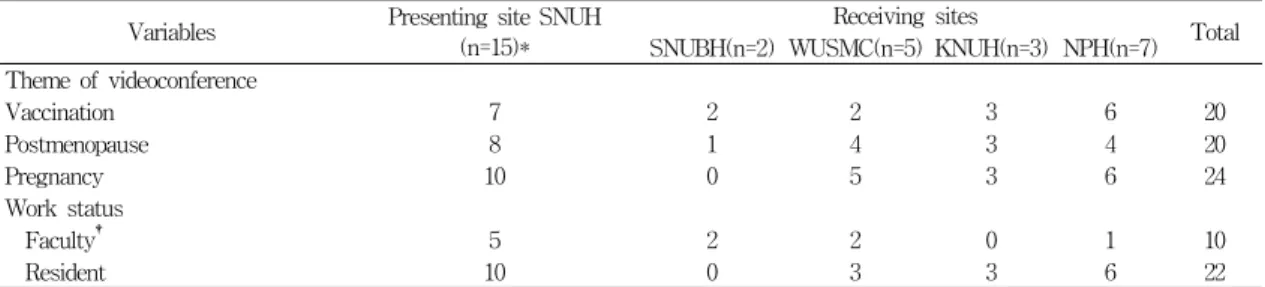
Table 1. Baseline characteristics of study participants 표 1. 연구 참여자들의 기본 특징
slide show, as well as view and have discussions with each other. Whenever a participant wanted, he could comment during the conference by using a function of the videoconference program.
The equipment used by the receiving site and the presenting sites were the same as those mentioned in the preliminary study
[11]. SNUH and SNUBH used beam projectors and a wide screen for display. KNUH, WUSMC and NPH used 17-inch dual monitors, lapel microphones and web cameras.
3. Data collection
Three days before each conference, a pre-test made up of five multiple choice questions was distributed to the residents. The pre-test dealt with the content of the conference that would be held. The residents participated in the conference on Monday, and after four days, they took a post-test that consisted of the same questions as the pre-test. At the same time, the residents also took the pre-test for the next conference and completed a satisfaction questionnaire about the videoconference. The professors and the full-time lecturers took the same satisfaction questionnaire at that time.
The satisfaction questionnaire consisted of 7 domains: capability of presenter, value of content, video technology, audio technology, conduction of the conference, advantages of videoconferencing, and overall valuation.
A 5-point Likert-scale was used to assess the level of
satisfaction with the videoconferences.
4. Statistical analysis
Statistical analyses were carried out using PASW Statistics® (version 18.0.0). We used the Mann-Whitney U test to compare the level of satisfaction reported by participants at the presenting site with that reported by participants at the receiving sites. The differences between pre-test scores and post-test scores were compared using the Wilcoxon signed rank test. The Mann-Whitney U test was also used to analyze whether the score change at the presenting site and the score changes at the receiving sites were different. This study was approved by the SNUBH Institutional Review Board (IRB No.
B-1110-137-301).
III. Results
The total numbers of participants at the presenting
site and the receiving sites were 15 and 17,
respectively. The numbers of participants were
different for each videoconference because some of the
participants were absent. The mean number of
participants was 8 and 13 for the presenting site and
the receiving sites, respectively. The ratio between
faculty and residents was 1: 2 for the presenting site
and 1: 2.4 for the receiving sites (see Table 1).
Items†
Overall Faculty Resident
Presenting site (n=25)‡
Receiving sites (n=39)
P§
Presenting site (n=6)
Receiving sites (n=8)
P
Presenting site (n=19)
Receiving sites (n=31)
P
Capability of presenter
Presenter delivered themes clearly 42.2(4.64) 26.3(4.00) <0.001 7.3(4.50) 7.7(4.50) 0.825 35.6(4.68) 19.3(3.87) <0.001 Presenter prepared the conference well 43.2(4.72) 25.7(4.00) <0.001 7.7(4.67) 7.4(4.62) 0.877 36.0(4.74) 19.1(3.84) <0.001 Value of content
I will recommend another to listen to the
content 43.6(4.68) 25.4(3.85) <0.001 7.2(4.50) 7.8(4.63) 0.746 37.4(4.74) 18.2(3.65) <0.001
Content was easy to understand 39.9(4.48) 27.7(3.92) <0.006 6.2(4.00) 8.5(4.50) 0.246 35.0(4.63) 19.7(3.77) <0.001 Content satisfied the thirst for professional
knowledge 41.4(4.48) 26.8(3.82) 0.001 5.4(4.00) 9.1(4.63) 0.071 36.3(4.63) 18.9(3.61) <0.001
My capacity for treating patients improved 40.9(4.32) 27.1(3.62) 0.002 6.8(4.17) 8.1(4.38) 0.528 34.7(4.37) 19.8(3.42) <0.001 Discussion was useful 39.1(4.00) 28.3(3.44) 0.017 6.0(3.50) 8.6(4.13) 0.215 33.7(4.16) 20.5(3.26) 0.001 Overall content was excellent 43.5(4.68) 25.5(3.90) <0.001 6.8(4.33) 8.0(4.50) 0.544 37.7(4.79) 18.0(3.74) <0.001 Video technology
Slides were clearly visible 42.1(4.52) 26.4(3.90) <0.001 7.6(4.17) 7.4(4.13) 0.935 35.1(4.63) 19.6(3.84) <0.001 Attendees were clearly visible 44.2(4.16) 25.0(3.10) <0.001 9.6(3.83) 5.9(3.00) 0.072 35.5(4.26) 19.4(3.13) <0.001 Audio technology
Voice of the presenter was clearly audible 43.8(4.56) 25.2(3.79) <0.001 7.6(4.17) 7.4(4.13) 0.935 36.7(4.68) 18.7(3.71) <0.001 Voice of the attendees were clearly audible 38.0(3.88) 29.0(3.36) 0.046 8.5(3.17) 6.8(2.88) 0.415 31.1(4.11) 22.1(3.48) 0.024 Conduction of the conference
The equipment was in good working order 39.5(4.32) 27.0(3.82) 0.003 8.3(4.00) 6.9(3.75) 0.468 32.0(4.42) 20.6(3.83) 0.002 Everyone had an equal chance to speak 37.0(3.80) 27.8(3.22) 0.039 8.3(3.00) 5.9(2.57) 0.252 31.1(4.05) 21.1(3.37) 0.012 Advantages of videoconference
More comfortable 32.3(3.76) 31.8(3.68) 0.916 5.5(3.17) 9.0(3.75) 0.092 27.6(3.95) 23.4(3.67) 0.274 More timesaving 36.8(4.13) 29.1(3.64) 0.075 6.1(3.83) 8.6(4.25) 0.241 31.6(4.22) 21.2(3.48) 0.006 Overcoming the limitation of distance 38.7(4.28) 28.5(3.85) 0.019 8.3(4.50) 6.9(4.13) 0.516 30.7(4.21) 22.3(3.77) 0.030 Increasing the number of participation 37.4(3.96) 29.4(3.56) 0.075 7.7(4.17) 7.4(4.00) 0.890 30.0(3.89) 22.8(3.45) 0.071 Promoting discussion as well as face-to-face
conferencing 37.2(3.64) 29.5(3.18) 0.082 9.3(3.67) 6.2(2.88) 0.156 28.5(3.63) 23.7(3.26) 0.216
Provoking thought as well as face-to-face
conferencing 36.5(3.64) 29.9(3.26) 0.135 5.4(3.00) 9.1(3.63) 0.071 31.7(3.84) 21.7(3.16) 0.012
Valuation
I will recommend another to join the
videoconference 38.6(4.20) 28.6(3.74) 0.021 5.7(4.17) 8.9(4.63) 0.098 32.9(4.21) 21.0(3.52) 0.002
I will join the videoconference regularly 37.3(4.12) 29.4(3.77) 0.074 4.5(4.00) 9.8(4.75) 0.007 32.3(4.16) 21.4(3.52) 0.006
*A higher mean rank represents higher satisfaction for each item. The numbers in brackets are mean values.
†Responses were conducted on a five point Likert scale: 1=strongly disagree, 2=disagree, 3=undecided, 4=agree, 5=strongly agree
‡The number of participants differs depending on the question
§P-values were calculated using Mann Whitney U test
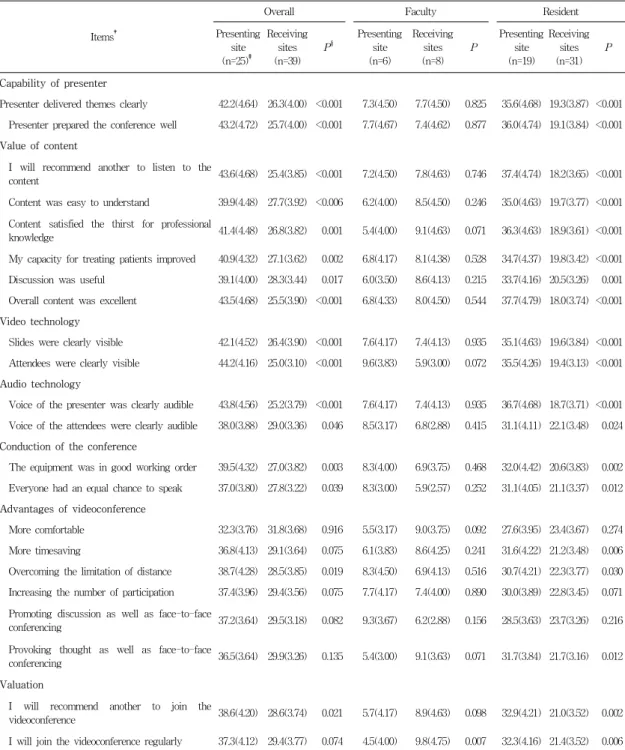
Table 2. Mean rank and mean scores* of satisfaction from presenting site and receiving sites on the videoconference
표 2. 화상회의를 주관하는 곳과 원격으로 참여하는 곳들의 만족도
N Mean(Pre-test) Mean(Post-test) P* P†
Presenting site 9 0.89 1.11 0.516
0.905
Receiving sites 25 1.88 1.96 0.760
*P-values were calculated using Wilcoxon signed rank test representing difference between pre-test scores and post-test scores
†P-values were calculated using Mann Whitney U test representing score changes between presenting site and receiving sites Table 3. Pre-test scores and post-test scores at presenting site and receiving sites
표 3. 화상회의를 주관하는 곳과 원격으로 참여하는 곳들의 사전 테스트 및 사후 테스트 점수 결과
The average satisfaction scores were over 3 points on a 5-point Likert scale, except for the items about the voice of the attendees, promoting discussion, and the chance to speak; the values obtained from the faculty group at the receiving sites were 2.88, 2.88, and 2.57 points, respectively (see Table II).
1. Capability of presenter, value of content, video and audio technology, conduction of the conference
Participants at the receiving sites rated the scores of these domains lower than participants at the presenting site rated them. In subgroup analysis, the residents’ ratings at the receiving sites were lower than those of the residents at the presenting site. The faculty at the receiving sites rated all items as good in agreement with faculty at the presenting site (see Table II).
2. Advantages of videoconference In the assessment of the advantages of videoconference, there were no differences between the presenting site and the receiving sites except for overcoming the limitation of distance. Participants at the receiving sites rated overcoming the limitation of distance lower than those at the presenting site. There were no differences in any items between faculty’s ratings at the presenting site and faculty’s ratings at the receiving sites. In contrast, residents at the receiving sites rated the items with advantages in time, distance and provoking thought lower than those at the presenting site (see Table II).
3. Valuation
With regard to overall valuation, intention to recommend and join the videoconference was lower for residents at the receiving sites than for residents at the presenting site. The intention to join the videoconference was higher for faculty at the receiving site than for faculty that at the presenting site (see Table II).
4. Pre-test scores and post-test scores There were no changes between pre-test and post-test scores at either the presenting site or the receiving sites. There was no difference in the score changes between the two groups (see Table III).
IV. Discussion
In accordance with previous studies on the levels of satisfaction of individuals holding various positions in hospitals
[5][9], the levels of satisfaction at the receiving sites were lower than those at the presenting sites for the first five domains, which were about the content of the conference and the technology of the system: the capability of presenter, value of content, video technology, audio technology, and conduction of the conference. However, there were no differences between the two groups in the domains of the advantage and the overall valuation of the videoconferencing system, except for the following two items: overcoming the limitation of distance and intention to recommend the use of videoconferencing.
Subgroup analysis showed that there was no
inferiority in the satisfaction level of faculty at the
receiving sites compared to that of faculty at the
presenting site. In addition, the acceptance level at the receiving sites was higher than that at the presenting site. However, the satisfaction levels of the resident group at the receiving sites were lower than those at the presenting site, except for the following three questions: more comfortable, increasing the number of participants, and provoking thought.
The reason for the residents’ lower level of satisfaction at the receiving sites could be that participants at the receiving sites had not experienced face-to-face conferences during their study period. In a study with similar settings, ten residents of a dermatology department had participated in videoconferences at the presenting site or the receiving sites in rotation, and eight attending physicians of dermatology had participated in videoconference only at a fixed site during a study period of one year
[5]. The authors concluded that there were no differences between the presenting site and the receiving sites. We postulate that the satisfaction level at the receiving sites may increase if the participants are exchanged between the presenting site and the receiving sites.
A second explanation for the residents’ low level of satisfaction is that the prior knowledge which residents had about the themes was less than that of the faculty members. In addition to less knowledge about the themes, unexpected errors related to the videoconferences would lower the satisfaction level of residents at the receiving sites.
Conducting videoconferences using broadband internet is cost-effective. Previous studies on the level of satisfaction with videoconferencing have mostly used an ISDN (integrated services digital network)-based internet connection, which did not exceed a maximum speed of 384 kilobits/second (Kbps). The speed of ISDN is insufficient to conduct two-way videoconferences that require transferring a large amount of data including clear sound, high-definition videos of participants and PowerPoint® slides simultaneously. We conducted
videoconferences via high-speed internet backbone with a speed of 100 megabits/second (Mbps), and scores of satisfaction were mostly above 3 on a Likert scale.
One of the factors which hindered the videoconferences was the absence of skilled coordinators of the videoconference system at the receiving sites. The coordinators were mainly residents who remained in the hospital for a month or two and then went to sister hospitals. If full-time coordinators conducted the videoconferences, then technical errors during the videoconferences would be reduced.
The content included on the tests was not perfectly matched with the content of the corresponding conferences, which explains the lack of change between pre-test and post-test scores both at the presenting site and at the receiving sites. In most cases, the presenter had not confirmed the content of the conference until three days before the conference.
Authors had to design the test questionnaires in reference to only the draft of the conference slides provided by the presenter. There was no time for the presenter to look over the contents of the test questionnaire. A second explanation is the scarce motivation of residents to achieve a better score on the pre-test and post-test. If the test scores had been reflected in the appraisals of the residents, there might have been improvements in post-test scores compared with pre-test scores.
In conclusion, the present study demonstrates that
videoconferences were acceptable both at the
presenting site and the receiving sites, despite the
residents’ low level of satisfaction at the receiving
sites. The advantages of joint-videoconferencing
among several departments of family medicine were
comfort level, time-saving, increasing the number of
participants, promoting discussion, and provoking
thought. The presence of a skilled coordinator would
increase the satisfaction of joint-videoconferences.
저자 소개
Jong Soo Han(정회원)
∙2006 : MB degree, Seoul National University
∙2011 : MBA degree in Medical Management, Kyunghee University
∙2011 ∼ present : Assistance Professor of Health Promotion Center, Seoul National University Bundang Hospital
<Main interests : Obesity, Medical Informatics>
Kee Hyuck Lee
∙2006 : MB degree, Seoul National University
∙2011 : MBA degree in Medical Management, Kyunghee University
∙2011 ∼ present : Assistance Professor of Medical Informatics, Seoul National University Bundang Hospital
<Main interests : Lifestyle related diseases, Medical informatics>
※ This work was supported by grant no 11-2011-013 from the SNUBH Research Fund.