• 검색 결과가 없습니다.

The Efficacy of Endobronchial Ultrasound-Guided Transbronchial Needle Aspiration in Mediastinal Staging of Non-Small Cell Lung Cancer in a University Hospital

N/A
N/A
Protected

Academic year: 2021

Share "The Efficacy of Endobronchial Ultrasound-Guided Transbronchial Needle Aspiration in Mediastinal Staging of Non-Small Cell Lung Cancer in a University Hospital"

Copied!
8
0
0

로드 중.... (전체 텍스트 보기)

전체 글

(1)

Tuberc Respir Dis 2011;71:180-187

CopyrightⒸ2011. The Korean Academy of Tuberculosis and Respiratory Diseases. All rights reserved.

The Efficacy of Endobronchial Ultrasound-Guided Transbronchial Needle Aspiration in Mediastinal Staging of Non-Small Cell Lung Cancer in a University Hospital

Hyejin Joo, M.D.

1

, Hyeong Ryul Kim, M.D.

2

, Yeon Mok Oh, M.D.

1

, Yong Hee Kim, M.D.

2

, Tae Sun Shim, M.D.

1

, Dong-Kwan Kim, M.D.

2

, Seung Il Park, M.D.

2

, Woo Sung Kim, M.D.

1

, Dong Soon Kim, M.D.

1

, Chang Min Choi, M.D.

1

Departments of

1

Pulmonary and Critical Care Medicine, and

2

Thoracic and Cardiovascular Surgery, Asan Medical Center, University of Ulsan College of Medicine, Seoul, Korea

Background: In mediastinal lymph node sampling in non-small cell lung cancer (NSCLC) it is important to determine the appropriate treatment as well as to predict an outcome. Endobronchial ultrasound-guided transbronchial needle aspiration (EBUS-TBNA) is a recently developed, accurate, safe technique in patients with NSCLC for sampling mediastinal lymph nodes. We sought to determine the usefulness of EBUS-TBNA in mediastinal staging with NSCLC considered to be operable.

Methods: We retrospectively reviewed the records of 142 patients who underwent EBUS-TBNA for mediastinal staging in the Asan Medical Center, Korea from July 2008 to July 2010. If patients were in an operable state, they underwent subsequent surgical staging. Diagnoses based on biopsy results were compared with those based on surgical results.

Results: We performed EBUS-TBNA in 184 mediastinal lymph nodes in 142 NSCLC patients. Almost all of the EBUS-TBNA samples were from the lower paratracheal (112, 60.9%) and subcarinal (57, 31.0%) lymph nodes. In 142 patients, 51 patients (35.9%) were confirmed with malignant invasion of the mediastinal lymph node by EBUS-TBNA and 91 (64.1%) patients were not confirmed. Among the 91 patients, 64 patients (70.3%) underwent surgical staging. 3 patients (4.7%) who were misdiagnosed by the EBUS-TBNA were confirmed by surgery. After Diagnostic sensitivity of EBUS-TBNA, the prediction of mediastinal metastatsis was 94.4% and specificity was 100%.

The procedures were performed safely and no serious complications were observed.

Conclusion: We demonstrated the high diagnostic value of EBUS-TBNA for mediastinal staging.

Key Words: Bronchi; Ultrasonography, Interventional; Biopsy, Fine-Needle; Mediastinum; Lymphatic Metastasis;

Carcinoma, Non-Small-Cell Lung

Address for correspondence: Chang Min Choi, M.D.

Department of Pulmonary and Critical Care Medicine, Asan Medical Center, University of Ulsan College of Medicine, 388-1, Pungnap2-dong, Songpa-gu, Seoul 138-736, Korea Phone: 82-2-3010-5902, Fax: 82-2-3010-6968

E-mail: [email protected] Received: Jun. 8, 2011 Accepted: Aug. 1, 2011

Introduction

Accurate disease staging is an important factor not only for determining a treatment method but also for predicting prognosis in patients diagnosed with lung cancer. In particular, mediastinal lymph node invasion

should be examined in patients with non-small cell lung

cancer for lymph node staging. Many studies have re-

ported that chest computed tomography (CT), which is

one of methods that identify mediastinal lymph node

invasion, has low sensitivity and specificity

1

. Positron

emission tomography has been also known as a method

to identify mediastinal lymph node invasion, but has a

limitation in that it has false negativity in slowly pro-

gressed cancer such as bronchioloalveolar carcinoma,

and false positivity in granuloma or inflammatory lymph

node diseases

2,3

. According to the guideline of Ameri-

can College of Chest Physicians (2007), it describes that

(2)

a pathological examination should be conducted if cen- tral lung cancer or mediastinal lymph node invasion is suspected. Until now, mediastinoscopic biopsy has been conducted as a standard examination

4

. However, mediastinoscopic biopsy has a limitation in that it is an invasive procedure that requires general anesthesia.

Endobronchial ultrasound-guided transbronchial nee- dle aspiration is a non-invasive procedure where needle aspiration is conducted while watching ultrasonogram during the conduct of bronchoscopy. Its usefulness in mediastinal lymph node examination has been fre- quently reported

5

. According to most studies published to date, endobronchial ultrasound-guided transbronchial needle aspiration has been reported to have sensitivity and specificity more than 90% in the examination of me- diastinal lymph node invasion in lung cancer patients

6,7

. Accordingly, in this study, the result of examining lymph node invasion via endobronchial ultrasound- guided transbronchial needle aspiration in patients, who had been already diagnosed with non-small cell lung cancer at one Korean general hospital, and who had shown mediastinal lymph node enlargement in chest CT, and the result of pathological examination of the mediastinal lymph node obtained from primary lung cancer resection and lymphadenectomy in patients with- out invasion were comparatively analyzed to investigate the usefulness of endobronchial ultrasound-guided transbronchial needle aspiration.

Materials and Methods 1. Subjects

Of 770 patients who underwent endobronchial ultra- sound-guided transbronchial needle aspiration at Seoul Asan hospital from July 1st 2008 to July 31st 2010, 142 patients, who had been already diagnosed with non- small cell lung cancer via percutaneous biopsy or bron- choscopy, and who had shown mediastinal lymph node enlargement with a size of more than 5 mm in chest CT, were selected as subjects. Positron emission tomog- raphy was conducted on all patients to predict media- stinal lymph node invasion and distant metastasis in

lung cancer. If the maximum standardized uptake value (SUV) was 2.5 or higher, it was considered positive.

Patients, who had distant metastasis where a surgical treatment was impossible, or who had poor health sta- tus where bronchoscopy was impossible, were exclud- ed from the subjects. Primary lung cancer resection and lymphadenectomy were conducted on the patients who had no mediastinal lymph node invasion in endobron- chial ultrasound-guided transbronchial needle aspirat- ion. After the surgery, mediastinal lymph node invasion was examined again to assess the accuracy of endo- bronchial ultrasound-guided transbronchial needle as- piration. This study was approved by the IRB of Seoul Asan hospital (201-0259).

2. Endobronchial ultrasound-guided transbronchial needle aspiration

Endobronchial ultrasound-guided transbronchial nee- dle aspiration was conducted after the intravenous in- jection of 2.0∼5.0 mg midazolam following local anes- thesia with 4% lidocaine. The tracheobronchea was ob- served via fiberoptic bronchoscopy (BF-T160 broncho- scope; Olympus, Tokyo, Japan). Subsequently, an ex- amination was conducted using convex prove EBUS (XBF-UC 160F; Olympus) with an ultrasonic transducer installed at the end of bronchoscopy. This endobron- chial ultrasonogram was approached to the wall of the airway to examine, and a installed balloon was dilated with saline solution to obtain ultrasonographic images of the lymph node. After 22-gauge needle (NA-202C;

Olympus) was inserted to the lymph node, the samples

were obtained using negative pressure. Aspiration was

performed at each lesion at least twice, and was con-

tinued until the tissue was obtained

8

. A pathological ex-

amination was not immediately conducted in the endo-

scopic lab. Instead, the samples obtained using the nee-

dle was smeared on a glass slide, and then fixed with

95% alcohol, followed by cytology. The tissue samples

were immediately fixed with formaldehyde, and then

transferred to the pathology lab. All endoscopic exami-

nations and subsequent endobronchial ultrasound-guid-

ed transbronchial needle aspiration were conducted by

(3)

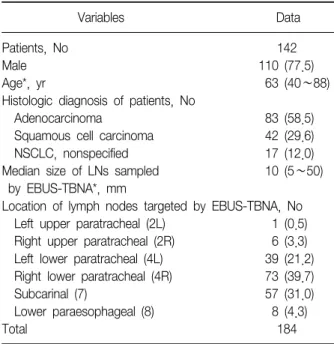
Table 1. Characteristics of patients and lymph nodes

Variables Data

Patients, No 142

Male 110 (77.5)

Age*, yr 63 (40∼88)

Histologic diagnosis of patients, No

Adenocarcinoma 83 (58.5)

Squamous cell carcinoma 42 (29.6)

NSCLC, nonspecified 17 (12.0)

Median size of LNs sampled 10 (5∼50) by EBUS-TBNA*, mm

Location of lymph nodes targeted by EBUS-TBNA, No Left upper paratracheal (2L) 1 (0.5) Right upper paratracheal (2R) 6 (3.3) Left lower paratracheal (4L) 39 (21.2) Right lower paratracheal (4R) 73 (39.7)

Subcarinal (7) 57 (31.0)

Lower paraesophageal (8) 8 (4.3)

Total 184

Data are presented as number (%) unless otherwise indicated.

*Data are presented as median (range).

NSCLC: non-small cell lung cance; EBUS-TBNA: endobronchial ultrasound-guided transbronchial needle aspiration; LN: lymph node.

Figure 1. Clinical course of 142 patients enrolled in the study. CTx: chemotherapy; EBUS-TBNA: endobronchial ultrasound-guided transbronchial needle aspiration; F/U:

follow up; LN: lymph node; RTx: radiation therapy; mLN (+): tumor invade the mediastinal lymph node.

one conductor. Classification criteria presented by Mou- ntain et al. was used to mark lymph node location

9

. 3. Analysis methods

The sensitivity and specificity of endobronchial ultra- sound-guided transbronchial needle aspiration were ex- amined to assess its usefulness for the examination of mediastinal lymph node invasion. The result variables were analyzed using a SPSS statistical package for social science version 18.0 (SPSS Inc., Chicago, IL, USA).

Results

Endobronchial ultrasound-guided transbronchial nee- dle aspiration was conducted on the mediastinal lymph node of 142 patients who had been already histologi- cally diagnosed with non-small cell lung cancer. The male subjects accounted for 110 (77.5%) patients and the median age was 63 years (range, 40∼88). The his- tological classification of the patients with non-small cell

lung cancer consisted of adenocarcinoma in 83 patients (58.5%), squamous cell carcinoma in 42 patients (29.6%) unclassified non-small cell lung cancer in 17 patients (12.0%). The lymph node on which endobronchial ul- trasound-guided transbronchial needle aspiration was conducted had a median size of 10 mm (5∼50 mm), and 91.9% of the lymph node were located in lower paratracheal lesion (4L, 4R) and subcarinal lesion (Table 1)

7

.

Via endobronchial ultrasound-guided transbronchial

needle aspiration, mediastinal lymph node invasion was

identified in 51 patients (35.9%), of whom 15 patients

(29.4%) underwent a surgery and 36 patients (70.6%)

underwent chemotherapy or radiotherapy. Among 91

patients (64.1%) who had not shown mediastinal lymph

node invasion in endobronchial ultrasound-guided

transbronchial needle aspiration, 64 patients (70.3%) un-

derwent a surgery. As a result of the surgery, media-

stinal lymph node invasion was identified in 3 patients

(4.7%), and no mediastinal lymph node invasion was

found in the remaining 61 patients (95.3%). 27 patients

(29.7%), who had not shown mediastinal lymph node

invasion in endobronchial ultrasound-guided transbron-

chial needle aspiration and who had been able to un-

dergo lung cancer surgery, actually did not undergo the

surgery or were not followed up after diagnosis due to

(4)

Table 2. Clinical characteristics of cases misdiagnosed by endobronchial ultrasound-guided transbronchial needle aspiration (EBUS-TBNA) of mediastinal staging in non-small cell lung cancer (NSCLC)

Sex/Age (yr) Histologic type Primary tumor location Target LN location Size of LN (mm) Max.SUV of LN, PET

M/57 Sarcomatoid carcinoma RUL, RML 7 11 5.0

M/67 Squamous cell carcinoma LLL 4L 7 2.5

M/67 Adenocarcinoma LLL 7 9 3.6

LLL: left lower lobe; LN: lymph node; RML: right middle lobe; RUL: right upper lobe; SUV: standardized uptake value; 4L: left lower paratracheal lymph node; 7: subcarinal lymph node.

Figure 2. In a patient with right lower lobe (RLL) sar- comatoid carcinoma, nodal station 7 was assessed by EBUS-TBNA. (A) Axial CT image of stations 7. (B) EBUS image of station 7.

EBUS-TBNA: endobronch- ial ultrasound-guided trans- bronchial needle aspirat- ion; CT: computed tomo- graphy.

Figure 3. In a patient with left lower lobe (LLL) squ- amous cell carcinoma, no- dal station 4L was as- sessed by EBUS-TBNA.

(A) Axial CT image of sta- tions 4L. (B) EBUS image of station 4L. EBUS-TBNA:

endobronchial ultrasound- guided transbronchial nee- dle aspiration; CT: com- puted tomography.

surgery risks and postoperative health status caused by old age, decreased lung function, or cardiovascular dis- eases (Figure 1). Therefore, endobronchial ultrasound- guided transbronchial needle aspiration was shown to have a sensitivity of 94.4% (51/54) and a specificity of 100% (61/61) for mediastinal lymph node invasion in non-small cell lung cancer. In addition, positron emis-

sion tomography was shown to have 98.1% (53/54) sen- sitivity and 80.3% (49/61) specificity.

Three patients, who had not shown lymph node in-

vasion in endobronchial ultrasound-guided transbron-

chial needle aspiration and who had undergone lung

cancer resection and lymphadenectomy, showed lymph

node invasion in the resected tissue. One patient who

(5)

Figure 4. In a patient with Left lower lobe adenocarcinoma, nodal station 7 was assessed by EBUS-TBNA. (A) Axial CT image of stations 7. (B) EBUS image of station 7. EBUS-TBNA: endobronchial ultrasound-guided transbronchial needle aspiration; CT: computed tomography.

had been diagnosed with sarcomatoid carcinoma in a preoperative histological examination on the mass on the right upper and middle lobes and who had shown subcarinal lymph node

7

enlargement in chest CT, under- went endobronchial ultrasound-guided transbronchial needle aspiration. Another patient, who had been diag- nosed with squamous cell carcinoma in a histologic ex- amination on the mass on the left upper lobe, under- went needle aspiration for left lower paratracheal lymph node (4L). The other patient, who had shown ad- enocarcinoma that had occurred around left lower bron- chus underwent needle aspiration for subcarinal lymph node

7

. No lymph node invasion was found in the three patients as a result of endobronchial ultrasonogram nee- dle aspiration. Each lymph node was shown to have the maximal SUV value of 2.5 and 3.6, respectively in positron emission tomography. The lymph node meas- ured in endobronchial ultrasonogram was shown to have a size of 11, 7, and 9 mm, respectively, which showed no common characteristic in the three patients (Table 2, Figure 2∼4).

Discussion

In this study, mediastinal lymph node invasion was examined in patients with non-small cell lung cancer via

preoperative endobronchial ultrasound-guided trans- bronchial needle aspiration in one university hospital.

Subsequently, the mediastinal lymph node obtained from lung cancer resection and lymphadenectomy was then examined to assess the sensitivity and specificity of endobronchial ultrasound-guided transbronchial nee- dle aspiration.

Non-small cell lung cancer accounts for approxima- tely 85% of malignant tumors occurring in the lung. In this case, mediastinal lymph node staging is an im- portant factor determining the resection possibility and prognosis of primary lung cancer

10

. Chest CT has been used for the early diagnosis and staging of lung cancer in most hospitals, but has been reported to have 51%

sensitivity and 86% specificity for mediastinal lymph

node invasion

1

. Positron emission tomography has been

also reported to have 74% sensitivity and 85% specificity

for mediastinal lymph node invasion, which showed

lower sensitivity than that shown in this study

1,7

. How-

ever, positron emission tomography can not replace a

pathological examination. The guideline of the US na-

tional cancer networks (2010) recommended that a

pathological examination should be conducted if media-

stinal lymph node invasion is suspected, and that meth-

ods such as mediastinoscopic biopsy, endobronchial ul-

trasound-guided transbronchial needle aspiration, and

(6)

esophagoscopic ultrasound-guided needle aspiration could be used

11

. A pathological examination via media- stinoscopic biopsy has been known as a standard meth- od to date. However, mediastinoscopic biopsy has been reported to be actually conducted in 27% of patients be- fore lung cancer resection

12

. Unlike the recommendat- ion of the guideline, mediastinoscopic biopsy has not been readily conducted in actual clinical practices due to the following reasons. This is likely to be attributable to the fact that mediastinoscopic biopsy, which has been known to be a relatively safe examination, has dis- advantages of adverse events related to general anes- thesia, and complications such as skin incision, ar- rhythmia, bleeding, chest lymphatic injury, recurrent lar- yngeal nerve injury, and pneumonia

13

.

Endobronchial ultrasonogram can observe the trache- al wall and para-structures in a real time by adhering the tracheal wall and probe as the bronchoscopy end is installed with a balloon that can be dilated with saline solution. It enables a histological examination using tis- sues obtained from the negative aspiration via a needle, and minimizes side effects by screening vessels via Doppler functions. Furthermore, it has an advantage of examining outpatients, who can undergo bronchoscopy except for patients with coagulopathy, under local anes- thesia and analgesics. Due to the aforementioned rea- sons, endobronchial ultrasound-guided transbronchial needle aspiration has been useful not only for the iden- tification of casual factors of mass including the media- stinal lymph node, but also for the examination of me- diastinal lymph node invasion in lung cancer

14-16

. Adams et al. conducted a meta-analysis of mediastinal lymph node data in 817 patients with lung cancer by reviewing 10 research papers, reporting that endobron- chial ultrasound-guided transbronchial needle aspiration had 88% sensitivity and 100% specificity

6

. Such result was higher than 80% sensitivity of conventional media- stinoscopic biopsy

4

. The higher sensitivity of endobron- chial ultrasound-guided transbronchial needle aspiration is likely to be attributable to the following reasons. As endobronchial ultrasonogram/needle aspiration can be conducted under local anesthesia, it makes the exami-

nation of mediastinal lymph node possible in patients with old age or cardiovascular diseases, who can not undergo mediastinoscopic biopsy due to risks caused by general anesthesia. In addition, the range of the lymph node that can be examined via endobronchial ultrasound-guided transbronchial needle aspiration is similar to that of the conventional mediastinoscopic biopsy. Upper paratracheal lymph node (2L, 2R) pre- vertebral lymph node (3P), lower paratracheal lymph node (4L, 4R), subcarinal lymph node

7

that can be ex- amined via mediastinoscopy can be also examined via endobronchial ultrasound-guided transbronchial needle aspiration. In particular, subcarinal lymph node

7

meta- stasis was reported to be more accurately identified in endobronchial ultrasound-guided transbronchial needle aspiration

17

. Furthermore, endobronchial ultrasound- guided transbronchial needle aspiration has an advant- age of observing the lymph node with a size of 1 cm or less through a real-time ultrasound compared to nee- dle aspiration. In this study, endobronchial ultrasound- guided transbronchial needle aspiration was conducted on the mediastinal lymph node whose size was 5 mm or higher in chest CT.

The result of this study confirmed that endobronchial ultrasound-guided transbronchial needle aspiration was useful for the detection of mediastinal lymph node invasion. However, this study has a few limitations in that it was not directly compared with mediastinoscopic biopsy, a conventional standard method of the examina- tion of mediastinal lymph node, and that the lymph node opposite to the primary lesion was not resected during the surgery so that it was not compared with the lymph node examined via endobronchial ultrasound- guided transbronchial needle aspiration. Despite the aforementioned limitations, disparity between conduct- ors was avoided as only one conductor selected the lymph node and conducted endobronchial ultrasound- guided transbronchial needle aspiration.

If a needle larger than 22-gauge needle is used in

endobronchial ultrasound-guided transbronchial needle

aspiration, false negativity could be reduced. Further-

more, Hwangbo et al. reported that via endobronchial

(7)

ultrasound-guided transbronchial needle aspiration with esophageal ultrasonographic needle aspiration, the lymph node beneath the aorta

5

, the paraesophsgeal lymph node

8

, and the pulmonary ligament lymph node

9

were examined. Therefore, as endobronchial ultrasound- guided transbronchial needle aspiration can examine most mediastinal lymph nodes, it can be used as a pre- operative examination method replacing mediastino- scopic biopsy

18

.

This study confirmed that endobronchial ultrasound- guided transbronchial needle aspiration was useful for the detection of mediastinal lymph node invasion in non-small cell lung cancer. When the result of examin- ing mediastinal lymph node invasion via endobronchial ultrasound-guided transbronchial needle aspiration was compared with the result of the actual surgery, the re- sult of endobronchial ultrasound-guided transbronchial needle aspiration showed high sensitivity and speci- ficity.

No large-scaled comparative study reporting that en- dobronchial ultrasound-guided transbronchial needle as- piration completely replaced mediastinoscopic biopsy has been reported to date. However, considering the high diagnostic rate of endobronchial ultrasound-guided transbronchial needle aspiration, it can be considered effective in mediastinal staging.

References

1. Silvestri GA, Gould MK, Margolis ML, Tanoue LT, McCrory D, Toloza E, et al. Noninvasive staging of non-small cell lung cancer: ACCP evidenced-based clinical practice guidelines (2nd edition). Chest 2007;

132(3 Suppl):178S-201S.

2. van Tinteren H, Hoekstra OS, Smit EF, van den Bergh JH, Schreurs AJ, Stallaert RA, et al. Effectiveness of positron emission tomography in the preoperative as- sessment of patients with suspected non-small-cell lung cancer: the PLUS multicentre randomised trial. Lancet 2002;359:1388-93.

3. Higashi K, Ueda Y, Seki H, Yuasa K, Oguchi M, Noguchi T, et al. Fluorine-18-FDG PET imaging is neg- ative in bronchioloalveolar lung carcinoma. J Nucl Med

1998;39:1016-20.

4. Detterbeck FC, Jantz MA, Wallace M, Vansteenkiste J, Silvestri GA; American College of Chest Physicians.

Invasive mediastinal staging of lung cancer: ACCP evi- dence-based clinical practice guidelines (2nd edition).

Chest 2007;132(3 Suppl):202S-220S.

5. Navani N, Spiro SG, Janes SM. Mediastinal staging of NSCLC with endoscopic and endobronchial ultrasound.

Nat Rev Clin Oncol 2009;6:278-86.

6. Adams K, Shah PL, Edmonds L, Lim E. Test perform- ance of endobronchial ultrasound and transbronchial needle aspiration biopsy for mediastinal staging in pa- tients with lung cancer: systematic review and meta- analysis. Thorax 2009;64:757-62.

7. Hwangbo B, Kim SK, Lee HS, Lee HS, Kim MS, Lee JM, et al. Application of endobronchial ultrasound- guided transbronchial needle aspiration following in- tegrated PET/CT in mediastinal staging of potentially operable non-small cell lung cancer. Chest 2009;135:

1280-7.

8. Lee HS, Lee GK, Lee HS, Kim MS, Lee JM, Kim HY, et al. Real-time endobronchial ultrasound-guided trans- bronchial needle aspiration in mediastinal staging of non-small cell lung cancer: how many aspirations per target lymph node station? Chest 2008;134:368-74.

9. Mountain CF, Dresler CM. Regional lymph node classi- fication for lung cancer staging. Chest 1997;111:1718- 23.

10. Robinson LA, Ruckdeschel JC, Wagner H Jr, Stevens CW; American College of Chest Physicians. Treatment of non-small cell lung cancer-stage IIIA: ACCP evi- dence-based clinical practice guidelines (2nd edition).

Chest 2007;132(3 Suppl):243S-265S.

11. Ettinger DS, Akerley W, Bepler G, Blum MG, Chang A, Cheney RT, et al. Non-small cell lung cancer. J Natl Compr Canc Netw 2010;8:740-801.

12. Little AG, Rusch VW, Bonner JA, Gaspar LE, Green MR, Webb WR, et al. Patterns of surgical care of lung can- cer patients. Ann Thorac Surg 2005;80:2051-6.

13. Lazzari Agli L, Trisolini R, Burzi M, Patelli M. Mediasti- nal hematoma following transbronchial needle aspirat- ion. Chest 2002;122:1106-7.

14. Herth F, Becker HD, Manegold C, Drings P. Endobron- chial ultrasound (EBUS)--assessment of a new diag- nostic tool in bronchoscopy for staging of lung cancer.

Onkologie 2001;24:151-4.

15. Cameron SE, Andrade RS, Pambuccian SE. Endobron-

chial ultrasound-guided transbronchial needle aspira-

tion cytology: a state of the art review. Cytopathology

(8)

2010;21:6-26.

16. Shannon JJ, Bude RO, Orens JB, Becker FS, Whyte RI, Rubin JM, et al. Endobronchial ultrasound-guided nee- dle aspiration of mediastinal adenopathy. Am J Respir Crit Care Med 1996;153:1424-30.

17. Ernst A, Anantham D, Eberhardt R, Krasnik M, Herth FJ. Diagnosis of mediastinal adenopathy-real-time en-

dobronchial ultrasound guided needle aspiration ver- sus mediastinoscopy. J Thorac Oncol 2008;3:577-82.

18. Hwangbo B, Lee GK, Lee HS, Lim KY, Lee SH, Kim HY, et al. Transbronchial and transesophageal fine- needle aspiration using an ultrasound bronchoscope in mediastinal staging of potentially operable lung cancer.

Chest 2010;138:795-802.

수치

Table  1.  Characteristics  of  patients  and  lymph  nodes
Figure  2.  In  a  patient  with  right  lower  lobe  (RLL)   sar-comatoid carcinoma, nodal  station 7 was assessed by  EBUS-TBNA
Figure  4.  In  a  patient  with  Left  lower  lobe  adenocarcinoma,  nodal  station  7  was  assessed  by  EBUS-TBNA

참조

관련 문서

age, smoking, histology, performance status, stage, initial treatment, and survival. Sex differences in presentation, management, and prognosis of patients with non-small

2재화 2요소 헥셔-올린 모형에서는 어느 한 경제에서 어느 한 요소의 양이 증가하면, 그 요소를 집약적으로 사용하는 산업의 생산량은 증가하고 다른

Prophylactic cranial irradiation for preventing brain metastases in patients undergoing radical treatment for non-small-cell lung.. A randomized trial of surgery

The index is calculated with the latest 5-year auction data of 400 selected Classic, Modern, and Contemporary Chinese painting artists from major auction houses..

a prospective analysis of 50 cases. Preoperative staging of non-small-cell lung cancer with positron-emission tomography. Staging of non- small-cell lung cancer

1 John Owen, Justification by Faith Alone, in The Works of John Owen, ed. John Bolt, trans. Scott Clark, "Do This and Live: Christ's Active Obedience as the

Patients with breast cancer; ovarian cancer; renal cell carcinoma; pancreatic neuroendocrine cancer; colorectal cancer; head and neck cancer; non-small cell lung

Preoperative evaluation of pelvic lateral lymph node of patients with lower rectal cancer: comparison study of MR imaging and CT in 53 patients?.