• 검색 결과가 없습니다.

Intrapulmonary Solitary Fibrous Tumor Masquerade Sigmoid Adenocarcinoma Metastasis

N/A
N/A
Protected

Academic year: 2021

Share "Intrapulmonary Solitary Fibrous Tumor Masquerade Sigmoid Adenocarcinoma Metastasis"

Copied!
4
0
0

로드 중.... (전체 텍스트 보기)

전체 글

(1)

Korean J Thorac Cardiovasc Surg 2013;46:295-298 □ Case Report □ http://dx.doi.org/10.5090/kjtcs.2013.46.4.295 ISSN: 2233-601X (Print) ISSN: 2093-6516 (Online)

− 295 − Departments of

1

Thoracic Surgery and

2

Pathology, 401 Military Hospital

Received: November 12, 2012, Revised: January 25, 2013, Accepted: March 7, 2013

Corresponding author: Timothy Sakellaridis, Departments of Thoracic Surgery, 401 Military Hospital, 91-95, Antoniou Tritsi, 15238, Halandri, Athens, Greece

(Tel) 30-210-6009016 (Fax) 30-210-6009016 (E-mail) [email protected]

C

The Korean Society for Thoracic and Cardiovascular Surgery. 2013. All right reserved.

CC

This is an open access article distributed under the terms of the Creative Commons Attribution Non-Commercial License (http://creative- commons.org/licenses/by-nc/3.0) which permits unrestricted non-commercial use, distribution, and reproduction in any medium, provided the original work is properly cited.

Intrapulmonary Solitary Fibrous Tumor Masquerade Sigmoid Adenocarcinoma Metastasis

Timothy Sakellaridis, M.D., M.Sc.

1

, Ioannis Koukis, M.D.

1

, Theodora Marouflidou, M.D.

2

, Ioannis Panagiotou, M.D.

1

, Anastasios Piyis, M.D.

1

, Konstantinos Tsolakis, M.D., Ph.D.

1

Solitary fibrous tumor is a rare spindle cell mesenchymal tumor entity, with either benign or malignant behavior that cannot be accurately predicted by histological findings. An intrapulmonary site of origin is even rarer. We re- port a case of a 51-year-old woman in whom an abnormal nodule in the lower right lung was detected during staging for sigmoid adenocarcinoma. The nodule was excised and pathological examination revealed an intra- pulmonary solitary fibrous tumor.

Key words: 1. Solitary fibrous tumors 2. Lung neoplasms

3. Video-assisted thoracic surgery

CASE REPORT

A 51-year-old Caucasian female was referred to our in- stitution because of an abnormal nodule detected in her right lung. This had at first been detected four months earlier when she underwent an urgent Hartmann procedure due to re- fractory adenocarcinoma of the sigmoid colon (pT

4

N

1

stage).

Due to the urgency of the surgery, the patient was not staged prior to the surgery but was initially staged after the operation. The only pathologic finding in the computed to- mography (CT) of the lung was a nodule in the lower right lobe of 2.5 cm at its longest dimension (Fig. 1), and the pa- tient was staged as cT

4

N

1

M

1

. She received 4 cycles of che- motherapy for the sigmoid adenocarcinoma before she was referred to us for excision of what was believed to be a sin- gle metastatic nodule. Although the radiologic findings sup- ported a benign tumor, neither positron emission tomog-

raphy-CT nor any other procedure to attempt to diagnose the nodule was performed due to the patient’s willingness to un- dergo complete removal of the mass even if it were benign.

The patient underwent video-assisted thoracoscopic (VATS) wedge excision of the tumor. She had an uneventful post- operative course and was discharged on the 4th postoperative day.

The specimen of the resected lung contained a firm intra- pulmonary white-colored well-defined mass with dimensions of 2.5×2.3×2.2 cm. Microscopically, the tumor had a

“patternless pattern,” with proliferation of bland spindle cells

in alternating hypocellular and hypercellular areas, accom-

panied by a collagenous stroma (Fig. 2A) with branching he-

mangiopericytoma-like vessels (Fig. 2B). The tumor had no

evidence of increased mitotic activity (0 to 1 mitoses per 10

high power fields using an Olympus BH-2 microscope, with

a 40× field, 0.5 mm diameter, and area of 0.196 mm

2

), any

(2)

Timothy Sakellaridis, et al

− 296 − Fig. 1. Computed tomography scan showing a well-defined tumor in the lower right lobe of the lung.

Fig. 2. Histologic appearance of solitary fibrous tumor. (A) The lesion is well delineated from the lung parenchyma, which is shown on the left (H&E, ×25). (B) The tumor is characterized by a growth of bland spindle-shape cells, with variable cellularity and branching he- mangiopericytoma-like vessels in the stroma, shown in the center (H&E, ×100). (C) Strong and diffuse immunoreactivity of the tumor cells for CD34 (×100).

significant atypia, or necrosis. Immunohistocemically, the tu- mor cells were positive for vimentin, CD34 (Fig. 2C), and Bcl-2. A few cells were also focally and weakly positive for estrogen and progesterone receptors. The index of cellular proliferation with the antibody Ki-67 is low and estimated at

<1% of the cellular population. Immunohistochemistry stain- ing of the tumor cells was negative for alfa-smooth muscle actin (SMA), muscle specific actin (HHF-35), h-caldesmon, CD117 (c-kit), S-100 protein, epithelial antigens (wide spec- trum cytokeratins [AE1/AE3] and epithelial membrane anti- gen), and thyroid transcription factor-1. The resection margins were free of disease. One year after the operation, the patient is well, with no evidence of recurrent disease.

DISCUSSION

Solitary fibrous tumors (SFTs) were first pathologically de- scribed by Klemperer and Rabin in 1931. To the present, about 800 cases have been reported in the English medical literature [1].

SFT is the preferred term for an uncommon, but histo- morphologically distinctive spindle cell neoplasm, that was identified in the past as fibrous mesothelioma, localized fi- brous mesothelioma, localized fibrous tumor, localized meso- thelioma, pleural fibroma, solitary fibrous mesothelioma, or submesothelial fibroma [1]. There are reports of SFTs arising either from mediastinal, diaphragmatic, or parietal pleura, or from within a lung fissure and in various extrapleural loca- tions, such as the retroperitoneum, mediastinum, thyroid gland, nasal cavities, meninges, or parietal surfaces of the in- tra-abdominal viscera. The intraparenchymal or endobronchial location is a rare occurrence [1]. Less than 20 cases of intra- parenchymal SFTs have been reported in the English liter- ature [1-5]. To prove and establish the fact that these lesions are indeed of pulmonary origin, it is important to consider the clinical, radiologic, and pathologic findings to demonstrate the lack of continuity with the visceral pleura and to exclude an endophytic growth in a pleural-based lesion [1,2,4].

SFTs of the pleura and lung occur predominantly in adults.

Nevertheless, there are rare cases of intrapulmonary SFTs re- ported in childhood [6]. They are usually found incidentally.

Possible symptoms include cough, pain and dyspnea, and dig-

(3)

Intrapulmonary Solitary Fibrous Tumor

− 297 −

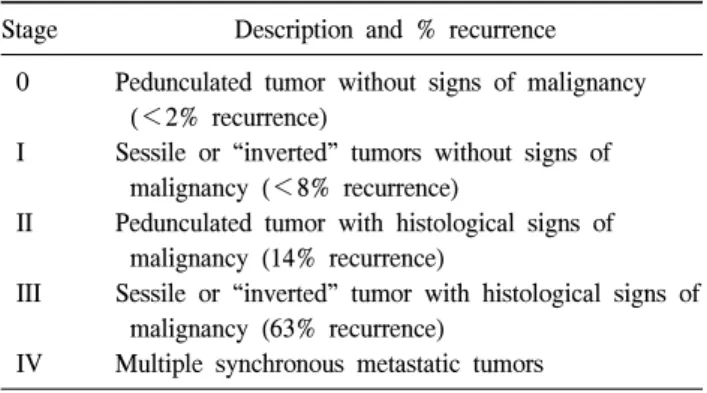
Table 1. Staging system for the management and follow-up of SFT

Stage Description and % recurrence 0 Pedunculated tumor without signs of malignancy

(<2% recurrence)

I Sessile or “inverted” tumors without signs of malignancy (<8% recurrence)

II Pedunculated tumor with histological signs of malignancy (14% recurrence)

III Sessile or “inverted” tumor with histological signs of malignancy (63% recurrence)

IV Multiple synchronous metastatic tumors ital clubbing. Hypoglycemia and seizures can be encountered

in some cases due to secretion of insulin-like growth factor II by the tumor [1-3,5]. Hemoptysis due to SFT as well as hy- pertrophic osteoarthropathy secondary to SFT of the lung has also been reported. There is no association with smoking or asbestos exposure. Due to its non-specific symptoms, it can potentially mimic solitary pulmonary metastasis, as was the case with our patient.

On gross examination, the tumor is generally well-circum- scribed with bulging and whorled cut surfaces. The tumor size can range from 1.9 to 20 cm. Histologically, it is asso- ciated with variable patterns, the most common being the

“patternless pattern.” The cellular areas with the spin- dle-shaped cells may alternate with hypocellular areas. The cytologic features consist of cellular areas composed of spin- dled to ovoid cells with scanty cytoplasm, occurring either solely or in groups. Immunohistochemistry plays a substantial role in supporting the diagnosis made by morphologic fea- tures and is also helpful in differentiating these tumors from mesothelioma, neurofibroma, and other spindle-cell lesions. A differential diagnosis of intrapulmonary SFT includes, among other lesions, pulmonary adenofibroma, benign neural neo- plasms, leiomyoma and leiomyosarcoma, synovial sarcoma, spindle cell thymoma, spindle cell carcinoid tumor, nerve sheath tumor, fibrosarcoma, sarcomatoid carcinoma, and sar- comatoid mesothelioma. The morphologic features and im- munohistochemical profile of SFT are sufficiently distinct to allow separation from such conditions in the majority of the cases. Several studies have reported positivity of tumor cells with CD34 antibody in almost 100% of cases, and with CD99 antibody in 70% of cases, whereas Bcl-2, SMA, and epithelial membrane antigen are positive in 20% to 35% of the cases. Vimentin is positive in 90% of the cases, but is considered nonspecific [7,8].

The histologic criteria for classifying the malignant variants of SFT of the lung and pleura were described by England et al. in 1989 and Vallat-Decouvelaere et al. in 1998. They es- tablished the following features suggestive of malignancy: 1) more than 4 mitoses per 10 high-power fields, 2) presence of necrosis, 3) hemorrhage, 4) hypercellularity as detected by nuclear crowding and overlapping, 5) nuclear atypia, 6) pleo- morphism, 7) stromal or vascular invasion, and 8) size ex-

ceeding 10 cm.

These pathologic features are only suggestive. The absence of these characteristics does not exclude malignant behavior.

On the other hand, encapsulation, pedunculated and resect- ability with free surgical margins are considered to be favor- able prognostic factors even in histologically malignant variants. Positive margins are associated with an aggressive clinical course and high rates of local recurrence and meta- stasis [1].

Resection with free margins is considered to be the treatment for SFT located either in the lung or on the pleura. Wedge re- section may be accomplished by VATS or standard thor- acotomy, according to the anatomic position and size of the le- sion and the experience of the surgeon [2,4]. Adjuvant therapy may have a place in recurrent or systemic disease, but its bene- fit is undefined [5]. In general, SFTs have an unpredictable course, depending on their potential for malignancy. In large series, the recurrence rate of benign SFTs is reported to be low (1.4%), while the recurrence rate of malignant variants is re- ported to be higher (range, 9% to 19%) [1,5].

A staging system based on pedunculated versus sessile at- tachment and malignant versus benign histology that predicts recurrence has been proposed by Perrot et al. [1] (Table 1).

Due to the possibility of local recurrence and/or distal metastasis after surgical removal of the primary SFT, long-term follow-up is recommended. Local recurrence de- tected early is amenable to reoperation and resection, with good long-term results. The long-term survival rate for both benign and malignant variants is reported to be more than 90% [1-3,6].

In conclusion, SFTs are neoplasms that usually arise from

(4)

Timothy Sakellaridis, et al

− 298 − the pleura. An intraparenchymal or endobronchial location is a rare occurrence. Resection with clear margins is curative and final diagnosis and prognosis can be defined only after surgical resection. The prognosis of patients with rare SFTs of the lung depends on the completeness of the tumor resection. Variants of SFTs of the lung that are malignant or suspected to be malignant should be managed as lung cancer with regard to the surgical resection of the tumor and fol- low-up strategy.

CONFLICT OF INTEREST

No potential conflict of interest relevant to this article was reported.

REFERENCES

1. Pak PS, Yanagawa J, Abtin F, Wallace WD, Holmes EC, Lee JM. Surgical management of endobronchial solitary fi- brous tumors. Ann Thorac Surg 2010;90:659-61.

2. Kawaguchi K, Taniguchi T, Usami N, Yokoi K. Intrapulmo- nary solitary fibrous tumor. Gen Thorac Cardiovasc Surg 2011;59:61-4.

3. Cardinale L, Ardissone F, Cataldi A, Familiari U, Solitro F, Fava C. Solitary fibrous tumor of the lung: three rare cases of intraparenchymal nodules. Acta Radiol 2009;50:379-82.

4. Sakurai H, Tanaka W, Kaji M, Yamazaki K, Suemasu K.

Intrapulmonary localized fibrous tumor of the lung: a very unusual presentation. Ann Thorac Surg 2008;86:1360-2.

5. Kouki HS, Koletsis EN, Zolota V, Prokakis C, Apostolakis E, Dougenis D. Solitary fibrous tumor of the lung. Gen Thorac Cardiovasc Surg 2008;56:249-51.

6. Geramizadeh B, Banani A, Moradi A, Hosseini SM, Foroutan H. Intrapulmonary solitary fibrous tumor with bronchial involvement: a rare case report in a child. J Pediatr Surg 2010;45:249-51.

7. Baliga M, Flowers R, Heard K, Siddiqi A, Akhtar I. Solitary fibrous tumor of the lung: a case report with a study of the aspiration biopsy, histopathology, immunohistochemistry, and autopsy findings. Diagn Cytopathol 2007;35:239-44.

8. Sagawa M, Ueda Y, Matsubara F, et al. Intrapulmonary soli- tary fibrous tumor diagnosed by immunohistochemical and genetic approaches: report of a case. Surg Today 2007;37:

423-5.

수치

Fig. 2. Histologic appearance of solitary fibrous tumor. (A) The lesion is well delineated from the lung parenchyma, which is shown on  the left (H&E, ×25)
Table 1. Staging  system for the management and follow-up of SFT

참조

관련 문서

The fat-forming variant of solitary fibrous tumors (SFTs) is a rare soft tissue neoplasm that was previously referred to as a lipomatous hemangiopericytoma (L-HPC).. The

Angiomatoid fibrous histiocytoma is a rare soft tissue tumor that generally affects children and young adults. Surgical excision was performed.

Well-Differentiated Pancreatic Neuroendocrine Tumor with Solitary Hepatic Metastasis Presenting as a Benign Cystic Mass.. 352 J Korean Soc Radiol

Histologi- cally, it is composed of spindle-shaped cells and it is ob- served that the pattern of hemangiopericytoma-like ap- pearance, spiral pattern, and fibrous spindle cell

We report, herein, on a rare case of malignant SFT in the thigh region along with a review of the literature.. Moran 등(3)은 고립성 섬유성 종양은 조직학적으로 경계가

We report this unusual case of non-dural based intraparenchymal solitary fibrous tumor/hemangiopericytoma with high mitotic index and acute massive hemorrhage.. Rapid tumor growth

Its occurrence in various organs of the body has recently been described; in particular, two cases of solitary fibrous tumor of the adrenal gland have been reported worldwide, but

A calcifying fibrous pseudotumor (CFP) is a rare benign fibrous lesion characterized by dense hyalinized collagenous tissue in the sparse spindle cells,