ISSN 0378-6471 (Print)⋅ISSN 2092-9374 (Online)
https://doi.org/10.3341/jkos.2018.59.5.451
Original Article
녹내장에서 브리모니딘/티몰롤 복합제제와 0.15% 브리모니딘 사용 시 알레르기 발생률의 비교
Comparison of Allergy Prevalence between Brimonidine/Timolol Fixed Combination and 0.15% Brimonidine in Glaucoma Patients
박은정⋅전연숙
Eun Jung Park, MD, Yeoun Sook Chun, MD, PhD
중앙대학교 의과대학 중앙대학교병원 안과학교실
Department of Ophthalmology, Chung-Ang University Hospital, Chung-Ang University College of Medicine, Seoul, Korea
Purpose: To compare the allergy prevalence and clinical manifestations of 0.2% brimonidine/0.5% timolol fixed combination (BTFC) and 0.15% brimonidine in Korean patients with glaucoma.
Methods: We retrospectively analyzed the medical records of 196 glaucoma patients treated with BTFC and 234 glaucoma pa- tients treated with 0.15% brimonidine. We compared sex, age, type of glaucoma, treatment period, allergy history, onset time of ocular allergy and clinical characteristics of allergy in the two groups.
Results: Ocular allergy percentages 10.14% in the BTFC group and 22.02% in the 0.15% brimonidine group, and the risk of al- lergy was approximately 0.4 times lower in patients using BTFC (hazard ratio = 2.5, p = 0.009). The BTFC group developed ocu- lar allergy at a mean of 20.5 months (range: 1.7–51.1 months), and the 0.15% brimonidine group developed ocular allergy at a mean of 7.7 months (range: 0.4–50.8 months). In the BTFC group, 50% of the ocular allergy occurred within 15 months, and within 5 months in the 0.15% brimonidine group. Clinical characteristics of brimonidine allergy involved two types of conjunctival follicles and conjunctival papillae, but there were no significant differences in incidence according to allergy type (p = 0.566).
Conclusions: The prevalence of ocular allergy in the BTFC group was lower than that in the 0.15% brimonidine group in Korean patients with glaucoma. The results of this study are expected to be useful for patient education and compliance improvement using brimonidine.
J Korean Ophthalmol Soc 2018;59(5):451-458
Keywords: Glaucoma, Korean, Ocular allergy, 0.2% brimonidine/0.5% timolol fixed combination, 0.15% brimonidine
■Received: 2017. 12. 7. ■ Revised: 2018. 1. 12.
■Accepted: 2018. 4. 18.
■Address reprint requests to Yeoun Sook Chun, MD, PhD Department of Ophthalmology, Chung-Ang University Hospital,
#102 Heukseok-ro, Dongjak-gu, Seoul 06973, Korea Tel: 82-2-6299-1666, Fax: 82-2-6299-3231 E-mail: [email protected]
*Conflicts of Interest: The authors have no conflicts to disclose.
ⓒ2018 The Korean Ophthalmological Society
This is an Open Access article distributed under the terms of the Creative Commons Attribution Non-Commercial License (http://creativecommons.org/licenses/by-nc/3.0/) which permits unrestricted non-commercial use, distribution, and reproduction in any medium, provided the original work is properly cited.
녹내장은 진행성 시신경병증으로 비가역적인 시기능의 소실로 인해 실명에 이를 수 있는 질환이다. 지금까지 녹내
장을 진행시키는 위험인자로 안압상승이 가장 중요하다고 알려져 있으며 녹내장의 진행을 억제하기 위해 안압을 낮 추는 것은 녹내장 치료의 기본이다.1-3 따라서 안압을 낮추 는 일차적인 치료제인 안압하강제 점안의 환자 순응도는 녹내장의 진행에 영향을 미치는 중요한 요소로 작용하게 된다.4-6
Brimonidine의 안구 알레르기는 약물치료를 중단하게 만 드는 중요한 부작용 중 하나로,4 연구에 따라 알레르기 발 생률은 약 4.2-25.7% 정도로 알려져 있다.7-17 초창기 brimo- nidine은 농도가 0.2%인 Alphagan® (Allergan Inc., Irvine,
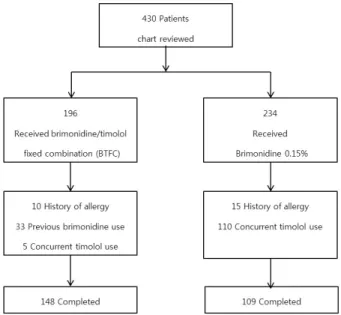
Figure 1. Summarized flow chart of patients. Among 430 glau-
coma patients who treated with brimonidine 0.2%/timolol 0.5%fixed combination (BTFC) or 0.15% brimonidine, a total 257 patients were enrolled after application of exclusion criteria.
CA, USA)으로 1996년 미국식품의약국(US Food and Drug administration, FDA)의 승인을 받고 출시되었다. 1996년 Schuman7이 보고한 0.2% brimonidine의 안구 알레르기 발 생률 7.4%를 시작으로 1996년부터 2004년까지 0.2% bri- monidine의 안구 알레르기에 대한 많은 연구가 발표되었 다.7-17 이 중 2002년 Bondeau and Rousseau13는 25.7%의 높은 안구 알레르기를 보고하였고 이러한 높은 알레르기 발생률은 0.2% brimonidine의 점안 순응도를 떨어뜨리게 되었다.4-6
2001년 FDA의 승인을 받은 Alphagan®P (Allergan Inc., Irvine, CA, USA)는 0.15% brimonidine-Purite로 기존의 0.2% brimonidine보다 농도가 낮고 보존제의 성분이 ben- zalkonium chloride에서 purite로 바뀌었다. 0.15% brimoni- dine과 기존의 0.2% brimonidine의 농도 차이에 의한 알레 르기 발생률을 비교한 Katz16와 Kim et al17의 연구에 따르 면 0.15% brimonidine의 안구 알레르기 발생률은 0.2% bri- monidine와 비교하여 절반으로 낮았다. Katz16와 Kim et al17은 0.15% brimonidine의 낮은 알레르기 발생률이 약제 의 점안 횟수 및 농도와 관련이 있다고 보고하였다.
단일제제의 안압하강제 점안만으로 목표 안압에 도달하 기 힘든 경우 두 개 이상의 안압하강제를 사용하게 되고, 사용하는 점안제의 수 증가로 인한 순응도 저하를 해결하 기 위해 두 가지 약을 혼합한 복합제제가 개발되어 사용되 어 왔다. 2007년 10월 FDA의 승인을 받은 Combigan® (Allergan Inc., Irvine, CA, USA)는 0.2% brimonidine과 0.5% timolol을 혼합한 복합제제이다. Brimonidine/timolol 복합제제(0.2% brimonidine/0.5% timolol fixed combina- tion, BTFC)를 1일 2회 점안하면 0.2% brimonidine을 1일 3회 또는 0.5% timolol을 1일 2회 각각 점안하는 것보다 더 큰 안압하강 효과를 보여주었으며,18 0.2% brimonidine과 0.5% timolol을 동시에 점안할 때와 동일한 안압하강 효과 를 보여주었다.19
BTFC와 0.2% brimonidine의 안구 알레르기 발생률을 비 교한 이전 연구에 의하면 Motolko20는 BTFC와 0.2% bri- monidine의 안구 알레르기 발생률을 각각 8.8%, 17.6%로 보고하였으며 Sherwood et al19의 연구에서는 각각 5.2%, 9.4%로 두 연구 모두에서 BTFC를 이용한 치료군이 더 낮 은 알레르기 발생률을 보였다. 하지만 기존 외국의 연구는 모두 0.2% brimonidine을 사용한 결과로 실제 우리나라 임 상에서 사용되는 0.15% brimonidine과 비교한 연구결과는 아직까지 발표된 바가 없었다.19,20 또한 아직까지 한국인 녹 내장 환자에서 BTFC를 사용한 후 안구 알레르기 발생률에 관한 연구결과가 보고된 바 없다. 이에 본 연구에서는 한국 인 녹내장 환자에서 0.2% brimonidine을 포함한 BTFC와
0.15% brimonidine 단일제제의 알레르기 발생률과 그 임상 양상을 비교하고자 하였다.
대상과 방법
본 연구는 2007년 6월부터 2017년 6월까지 녹내장으로 본원 안과에서 치료를 받은 환자 중 BTFC를 1일 2회 사용 한 환자 196명, 0.15% brimonidine을 1일 2회 사용한 환자 234명의 의무기록을 후향적으로 분석하여 두 군 간의 안구 알레르기 발생률과 임상특징을 비교하였다. 본 연구는 중 앙대학교병원 연구윤리심의위원회의 심의 승인을 받았다. BTFC 치료군 중 이전에 brimonidine 성분이 포함된 점안 액을 사용한 경험이 있는 33명과 BTFC 또는 0.15% brimo- nidine 사용 중 timolol 성분이 포함된 점안액을 병행 치료 한 115명은 연구대상에서 제외되었다. 또한 brimonidine 이 외의 성분인 prostaglandin 계열 점안액, timolol, cyclo- sporin, loteprednol 성분에 안구 알레르기를 보인 환자 8명 과 알레르기 결막염으로 치료받은 과거력이 있는 환자 12 명, 알레르기 비염이나 조영제 등에 전신 알레르기 과거력 이 있는 환자 5명은 연구대상에서 제외되었다(Fig. 1).
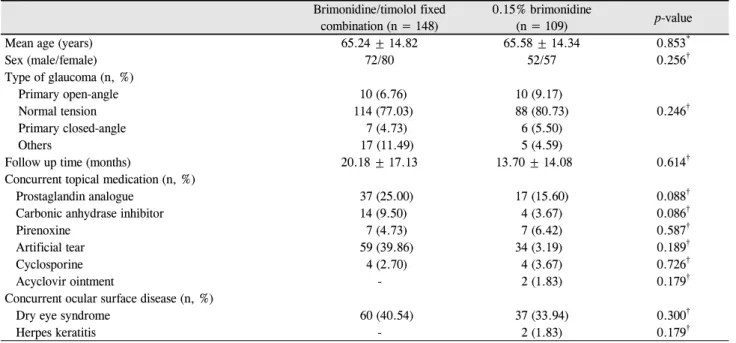
최종적으로 상기 선정조건을 만족하는 BTFC 치료군 148명과 0.15% brimonidine 치료군 109명을 대상으로 환자 의 성별, 나이, 녹내장 형태, 점안액 치료 시작 후 경과관찰 기간, 다른 계열의 안압하강제 및 다른 점안액 사용 여부, 동반 안구표면질환의 종류, 알레르기 발생 유무, 알레르기
Table 1. Baseline characteristics of patients
Brimonidine/timolol fixed combination (n = 148)
0.15% brimonidine
(n = 109) p-value
Mean age (years) 65.24 ± 14.82 65.58 ± 14.34 0.853*
Sex (male/female) 72/80 52/57 0.256†
Type of glaucoma (n, %)
Primary open-angle 10 (6.76) 10 (9.17)
Normal tension 114 (77.03) 88 (80.73) 0.246†
Primary closed-angle 7 (4.73) 6 (5.50)
Others 17 (11.49) 5 (4.59)
Follow up time (months) 20.18 ± 17.13 13.70 ± 14.08 0.614†
Concurrent topical medication (n, %)
Prostaglandin analogue 37 (25.00) 17 (15.60) 0.088†
Carbonic anhydrase inhibitor 14 (9.50) 4 (3.67) 0.086†
Pirenoxine 7 (4.73) 7 (6.42) 0.587†
Artificial tear 59 (39.86) 34 (3.19) 0.189†
Cyclosporine 4 (2.70) 4 (3.67) 0.726†
Acyclovir ointment - 2 (1.83) 0.179†
Concurrent ocular surface disease (n, %)
Dry eye syndrome 60 (40.54) 37 (33.94) 0.300†
Herpes keratitis - 2 (1.83) 0.179†
Values are presented as mean ± standard deviation (SD) or n (%) unless otherwise indicated.
*p-value by Student’s t-test; significance set at < 0.05; †p-value by chi-square test or a Fisher’s exact test for two-by-two tables; significance set at <0.05.
발생 시기 및 알레르기의 임상특징을 조사하였다. 녹내장 형태는 원발개방각녹내장, 정상안압녹내장, 원발폐쇄각녹 내장, 기타 녹내장으로 분류하였다. 점안액 치료 시작 후 경과관찰 기간은 BTFC 또는 0.15% brimonidine의 점안을 시작한 날부터 마지막 내원일까지로 계산하였고 안구 또는 전신 알레르기가 발생하였거나 안압을 조절하기 위해 점안 액 치료의 변경이 필요하여 사용을 중단한 경우 점안액 사 용을 중단한 날까지로 계산하였다.
Brimonidine으로 인한 안구 알레르기는 눈 가려움과 함 께 눈꺼풀의 부종 및 발적의 증상을 보이거나 결막의 충혈 과 함께 결막유두 또는 결막여포가 동반되어 점안액 사용 을 중단한 경우로 정의하였다.14 안구 알레르기의 임상적 특징을 알아보기 위해 알레르기의 형태를 눈꺼풀 결막염, 결막거대여포, 결막유두 세 가지로 분류하였으며 두 군 간 발생형태에 차이가 있는지 비교하였다. BTFC 또는 0.15%
brimonidine 사용 후 발생한 구강건조감, 졸림, 어지럼 증상 은 brimonidine으로 인한 전신 부작용으로 정의하였으나 안 구 알레르기가 동반되지 않는 경우 알레르기 발생군에는 포함시키지 않았다.21-24
통계적 분석은 SPSS 21.0 (IBM Corp., Armonk, NY, USA)을 사용하였다. 두 군 간의 차이를 알아보기 위하여 Student’s t-test를 사용하였고 녹내장 환자에서 BTFC와 0.15% brimonidine 사용에 따른 알레르기 발생률은 상관분 석(Pearson’s correlation coefficient)과 누적위험함수비율
(hazard ratio, HR)을 이용하였다. 점안액 치료를 시작한 후 경과관찰 기간 동안 안구 알레르기의 발생으로 인해 점안 액 치료를 중단한 시점과 치료를 지속하고 있는 환자의 비 율을 Kaplan-Meier 생존곡선으로 표현하였다. 모든 통계적 분석은 p-value가 0.05보다 작은 경우를 유의한 것으로 정 의하였다.
결 과
BTFC 치료군 148명은 평균 20개월간(범위: 0.23-65.13 개월), 0.15% brimonidine 치료군 109명은 평균 14개월간 (범위: 0.2-65개월) 약제를 사용하였으며 두 군 간의 나이, 성별, 녹내장 형태, 점안액 치료 시작 후 경과관찰 기간, 다 른 계열의 안압하강제 및 다른 점안액 사용 여부, 동반 안 구표면질환의 종류는 통계적으로 유의한 차이가 없었다 (Table 1).
두 군의 알레르기 발생 비율과 발생 시기를 비교하면 BTFC 치료군의 알레르기 발생 시기는 평균 20.5개월(범위:
1.73-51.07개월)이었으며 알레르기 반응의 50%가 15개월 내에 발생하였다. 0.15% brimonidine 치료군의 경우 알레 르기 발생 시기는 평균 7.7개월(범위: 0.4-50.83개월)이었지 만 알레르기 반응의 50%는 초기 5개월 이내에 나타났다 (Table 2, Fig. 2). 또한 0.15% brimonidine 치료군과 비교하 여 BTFC 치료군의 초기 5개월 이내에 알레르기 발생률은
Table 2. Onset of allergy and rate of ocular allergic reaction and systemic adverse event
Brimonidine/timolol fixedcombination (n = 148)
0.15% brimonidine
(n = 109) p-value* HR 95% CI
Onset of allergy (months) 20.47 ± 16.71 (1.73-51.07) 7.66 ± 9.91 (0.40-50.83)
Ocular allergy (n, %) 15 (10.14) 24 (22.02) 0.009 2.50 1.24-5.04
Blepharoconjunctivitis 2 4
Conjunctival follicles 9 15 0.566
Conjunctival papillae 6 9
Systemic adverse event (n) 1 5 0.040 7.07 0.81-61.38
Values are presented as mean ± standard deviation (SD) (range) unless otherwise indicated.
HR = hazard ratio; CI = confidence interval.
*p-value by pairwise comparison of brimonidine/timolol fixed combination vs. 0.15% brimonidine based on the pearson 2 test; significance set at <0.05.
Figure 2. Percentage of patients who developed an ocular al-
lergy to 0.2% brimonidine/0.5% timolol fixed combination (BTFC) and 0.15% brimonidine. In the BTFC group, 50% of the ocular allergy occurred within 15 months, and within 5 months in the 0.15% brimonidine group. Compared with 0.15%brimonidine group, only 20% of the ocular allergy occurred in the BTFC group within the first 5 months of treatment.
Figure 3. Kaplan–Meier curve, showing distribution of time to
withdrawal due to allergic reaction for 0.2% brimoni- dine/0.5% timolol fixed combination (BTFC) versus 0.15%brimonidine. During the entire course of the observation peri- od, the proportion of patients who discontinued treatment due to ocular allergy was lower in the BTFC group than in the 0.15% brimonidine group.
20%밖에 되지 않았다(Fig. 2). 알레르기 발생률은 BTFC 치 료군에서 10.14% (15/148), 0.15% brimonidine 치료군에서 는 22.02% (24/109)였다(Table 2). 또한 BTFC 치료군이 0.15% brimonidine 치료군보다 알레르기가 발생할 위험이 약 0.4배 더 낮았다(HR = 2.50, 95% confidence interval (CI) [1.24, 5.04]).
Brimonidine 안구 알레르기의 임상양상으로 결막유두와 결막여포 두 가지 형태로 나타났다. 결막유두는 일반적인 계절성 알레르기에서와 같이 유두가 결막표면 위로 올라와 울퉁불퉁하게 도드라져 보이는 유두비대의 형태를 보였다.
반면 결막여포는 작은 물집모양의 여포가 관찰되는 경우는 없었고 매우 특징적인 지름 1.0 mm 이상의 거대여포 소견 을 보였다. 알레르기 발생률과 달리 알레르기 형태에 따른 발생 비율에는 유의한 차이가 없었다(p=0.566). 또한 구강 건조감, 졸림, 어지럼 등의 전신 부작용을 보인 환자는 BTFC 치료군에서 1명, 0.15% brimonidine 치료군에서 5명
으로 BTFC 사용 시 전신 부작용의 발생 위험이 유의하게 낮았다(p=0.04). 전신 부작용이 발생한 환자 6명 모두에서 brimonidine에 의한 안구 알레르기는 발생하지 않아 brimo- nidine에 의한 전신 부작용과 안구 알레르기와의 관련성은 확인할 수 없었다. 총 257명의 환자 중 서맥, 호흡곤란 등 비선택적 베타길항제인 timolol에 의한 전신부작용을 보이 는 환자는 없었다(Table 2).
점안액 치료를 시작한 후 경과관찰 기간 동안 알레르기 발생으로 인해 치료를 중단한 시점과 치료를 지속하고 있 는 환자의 비율을 Kaplan-Meier 생존곡선으로 표현하였다.
전체 경과관찰 기간 동안 알레르기 발생으로 인해 점안액 치료를 중단한 환자의 비율이 BTFC 치료군에서 0.15%
brimonidine 치료군보다 낮았다. BTFC 치료군에서 알레르 기 발생으로 인해 치료를 중단하는 시점이 점안액 치료 시 작 후 24개월까지로 그 속도가 완만하였다. 반면 0.15%
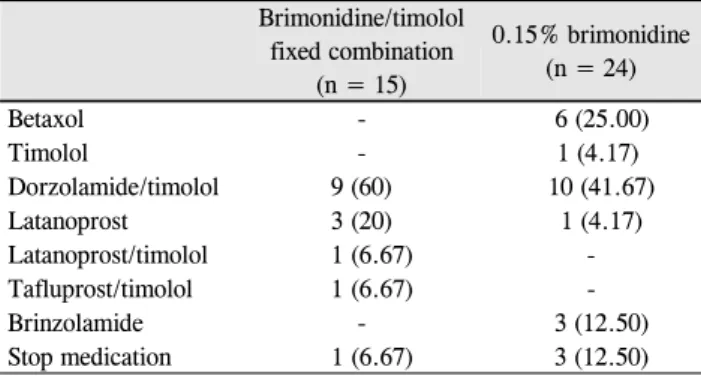
Table 3. Change of glaucoma medication classes after onset of
ocular allergic reactionBrimonidine/timolol fixed combination
(n = 15)
0.15% brimonidine (n = 24)
Betaxol - 6 (25.00)
Timolol - 1 (4.17)
Dorzolamide/timolol 9 (60) 10 (41.67)
Latanoprost 3 (20) 1 (4.17)
Latanoprost/timolol 1 (6.67) -
Tafluprost/timolol 1 (6.67) -
Brinzolamide - 3 (12.50)
Stop medication 1 (6.67) 3 (12.50) Values are presented as n (%).
A C
B D
Figure 4. Slit-lamp photographs of the ocular allergy on left eye in patient who used 0.2% brimonidine/0.5% timolol fixed combi-
nation just in her left eye. (A, B) Right eye showed clear cornea and conjunctive. (C, D) Left eye showed significant hyperemia and distinguishing giant follicles on the upper and lower palpebral conjunctivae.brimonidine 치료군의 경우, 초기 6개월 동안 알레르기로 인해 점안액 치료를 중단하는 비율이 빠르게 증가하며 환 자의 대부분이 12개월 이내 중단함을 알 수 있었다(Fig. 3).
Brimonidine에 의한 안구 알레르기로 진단하고 BTFC와 0.15% brimonidine의 사용을 2주간 중단하였다. Brimonidine 사용 중단 2주 뒤 알레르기 증상이 모두 호전되어 다른 계 열의 안압하강제로 치료약제를 변경하였으며(Table 3), 변 경 후 평균 20개월간(범위: 0.8-56개월) 안구 알레르기 등
다른 약제에 의한 부작용은 발생하지 않았다. BTFC 사용 후 안구 알레르기가 발생한 15명 중 9명(60%), 0.15% bri- monidine 사용 후 안구 알레르기가 발생한 24명 중 10명 (41.67%)인 대부분의 환자에서 Dorzolamide/timolol 복합 제제인 Cosopt-S® (Merck & Co., Inc., Kenilworth, NJ, USA)로 변경하였다(Table 3). BTFC 사용 후 안구 알레르 기가 발생한 환자 중 1명은 병용 중인 bimatoprost로 목표 안압이 유지되었으며 0.15% brimonidine 사용 후 안구 알 레르기가 발생한 환자 중 3명도 0.15% brimonidine 중단에 도 목표안압이 유지되어 추가적인 안압하강제 사용 없이 녹내장 진행 여부를 경과관찰 하기로 하였다(Table 3).
대표적인 환자 증례로 69세 여자 환자가 좌안 정상안압 녹내장으로 진단받고 좌안에만 BTFC를 사용하고 있었다.
약제를 사용한지 약 18개월(563일)에 좌안 상안검 부종 및 이물감, 가려움, 충혈을 주소로 내원하였다. 안과검사상 교 정시력 우안 0.8, 좌안 1.0으로 측정되었고, 골드만 압평안 압계로 측정한 안압은 우안 14 mmHg, 좌안 12 mmHg로 측정되었다. 세극등현미경 검사상 좌안의 상하 전체 검결 막에 충혈과 함께 거대여포 및 결막부종이 관찰되었다. 치 료를 하지 않는 우안의 결막(Fig. 4A, B)과 비교하여 BTFC 를 점안한 좌안에만 특징적인 거대여포 소견이 관찰되어
brimonidine에 의한 안구 알레르기로 진단하고 BTFC의 사 용을 2주간 중단하였다(Fig. 4C, D). 2주 뒤 주관적 증상 및 거대여포, 결막부종이 호전되어 dorzolamide/timolol 복합 제제로 치료약제를 변경하였으며 이후 안구 알레르기의 재 발 없이 경과관찰 하였다.
고 찰
Brimonidine/timolol 복합제제(BTFC)는 0.15% brimoni- dine 치료에 비해 안구 알레르기 발생 비율이 0.4배 낮고, 알레르기 발생 시기도 평균 20.5개월로 0.15% brimonidine 단일제제의 알레르기 발생 시기인 평균 7.7개월에 비해 늦 게 발생하였으며 알레르기 결막염의 형태학적 특징은 차이 가 없었다.
BTFC 사용 시 알레르기 발생률이 낮은 주된 이유는 BTFC 에 포함된 timolol이 brimonidine의 알레르기 반응을 억제 하기 때문으로 생각된다.25,26 알파작용제 중 하나인 apra- clonidine의 안구 알레르기에 대한 Butler et al25의 보고에 따르면 알파작용제가 결막상피세포의 부피를 감소시켜 세 포 사이 공간의 확장을 일으켜 수십 가지의 잠재적인 전염 증성(pro-inflammatory) 물질들이 넓어진 세포간 공간을 통 해 쉽게 결막하 조직으로 이동할 수 있게 하여 알레르기 반 응이 일어난다고 제시하였다. 여기서 말하는 전염증성 물 질에는 공기매개의 외인성 항원, 눈물 속 내인성 지방분비 물과 다른 잠재적인 독성물질이 포함된다. Brimonidine은 apraclonidine과 동일한 알파작용제로 약하지만 알파1수용 체에도 친화력이 있는 공통점이 있다. Alvarado26는 apra- clonidine과 같은 알파작용제 성분인 brimonidine 또한 동일 한 과정으로 안구 알레르기 반응을 일으킬 것이며, 이때 베 타길항제인 timolol을 함께 점안하게 되면 timolol이 brimo- nidine의 세포부피감소작용을 직접적으로 억제하여 알레르 기 발생률이 줄어든다고 설명하였다.
본 연구에서 brimonidine에 의한 안구 알레르기 진단기 준이 기존의 연구와 차이가 없음에도 불구하고 이전의 연 구결과에 비해 BTFC와 0.15% brimonidine 모두에서 기존 의 연구결과에 비해 상대적으로 높은 알레르기 발생률을 보였다. Brimonidine 알레르기 발생률은 brimonidine의 점 안 횟수 및 농도와 주된 관련이 있다고 보고되었으나,10,16,17 기존의 연구와 비교 시 점안 횟수 및 농도만으로는 본 연구 의 높은 알레르기 발생률을 설명할 수 없었다. 본 연구는 0.2% brimonidine이 포함된 BTFC를 1일 2회 점안하여 점 안 횟수 및 농도가 Sherwood et al19와 Motolko20의 연구와 동일하나, 안구 알레르기 발생률이 10.14%로 5.2%, 8.8%
인 Sherwood et al19과 Motolko20의 결과보다 발생률이 높
았다.19,20 0.15% brimonidine의 경우, 본 연구와 동일하게 1
일 2회 점안한 Kim et al17의 연구에서는 3.5%의 알레르기 발생률이 보고되었으며, 1일 3회 점안 후 15.7%의 알레르 기를 보인 Katz16의 연구와 비교해도 1일 2회를 점안한 본 연구에서 22.02%로 더 높은 알레르기 발생률을 보였다.
Brimonidine에 의한 알레르기 발생률의 결과가 다양한 이유로 점안액 치료기간과 인종 차이를 고려해 볼 수 있다. Motolko20와 Sherwood et al19의 연구는 18개월, Katz16와 Kim et al17은 12개월과 4주라는 제한된 기간 동안 전향적 연구를 진행하였다. 이와 달리 본 연구는 최대 65개월의 장 기간 후향적 연구를 진행하여 18개월 이후인 후기에 발생 한 안구 알레르기를 모두 포함하게 된 것이 알레르기 발생 률을 높였다고 생각해 볼 수 있다. 또한 연구대상의 인종에 대한 제한이 없이 백인의 비율이 70% 이상이었던 이전의 연구와 달리, 본 연구의 환자군은 모두 단일 인종인 한국인 으로 brimonidine에 대한 인종 간 감수성의 차이를 고려해 볼 수 있다. 인종에 따른 홍채색의 차이를 고려하였을 때, 알 파작용제는 홍채색에 영향을 받아 밝은 청색홍채보다 갈색 홍채에서 효과가 더 큰 것으로 보고되었다.27,28 Acheampong et al29은 방사선 표지된 brimonidine을 쥐 모델에 점안 시, 비색소성 홍채를 가진 백색증 쥐보다 짙은 색소성 홍채를 가진 쥐의 눈에서 brimonidine의 농도가 높고 대사속도가 느림을 보고하였다. 이를 통해 brimonidine의 대사는 홍채 색소량에 영향을 받으며 본 연구의 대상 인종이 모두 짙은 갈색홍채를 가진 한국인이므로 전안부내 brimonidine의 농 도가 상대적으로 높은 것이 알레르기 발생률을 높였다고 생각해 볼 수 있다.
본 연구의 강점은 한국인 환자에서 BTFC 사용 후 발생 한 안구 알레르기의 발생률과 관련된 임상양상을 연구하고 이를 실제 임상에서 사용 중인 0.15% brimonidine과 비교 한 최초의 보고라는 점이다. 또한 BTFC 사용 시 임상적으 로 알레르기 발생률이 절반으로 감소하기는 하지만 통계적 으로 유의하지 않았던 Motolko20의 연구와 달리 BTFC 사 용 시 알레르기 발생률이 0.4배 감소하며 그 값이 통계적으 로 유의하였다. 뿐만 아니라 257명의 연구대상에 대해 최 대 1,532일까지 장기간 약제를 사용한 환자를 포함하여 기 존의 18개월로 제한된 연구와 비교하여 장기간 사용으로 인한 알레르기 발생률의 상승을 확인할 수 있었다.
본 연구는 후향적 연구이기에 경과관찰 기간을 점안액 치료를 시작한 날부터 마지막 내원일까지로 계산하여 환자 간의 경과관찰 기간이 동일하지 못하다는 한계점이 있다. 또한 연구대상을 선정함에 있어 알레르기 과거력이 있는 환자를 제외한 환자를 연구대상으로 선정하여 알레르기 발 생률을 보았는데, 만약 알레르기 과거력이 있는 환자까지
모두 연구대상에 포함한 후 BTFC 또는 0.15% brimonidine 과의 알레르기 교차반응까지 모두 고려하였다면 실제 알레 르기 발생률이 더 높아졌을 가능성을 배제할 수 없다.
결론적으로 한국 녹내장 환자에서 BTFC를 이용한 치료 는 0.15% brimonidine 단일제제와 비교하여 안구 알레르기 가 2.5배 적게 발생하고 알레르기 발생의 시작시기가 늦어, BTFC 치료는 환자의 점안 순응도를 높여 녹내장 진행을 늦추는 데 도움이 될 것으로 생각된다. 또한 점안액치료를 장기간 유지해야 하는 녹내장의 치료 특성을 고려하면 본 결과는 약제사용 관련 환자교육 및 점안 순응도 향상에 도 움을 줄 것으로 기대된다.
REFERENCES
1) Kass MA, Heuer DK, Higginbotham EJ, et al. The Ocular Hypertension Treatment Study: a randomized trial determines that topical ocular hypotensive medication delays or prevents the onset of primary open-angle glaucoma. Arch Ophthalmol 2002;120:
701-13; discussion 829-30.
2) Collaborative Normal-Tension Glaucoma Study Group. The effec- tiveness of intraocular pressure reduction in the treatment of nor- mal-tension glaucoma. Am J Ophthalmol 1998;126:498-505.
3) Friedman DS, Wilson MR, Liebmann JM, et al. An evidence-based assessment of risk factors for the progression of ocular hyper- tension and glaucoma. Am J Ophthalmol 2004;138(3 Suppl):S19-31.
4) Ahn DH, Lee YG, Hong YJ. Factors affecting compliance with prescribed eyedrops for glaucoma. J Korean Ophthalmol Soc 1998;39:2145-51.
5) Yoo SG, Hwang YH. Assessment of glaucoma medication compliance. J Korean Ophthalmol Soc 2015;56:365-70.
6) Yeon DY, Yoo C, Park JH, et al. Adherence to preservative-free dorzolamide/timolol fixed combination assessed by counting the un- used single-dose units. J Korean Ophthalmol Soc 2015;56:906-10.
7) Schuman JS. Clinical experience with brimonidine 0.2% and tim- olol 0.5% in glaucoma and ocular hypertension. Surv Ophthalmol 1996;41:S27-37.
8) Schuman JS, Horwitz B, Choplin NT, et al. A 1-year study of bri- monidine twice daily in glaucoma and ocular hypertension. A con- trolled, randomized, multicenter clinical trial. Chronic Brimonidine Study Group. Arch Ophthalmol 1997;115:847-52.
9) LeBlanc RP. Twelve-month results of an ongoing randomized trial comparing brimonidine tartrate 0.2% and timolol 0.5% given twice daily in patients with glaucoma or ocular hypertension. Brimonidine Study Group 2. Ophthalmology 1998;105:1960-7.
10) Katz LJ. Brimonidine tartrate 0.2% twice daily vs timolol 0.5%
twice daily: 1-year results in glaucoma patients. Brimonidine Study Group. Am J Ophthalmol 1999;127:20-6.
11) Melanmed S, David R. Ongoing clinical assessment of the safety profile and efficacy of brimonidine compared with timolol: year- three results. Brimonidine Study Group II. Clin Ther 2000;22:
103-11.
12) Cantor LB. The evolving pharmacotherapeutic profile of brimoni- dine, an alpha 2-adrenergic agonist, after four years of continuous use. Expert Opin Pharmacother 2000;1:815-34.
13) Bondeau P, Rousseau JA. Allergic reactions to brimonidine in pa- tients treated for glaucoma. Can J Ophthalmol 2002;37:21-6.
14) Manni G, Centofanti M, Sacchetti M, et al. Demographic and clin- ical factors associated with development of brimonidine tartrate 0.2%-induced ocular allergy. J Glaucoma 2004;13:163-7 15) Stewart WC, Sharpe ED, Harbin TS Jr, et al. Brimonidine 0.2%
versus dorzolamide 2% each given three times daily to reduce in- traocular pressure. Am J Ophthalmol 2000;129:723-7.
16) Katz LJ. Twelve-month evaluation of brimonidine-purite versus brimonidine in patiens with glaucoma or ocular hypertension. J Glaucoma 2002;11:119-26.
17) Kim CY, Hong S, Seong GJ. Brimonidine 0.2% versus brimonidine Purite 0.15% in Asian ocular hypertension. J Ocul Pharmacol Ther 2007;23:481-6.
18) Goni FJ. 12-week study comparing the fixed combination of bri- monidine and timolol with concomitant use of the individual com- ponents in patients with glaucoma and ocular hypertension. Eur J Ophthalmol 2005;15:581-90.
19) Sherwood MB, Craven ER, Chou C, et al. Twice-daily 0.2% brimo- nidine–0.5% timolol fixed-combination therapy vs monotherapy with timolol or brimonidine in patients with glaucoma orocular hy- pertension: a 12-month randomized trial. Arch Ophthalmol 2006;
124:1230-8.
20) Motolko MA. Comparison of allergy rates in glaucoma patients re- ceiving brimonidine 0.2% monotherapy versus fixed-combination brimonidine 0.2%-timolol 0.5% therapy. Curr Med Res Opin 2008;
24:2663-7.
21) Rosenthal AL, Walters T, Berg E, et al. A comparison of the safety and efficacy of brimonidine 0.2%, BID versus TID, in subjects with elevated intraocular pressure. Invest Ophthalmol Vis Sci 1996;37:S1102.
22) Serle JB. A comparison of the safety and efficacy of twice daily bri- monidine 0.2% versus betaxolol 0.25% in subjects with elevated intraocular pressure. The Brimonidine Study Group III. Surv Ophthalmol 1996;41 Suppl 1:S39-47.
23) Derick RJ, Robin AL, Walters TR, et al. Brimonidine tartrate: a one-month dose response study. Ophthalmology 1997;104:131-6.
24) Adkins JC, Balfour JA. Brimonidine. A Review of its pharmaco- logical properties and clinical potential in the management of open-angle glaucoma and ocular hypertension. Drugs Aging 1998;
12:225-41.
25) Butler P, Mannschreck M, Lin S, et al. Clinical experience with the long-term use of 1% apraclonidine: incidence of allergic reactions.
Arch Ophthalmol 1995;113:293-6.
26) Alvarado JA. Reduced ocular allergy with fixed-combination 0.2%
brimonidine–0.5% timolol. Arch Ophthalmol 2007;125:717; au- thor reply 717-8.
27) Duffin RM, Pettit TH, Straatsma BR. 2.5% vs 10% phenylephrine in maintaining mydriasis during cataract surgery. Arch Ophthalmol 1983;101:1903-6.
28) Patil PM, Jacobowitz D. Unequal accumulation of adrenergic drugs by pigmented and nonpigmented iris. Am J Ophthalmol 1974;78:470-7.
29) Acheampong AA, Shackleton M, Tang-Liu DD. Comparative ocu- lar pharmacokinetics of brimonidine after a single dose application to the eyes of albino and pigmented rabbits. Drug Metab Dispos 1995;23:708-12.
= 국문초록 =
녹내장에서 브리모니딘/티몰롤 복합제제와 0.15% 브리모니딘 사용 시 알레르기 발생률의 비교
목적: 한국 녹내장 환자에서 0.2% brimonidine/0.5% timolol 복합제제(0.2% brimonidine/0.5% timolol fixed combination, BTFC)와 0.15% brimonidine의 알레르기 발생과 임상양상을 비교하고자 하였다.
대상과 방법: 녹내장으로 진단받은 환자 중 BTFC를 사용한 환자 196명, 0.15% brimonidine을 사용한 환자 234명을 대상으로 의무기 록을 후향적으로 분석하였다. 환자의 성별, 나이, 녹내장 형태, 점안액 치료 시작 후 경과관찰 기간, 알레르기 발생 유무, 알레르기 발생 시기 및 알레르기의 임상특징을 조사하여 비교 분석하였다.
결과: 안구 알레르기 발생률은 BTFC 치료군에서 10.14%, 0.15% brimonidine 치료군에서 22.02%로 BTFC를 사용한 환자에서 알레르 기가 발생할 위험이 약 0.4배 더 낮았으며 통계적으로 유의하였다(hazard ratio = 2.5, p=0.009). 알레르기 발생 시기는 BTFC는 평균 20.5개월(범위: 1.7-51.1개월), 0.15% brimonidine은 평균 7.7개월(범위: 0.4-50.8개월)이었다. BTFC 치료군에서 알레르기 반응의 50%가 15개월 내에 발생했지만 0.15% brimonidine 치료군의 경우 초기 5개월 이내에 나타났다. Brimonidine에 의한 알레르기 임상양 상은 결막여포와 결막유두 두 가지 형태가 관찰되었으며 형태에 따른 발생 비율에는 유의한 차이는 없었다(p=0.566).
결론: 한국 녹내장 환자에서 BTFC는 0.15% brimonidine보다 안구 알레르기가 발생률이 낮고 발생 시기도 늦다. 본 결과는 약제사용 관련 환자교육 및 점안 순응도 향상에 도움을 줄 것으로 기대된다.
<대한안과학회지 2018;59(5):451-458>