J O U R N A L O F
Veterinary Science
pISSN 1229-845X, eISSN 1976-555X J. Vet. Sci. (2011), 12(2), 195-197 DOI: 10.4142/jvs.2011.12.2.195
Received: 23 Mar. 2010, Accepted: 14 Jan. 2011
Short Communication
*Corresponding author
Tel: +82-2-880-1257; Fax: +82-2-871-7524 E-mail: [email protected]
†The first two authors contributed equally to this work.
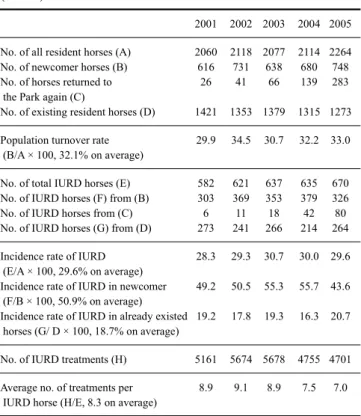
Table 1. Statistics related to infectious upper respiratory disease (IURD) at the Seoul Race Park
2001 2002 2003 2004 2005 No. of all resident horses (A) 2060 2118 2077 2114 2264 No. of newcomer horses (B) 616 731 638 680 748
No. of horses returned to 26 41 66 139 283
the Park again (C)
No. of existing resident horses (D) 1421 1353 1379 1315 1273 Population turnover rate 29.9 34.5 30.7 32.2 33.0 (B/A × 100, 32.1% on average)
No. of total IURD horses (E) 582 621 637 635 670 No. of IURD horses (F) from (B) 303 369 353 379 326
No. of IURD horses from (C) 6 11 18 42 80
No. of IURD horses (G) from (D) 273 241 266 214 264 Incidence rate of IURD 28.3 29.3 30.7 30.0 29.6 (E/A × 100, 29.6% on average)
Incidence rate of IURD in newcomer 49.2 50.5 55.3 55.7 43.6 (F/B × 100, 50.9% on average)
Incidence rate of IURD in already existed 19.2 17.8 19.3 16.3 20.7 horses (G/ D × 100, 18.7% on average)
No. of IURD treatments (H) 5161 5674 5678 4755 4701 Average no. of treatments per 8.9 9.1 8.9 7.5 7.0 IURD horse (H/E, 8.3 on average)
The difference between the sum of A, B, C, and D is derived from the return of newcomer horses within 1 year.
Etiologic and epidemiologic analysis of bacterial infectious upper respiratory disease in Thoroughbred horses at the Seoul Race Park
Seung-Ho Ryu
1,3,†, Hye Cheong Koo
2,†, Young-Woo Lee
1, Yong Ho Park
2,*, Chang-Woo Lee
31
Korea Racing Authority, Gwacheon, Gyeonggi 427-711, Korea
Departments of
2Microbiology and
3Clinical Pathology, College of Veterinary Medicine and BK21 Program for Veterinary Science, Seoul National University, Seoul 151-742, Korea
Infectious upper respiratory disease (IURD) of Thoroughbred racehorses has been a frequent problem (29.6% of incidence) at the Seoul Race Park (Korea). Risk factors for IURD include the season with a high transfer rate (summer and fall), the stabling period (≤ 3 months), and age (2 to 3 years old), suggesting that the movement and new environment may have depressed the immune system of the horses and decreased their ability to respond properly to pathogens. The bacterial strains (n = 98) isolated from IURD horses included Pseudomonas spp., Escherichia coli, Staphylococcus spp., Streptococcus equi subsp. equi and zooepidemicus.
Keywords: infectious upper respiratory disease, risk factors, Streptococcus equi subsp. equi, Streptococcus equi subsp.
zooepidemicus, Thoroughbred racehorses
Infectious upper respiratory disease (IURD) is a common and frequently recurrent problem for racehorses in training. It is considerably more common in young racehorses and clinical signs usually include coughing, visible increases in tracheal mucus, and poor racing performance. This is an acute clinical disease that can be caused by several respiratory viruses and bacteria including equine influenza virus, equine herpesvirus-1 and -4, equine arteritis virus, Streptococcus equi subsp. equi, and S. equi subsp. zooepidemicus [8]. At the Seoul Race Park, where the largest horse population in Korea is located, there has only been one influenza epidemic in 1973 and an equine herpesvirus in 1979, and no additional viral respiratory outbreaks have occurred since that time.
Data were collected from January 2001 to December 2005 by the Korea Racing Authority Equine Registration and Health Management System (Table 1). With the
Analyse-it program (Analyse-it Software, UK), the
χ2and
one-tailed p values from the Mantel-Haenszel
χ2test and
the two-tailed probability from the Fisher Exact test were
used to analyze significant differences in IURD incidence
with different risk factors (season, age, and stabling
period). The Park had yearly IURD epizootics with a
29.6% average incidence rate from 2001 to 2005. This was
significantly higher than the 1.5% IURD incidence rate per
quarter in non-racetrack horse populations in the USA
196 Seung-Ho Ryu et al.
Fig. 1. Comparison of seasonal population turnover rates (A) and seasonal incidence rates of infectious upper respiratory disease (IURD) (B) at the Seoul Race Park (2001∼2005). (A-B)
a-dLetters indicate statistical differences (p < 0.01). The main populations of newly stabled horses (A) as well as IURD patients (B) were 2 and 3 years old (yr).
Table 2. Comparison of incidence rates of IURD according to age and stabling periods at the Seoul Race Park
Years 2001 2002 2003 2004 2005
Age 2 yr 51.8a 54.5a 61.4a 56.9a 43.6a 3 yr 36.1b 26.4b 29.1b 30.3b 34.3b 4∼5 yr 13.1c 16.8c 13.8c 12.4c 17.7c 6∼7 yr 8.0c 10.1c 11.5c 5.8c 8.1c 8∼9 yr 2.2c 3.6c 18.2c 8.3c 0.0c Stabling P ≤ 3 mo 47.4a 45.0a 44.5a 48.1a 46.9a period 3 < P ≤6 mo 19.1b 19.8b 21.0b 20.8b 18.1b 6 mo < P ≤ 1 yr 10.0b 12.3b 14.0b 15.7b 10.3b
a-cSuperscripts indicate statistical differences (p < 0.01). The differences among age groups were significant for IURD incidence rates only in the 2- to 3-year-old group. The differences among stabling periods were significant for IURD incidence rates only when the stabling period was less than 3 months.
reported at the annual convention of the American Association of Equine Practitioners. The difference between the incidence of IURD in our study and the USA might be caused by the dense population and high turnover rate at the Park (Table 1).
A number of risk factors for IURD occurrence were identified in this study including the frequent stabling seasons, the stabling period, and age of the horses. There was frequent movement of horses in and out of the Park in the spring, summer, and fall and the least amount of movement in winter (Fig. 1A, p < 0.05). The IURD incidence rate (Fig. 1B) was significantly higher in the
summer and fall (p < 0.05). The main populations of newly stabled horses and IURD patients were 2 to 3 years old. The incidence rate of IURD in the 2 and 3 years old group (Table 2) was significantly higher than in other age groups (p < 0.05). The IURD incidence rate in horses stabled for less than 3 months (Table 2) was significantly higher than that for horses stabled for other periods of time (p < 0.05).
Bacterial identification and confirmation were performed using nasal swap specimeans with the API 20 Strep (bioMérieux, France). In vitro antimicrobial susceptibility testing was conducted using the disk- diffusion testing method with Sensi-disc test discs (Becton, Dickinson and Company, USA) in accordance with the guidelines of the Clinical and Laboratory Standards Institute (CLSI) [3,4].
S. equi subsp. equi ATCC 33398, S. equi subsp.
zooepidemicus ATCC 43079, and Staphylococcus aureus 25923 were used as quality control organisms. The zone diameters were determined using criteria defined by the CLSI and Food and Drug Administration, and other protocols from France and the USA [5,7]. The most commonly isolated organisms were Pseudomonas spp.
(16.3%), Escherichia coli (14.3%), S. equi (10.2%) [S.
equi subsp. equi (5.1%), and S. equi subsp. zooepidemicus (5.1%)], Enterobacter cloacae (9.2%), and Staphylococcus spp. (8.2%) among the aerobic bacterial isolates (n = 98).
The bacterial isolates most commonly identified in this study are consistent with previous reports, but notable differences existed in their isolation frequency [1,2,6].
Results from a study of acute respiratory disease in horses
in Ontario, Canada suggested that the most frequently
isolated bacteria were
α-hemolytic streptococci, coagulase-
negative staphylococci, Actinobacillus equuli, and S. equi
subsp. zooepidemicus [2]. Another study of foals with
Epidemiologic analysis of equine IURD in Korea 197
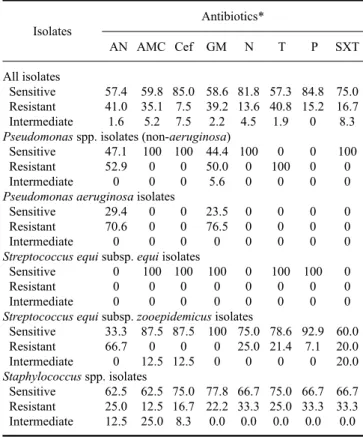
Table 3. Antimicrobial susceptibility results (%) for bacterial isolates collected from horses with IURD (2001∼2005)
Isolates
Antibiotics*
AN AMC Cef GM N T P SXT
All isolates
Sensitive 57.4 59.8 85.0 58.6 81.8 57.3 84.8 75.0 Resistant 41.0 35.1 7.5 39.2 13.6 40.8 15.2 16.7 Intermediate 1.6 5.2 7.5 2.2 4.5 1.9 0 8.3 Pseudomonas spp. isolates (non-aeruginosa)
Sensitive 47.1 100 100 44.4 100 0 0 100
Resistant 52.9 0 0 50.0 0 100 0 0
Intermediate 0 0 0 5.6 0 0 0 0
Pseudomonas aeruginosa isolates
Sensitive 29.4 0 0 23.5 0 0 0 0
Resistant 70.6 0 0 76.5 0 0 0 0
Intermediate 0 0 0 0 0 0 0 0
Streptococcus equi subsp. equi isolates
Sensitive 0 100 100 100 0 100 100 0
Resistant 0 0 0 0 0 0 0 0
Intermediate 0 0 0 0 0 0 0 0
Streptococcus equi subsp. zooepidemicus isolates
Sensitive 33.3 87.5 87.5 100 75.0 78.6 92.9 60.0 Resistant 66.7 0 0 0 25.0 21.4 7.1 20.0
Intermediate 0 12.5 12.5 0 0 0 0 20.0
Staphylococcus spp. isolates
Sensitive 62.5 62.5 75.0 77.8 66.7 75.0 66.7 66.7 Resistant 25.0 12.5 16.7 22.2 33.3 25.0 33.3 33.3 Intermediate 12.5 25.0 8.3 0.0 0.0 0.0 0.0 0.0
*AN: Amikacin, AMC: Amoxicillin/Clavulanate, Cef: Ceftiofur, GM:
Gentamicin, N: Neomycin, T: Oxytetracycline, P: Penicillin, SXT:
Trimethoprim/Sulfamethoxazole.
upper respiratory tract infections in Poland reported that coagulase-negative staphylococci and Acinetobacter sp.
were the dominant identified species [1]. A German study of respiratory symptoms in horses found that S. equi subsp.
zooepidemicus and S. equi subsp. equi were the dominant species [6]. A possible explanation of these differences in the frequency of major bacterial species isolated from cases of IURD may be due to differences in geography and stabling environments. Antimicrobial susceptibility of bacterial isolates is summarized in Table 3, suggesting that the current initial (trimethoprim/sulfamethoxazole, oxytetracyclin, penicillin, or amoxicillin/clavulanate), secondary (amikacin and gentamicin nebulization), and tertiary antibiotic (ceftiofur) treatments for IURD were effective.
In conclusion, this study revealed that host factors have a critical role in the development of IURD. Further analysis is required to determine the viral contribution to IURD and the detailed relationships between risk factors and IURD incidence rates at the Seoul Race Park in Korea. Regulatory veterinarians should target and segregate horses with the
greatest IURD risks and design more effective preventative measure, such as implementing specific respiratory pathogen- free certification systems prior to the Park arrival, and removing infected horses.
Acknowledgments
We would like to thank Sook Shin and Young Kyung Park from the Seoul National University for their technical support.
This study was supported by Basic Science Research Program through the National Research Foundation of Korea (NRF) funded by the Ministry of Education, Science and Technology (2010-0003357). Further support was also provided in part by the Research Institute of Veterinary Science, Department of Veterinary Microbiology, College of Veterinary Medicine, and the BK21 Program for Veterinary Science, Seoul National University.
References
1. Boguta L, Gradzki Z, Borges E, Maurin F, Kodjo A, Winiarczyk S. Bacterial flora in foals with upper respiratory tract infections in Poland. J Vet Med B Infect Dis Vet Public Health 2002, 49, 294-297.
2. Carman S, Rosendal S, Huber L, Gyles C, McKee S, Willoughby RA, Dubovi E, Thorsen J, Lein D. Infectious agents in acute respiratory disease in horses in Ontario. J Vet Diagn Invest 1997, 9, 17-23.
3. Clinical and Laboratory Standards Institute (CLSI).
Performance Standards for Antimicrobial Disk and Dilution Susceptibility Tests for Bacteria Isolated from Animals;
Informational Supplement. CSLI document M31-S1. CLSI, Wayne, 2004.
4. Clinical and Laboratory Standards Institute (CLSI).
Performance Standards for Antimicrobial Susceptibility Testing: Seventeenth Informational Supplement. CSLI document M100-S17. CLSI, Wayne, 2007.
5. Erskine RJ, Walker RD, Bolin CA, Bartlett PC, White DG. Trends in Antibacterial susceptibility of mastitis pathogens during a seven-year period. J Dairy Sci 2002, 85, 1111-1118.
6. Fey K, Schmid P. Susceptibility of bacterial isolates from the equine respiratory tract to trimethoprim, sulfadoxine, sulfadimethoxine and combinations of these compounds.
Tierarztl Prax 1995, 23, 148-154.
7. Guérin-Faublée V, Tardy F, Bouveron C, Carret G.
Antimicrobial susceptibility of Streptococcus species isolated from clinical mastitis in dairy cows. Int J Antimicrob Agents 2002, 19, 219-226.
8. Mumford EL, Traub-Dargatz JL, Carman J, Callan RJ, Collins JK, Goltz KL, Romm SR, Tarr SF, Salman MD.
Occurrence of infectious upper respiratory tract disease and response to vaccination in horses on six sentinel premises in northern Colorado. Equine Vet J 2003, 35, 72-77.