• 검색 결과가 없습니다.

Effect of Deep Neck Flexor Performance on the Stability of the Cervical Spine in Subject With and Without Neck Pain

N/A
N/A
Protected

Academic year: 2021

Share "Effect of Deep Neck Flexor Performance on the Stability of the Cervical Spine in Subject With and Without Neck Pain"

Copied!
10
0
0

로드 중.... (전체 텍스트 보기)

전체 글

(1)

Effect of Deep Neck Flexor Performance on the Stability of the Cervical Spine in Subject With and Without Neck Pain

Oh-yun Kwon, Ph.D., P.T.

Dept. of Physical Therapy, College of Health Science, Yonsei University

Dept. of Ergonomic Therapy, The Graduate School of Health and Environment, Yonsei University

Won-hwee Lee, M.Sc., P.T.

Sung-dae Jung, B.H.Sc., P.T.

Si-hyun Kim, M.Sc., P.T.

Do-heon Jung, B.H.Sc., P.T.

Dept. of Physical Therapy, The Graduate School, Yonsei University

Abstract 1)

This study compared the stability of the cervical spine according to the presence of neck pain and deep neck flexor performance. Thirty subjects with neck pain, and thirty subjects without neck pain were recruited for this study. The Cranio-cervical flexion (CCF) test was applied using a pressure biofeedback unit to classify the subjects into four subgroups; no cervical pain and good deep neck flexor performance (NG group), no cervical pain and poor deep neck flexor performance (NP group), cervical pain and good deep neck flexor performance (PG group), and cervical pain and poor deep neck flexor performance (PP group). The head sway angle was measured using a three-dimensional motion analysis system. A 3-㎏

weight was used for external perturbation with the subject sitting in a chair in the resting and erect head positions with voluntary contraction of the deep neck flexors. A one-way analysis of variance (ANOVA) was performed with a Bonferroni post hoc test. The deep neck flexor performance differed significantly among the four groups (p<.05). The NG group had significantly greater deep neck flexor performance than NP and PP groups. The stability of the cervical spine also differed significantly among the four groups in the resting head position (p<.05). The head sway angle was significantly smaller in NG group as compared with the other groups. The PP group had the greatest head sway angle in the resting head position. However, there was no significant difference in the stability of the cervical spine among the groups in the erect head position with voluntary contraction of deep neck flexors (p=.57). The results of this study suggest that the deep neck flexor performance is important for maintaining the stability of cervical spine from external perturbation.

Key Words: Cranio-cervical flexion test; Deep neck flexor performance; External perturbation; Stability.

Introduction

Neck pain is a common complaint, affects up to 70% of individuals in their lives; it is highly prevalent, and its incidence is increasing (Falla and Farina, 2007; Javanshir et al, 2011). Neck pain is a common condition with substantial personal

and financial costs (Jull et al, 2004). Due to the prevalence of cervical pain, effective management is important to relieve symptoms and prevent its recurrence (Jesus et al, 2008).

Spinal instability is considered a major cause of neck pain (Olson and Joder, 2001). Stability is necessary for proper functioning of the kinematics of the spine

Corresponding author: Oh-yun Kwon [email protected]

This work was supported by the Yonsei University Research Fund of 2010.

(2)

(Panjabi, 1992). The stability of the cervical spine de- pends on the inherent passive stability of the spinal col- umn and active stability provided by the surrounding muscles. It is estimated that the osteoligamentous system contributes 20% to the stability of the cervical spine, while 80% is provided by the surrounding neck muscu- lature (Panjabi et al, 1998). The ligaments provide stabil- ity mainly at end of range postures, while muscles pro- vide dynamic support around the neutral and mid-range postures during activities (Falla, 2004).

The muscles in the cervical region can be classified into two distinct groups according to the relationship of the attachment of the muscles to the axis of motion of the cervical spine (Otis, 2004). The intrinsic muscles of the cervical spine are located close to the axis of motion and provide precise control of motion during movement.

The extrinsic muscles of the cervical spine are located farther from the axis of motion and provide power to the motion, but not necessarily precision of motion (Sahrmann, 2011). Although many muscles of the neck contribute to stabilization and protection of the cervical spine, the longus colli and capitis are critical for con- trolling intervertebral motion and the cervical lordosis;

these muscles act as a component of feed-forward pos- tural adjustment (Falla et al, 2004a; 2011;

Mayoux-Benhamou et al, 1994). The longus colli is also the principle muscle that supports and controls the cer- vical curve against the tendency towards buckling of the spine induced by head weight and with the contraction of the powerful extensor muscles (Falla et al, 2004b).

Some researchers argue that activation and retraining of the deep neck flexor muscles results in increased stabil- ity (Armstrong et al, 2005; Jull et al, 1999). However, it is difficult to measure the activity of deep neck muscles directly using surface and needle electromyography (EMG) in humans (Conley et al, 1995). Therefore, the deep cervical flexor muscles have been investigated us- ing various indirect approaches (Conley et al, 1995;

Falla et al, 2003; Vasavada et al, 1998). Of these in- direct approaches, the cranio-cervical flexion (CCF) test is a representative method for measuring deep neck flexor performance (Chiu et al, 2005;

Fernandez-de-las-Peñas et al, 2007; Jull, 2000).

Some studies have focused on identifying and quan- tifying deficits in the deep cervical flexor muscles in patients with neck pain disorders (Cagnie et al, 2010a;

Falla et al, 2011; Javanshir et al, 2011). Patients with chronic neck pain have cervical spine instability and deficits in isometric cervical and cranio-cervical strength and endurance (Chiu et al, 2005; Falla and Farina, 2007; Roijezon et al, 2011). Some studies have demonstrated that impairment of deep cervical flexor muscle function contributes to chronic neck pain dis- orders (Jull et al, 2009; Peolsson et al, 2010). Patients with whiplash-associated disorder or insidous-onset neck pain patients showed increased superficial cervical flexor muscle activity during arm movement or the CCF test (Falla et al, 2004b; Jull et al, 2004). Increased activation of the superficial cervical flexors in patients with whiplash-associated disorder and neck pain likely compensates for the dysfunction of the deep cervical flexors (Cagnie et al, 2010b). Weakness of the deep neck flexors in patients with chronic neck pain may contribute to cervical spine instability, increased head sway and poor head stabilization in the presence of postural perturbations (Michaelson et al, 2003). Previous studies have shown that individuals with whip- lash-associated disorders have a larger center of pres- sure displacement amplitude and are more susceptible to sensory perturbations during quiet standing (Côté et al, 2009; Madeleine et al, 2004).

Most studies have compared deep neck flexor per- formance and cervical stability between subjects with and without neck pain. However, Chiu et al (2005) re- ported that 20% of the neck pain group had good con- tractile capacity, while 15% of the asymptomatic group had poor contractile capacity of the deep neck flexors.

Therefore, in this study, the subjects were classified

into four subgroups according to neck pain and deep

neck flexor performance: no cervical pain and good

deep neck flexor performance (NG group), no cervical

pain and poor deep neck flexor performance (NP

group), cervical pain and good deep neck flexor per-

formance (PG group), and cervical pain and poor deep

(3)

Characteristics Without neck pain group (n

1

=30) Neck pain group (n

2

=30) p

Age (yrs) 23.7±2.3

a

22.7±1.9 .08

Height (㎝) 166±7.9 168.77±7.5 .32

Weight (㎏) 67.42±7.6 64.85±7.5 .34

Visual analog scale (㎝) 5.46±1.5

Neck disability index (%) 22.96±6.8

a

Mean±standard deviation.

Table 1. General characteristics of subjects (N=60)

neck flexor performance (PP group). This study com- pared the stability of the cervical spine during external perturbation among the four groups. It was hypothe- sized that stability of cervical spine of PP and PG group would be more decreased than NP and NG group during external perturbation.

Methods Subjects

Thirty subjects without neck pain and thirty subjects with a history of bilateral chronic neck pain partici- pated in this study. The subjects without neck pain (18 males, 12 females) were between 20 and 31 years of age and were included in the past 6 months prior to enrollment of this study and had no history of orthope- dic or neurological disorders. The group with neck pain (18 male, 12 female) was between 20 and 26 years of age and had a history of chronic neck pain for longer than 1 year with moderate or severe disability (Neck Disability Index score, 15~34 of NDI). Subjects were excluded if they had undergone cervical spine surgery, had neurological signs, or participated in a neck ex- ercise program in the past 6 months (Table 1). The subjects were recruited from Yonsei University, Korea.

Before the study, the principal investigator explained all of the procedures to the subjects, and all of the sub- jects signed an informed consent form that was ap- proved by the Yonsei University Wonju Campus

Human Studies Committee.

Measurement Instruments

Pressure Biofeedback Unit

2)

To measure deep neck flexor performance, a pres- sure biofeedback unit

1)

was used.

Surface Electromyographic Biofeedback system

3)

To prevent excessive contraction of the sternocleido- mastoid (SCM) muscle during the CCF test, EMG bio- feedback was used with the Noraxon TeleMyo 2400 system

2)

. The target threshold was measured in the resting position. The threshold amplitude of the SCM was set using the mean of the resting EMG plus two standard deviations (Medina et al, 2008). The EMG bio- feedback system provided real-time auditory feedback when the activity of SCM exceeded the target threshold.

3D Motion Analysis System

4)

Head motion was analyzed from the three-dimen- sional (3D) position coordinates of the body markers using a high-resolution six-camera 3D motion analy- sis system

3)

with sampling rate of 60 ㎐. Kinematic data were collected and analyzed using Nexus 1.4 software. Reflective markers were placed on the fol- lowing landmarks: middle of forehead, temporal bone bilaterally, xiphoid process of sternum, and 5 ㎝ su- perolateral to the xiphoid process bilaterally. The head segment was defined with three head markers and the trunk segment was defined with three

1) Pressure biofeedback unit, Chattanooga Group Inc., Hiexon, U.S.A.

2) Noraxon TeleMyo 2400T, Noraxon Inc., Scottdale, AZ, U.S.A.

3) VICON MX system, Oxford Metrics Ltd., Oxford, U.K.

(4)

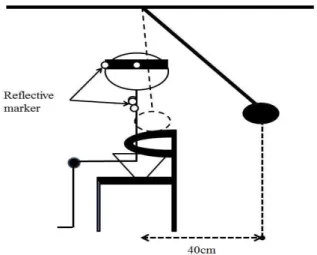
Figure 2. The external perturbation apparatus.

Figure 1. Location of reflective markers.

markers on the chest (Figure 1). The head sway an- gle was computed as the orientation of the head segment relative to the trunk segment. We analyzed the head sway angle in the sagittal plane. The head sway angle was the sum of the maximum flexion and extension angles of the head. The mean head sway angle was determined from three trials.

External Perturbation Apparatus

A 3-㎏ padded ball was used to apply external perturbation at the level of the upper thorax in each subject (Figure 2). The length of the pendulum was adjusted to the height of each subject. The principal investigator dropped the padded ball from 40 ㎝ be- hind the subject. The subjects wore earplugs and eye patches to eliminate auditory and visual information during the external perturbation.

Procedures

Measuring Deep Neck Flexor Performance

Deep neck flexor performance was measured using the CCF test, as reported by Jull et al (2009). Before the CCF test, the subject was trained in CCF motion.

In the first phase of training, the principal investigator taught the subject to perform a slow, and controlled CCF motion in the supine position. The subject con- centrated on feeling the back of the head slide in the cranial and caudal directions on the supporting surface

to ensure sagittal rotation rather than a retraction movement. Once the correct CCF motion was ach- ieved, the subjects began the second phase of training in which they were trained to hold progressively in- creasing ranges of CCF using a pressure biofeedback unit. The feedback dial displayed the amount of pres- sure changes as the cervical lordosis progressively flattened during CCF (Jull et al, 2009). The unit was inflated to a 20 ㎜Hg as the baseline pressure (Chiu et al. 2009). To minimize SCM muscle contraction during CCF, EMG biofeedback was applied. After CCF training, the CCF test was performed. During the test, the subjects were required to perform the gentle nod- ding motion of CCF, and increase and hold the pres- sure for 5 seconds without contracting the SCM mus- cle and avoiding excessive ribcage or lumbar motion.

When the SCM activity exceeded a preset target threshold, a tone was heard, and the CCF test was stopped. The principal investigator confirmed pressure gauge while the subjects increase and hold the pressure. When the subject could not hold the in- creased pressure, the CCF test was terminated. This procedure was repeated three times, and the mean pressure of three trials was recorded.

Chiu et al. (2005) reported that the mean pressure achieved by the control group was 28 ㎜Hg versus 24 ㎜Hg for the subjects in the chronic neck pain group. Therefore, subjects who achieved an increase

> 6 ㎜Hg were considered the good deep neck flexor

(5)

Group Deep neck flexor performance (㎜Hg) p

NG

b

(n

1

=17) 30.86±9.11

a

<.01

NP

c

(n

2

=13) 23.02±3.85

PG

d

(n

3

=12) 27.69±6.12

PP

e

(n

444

=18) 21.64±1.55

a

Mean±Standard deviation,,

b

No cervical pain and good deep neck flexor performance,

c

No cervical pain and poor deep neck flexor performance,

d

Cervical pain and good deep neck flexor performance,

e

Cervical pain and poor deep neck flexor performance.

Table 2. Comparison of deep neck flexor performance among four groups (N=60)

Position Head sway angle (˚)

NG

b

(n

1

=17) NP

c

(n

2

=13) PG

d

(n

3

=12) PP

e

(n

4

=18) p

Resting position 5.43±2.17

a

7.41±2.79 7.81±2.58 9.71±5.13 <.01

Erect head position 4.21±2.83 5.32±3.07 4.25±1.84 5.58±4.68 .57

a

Mean±Standard deviation,

b

No cervical pain and good deep neck flexor performance,

c

No cervical pain and poor deep neck flexor performance,

d

Cervical pain and good deep neck flexor performance,

e
Cervical pain and poor deep neck flexor performance.

Table 3. Difference of head sway angles among the four groups in each position (N=60) performance group in this study.

Measuring Cervical Spine Stability

To investigate cervical spine stability, an external perturbation apparatus was used. The subjects were asked to sit on a chair with back support. To pre- vent trunk motion, subject’s chest was fixed to the back support with a seat belt. The subjects were asked to wear an eye patch and earplugs and re- main relaxed. The pendulum was hung from the ceiling just above the subject's head. The drop dis- tance and weight of padded ball were selected in a pilot study: a 3 ㎏ weight and 40 ㎝ distance behind the back were appropriate for evoking head sway without neck or upper thorax pain. The subjects performed an active neck range of motion exercise to prevent neck injury before the external perturbation. To familiarize with the external pertur- bation, three external perturbations were performed before the cervical spine stability test.

The cervical spine stability test was performed in two positions: the resting head position and erect head position with voluntary contraction of the deep neck flexors. Three trials were performed for each position.

The subjects were asked to maintain their head and neck in a self-selected relaxed position as the resting head position. For the erect head position with volun- tary contraction of the deep neck flexors, the subjects were asked to contract the deep neck flexors with a chin tuck. A 3-minute rest was allowed between each trial. The test order was selected randomly.

Statistical Analysis

A one-way analysis of variance (ANOVA) was used to examine the differences in deep neck flexor performance and cervical spine stability among four the subgroups. Post hoc tests to identify the main mean differences were performed using Bonferroni's correction. Statistical significance was set at α=.05.

The statistical analyses were performed using SPSS version 18.0 software.

Results

Comparison of deep neck flexor performance among the four groups

Deep neck flexor performance differed significantly

(6)

Figure 3. Comparison of deep neck flexor performance among four groups. NG: No cervical pain and good deep neck flexor performance, NP: No cervical pain and poor deep neck flexor performance, PG: Cervical pain and good deep neck flexor performance, PP:

Cervical pain and poor deep neck flexor performance (*p<.05).

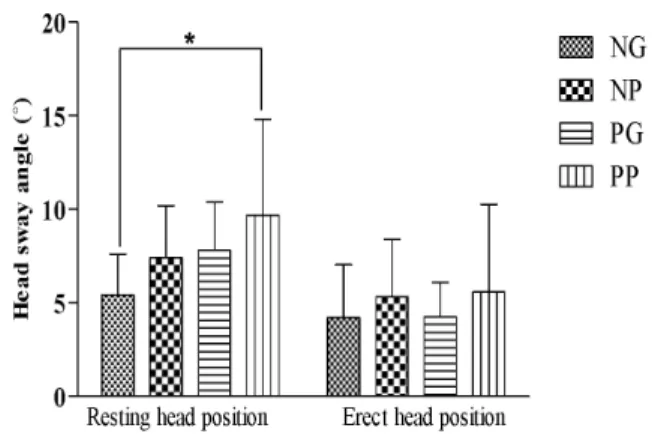
Figure 4. The difference of head sway angles among four groups in each position. NG: No cervical pain and good deep neck flexor performance, NP: No cervical pain and poor deep neck flexor performance, PG: Cervical pain and good deep neck flexor performance, PP:

Cervical pain and poor deep neck flexor performance (*p<.05).

among the four groups (p<.01) (Table 2). The NG group had significantly greater deep neck flexor per- formance than the NP and PP group. The PP group had significantly poorer deep neck flexor performance than the PG group (Figure 3).

Differences in head sway angles among the four groups

The head sway angle differed significantly among the four groups in the resting position (p<.01). There was no significant difference in the head sway angle in the erect head position with voluntary contraction of the deep neck flexors (p=.57) (Table 3). Based on the post hoc tests, the head sway angle of NG group was significantly less than that of the PP group in the resting position (Figure 4).

Discussion

This is the first study to compare the stability of the cervical spine among four groups classified by

neck pain and deep neck flexor performance during an external perturbation. Deep neck flexor perform- ance differed significantly among the four groups.

The NG group had a significantly higher mean pres- sure in the CCF test than NP and PP groups, and the PP group had a significantly lower pressure than the PG group. Chiu et al. (2005) reported that 15%

of asymptomatic group had poor contractile capacity of the deep neck flexors and 20% of the neck pain group had good contractile capacity. In our study, 13 of 30 subjects without neck pain had poor deep neck flexor performance, and 12 of 30 subjects with neck pain had good deep neck flexor performance. Many studies have suggested that poor deep neck flexor performance contributes to chronic neck pain (Falla, 2004a; 2004b; O'Leary et al, 2011) The pain intensity of the group with neck pain was 5.46 on a visual analog scale (VAS) in our study. This suggests that both neck pain and the performance of the deep neck flexors should be considered when classifying sub- jects with chronic neck pain for clinical study.

Our study investigated cervical spine stability in

(7)

resting and erect head positions with voluntary con- traction of the deep neck flexors. Cervical spine sta- bility was measured using the head sway angle. The head sway angle of the four groups differed sig- nificantly in the resting head position. In the post hoc test, the head sway angle in the resting head position only differed significantly between NG and PP groups. Röijezon et al (2008) reported that the head sway angle increased in subjects with dysfunc- tion of deep neck flexors. The deep cervical flexors contain a high density of muscle spindles and pro- vide dynamic postural stability (Röijezon et al, 2008).

Activation of the deep neck flexor muscles can im- prove the stability and proprioception of the head and neck (Armstrong et al, 2005). Therefore, NG group showed small head sway angle, and the PP group showed great head sway angle.

In this study, the head sway angle in NP and PG group did not differ significantly, and the NP group had a greater head sway angle than the NG group.

The PG group had a smaller head sway angle than the PP group and a greater head sway angle as compared with the NG group. These results suggest that neck pain or poor deep neck flexor performance can decrease cervical spine stability, which did sup- port our research hypothesis.

The head sway angle did not differ in the erect head position with voluntary contraction of deep neck flexors among the four groups. All subjects were asked to contract deep neck flexors in the erect sitting position. Stemper et al (2006) also re- ported that pre-contraction of the neck muscles re- sulted in a 63% decrease in the maximum head an- gle in the whiplash test. Therefore, voluntary con- traction of the deep neck flexors can compensate for poor deep neck flexor performance resulting from a 3-㎏ external perturbation. Although the head angle did not differ significantly in the erect head position with voluntary contraction, the NP and PP groups showed greater head sway than NG and PG groups. The cross-sectional area of a mus- cle affects muscle stiffness (Ryan et al, 2009).

Many studies have measured the cross-sectional area of the longus colli muscle to classify subjects with and without neck pain (Chiu et al, 2005;

Javanshir et al, 2011; O'Leary et al, 2007). Although we did not measure cross-sectional area of the deep neck flexor muscle directly, the NG and PG groups may have had greater cross-sectional areas than NP and PP groups. We postulate that the difference of cross-sectional area and stiffness of longus colli contributed to the smaller head sway angle in NG and PG groups.

Falla et al (2004b) reported that, in patients with neck pain, the superficial neck flexors were more dominant than the deep neck flexors in the CCF test.

The patients with chronic neck pain had a sig- nificantly higher EMG amplitude in the superficial neck flexors as compared with symptomatic controls (Fernandez-de-las-Peñas et al, 2007; O'leary et al, 2007). O'leary et al (2011) demonstrated that the in- tensity of pain and activity of the superficial neck flexors had a significantly strong positive correlation in the CCF test. It is difficult for patients with chronic neck pain to contract the deep neck flexors selectively during the CCF test. Therefore, we used EMG biofeedback to minimize the contraction of the SCM muscle during the CCF test.

Many studies have reported that decreased activity of the deep neck flexors contributes to cervical in- stability (Falla et al, 2010; Jull et al, 2004; O'Leary et al, 2011). Chiu et al (2007) reported that the neck pain group showed a smaller increase in the mean pressure of the CCF test than the group without neck pain.

However, deep neck flexor performance differed sig- nificantly between subjects with and without neck pain. Previous studies did not control superficial mus- cle activation; however, we effectively controlled su- perficial muscle activation using EMG biofeedback.

Therefore, our results suggest that the CCF test should be performed to classify patients with chronic neck pain into subgroups for any clinical study.

This study has some limitations. First, young sub-

jects participated in this study. Therefore, our results

(8)

cannot be generalized to all populations. Second, we used EMG biofeedback to minimize contraction of the SCM muscles. Contraction of other superficial mus- cles, such as scalenus, was not controlled during CCF test in this study. Further studies are needed to determine whether long-term deep neck flexor mus- cle strengthening can increase the stability of the cervical spine with an external perturbation.

Conclusion

This study compared the stability of the cervical spine among four subgroups classified by neck pain and deep neck flexor performance. Deep neck flexor performance differed significantly among the four groups. The stability of cervical spine also differed significantly between the NG and PP groups in the resting head position. However, there was no sig- nificant difference in the stability of the cervical spine among groups in the erect head position with volun- tary contraction of the deep neck flexors. Our results suggest that deep neck flexor performance is im- portant for maintaining the stability of the cervical spine from external perturbation. Further studies are needed to determine whether long-term deep neck flexor muscle strengthening can increase the stability of the cervical spine with external perturbation.

Reference

Armstrong BS, McNair PJ, Williams M. Head and neck position sense in whiplash patients and healthy individuals and the effect of the cranio-cervical flexion action. Clin Biomech. 2005;20:675-684.

Cagnie B, D'Hooge R, Achten E, et al. A magnetic resonance imaging investigation into the function of the deep cervical flexors during the perform- ance of craniocervical flexion. J Manipulative Physiol Ther. 2010a;33(4):286-291.

Cagnie B, Dolphens M, Peeters I, et al. Use of muscle

functional magnetic resonance imaging to compare cervical flexor activity between patients with whiplash-associated disorders and people who are healthy. Phys Ther. 2010b;90(8):1157-1164.

Chiu TT, Law EY, Chiu TH. Performance of the craniocervical flexion test in subjects with and without chronic neck pain. J Orthop Sports Phys Ther. 2005;35:567-571.

Conley MS, Meyer RA, Bloomberg JJ, et al. Noninvasive analysis of human neck muscle function. Spine (Phila Pa 1976). 1995;20(23):2505-2512.

Côté JN, Patenaude I, St-Onge N, et al. Whiplash-as- sociated disorders affect postural reactions to an- tero-posterior support translations during sitting.

Gait Posture. 2009;29:603-611

Falla D. Unravelling the complexity of muscle im- pairment in chronic neck pain. Man Ther. 2004

;9(3):125-133.

Falla D, Farina D. Neural and muscular factors as- sociated with motor impairment in neck pain.

Curr Rheumatol Rep. 2007;9(6):497-502.

Falla D, Jull G, Dall'Alba P, et al. An electromyo- graphic analysis of the deep cervical flexor muscles in performance of craniocervical flexion.

Phys Ther. 2003;83(10):899-906.

Falla D, O'leary S, Farina D, et al. Association between intensity of pain and impairment in onset and acti- vation of the deep cervical flexors in patients with persistent neck pain. Clin J Pain. 2011;27(4):309-314.

Falla D, Rainoldi A, Jull G, et al. Lack of correlation be- tween sternocleidomastoid and scalene muscle fatig- ability and duration of symptoms in chronic neck pain patients. Neurophysiol Clin. 2004a;34(3-4):159-165.

Falla DL, Jull GA, Hodges PW. Patients with neck pain demonstrate reduced electromyographic ac- tivity of the deep cervical flexor muscles during performance of the craniocervical flexion test.

Spine (Phila Pa 1976). 2004b;29(19):2108-2114.

Fernandez-de-las-Peñas C, Pérez-de-Heredia M,

Molero-Sánchez A, et al. Performance of the cranio-

cervical flexion test, forward head posture, and

headache clinical parameters in patients with chronic

(9)

tension-type headache: A pilot study. J Orthop Sports Phys Ther. 2007;37(2):33-39.

Javanshir K, Mohseni-Bandpei MA, Rezasoltani A, et al.

Ultrasonography of longus colli muscle: A reliability study on healthy subjects and patients with chronic neck pain. J Bodyw Mov Ther. 2011;15(1):50-56.

Jesus FM, Ferreira PH, Ferreira ML. Ultrasonographic measurement of neck muscle recruitment: A pre- liminary investigation. J Man Manip Ther.

2008;16(2):89-92.

Jull GA, Barrett C, Magee R, et al. Further clinical clarification of the muscle dysfunction in cer- vical headache. Cephalalgia. 1999;19(3):179-185.

Jull GA, Kristjansson E, Dall'Alba P. Impairment in the cervical flexors: a comparison of whiplash and insidious onset neck pain patients. Man Ther. 2004;9(2):89-94.

Jull GA. Deep cervical flexor muscle dysfunction in whiplash. J Musculoskelet Pain. 2000;8:143-154.

Jull GA, Falla D, Vicenzino B, et al. The effect of therapeutic exercise on activation of the deep cervical flexor muscles in people with chronic neck pain. Man Ther. 2009;14(6):696-701.

Lincoln J. Case report. Clinical instability of the up- per cervical spine. Man Ther. 2000;5(1):41-46.

Madeleine P, Prietzel H, Svarrer H, et al. Quantitative posturography in altered sensory conditions: A way to assess balance instability in patients with chronic whiplash injury. Arch Phys Med Rehabil. 2004;85(3):432-438.

Mayoux-Benhamou MA, Revel M, Vallée C, et al.

Longus colli has a postural function on cervical curvature. Surg Radiol Anat. 1994;16(4):367-371.

Medina JM, Valovich McLeod TC, Howell SK, et al.

Timing of neuromuscular activation of the quadriceps and hamstrings prior to landing in high school male athletes, female athletes, and female non-athletes. J Electromyogr Kinesiol. 2008;18(4):591-597.

Michaelson P, Michaelson M, Jaric S, et al. Certical posture and head stability in patients with chron- ic neck pain. J Rehabil Med. 2003;35(5):229-235.

O'Leary S, Falla D, Jull G. The relationship between

superficial muscle activity during the cra- nio-cervical flexion test and clinical features in patients with chronic neck pain. Man Ther.

2011;16(5):452-455.

O'Leary S, Jull G, Kim M, et al. Cranio-cervical flexor muscle impairment at maximal, moderate, and low loads is a feature of neck pain. Man Ther. 2007;12:34-39.

Olson KA, Joder D. Diagnosis and treatment of cer- vical spine clinical instability. J Orthop Sports Phys Ther. 2001;31(4):194-206.

Otis CA. Kinesiology: The mechanics and the patho- mechanics of human movement. Philadelphia, Lippincott Williams & Willkins, 2004.

Panjabi MM, Cholewicki J, Nibu K, et al. Critical load of the human cervical spine: An in vitro ex- perimental study. Clin Biomech. 1998;13(1):11-17.

Panjabi MM. The stabilizing system of the spine.

Part I. Function, dysfunction, adaptation, and enhancement. J Spinal Disord. 1992;5(4):383-389.

Peolsson M, Brodin LA, Peolsson A. Tissue motion pattern of ventral neck muscles investigated by tissue velocity ultrasonography imaging. Eur J Appl Physiol. 2010;109(5):899-908.

Röijezon U, Björklund M, Bergenheim M, et al. A novel method for neck coordination exercise - a pilot study on persons with chronic non-specific neck pain. J Neuroeng Rehabil. 2008;5:36.

Röijezon U, Björklund M, Djupsjöbacka M. The slow and fast components of postural sway in chronic neck pain. Man Ther. 2011;16(3):273-378.

Ryan ED, Herda TJ, Costa PB, et al. Passive prop- erties of the muscle-tendon unit: The influence of muscle cross-sectional area. Muscle Nerve.

2009;39(2):227-229.

Sahrmann SA. Movement System Impairment Syndromes of the Extremities, Cervical and Thoracic Spines. St. Louis, Elsevier, 2011.

Stemper BD, Yoganadan N, Cusick JF, et al.

Stabilizing effect of precontracted neck muscu- lature in whiplash. Spine (Phila Pa 1976).

2006;31(20):E733-E738.

(10)

This article was received October 4, 2011, was reviewed October 12, 2011, and was accepted November 3, 2011.

Vasavada AN, Li S, Delp SL. Influence of muscle morphometry and moment arms on the mo- ment-generating capacity of human neck muscles.

Spine (Phila Pa 1976). 1998;23(4):412-422.

수치

Table 1. General characteristics of subjects (N=60)
Figure 2. The external perturbation apparatus.
Table 3. Difference of head sway angles among the four groups in each position (N=60)performance group in this study.
Figure 3. Comparison of deep neck flexor performance among four groups. NG: No cervical pain and good deep neck flexor performance, NP: No cervical pain and poor deep neck flexor performance, PG: Cervical pain and good deep neck flexor performance, PP:

참조

관련 문서

Percutaneous endoscopic cervical discectomy (PECD) is an effective minimally invasivesurgery for soft cervical disc herniation in properly selected cases..

Depending on Tennis Forehand Stroke with elbow pain and without elbow pain Kinematic Analysis of

This research further enriches the previous research on the influencing factors of employee organizational commitment and OCB, which help Chinese companies

3yr Distant control rate (%) RT alone vs.. 2) Erbitux based concurrent chemoradiotherapy (CCRTx)는 cisplatin based CCRTx보다 생존율을 증가시킨다. 3) Erbitux

이하선의 실질 속에서 하악경의 후내측에서 나와 하악지의 내측면을 따라 앞으로 간다. (귀밑샘 부위에서 갈라져 나와

 수입관 (afferent vessels)- 림프절로 들어오는 림프관 수출관 (efferent vessels)- 림프절로부터

1 John Owen, Justification by Faith Alone, in The Works of John Owen, ed. John Bolt, trans. Scott Clark, &#34;Do This and Live: Christ's Active Obedience as the

W You’re going to have back and neck pain, if you sit like that for a long time4. When you’re sitting, it’s very important to keep the back straight, knees bent, and head