ISSN 0377-9556 (PRINT) ISSN 2383-9457 (ONLINE) 약학회지 제63권 제1호 1~14 (2019)
Yakhak Hoeji Vol. 63, No. 1 DOI 10.17480/psk.2019.63.1.1
1
Cost Effectiveness of Insulin Glargine/Lixisenatide for Patients with Type 2 Diabetes Inadequately Controlled on Basal Insulin in South Korea
Hae-Young Park*
,†, Sena An*
,†, Susan Park*, Dong-Ha Kim*, Hye Ok Kim**, Jeong-Mi Kwon**, and Jin-Won Kwon*
,#*College of Pharmacy and Research Institute of Pharmaceutical Sciences, Kyungpook National University
**Sanofi-Aventis Korea Co., Ltd.
(Received October 29, 2018; Revised December 28, 2018; Accepted December 31, 2018)
Abstract This study aimed to assess the cost-effectiveness of insulin glargine/lixisenatide (iGlarLixi) in comparison with premixed insulin for patients with basal insulin-uncontrolled type 2 diabetes in South Korea. The CORE Diabetes Model, a Markov model, was used with the following settings: a 30 year horizon, a payer perspective, and a 3% discount rate.
Each treatment was assumed to be administered for the first 3 years, and then switched to rescue regimen. The baseline HbA1c and body mass index (BMI) were 8.6 ± 1.3%, and 24.4 ± 3.3 kg/m
2, respectively. Indirect treatment comparisons showed that iGlarLixi resulted in significantly greater reduction from baselines for HbA1c and BMI compared with premixed insulin; −0.50% (95% confidence interval (CI): −0.68, −0.32) for HbA1c and −0.80 kg/m
2(95% CI: −1.29, −0.31) for BMI. In the base analysis, iGlarLixi was found to be dominant (more effective and less costly) over premixed insulin with 0.079 additional quality-adjusted life-years and lowered cost by approximately 230 USD, and the incremental cost- utility ratios from sensitivity analyses also remained dominant or below 10,000 USD. This study demonstrated that iGlarLixi was cost effective for treating patients with type 2 diabetes with poor glucose control on basal insulin in comparison with premixed insulin in South Korea.
Keywords Cost-utility analysis, insulin glargine, glucagon-like peptide-1 receptor, diabetes mellitus
Introduction
The prevalence of diabetes in 2014 was reported to be approximately 8.5% of adults worldwide, a significant increase from 4.7% in 1980. Estimates for the worldwide prevalence of diabetes are based mostly on type 2 diabetes (T2DM) and exact estimates for the different types of diabetes are not available.
1)In 2016, there were an estimated 4.8 million people with diabetes in South Korea, comprising approximately 13.7% of adults aged >30. This is approximately 1.5 times higher than the global average, and is expected to continue to rise, given that approximately 25% of the general population is presumed have a pre-diabetes status.
2)Patients with T2DM usually start treatment using oral anti- diabetes (OAD) medication in conjunction with dietary control
and exercise, and an insulin regimen should be initiated when target glycemic levels are not achieved, despite appropriate treatment using OADs. Insulin therapies usually start with basal insulin and move to intensification with the addition of glucagon-like peptide 1 receptor agonist (GLP-1RA), or with 1 to 3 injections of short-acting insulin, or through changing to premixed insulin when glycemic control is unsatisfactory using basal insulin alone.
3-5)The rate of insulin initiation and the proportion of insulin treatment in patients with T2DM insufficiently controlled with OADs alone are relatively low in South Korea. It is estimated that approximately 11% of patients diagnosed with diabetes are untreated, 80.2% are treated with OADs, and only 8.9%
are treated using insulin.
6)Although patients started insulin treatment, the majority of patients cannot reach the glycemic targets without proper intensified insulin treatment. However, insulin intensification has been shown to have a high start barrier and patients have tended to delay the initiation of insulin, which could result in prolonging insufficient glycemic control. In a retrospective cohort study by Khunti et al.
involving 81,573 patients, the glycated hemoglobin (HbA1c) levels at the initiation of insulin intensification were very
†
These authors contributed equally to this work
#
Corresponding author
Jin-Won Kwon, College of Pharmacy and Research Institute of Phar- maceutical Sciences, Kyungpook National University, 80 Daehak-ro Buk-gu, Daegu 41566, South Korea
Tel: +82-53-950-8580, Fax: +82-53-950-8557
E-mail: [email protected]
high at 8.7, 9.1, and 9.7% for patients treated with 1, 2, and 3 OADs, respectively.
7)The causes of suboptimal glycemic control were found to be related to patients’ reluctance and concern for insulin therapy, due to side-effects such as weight gain, hypoglycemia, complexity of the regimen, injection pain, and insulin resistance.
8,9)At the end of 2017, a new preparation for insulin therapy, namely, a 2:1 or 3:1 fixed-ratio co-formulation of insulin glargine and lixisenatide (iGlarLixi) was approved and launched in South Korea. iGlarLixi showed superior HbA1c reduction than insulin glargine alone in basal insulin-uncontrolled adult T2DM patients in a phase III trial, namely, the LixiLan-L study.
10)Furthermore, it demonstrated weight reduction benefits and comparable results in hypoglycemic event rates in the LixiLan-L study and in other studies.
11,12)Thus, iGlarLixi is considered to be a suitable option for patients who are required to start insulin therapy or insulin intensification through lowering potential barriers for insulin therapy, but its cost-effectiveness has not been determined in the Korean settings. Therefore, in this study, we assessed the cost-effectiveness of iGlarLixi for patients with basal insulin-uncontrolled T2DM in South Korea.
This study may serve as a reference for other countries given the high prevalence of diabetes in South Korea, and given national treatment guidelines are in line with international guidelines.
Experimental Methods
IRB approval and informed consent
The study protocol was approved by the institutional review board of Kyungpook National University (approval number: KNU 2017-0091). This study was based on a secondary data source and patients were not directly involved in the entire research process. Therefore, the need for informed consent was waived.
Target population, comparator, and settings
The target patients were basal insulin users with inadequate glycemic control. Patients diagnosed with T2DM and experienced in insulin therapy, and with HbA1c 7.0% were identified from the Korea National Health and Nutrition Examination survey (KNHANES) 2013-2015, and the baseline characteristics of the target cohort were set based primarily on the analysis results of the selected patients from the KNHANES. If data were limited within the data source, data from published literature concerning Koreans with T2DM were used.
13-15)Premixed insulin was set as the comparator in the base case as premixed insulin was the most frequently selected insulin intensification regimen for basal insulin-uncontrolled patients, based on external market data and survey results.
16)In the sensitivity analysis, insulin glargine, the most dominant basal insulin, was chosen as the comparator considering the delayed
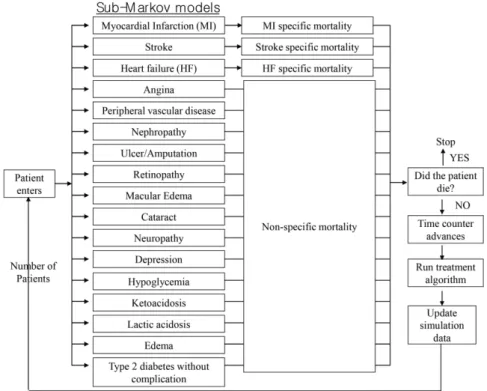
Fig. 1. Simplified structure of CORE Diabetes Model (CDM).
Cost Effectiveness of Insulin Glargine/Lixisenatide 3
J. Pharm. Soc. Korea insulin intensification. A perspective of the National Health
Insurance Service, a time horizon of 30 years, and a 3%
discount rate for outcomes and cost were applied in the base case setting.
Model
This study was analyzed using the CORE Diabetes Model (CDM) version 9.0, a generic diabetes decision analytic model developed by IQVIATM. The CDM is composed of 17 interconnected Markov sub-models (Fig. 1). Each group was assumed to have been treated with iGlarLixi or premixed insulin for the first three years based on the duration of basal insulin treatment in Lixilan-L study,
10)and switched to rescue regimen (basal insulin + 3 short-acting insulin injections) as a rescue regimen from the fourth year. In the model, cycle length was defined as one year, and each sub-model was simulated with an assumed transition probability through the treatment arms. Progressions for HbA1c, systolic blood pressure (SBP), and cardiovascular disease (CVD) risk were based on the UKPDS 68 model,
17)and progressions for total/
low-density lipoprotein (LDL)/high-density lipoprotein (HDL)- cholesterol and triglycerides (TG) were based on the Framingham heart studies.
18)The progressions for HbA1c, CVD risks and SBP were set to be equal in both iGlarLixi and comparator (premixed insulin) arms with UKPDS 68 regressions after treatment discontinuation.
Effectiveness
The efficacy parameters in the model were HbA1c, SBP, total cholesterol, LDL-C, HDL-C, TG, body mass index (BMI), and hypoglycemia event rate, which were sourced from the LixiLan-L study, a randomized phase III trial for iGlarLixi.
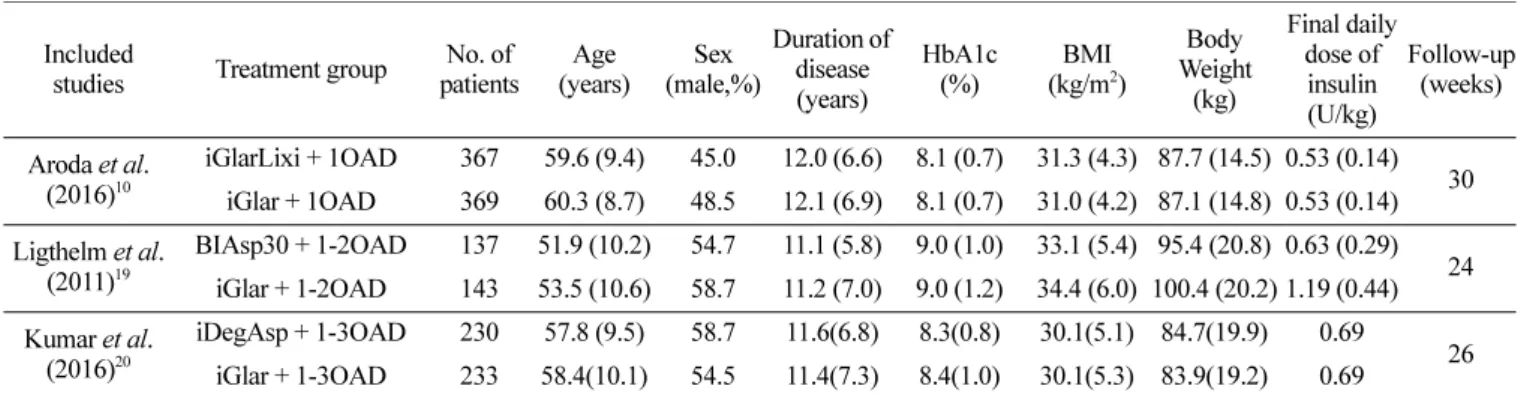
Those parameters involving premixed insulin were based on an indirect treatment comparison (ITC) via the common comparator of insulin glargine and on a meta-analysis of two studies concerning premixed insulin versus insulin glargine by Ligthelm (2011)
19)and by Kumar (2017).
20)Rescue therapy also assumed treatment effects on itself, based on the GetGoal- Duo2 study.
21)A meta-analysis and an ITC were conducted using the RevMan Review Manager (Version 5.3, The Nordic Cochrane Centre, 2014) and the Canadian ITC program,
22)respectively. Total effectiveness was presented as life years and as quality-adjusted life years (QALY). The health status utility for T2DM was set at 0.785.
23)Disutility of −0.0061 was applied for every unit increase from 25 kg/m
2BMI,
24)and −0.012 for hypoglycemia.
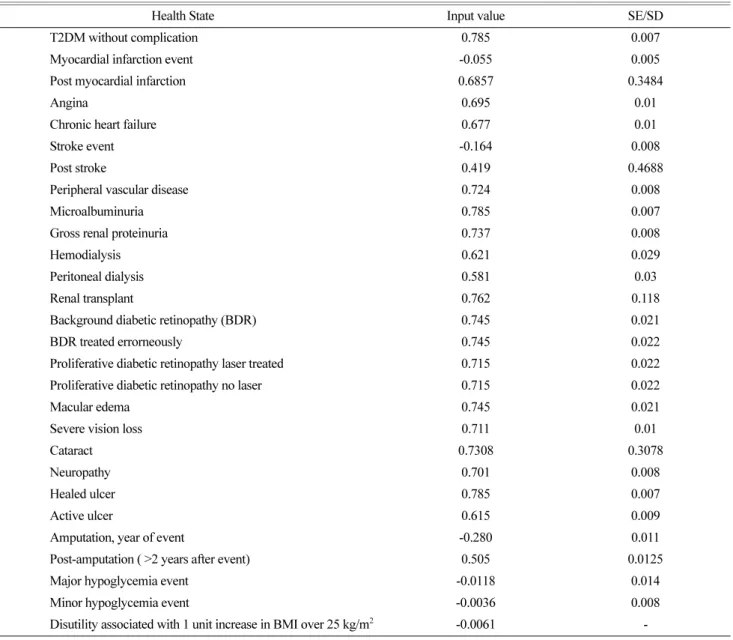
23)Other utilities used in the model are presented in the Supplementary Appendix Table S1.
Costs
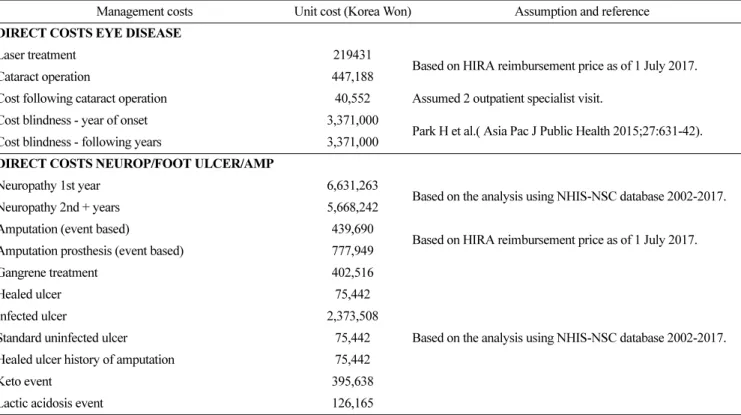
The daily dosages of insulin preparations were set based on the source studies for effectiveness. Inputs for other treatment costs were assumed and presented in the Supplementary Appendix Table S2 based on the government reimbursement price or real-world claim data analysis. Parameters for other management and clinical settings in the model were set based on local data, such as Korean mortality,
25)or on data from existing literature or guidelines where available. Otherwise default values provided by CDM were applied.
Sensitivity analysis
Deterministic sensitivity analyses were conducted to evaluate the uncertainties of the model assumptions and input values.
The assessed parameters in sensitivity analyses were as follows:
the characteristics of the target cohort as based on the LixiLan-L study, a time horizon of 15 or 20 years, a 5-year treatment period for the 1
sttherapy (rescue therapy from the 6
thyear), a switch to rescue therapy at 7.5 or 8% HbA1c threshold and not by treatment duration, ± 20% variation of effectiveness or cost input for premixed insulin, a 0 or 5%
discount rate, and a comparator change to insulin glargine.
Statistics
The cost effectiveness results were presented using an incremental cost-effectiveness ratio (ICER) between iGlarLixi and the comparator. The analysis was performed for the 1,000-simulation cohort with 1,000 iterations in the Monte Carlo simulations, considering the complex interactions between each Markov sub-model, and mean values and 95% confidence intervals (CIs) were presented for the result. Each of the bootstrap iteration were randomly sampled from normal (Gaussian) distributions generated by the mean and standard deviation values entered for the most parameters such as patient characteristics and treatment effects except the baseline characteristics of triglycerides, which assumed gamma distribution.
Experimental Results
The characteristics of the target cohort
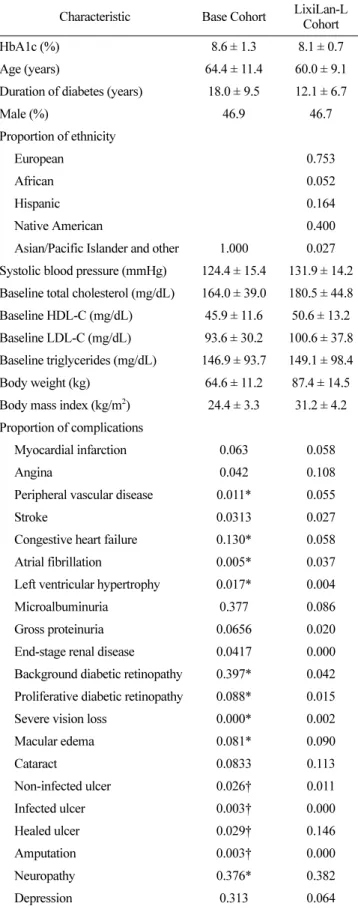
The average age for the target cohort was 64.4 ± 11.4
years, with an average HbA1c level of 8.6 ± 1.3%, an average
BMI of 24.4 ± 3.3 kg/m
2, and males comprised 46.9% of the
cohort based on the analysis of KNHANES. Compared to
the LixiLan-L study cohort used in the sensitivity analysis,
the major differences included a 0.52% higher HbA1c, a 4.4
year increase in age, an average reduction in BMI of 6.8
kg/m
2, and a complete Asian population (Table 1).
Effectiveness and Cost
iGlarLixi showed a significantly higher reduction of HbA1c and BMI from baseline compared to premixed insulin through ITC analysis. The mean differences were −0.50% (95%
confidence interval (CI): −0.68, −0.32) for HbA1c and −0.80 kg/m
2(95% CI: −1.29, −0.31) for BMI (Supplementary Appendix Table S2-S5). Based on the ITC and LixiLan-L study, the parameters for effectiveness were assumed, as shown in Table 2. The daily treatment costs were assumed at 4,864 KRW (approximately 4.4 USD at an exchange rate of 1,100 KRW/USD) for iGlarLixi, and 3,028 KRW (2.8 USD) for premixed insulin in the maintenance phase. The mean difference in HbA1c reduction between iGlarLixi and insulin glargine in the sensitivity analysis was −0.64%, and the daily treatment cost of insulin glargine was 1,754 KRW (1.6 USD), which was 36% of the iGlarLixi cost (Table 2).
Diabetes-related complications, except for hypoglycemia, showed lower incidences in the iGlarLixi-treated patients (Table 3).
Hypoglycemia did not show a significant difference in the ITC and was assumed to be at the same rate of the iGlarLixi throughout this analysis.
Incremental Cost-Effectiveness Ratios (ICERs)
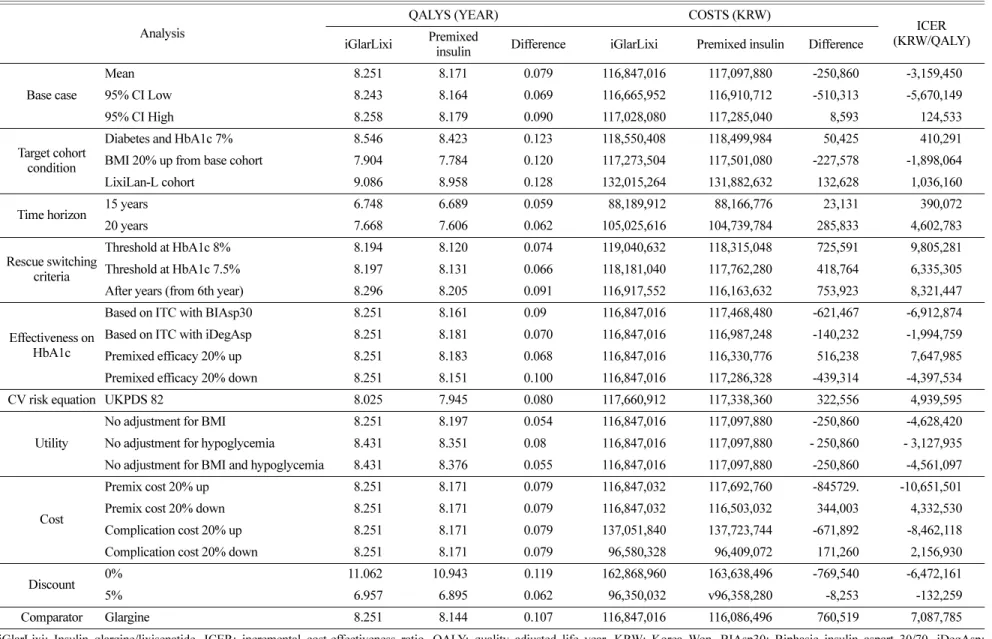
iGlarLixi was analyzed and shown to have 0.079 additional QALYs and a 250,860 KRW (228 USD) lower cost over the time horizon, and the incremental cost-effectiveness ratios (ICERs) were −3,159,450 KRW/QALY. In sensitivity analyses, all ICURs remained dominant (more effective and less costly) or below 10,000 USD (Table 4, Supplementary Fig. S2).
Discussion
This study evaluated the cost-effectiveness of the newly launched iGlarLixi, and compared iGlarLixi with premixed insulin in the base analysis and insulin glargine in the sensitivity analysis under the Korean settings. The study results showed comparable cost effectiveness with selected comparators for patients with T2DM inadequately controlled on basal insulin.
The CDM used in this study is a validated decision analytic model to assess the long-term cost-effectiveness of treatment options for diabetes. The CDM consists of one diabetes therapy Markov model and 16 sub-models mainly for diabetes complications, and each sub-model has a Markov model reflecting time horizon, health status, diabetes patterns, and severity according to selected treatment algorithms. Each sub-
Table 1. Characteristics of target cohort
Characteristic Base Cohort LixiLan-L Cohort
HbA1c (%) 8.6 ± 1.3 8.1 ± 0.7
Age (years) 64.4 ± 11.4 60.0 ± 9.1
Duration of diabetes (years) 18.0 ± 9.5 12.1 ± 6.7
Male (%) 46.9 46.7
Proportion of ethnicity
European 0.753
African 0.052
Hispanic 0.164
Native American 0.400
Asian/Pacific Islander and other 1.000 0.027 Systolic blood pressure (mmHg) 124.4 ± 15.4 131.9 ± 14.2 Baseline total cholesterol (mg/dL) 164.0 ± 39.0 180.5 ± 44.8 Baseline HDL-C (mg/dL) 45.9 ± 11.6 50.6 ± 13.2 Baseline LDL-C (mg/dL) 93.6 ± 30.2 100.6 ± 37.8 Baseline triglycerides (mg/dL) 146.9 ± 93.7 149.1 ± 98.4
Body weight (kg) 64.6 ± 11.2 87.4 ± 14.5
Body mass index (kg/m
2) 24.4 ± 3.3 31.2 ± 4.2 Proportion of complications
Myocardial infarction 0.063 0.058
Angina 0.042 0.108
Peripheral vascular disease 0.011* 0.055
Stroke 0.0313 0.027
Congestive heart failure 0.130* 0.058
Atrial fibrillation 0.005* 0.037
Left ventricular hypertrophy 0.017* 0.004
Microalbuminuria 0.377 0.086
Gross proteinuria 0.0656 0.020
End-stage renal disease 0.0417 0.000
Background diabetic retinopathy 0.397* 0.042 Proliferative diabetic retinopathy 0.088* 0.015
Severe vision loss 0.000* 0.002
Macular edema 0.081* 0.090
Cataract 0.0833 0.113
Non-infected ulcer 0.026† 0.011
Infected ulcer 0.003† 0.000
Healed ulcer 0.029† 0.146
Amputation 0.003† 0.000
Neuropathy 0.376* 0.382
Depression 0.313 0.064
HbA1c: glycated hemoglobin, HDL: high-density lipoprotein, LDL:
low-density lipoprotein.
*Based on Lee KH et al., 2009,
14†Based on Bae JI et al., 2016
15Cost Effectiveness of Insulin Glargine/Lixisenatide 5
J. Pharm. Soc. Korea model moves according to the assumed transfer probability
until the treatment alternatives reach a threshold for rescue therapy. Under a simple Markov model, each health status has exclusivity, making it difficult to assume the complex complication status occurring in actual diabetes. However, the CDM allows for a simulation of multiple complications simultaneously, such as myocardial infraction (MI), stroke, and peripheral vascular diseases (PVDs) with 16 sub-Markov models. Cost-effectiveness studies using the CDM have been widely published and the models have been validated in several studies.
26,27)In a study by McEwan et al., estimates on vascular complications and mortality with 112 simulations using the CDM were compared with the actual value observed from the data of the Diabetes Control and Complications Trial (DCCT) and the United Kingdom Prospective Diabetes Study (UKPDS) cohort and evaluated the goodness of fit and the coefficient of determination (R
2) for the CDM. The R
2in a simulation using the DCCT cohort was 0.9 for the 15- year horizon, and 0.72 for the 30-year horizon. In the simulation with the UKPDS and the 20-year horizon, the coefficient was 0.92. Therefore, CDM is considered a reliable analytical model for population groups similar to the UKPDS
or DCCT cohorts.
27)There is limited data regarding its relevance in terms of validity for Korean populations, but a study concerning the cost-effectiveness for Korean patients with T2DM using the CDM has been published.
14)As with previous Korean studies, this study changed all possible settings of the model into relevant conditions for Korean patients based on real-world claim data analysis or a literature research.
The direct insulin treatment cost itself was higher in iGlarLix, but its overall cost over a 30-year horizon was even slightly lower than that of premixed insulin, due to savings in cardiovascular, kidney, ophthalmology, foot ulceration and neuropathy-related complications. These savings resulted from the lowered risks of macro- or micro-vascular complications through the benefits of the HbA1c reduction effect. Uncontrolled T2DM and hyperglycemia increase the risk of vascular complications, and a decrease in HbA1c levels reflecting blood glucose levels could eventually be associated with reducing these complications. This CDM assumed a 12 to 16% risk reduction for MI, heart failure (HF), stroke, and angina for an absolute 1% point reduction in the HbA1c level, based on published study results.
28,17)SBP, cholesterol, and TG also affected the risk for macro- and micro-vascular complications Table 2. Efficacy and cost assumption by treatment arm
Base case Sensitivity
Rescue therapy iGlarLixi Premixed insulin BIAsp30 iDegAsp Insulin glargine
Efficacy
HbA1c (%) -1.15 (0.06) -0.65 (0.06)
†-0.67 (0.06)
†-0.64 (0.06)
†-0.61 (0.06)
†-0.84 (0.05) Systolic blood pressure (mmHg) 0.02 (0.80) 0.02 (0.80)
‡0.02 (0.80)
‡0.02 (0.80)
‡0.68 (0.78) 1.55 (0.84) Total cholesterol (mg/dL) 1.53 (3.16) 1.53 (3.16)
‡1.53 (3.16)
‡1.53 (3.16)
‡6.67 (2.98) -1.37 (2.25) LDL-C (mg/dL) 1.01 (2.75) 1.01 (2.75)
‡1.01 (2.75)
‡1.01 (2.75)
‡5.50 (2.59) -1.35 (1.84) HDL-C (mg/dL) 0.11 (1.04) 0.11 (1.04)
‡0.11 (1.04)
‡0.11 (1.04)
‡-0.73 (0.98) -0.44 (0.52) Triglycerides (mg/dL) -0.86 (7.79) -0.86 (7.79)
‡-0.86 (7.79)
‡-0.86 (7.79)
‡8.58 (7.35) 0.92 (6.22) Body mass index (kg/m
2) -0.27 (0.07) 0.53 (0.07)
§0.79 (0.07)
§0.31 (0.07)
§0.21 (0.06) 0.51 (0.09)
Minor hypo (event rate per 100 pt yr) 303.0 303.0 454.0 303.0 422.0 410.4
Major hypo (event rate per 100 pt yr)* 2.5 2.5 2.5 2.5 0.5 0.0
Insulin dose (IU/Kg/day)
maintenance 0.53 0.84
∥1.19 0.69 0.53 0.52 (Basal)
0.39 (Bolus) Yearly treatment cost (KRW)
¶Maintenance phase 1,775,403 1,105,062
e1,244,848 1,045,154 640,062 1,096,758
iGlarLixi: Insulin glargine/lixisenatide, BIAsp30: Biphasic insulin aspart 30/70, iDegAsp: Insulin degludec/Aspart, LDL: low density lipoprotein, HDL: high density lipoprotein, Pt yr: Patient years., KRW: Korean Won (approximately 1100 KRW/USD).
All data are means (standard error), unless otherwise specified.
*Severe hypoglycemia requiring medical assistance;
†Assumed mean values with the equation of ‘(mean value of iGlarLxi)-(mean difference between iGlarLixi and comparator in the ITC)’, and same standard errors as iGlarLixi were used due to limited data for comparators;
‡Assumed same effectiveness as comparison data were not available for the ITC;
§Assumed with the equation of ‘body weight/1.7^2’;
∥Assumed as BIAsp30:
iDegAsp=3:7;
¶Included the costs of metformin and disposable injection needles.
in the CDM, but this study assumed the same effectiveness on SBP, cholesterol, and TG, as comparison data were not available from the ITC. In the case of insulin glargine used as comparator in the sensitivity analysis, the parameters of SBP, cholesterol, and TG were significantly more effective in iGlarLixi than in insulin glargine. If direct comparison data had been available between iGlarLixi and premixed insulin, the efficacy parameters on SBP, cholesterol, TG could have shown more favorable results for iGlarLixi, considering that premixed insulin only consisted of insulin components, so cannot expect the benefits from GLP-1RAs. In that case, the ICERs between iGlarLixi and premixed insulin would be more favorable for iGlarLixi than that found in this study.
Successful glycemic control in the early stage of diabetes is essential to reduce the risk of macrovascular and micro- vascular complications, while the benefits of tight glycemic control on macrovascular complications in late-stage diabetes are controversial.
29-31)Insulin shows the most potent glucose- lowering effect among all anti-diabetic agents, and guidelines recommend individualized and stepwise intensification for glycemic control
5). In addition, a recent retrospective cohort
study involving 105,477 patients in the UK suggested that early insulin intensification to achieve glycemic goals might help lower the rates of diabetes-related cardiovascular events for patients with T2DM. However, patients often delay the initiation of insulin therapy or treatment intensification even when their glycemic controls remain unsuccessful, which is known as clinical inertia.
32,33)A large proportion of patients with T2DM experience clinical inertia.
22,33-35)Based on a retrospective study using cohort data for 11,696 patients with T2DM in the UK, approximately two-thirds of the targeted patients requiring insulin intensification did not start treatment intensifications at all, and a significant number of patients even stopped basal insulin.
33)Clinical inertia has also been found in Asian population studies. A Taiwanese study reported approximately 39% of the patients who had inadequate glycemic control did not have their treatments intensified.
34)In a Korean study involving 76 patients with T2DM indicated for insulin therapy, 67% of the patients declined or delayed insulin therapy initiation or intensification.
36)The reasons for this clinical inertia are related to the side-effects of insulin therapy, such as hypoglycemia, weight gain, lower treatment adherence, complexity of the regimen, and anxiety concerning the requirement for multiple injections, which increase the healthcare-related burdens for both physicians and patients.
9,8)For countries such as South Korea with high rates of diabetes, overcoming barriers against clinical inertia is very important to control the total treatment cost of diabetes nationally.
There is an unmet need for intensification initiation, and insulin glargine/lixisenatide using a titratable fixed-ratio co- formulation appears to reduce potential barriers considering its complementary modes of action involving insulin glargine and lixisenatide that target fasting glucose level through basal insulin and postprandial glucose level through short-acting GLP-1RA. Additionally, it may result in lowering the frequency of injections. As initial basal insulin is often not changed and is used continuously, even glycemic control is poorly managed when intensification is delayed. In this case, it may be a more cost-effective option to use iGlarLixi as soon as possible, as iGlarLixi has little or no cost difference compared to basal insulin over the analysis time horizon while its benefits are significantly greater.
10,37)This study had some potential limitations. First, effectiveness in the base analysis was derived from an indirect treatment comparison. This study selected three randomized studies that assessed ‘insulin glargine with 1 to 3 OADs’, which were used as the common comparator in the indirect comparison between iGlarLixi and premixed insulin. In those studies, the Table 3. Cumulated complication incidences
Complication iGlarLixi Premixed
insulin Difference
Background retinopathy 21.61 22.37 -0.76
Proliferative retinopathy 2.54 2.71 -0.17
Micro-albuminuria 35.77 37.04 -1.27
Gross proteinuria 22.33 23.51 -1.18
End-stage renal disease 8.55 9.25 -0.7
1
stulcer 22.21 23.07 -0.86
Amputation due to non-healing
ulcer 7.89 8.11 -0.22
Neuropathy 63.65 65.51 -1.86
Peripheral vascular disease 13.73 13.86 -0.13
Congestive heart failure 7.39 7.77 -0.38
Angina 8.15 8.22 -0.07
Myocardial infarction 13.59 13.87 -0.28
Stroke 4.83 4.87 -0.04
Cataract 10.18 10.52 -0.34
Macular edema 19.93 20.96 -1.03
Severe vision loss 11.62 12.08 -0.46
Non-severe hypoglycemia
(event per patient) 68.42 68.06 0.36
Severe hypoglycemia
(event per patient) 0.074 0.072 0.002
All data are cumulated number of events of 1,000 simulation cohort.
Cost Ef fec tive n es s of Insuli n Gl argi n e/ Li xisena tid e 7
J. Ph ar m. So c. Kore a
Table 4. The results of base analysis and deterministic sensitivity analysis Analysis
QALYS (YEAR) COSTS (KRW)
ICER (KRW/QALY) iGlarLixi Premixed
insulin Difference iGlarLixi Premixed insulin Difference
Base case
Mean 8.251 8.171 0.079 116,847,016 117,097,880 -250,860 -3,159,450
95% CI Low 8.243 8.164 0.069 116,665,952 116,910,712 -510,313 -5,670,149
95% CI High 8.258 8.179 0.090 117,028,080 117,285,040 8,593 124,533
Target cohort condition
Diabetes and HbA1c 7% 8.546 8.423 0.123 118,550,408 118,499,984 50,425 410,291
BMI 20% up from base cohort 7.904 7.784 0.120 117,273,504 117,501,080 -227,578 -1,898,064
LixiLan-L cohort 9.086 8.958 0.128 132,015,264 131,882,632 132,628 1,036,160
Time horizon 15 years 6.748 6.689 0.059 088,189,912 088,166,776 23,131 390,072
20 years 7.668 7.606 0.062 105,025,616 104,739,784 285,833 4,602,783
Rescue switching criteria
Threshold at HbA1c 8% 8.194 8.120 0.074 119,040,632 118,315,048 725,591 9,805,281
Threshold at HbA1c 7.5% 8.197 8.131 0.066 118,181,040 117,762,280 418,764 6,335,305
After years (from 6th year) 8.296 8.205 0.091 116,917,552 116,163,632 753,923 8,321,447
Effectiveness on HbA1c
Based on ITC with BIAsp30 8.251 8.161 0.090 116,847,016 117,468,480 -621,467 -6,912,874
Based on ITC with iDegAsp 8.251 8.181 0.070 116,847,016 116,987,248 -140,232 -1,994,759
Premixed efficacy 20% up 8.251 8.183 0.068 116,847,016 116,330,776 516,238 7,647,985
Premixed efficacy 20% down 8.251 8.151 0.100 116,847,016 117,286,328 -439,314 -4,397,534
CV risk equation UKPDS 82 8.025 7.945 0.080 117,660,912 117,338,360 322,556 4,939,595
Utility
No adjustment for BMI 8.251 8.197 0.054 116,847,016 117,097,880 -250,860 -4,628,420
No adjustment for hypoglycemia 8.431 8.351 0.080 116,847,016 117,097,880 - 250,860 - 3,127,935
No adjustment for BMI and hypoglycemia 8.431 8.376 0.055 116,847,016 117,097,880 -250,860 -4,561,097
Cost
Premix cost 20% up 8.251 8.171 0.079 116,847,032 117,692,760 -845729. -10,651,501
Premix cost 20% down 8.251 8.171 0.079 116,847,032 116,503,032 344,003 4,332,530
Complication cost 20% up 8.251 8.171 0.079 137,051,840 137,723,744 -671,892 -8,462,118
Complication cost 20% down 8.251 8.171 0.079 096,580,328 096,409,072 171,260 2,156,930
Discount 0% 11.0620 10.9430 0.119 162,868,960 163,638,496 -769,540 -6,472,161
5% 6.957 6.895 0.062 096,350,032 v96,358,280 -8,253 -132,259
Comparator Glargine 8.251 8.144 0.107 116,847,016 116,086,496 760,519 7,087,785
iGlarLixi: Insulin glargine/lixisenatide, ICER: incremental cost-effectiveness ratio, QALY: quality adjusted life year, KRW: Korea Won, BIAsp30: Biphasic insulin aspart 30/70, iDegAsp:
Insulin degludec/Aspart.
‘insulin glargine with 1 to 3 OADs’ groups were not exactly the same and differed in terms of the number and types of OADs. However, we chose to select these studies because it is very difficult to clearly control the number or type of OADs in clinical trials involving patients with T2DM, and the objective of each study was to compare the differences in insulin preparations, and the OADs between the two arms in each study were matched not to affect the results.
Additionally, sensitivity analyses were conducted with changed efficacy values to evaluate the uncertainty of the results, and they showed relatively stable results as the base analysis.
Second, uncertainty arose related to the parameters in the CDM because the model required inputting various parameters on setting, cost, cohort, complications, and cost-effectiveness.
This study performed various sensitivity analyses through varying those parameters and sought to assess the uncertainty while aware that limitations arising in this regard may not have been fully overcome.
This study is the first to assess the cost effectiveness of iGlarLixi in South Korea as well as in other countries, and iGlarLixi showed dominance or acceptable incremental cost- effectiveness over premixed insulin. In conclusion, these outcomes suggest iGlarLixi could be a suitable alternative to insulin intensification, about which concerns have been raised in relation to poor glycemic control, hypoglycemia and weight gain.
Acknowledgment
This study was funded and supported by Sanofi-Aventis Korea Co., Ltd. and we thank them for the support.
Conflict of Interest
Hae-Young Park, Sena An, Susan Park, Dong-Ha Kim and Jin-Won Kwon declare that they have no conflict of interest.
Hye Ok Kim and Jeong-Mi Kwon are employees of Sanofi- Aventis Korea and the authors declare that they have no conflicts of interest regarding the content of this article.
References
1. World Health Organization. Diabetes Fact Sheet. Updated July 2017: Available: http://www.who.int/mediacentre/factsheets/fs312/
en/. Accessed 1 April 2018.
2. World Health Organization. Global Report on Diabetes., Available:
http://www.who.int/diabetes/global-report/en/. Accessed 1 April 2018.
3. Lee BW, Kim JH, Ko SH, Hur KY, Kim NH, Rhee SY, Kim HJ, Moon MK, Park SO, Choi KM. Insulin therapy for adult patients
with type 2 diabetes mellitus: a position statement of the Korean Diabetes Association, 2017. Korean J Intern Med. 41, 367 (2017) 4. Chamberlain JJ, Herman WH, Leal S, Rhinehart AS, Shubrook
JH, Skolnik N, Kalyani RR. Pharmacologic Therapy for Type 2 Diabetes: Synopsis of the 2017 American Diabetes Association Standards of Medical Care in Diabetes. Ann Intern Med. 166, 572 (2017)
5. Inzucchi SE, Bergenstal RM, Buse JB, Diamant M, Ferrannini E, Nauck M, Peters AL, Tsapas A, Wender R, Matthews DR.
Management of hyperglycemia in type 2 diabetes, 2015: a patient- centered approach: update to a position statement of the American Diabetes Association and the European Association for the Study of Diabetes. Diabetes Care. 38, 140 (2015)
6. Korean Diabetes Association. Diabetes Fact Sheet in Korea. 2016:
Available: http://www.diabetes.or.kr/. Accessed 1 April 2018.:
7. Khunti K, Wolden ML, Thorsted BL, Andersen M, Davies MJ.
Clinical inertia in people with type 2 diabetes: a retrospective cohort study of more than 80,000 people. Diabetes Care. 36, 3411 (2013)
8. Khunti K, Gomes MB, Pocock S, Shestakova MV, Pintat S, Fenici P, Hammar N, Medina J. Therapeutic inertia in the treatment of hyperglycaemia in patients with type 2 diabetes: A systematic review. Diabetes Obes Metab. 20, 427 (2018)
9. Russell-Jones D, Pouwer F, Khunti K. Identification of barriers to insulin therapy and approaches to overcoming them. Diabetes Obes Metab. 20, 488 (2018)
10. Aroda VR, Rosenstock J, Wysham C, Unger J, Bellido D, Gonzalez-Galvez G, Takami A, Guo H, Niemoeller E, Souhami E, Bergenstal RM, LixiLan LTI. Efficacy and Safety of LixiLan, a Titratable Fixed-Ratio Combination of Insulin Glargine Plus Lixisenatide in Type 2 Diabetes Inadequately Controlled on Basal Insulin and Metformin: The LixiLan-L Randomized Trial.
Diabetes Care. 39, 1972 (2016)
11. Scott LJ. Insulin Glargine/Lixisenatide: A Review in Type 2 Diabetes. Drugs. 77, 1353 (2017)
12. Goldman J, Trujillo JM. iGlarLixi: A Fixed-Ratio Combination of Insulin Glargine 100 U/mL and Lixisenatide for the Treatment of Type 2 Diabetes. Ann Pharmacother. 51, 990 (2017)
13. Yoo SY, Kim MY, Kim S, Kim SH, Ko SJ, Beom JW, Kim JY, Jo J, Kim YU, Heo D, Moon JC, Moon S, Lim YH, Lee SA, Lee DH, Lim DM, Paark KY, Kim BJ, Koh GP. Relationship Between Obesity Indices and Cardiovascular Risk Score in Korean Type 2 Diabetes Patients. Korean J Obes. 22, 148 (2013)
14. Lee KH, Seo SJ, Smith-Palmer J, Palmer JL, White J, Valentine WJ. Cost-effectiveness of switching to biphasic insulin aspart 30 from human insulin in patients with poorly controlled type 2 diabetes in South Korea. Value Health. 12 Suppl 3, S55 (2009) 15. Bae J-I, Won JH, Kim JS, Kim MD, Yoon CJ, Cho YK.
Prevalence and Current Status of Treatment of Diabetic Foot in South Korea. Journal of the Korean Society of Radiology. 74, 169 (2016)
16. Market survey data on insulin intensification treatment approach.
Commissioned by Sanofi Aventis Korea Ltd. (2017)
17. Clarke PM, Gray AM, Briggs A, Farmer AJ, Fenn P, Stevens RJ, Matthews DR, Stratton IM, Holman RR, Group UKPDS. A model to estimate the lifetime health outcomes of patients with type 2 diabetes: the United Kingdom Prospective Diabetes Study (UKPDS) Outcomes Model (UKPDS no. 68). Diabetologia. 47, 1747 (2004)
18. Blak BT, Smith HT, Hards M, Maguire A, Gimeno V. A retrospective database study of insulin initiation in patients with Type 2 diabetes in UK primary care. Diabet Med. 29, e191 (2012) 19. Ligthelm RJ, Gylvin T, DeLuzio T, Raskin P. A comparison of
twice-daily biphasic insulin aspart 70/30 and once-daily insulin
glargine in persons with type 2 diabetes mellitus inadequately
Cost Effectiveness of Insulin Glargine/Lixisenatide 9
J. Pharm. Soc. Korea controlled on basal insulin and oral therapy: a randomized, open-
label study. Endocr Pract. 17, 41 (2011)
20. Kumar S, Jang HC, Demirag NG, Skjoth TV, Endahl L, Bode B.
Efficacy and safety of once-daily insulin degludec/insulin aspart compared with once-daily insulin glargine in participants with Type 2 diabetes: a randomized, treat-to-target study. Diabet Med.
34, 180 (2017)
21. Rosenstock J, Guerci B, Hanefeld M, Gentile S, Aronson R, Tinahones FJ, Roy-Duval C, Souhami E, Wardecki M, Ye J, Perfetti R, Heller S. Prandial Options to Advance Basal Insulin Glargine Therapy: Testing Lixisenatide Plus Basal Insulin Versus Insulin Glulisine Either as Basal-Plus or Basal-Bolus in Type 2 Diabetes: The GetGoal Duo-2 Trial. Diabetes Care. 39, 1318 (2016)
22. Rubino A, McQuay LJ, Gough SC, Kvasz M, Tennis P. Delayed initiation of subcutaneous insulin therapy after failure of oral glucose-lowering agents in patients with Type 2 diabetes: a population-based analysis in the UK. Diabet Med. 24, 1412 (2007) 23. Beaudet A, Clegg J, Thuresson PO, Lloyd A, McEwan P. Review
of utility values for economic modeling in type 2 diabetes. Value Health. 17, 462 (2014)
24. Bagust A, Beale S. Modelling EuroQol health-related utility values for diabetic complications from CODE-2 data. Health Econ. 14, 217 (2005)
25. Korean Statistical Information Service. Korean Life Table., Available: http://kosis.kr/statHtml/statHtml.do?orgId=101&tblId=
DT_1B42&conn_path=I3., Accessed 1 December 2017.
26. McEwan P, Grant D, Lamotte M, Foos V. Quantifying Nonlinear Effects in Stochastic Markov Simulation Using UKPDS 68 and Ukpds 82 Equations in Type 2 Diabetes Modeling Analysis With the IMS Core Diabetes Model (CDM). Value Health. 17, A546 (2014)
27. McEwan P, Foos V, Palmer JL, Lamotte M, Lloyd A, Grant D.
Validation of the IMS CORE Diabetes Model. Value Health. 17, 714 (2014)
28. Stratton IM, Adler AI, Neil HA, Matthews DR, Manley SE, Cull
CA, Hadden D, Turner RC, Holman RR. Association of glycaemia with macrovascular and microvascular complications of type 2 diabetes (UKPDS 35): prospective observational study.
BMJ. 321, 405 (2000)
29. Lovre D, Fonseca V. Benefits of timely basal insulin control in patients with type 2 diabetes. J Diabetes Complications. 29, 295 (2015)
30. Khunti K, Millar-Jones D. Clinical inertia to insulin initiation and intensification in the UK: A focused literature review. Prim Care Diabetes. 11, 3 (2017)
31. Lathief S, Inzucchi SE. Approach to diabetes management in patients with CVD. Trends Cardiovasc Med. 26, 165 (2016) 32. Berlowitz DR, Ash AS, Glickman M, Friedman RH, Pogach LM,
Nelson AL, Wong AT. Developing a quality measure for clinical inertia in diabetes care. Health Serv Res. 40, 1836 (2005)
33. Khunti K, Nikolajsen A, Thorsted BL, Andersen M, Davies MJ, Paul SK. Clinical inertia with regard to intensifying therapy in people with type 2 diabetes treated with basal insulin. Diabetes Obes Metab. 18, 401 (2016)
34. Huang LY, Shau WY, Yeh HL, Chen TT, Hsieh JY, Su S, Lai MS.
A model measuring therapeutic inertia and the associated factors among diabetes patients: A nationwide population-based study in Taiwan. J Clin Pharmacol. 55, 17 (2015)
35. Mata-Cases M, Benito-Badorrey B, Roura-Olmeda P, Franch- Nadal J, Pepio-Vilaubi JM, Saez M, Coll-de-Tuero G. Clinical inertia in the treatment of hyperglycemia in type 2 diabetes patients in primary care. Curr Med Res Opin. 29, 1495 (2013) 36. Hong SH, Kim MJ, Noh SG, Suh DW, Youn SJ, Lee KW, Lee
HC, Chung YS, Chung HR, Kwon HS, Cha BY, Son HY, Yoon KH. A Study on Resistance in Type 2 Diabetic Patient Against Commencement of Insulin Treatment. Korean Diabetes Jounal.
32, 269 (2008)
37. Niemoeller E, Souhami E, Wu Y, Jensen KH. iGlarLixi Reduces
Glycated Hemoglobin to a Greater Extent Than Basal Insulin
Regardless of Levels at Screening: Post Hoc Analysis of LixiLan-
L. Diabetes Ther. 9, 373 (2018)
Supplementary Appendix
Table S1. Quality of life utilities or disutilities applied in the CDM Model
Health State Input value SE/SD
T2DM without complication 0.785 0.007
Myocardial infarction event -0.055 0.005
Post myocardial infarction 0.6857 0.3484
Angina 0.695 0.01
Chronic heart failure 0.677 0.01
Stroke event -0.164 0.008
Post stroke 0.419 0.4688
Peripheral vascular disease 0.724 0.008
Microalbuminuria 0.785 0.007
Gross renal proteinuria 0.737 0.008
Hemodialysis 0.621 0.029
Peritoneal dialysis 0.581 0.03
Renal transplant 0.762 0.118
Background diabetic retinopathy (BDR) 0.745 0.021
BDR treated errorneously 0.745 0.022
Proliferative diabetic retinopathy laser treated 0.715 0.022
Proliferative diabetic retinopathy no laser 0.715 0.022
Macular edema 0.745 0.021
Severe vision loss 0.711 0.01
Cataract 0.7308 0.3078
Neuropathy 0.701 0.008
Healed ulcer 0.785 0.007
Active ulcer 0.615 0.009
Amputation, year of event -0.280 0.011
Post-amputation ( >2 years after event) 0.505 0.0125
Major hypoglycemia event -0.0118 0.014
Minor hypoglycemia event -0.0036 0.008
Disutility associated with 1 unit increase in BMI over 25 kg/m
2-0.0061 -
SE: standard error, SD: standard deviation
Cost Effectiveness of Insulin Glargine/Lixisenatide 11
J. Pharm. Soc. Korea Table S2. Other treatment costs
Management costs Unit cost (Korea Won) Assumption and reference
Annual statins 237,615 Simvastatin 20mg (unit price: 651won x 365 days), Based on
HIRA weighted price, 2017.
Annual aspirin 10,220 Asprin 0.1g (unit price 28won x365days), Based on HIRA
weighted price, 2017.
Annual angiotensin-converting-enzyme inhibitor (ACEi) 140,890
Average price of ACEi (captopril 25mg, enalaril 10mg, ramipril 5mg) (average unit price: 386 won) x 365 days, Based on HIRA weighted price, 2017.
Annual eye screening 40,553
Based on HIRA reimbursement price as of 1 July 2017.
20,276 won or 40,553 won: assumed 1 or 2 outpatient specialist visits.
Annual screening for microalbuminurea 23,852 Annual screening for gross proteinuira 1,688
Annual foot screening program 40,553
Stopping ACE due to SE 20,276
Foot screening program (monthly based) 20,276
Non-standard ulcer treatmnt 31,797
Cost anti-depression treatment 216,884
Assumed 4 outpatient specialist visits per year and cost for anti- depressant (fluoxetine 372 won x365 days), Based on HIRA weighted price, 2017.
Cost screening for depression 20,276 Assumed 1 outpatient specialist visits.
DIRECT COSTS RENAL COMPLICATIONS
Myocardial infarction 1st year 12,235,754
Based on the analysis using the NHIS-NSC database 2002-2017.
All the costs were converted to 2017 price level.
Myocardial infarction 2nd + years 7,926,624
Angina 1st year 7,441,057
Angina 2nd + years 5,718,472
Congestive heart failure 1st year 9,323,175
Congestive heart failure 2nd + years 7,526,818
Stroke 1st year 11,234,263
Stroke 2nd + years 9,144,489
Stroke death within 30 days 9,067,230
Peripheral vascular disease 1st year 4,635,083 Peripheral vascular disease 2nd + years 4,468,208
Haemodialysis 1st year 34,135,512
Haemodialysis 2 + years 27,948,080
Peritoneal Dialysis 1st year 34,135,512
Peritoneal Dialysis 2 + years 33,470,754
Renal transplant costs 1st year 44,108,952
Renal transplant 2 + years 18,153,658
DIRECT COSTS ACUTE EVENTS
Major hypoglycaemia (per event) 1,596,079
Based on the analysis using NHIS-NSC database 2002-2017.
Minor hypoglycaemia (per event) 122,059
Table S2. Continued
Management costs Unit cost (Korea Won) Assumption and reference
DIRECT COSTS EYE DISEASE
Laser treatment 219431
Based on HIRA reimbursement price as of 1 July 2017.
Cataract operation 447,188
Cost following cataract operation 40,552 Assumed 2 outpatient specialist visit.
Cost blindness - year of onset 3,371,000
Park H et al.( Asia Pac J Public Health 2015;27:631-42).
Cost blindness - following years 3,371,000
DIRECT COSTS NEUROP/FOOT ULCER/AMP
Neuropathy 1st year 6,631,263
Based on the analysis using NHIS-NSC database 2002-2017.
Neuropathy 2nd + years 5,668,242
Amputation (event based) 439,690
Based on HIRA reimbursement price as of 1 July 2017.
Amputation prosthesis (event based) 777,949
Gangrene treatment 402,516
Based on the analysis using NHIS-NSC database 2002-2017.
Healed ulcer 75,442
Infected ulcer 2,373,508
Standard uninfected ulcer 75,442
Healed ulcer history of amputation 75,442
Keto event 395,638
Lactic acidosis event 126,165
HIRA: Health Insurance and Review and Assessment Service, NHIS-NSC: the National Health Insurance Service-National Sample Cohort.
Cost Effectiveness of Insulin Glargine/Lixisenatide 13
J. Pharm. Soc. Korea
Supplementary Indirect Treatment Comparison
Table S3. PICO for literature reviews
Components Key criteria
Population Patients with Type 2 diabetes having inadequately controlled blood glucose level on basal insulin with or without oral anti-diabetics (OADs)
Intervention 1. Insulin glargine + Lixisenatide + OADs (iGlarLixi + OADs) 2. Premixed insulin + OADs
Comparison (common comparator) Insulin Glargine + OADs Outcomes
1. HbA1c change from base value 2. Weight or BMI change from base value 3. Rate of hypoglycemia event
Types of Study Randomized controlled trial (RCT) Publication date To 26 October 2017
Table S4. Baseline characteristic of included studies
Included
studies Treatment group No. of patients
Age (years)
Sex (male,%)
Duration of disease (years)
HbA1c (%)
BMI (kg/m
2)
Body Weight (kg)
Final daily dose of insulin (U/kg)
Follow-up (weeks)
Aroda et al.
(2016)
10iGlarLixi + 1OAD 367 59.6 (9.4) 45.0 12.0 (6.6) 8.1 (0.7) 31.3 (4.3) 87.7 (14.5) 0.53 (0.14) iGlar + 1OAD 369 60.3 (8.7) 48.5 12.1 (6.9) 8.1 (0.7) 31.0 (4.2) 87.1 (14.8) 0.53 (0.14) 30 Ligthelm et al.
(2011)
19BIAsp30 + 1-2OAD 137 51.9 (10.2) 54.7 11.1 (5.8) 9.0 (1.0) 33.1 (5.4) 95.4 (20.8) 0.63 (0.29) iGlar + 1-2OAD 143 53.5 (10.6) 58.7 11.2 (7.0) 9.0 (1.2) 34.4 (6.0) 100.4 (20.2) 1.19 (0.44) 24 Kumar et al.
(2016)
20iDegAsp + 1-3OAD 230 57.8 (9.5) 58.7 11.6(6.8) 8.3(0.8) 30.1(5.1) 84.7(19.9) 0.69 iGlar + 1-3OAD 233 58.4(10.1) 54.5 11.4(7.3) 8.4(1.0) 30.1(5.3) 83.9(19.2) 0.69 26
iGlarLixi: insulin glargine/lixisenatide, iGlar: insulin glargine, BIAsp30: Biphasic insulin aspart 30/70, iDegAsp: insulin degludec/Aspart, U: Unit.
All data are means (standard error), unless otherwise specified.
Figure S1. Flow diagram of the study selection process.
Table S5. Efficacy results of premixed insulin compared to insulin glargine (common comparator)
Included studies Mean Difference (95% CI) Risk Ratio (95% CI)
aHbA1c (%) Body Weight (kg) BMI (kg/m
2)
bHypoglycemia Sever hypoglycemia Ligthelm RJ et al.
(2011) -0.06 (-0.320, 0.200) 1.71 (0.77, 2.66) 0.592 (0.266, 0.920) 1.41 (1.17, 1.71) 0.51 (0.10, 2.74) Kumar A et al. (2016) -0.03 (-0.200, 0.140) 0.33 (-0.17, 0.83) 0.114 (-0.059, 0.287) 1.09 (0.91, 1.31) 0.14 (0.01, 2.79)
Meta-results of
Premixed Insulin
c-0.04 (-0.180, 0.100) 0.96 (-0.39, 2.31) 0.33 (-0.130, 0.800) 1.24 (0.97, 1.60) 0.38 (0.09, 1.62)
a
Based on the event rates in each study;
bAssumed with the equation of ‘body weight/1.7^2’;
cMeta-analysis results of two studies of Ligthelm RJ et al . (2011) and Kumar A et al . (2016)
Table S6. Results of an indirect treatment comparison between iGlarLixi and premixed insulin
Mean Difference (95% CI) Relative Risk (95% CI)
HbA1c (%) Body Weight (kg) BMI (kg/m
2) Hypoglycemia Sever Hypoglycemia iGlarLixi vs.
BIAsp30 -0.480 (-0.765, -0.195) -3.110 (-4.157, -2.063) -1.062 (-1.425, -0.699) 0.667 (0.517, 0.859) 7.843 (0.51, 121.68) IDegAsp -0.510 (-0.716, -0.304) -1.730 (-2.403, -1.057) -0.584 (-0.808, -0.035) 0.682 (0.673, 1.105) 28.57 (0.81, 1009.09) Premixed Insulin
a-0.500 (-0.682, -0.318) -2.360 (-3.783, -0.937) -0.800 (-1.291, -0.309) 0.758 (0.561, 1.025) 10.526 (0.77, 144.63) iGlarLixi: insulin glargine/lixisenatide, iGlar: insulin glargine, BIAsp30: Biphasic insulin aspart 30/70, iDegAsp: insulin degludec/Aspart, U: Unit.
a