D I A B E T E S & M E T A B O L I S M J O U R N A L
This is an Open Access article distributed under the terms of the Creative Commons Attribution Non-Commercial License (http://creativecommons.org/licenses/by-nc/4.0/) which permits unrestricted non-commercial use, distribution, and reproduction in any medium, provided the original work is properly cited.
Antihyperglycemic Agent Therapy for Adult Patients with Type 2 Diabetes Mellitus 2017: A Position
Statement of the Korean Diabetes Association
Seung-Hyun Ko1,*, Kyu-Yeon Hur2,*, Sang Youl Rhee3, Nan-Hee Kim4, Min Kyong Moon5, Seok-O Park6, Byung-Wan Lee7, Hyun Jin Kim8, Kyung Mook Choi4, Jin Hwa Kim9, on behalf of the Committee of Clinical Practice Guideline of Korean Diabetes Association
1Division of Endocrinology and Metabolism, Department of Internal Medicine, College of Medicine, The Catholic University of Korea, Seoul,
2 Division of Endocrinology and Metabolism, Department of Internal Medicine, Samsung Medical Center, Sungkyunkwan University School of Medicine, Seoul,
3Department of Endocrinology and Metabolism, Kyung Hee University School of Medicine, Seoul,
4Division of Endocrinology and Metabolism, Department of Internal Medicine, Korea University College of Medicine, Seoul,
5 Department of Internal Medicine, Seoul Metropolitan Government Boramae Medical Center, Seoul National University College of Medicine, Seoul,
6Department of Internal Medicine, Gwangmyeong Sungae Hospital, Gwangmyeong,
7Division of Endocrinology and Metabolism, Department of Internal Medicine, Yonsei University College of Medicine, Seoul,
8Division of Endocrinology and Metabolism, Department of Internal Medicine, Chungnam National University School of Medicine, Daejeon,
9Division of Endocrinology and Metabolism, Department of Internal Medicine, Chosun University College of Medicine, Gwangju, Korea
In 2017, the Korean Diabetes Association (KDA) published a position statement on the use of antihyperglycemic agents for pa- tients with type 2 diabetes mellitus (T2DM). The KDA regularly updates its Clinical Practice Guidelines, but since the last update in 2015, many results from clinical trials have been introduced, and domestic data from studies performed in Korean patients with T2DM have been published. Recently, evidence from large clinical studies assessing cardiovascular outcomes following the use of sodium-glucose cotransporter 2 inhibitors and glucagon-like peptide 1 receptor agonists in patients with T2DM were in- corporated into the recommendations. Additionally, new data from clinical trials using dipeptidyl peptidase 4 inhibitors and thia- zolidinediones in Korean patients with T2DM were added. Following a systematic review and assessment of recent evidence, the KDA updated and modified its clinical practice recommendations regarding the use of antihyperglycemic agents and revised the treatment algorithm for Korean adult patients with T2DM.
Keywords: Diabetes mellitus, type 2; Hypoglycemic agents; Insulin; Practice guideline
Corresponding author: Kyung Mook Choi https://orcid.org/0000-0001-6175-0225
Division of Endocrinology and Metabolism, Department of Internal Medicine, Korea University Guro Hospital, Korea University College of Medicine, 148 Gurodong-ro, Guro-gu, Seoul 08308, Korea
E-mail: [email protected]
This manuscript is simultaneously published in the Diabetes Metabolism Journal and the Korean Journal of Internal Medicine by the Korean Diabetes Association and the Korean Association of Internal Medicine.
INTRODUCTION
The Clinical Practice Guidelines for type 2 diabetes mellitus (T2DM) provided by the Korean Diabetes Association (KDA) include comprehensive and evidence-based treatment and management guidelines to improve the level of care for adults
with T2DM in Korea according to Korean standards. The tar- get users of this guideline are primary care physicians and oth- er healthcare professionals who treat adults with T2DM. Since the first edition was published in 1990, the Clinical Practice Guidelines for adult patients with T2DM have been periodi- cally updated by the Committee of Clinical Practice Guidelines https://doi.org/10.4093/dmj.2017.41.5.337
pISSN 2233-6079 · eISSN 2233-6087
of the KDA [1]. However, since the fifth edition was published in 2015, many results from large clinical trials of antidiabetic drugs have been introduced, and clinical evidence from stud- ies assessing Korean patients with T2DM who use dipeptidyl peptidase 4 (DPP4) inhibitors, glucagon-like peptide 1 recep- tor agonists (GLP-1RAs), or sodium-glucose cotransporter 2 (SGLT2) inhibitors have accumulated [2-5]. All novel evidence and results were reviewed to extract recommendations for the treatment of these patients.
The 2017 KDA position statement was written by the Com- mittee of Clinical Practice Guidelines under a formal review process after a systematic and extensive review of articles pub- lished from January 1, 2015 to May 31, 2017. The grading sys- tem for the scientific evidence was defined by the KDA and modeled after the evidence-grading system of the American Diabetes Association (ADA) with some modifications [6].
Therefore, the level of evidence and strength of the recommen- dation were not treated as separate entities. The KDA classified recommendation levels into four ratings (A, B, C, and E) ac- cording to the quality of evidence (Table 1). If domestic data were limited or evidence was difficult to apply to Korean pa- tients with T2DM, the Committee of Clinical Practice Guide- lines made a final decision after intensive discussion. In the ab- sence of qualified supporting evidence, or if the recommenda- tion was based on the consensus of the Expert Committees, a grade E was assigned.
In this 2017 position statement regarding pharmacological therapies for non-pregnant adult patients with T2DM, the KDA updated the previous recommendations published in 2015. In principle, these recommendations were based on ex-
tensive review of scientific evidences; therefore, criteria for the health insurance coverage in Korea were not considered. The treatment algorithm for use of antihyperglycemic agents was also revised. Specifically, the previous algorithm was divided into treatment with non-insulin antihyperglycemic agents and treatment with insulin, whereas the updated 2017 position statement is believed to provide the most recent evidence-based treatment recommendations for adult Korean patients with T2DM.
RECOMMENDATIONS
Oral antihyperglycemic agents and GLP-1RAs for type 2 diabetes mellitus
Principles of initial management after diagnosis of type 2 diabetes mellitus
1. Active lifestyle modification (LSM) and appropriate phar- macotherapy are needed following the initial diagnosis of diabetes [A].
2. An appropriate selection of pharmacotherapies should be made after considering the patient’s clinical characteristics and the efficacy, side effects, mechanism of action, risk of hypoglycemia, effect on body weight, patient preference, and combined comorbidity [E].
Principles of treatment with antihyperglycemic agents 1. Metformin is the preferred initial oral antihyperglycemic
agent [A].
2. If metformin is contraindicated or intolerable as the initial
Table 1. Evidence-grading system of the Korean Diabetes Association
Level of evidence Description
A Evidence from well-conducted, generalizable randomized controlled trials that are adequately powered, including - Evidence from well-conducted multicenter trials
- Evidence from meta-analyses that incorporated quality ratings in the analysis
B Evidence from well-conducted cohort studies
- Evidence from well-conducted prospective cohort studies or registries - Evidence from well-conducted meta-analyses of cohort studies - Evidence from well-conducted case-control studies
C Evidence from poorly controlled or uncontrolled studies
- Evidence from randomized controlled studies with some flaws in design, method, or analysis - Evidence from case reports
- Evidence from observational studies with potential bias
E Expert consensus
treatment, then another class of antihyperglycemic agent can be used depending on the clinical situation [E].
3. If monotherapy fails to achieve the glycemic goal, then com- bination therapy using a second agent with a different mech- anism of action should be initiated [A].
4. Dual combination therapy can be used as the initial manage- ment strategy depending on the patient [B].
5. Although the maximal dosage of a single oral agent may be prescribed, early initiation of combination therapy is suitable after considering the glucose-lowering efficacy and side ef- fects of the drug [B].
6. When selecting a class of antihyperglycemic agents for com- bination therapy, the glucose-lowering efficacy, risk of hypo- glycemia, body weight gain, and cardiovascular benefits as- sociated with the drugs are preferentially considered [E].
7. The different mechanisms of action, drug interactions, and patient preferences for combination therapy with more than two classes of antihyperglycemic agents should be consid- ered [C].
8. Although insulin therapy is recommended after failed oral combination therapy, changing or adding another class of oral antihyperglycemic agent can be performed [C].
Glycemic control within the target range has beneficial ef- fects for reducing the risk of cardiovascular and/or microvas- cular complications [7]. The glycemic goal for non-pregnant adult patients with T2DM is ideally a glycosylated hemoglobin (HbA1c) level <6.5%, but this can be tailored to individual cir- cumstances [1,8,9]. Factors to consider when setting a glycemic target goal include age, duration of diabetes, life expectancy, presence of advanced diabetic complications, comorbidities, repeated episodes of hypoglycemia, cognitive dysfunction, and patient preference [1,6,8]. More stringent goals are required for preoperative and postoperative situations, pregnancy, and acute-onset disease. A patient-centered approach is empha- sized to successfully achieve the glycemic goal [1,6,8-10].
LSM is an essential component of treatment for all patients with T2DM and should be initiated promptly and simultane- ously with antidiabetic medications after diagnosis. Patient ed- ucation within a structured program should be received from a healthcare professional at the time of diagnosis and then fol- lowed up with regular reinforcement checks [11-13]. For pa- tients with newly diagnosed T2DM, LSM includes medical nu- trition therapy, weight control, physical activity, smoking ces- sation, and avoidance of alcohol should be initiated. Although
LSM is a very important component of treatment for T2DM, the administration of antihyperglycemic agents should not be delayed. Pharmacotherapy can be initiated simultaneously and in conjunction with LSM.
T2DM is a chronic metabolic disease with a progressive na- ture [14]. A gradual decline in β-cell function and progressive increases in insulin resistance lead to a deteriorated glycemic control status and the need for increasingly intensive pharma- cotherapies [15]. Therefore, in addition to LSM, a transition from monotherapy to combination therapy with antihypergly- cemic agents is usually inevitable. The initiation or add-on to a current therapy of most oral antihyperglycemic agents yields an additional reduction in HbA1c levels of 0.5% to 1.25%, whereas thiazolidinediones (TZDs) and sulfonylureas (SUs) lower HbA1c levels by approximately 1.0% to 1.25% [16].
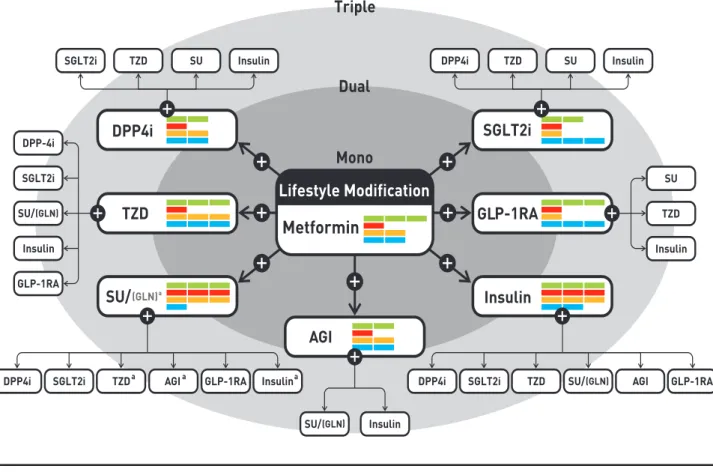
As an initial therapy for newly diagnosed patients with an HbA1c level ≤7.5%, metformin monotherapy is recommend- ed [17-19]. Metformin should not be used in patients with an estimated glomerular filtration rate <30 mL/min/1.73 m2, se- vere renal or hepatic dysfunction, heart failure, severe infection, or dehydration [6-10]. If metformin is not tolerable or is con- traindicated, the alternative choices for monotherapy include DPP4 inhibitors, SGLT2 inhibitors, TZDs, GLP-1RAs, SUs, glinides (meglitinide), α-glucosidase inhibitors (AGIs), and insulin according to patient circumstances (Table 2, Fig. 1).
The factors to consider when choosing an antihyperglycemic medication include its efficacy, complementary mechanism of action, risk of hypoglycemia, effect on weight gain, side effects, patient preference, and comorbidities [20-23]. In the Practical Evidence of Antidiabetic Monotherapy (PEAM) study, the glucose-lowering efficacies of SUs (glimepiride), biguanide (metformin), and TZDs (rosiglitazone) as antidiabetic mono- therapies administered for 48 weeks were similar in drug-naive Korean patients with T2DM (decrease in HbA1c levels from 7.8% to 6.9% for glimepiride, P<0.001; from 7.9% to 7.0% for metformin, P<0.001; and from 7.8% to 7.0% for rosiglitazone, P<0.001; P=0.62) [24]. Glimepiride and rosiglitazone signifi- cantly increased body weight, while metformin reduced body weight. Symptomatic hypoglycemia was more frequent in the glimepiride group, while diarrhea was more frequent in the metformin group [24].
If the initial HbA1c level of a patient is ≥7.5% or the HbA1c target is not achieved within 3 months initiating monotherapy, dual combination therapy can be considered [6-10,25-30]. If the HbA1c target is not achieved within 3 months of initiating
dual therapy, a third agent with a complementary mechanism of action can be added for triple combination therapy [31].
Metformin is maintained as background therapy during dual or triple combination therapy. If metformin is not tolerable or
is contraindicated, avoid the use of metformin and proceed to the next category in the algorithm (Fig. 1). The reductions in HbA1c values are similar across all drug classes used as mono- therapies and metformin-based combinations. Body weight is Table 2. Oral antihyperglycemic agents for patients with type 2 diabetes mellitus used in Korea
Mechanism and
common use Weight
gain Hypoglycemiaa HbA1c
reduction, %a Side effects Caution Biguanide (metformin) ↓ Hepatic glucose pro-
duction
Start with lower dose and titrate upward slowly
Neutral or
decrease No 1.0–2.0 GI side effects (anorexia, nausea, vomiting, diar- rhea, cramping), vitamin B12 defi- ciency, lactic aci- dosis (rare)
Contraindication in severe hepatic or renal insuffi- ciency (eGFR <30 mL/
min/1.73 m2), severe infection, dehydration, heart failure. Major opera- tion or iodine-contrast use within 48 hours
Sulfonylurea (gliclazide, glipizide, glimepiride, glibenclamide)
↑ Insulin secretion from β-cells Before meal
Yes Yes 1.0–2.0 Severe hepatic or renal
insufficiency, secondary failure
Meglitinide (repa- glinide, nateglinide, mitiglinide)
↑ Insulin secretion from β-cells, ↓ post- prandial hyperglyce- Before each meal mia
Yes Yes 0.5–1.5 Severe hepatic or renal
insufficiency
DPP4 inhibitor (sita- gliptin, vildagliptin, saxagliptin, linagliptin, gemigliptin, alogliptin, teneligliptin, ana- gliptin)
↑ Postprandial incretin (GLP-1, GIP), ↑ glu- cose-dependent insu- lin secretion, ↓ post- prandial glucagon se- cretion, ↓ postprandi- al hyperglycemia, use regardless of meal- time
No No 0.5–1.0 Angioedema, urti-
caria
Acute pancreatitis Risk for heart fail-
ure (saxagliptin, alogliptin)
Dose titration in severe hepatic or renal insuffi- ciency
Thiazolidinedione (pioglitazone, lobegli- tazone)
↑ Insulin sensitivity (muscle, adipose tissue), ↓ hepatic glucose production, once daily regardless of mealtime
Yes No 0.5–1.4 Edema, anemia,
bone fracture, heart failure
Heart failure, severe hepatic or renal insufficiency
SGLT2 inhibitor (dapa- gliflozin, ipragliflozin, empagliflozin)
↓ Renal glucose reab- sorption, ↑ glucosuria Once daily regardless of
mealtime
No No 0.5–1.0 Genitourinary tract
infections, poly- uria, dehydration, DKA
Old age, heart failure, hypotension, diuretics use, not for severe CKD (eGFR
<60 mL/min/1.73 m2) α-Glucosidase inhibitor
(acarbose, voglibose) ↓ Upper intestinal glucose absorption,
↓ postprandial hyper- glycemia
Before each meal
No No 0.5–1.0 GI side effects (flat-
ulence, diarrhea, bloating)
Severe hepatic or renal insufficiency, chronic inflammatory bowel disease with malabsorption, severe infection
HbA1c, glycosylated hemoglobin; GI, gastrointestinal; eGFR, estimated glomerular filtration rate; DPP4, dipeptidyl peptidase 4; GLP-1, gluca- gon-like peptide 1; GIP, gastric inhibitory polypeptide; CKD, chronic kidney disease; SGLT2, sodium-glucose cotransporter 2; DKA, diabetic ketoacidosis.
aMonotherapy.
Fig. 1. Antihyperglycemic therapy algorithm for adult patients with type 2 diabetes mellitus (T2DM). The algorithm stratifies the choice of medications for T2DM based on initial glycosylated hemoglobin (HbA1c) levels and demonstrates drug arrangement in a centrifugal direction. This algorithm includes only U.S. Food and Drug Administration-approved classes of medications for T2DM that are prescribed in Korea. For newly diagnosed T2DM, begin with lifestyle modification (LSM) at the time of diagnosis and subsequently maintain these changes for the duration of treatment. The HbA1c target is <6.5%; if this is not achieved within 3 months after implementing LSM, then the use of an antihyperglycemic agent should be initiated promptly. If the HbA1c level is
<7.5%, metformin monotherapy is the preferred choice for pharmacotherapy in conjunction with LSM. If there are contraindica- tions for metformin or side effects, then consider other monotherapy options such as a dipeptidyl peptidase 4 inhibitor (DPP4i), sodium-glucose cotransporter 2 inhibitor (SGLT2i) thiazolidinedione (TZD), glucagon-like peptide 1 receptor agonists (GLP- 1RAs), sulfonylurea (SU), α-glucosidase inhibitor (AGI), or insulin as the initial therapy according to the patient’s condition. If the initial HbA1c level is <7.5% or the HbA1c target is not achieved within 3 months of monotherapy, dual combination therapy can be considered. In this case, a second-line drug is added to metformin; however, any other combination of drugs with different mechanisms of action can be used depending on the patient’s clinical characteristics. If the HbA1c target is not achieved within 3 months after commencing dual therapy, then proceed to triple combination therapy. In no particular order of preference, efficacy, risk of hypoglycemia, weight gain, impact on cardiovascular (CV) outcomes, and presence of clinical data in the Korean popula- tion should be considered for this arrangement. To aid the physician’s choice, the characteristics of antihyperglycemic agent class- es are shown as a bar scale. Efficacy (green), hypoglycemia risk (red), body weight gain (yellow), and CV benefit (blue color) were assigned ratings of low, intermediate, or high based on recently published studies identified in an extensive literature review; the scale bar is not constructed according to strict definitions but should be used as a guide for clinical decisions. GLN, glinide (meg- litinide). aGLN can be used as dual combination therapy with metformin, TZD, AGI, or insulin or as a triple combination therapy with metformin and AGI, metformin and TZD, or metformin and insulin.
reduced or maintained with metformin, DPP4 inhibitors, GLP-1RAs, and SGLT2 inhibitors but increased with SUs and TZDs [25-29]. Hypoglycemia is more frequent with SUs [18, 19,28,29]. As a monotherapy, DPP4 inhibitors exhibit a lower risk of hypoglycemia, lower risks of side effects and weight gain, and a better glucose-lowering efficacy in Asians com- pared with other ethnic groups [30]. When added to metfor- min and SUs, GLP-1RAs are associated with the lowest risk of hypoglycemia (odds ratio, 0.60; 95% confidence interval, 0.39 to 0.94) [19], but gastrointestinal side effects are highest with metformin and GLP-1RAs. SGLT2 inhibitors have greater as- sociations with the potential side effects of urinary tract infec- tion and euglycemic diabetic ketoacidosis [26,32].
If postprandial hyperglycemia occurs, meglitinides, AGIs, DPP4 inhibitors, or GLP-1RAs can be considered [33,34]. The early initiation of combination therapy is preferred over maxi- mizing the dosage of a single agent after considering glucose- lowering efficacy and side effects [35,36]. SUs or DPP4 inhibi- tors are not associated with increased risks of major cardiovas- cular events in patients with T2DM, irrespective of comparator or background medications [6,37]. However, for patients with longstanding suboptimally controlled T2DM and established atherosclerotic cardiovascular disease, the ADA recommends empagliflozin or liraglutide, because these drugs have been shown to reduce cardiovascular and all-cause mortality rates [6,38,39]. Ongoing studies investigating the cardiovascular benefits of the SGLT2 inhibitors, DPP4 inhibitors, and GLP- 1RAs are being conducted [6].
Injections for patients with type 2 diabetes mellitus:
insulin and GLP-1RAs
Indications for insulin treatment for patients with type 2 di- abetes mellitus
1. Insulin therapy should be initiated if the patient fails to achieve the target glycemic goal despite appropriate treat- ment with oral antihyperglycemic agents [A].
2. Insulin can be used as an initial treatment at the time of di- agnosis of T2DM for patients with metabolic decompensa- tion and/or HbA1c levels >9.0% and/or symptomatic hy- perglycemia [E].
3. Initiate insulin therapy in cases of decompensated renal or hepatic insufficiency, myocardial infarction, stroke, acute se- vere illness, and/or major surgery [B].
Choice of type of insulin treatment
1. A basal insulin regimen or premixed insulin injections (once or twice daily) should be used depending on the patient’s circumstances [B].
2. If the glycemic goal is not achieved with a basal insulin or premixed insulin regimen, then a multiple-component insu- lin regimen should be used [A].
3. A combination therapy of oral antihyperglycemic agents and insulin can be employed depending on the patient’s condi- tion [A].
GLP-1RAs
1. A GLP-1RA can be used as monotherapy or combination ther- apy with oral antihyperglycemic agents or basal insulin [A].
Insulin therapy should be initiated if the patient fails to achieve the target glycemic goal despite the appropriate treat- ment with oral antihyperglycemic agents. The KDA recom- mends insulin therapy in two circumstances: as the initial treatment after diagnosis of T2DM and after oral antihypergly- cemic agent failure.
Initiation of insulin treatment at the diagnosis of T2DM is recommended if the patient has severe hyperglycemia (HbA1c levels >9.0%) with hyperglycemic symptoms (polyuria, poly- dipsia, and weight loss) and/or metabolic decompensation [1,6,40]. Insulin therapy should also be considered in patients with decompensated hepatic or renal insufficiency, myocardial infarction, stroke, and/or critical illness, as well as those under- going major surgery [1,6,41,42].
For patients with T2DM who fail to achieve the glycemic goal following adequate treatment with oral antihyperglycemic agents, insulin injection therapy is the next step [6-9,19,43-45].
Basal insulin alone or in combination with oral antihypergly- cemic agents is easy to administer and is the preferred choice.
Basal insulin alone, including both intermediate-acting and long-acting analogs, is the most convenient initial insulin regi- men. Although the glucose-lowering effects are similar, hypo- glycemia occurs less frequently with long-acting basal insulin analogs (insulin glargine or detemir) than with neutral prot- amine Hagedorn (NPH) insulin (human isophane insulin) [46]. A recently introduced ultra-long-acting insulin, de- gludec, showed a lower rate of nocturnal hypoglycemia and re- duced mean fasting plasma glucose level compared with glargine in patients with T2DM [47,48].
Basal insulin is typically combined with metformin and/or
other classes of oral antihyperglycemic agents. The addition of DPP4 inhibitors to a basal insulin regimen results in significant improvements in glycemic control relative to placebo without increasing hypoglycemia or body weight [49-51]. Compared with a 25% increase in the insulin dose, the addition of sita- gliptin to an insulin-based regimen is more effective at lower- ing HbA1c levels and is associated with less hypoglycemia and weight gain in Korean patients with uncontrolled T2DM [51].
SGLT2 inhibitors achieve better glycemic control and weight
reduction than do DPP4 inhibitors without increasing the risk of hypoglycemia in patients with T2DM inadequately con- trolled by insulin [52].
The addition of a GLP-1RA to basal insulin or switching to a premixed insulin regimen (once or twice daily) is another op- tion, but this depends on the patient’s clinical situation (Table 3) [53]. Premixed insulin products contain a basal component as well as a prandial component (NPH/Regular 70/30, 70/30 aspart mix, 75/25 lispro mix, and 50/50 lispro mix), which pro-
Table 3. Glucagon-like peptide 1 receptor agonists for patients with type 2 diabetes mellitus Mechanism and
common use Weight
gain Hypoglycemiaa HbA1c
reduction, %a Side
effects Caution
GLP-1 receptor ago- nist (exenatide, li- raglutide, albiglu- tide, lixisenatide, dulaglutide)
↑ Glucose-dependent insulin secretion, ↓ postprandial glu- cagon secretion, ↓ postprandi- al hyperglycemia, delay gastric emptying, ↑ satiety
Once or twice daily or once weekly SC injection
No No 0.6–1.9 GI side ef-
fects (nau- sea, vomit- ing, diar- rhea)
Acute pancreatitis, C-cell hyperplasia, MEN2/MTC family or past history, severe renal or severe bowel disease
HbA1c, glycosylated hemoglobin; GLP-1, glucagon-like peptide 1; SC, subcutaneous; GI, gastrointestinal; MEN2, multiple endocrine neoplasia 2; MTC, medullary thyroid cancer.
aMonotherapy.
Table 4. Properties of different insulins
Insulin Action Maximal effect, hr Action duration, hr
Prandial insulin analogs Rapid-acting analogs
Aspart (NovoRapid) 10–15 min 1–1.5 3–5
Lispro (Humalog) 10–15 min 1–2 3.5–4.75
Glulisine (Apidra) 10–15 min 1–1.5 3–5
Short-acting insulin
Humulin regular 30 min 2–3 6.5
Basal insulin
Intermediate-acting Humulin N 1–3 hr 5–8 Up to 18
Long-acting basal analogs No
Detemir (Levemir) 90 min 24
Glargine (Lantus) 90 min 24
Degludec (Tresiba) 60–90 min >42
Gla-300 (Toujeo) 6 hr >36
Mixed insulins Mixed insulin NPH/Regular 70/30 Aspart 70/30 Lispro 75/25, 50/50
Premixed insulin products contain both a basal and prandial insulin component to cover both basal and prandial glucose levels with a single injection
NPH, neutral protamine Hagedorn.
vides coverage for both basal and prandial needs in a single in- jection [6-10]. For patients with T2DM who are unable to achieve glycemic control despite basal insulin titration, the ad- dition of a GLP-1RA to the titrated basal insulin results in HbA1c reductions that are similar to those seen with standard basal-bolus or basal-plus insulin regimens, in conjunction with a lower relative risk of hypoglycemia and a greater decrease in body weight [54-56].
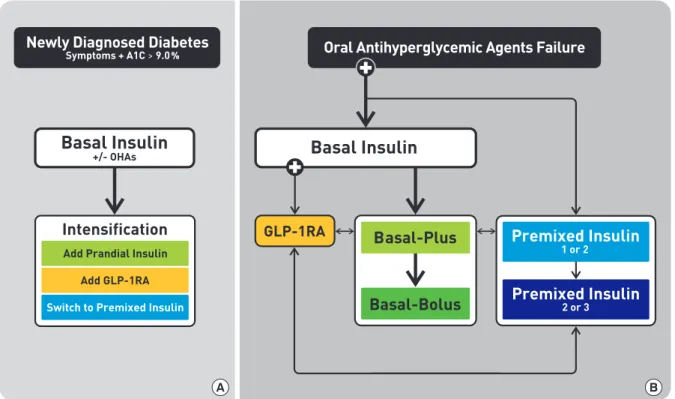
If glycemic control in patients treated with basal insulin alone or in combination with oral antihyperglycemic agents is not within the target range, treatment intensification via addi- tion of a prandial insulin, such as a rapid-acting insulin analog (lispro, aspart, or glulisine), at the main meal (basal-plus) or at
each meal (basal-bolus) is recommended (Table 4, Fig. 2). An insulin intensification strategy might also consist of upward ti- tration of the insulin dose and regimen modification. As pran- dial insulin, rapid-acting insulin analogs are preferred to regu- lar insulin because of their rapid onset, lower frequency of hy- poglycemia, and ease of use (injection before meal) [6-10]. If the HbA1c goal is not reached following the administration of premixed insulin given twice daily, consider switching to a pre- mixed insulin analog (70/30 aspart mix, 75/25 lispro mix, 50/50 lispro mix) given three times daily for intensification.
There are no clinically relevant differences in terms of the effi- cacies of basal-bolus versus premixed insulin regimens for de- creasing HbA1c levels in patients with T2DM [53].
Fig. 2. Treatment algorithm for insulin therapy. (A) Initiation of insulin treatment. If the initial glycosylated hemoglobin (A1C) level is >9.0% and symptomatic hyperglycemia or metabolic decompensation is present, insulin therapy can be initiated with or without oral antihyperglycemic agents (OHAs) in patients with newly diagnosed type 2 diabetes mellitus (T2DM). If the HbA1c target range is not achieved after implementing a basal insulin regimen, then proceed to intensification treatment, for example, addition of a glucagon-like peptide 1 receptor agonist (GLP-1RA) or a prandial insulin or switching to a premixed insulin regi- men. (B) For adult patients with T2DM who have not achieved their glycemic target following adequate treatment using OHAs.
When OHAs fail, proceed to basal insulin either with or without OHAs. The addition of a GLP-1RA or switching to a premixed insulin regimen could be another option depending on the patient’s clinical situation. The width of each black line reflects the strength of the expert consensus recommendations.
A B
The effects of two insulin-based strategies, glargine once dai- ly and premixed insulin once or twice daily, were compared in subjects with T2DM who did not achieve adequate glycemic control with oral agents. More patients using premixed insulin achieved their target, with less frequent symptomatic hypogly- cemia, compared with glargine. Glargine (with or without glu- lisine) and premix strategies result in similar rates of well-con- trolled diabetes without hypoglycemia, in that more patients achieve their target HbA1c levels with premixed insulin, whereas overall symptomatic hypoglycemia occurs less fre- quently with glargine [40,53].
When deciding intensify an insulin regimen, physicians should consider the various advantages and disadvantages of each option, including flexibility, complexity, and the frequen- cy of hypoglycemia. Furthermore, healthcare professionals should provide comprehensive self-care education that in- cludes insulin injection skills, self-monitoring of blood glucose levels, hypoglycemia management, and simple dosage adjust- ment prior to the initiation of insulin therapy [57].
CONFLICTS OF INTEREST
No potential conflict of interest relevant to this article was re- ported.
ACKNOWLEDGMENTS
Financial support for the development of these guidelines was provided by the KDA operating budget; there was no support or involvement from industry sources.
This position statement on antihyperglycemic agent therapy was written by the KDA Committee of Clinical Practice Guide- lines. We gratefully acknowledge the following experts who provided a critical review and discussion of this update: Tae- Nyun Kim, Inje University College of Medicine, Busan; Yong- ho Lee, Severance Hospital, Yonsei University College of Medi- cine, Seoul; Jin-Hwa Kim, Chosun University Hospital, Cho- sun University College of Medicine, Gwangju; Eun-Gyoung Hong, Hallym University Dongtan Sacred Heart Hospital, Hallym University College of Medicine, Hwaseong; Jaetaek Kim, Chung-Ang University College of Medicine, Seoul; Won- Young Lee, Kangbuk Samsung Hospital, Sungkyunkwan Uni- versity School of Medicine, Seoul; Bokrye Song, Seoul St.
Mary’s Hospital, College of Medicine, The Catholic University of Korea, Seoul; Ji Young Kim, Samsung Medical Center, Sung-
kyunkwan University School of Medicine, Seoul; Dong Hee Yang, Inje University Ilsan Paik Hospital, Inje University Col- lege of Medicine, Goyang; Taeyoung Yang, Taeyoung 21 Hos- pital, Gwangju; and Hyeongjin Kim, Kim HJ Medical Clinic, Paju, Korea.
REFERENCES
1. Ko SH, Kim SR, Kim DJ, Oh SJ, Lee HJ, Shim KH, Woo MH, Kim JY, Kim NH, Kim JT, Kim CH, Kim HJ, Jeong IK, Hong EK, Cho JH, Mok JO, Yoon KH; Committee of Clinical Prac- tice Guidelines, Korean Diabetes Association. 2011 Clinical practice guidelines for type 2 diabetes in Korea. Diabetes Metab J 2011;35:431-6.
2. Min KW, Ku BJ, Lee JH, Kim MS, Ahn KJ, Lee MK, Kokubo S, Yoshida S, Cho HJ, Cha BS. Addition of ipragliflozin to metfor- min treatment in Korean patients with type 2 diabetes mellitus:
subgroup analysis of a phase 3 trial. Diabetes Metab J 2017;41:
135-45.
3. Kim JH, Kim SS, Baek HS, Lee IK, Chung DJ, Sohn HS, Bae HY, Kim MK, Park JH, Choi YS, Kim YI, Hahm JR, Lee CW, Jo SR, Park MK, Lee KJ, Kim IJ. Comparison of vildagliptin and pioglitazone in Korean patients with type 2 diabetes inade- quately controlled with metformin. Diabetes Metab J 2016;40:
230-9.
4. Yoon KH, Nishimura R, Lee J, Crowe S, Salsali A, Hach T, Wo- erle HJ. Efficacy and safety of empagliflozin in patients with type 2 diabetes from Asian countries: pooled data from four phase III trials. Diabetes Obes Metab 2016;18:1045-9.
5. Yoon KH, Hardy E, Han J. Exenatide versus insulin lispro add- ed to basal insulin in a subgroup of Korean patients with type 2 diabetes mellitus. Diabetes Metab J 2017;41:69-74.
6. American Diabetes Association. Standards of medical care in diabetes: 2017. Diabetes Care 2017;40(Suppl 1):S1-135.
7. UK Prospective Diabetes Study (UKPDS) Group. Intensive blood-glucose control with sulphonylureas or insulin com- pared with conventional treatment and risk of complications in patients with type 2 diabetes (UKPDS 33). Lancet 1998;352:
837-53.
8. Garber AJ, Abrahamson MJ, Barzilay JI, Blonde L, Bloomgar- den ZT, Bush MA, Dagogo-Jack S, DeFronzo RA, Einhorn D, Fonseca VA, Garber JR, Garvey WT, Grunberger G, Handels- man Y, Hirsch IB, Jellinger PS, McGill JB, Mechanick JI, Rosen- blit PD, Umpierrez GE. Consensus statement by the American association of clinical endocrinologists and American college
of endocrinology on the comprehensive type 2 diabetes man- agement algorithm: 2017 executive summary. Endocr Pract 2017;23:207-38.
9. McGuire H, Longson D, Adler A, Farmer A, Lewin I; Guide- line Development Group. Management of type 2 diabetes in adults: summary of updated NICE guidance. BMJ 2016;353:i1575.
10. Inzucchi SE, Bergenstal RM, Buse JB, Diamant M, Ferrannini E, Nauck M, Peters AL, Tsapas A, Wender R, Matthews DR.
Management of hyperglycemia in type 2 diabetes, 2015: a pa- tient-centered approach: update to a position statement of the American Diabetes Association and the European Association for the Study of Diabetes. Diabetes Care 2015;38:140-49.
11. Kim JM, Hong JW, Noh JH, Kim DJ. Factors associated with participation in diabetes education: the Korea National Health and Nutrition Examination Survey 2007 to 2009. Diabetes Metab J 2016;40:447-53.
12. Yong YM, Shin KM, Lee KM, Cho JY, Ko SH, Yoon MH, Kim TW, Jeong JH, Park YM, Ko SH, Ahn YB. Intensive individual- ized reinforcement education is important for the prevention of hypoglycemia in patients with type 2 diabetes. Diabetes Metab J 2015;39:154-63.
13. Ha KH, Kim DJ. Current status of managing diabetes mellitus in Korea. Korean J Intern Med 2016;31:845-50.
14. Chon S, Gautier JF. An update on the effect of incretin-based therapies on β-cell function and mass. Diabetes Metab J 2016;
40:99-114.
15. Turner RC, Cull CA, Frighi V, Holman RR. Glycemic control with diet, sulfonylurea, metformin, or insulin in patients with type 2 diabetes mellitus: progressive requirement for multiple therapies (UKPDS 49). UK Prospective Diabetes Study (UKP- DS) Group. JAMA 1999;281:2005-12.
16. Sherifali D, Nerenberg K, Pullenayegum E, Cheng JE, Gerstein HC. The effect of oral antidiabetic agents on A1C levels: a sys- tematic review and meta-analysis. Diabetes Care 2010;33:1859- 64.
17. UK Prospective Diabetes Study (UKPDS) Group. Effect of in- tensive blood-glucose control with metformin on complica- tions in overweight patients with type 2 diabetes (UKPDS 34).
Lancet 1998;352:854-65.
18. Maruthur NM, Tseng E, Hutfless S, et al. Diabetes medications as monotherapy or metformin-based combination therapy for type 2 diabetes: a systematic review and meta-analysis. Ann In- tern Med 2016;164:740-51.
19. Palmer SC, Mavridis D, Nicolucci A, Johnson DW, Tonelli M, Craig JC, Maggo J, Gray V, De Berardis G, Ruospo M, Natale P,
Saglimbene V, Badve SV, Cho Y, Nadeau-Fredette AC, Burke M, Faruque L, Lloyd A, Ahmad N, Liu Y, Tiv S, Wiebe N, Strip- poli GF. Comparison of clinical outcomes and adverse events associated with glucose-lowering drugs in patients with type 2 diabetes: a meta-analysis. JAMA 2016;316:313-24.
20. Esposito K, Chiodini P, Maiorino MI, Bellastella G, Capuano A, Giugliano D. Glycaemic durability with dipeptidyl peptidase-4 inhibitors in type 2 diabetes: a systematic review and meta- analysis of long-term randomised controlled trials. BMJ Open 2014;4:e005442.
21. Storgaard H, Gluud LL, Bennett C, Grondahl MF, Christensen MB, Knop FK, Vilsboll T. Benefits and harms of sodium-glu- cose co-transporter 2 inhibitors in patients with type 2 diabe- tes: a systematic review and meta-analysis. PLoS One 2016;11:
e0166125.
22. Yun JS, Ko SH. Risk factors and adverse outcomes of severe hy- poglycemia in type 2 diabetes mellitus. Diabetes Metab J 2016;
40:423-32.
23. Cha SA, Yun JS, Lim TS, Hwang S, Yim EJ, Song KH, Yoo KD, Park YM, Ahn YB, Ko SH. Severe hypoglycemia and cardio- vascular or all-cause mortality in patients with type 2 diabetes.
Diabetes Metab J 2016;40:202-10.
24. Yoon KH, Shin JA, Kwon HS, Lee SH, Min KW, Ahn YB, Yoo SJ, Ahn KJ, Park SW, Lee KW, Sung YA, Park TS, Kim MS, Kim YK, Nam MS, Kim HS, Park IeB, Park JS, Woo JT, Son HY.
Comparison of the efficacy of glimepiride, metformin, and rosiglitazone monotherapy in korean drug-naïve type 2 diabet- ic patients: the practical evidence of antidiabetic monotherapy study. Diabetes Metab J 2011;35:26-33.
25. Foroutan N, Muratov S, Levine M. Safety and efficacy of dipep- tidyl peptidase-4 inhibitors vs sulfonylurea in metformin- based combination therapy for type 2 diabetes mellitus: sys- tematic review and meta-analysis. Clin Invest Med 2016;39:
E48-62.
26. Zhong X, Lai D, Ye Y, Yang X, Yu B, Huang Y. Efficacy and safe- ty of empagliflozin as add-on to metformin for type 2 diabetes:
a systematic review and meta-analysis. Eur J Clin Pharmacol 2016;72:655-63.
27. Mishriky BM, Cummings DM, Tanenberg RJ. The efficacy and safety of DPP4 inhibitors compared to sulfonylureas as add-on therapy to metformin in patients with type 2 diabetes: a sys- tematic review and meta-analysis. Diabetes Res Clin Pract 2015;109:378-88.
28. Zhou JB, Bai L, Wang Y, Yang JK. The benefits and risks of DPP4-inhibitors vs. sulfonylureas for patients with type 2 dia-
betes: accumulated evidence from randomised controlled trial.
Int J Clin Pract 2016;70:132-41.
29. Del Prato S, Nauck M, Duran-Garcia S, Maffei L, Rohwedder K, Theuerkauf A, Parikh S. Long-term glycaemic response and tolerability of dapagliflozin versus a sulphonylurea as add-on therapy to metformin in patients with type 2 diabetes: 4-year data. Diabetes Obes Metab 2015;17:581-90.
30. Kim YG, Hahn S, Oh TJ, Kwak SH, Park KS, Cho YM. Differ- ences in the glucose-lowering efficacy of dipeptidyl peptidase-4 inhibitors between Asians and non-Asians: a systematic review and meta-analysis. Diabetologia 2013;56:696-708.
31. Mearns ES, Saulsberry WJ, White CM, Kohn CG, Lemieux S, Sihabout A, Salamucha I, Coleman CI. Efficacy and safety of antihyperglycaemic drug regimens added to metformin and sulphonylurea therapy in type 2 diabetes: a network meta- analysis. Diabet Med 2015;32:1530-40.
32. Taylor SI, Blau JE, Rother KI. SGLT2 inhibitors may predispose to ketoacidosis. J Clin Endocrinol Metab 2015;100:2849-52.
33. Oh S, Chon S, Ahn KJ, Jeong IK, Kim BJ, Kang JG. The role of glucagon-like peptide-1 receptor agonists in type 2 diabetes:
understanding how data can inform clinical practice in Korea.
Diabetes Metab J 2015;39:177-87.
34. Kim MK, Suk JH, Kwon MJ, Chung HS, Yoon CS, Jun HJ, Ko JH, Kim TK, Lee SH, Oh MK, Rhee BD, Park JH. Nateglinide and acarbose for postprandial glucose control after optimizing fasting glucose with insulin glargine in patients with type 2 dia- betes. Diabetes Res Clin Pract 2011;92:322-8.
35. Olansky L, Reasner C, Seck TL, Williams-Herman DE, Chen M, Terranella L, Mehta A, Kaufman KD, Goldstein BJ. A treatment strategy implementing combination therapy with sitagliptin and metformin results in superior glycaemic control versus metformin monotherapy due to a low rate of addition of anti- hyperglycaemic agents. Diabetes Obes Metab 2011;13:841-9.
36. Phung OJ, Sobieraj DM, Engel SS, Rajpathak SN. Early combi- nation therapy for the treatment of type 2 diabetes mellitus:
systematic review and meta-analysis. Diabetes Obes Metab 2014;16:410-7.
37. Varvaki Rados D, Catani Pinto L, Reck Remonti L, Bauermann Leitão C, Gross JL. The association between sulfonylurea use and all-cause and cardiovascular mortality: a meta-analysis with trial sequential analysis of randomized clinical trials. PLoS Med 2016;13:e1001992.
38. Marso SP, Daniels GH, Brown-Frandsen K, Kristensen P, Mann JF, Nauck MA, Nissen SE, Pocock S, Poulter NR, Ravn LS, Steinberg WM, Stockner M, Zinman B, Bergenstal RM, Buse
JB; LEADER Steering Committee; LEADER Trial Investiga- tors. Liraglutide and cardiovascular outcomes in type 2 diabe- tes. N Engl J Med 2016;375:311-22.
39. Zinman B, Wanner C, Lachin JM, Fitchett D, Bluhmki E, Han- tel S, Mattheus M, Devins T, Johansen OE, Woerle HJ, Broedl UC, Inzucchi SE; EMPA-REG OUTCOME Investigators. Em- pagliflozin, cardiovascular outcomes, and mortality in type 2 diabetes. N Engl J Med 2015;373:2117-28.
40. Hwang YC, Kang JG, Ahn KJ, Cha BS, Ihm SH, Lee S, Kim M, Lee BW. The glycemic efficacies of insulin analogue regimens according to baseline glycemic status in Korean patients with type 2 diabetes: sub-analysis from the A(1)chieve((R)) study.
Int J Clin Pract 2014;68:1338-44.
41. Malmberg K, Norhammar A, Wedel H, Ryden L. Glycometa- bolic state at admission: important risk marker of mortality in conventionally treated patients with diabetes mellitus and acute myocardial infarction: long-term results from the Diabe- tes and Insulin-Glucose Infusion in Acute Myocardial Infarc- tion (DIGAMI) study. Circulation 1999;99:2626-32.
42. Griesdale DE, de Souza RJ, van Dam RM, Heyland DK, Cook DJ, Malhotra A, Dhaliwal R, Henderson WR, Chittock DR, Finfer S, Talmor D. Intensive insulin therapy and mortality among critically ill patients: a meta-analysis including NICE- SUGAR study data. CMAJ 2009;180:821-7.
43. Fonseca V, Gill J, Zhou R, Leahy J. An analysis of early insulin glargine added to metformin with or without sulfonylurea: im- pact on glycaemic control and hypoglycaemia. Diabetes Obes Metab 2011;13:814-22.
44. Park CY, Kang JG, Chon S, Noh J, Oh SJ, Lee CB, Park SW.
Comparison between the therapeutic effect of metformin, glimepiride and their combination as an add-on treatment to insulin glargine in uncontrolled patients with type 2 diabetes.
PLoS One 2014;9:e87799.
45. Zhong X, Zhang T, Liu Y, Wei X, Zhang X, Qin Y, Jin Z, Chen Q, Ma X, Wang R, He J. Effects of three injectable antidiabetic agents on glycaemic control, weight change and drop-out in type 2 diabetes suboptimally controlled with metformin and/
or a sulfonylurea: a network meta-analysis. Diabetes Res Clin Pract 2015;109:451-60.
46. Horvath K, Jeitler K, Berghold A, Ebrahim SH, Gratzer TW, Plank J, Kaiser T, Pieber TR, Siebenhofer A. Long-acting insu- lin analogues versus NPH insulin (human isophane insulin) for type 2 diabetes mellitus. Cochrane Database Syst Rev 2007;
(2):CD005613.
47. Russell-Jones D, Gall MA, Niemeyer M, Diamant M, Del Prato
S. Insulin degludec results in lower rates of nocturnal hypogly- caemia and fasting plasma glucose vs. insulin glargine: a meta- analysis of seven clinical trials. Nutr Metab Cardiovasc Dis 2015;25:898-905.
48. Marso SP, McGuire DK, Zinman B, Poulter NR, Emerson SS, Pieber TR, Pratley RE, Haahr PM, Lange M, Brown-Frandsen K, Moses A, Skibsted S, Kvist K, Buse JB; DEVOTE Study Group. Efficacy and safety of degludec versus glargine in type 2 diabetes. N Engl J Med 2017;377:723-32.
49. Yki-Jarvinen H, Rosenstock J, Duran-Garcia S, Pinnetti S, Bhattacharya S, Thiemann S, Patel S, Woerle HJ. Effects of add- ing linagliptin to basal insulin regimen for inadequately con- trolled type 2 diabetes: a ≥52-week randomized, double-blind study. Diabetes Care 2013;36:3875-81.
50. Kothny W, Foley J, Kozlovski P, Shao Q, Gallwitz B, Lukashev- ich V. Improved glycaemic control with vildagliptin added to insulin, with or without metformin, in patients with type 2 dia- betes mellitus. Diabetes Obes Metab 2013;15:252-7.
51. Hong ES, Khang AR, Yoon JW, Kang SM, Choi SH, Park KS, Jang HC, Shin H, Walford GA, Lim S. Comparison between si- tagliptin as add-on therapy to insulin and insulin dose-increase therapy in uncontrolled Korean type 2 diabetes: CSI study. Dia- betes Obes Metab 2012;14:795-802.
52. Min SH, Yoon JH, Hahn S, Cho YM. Comparison between SGLT2 inhibitors and DPP4 inhibitors added to insulin thera- py in type 2 diabetes: a systematic review with indirect com- parison meta-analysis. Diabetes Metab Res Rev 2017;33:e2818.
53. Giugliano D, Chiodini P, Maiorino MI, Bellastella G, Esposito K. Intensification of insulin therapy with basal-bolus or pre- mixed insulin regimens in type 2 diabetes: a systematic review and meta-analysis of randomized controlled trials. Endocrine 2016;51:417-28.
54. Diamant M, Nauck MA, Shaginian R, Malone JK, Cleall S, Re- aney M, de Vries D, Hoogwerf BJ, MacConell L, Wolffenbuttel BH; 4B Study Group. Glucagon-like peptide 1 receptor agonist or bolus insulin with optimized basal insulin in type 2 diabetes.
Diabetes Care 2014;37:2763-73.
55. Eng C, Kramer CK, Zinman B, Retnakaran R. Glucagon-like peptide-1 receptor agonist and basal insulin combination treat- ment for the management of type 2 diabetes: a systematic re- view and meta-analysis. Lancet 2014;384:2228-34.
56. Mathieu C, Rodbard HW, Cariou B, Handelsman Y, Philis- Tsimikas A, Ocampo Francisco AM, Rana A, Zinman B; BE- GIN: VICTOZA ADD-ON (NN1250-3948) study group. A comparison of adding liraglutide versus a single daily dose of insulin aspart to insulin degludec in subjects with type 2 diabe- tes (BEGIN: VICTOZA ADD-ON). Diabetes Obes Metab 2014;16:636-44.
57. Choi SH, Oh TJ, Jang HC. Comparison of antidiabetic regi- mens in patients with type 2 diabetes uncontrolled by combi- nation therapy of sulfonylurea and metformin: results of the MOHAS Disease Registry in Korea. Diabetes Metab J 2017;41:
170-8.