Korean Journal of Microbiology (2019) Vol. 55, No. 1, pp. 67-68 pISSN 0440-2413
DOI https://doi.org/10.7845/kjm.2019.8110 eISSN 2383-9902
Copyright ⓒ 2019, The Microbiological Society of Korea
Draft genome sequence of Streptococcus constellatus KCOM 1039 isolated from human postoperative maxillary cyst lesion
Soon-Nang Park
1†, Yun Kyong Lim
1†, Seong-Chul Hong
2, Ja Young Shin
3, Hanseong Roh
3, and Joong-Ki Kook
1*
1
Korean Collection for Oral Microbiology and Department of Oral Biochemistry, School of Dentistry, Chosun University, Gwangju 61452, Republic of Korea
2
School of Dentistry, Chosun University, Gwangju 61452, Republic of Korea
3
Macrogen Inc., Seoul 08511, Republic of Korea
사람 수술후 상악낭종 병소에서 분리된 Streptococcus constellatus KCOM 1039의 유전체 염기서열 완전 해독
박순낭
1†・ 임윤경
1†・ 홍성철
2・ 신자영
3・ 노한성
3・ 국중기
1*
1
조선대학교 치과대학 구강생화학교실 및 한국구강미생물자원은행,
2조선대학교 치과대학 치의학과,
3마크로젠
(Received December 24, 2018; Revised December 30, 2018; Accepted January 16, 2019)
†These authors contributed equally to this work.
*For correspondence.
E-mail: [email protected];Tel.: +82-62-230-6877; Fax: +82-62-236-2734
Streptococcus constellatus is Gram-stain-positive, facultative anaerobic, and non-spore forming coccus. It is a member of normal flora of human oral cavity. S. constellatus KCOM 1039 was isolated from human postoperative maxillary cyst lesion.
In this report, we present the draft genome sequence of S.
constellatus KCOM 1039.
Keywords: Streptococcus constellatus, human, postoperative maxillary cyst
Streptococcus constellatus is Gram-stain-positive, facultative anaerobic, and non-spore forming coccus which are round to slightly oval and occur in pairs and short chain (Whiley et al., 1999). It showed beta-hemolytic activity and produced a streptolysin S-like protein (Tabata et al., 2014). The bacterium is primarily inhabits the human oral cavity and is considered to be an opportunistic human pathogen (Tabata et al., 2014). S.
constellatus KCOM 1039 (= ChDC B280) was isolated from
human periodontitis lesion. In this report, we presented the draft genome sequence of S. constellatus KCOM 1039.
S. constellatus KCOM 1039 was grown in brain heart infusion (BHI, Difco Laboratories) medium in an anaerobic chamber (Model Bactron I) maintained using a gas mixture of 10% H
2, 5% CO
2, and 85% N
2. Genomic DNA of S. constellatus KCOM 1039 was prepared as previously described (Cho et al., 2015).
Genomic DNA of S. constellatus KCOM 1039 was sequenced using the Illumina Hiseq 2000 platform by Macrogen Inc.
Three libraries of 350 bp paired-end, 5 kb mate-pair, and 8 kb mate-pair were sequenced which reached coverage of 657.0 ×, 646.2 ×, and 955.7 ×, respectively. The de novo assembly was performed by SPAdes (http://bioinf.spbau.ru/spades) (Bankevich et al., 2012). All gaps among the scaffolds were filled by GapCloser (http://soap.genomics.org.cn/soapdenovo.html) (Luo et al., 2012). Error correction was performed by Pilon (https://
github.com/broadinstitute/pilon/wiki) (Walker et al., 2014).
Genome annotation was conducted by the NCBI Prokaryotic Genome Annotation Pipeline (PGAP) (https://www.ncbi.nlm.
nih.gov/genome/annotation_prok/) (Tatusova et al., 2016).
The draft genome of S. constellatus KCOM 1039 was
68
∙Park et al.미생물학회지 제55권 제1호
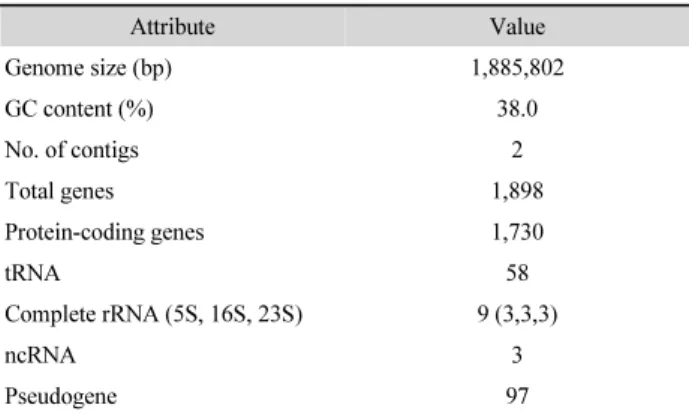
Table 1. Genome features of Streptococcus constellatus KCOM 1039
Attribute Value
Genome size (bp) 1,885,802
GC content (%) 38.0
No. of contigs 2
Total genes 1,898
Protein-coding genes 1,730
tRNA 58
Complete rRNA (5S, 16S, 23S) 9 (3,3,3)
ncRNA 3
Pseudogene 97
composed of 2 contigs; 1,883,587 bp and 2,215 bp in length.
The average G+C content of the genome was 38.0%. A total of 1,730 protein-coding sequences, 9 complete rRNA operons (3 5S rRNAs, 3 16S rRNAs, and 3 23 rRNAs), 58 tRNAs, and 3 ncRNAs were identified (Table 1).
In the genome, genes involved in proteinase were identified;
putative protease YdcP/YdeA, protease HtpX, ATP-dependent zinc metalloprotease FtsH, putative zinc metalloprotease, Lon protease, rhomboid protease GluP, serine protease Do-like HtrA, and putative zinc protease AlbF. It also contained antibiotic- resistance-related genes; multiple antibiotic resistance protein MarA/MarR, daunorubicin/doxorubicin resistance ATP-binding protein DrrA, putative multidrug resistance ABC transporter ATP-binding/permease protein YheI/YheH, multidrug resistance protein NorM, and tetracycline resistance protein TetM from transposon TnFO1. It also contained biofilm formation-related genes; toxin-antitoxin biofilm protein TabA, putative glycosyl- transferase EpsH/EpsJ/CsbB, biofilm regulatory protein A, and D-inositol-3-phosphate glycosyltransferase. It also contained type II secretion system protein F, protein translocase subunit SecA/SecY, and ESAT-6 secretion accessory factor EsaA. The genome also contained the oxidative stress-response genes;
glutathione reductase and thioredoxin reductase. Hemolysin A and diphtheria toxin repressor were also found in the genome sequence.
The S. constellatus KCOM 1039 strain was deposited into the Korean Collection for Oral Microbiology.
Nucleotide sequence accession number
This whole genome shotgun project has been deposited at DDBJ/ENA/GenBank under the accession QWKV00000000. The version described in this paper is version QWKV00000000.
적 요
Streptococcus constellatus는 그람 염색에 양성을 띄며, 조건 혐기성이면서 아포를 생성하지 않는 구균이다. S. constellatus 는 사람 구강의 정상 세균 총에 속한다. 수술후 상악낭종 병소 에서 S. constellatus KCOM 1039 균주가 분리되었다. 여기에 서 S. constellatus KCOM 1039 균주의 유전체 염기서열을 결 정하여 보고한다.
Acknowledgements
This research was supported by the National Research Foundation of Korea (NRF) grant funded by the Korea government (MSIT) (No. 2018R1A2B5002239).
References
Bankevich A, Nurk S, Antipov D, Gurevich AA, Dvorkin M, Kulikov AS, Lesin VM, Nikolenko SI, Pham S, Prjibelski AD, et al. 2012.
SPAdes: a new genome assembly algorithm and its applications to single-cell sequencing. J. Comput. Biol. 19, 455–477.
Cho E, Park SN, Lim YK, Shin Y, Paek J, Hwang CH, Chang YH, and Kook JK. 2015. Fusobacterium hwasookii sp. nov., isolated from a human periodontitis lesion. Curr. Microbiol. 70, 169–175.
Luo R, Liu B, Xie Y, Li Z, Huang W, Yuan J, He G, Chen Y, Pan Q, Liu Y, et al. 2012. SOAPdenovo2: an empirically improved memory- efficient short-read de novo assembler. Gigascience 1, 18.
Erratum in: Gigascience 2015. 4, 30.
Tabata A, Sato Y, Maya K, Nakano K, Kikuchi K, Whiley RA, Ohkura K, Tomoyasu T, and Nagamune H. 2014. A streptolysin S homologue is essential for β-haemolytic Streptococcus constellatus subsp. constellatus cytotoxicity. Microbiology 160, 980–991.
Tatusova T, DiCuccio M, Badretdin A, Chetvernin V, Nawrocki EP, Zaslavsky L, Lomsadze A, Pruitt KD, Borodovsky M, and Ostell J. 2016. NCBI prokaryotic genome annotation pipeline. Nucleic Acids Res. 44, 6614–6624.
Walker BJ, Abeel T, Shea T, Priest M, Abouelliel A, Sakthikumar S, Cuomo CA, Zeng Q, Wortman J, Young SK, et al. 2014. Pilon:
an integrated tool for comprehensive microbial variant detection and genome assembly improvement. PLoS One 9, e112963.
Whiley RA, Hall LM, Hardie JM, and Beighton D. 1999. A study of small-colony, beta-haemolytic, Lancefield group C streptococci within the anginosus group: description of Streptococcus constellatus subsp. pharyngis subsp. nov., associated with the human throat and pharyngitis. Int. J. Syst. Bacteriol. 49, 1443–1449.