Risk Factors for Acute Hepatitis A Infection in Korea in 2007 and 2009: A Case-Control Study
This study aimed to identify the risk factors associated with acute hepatitis A virus (HAV) infection in the Korean population. Participants were recruited from five referral hospitals across the country in 2007 and from 11 hospitals in 2009. Patients with positive anti-HAV IgM antibody tests became the case group, while patients treated for non-contagious diseases at the same hospitals were recruited as controls. A total of 222 and 548 case- control pairs were studied in the 2007 and 2009 surveys, respectively. Data from the surveys were analyzed jointly. In a multivariate analysis, sharing the household with HAV- infected family members (OR, 6.32; 95% CI, 1.4-29.6), contact with other HAV-infected individuals (OR, 4.73; 95% CI, 2.4-9.4), overseas travel in 2007 (OR, 19.93; 95% CI, 2.3- 174.4), consumption of raw shellfish (OR, 2.51; 95% CI, 1.8-3.5), drinking bottled water (OR, 1.64; 95% CI, 1.3-8.4), and occupation that involve handling food (OR, 3.30; 95%
CI, 1.3-8.4) increased the risk of HAV infection. Avoiding contact with HAV-infected individuals and avoiding raw foods eating could help minimize the risk of hepatitis A infection. Immunization must be beneficial to individuals who handle food ingredients occupationally or travel overseas to HAV-endemic areas.
Key Words: Case-Control Studies; Hepatitis A; Korea; Risk Factors Joo Youn Seo,1 Bo Youl Choi,1 Moran Ki,2
Hye Lim Jang,1 Hee Suk Park,1 Hyun Jin Son,3 Si Hyun Bae,4 Jin Han Kang,5 Dae Won Jun,6 Jin-Woo Lee,7 Young Jin Hong,8 Young Seok Kim,9 Chang-Hwi Kim,10 U Im Chang,4 Jong-Hyun Kim,11 Hyeon Woong Yang,12 Hong Soo Kim,13 Kyeong Bae Park,14 Jae Seok Hwang,15 Jeong Heo,16 In Hee Kim,17
Jung Soo Kim,18 and Gab Jin Cheon19
1Department of Preventive Medicine/Institute of Community Health, Hanyang University, College of Medicine, Seoul; 2Department of Preventive Medicine, Eulji University, School of Medicine, Daejeon; 3Division of Public Health Crisis Response, Korea Centers for Disease Control and Prevention, Cheongwon; Departments of 4Internal Medicine,
5Pediatrics, The Catholic University of Korea College of Medicine, Seoul; 6Department of Internal Medicine, Hanyang University College of Medicine, Seoul; Departments of 7Internal Medicine,
8Pediatrics, Inha University School of Medicine, Incheon; Departments of 9Internal Medicine,
10Pediatrics, Soonchunhyang University Bucheon Hospital, Soonchunhyang University College of Medicine, Bucheon; 11Department of Pediatrics, St.
Vincent’s Hospital, College of Medicine, The Catholic University of Korea, Suwon; 12Angel Internal Medicine Clinic, Daejeon; Departments of 13Internal Medicine, 14Pediatrics, Soonchunhyang University College of Medicine, Cheonan; 15Department of Internal Medicine, Keimyung University School of Medicine, Daegu; 16Department of Internal Medicine, Pusan National University School of Medicine, Busan; Departments of 17Internal Medicine, 18Pediatrics, Chonbuk National Unversity Medical School and Hospital, Jeonju; 19Department of Internal Medicine, Gangneung Asan Hospital, University of Ulsan College of Medicine, Gangneung, Korea
Received: 31 January 2013 Accepted: 9 April 2013 Address for Correspondence:
Bo Youl Choi, MD
Department of Preventive Medicine/Institute of Community Health, Hanyang University, College of Medicine, 222 Wangsimni-ro, Seongdong-gu, Seoul 133-791, Korea Tel: +82.2-2220-0662, Fax: +82.2-2293-0660 E-mail: [email protected]
This study was funded by the Korea Centers for Disease Control and Prevention, Ministry of Health and Welfare, Republic of Korea, grant numbers 2007E0001200 and 2008E0042600.
http://dx.doi.org/10.3346/jkms.2013.28.6.908 • J Korean Med Sci 2013; 28: 908-914 Gastroenterology & Hepatology
INTRODUCTION
Hepatitis A virus (HAV) is the main cause of acute viral hepatitis in Korea, and typically affects adults in their 20s and 30s (1). HAV infection may be transmitted via the fecal-oral route and intake of contaminated water or food. Non-oral routes of transmission include male homosexual sex, drug use, and blood transfusions (2, 3). The incubation period of hepatitis A is 2-6 weeks. Chil- dren with hepatitis A usually do not have any clinical symp- toms, while adults experience nausea, weight loss, and jaun- dice. In some cases, hepatitis A may progress to acute hepatic failure or fulminant hepatitis (1, 4, 5).
In the past, during a period of economic underdevelopment in Korea, children frequently developed HAV immunity through asymptomatic infections (6). However, fast economic growth in the past decades and the subsequent improvement in sanitary conditions have limited HAV transmission among children and increased the non-immune states in adults (7). As a result, since 1997 hepatitis A vaccination in Korea is now recommended for those who travel to areas of high endemicity, laboratory staff handling HAV pathogens, patients with blood clotting disor- ders, homosexuals, and adults in their 20s or 30s (8). Despite the recommendation, the immunization rate is very low among young adults (9). In a local study, the prevalence of seropositive individuals was just 6.2% in the 20-29 age group (10). Hepatitis A cases in Korea have been increasing since 1998, as shown in the number of patients who receive liver transplants or death due to the disease (11).
Currently, the risk factors for hepatitis A include travel to high- endemic areas, living with school-age children, who may be an asymptomatic reservoir of infection, consumption of raw shell- fish, drinking unpurified water, male homosexuality, not wash- ing hands after defecation or before eating, and contact with HAV-infected individuals (3, 12-15). According to a local study in Korea, the risk factors included contact with HAV-infected individuals, living with a child under five years old, consump- tion of raw vegetables, eating out, and drinking tap water (16).
The prevalence and risk factors for hepatitis A are also related to the socioeconomic and sanitary conditions, which vary by country (13, 17).
Because the hepatitis A incidence rate in Korea has risen shar- ply from 24.1 per 100,000 population in 2007 to 61.7 in 2008 (18), it is thought that the risk factors for HAV infection have changed in parallel with the increase. A large study was recently con- ducted to estimate the seroprevalence of HAV (19). However, the risk factors for hepatitis A infection have not been investi- gated in national scale in the Korean population. Therefore, we conducted two case-control studies in hepatitis A patients of tertiary hospitals across the country in 2007 and 2009, in order to identify the risk factors associated with HAV infection in Ko- rea.
MATERIALS AND METHODS Study design and subjects
In 2007, patients with hepatitis A were recruited for a survey at five tertiary hospitals in the Chungnam (one site), Gyeonggi (three sites), and Jeonbuk (one site) provinces. Patients with non-infectious diseases at the same sites were recruited as case- controls. Between October and December 2007 the participants were interviewed over the telephone. In 2009, in- and outpa- tients with HAV and their respective controls were recruited at 11 major tertiary hospitals in the Busan (one site), Daegu (one site), Daejeon (one site), Gyeonggi (three sites), Jeonbuk (one site), and Chungnam (one site) provinces. Face-to-face inter- views were conducted between April and September 2009.
In both studies, hepatitis A infection was diagnosed when patients showed clear clinical symptoms such as fatigue, stom- ach-ache, loss of appetite, and nausea. The controls were mat- ched to cases on the basis of gender, age ( ± 2 yr old), and hos- pitalization or visit dates ( ± 15 days). Patients with a history of hepatitis A infection or vaccination were excluded from the con- trol groups.
A total of 234 and 556 case-control pairs were surveyed in the 2007 and 2009 studies, respectively. Whenever an outbreak was suspected, only the initial case was included in the study. Con- sequently, 12 and 8 patients were excluded from the 2007 and 2009 surveys, respectively. Survey data from 222 case-control pairs in the 2007 study, and from 548 pairs in the 2009 study, were used in the analysis.
Survey variables
In the 2007 survey, the variables of interest included gender, age, occupation, and exposure to HAV transmission through contact with family members living in the same household and non-family members, shared communal facilities such as or- phanages and nursing homes, sexual behaviors, everyday con- tact, medical contact, use of syringes, overseas travel, intake of raw shellfish (including oysters, mussels, and clams) or other raw foods, and types of water used for drinking 2-6 weeks be- fore diagnosis. It was adequate to analyze separately of seafood and meat, however they were not separately investigated in the initial questionnaire. In addition to the 2007 variables, the 2009 survey included educational level, household income, commu- nal living, living with children under 12 yr old, and hygiene-re- lated behaviors such as hand washing habit (after defecation, after going out, or before eating), use of personal towels, and sharing glasses when drinking alcohol.
Data analysis
The data from both surveys were combined for analysis. De- scriptive statistics were used to show the distribution of gender, age, and occupational activities. The Cochran-Mantel-Haenzel
test adjusted for study year was used to determine any signifi- cant associations between the cases and categorical variables, and McNemar’s test was used to estimate percentages and P values. To identify the risk factors for hepatitis A infection, con- ditional logistic regression analyses were performed. Variables that were significant in the univariate analysis were used in a multivariate model. Results are expressed as odds ratios (OR) with 95% confidence intervals (CI). The threshold for signifi- cance was set at P < 0.05. All statistical analyses were performed using SAS 9.2 software (SAS Inc., Cary, NC, USA).
Ethics statement
These studies were reviewed and approved by the institutional review boards of Hanyang University and Eulji University (2007- 266 and 09-09). Written informed consent was obtained from all participants in the study.
RESULTS
Sociodemographic characteristics of the combined study population
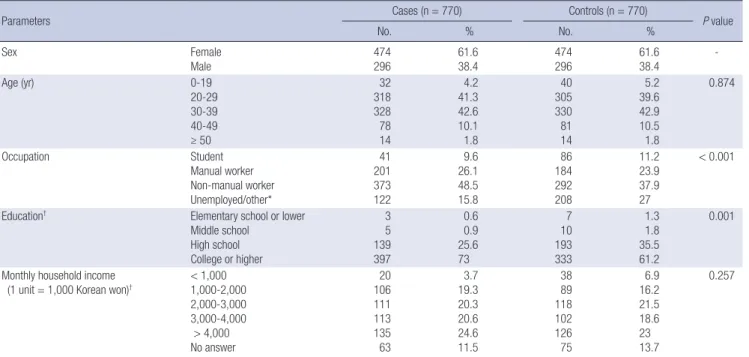
Table 1 presents the sociodemographic characteristics of the subjects of both surveys. As intended in the study design, there were no significant differences between cases and controls with respect to age or gender. Subjects in their 30s were the largest group among the cases (42.6%). Although occupation and edu- cational levels were significantly different between the groups, household income distribution was similar for cases and con- trols (P = 0.257).
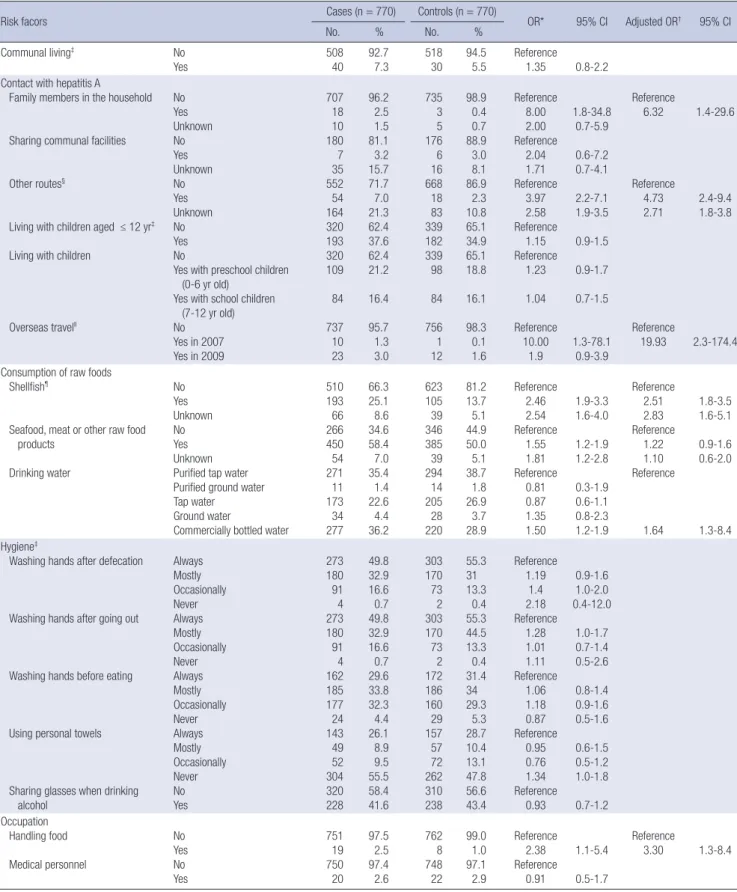
Risk factors associated with acute hepatitis A infection Table 2 shows the risk factors associated with acute hepatitis A.
In univariate analysis, factors associated with HAV infection in- cluded contact with HAV-infected family members in the same household (OR, 8.00; 95% CI, 1.8-34.8), contact with other HAV- infected individuals (OR, 3.97; 95% CI, 2.2-7.1), overseas travel in 2007 (OR, 10.00; 95% CI, 1.3-78.1), consumption of raw shell- fish (OR, 2.46; 95% CI, 1.9-3.3), consumption of raw fish (other than shellfish), meat, and other raw food products (OR, 1.55;
95% CI, 1.2-1.9), drinking commercially bottled water (e.g. min- eral water) instead of purified tap water (OR, 1.50; 95% CI, 1.2- 1.9), and occupation that involves handling food (OR, 2.38; 95%
CI, 1.1-5.4). Similarly, multivariate analysis showed that contact with HAV-infected family members in the household (adjusted OR, 6.32; 95% CI, 1.4-29.6), contact with other HAV-infected in- dividuals (adjusted OR, 4.73; 95% CI, 2.4-9.4), overseas travel in 2007 (adjusted OR, 19.93; 95% CI, 2.3-174.4), consumption of raw shellfish (adjusted OR, 2.51; 95% CI, 1.8-3.5), drinking com- mercially bottled water (e.g. mineral water) instead of purified tap water (adjusted OR, 1.64; 95% CI, 1.3-8.4) and occupation that involves handling food (adjusted OR, 3.30; 95% CI, 1.3-8.4) were independently associated with HAV infection.
Transmission of HAV via routes other than through family members was also found to be significant. 54 subjects reported contact with HAV through other routes: 43 (80%) through regu- lar everyday contact, 1 (2%) through sexual contact, 3 (6%) thro- ugh medical contact as health care worker and 4 (7%) through the use of common syringes. The remaining three respondents reported routes not covered by the surveys. Factors that did not show any significant association with HAV infection were med- Table 1. Sociodemographic characteristics of the combined study populations in the two surveys (2007 and 2009)
Parameters Cases (n = 770) Controls (n = 770)
P value
No. % No. %
Sex Female
Male
474 296
61.6 38.4
474 296
61.6 38.4
-
Age (yr) 0-19
20-29 30-39 40-49
≥ 50
32 318 328 78 14
4.2 41.3 42.6 10.1 1.8
40 305 330 81 14
5.2 39.6 42.9 10.5 1.8
0.874
Occupation Student
Manual worker Non-manual worker Unemployed/other*
41 201 373 122
9.6 26.1 48.5 15.8
86 184 292 208
11.2 23.9 37.9 27
< 0.001
Education† Elementary school or lower
Middle school High school College or higher
3 5 139 397
0.6 0.9 25.6 73
7 10 193 333
1.3 1.8 35.5 61.2
0.001
Monthly household income
(1 unit = 1,000 Korean won)† < 1,000 1,000-2,000 2,000-3,000 3,000-4,000
> 4,000 No answer
20 106 111 113 135 63
3.7 19.3 20.3 20.6 24.6 11.5
38 89 118 102 126 75
6.9 16.2 21.5 18.6 23 13.7
0.257
*Including housewives; †Variables applicable only to the 2009 survey (n = 548 case-control pairs).
Table 2. Risk factors associated with acute hepatitis A infection
Risk facors Cases (n = 770) Controls (n = 770)
OR* 95% CI Adjusted OR† 95% CI
No. % No. %
Communal living‡ No
Yes
508 40
92.7 7.3
518 30
94.5 5.5
Reference
1.35 0.8-2.2 Contact with hepatitis A
Family members in the household
Sharing communal facilities
Other routes§
Living with children aged ≤ 12 yr‡ Living with children
Overseas travelII
No Yes Unknown No Yes Unknown No Yes Unknown No Yes No
Yes with preschool children (0-6 yr old)
Yes with school children (7-12 yr old) No Yes in 2007 Yes in 2009
707 18 10 180 7 35 552 54 164 320 193 320 109 84 737 10 23
96.2 2.5 1.5 81.1 3.2 15.7 71.7
7.0 21.3 62.4 37.6 62.4 21.2 16.4 95.7 1.3 3.0
735 3 5 176 6 16 668 18 83 339 182 339 98 84 756 1 12
98.9 0.4 0.7 88.9 3.0 8.1 86.9 2.3 10.8 65.1 34.9 65.1 18.8 16.1 98.3 0.1 1.6
Reference 8.00 2.00 Reference
2.04 1.71 Reference
3.97 2.58 Reference
1.15 Reference
1.23 1.04 Reference
10.00 1.9
1.8-34.8 0.7-5.9 0.6-7.2 0.7-4.1 2.2-7.1 1.9-3.5 0.9-1.5 0.9-1.7 0.7-1.5
1.3-78.1 0.9-3.9
Reference 6.32
Reference 4.73 2.71
Reference 19.93
1.4-29.6
2.4-9.4 1.8-3.8
2.3-174.4 Consumption of raw foods
Shellfish¶
Seafood, meat or other raw food products
Drinking water
No Yes Unknown No Yes Unknown Purified tap water Purified ground water Tap water Ground water
Commercially bottled water
510 193 66 266 450 54 271 11 173 34 277
66.3 25.1 8.6 34.6 58.4 7.0 35.4
1.4 22.6 4.4 36.2
623 105 39 346 385 39 294 14 205 28 220
81.2 13.7 5.1 44.9 50.0
5.1 38.7 1.8 26.9 3.7 28.9
Reference 2.46 2.54 Reference
1.55 1.81 Reference
0.81 0.87 1.35 1.50
1.9-3.3 1.6-4.0 1.2-1.9 1.2-2.8 0.3-1.9 0.6-1.1 0.8-2.3 1.2-1.9
Reference 2.51 2.83 Reference
1.22 1.10 Reference
1.64
1.8-3.5 1.6-5.1 0.9-1.6 0.6-2.0
1.3-8.4 Hygiene‡
Washing hands after defecation
Washing hands after going out
Washing hands before eating
Using personal towels
Sharing glasses when drinking alcohol
Always Mostly Occasionally Never Always Mostly Occasionally Never Always Mostly Occasionally Never Always Mostly Occasionally Never No Yes
273 180 91 4 273 180 91 4 162 185 177 24 143 49 52 304 320 228
49.8 32.9 16.6 0.7 49.8 32.9 16.6 0.7 29.6 33.8 32.3 4.4 26.1 8.9 9.5 55.5 58.4 41.6
303 170 73 2 303 170 73 2 172 186 160 29 157 57 72 262 310 238
55.3 31 13.3
0.4 55.3 44.5 13.3 0.4 31.4 34 29.3
5.3 28.7 10.4 13.1 47.8 56.6 43.4
Reference 1.19
1.4 2.18 Reference
1.28 1.01 1.11 Reference
1.06 1.18 0.87 Reference
0.95 0.76 1.34 Reference
0.93
0.9-1.6 1.0-2.0 0.4-12.0
1.0-1.7 0.7-1.4 0.5-2.6 0.8-1.4 0.9-1.6 0.5-1.6 0.6-1.5 0.5-1.2 1.0-1.8 0.7-1.2 Occupation
Handling food Medical personnel
No Yes No Yes
751 19 750 20
97.5 2.5 97.4 2.6
762 8 748 22
99.0 1.0 97.1
2.9
Reference 2.38 Reference
0.91
1.1-5.4 0.5-1.7
Reference
3.30 1.3-8.4
*Adjusted for study year; †Adjusted for study year, contact with HAV-infected family members in the same household or exposure to HAV via other routes, overseas travel, con- sumption of raw shellfish, seafood, meat and other raw foods, drinking bottled water, and occupation that involves handling food; ‡Variables applicable only to the 2009 survey (n = 548 case-control pairs); §Sexual intercourse, everyday contact, medical contact, use of syringes, etc; IIOverseas travel 2-6 weeks before diagnosis; ¶Including oysters, mussels and clams. OR, odds ratio; CI, confidence interval.
ical professionals, communal living such as orphanages and nursing homes, living with children ≤ 12 yr, washing hands, us- ing personal towels, and sharing glasses when drinking alcohol.
Overseas travel was associated with HAV infection only in the 2007 survey. Of the 10 HAV-infected subjects who had trav- elled abroad, two had been in China, seven to India and South- east Asia, and one had travelled to Western Europe. Only one subject in the control group had travelled (to Southeast Asia).
The average time spent abroad was 6.5 ± 2.6 days, and the in- terval between the travel and HAV diagnosis was 13.5 ± 3.6 days.
DISCUSSION
In this study, we report that the risk factors for hepatitis A in- clude contact with HAV-infected individuals, overseas travel in 2007, consumption of raw shellfish, drinking commercially bot- tled water instead of purified tap water, and occupations food handling. The highest odds ratio was associated with overseas travel in 2007, and HAV transmission through contact with fam- ily members in the same household was in second place.
In line with previous research, there were a considerably high- er proportion of non-manual workers and highly-educated in- dividuals among the cases than controls. Previous studies found that highly-educated adults, or adults with highly-educated mo- thers, were less likely to be immune and were therefore more prone to symptomatic infections (13, 20-24). The HAV-infected subjects in our study were better educated than the control which suggests that they may have grown up in more sanitary environ- ments with less exposure to HAV.
In contrast to previous research, the distribution of house- hold income in our study was similar in cases and controls. Pre- vious studies demonstrated that the more economically active the families were, the less immune were individuals to hepatitis A (23). However, this correlation could be due to the use of edu- cation level as variable rather than household income as the in- dicator of socioeconomic status in those studies (20-22, 25).
Communal living, investigated in the 2009 survey, was not significantly related to acute HAV infection. However, we found that contact with hepatitis A through infected family members, extramarital sexual contact, everyday contact, medical contact, and contact through other routes such as shared syringes were independent risk factors for hepatitis A infection. Our findings support the results of previous studies, which reported the exis- tence of person-to-person HAV transmission in addition to the usual fecal-oral route (16, 26).
Typically asymptomatic elementary school children can be a reservoir of HAV, and living with children ≤ 12 yr is a known risk factor for hepatitis A infection (14, 16). However, this asso- ciation was not significant in our study (OR, 1.15; 95% CI, 0.9- 1.5). The association was also insignificant when we analyzed into preschool and school children (OR, 1.23; 95% CI, 0.9-1.7 in
preschool children and OR, 1.04; 95% CI, 0.7-1.5 in school chil- dren).
Travelling to regions where hepatitis is endemic is a well- known risk factor for acute HAV infection (12, 17, 20, 25, 26). In- terestingly, overseas travel was a predictor of HAV in 2007 but not in 2009. A sudden spike in hepatitis A cases was observed in Korea in 2008, which suggests that most HAV transmissions oc- curred during travel abroad until 2007, and that since 2008 when HAV has been endemic.
In the multivariate analysis, eating raw shellfish was shown to be a significant predictor of HAV infection. A small study in 2008 showed that consumption of raw fish, but not raw shell- fish, was associated with a significantly high odds ratio (16). On the other hand, eating raw shellfish significantly increased the odds ratio of HAV infection in an Italian study (26). Most stud- ies support the correlation between eating raw shellfish and the risk of hepatitis A infection.
The association between access to drinking water and the risk of hepatitis A has been the subject of many investigations.
In our report, drinking commercially bottled water was a signif- icant predictor of HAV infection. Korean national tap water sup- ply is more than 90% and the qualities of drinking commercially bottled water by brands were not so different in the whole coun- try, so the influence of drinking water among different region is not considered (18). In another study, there was no link between drinking bought water and the risk of infection; however, the same study showed that drinking purified tap water or potable spring water was associated with a higher risk of HAV (16). In- creased HAV seroprevalence was associated with drinking gro- und water in a study of elementary school children in Taiwan (27), while another report suggested that an extensive water supply network could contribute to a decrease in HAV infec- tions (13). Access to safe water sources is crucial in preventing hepatitis A, and the issue of waterborne hepatitis A infection is controversial in countries that are completely covered by an in- frastructure of water supply as is the case in Korea.
Hygienic practices such as washing hands or using personal towels, covered in the 2009 survey, were not found to influence the risk of acute hepatitis A. However, a previous study demon- strated that lack of hand washing among intravenous drug us- ers increased their risk of HAV infection (15). Another study sug- gested that the incidence of hepatitis A declined as people be- came more aware of the importance of personal hygiene in the wake of the influenza A (H1N1) pandemic in 2009 (28). Although hand washing and personal hygiene failed to show a significant association with the risk of HAV in this study, there may be a cumulative effect that could not be detected by the present study design. On balance, the evidence suggests that sanitation is an important factor in preventing hepatitis A.
In our study, working in an occupation that involves han- dling food was a significant variable, while working in a medical
occupation was not. Handling food included not only the per- sons who handle raw food materials but also all employees in restaurants. Our findings differ from those of a previous study, which did not recommend vaccinating food industry workers or medical personnel (17). Our results suggest that the risk of hepatitis A transmission cannot be completely ruled out in food- handling occupations, and care is needed to avoid infection in food factories and restaurants.
Our study has several limitations. First, some participants in the 2007 survey were interviewed up to 12 months after hospi- talization, and recall bias cannot be ruled out. Second, different questionnaires were used in the two surveys, and some vari- ables could not be integrated into the analysis. Third, because antibody testing could not be performed, it is possible that some subjects in the control group were seropositive as a result of as- ymptomatic infections, even though they had not been diag- nosed with hepatitis A.
In 2011, hepatitis A was reclassified as a class 1 legal infec- tious disease instead of a designated contagious disease. In 2007, the Korean Society of Infectious Diseases recommended that all adults in their 20s should be vaccinated against hepatitis A, as well as adults in their 30s and 40s without immunity (8). In the light of these changes in vaccination policy and the subse- quent public health efforts to improve vaccination coverage, our findings may help to raise the awareness of the risk factors for hepatitis A, and prevent its transmission.
We found that direct contact with hepatitis A-infected indi- viduals and consumption of raw shellfish were independent risk factors for hepatitis A infection. Given these findings, direct contact with HAV-infected individuals should be minimized, and caution should be used when preparing and eating raw foods. Personal hygiene must be promoted, while people in con- tact with hepatitis A patients should be advised to be vaccinat- ed. As handling food is one of the risk factors, improvements in hygiene standards in restaurants should also be encouraged.
In conclusion, this study found that sharing the household with HAV-infected family members, contact with other HAV-in- fected individuals, overseas travel in 2007, consumption of raw shellfish, drinking commercially bottled water and occupation that involves handling food increased the risk of HAV infection.
We recommend that avoiding contact with HAV-infected indi- viduals and using caution when eating raw foods to minimize the risk of hepatitis A infection. Immunization must be benefi- cial to individuals who handle food ingredients occupationally or travel overseas to HAV-endemic areas.
DISCLOSURE
The authors have no conflicts of interest to disclose.
REFERENCES
1. Lee EJ, Kwon SY, Seo TH, Yun HS, Cho HS, Kim BK, Choe WH, Lee CH, Kim JN, Yim HJ. Clinical features of acute hepatitis A in recent two years clinical features of acute hepatitis A in recent two years. Korean J Gastro- enterol 2008; 52: 298-303.
2. Brown GR, Persley K. Hepatitis A epidemic in the elderly. South Med J 2002; 95: 826-33.
3. Franco E, Giambi C, Ialacci R, Coppola RC, Zanetti AR. Risk groups for hepatitis A virus infection. Vaccine 2003; 21: 2224-33.
4. Jung YK, Kim JH. Epidemiology and clinical features of acute hepatitis A:
from the domestic perspective. Korean J Hepatol 2009; 15: 438-45.
5. Kang HM, Jeong SH, Kim JW, Lee D, Choi CK, Park YS, Hwang JH, Kim N, Lee DH. Recent etiology and clinical features of acute viral hepatitis in a single center of Korea. Korean J Hepatol 2007; 13: 495-502.
6. Lee H, Cho HK, Kim JH, Kim KH. Seroepidemiology of hepatitis A in Korea: changes over the past 30 years. J Korean Med Sci 2011; 26: 791-6.
7. Kim JH. Recent epidemiological status and vaccination of hepatitis A in Korea. J Korean Med Assoc 2008; 51: 110-8.
8. Cheong HJ. Vaccination necessary for Korean adults. J Korean Med As- soc 2011; 54: 1289-96.
9. Baek JH, Kim CO, Park JY, Jeong SJ, Koo NS, Kim HW, Han SH, Choi JY, Song YG, Kim JM. Clinical factors associated with hepatitis A virus sero- positivity in HIV-infected adults living in a country with an epidemio- logic shift for hepatitis A virus infection. J Korean Med Sci 2012; 27: 969- 71.
10. Chung GE, Yim JY, Kim D, Lim SH, Park MJ, Kim YS, Yang SY, Yang JI, Cho SH. Seroprevalence of hepatitis a and associated socioeconomic factors in young healthy Korean adults. Gut Liver 2011; 5: 88-92.
11. Choi HK, Song YG, Kim CO, Shin SY, Chin BS, Han SH, Jin SJ, Chae YT, Baek JH, Kim SB, et al. Clinical features of re-emerging hepatitis A: an analysis of patients hospitalized during an urban epidemic in Korea. Yon- sei Med J 2011; 52: 686-91.
12. Askling HH, Rombo L, Andersson Y, Martin S, Ekdahl K. Hepatitis A risk in travelers. J Travel Med 2009; 16: 233-8.
13. Jacobsen KH, Koopman JS. The effects of socioeconomic development on worldwide hepatitis A virus seroprevalence patterns. Int J Epidemiol 2005; 34: 600-9.
14. Roberts RJ, Palmer SR. Exposure to school children as a risk factor in a community outbreak of hepatitis A in young adults: a case control study.
Epidemiol Infect 2006; 134: 803-7.
15. Roy K, Howie H, Sweeney C, Parry J, Molyneaux P, Goldberg D, Taylor A.
Hepatitis A virus and injecting drug misuse in Aberdeen, Scotland: a case- control study. J Viral Hepat 2004; 11: 277-82.
16. Yoon YK, Chun BC, Lee HK, Seo YS, Shin JH, Hong YS, Sim HS, Kim JY, Kim JY, Park YS, et al. Epidemiological and genetic analysis of a sustained community-wide outbreak of hepatitis A in the Republic of Korea, 2008:
a hospital-based case-control study. J Clin Virol 2009; 46: 184-8.
17. Mohd Hanafiah K, Jacobsen KH, Wiersma ST. Challenges to mapping the health risk of hepatitis A virus infection. Int J Health Geogr 2011; 10:
57.
18. Seo JY, Seo JH, Kim MH, Ki M, Park HS, Choi BY. Pattern of hepatitis a incidence according to area characteristics using national health insur- ance data. J Prev Med Public Health 2012; 45: 164-73.
19. Lee D, Ki M, Lee A, Lee KR, Park HB, Kim CS, Yoon BY, Kim JH, Lee YS, Jeong SH. A nationwide seroprevalence of total antibody to hepatitis A virus from 2005 to 2009: age and area-adjusted prevalence rates. Korean J Hepatol 2011; 17: 44-50.
20. Tsou TP, Liu CC, Huang JJ, Tsai KJ, Chang HF. Change in hepatitis A epi- demiology after vaccinating high risk children in Taiwan, 1995-2008.
Vaccine 2011; 29: 2956-61.
21. Kaya D, Guler E, Ekerbicer HC, Dilber C, Karabiber H, Guler S, Davuto- glu M, Ciragil P. Hepatitis A seroprevalence and its relationship with en- vironmental factors in children of different age groups in Kahramanma- ras, Eastern Mediterranean region of Turkey. J Viral Hepat 2007; 14: 830- 4.
22. Ceran N, Yüksel Kocdogan F, Mert D, Erdem I, Dede B, Adaleti R, Ozy- ürek S, Karagül E, Göktaş P. Hepatitis A seroprevalence in children and young adults in Istanbul, Turkey: seroprevalence change and associated factors. J Viral Hepat 2012; 19: 72-6.
23. De Alencar Ximenes RA, Martelli CM, Merchán-Hamann E, Montar- royos UR, Braga MC, de Lima ML, Cardoso MR, Turchi MD, Costa MA, de Alencar LC, et al. Multilevel analysis of hepatitis A infection in chil-
dren and adolescents: a household survey in the Northeast and Central- west regions of Brazil. Int J Epidemiol 2008; 37: 852-61.
24. Venczel L, Brown S, Frumkin H, Simmonds-Diaz J, Deitchman S, Bell BP. Prevalence of hepatitis A virus infection among sewage workers in Georgia. Am J Ind Med 2003; 43: 172-8.
25. Verhoef L, Boot HJ, Koopmans M, Mollema L, Van Der Klis F, Reimer- ink J, Van Pelt W. Changing risk profile of hepatitis A in the Netherlands:
a comparison of seroprevalence in 1995-1996 and 2006-2007. Epidemiol Infect 2011; 139: 1172-80.
26. Tosti ME, Spada E, Romanò L, Zanetti A, Mele A; SEIEVA collaborating group. Acute hepatitis A in Italy: incidence, risk factors and preventive measures. J Viral Hepat 2008; 15: 26-32.
27. Tsai CF, Lin DB, Chen SC, Chang YH, Chen CY, Lin JB. Seroepidemiolo- gy of hepatitis A virus infection among schoolchildren in Taiwan. J Med Virol 2011; 83: 196-200.
28. Byun JM, Kim SG, Zhang YY, Kim YS, Jeong SW, Lee SH, Jang JY, Hong SJ, Moon JH, Kim HS, et al. Influenza A (H1N1) 2009 pandemic calm down the prevalence of acute hepatitis A in the latter half of 2009: Kore- an Population Study. Korean J Gastroenterol 2012; 59: 360-5.