http://crossmark.crossref.org/dialog/?doi=10.14474/ptrs.2019.8.3.162&domain=pdf&date_stamp=2019-9-25
Received: 13 March, 2019 Revised: 13 May, 2019 Accepted: 16 May, 2019 Corresponding author: Yijung Chung (ORCID https://orcid.org/0000-0002-2431-8895)
Department of Physical Therapy, College of Health Science and Social Welfare, Sahmyook University, Seoul, Republic of Korea Tel: 82-2-3399-1637 Fax: 82-2-3399-1639 E-mail: [email protected]
This is an Open-Access article distributed under the terms of the Creative Commons Attribution Non-Commercial License (http://creativecommons.org/licenses/
by-nc/4.0) which permits unrestricted non-commercial use, distribution, and reproduction in any medium, provided the original work is properly cited.
Copyright © 2019 Korean Academy of Physical Therapy Rehabilitation Science https://doi.org/10.14474/ptrs.2019.8.3.162
pISSN 2287-7576 eISSN 2287-7584
Phys Ther Rehabil Sci 2019, 8 (3), 162-169 www.jptrs.org
Comparison of trunk muscle activity according to hip abduction angle during plank exercise
Tae jin Pi a , Minkwon Cho b , Suyoung Shim c , Jongchan Jung c , Yijung Chung d
a
Department of Physical Therapy, SOL Hospital, Seoul, Republic of Korea
b
Department of Physical Therapy, Kaiser Hospital, Guri, Republic of Korea
c
Department of Physical Therapy, The Graduate School, Sahmyook University, Seoul, Republic of Korea
d
Department of Physical Therapy, College of Health Science and Social Welfare, Sahmyook University, Seoul, Republic of Korea
Objective: The purpose of this study was to investigate the conditions for the application of various plank exercises to people who require trunk stabilization by comparing trunk muscle activity according to the degree of hip abduction in the plank exercise.
Design: Cross-sectional study.
Methods: Twenty healthy participants voluntarily participated in this study and the plank exercise was performed under 5 con- ditions (two-legged support plank [TSP] with hip abduction, TSP with hip abduction of 15 degrees, TSP with hip abduction of 30, one-legged support plank [OSP] with hip abduction of 15 degrees, OSP with hip abduction of 30 degrees). In order to measure the trunk muscle activity according to the 5 conditions, surface electromyography was used. The electrical activities of the rectus ab- dominis (RA), external oblique (EO), and internal oblique (IO) muscles were measured during the 5 plank exercises. Subjects practiced each of the 5 conditions three times in random order and the average values were obtained.
Results: In the OSP condition with 15/30 degrees of hip abduction, activities of the RA, EO, and IO were significantly greater than during the TSP (p<0.05). In the OSP with 30 degrees of hip abduction condition, activities of the left EO, IO were sig- nificantly greater than other plank exercise conditions (p<0.05).
Conclusions: The plank exercise with hip abduction of 30 degrees and the OSP exercise can be suggested as an effective method to enhance the activity of the trunk oblique muscles.
Key Words: Abdominal muscles, Electromyography, Hip joint, Plank exercise
Introduction
Trunk stabilization exercises are one of the important components of rehabilitation training for increasing trunk muscle activation [1] because it is possible to re-educate the trunk muscles for proper activation and coordination through improved exercise control, and they can lead to improve- ment of vertebral stability [2,3]. It also maintains spinal alignment, provides adequate motion control for functional activity, and is widely used to prevent and treat back pain [4].
The development of core muscles is important in many functional activities because it improves trunk stability, pro-
vides proximal stability of the body, and facilitates distal movement [5]. The core muscles include various muscles, such as the rectus abdominis (RA), internal and external ob- liques (EOs), and the multifidus muscles. Since they are in- volved in controlling the the neutral position of the vertebrae during dynamic functional activities, it is important perform exercises to increase the activity of the internal and EO mus- cle activity [6].
Plank exercises are popular for strengthening the core
muscles, including internal and EO muscles [7], and is a pas-
sive and active stabilizer of the lumbar pelvis region that
maintains proper balance and control of the trunk and hip
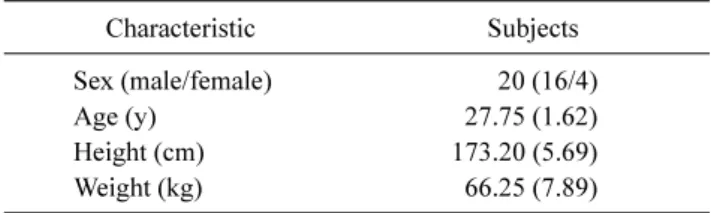
Table 1. General characteristics of the subjects (N=20)
Characteristic Subjects
Sex (male/female) 20 (16/4)
Age (y) 27.75 (1.62)
Height (cm) 173.20 (5.69)
Weight (kg) 66.25 (7.89)
Values are presented as number only or mean (SD).
joint during both static and dynamic movement of the body [8]. Sit-ups, crunches, and plank movements spinal stabili- zation exercises that are effective for strengthenening the core muscles without time and space constraints [9]. When comparing sit-up exercises and plank exercises, which have been widely used as stabilizing exercises for the trunk, sit-up exercises increase the compression force on the vertebrae, making it easy to cause degenerative spinal injuries [10]. On the other hand, plank exercise is an optimal exercise to in- crease abdominal muscle strength because the lumbar pelvic region can be placed in a neutral position to reduce the load placed onto the vertebrae [7].
There have recent been studies on modified plank mo- tions with the addition of limb movements.
Kim et al. [6] reported increased activity of the RA and in- ternal and EO muscles in the plank exercise with isometric contraction of the hip adduction muscles. Schoenfeld et al.
[11] reported increased rectus abdominus and EO muscle activity during the modified plank exercise. In addition, when the posture with hip abduction was maintained in the stance position, the activity of the anterior muscles of the trunk was greater on an unstable surface than in the stable basal plane [12]. As shown in the above study, the addition of limb movements to the trunk muscle stabilization ex- ercises further increased abdominal activation [13], and in particular, the movement of one limb further increased the activity of the abdominal muscles associated with trunk sta- bility [14]. Although there are several studies that show that plank exercises are effective, there are few studies that have investigated the activation of trunk muscles during plank ex- ercises according to postural changes [9], and studies with limb movements during modified plank exercise are also lacking.
In particular, there are few studies that have investigated trunk muscle activity during plank exercises according dif- ferent hip abduction angles. Therefore, the purpose of this study was to investigate the activation of the trunk muscles when the abduction angle of one hip joint was differentiated during the plank exercise and to provide basic information on effective plank exercise methods.
Methods Participants
This study was conducted on adult males and females (16 males and 4 females) working in SOL hospital who under- stood the study and expressed their intention to participate
actively. This study was approved by the research Sah- myook University Life Science ethics committee (IRB No.
2-7001793-AB-N-012019006HR) and informed consent was obtained.
The subjects of the study were selected as those who had no musculoskeletal or nervous system or cardiovascular dis- ease and symptoms in the trunk, upper limb, and lower limb during the past 6 months and did not complain of shoulder pain and back pain in performing the plank exercise posture, those who did not perform extreme exercise the day before the experiment, and healthy adults who did not have any ac- companying diseases that would restrict other research ac- tivities. The exclusion criteria were those medically diag- nosed with back and upper limb damage, those who could not be tested because of musculoskeletal injuries, those who have been diagnosed with medical problems that would re- strict them from exercising, and those who have consumed alcohol on the day before and the day of the experiment (Table 1).
Procedures
The maximum voluntary isometric contraction (MVIC)
was measured after attaching electrodes to both the RA and
the external and internal oblique (IO) muscles of the subjects
[9]. Prior to the experiment, the researchers selected the hip
joint abduction site of the lower limb. After measuring 0, 15,
and 30 degrees of hip abduction with a goniometer on the
mat to be tested for each subject, the position of the sub-
jects’left leg was indicated by markers at the corresponding
angle point, and the position of the right leg placed at the lev-
el of the right end of the mat. Prior to the experiment, the re-
searchers ensured that the subjects were able to understand
the experimental method by providing explanation about the
plank posture and allowing the subject so practice each
plank more than 3 times [20]. The plank exercises were per-
formed in 5 different postures randomly, with each repeated
3 times.
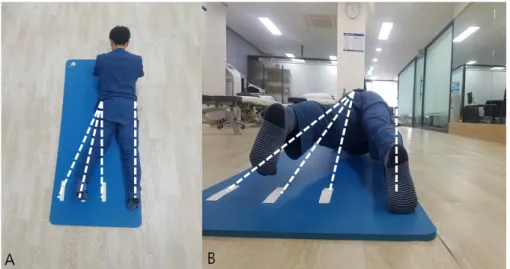
Figure 1. Plank exercise. (A) Two-leg- ged support plank with hip abduction.
(B) One-legged support plank with hip abduction.
Two-legged support plank with 0° of hip abduction In the prone position, the elbows and forearms of the up- per limbs were placed on the floor and were at right angles with the shoulders. The legs were fully extended without any hip abduction and with only the tip of the feet touching the floor (Figure 1A) [6,9].
Two-legged support plank with 15° of hip abduction In a basic plank posture, such as a two-legged support plank (TSP), the right leg remained intact and the left hip was abducted to 15° (Figure 1A).
Two-legged support plank with 30° of hip abduction In a basic posture, such as a TSP, the right leg remained in- tact and the left hip was abducted to 30° (Figure 1A).
One-legged support plank with 15° of hip abduction In the TSP position, the right leg was in contact with the floor while the left leg was raised up from the floor with the hip 15° of abduction (Figure 1B).
One-legged support plank with 30° of hip abduction In the TSP position, the right leg was in contact with the floor while the left leg is raised up from the floor with the hip in 30° of abduction (Figure 1B).
All subjects were instructed to perform the 5 different flank positions and to maintain each position for 5 seconds.
Each plank condition was repeated three times and the sub- jects were allowed to take one-minute rest between each condition. The experiment was carried out in random order [20].
Measurement
Collection of electromyography data
Muscle electromyography (EMG) signals measured in this study were processed by full wave rectification using the Myoresearch XP Master edition software (2013; Noraxon Inc., Scottsdale, AZ, USA) and the root mean square. The maximum voluntary contraction (MVC) value was calcu- lated by dividing the MVIC value by the percent MVC value [9]. Each plank posture was maintained for 5 seconds but da- ta was analyzed during a stable period of 3 seconds with the first and last second extracted, and after the average values were obtained from repeating the measurement three times in all conditions, data was normalized to MVIC values [6,20]. To investigate muscle activity during the plank ex- ercise, the surface EMG Telemyo DTS EMG system (2013;
Noraxon Inc.) was used. The sampling rate of the EMG sig- nal was set to 100 Hz and the frequency bandwidth was 10 to 450 Hz [20].
The electrodes were attached to the RA muscle at the site 2 cm away from the navel, between the iliac crest and the rib for the EO, and inward and downward from the anterior su- perior iliac spine (ASIS) 2 cm apart from each other for the IO [15]. In order to minimize skin resistance, leg hair was re- moved from the electrode site with a disposable razor before attaching the electrode, and the electrode was cleaned with alcohol to remove the oil or foreign matter [9].
Prior to the experiment, MVIC measurements were per-
formed to obtain the contraction values of the RA, the EO,
and the IO muscles for 5 seconds. For the RA, external and
IO muscles, the MVIC was obtained by having the subject
start in the supine position, and with the therapist fixating the
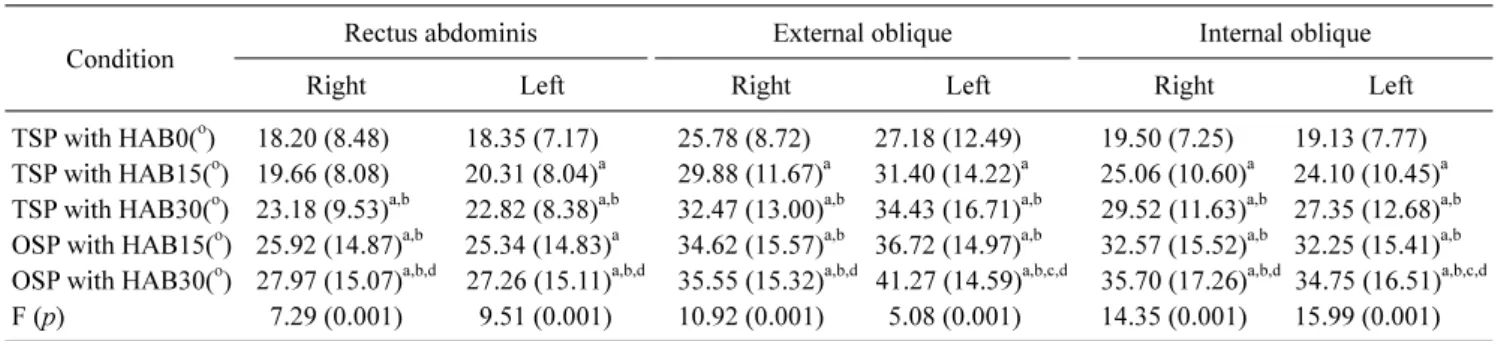
Table 2. Comparison of activities of trunk muscle in plank exercise with hip abduction (N=20)
Condition Rectus abdominis External oblique Internal oblique
Right Left Right Left Right Left
TSP with HAB0(
o) 18.20 (8.48) 18.35 (7.17) 25.78 (8.72) 27.18 (12.49) 19.50 (7.25) 19.13 (7.77) TSP with HAB15(
o) 19.66 (8.08) 20.31 (8.04)
a29.88 (11.67)
a31.40 (14.22)
a25.06 (10.60)
a24.10 (10.45)
aTSP with HAB30(
o) 23.18 (9.53)
a,b22.82 (8.38)
a,b32.47 (13.00)
a,b34.43 (16.71)
a,b29.52 (11.63)
a,b27.35 (12.68)
a,bOSP with HAB15(
o) 25.92 (14.87)
a,b25.34 (14.83)
a34.62 (15.57)
a,b36.72 (14.97)
a,b32.57 (15.52)
a,b32.25 (15.41)
a,bOSP with HAB30(
o) 27.97 (15.07)
a,b,d27.26 (15.11)
a,b,d35.55 (15.32)
a,b,d41.27 (14.59)
a,b,c,d35.70 (17.26)
a,b,d34.75 (16.51)
a,b,c,dF (p) 7.29 (0.001) 9.51 (0.001) 10.92 (0.001) 5.08 (0.001) 14.35 (0.001) 15.99 (0.001)
Values are presented as mean (SD).
TSP: two-legged support plank, HAB: hip abduction, OSP: one-legged support plank.
a
Statistically significant difference with TSP with HAB0 (p<0.05).
b
Statistically significant difference with TSP with HAB15 (p<0.05).
c
Statistically significant difference with TSP with HAB30 (p<0.05).
d
Statistically significant difference with OSP with HAB15 (p<0.05).
thighs the subject lifted the upper body so that the spine of the scapula was not in contact with the floor. For the internal and EOs muscles, subjects were placed in the testing posture of the rectus abdomins with the addition of rotational resist- ance [16].
Data and statistical analysis
The collected data were analyzed using IBM SPSS Statistics for Windows, Version 19.0 (IBM Co., Armonk, NY, USA). The general characteristics of the subjects were ana- lyzed by descriptive statistics and one-way repeated meas- ures ANOVA was performed to investigate the effect of per- forming the plank exercises with various hip joint abduction angles on trunk muscle activity. The least significant differ- ence was used for post-test to see if there were any differ- ences in the muscle activity between the plank conditions.
All data were statistically significant at p<0.05.
Results
Comparison of bilateral rectus abdominis muscle activity The TSP with hip abduction (HAB)30 condition showed significantly greater muscle activity than TSP with HAB0 and TSP with HAB15 plank conditions (p<0.05). In one-leg- ged support plank (OSP) with HAB15, the muscle activity of right RA muscle was significantly greater than TSP with HAB0 and TSP with HAB15 plank conditions (p<0.05).
However, there was no significant difference compared with TSP with HAB30. In the OSP with HAB30, the TSP with HAB0, TSP with HAB15, and OSP with HAB15 had sig- nificantly greater muscle activity than the right RA muscle
(p<0.05) (Table 2).
However, there was no significant difference when com- paring TSP with HAB30. In TSP with HAB15, the muscle activity of the left rectus abdominus muscle was signifi- cantly larger than that of TSP with HAB0 (p<0.05). The TSP with HAB0, TSP with HAB0, and TSP with HAB15 showed significantly greater muscle activity than the TSP with HAB0 (p<0.05). In OSP with HAB15, the left RA muscle activity was significantly greater than TSP with HAB0 (p<0.05).
However, there was no significant difference between TSP with HAB15 and TSP with HAB30. In OSP with HAB30, the muscle activity of the left lateral RA muscle was sig- nificantly greater than that of TSP with HAB0, TSP with HAB15 and OSP with HAB15 plank conditions (p<0.05) (Figure 2, Table 2).
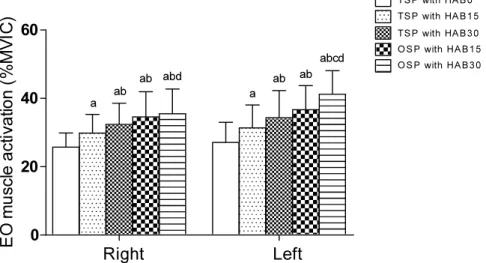
Comparison of bilateral external oblique muscle activity The TSP with HAB15 showed significantly greater bilat- eral EO muscle activity than the TSP with HAB0 (p<0.05).
The TSP with HAB30, TSP with HAB0, and TSP with HAB15 showed significantly greater bilateral EO muscle activity than the TSP with HAB30 (p<0.05). In OSP with HAB15, bilateral EO muscle activity was significantly greater than TSP with HAB0 and TSP with HAB15 (p<0.05).
However, there was no significant difference compared with
TSP with HAB30. In OSP with HAB30, TSP with HAB0,
TSP with HAB15, and OSP with HAB15 showed signifi-
cantly greater activity of right EO muscle (p<0.05) than TSP
with HAB0, TSP with HAB15 and OSP with HAB15 (p<0.05),
respectively (Figure 3, Table 2).
0 10 20 30 40
TSP with HAB0 TSP with HAB15 TSP with HAB30 OSP with HAB15 OSP with HAB30
ab
ab
a ab
a abd abd
Right Left
R A m us cl e ac tiv at ion (% M VI C )
TSP=Two leg support plank; OSP=One leg support plank; HAB=Hip abduction.
a
Statistically significant difference with TSP with HAB0 (p<0.05).
b
Statistically significant difference with TSP with HAB15 (p<0.05).
c
Statistically significant difference with TSP with HAB30 (p<0.05).
d
Statistically significant difference with OSP with HAB15 (p<0.05).
Figure 2. Rectus abdominis (RA) muscle activities of 5 conditions.
MVIC: maximum voluntary isometric contraction.
0 20 40 60
ab ab ab
a
abcd abd
a
ab
Right Left
E O m us cl e ac tiv atio n ( % M VI C )
TSP with HAB0TSP with HAB15 TSP with HAB30 OSP with HAB15 OSP with HAB30
TSP=Two leg support plank; OSP=One leg support plank; HAB=Hip abduction.
a
Statistically significant difference with TSP with HAB0 (p<0.05).
b
Statistically significant difference with TSP with HAB15 (p<0.05).
c
Statistically significant difference with TSP with HAB30 (p<0.05).
d
Statistically significant difference with OSP with HAB15 (p<0.05).
Figure 3. External oblique (EO) mus- cle activities of 5 conditions. MVIC:
maximum voluntary isometric con- traction.
Comparison of bilateral internal oblique muscle activity The TSP with HAB15 showed significantly greater bi- lateral IO muscle activity than TSP with HAB0 (p<0.05). In TSP with HAB30, bilateral IO muscle activity was signifi- cantly greater than TSP with HAB0 and TSP with HAB15 (p<0.05). In OSP with HAB15, bilateral IO muscles activity was significantly greater than TSP with HAB0 and TSP with
HAB15 (p<0.05). However, there was no significant differ-
ence compared with TSP with HAB30. In OSP with HAB30,
TSP with HAB0, TSP with HAB15, OSP with HAB15 and
OSP with HAB15 compared with TSP with HAB0, TSP
with HAB15 and OSP with HAB15 (p<0.05) (Figure 4,
Table 2).
0 10 20 30 40 50
ab ab
ab a abd abcd
a
ab
Right Left
IO m us cl e ac tiv ati on (% M VI C )
TSP=Two leg support plank; OSP=One leg support plank; HAB=Hip abduction.
a
Statistically significant difference with TSP with HAB0 (p<0.05).
b
Statistically significant difference with TSP with HAB15 (p<0.05).
c
Statistically significant difference with TSP with HAB30 (p<0.05).
d
Statistically significant difference with OSP with HAB15 (p<0.05).
TSP with HAB0 TSP with HAB15 TSP with HAB30 OSP with HAB15 OSP with HAB30