• 검색 결과가 없습니다.

Phylogenetic Study of Genus Haliotis In Korea by Internal Transcribed Spacer Sequence (ITS)

N/A
N/A
Protected

Academic year: 2021

Share "Phylogenetic Study of Genus Haliotis In Korea by Internal Transcribed Spacer Sequence (ITS)"

Copied!
6
0
0

로드 중.... (전체 텍스트 보기)

전체 글

(1)

Phylogenetic Study of Genus Haliotis in Korea by Internal Transcribed Spacer Sequence (ITS)

Man Kyu Huh*, Jung Ho Kim

1

and Du-Ho Moon

1

Department of Molecular Biology, Dongeui University, 995 Eomgwangno, Busanjin-gu, Busan 614-714, Korea

1

Biological Education, Busan National University, Busan 607-735, Korea Received June 27, 2008 /Accepted August 10, 2009

Abalone (genus Haliotis) is a woody species with a long life span that is primarily distributed through- out the world, including Asia. This species is regarded as a very important marine gastropod mollusk in Korea and China, and also in food industries around the world. We evaluated a representative sample of the five species with nuclear ribosomal DNA internal transcribed spacer sequences (ITS) to estimate genetic relationships within the genus. Aligned nucleotide sequences of the length of the 5.8S subunit of all taxa of Haliotis were found to constant of 160 bp nucleotides. However, aligned nucleotide sequences of the length of ITS1 were varied within genus Haliotis, varying from 272 in H.

diversicolor aquatilis to 292 in H. discus hannai. Aligned nucleotide sequences of the length of ITS2, espe- cially, vary from 722 in H. diversicolor aquatilis to 752 in H. sieboldii. Total alignment length is 763 posi- tions, of which 78 are parsimony-informative, 57 variable but parsimony-uninformative, and 459 con- stant characters. H. discus hannai was similar to H. discus, while H. diversicolor aquatilis was more distinct. ITS analysis may be useful in germ-plasm classification several taxa of genus Haliotis.

Key words : Abalone, Haliotis, ITS, phylogenetic analysis

*Corresponding author

*Tel:+82-51-890-1529, Fax:+82-51-890-1521

*E-mail : [email protected]

Introduction

Determination of DNA sequence heterogeneity can pro- vide useful taxonomic information on intra- and in- ter-specific genetic variation in animals. In order to develop- ment a rapid, taxonomically useful system to define intra- and inter-specific DNA sequence variation we have used the polymerase chain reaction (PCR) to amplify DNA fragments displaying sequence heterogeneity. The PCR has been used to isolate and sequence specific regions of genetic variation from within the genome [22].

Nuclear ribosomal DNA internal transcribed spacer se- quences (ITS) is eukaryotic ribosomal RNA genes (known as ribosomal DNA or rDNA) are found as parts of repeat units that are arranged in tandem arrays, located at the chro- mosomal sites known as nucleolar organizing regions (NORs) [1]. Each repeat unit consists of a transcribed region (having genes for 18S, 5.8S and 26S rRNAs and the external transcribed spacers i.e. ETS1 and ETS2) and a non-tran- scribed spacer (NTS) region. In the transcribed region, in- ternal transcribed spacers (ITS) are found on either side of 5.8S rRNA gene and are described as ITS1 and ITS2. The

two internal transcribed spacers (ITS1 and ITS2) have been shown to be relatively valuable targets for defining markers in systematic studies [16]. In fact, ITS1 and ITS2 have proven useful for resolving phylogenies of closely related taxa that have diversed relatively recently (<50 million years ago) and are excellent markers for species distinction, since they are relatively fast evolving sequences [2,18]. Universal PCR pri- mers designed from highly conserved regions flanking the ITS and its relatively small size (600-700 bp) enable easy am- plification of ITS region due to high copy number (up to-30000 per cell) of rDNA repeats [7].

Abalone (family Haloitidae) are marine gastropod mol- lusks a worldwide distribution in coastal temperate and tropical waters [5]. There are about 55-60 recognized species of Haliotis in the world [9,10,13]. The genus has a consid- erable literature concerning gamete affinities and cross-fertil- ization among species, an aspect of species biology partic- ularly interesting to compare to a phylogenetic re- construction based on ITS sequences [4]. Furthermore, Haliotis is the only animal genus for which DNA sequences are available from multiple species for two gene products.

One is the DNA sequence on the sperm and the other on the egg. They are interacted at a major step in gamete recog- nition at fertilization [19].

Many species of Haliotis had been used from the example

(2)

Table 1. Codes and locations of Haliotis species used in this study

Species Localities Code

Haliotis discus hannai Reeve H. gigantea Gmelin H. sieboldii Reeve H. discus discus Reeve H. diversicolor aquatilis Reeve

Bogil-myeon, Woando-gun, Chonlanam-do Samyang-dong, Jeju-shi, Jeju-do

Sinchang-ri, Hangeong-myeon, Bukjeju-gun, Jeju-do Iho, Jeju-shi, Jeju-do

Sinchang-ri, Hangeong-myeon, Bukjeju-gun, Jeju-do

HAN GIG SIE DIV DIS

for good materials for food and according as new research and practical use way about medical use and so on are risen, as the availability also is increased, the importance and edi- bility as resources.

The genus Haliotis was chosen for this study for three reasons. First is to assess the usefulness of ITS sequences for reconstructing the phylogenetic history of an animal group. Second is to compare the ITS results with known hy- bridization data for the same species. Finally, Coleman and Vacquier [4] used ITS sequence to study the phylogenetic relationships within genus Haliotis. In their investigations, only H. divericolor supertexta from Taiwan are suggested, one with the Taiwan Haliotis species and the eastern Asian abalone. DNA sequence analyses comprising many Asian species from the most important diversity center of the ge- nus have not yet been carried out thus far.

The purpose of this research is to do molecular data sup- port the current classification of the species within the genus Haliotis in Korea. In addition, molecular evidence assumes an important role in phylogenetic reconstruction of species in this genus.

Materials and Methods Animals and DNA extraction

The specimens of Haliotis discus hannai, Haliotis discus, H.

sieboldii, H. gigantea, and H. diversicolor aquatilis were col- lected from five populations in Korea (Table 1). Tissue and DNA were from same animals. DNA extracts from tissue of a specimen each of species. Individual abalones were iso- lated without food, in an antibiotic solution (ampicillin 100 μ g/ml) and left overnight at 4

o

C to minimize prokaryotic growth prior to DNA extraction. The protocol to obtain ITS sequences was similar to that utilized previously with some modification [3,6]. Briefly, muscle tissues were ground in ni- trogen gases and added 20 μl proteinase K (10 μg/μl). The mixture incubated at 55

o

C for 4 hr and added 2 μl RNase (10 μg/μl) at 37

o

C for 5 min. Nucleic acids were extracted

by adding phenol : chloroform : isoamylalcohol (25:24:1) and shaken for 2 min. The aqueous layer was collected by cen- trifugation and transferred into a new tube containing 250 μl of absolute ethanol and 10 μl of 3 M sodium acetate.

Genomic DNA was pelleted, after incubation at -70

o

C for 30 min, by centrifugation and washed in 70% ethanol to re- move excess salts, vacuum dried and then re-dissolved in 12 μl TE buffer (10 mM Tris-HCl, pH 8.0, 1 mM EDTA, pH 8.0) and subsequently stored at 4

o

C. DNA was checked for shearing and concentration by agarose electrophoresis and fluometry respectively.

ITS analysis

Primer sets of about 20 bases in length (ITS1 and ITS2) [23] were used for PCR analysis (Table 2). These primers were based on well-characteristic DNA Sequences and were designed making use of conserved regions of the 18S and 28S rRNA genes to amplify the noncoding regions between the (ITS1 and ITS2) and 5.8S rRNA gene.

PCR materials (50 μl volume) included 50 ng of genomic DNA, 100 uM of each dNTP, 0.2 uM of each primer, 1x en- zyme buffer, and 2 unit of Taq polymerase. The amplifica- tion profile was 28 cycles of 94

o

C for 30 sec, 42

o

C for 60 sec, 72

o

C for 60 sec, preceded by an initial denaturation at 94

o

C foe 90 sec and followed by a final extension at 72

o

C for 5 min.

PCR products were separated on 1.5% agarose gels and purified using the QIAquick Gel Extraction Kit (QIAGEN).

The amplified fragments were cloned into a bluescript vector and sequenced using ABI Prism 377 Sequencer (Applied

Table 2. Synthetic primer (5'-3') used for sequencing the ITS gene in genus Haliotis taxa

No. Primer Reference

ITS1 ITS2 ITS3 ITS4

TCCGTAGGTGAACCTGCGG GCTGCGTTCTTCATCGATGC GCATCGATGAAGAACGCAGC TCCTCCGCTTATTGATATGC

White et al. [23]

White et al. [23]

White et al. [23]

White et al. [23]

(3)

Biosystem, USA). At least ten individuals' clones of each tax- on were analyzed.

Phylogenetic analysis and RNA secondary structure A pairwise alignment was calculated using the ClustalX program. Phylogenetic relationship were estimated by MEGA4 version 4.0 [20] treating all alignment gaps as missing. A maximum parsimony tree (MP) was inferred us- ing heuristic search, branch-swapping options and tree bi- section-reconnection. Confidence values for individual branches were determined by a bootstrap analysis with 100 repeated sampling of the data. In addition, a phylogenetic tree was constructed by the neighborjoining (NJ) method [17]

using the NEIGHBOR program in PHYLIP version 3.57 [8].

Results

ITS profiles for five species of Haliotis were shown in Figure 1. DNA sequencing of ITS1, 5.8S, and ITS2 were suc- cessful in all of the species given in Table 3.

Aligned nucleotide sequences of the length of ITS1 were varied within Haliotis varying from 272 in H. diversicolor aqua- tilis to 292 in H. discus hannai. Especially, the 5.8S subunit of all taxa of Haliotis was found to constant of 160 bp nucleotides. Aligned nucleotide sequences of the length of

Fig. 1. ITS profiles of five species genus Haliotis in Korea. H1:

Haliotis discus hannai , H2: H. gigantea , H3: H. sieboldii , H4:

H. discus , H5: H. diversicolor aquatilis .

Table 3. Sizes of ITS-1, 5.8S and ITS-2 regions of genus Haliotis

Codes ITS-1 5.8S ITS-2 Total

HAN GIG SIE DIV DIS

292 275 294 288 272

160 160 160 160 160

298 298 298 298 290

750 733 752 746 722 The codes of HAN, GIG, SIE, DIS, and DIV are the same as Table 1.

ITS2 vary from 722 in H. diversicolor aquatilis 752 in H. sieboldii.

Total alignment length is 763 positions, of which 78 are parsimony-informative, 57 variable but parsimony-unin- formative, and 459 constant characters. The base furtherance showed the difference to the by a total taxon (Table 4): an average A and C are 16.9% and 21.3% and G and T are 24.1%, 37.8%, respectively. The base furtherance of G+C was showed about 45.4%. The content of T is most high to 37.8%

in Haliotis.

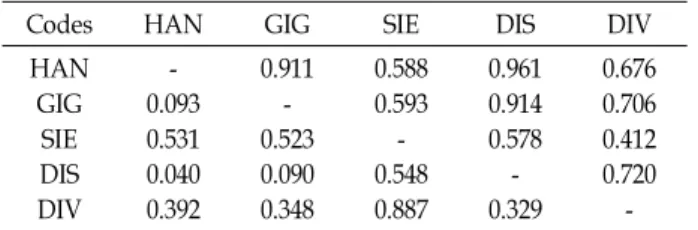
H. diversicolor aquatilis showed the highest number of dif- ferent bases between all the sequences studied (Table 5).

Genetic identity (I) based on the proportion of shared fragments was used to evaluate relatedness among species.

The estimate of I ranged from 0.040 to 0.887 (Table 6).

Table 4. Rate of A, C, G, T to four spices of genus Haliotis using ITS

Codes A C G T

HAN DIS SIE GIG DIV Mean

16.6 22.3 16.3 14.8 14.7 16.94

26.4 20.8 20.4 19.3 19.6 21.30

25.5 26.2 20.4 24.0 24.6 24.14

31.5 30.7 42.9 42.6 41.1 37.76 The codes of HAN, GIG, SIE, DIS, and DIV are the same as Table 1.

Table 5. The number of different bases among five species of Haliotis using ITS

Species HAN GIG SIE DIS DIV

HAN GIG SIE

DIS DIV

- 296 275

30 149

146 - 219 358

- 259

337 -

154 -

The codes of HAN, GIG, SIE, DIS, and DIV are the same as Table 1.

Table 6. Genetic identity (upper diagonal) of Haliotis based on ITS and genetic distances (low diagonal) at species level

Codes HAN GIG SIE DIS DIV

HAN GIG SIE DIV DIS

- 0.093 0.531 0.040 0.392

0.911 0.523 - 0.090 0.348

0.588 0.593 - 0.548 0.887

0.961 0.914 0.578 0.329 -

0.676

0.706

0.412

0.720

-

The codes of HAN, GIG, SIE, DIS, and DIV are the same as

Table 1.

(4)

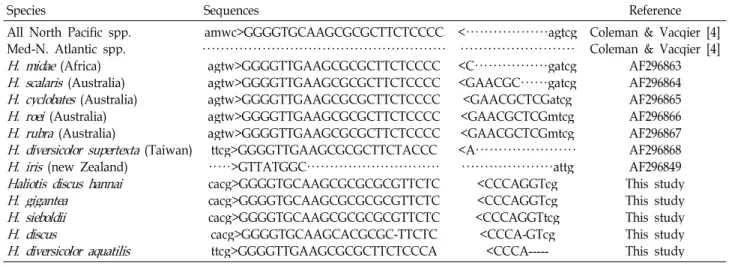
Table 7. Comparison of genus Haliotis on ITS insert sequences

Species Sequences Reference

All North Pacific spp.

Med-N. Atlantic spp.

H. midae (Africa) H. scalaris (Australia) H. cyclobates (Australia) H. roei (Australia) H. rubra (Australia)

H. diversicolor supertexta (Taiwan) H. iris (new Zealand)

Haliotis discus hannai H. gigantea

H. sieboldii H. discus

H. diversicolor aquatilis

amwc>GGGGTGCAAGCGCGCTTCTCCCC

···

agtw>GGGGTTGAAGCGCGCTTCTCCCC agtw>GGGGTTGAAGCGCGCTTCTCCCC agtw>GGGGTTGAAGCGCGCTTCTCCCC agtw>GGGGTTGAAGCGCGCTTCTCCCC agtw>GGGGTTGAAGCGCGCTTCTCCCC ttcg>GGGGTTGAAGCGCGCTTCTACCC

···>GTTATGGC···

cacg>GGGGTGCAAGCGCGCGCGTTCTC cacg>GGGGTGCAAGCGCGCGCGTTCTC cacg>GGGGTGCAAGCGCGCGCGTTCTC cacg>GGGGTGCAAGCACGCGC-TTCTC ttcg>GGGGTTGAAGCGCGCTTCTCCCA

<···agtcg

···

<C···gatcg

<GAACGC···gatcg

<GAACGCTCGatcg

<GAACGCTCGmtcg

<GAACGCTCGmtcg

<A···

···attg

<CCCAGGTcg

<CCCAGGTcg

<CCCAGGTtcg

<CCCA-GTcg

<CCCA---

Coleman & Vacqier [4]

Coleman & Vacqier [4]

AF296863 AF296864 AF296865 AF296866 AF296867 AF296868 AF296849 This study This study This study This study This study

99 H. discus 70

H. discus hannai 91

H. sieboldii 97

H. gigantea

H. diversicolor aquatilis

45 40 35 30 25 20 15 10 5 0

Nucleotide substitutions (x10)

Fig. 2. Fifty percent majority rule consensus tree, obtained after 1000 bootstrap repetitions for ITS parsimony analysis (heuristic, TBR default) with gaps coded as missing. Above the lines, percent frequencies greater than 50 are shown.

Although alignments of the Haliotis species were great similarity among the species' sequences, the unusual ITS1 insert were shown (Table 7). In addition, variations was shown in nucleotide substitutions and indels.

Clustering of Haliotis Species, using the NJ algorithm, was performed based on the matrix of calculated distances (Fig.

2). The phylogenic tree showed Korean species were well separated each other. When a more worldwide selection of species was included, the tree also shows genetic differ- entiation among Haliotis species.

All ITS trees generated exhibited partly unsolved top- ology with low bootstrap support irrespective of the meth- ods (parsimony or N-J) and the setting used. This result con- firmed two clades for all species. H. discus hannai was similar to H. discus, while H. diversicolor aquatilis was more distinct (Fig. 2). H. discus hannai and H. discus were supported with bootstrap values of 99%.

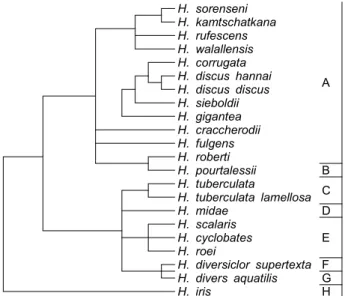
Considering all the non-North Pacific species of Haliotus, H. discus hannai, H. discus, H. sieboldii, and H. gigantea are not conformed one group and H. diversicolor aquatilis is an-

other (Fig. 3).

Discussion

Given the proliferation of genetic markers, comparisons between techniques are inevitable. However, there is a need technique is best suited the issues being examined. In pre- vious study, ITS were used to determine the genetic relation- ships among species and the results compared to pedigree relationships where there were available [4]. With respect to particular genes and their associated regions, phyloge- netic reconstructions are available for the cDNA sequences of the sperm protein lysin, the flanking 3' untranslated se- quence of lysin [19], the 18 kD protein related to lysin [21], and the mtCOI gene [15]. In the North Pacific species ITS subclade (A), the foursome of California species grouped to- gether in Fig. 3 in trees for these four additional loci. With respect to particular genes and their associated regions, phy- logenetic reconstructions are available for the ITS sequence.

From the ITS analyses, the Pacific species appear to be closely

(5)

H. sorenseni

A H. kamtschatkana

H. rufescens H. walallensis H. corrugata H. discus hannai H. discus discus H. sieboldii H. gigantea H. craccherodii H. fulgens H. roberti

H. pourtalessii B

H. tuberculata

H. tuberculata lamellosa C

H. midae D

H. scalaris

E H. cyclobates

H. roei

H. diversiclor supertexta F H. divers aquatilis G

H. iris H

Fig. 3. A phylogenetic tree for Haliotis based on ITS analysis.

A: North Pacific, B: Caribbean, C: Europe, D: Africa, F:

South Australia, G: Korea, H: Taiwan, I: New Zealand related. If so, it is of interest to examine whether they can potentially interbreed successfully. Four papers [11,12,14,21]

reported the results from various experimental pairings of eight North Pacific species. These include data on frequency of fertilization in interspecies pairings and titer of lysin need- ed for vitellitine envelop dissolution [4]. Most reciprocal pairings, but not all, produce similar results in terms of pres- ent fertilization.

From the ITS analyses, the North Pacific species appear to be closely related. If so, it is of interest to examine whether they can potentially interbreed successfully [14,21].

The branching pattern of the Taiwan-Australia-South Africa assortment of species remains unresolved [4]. The ITS analyses, one might conclude that the common ancestor of the Halioitis species had a major ITS-1 insert, and that all the North Pacific species diverged fairly recently from one ancestral type, hence their uniformity for this insert. The Mediterranean-Atlantic species is likely derived from a dif- ferent ancestor, one that had lost the insert [4]. However, both the North Pacific species, H. diversicolor supertexta and H. diversicolor aquatilis in Korea have become isolated from other North Pacific species (Fig. 3). Both species are very smaller that those of other North Pacific species, It is not unsurprising of considering the morphological differences.

From the dendrogram of the species studied, a very good agreement with the existing classification based on ITS and mitochondrial DNA sequences of the species of genus Haliotis was observed [15]. First, H. discus hannai, H. discus,

H. sieboldii, and H. gigantea grouped with species of North Pacific. Secondly, H. diversicolor aquatilis is separated from the remaining Korean abalone and is both positioned just ancestral to subclade Europe and Australia in the tree.

There is a good agreement between results from ITS se- quence analysis [4], although the ITS1/5.8S regions do not show enough resolution potential among several species. The ITS technique is more useful taxonomic tool for genus Haliotis species and species delineation than the ITS sequences.

References

1. Adams, R. P., A. E. Schwarzbach, and R. N. Pandey. 2003.

The concordance of terpenoid, ISSR, and RAPD markers, and ITS sequences data sets among genotypes: an example from Juniperus . Biochem. System. and Ecol. 31, 375-387.

2. Baldwin, B. G. 1993. Molecular phylogenetics of Calcydenia (Compositae) based on ITS sequences of nuclear ribosomal DNA: Chromosomal and morphological evolution reexamined. Am. J. Bot. 80, 222-238.

3. Coleman, A. W., L. Jaeenicke, and R. C. Starr. 2001. Genetics and sexual behavior of the pheromone producer, Chlamydomonas allensworthii (Chlorophyceae). J. Phycol. 37, 4. Coleman, A. W. and V. D. Vacquier. 2002. Exploring the 1-5.

phylogenetic utility of ITS sequences for animals: a test case for abalone ( Haliotis ). J. Mol. Evol. 54, 246-257.

5. Degnan, S. M., I. Imron, D. L. Geiger, and B. M. Degnam.

2006. Evolution in temperate and tropical seas: disparate patterns in southern hemisphere abalone (Mollusca:

Vetigastropod: Haliotidae). Mol. Phylogen. Evol. 41, 249-256.

6. Doyle, J. J. and J. L. Doyle. 1987. A rapid DNA isolation procedure for small quantities of fresh leaf tissues. Phyto.

Bull. 19, 11-15.

7. Dubouzet, J. G. and K. Shinoda. 1999. Relationships among old and New world Alliums according to ITS DNA sequence analysis. Theor. Appl. Genet. 98, 422-433.

8. Felsenstein, J. 1993. PHYLIP (Phylogeny Inference Package) Version 3.5s, Distributed by the Author . Department of Genetics, Univ. Washington, seattle.

9. Geiger, D. L. 1998. Recent genera and species of the family Haliotidae (Gastropoda: Vetigastropoda). The Nautilus 111, 85-116.

10. Geiger, D. L. 1999. Ph. D. dissertation, University of Southern California, Los Angeles, CA, pp. 423.

11. Hoshikawa, H, Y. Sakai, and A. Kijima. 1998. Growth char- acteristics of the hybrid between abalone, Haliotis kamt- schatkana Jonas, and ezo abalone, H. discus hannai Ino, under high and low temperature. J. Shellfish Res. 17, 673-677.

12. Leighton, D. L. and C. A. Lewis. 1982. Experimental hybrid- ization in abalones. Int. J. Invert. Reprod. 5, 273-282.

13. Lindberg, D. R. 1992. Evolution, distribution and system-

atics of Haliotidae , pp. 3-19, In Shepherd, S. A., M. J. Tegner

(6)

and G. del Proo (eds.), Abalone of the World: Biology, Fisheries and Culture . Blackwell Scientific, London.

14. Lyon, J. D. and V. D. Vacquier. 1999. Interspecies chimeric sperm lysins identify regions mediating species-specific rec- ognition of the abalone egg vitelline envelope. Dev. Biol. 214, 151-159.

15. Metz, E. C., R. Robles-Sikisaka, and V. D. Vaquier. 1998.

Nonsynonymous substitution in abalone sperm fertilization genes exceeds substitution in introns and mitochondrial DNA. Proc. Natl. Acad. Sci. USA 95, 10676-10681.

16. Oliverio, M., M. Cervelli, and P. Mariottini. 2002. ITS2 rRNA evolution and its congruence with the phylogeny of muricid neogastropods (Caenogastropoda, Muriocoidea).

Mol. Phylogen. Evol. 25, 63-69.

17. Saitou, N. and M. Nei. 1987. The neighbor-joining method:

A new method for reconstructing phylogenetic trees. Mol.

Biol. Evol. 4, 406-425.

18. Schlötter, C., M. T. Hauser, A. van Haesler, and D. Tautz.

1994. Comparative evolutionary analysis of rRNA ITS re-

gions in Drosophila . Mol. Biol. Evol. 11, 513-522.

19. Swanson, W. J. and V. D. Vacquier. 1998. Concerted evolu- tion in an egg receptor for a rapidly evolving abalone sperm protein. Science 281, 710-712.

20. Tamura, K., J. Dudley, M. Nei, and S. Kumar. 2007. MEGA4:

Molecular evolutionary genetics analysis (MEGA) software version 4.0. Mol. Biol. Evol. 24, 1596-1599.

21. Vacquier, V. D. and Y. H. Lee. 1993. Abalone sperm lysin:

unusual mode of evolution of a gamete recognition protein.

Zygote 1, 181-196.

22. Wrischnik, L. A., R. G. Higuchi, M. Stoneking, H. A. Erlich, N. Arnheim, and A. C. Wilson. 1987. Length mutations in human mitochondrial DNA: direct sequencing of enzymati- cally amplified DNA. Nucleic Acids Res. 15, 529-542.

23. White, T. J., T. Bruns, S. Lee, and J. Taylor. 1999. Amplifica- tion and direct sequencing of fungal ribosomal genes for phylogenetics, pp. 315-322, In Innis M. A., D. H. Gelfand, J. J. Sninsky, and T. J. White (eds.), PCR Protocols: A Guide to Methods and Applications , New York Academic press.

초록:ITS에 의한 한국내 전복 속 분류군의 유전적 계통분류학적 연구 허만규*․김정호

1

․문두호

1

(동의대학교 분자생물학과,

1

부산대학교 생물교육전공)

전복속에 속하는 종은 아시아를 포함한 세계에 광범위하게 서식한다. 전복속 종은 한국과 중국에서는 식용뿐만 아니라 약용으로도 이용된다. 한국내 전복속(genus Haliotis)에 속하는 분류군에 대해 ITS에 의한 계통관계를 조사하 였다. 전복속 전체 종에서 5.8S exon은 160 핵산서열로 일정하였다. ITS1은 종에 따라 다양하였는데, 오분자기(H.

diversicolor aquatilis)에서 272 핵산서열인 반면, 시볼트전복은 294 핵산서열이었다. ITS2 핵산서열 역시 종에 따라

다양하였다. 전체 서열은 오분자기는 722 핵산서열인 반면, 시볼트전복은 752 핵산서열이었다. ITS 전체 서열은

763 핵산서열에서 78개는 절약법에 정보적이었고, 57개는 변이로 비정보적이였고, 459는 일정하였다. 오분자기는

다른 전복속 종과 다른 분지를 나타내었다. ITS 서열로 한국내 분류군과 유럽종간 구분이 잘 되었다. ITS 서열로

종 동정에 이용할 수 있었으며, 종의 보전이나 생식질 보전에 기초로 이용될 수 있을 것으로 사료된다.

수치

Table 1. Codes and locations of Haliotis species used in this study
Table 5. The number of different bases among five species of Haliotis using ITS
Fig. 2. Fifty percent majority rule consensus tree, obtained after 1000 bootstrap repetitions for ITS parsimony analysis (heuristic, TBR default) with gaps coded as missing
Fig. 3. A phylogenetic tree for Haliotis based on ITS analysis.

참조

관련 문서

We determined the nucleotide sequences of the mitochondrial DNA (mtDNA) control region using cloning and sequencing, and obtained the complete sequence from the cattle bones

Full genome cloning and nucleotide sequence analysis of hepatitis C virus from sera of chronic hepatitis patients in Korea. Detection of hepatitis C virus RNA

Therefore, in this study, genetic tests were performed to investigate and identify the infections of Orientia tsutsugamushi, Ricekttsia genus, Anaplasma phagocytophilum ,

The Dusky Lory ( Pseudeos fuscata ) is a monotypic species of parrot in the Psittaculidae family, and the only species of the genus Pseudeos... platyrhynchos

Zao Wou-Ki generated the best H1 result for the entire Asian continent in Hong Kong; 53% of Zhang Daqian’s turnover was hammered there, and lots of new

It considers the energy use of the different components that are involved in the distribution and viewing of video content: data centres and content delivery networks

After first field tests, we expect electric passenger drones or eVTOL aircraft (short for electric vertical take-off and landing) to start providing commercial mobility

1 John Owen, Justification by Faith Alone, in The Works of John Owen, ed. John Bolt, trans. Scott Clark, &#34;Do This and Live: Christ's Active Obedience as the