• 검색 결과가 없습니다.

The Role of Angiogenesis in Obesity

N/A
N/A
Protected

Academic year: 2021

Share "The Role of Angiogenesis in Obesity"

Copied!
15
0
0

로드 중.... (전체 텍스트 보기)

전체 글

(1)

The Role of Angiogenesis in Obesity

Michung Yoon*

Department of Biomedical Engineering, Mokwon University, Daejeon 302-729, Korea Received March 2, 2014 /Revised March 20, 2014 /Accepted March 20, 2014

Angiogenesis, the formation of new capillary blood vessels, is a tightly regulated process. Under nor- mal physiological conditions, angiogenesis only takes place during embryonic development, wound healing, and female menstruation. Dysregulation of angiogenesis is associated with many diseases, such as cancer, rheumatoid arthritis, psoriasis, and proliferative retinopathy. The growth and ex- pansion of adipose tissue require the formation of new blood vessels. Adipose tissue is probably the most highly vascularized tissue in the body, as each adipocyte is surrounded by capillaries, and the angiogenic vessels supply nutrients and oxygen to adipocytes. Accumulating evidence shows that ca- pillary endothelial cells communicate with adipocytes via paracrine signaling pathways, extracellular components, and direct cell-cell interactions. Activated adipocytes produce multiple angiogenic factors, including VEGF, FGF-2, leptin, and HGF, which either alone or cooperatively stimulate the expansion and metabolism of adipose tissue by increasing adipose tissue vasculature. Recently, it was demon- strated that antiangiogenic herbal Ob-X extracts and Korean red ginseng extracts reduce adipose tissue mass and suppress obesity by inhibiting angiogenesis in obese mice. Thus, angiogenesis inhibitors provide a promising therapeutic approach for controlling human obesity and related disorders.

Key words : Adipose tissue growth, angiogenesis, angiogenesis inhibitors, obesity, MMP

*Corresponding author

*Tel : +82-42-829-7581, Fax : +82-42-829-7580

*E-mail : [email protected]

This is an Open-Access article distributed under the terms of the Creative Commons Attribution Non-Commercial License (http://creativecommons.org/licenses/by-nc/3.0) which permits unrestricted non-commercial use, distribution, and reproduction in any medium, provided the original work is properly cited.

Journal of Life Science 2014 Vol. 24. No. 5. 573~587 DOI : http://dx.doi.org/10.5352/JLS.2014.24.5.573

Introduction

Obesity is the result of an energy imbalance caused by an increased ratio of caloric intake to energy expenditure.

In conjunction with obesity, related metabolic disorders such as dyslipidemia, atherosclerosis, and type 2 diabetes have become global health problems. Obesity is characterized by increased adipose tissue mass that results from both in- creased fat cell number (hyperplasia) and increased fat cell size (hypertrophy) [23]. Development of obesity is associated with extensive modifications in adipose tissue involving adi- pogenesis, angiogenesis, and remodeling of extracellular ma- trix (ECM) [24].

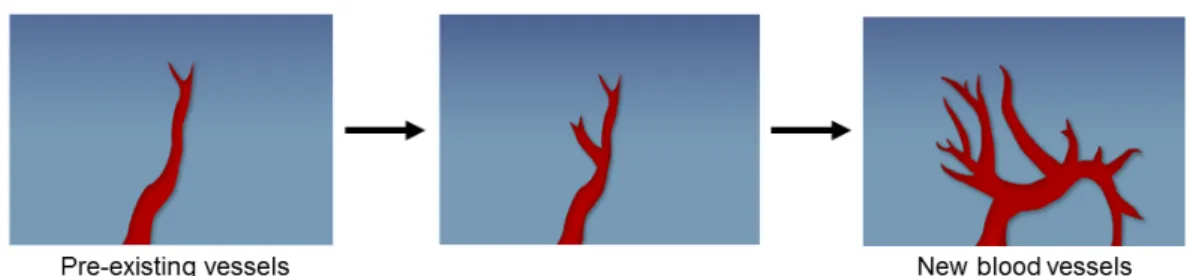
Angiogenesis means the formation of new blood vessels from preexisting vessels (Fig. 1). Angiogenesis is a funda- mental requirement for the survival of new tissue in embry- onic development as well as for wound healing, placental development, and cyclical changes within the endometrium in the mature adult [30]. However, angiogenesis is also the

underlying pathological process of all major diseases of the developed world. It is a prominent feature of cancer, athero- sclerosis, diabetes, rheumatoid arthritis, and proliferative retinopathy [14, 18]. Similarly, the growth and development of adipose tissue require the formation of new blood vessels to provide oxygen and nutrients to adipocytes [13, 63].

Similar to neoplastic tissues, angiogenesis occurs in the growing adipose tissue of adults [24]. Adipose tissue can expand and shrink throughout life, whereas most tissues normally do not grow throughout adulthood, and the sup- porting vasculature is quiescent [44]. Adipose tissue is high- ly vascularized, and each adipocyte is nourished by an ex- tensive capillary network [8, 24, 58]. It is suggested, there- fore, that growth and expansion of adipose tissue is angio- genesis-dependent and may be inhibited by angiogenesis inhibitors. This is supported by reports that treatment with angiogenesis inhibitors resulted in weight reduction and adi- pose tissue loss, showing that adipose tissue mass can be regulated by its vasculature [10, 74, 81].

Prominent changes in ECM remodeling have also been

observed during adipose tissue growth. Two types of pro-

teolytic systems, the plasminogen/plasmin (fibrolytic) and

matrix metalloproteinase (MMP) systems, have been im-

plicated in tissue remodeling, via degradation of ECM and

basement membrane components, or activation of adipocyte

growth factors [66, 94]. The MMP system plays important

- Review -

(2)

Fig. 1. Schematic representation of angiogenesis. Angiogenesis is the formation of new blood vessels from pre-existing vessels by the proliferation and migration of differentiated endothelial cells.

roles in the development of adipose tissue and microvessel maturation by modulating ECM [9, 35, 66]. Increasing evi- dence suggests that endogenous and exogenous MMPs regu- late adipogenesis [9, 21, 52]. During obesity, MMP ex- pression is modulated in adipose tissue, and MMPs (e.g., MMP-2 and MMP-9) potentially affect adipocyte differ- entiation [9, 19, 71]. More clearly, MMP inhibition impairs development of adipose tissue in mice [66].

Growing adipocytes produce angiogenic factors, such as vascular endothelial growth factor (VEGF)-A and fibroblast growth factor (FGF)-2, contributing to the formation of new blood vessels inside the adipose tissue [13, 22, 95]. VEGF-A and FGF-2 stimulate proliferation and migration of endothe- lial cells and enhance adipocyte differentiation [7, 16, 52].

Adipose tissue also secretes several MMPs, including MMP-2 and MMP-9 [9]. Indeed, it is well established that degradation of ECM represents the first step in the angio- genic process, and that MMP-2 and MMP-9 have been shown to be necessary for this event [85], indicating the syn- ergistic actions of angiogenesis and the MMP system on the regulation of adipose tissue growth.

Based on my published results showing the actions of an- ti-angiogenic herbs on obesity, this review will discuss the role of angiogenesis in modulating adipose tissue growth and the regulation of adipose tissue growth by anti-angio- genic agents.

Adipose tissue vasculature

Adipose tissue is primarily a site of fat storage, but also serves as an endocrine gland secreting hormones, angiogenic factors, growth factors, cytokines, and free fatty acids.

Development of fat cells is characterized by the appearance of a number of fat cell clusters, or ‘primitive fat organs,’

which are vascular structures in the adipose tissue with few or no fat cells. Adipose tissue consists of diverse cell pop- ulations including preadipocytes, mature adipocytes, adi- pose stromal cells, endothelial cells, fibroblasts, and in-

flammatory cells.

Adipose tissues exhibit extensive vascularity and each adipocyte is surrounded by an extensive capillary network.

The adipose vasculature supplies nutrients and oxygen to growing adipocytes by increasing the size and number of new blood vessels. The vessels also support infiltration of a number of inflammatory cells [80] and remove waste products. In addition to adipocytes, activated endothelial cells produce various growth factors and cytokines, and fe- nestrated vessels play an essential part in local or systemic effects of adipokines [12]. Accumulating evidence shows that capillary endothelial cells communicate with adipocytes via paracrine signaling pathways, extracellular components, and direct cell-cell interactions [8, 43, 45]. Interestingly, adipo- cytes and their accompanying endothelial cells might share a common progenitor that could differentiate into adipocytes or endothelial lineages depending upon exposure to differ- ent environments [79]. Human adipose tissue–derived stem cells can differentiate into endothelial cells and improve postnatal neovascularization [15]. These findings raise an in- teresting and exciting possibility that targeting a common adipose progenitor is probably an effective approach for therapeutic intervention of obesity.

Growth and differentiation of adipocytes are spatially and

temporally associated with angiogenesis [24]. The growth

and development of white adipose tissue requires extensive

remodelling of the vascular network, primarily of primitive

capillary networks. Expansion of adipose tissue can be sup-

ported by both neovascularization (for adipocyte hyper-

plasia) and dilation and remodeling of existing capillaries

(for adipocyte hypertrophy). Brown adipose tissue is largely

responsible for energy metabolism, and its function requires

efficient blood perfusion to supply nutrients and oxygen and

to produce heat. Hyperplasia of brown adipose tissue is crit-

ically dependent on angiogenesis, as it requires rapid activa-

tion of mitosis in fat precursor cells and endothelial cells

to develop capillaries [11].

(3)

To adapt to changes in the size and metabolic rate of adi- pose depots, adipose vasculature requires constant regu- lation by several angiogenic modulators. Adipocytes seem to regulate angiogenesis both by cell to cell contact and by adipokine secretion [13]. Conditioned media obtained from preadipocytes and tissue homogenates from omentum or subcutaneous fat induce angiogenesis in the chick cho- rioallantoic membrane and in the mouse cornea [17, 38, 60, 88]. Both white and brown adipose tissue produce several proangiogenic growth factors, such as VEGF-A, FGF-2, and leptin [12] as well as antiangiogenic factors, such as throm- bospondin-1 (TSP-1), or other angiogenic modulators includ- ing plasminogen activator inhibitor or adiponectin, whose expression ratio will determine the angiogenic phenotype in the adipose tissue [90]. During differentiation of 3T3-F442A pre-adipocytes into mature adipocytes, proangiogenic fac- tors are upregulated, whereas TSP-1 and TSP-2 are tran- siently downregulated [95]. In addition to adipocytes, other cell types contribute to angiogenesis modulation, including resident macrophages, other inflammatory cells and stromal cells [20].

Maturation of capillary networks and the size of fetal adi- pose clusters are inversely correlated with the degree of ECM deposition, and the presence of gelatinous protein mix- ture reduces microvessel and preadipocyte maturation [24, 53]. Adipose tissue produces several MMPs including MMP- 2 and -9, which could potentially affect preadipocyte differ- entiation and microvessel maturation by modulating ECM [9]. Moreover, MMP-9 is able to release the matrix-bound VEGF and indirectly induces angiogenesis [6]. It is suggested that endogenous and exogenous MMPs regulate adipo- genesis [9, 21, 53]. In expanding adipose tissue, upregulation of MMP-3, -11, -12, -13, and -14 and downregulation of MMP-7, -9, -16, and -24 have also been found although most of these modulations are specific to gonadal fat depots [21].

Deletion of tissue inhibitor-1 of MMP (TIMP-1), a known angiogenesis inhibitor, leads to reduced obesity in mice fed a high-fat diet [65]. In contrast, significantly higher vessel density and sizes are present in the adipose tissue of TIMP-1 knockout mice compared with control mice.

Blood vessel density in adipose tissue may not truly re- flect angiogenic activity. Indeed, a tumor study suggested that the number of cells that can be supported by a blood vessel varies, influencing in turn the vascular density [42].

Similarly, the number and/or size of adipocytes in adipose tissue may affect blood vessel density. This is supported by

a study on capillary fenestrations in adipose tissue, showing that microvessel density was lower in genetically obese ob/ob mice than in wild-type controls, possibly as a result of increased adipocyte size in ob/ob mice [12]. To take this into account, blood vessel density in adipose tissues can be normalized to the adipocyte density. These paradoxical find- ings might be explained by normalizing blood vessel density with the number of adipocytes [21, 65]. Collectively, these findings demonstrate that MMPs and TIMPs play a pivotal role in controlling adipogenesis via regulation of angio- genesis.

Adipose tissue as an endocrine gland

Adipose tissue is very well developed and is substantial amount of the total body mass (up to 40% of body weight).

Adipose tissue is considered as the largest endocrine gland because it produces free fatty acids, hormones, growth fac- tors, and cytokines that either individually or jointly regulate vessel growth.

Adipose tissue-derived angiogenic factors

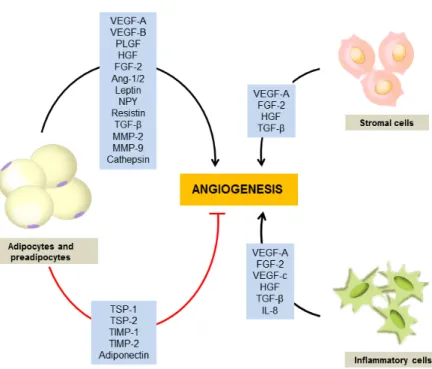
Growing adipocytes produce a dozen angiogenic factors including leptin, VEGF, FGF-2, hepatocyte growth factor (HGF), insulin-like growth factor (IGF), tumor necrosis fac- tor α (TNF-α), tumor necrosis factor β (TGF-β), placental growth factor (PlGF), VEGF-C, resistin, tissue factor (TF), neuropeptide Y (NPY), heparin-binding epidermal growth factor, angiopoietin (Ang)-1 and Ang-2 [13, 14]. Preadipocy- tes and adipocytes also produce non-protein small lipid mol- ecules such as monobutyrin that stimulate angiogenesis in the adipose tissue [29, 97]. Adipose-derived stem cells se- crete high levels of a number of angiogenic factors including VEGF, HGF, granulocyte macrophage colony-stimulating factor (GM- CSF), FGF-2, and TGF-β [9]. Recruitment of in- flammatory cells also significantly contributes to adipose ne- ovascularization. For example, activated macrophages pro- duce potent angiogenic factors such as TNF-α, VEGF, FGF-2, interleukin-1 beta (IL-1β), IL-6, and IL-8 [95] (Fig. 2).

It is generally accepted that the vascular endothelial

growth factor/vascular endothelial growth factor receptor

(VEGF/VEGFR) system accounts for most of the angiogenic

activity in adipose tissue, making it an attractive target to

reduce obesity [33, 39, 96]. Among all adipose tissues exam-

ined in the body, omentum expresses the highest level of

VEGF. Localization studies have shown that adipocytes are

the primary source of VEGF, which may act as an angiogenic

(4)

Fig. 2. Regulation of adipose tissue angio- genesis by multiple factors. A variety of cells in the adipose tissue, includ- ing preadipocytes, adipocytes, and adipose stromal cells contributes to production of multiple angiogenic factors and inhibitors that regulate adipose tissue angiogenesis.

and vascular survival factor for the omental vasculature.

Additionally, adipose-infiltrated inflammatory cells and adi- pose stromal cells also significantly contribute to VEGF production. VEGF-A (17–23 kDa) is a major angiogenic fac- tor that stimulates proliferation and migration of endothelial cells [63]. Three forms of VEGF-A are produced in the mouse as a result of alternative splicing (VEGF-A121, VEGF-A165, and VEGF-A189). Several studies indicate that VEGF-A stim- ulates both physiological and pathological angiogenesis by signaling through VEGFR-2 in a strict dose-dependent manner. VEGF-B (21 kDa) is 43% identical to VEGF-A165;

it also promotes angiogenesis and is implicated in ECM deg- radation via regulation of plasminogen activation. VEGF-C (23 kDa) displays 30% homology with VEGF-A165 and plays an important role both in angiogenesis and lymph angiogenesis. VEGF-D (22 kDa) is 48% identical to VEGF-C and also promotes the growth of lymphatic vessels.

Another member of the VEGF family, placental growth factor (PlGF, 25 kDa) is 53% identical to VEGF-A165 and enhances angiogenesis, but only in pathological conditions [63]. Loss of PlGF impairs angiogenesis in the ischemic reti- na, limb, and heart, in wounded skin and in tumors, without affecting physiological angiogenesis. Inactivation of PlGF function in mice leads to impaired adipose tissue develop- ment due to defective angiogenesis, suggesting that other VEGF members also modulate adipogenesis via the vascular system [64].

FGF-2 (25 kDa) is a potent stimulator of differentiation,

migration, and proliferation of endothelial cells, and enhan- ces adipocyte differentiation in vivo. During angiogenesis, FGF-2 stimulates the synthesis of proteinases such as colla- genase and urokinase-type plasminogen activator (u-PA), and of integrins to form new capillary cord structures.

Leptin is an adipocyte-derived hormone that regulates ap- petite and energy homeostasis. Leptin (16 kDa) deficiency leads to severe obesity, diabetes, and infertility [31].

Interestingly, leptin is also defined as a potent angiogenic factor to promote migration of endothelial cells. Interaction of leptin with its receptor on endothelail cells leads to activa- tion of the Stat3 pathway and enhancement of its DNA-bind- ing activity. Besides a direct pro-angiogenic activity, leptin upregulates VEGF expression via activation of the Jak/Stat3 signaling pathway. Similar to VEGF-A, leptin induces the formation of fenestrated capillaries, as confirmed by the ab- sence of fenestrations in leptin deficient ob/ob mice [12].

Leptin has a synergistic effect on stimulation of angiogenesis by VEGF or FGF-2 [12]. Leptin has been shown to induce MMP-2 and MMP-9 activity, which indirectly facilitates an- giogenesis [13]. Interestingly, leptin modulates FGF-2- and VEGF-induced vascular activity by synergistically promot- ing neovascularization in vivo. These studies show that leptin also acts as an indirect angiogenic factor or a modulator for other known angiogenic factors.

NPY is a small protein peptides acting as both endocrine and paracrine factors to control adipogenesis and obesity.

NPY stimulates angiogenesis in vitro and in vivo via activa-

(5)

tion of its Y2 receptor distributed in vascular endothelial cells, and deletion of the Y2 receptor in mice leads to delayed wound healing [13]. Resistin is an angiogenic factor that is produced in adipose tissue and directly promotes endothe- lial cell proliferation, migration, and tube formation [73].

IGF-1 and TNF-α are two other upregulated angiogenic fac- tors in expanding adipose tissues. IGF-1 is a survival factor for many cell types and may play an important role in main- tenance of vascular integrity in adipose tissue. In addition to its direct angiogenic activity, TNF-α is a potent in- flammatory cytokine that links between inflammation, an- giogenesis, and adipogenesis. In fact, adipose-infiltrated in- flammatory cells produce high levels of proangiogenic cyto- kines such as TNF-α, IL-1b, IL-6, and IL-8 [96] (Fig. ​ 2).

Intriguingly, IL-8 could be a survival factor for adipocytes in vivo, probably via stimulation of angiogenesis.

TGF-β and TF are expressed in both adipocytes and stro- mal cells and increased in adipose tissue of obese mice [84].

TGF-β could positively and negatively regulate angiogenesis depending on the concentration and receptor types ex- pressed in endothelial cells. Preadipocytes and adipocytes produce high levels of HGF, which is an important angio- genic factor for vessel growth and remodeling [83].

Remarkably, Ang-2 as a vascular remodeling factor is con- sistently upregulated during adipose tissue growth [95].

Other angiogenic factors including VEGF-B, VEGF-C, and angiogenin have also been positively correlated with BMI.

ECM proteolysis is required for cell migration during the development of blood vessels and also for adipose tissue expansion. Several MMPs including MMP-2 and MMP-9 af- fects microvessel maturation and adipocyte differentiation by modulating ECM [9]. Endogenous and exogenous MMPs regulate adipogenesis [9, 21, 53]. High expression of MMPs was reported in adipose tissue of diet-induced and genet- ically obese mice, and in obese human adipose tissue [5, 31], whereas TIMP levels are modulated during adipocyte differ- entiation, and in adipose tissue of obese mice [31].

Cathepsins belong to a family of cysteine proteases that play important roles in human pathobiology, through their pro- teolytic activity toward extracellular elastins and collagens.

Some members, including cathepsins -S, -L, and -K, have been implicated in atherogenesis [41]. Cathepsin B, regulates both pro and anti-angiogenic factors [57] and is secreted by human adipose tissue [64]. Finally, the proteins of the ADAM (a disintegrin and metalloproteinase) and ADAMTS (ADAM with TSP motif) may also contribute to the angio-

genesis and adipogenesis regulation [73].

Adipose tissue-derived angiogenesis inhibitors Adipose vasculature may be modulated by a net balance between angiogenic factors and their inhibitors, which coop- eratively determine growth or regress of the vasculature.

Adipose tissue also produces several angiogenesis inhibitors including TSP-1, TIMPs, and adiponectin [13]. In contrast to proangiogenic factors, regulation of adipose vessel growth and remodeling by endogenous angiogenesis inhibitors is relatively poorly understood. Adiponectin accumulates to high levels in the circulation of lean individuals and may protect against diabetes and atherosclerosis. Blood levels of adiponectin have inversely been correlated with BMI and are significantly decreased in obese animals and humans, suggesting its negative role in regulation of adipogenesis.

Adiponectin inhibits endothelial cell proliferation, migra- tion, and survival via activation of caspase-triggered endo- thelial cell apoptosis. In vivo it inhibits mouse corneal, CAM, and tumor angiogenesis. However, deletion or over- expression of adiponectin in mice does not seem to affect body weight, suggesting that the adiponectin system might be redundant.

TSP-1 (145 kDa) and TSP-2 (145 kDa) are components of the ECM in remodeling tissues and binds to matrix proteins and cell-surface receptors, including proteoglycans, non-in- tegrin, and integrin receptors [63]. MMP activity is modu- lated through interactions with TIMPs. TIMP-1, which is synthesized by most types of connective tissue cells as well as macrophages, acts against all members of the collagenase, stromelysin, and gelatinase classes. Analysis of mRNA ex- pression in adipose tissue of lean and obese mice revealed significant upregulation of TIMP-1 with obesity. In contrast, TIMP-4 was downregulated with obesity, whereas TIMP-2 and TIMP-3 expression levels were not significantly modu- lated, at least in gonadal adipose tissue.

Several reports describe the inexplicable finding that a number of endogenous angiogenesis inhibitors including an- giostatin, endostatin, TSP-1, and soluble VEGFR-2 are pro- duced at high levels in overweight and obese subjects [95].

These contradictory findings can be explained by that when

the growth rate of an adipose tissue becomes stabilized, high

expression levels of angiogenesis inhibitors are required to

restrict further vessel growth. In agreement with this hy-

pothesis, TSP-1 expression is downregulated in pre-

adipocytes, followed by upregulation in differentiated

(6)

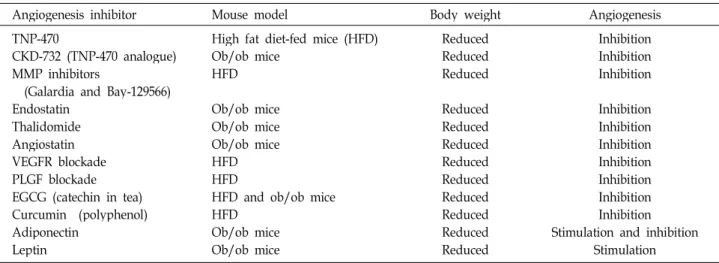
Table 1. Anti-obesity effects of angiogenesis modulators in animal models

Angiogenesis inhibitor Mouse model Body weight Angiogenesis

TNP-470

CKD-732 (TNP-470 analogue) MMP inhibitors

(Galardia and Bay-129566) Endostatin

Thalidomide Angiostatin VEGFR blockade PLGF blockade EGCG (catechin in tea) Curcumin (polyphenol) Adiponectin

Leptin

High fat diet-fed mice (HFD) Ob/ob mice

HFD Ob/ob mice Ob/ob mice Ob/ob mice HFD

HFD HFD and ob/ob mice HFD Ob/ob mice

Ob/ob mice

Reduced Reduced Reduced Reduced Reduced Reduced Reduced Reduced Reduced Reduced Reduced Reduced

Inhibition Inhibition Inhibition Inhibition Inhibition Inhibition Inhibition Inhibition Inhibition Inhibition Stimulation and inhibition

Stimulation Adapted from [14].

adipocytes. High expression of endostatin could be due to the fact that expanding adipose tissue produces an excessive amount of proteases such as MMPs that cleave collagen XVIII into endostatin. Although TSP-1 is a relatively well characterized angiogenesis inhibitor, deletion of the TSP-1 gene in mice did not result in severe vasculature-related abnormalities. Similarly, exposure of TSP-1 knockout mice to a high-calorie diet does not significantly alter body weight or adipose tissue development as compared with control animals. Thus the role of TSP-1 in regulation of adipose an- giogenesis needs further to be investigated. Thus, it is possi- ble that a number of endogenous angiogenesis inhibitors are upregulated in order to maintain a homeostatic state of the adipose tissue by counteracting the excessive proangiogenic activity.

Modulation of obesity by angiogenesis inhibitors Substantial evidence suggests that different angiogenesis inhibitors significantly reduced body weight and adipose tis- sue mass [81] and newly formed adipose tissue depends on continued angiogenesis for further growth [68], strongly in- dicating a role of angiogenesis in adipose tissue growth.

Anti-obesity effects of angiogenesis modulators Several types of angiogenesis inhibitors, such as angiosta- tin, endostatin, TNP-470 and CKD-732 (TNP-470 analog) in- hibited fat mass expansion in mice (Table 1) [10, 54, 63, 81].

It is known that TNP-470 inhibits endothelial cell pro- liferation in vitro and angiogenesis in vivo [72]. TNP-470 also suppresses non-endothelial cell proliferation [46, 59].

TNP-470 suppresses 3T3-L1 preadipocyte proliferation [58]

and significantly reduced body weight in obese ob/ob mice [81]. Mice from other obesity models (A

y

, Cpe

fat

, C57BL/6J mice on a high-fat diet) treated with TNP-470 also weighed less than controls. Aged, relatively weight-stable ob/ob mice with negligible adipose endothelial cell proliferation lost weight when treated with TNP-470, whereas controls slight- ly gained. This suggests adipose vasculature is susceptible to inhibitors, even when not proliferating. CDK-732 also sig- nificantly decreased body weight, mesenteric fat pads and the size of adipocytes in arcuate nucleus lesion mice and ob/ob mice.

Angiostatin (crinkle 1-4 domains of plasminogen) [77] and endostatin (a C-terminal fragment of collagen XVIII) are en- dogenous angiogenesis inhibitors that act exclusively on endothelium. Obese mice treated with angiostatin at 20 mg/kg per day gained one-third that of controls, whereas those receiving 50 mg/kg per 12 hr lost weight. Endostatin- treated ob/ob mice gained less or lost weight relative to controls. VEGFR2 inhibitors can limit diet-induced fat tissue expansion and adipocyte differentiation during in vivo adi- pogenesis [91, 33].

D'Amato et al. have demonstrated that orally ad- ministered thalidomide is an inhibitor of angiogenesis in- duced by bFGF in a rabbit cornea micropocket assay [26], although thalidomide is a potent teratogen causing dysmelia (stunted limb growth) in humans. Ob/ob mice treated with thalidomide gained less or lost weight relative to controls.

Galardin and Bay-129566 are matrix metalloproteinase in-

hibitors [36]. Galardin significantly reduced the weight of

subcutaneous and gonadal fat deposits, but not body weight

in high fat diet-fed wild-type mice, suggesting a role of

(7)

A

B

C

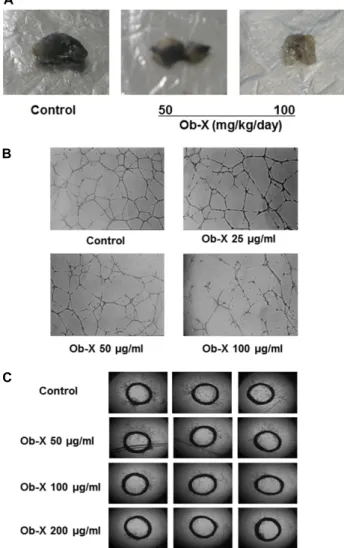
Fig. 3. Inhibitory effects of Ob-X on angiogenesis. (C) Matrigel plugs containing VEGF plus bFGF (control group) or VEGF plus bFGF plus Ob-X (Ob-X group) were photo- graphed. (B) Tube formation of human endothelial cells.

HUVECs were plated in Matrigel-coated wells with varying amounts of Ob-X (25, 50, and 100 μg/ml). After incubation capillary-like tube formation was photo- graphed (original magnification 100×). (C) Microvessel outgrowth arising from rat aortic ring. Aortic rings were embedded in Matrigel, then fed with medium containing various concentrations of Ob-X for 10 days, and photo- graphed (original magnification 12.5×). Adapted from [55].

MMP inhibitors in the development of adipose tissue.

Bay-129566 treated ob/ob mice gained less or lost weight rel- ative to controls.

The antiangiogenic herbal composition Ob-X reduces adipose tissue mass

The anti-angiogenic and MMP inhibitory activities were examined in water extracts from medicinal herbs and plants which have been used for a long perizod of time, and three herbal extracts Melissa officinalis L. (Labiatae; lemon balm), Morus alba L. (Moraceae; white mulberry), and Artemisia ca- pillaris Thunb. (Compositae; injin) were selected to make Ob-X [62]. The antiangiogenic herbal extracts Ob-X reduced body weight gain and adipose tissue mass, and markedly modulated the expression of genes involved in angiogenesis and the MMP system in adipose tissue.

Close examination of developing adipose tissue micro- vasculature revealed that angiogenesis often precedes adipo- genesis [24]. The interaction between adipocytes and endo- thelium is therefore presumed to be involved in the develop- ment and maintenance of adipose tissue. Newly formed adi- pose tissue depends on continued angiogenesis for further growth [68]. It was shown that different angiogenesis in- hibitors significantly reduced body weight and adipose tis- sue mass [81], strongly indicating a role of angiogenesis in adipose tissue growth. Ob-X reduced the formation of new blood vessels induced by the angiogenic factors VEGF and bFGF in a mouse Matrigel plug assay (Fig. 3A). Plugs from Ob-X-treated mice exhibited decreased blood vessel density and hemoglobin contents in a dose-dependent manner. Ob-X inhibited HUVEC tube formation in vitro in a dose-depend- ent manner (Fig. 3B). Ob-X also produced dose-dependent inhibition of VEGF-induced microvessel outgrowth from aortic tissue in the ex vivo rat aortic ring assay (Fig. 3C).

These results show that Ob-X has the ability to inhibit angiogenesis.

Ob-X showed the inhibition of two major MMP activities (MMP-2 and MMP-9) in vitro markedly [55]. MMPs play ma- jor roles in the ECM remodeling occurring in a variety of physiological and pathological conditions, such as embry- onic growth and development, wound healing, athero- sclerosis, and tumor invasion and metastasis. Moreover, adi- pocytes are surrounded by a basement membrane that has to be extensively remodeled in order to allow the hyper- trophic development of adipocytes observed in obesity [78].

MMP-2 and MMP-9 can remodel the ECM of murine and

human adipogenic cells to facilitate the adipogenic process [9, 67], and regulate the bio-availability of adipocyte growth factors sequestered as inactive molecules in the matrix, or blocked by interaction with their binding proteins [82].

These results strongly suggest that Ob-X, which has the abil- ity to inhibit MMP activity as well as angiogenesis, can regu- late adipose tissue growth.

Body weight gain and adipose tissue mass of Ob-X-treat-

(8)

Table 2. Effects of Ob-X on body weight gain and adipose tissue weight in nutritionally obese mice

Normal Control Ob-X

Body weight (g) Body weight gain (g) VSC fat (g)

Epididymal (g) Mesenteric (g) Retroperitoneal (g) SC fat (g) Brown fat (g)

26.9±0.70 5.61±0.43 1.58±0.11 0.88±0.19 0.38±0.07 0.32±0.06 0.89±0.09 1.13±0.11

30.7±0.71*

9.60±0.54*

2.64±0.41*

1.62±0.23*

0.61±0.16*

0.41±0.11 1.77±0.25*

1.38±0.20*

28.4±0.62**

7.29±1.14**

1.65±0.27**

0.95±0.20**

0.35±0.08**

0.35±0.07 0.97±0.13**

1.20±0.17**

Adult male mice received a low fat (normal group), high fat (control group), or Ob-X-supplemented (0.2% w/w) high fat di- et (Ob-X group) for 12 weeks. All values are expressed as the mean ± SD. * p <0.05 compared with normal group. ** p <0.05 compared with control group. VSC, visceral; SC, subcutaneous.

Adapted from [55].

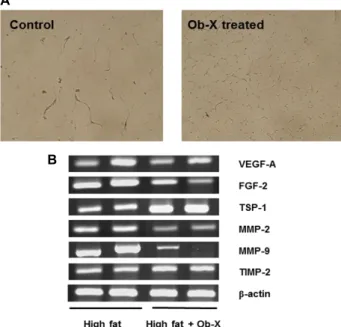
A

B

Fig. 4. Effects of Ob-X on blood vessel density and mRNA ex- pression of genes involved in angiogenesis in adipose tissues of diet-induced obese mice. (A) Histological anal- ysis of the blood vessels in visceral adipose tissue stained with an antibody against von Willebrand Factor. The blood vessels of epididymal white adipose tissue derived from mice fed with a high fat diet (control group) or a high fat diet supplemented with Ob-X (Ob-X group) for 12 weeks were stained and analyzed (original magni- fication 100×). (B) mRNA expression of angiogenic fac- tors, MMPs, and their inhibitors in adipose tissues of diet-induced obese mice. Adapted from [55].

ed mice were significantly less than those of untreated mice (Table 2). Ob-X treatment for 12 weeks in high fat diet-fed mice decreased adipose tissue mass by 43%, and this effect was higher than the results showing a 38% reduction after a 12-week administration of galardin, a broad spectrum in- hibitor of angiogenesis and MMP [66]. These data are also supported by other results indicating that body weight gain and adipose tissue mass of obese animals were reduced sig- nificantly by several kinds of angiogenesis inhibitors [63, 81].

Human studies also showed that 1.5 g of Ob-X per day for a 12- week treatment reduced VSC fat area by 9.5% (from 81.5 ± 4.40 cm

2

to 73.8 ± 4.72 cm

2

; p<0.01) (unpublished data).

In addition to weight reduction, Ob-X inhibited adipocyte hypertrophy in high fat diet-fed obese mice. The size of adi- pocytes was considerably smaller in Ob-X-treated mice than in controls, eventually resulting in the decreased body weight gain and adipose tissue mass.

Consistent with the inhibitory effects of Ob-X on angio- genesis in vitro, blood vessel density of visceral adipose tis- sue sections from Ob-X-treated mice was much lower than in untreated mice (Fig. 4A). In contrast, the in vivo admin- istration of galardin results in a higher blood vessel density in adipose tissue of mice than in untreated control mice [66].

These inconsistent findings can be explained by normalizing blood vessel density with the number of adipocytes [21, 65].

Zymographic analysis revealed that administration of Ob-X suppressed gelatinolytic activity, especially MMP-2 activity, since proMMP-2 activity was markedly reduced in adipose tissues, even though MMP-9 activity was not detectable in our tissue samples. It has also been reported that in situ zy-

mography with gelatin-containing gels on cryosections of adipose tissues confirmed a lower MMP activity in tissues of galardin-treated animals. These results indicate that the reduction of adipose tissue mass by Ob-X may be due to its anti-angiogenic and MMP-inhibiting actions.

Several kinds of cells in adipose tissue, including pre-

adipocytes, adipocytes, adipose stromal cells, endothelial

cells, and inflammatory cells contributes to production of

multiple angiogenic factors and inhibitors that regulate adi-

pose angiogenesis. Angiogenic factors, such as VEGF-A and

FGF-2, promote the proliferation and differentiation of endo-

thelial cells within fat pad [7, 17, 52], whereas TSP-1 inhibits

angiogenesis in vivo and impairs migration and proliferation

of cultured microvascular endothelial cells [2]. Adipocytes

also produce MMPs and MMP inhibitors that are differ-

entially expressed in adipose tissue during obesity in murine

obesity models [19, 71, 95]. Interplay between different fac-

tors is presumed to be involved in the development and

maintenance of adipose tissue. Ob-X administration to high

(9)

fat diet-induced obese mice decreased the mRNA expression of VEGF-A and FGF-2 responsible for angiogenesis, whereas it increased mRNA level of the anti-angiogenic TSP-1 in adi- pose tissues (Fig. 4B). Similarly, Ob-X decreased MMP-2 and MMP-9 mRNA levels, but increased TIMP1 and TIMP-2.

These data indicate that Ob-X exerts a specific regulatory effect on genes involved in angiogenesis and the MMP sys- tem in adipose tissues. Moreover, inhibition of adipose tis- sue growth by Ob-X may alter the expression of genes re- sponsible for angiogenesis and the MMP system.

MMPs play important roles in angiogenesis. MMP in- hibitors, both synthetic and endogenous, inhibit angiogenic responses both in vivo and in vitro [3, 40, 50, 90]. Moreover, MMP-deficient mice exhibit delayed or diminished angio- genic responses during development or in response to tumor xenograft [47]. But on the other hand, it was reported that MMP-based proteolysis of the ECM proteins releases cryptic fragments, which are very potent anti-antiogenic substances such as angiostatin and endostatin [76, 77]. High expression of endostatin could be due to the fact that expanding adipose tissue produces a MMPs that cleave collagen XVIII into en- dostatin, showing that inhibiting MMP activity may de- crease endogenous angiogenic inhibitors.

Several studies demonstrated that MMPs have novel func- tion in adipogenesis which modulate adipocyte differ- entiation independent of angiogenesis and therefore MMP inhibitors can block the adipocyte differentiation process [9, 19, 25, 71]. Ob-X is capable of suppressing adipogenesis and adipocyte-specific gene expression. Ob-X treatment pre- vented lipid accumulation in 3T3-L1 adipocytes. Consistent with the effects of Ob-X on lipid accumulation, Ob-X de- creased the expression of PPARγ and the PPARγ target gene aP2, which are directly implicated in lipogenic pathways in 3T3-L1 cells, indicating that Ob-X has an inhibitory effect on adipogenesis. Treatment with MMP inhibitors impairs adipose tissue development in mice fed a high fat diet [44, 66]. Furthermore, the secretion of MMP-2 and MMP-9 in- creases during adipocyte differentiation in both human adi- pocytes and mouse preadipocyte cell lines [9, 19, 71]. This suggests that Ob-X can regulate growth and development of adipose tissue by inhibiting MMP activities.

Metabolic changes were accompanied during Ob-X-in- duced weight loss. Ob-X decreased serum triglyceride and free fatty acid levels. Serum glucose and insulin levels were also decreased by Ob-X in obese mice, which exhibited hy- perinsulinemia and hyperglycemia. These results are con-

sistent with our previous study showing that Ob-X treat- ment to obese mice increases mRNA expression of enzymes for fatty acid β-oxidation [61]. Thus, it is likely that Ob-X may be used to prevent and treat obesity and obesity-related disorders. Since there is a strong association between viscer- al adiposity and insulin resistance, Ob-X may have an im- portant role in alleviating hyperlipidemia, insulin resistance and diabetes [28, 56].

In conclusion, these studies demonstrate that Ob-X, which inhibits angiogenesis and MMP activity, regulates adipose tissue growth of nutritionally induced obesity and related disorders in mice. These events may influence changes in the expression of genes involved in angiogenesis and the MMP system.

Korean red ginseng prevents obesity by inhibiting angiogenesis

Ginseng is widely used in Asian societies as a valuable medicine. Extensive research indicates that ginseng has many pharmacological effects on the central nervous, endo- crine, immune, and cardiovascular systems [1, 37, 69].

Ginseng has also been reported to inhibit tumor growth by modulating MMP-2 and MMP-9 [98, 102], which are re- garded as markers of tumor invasion and metastasis, and suppression of their expression may inhibit malignant tumor invasion and metastasis. Ginseng and ginsenosides, its major active components, exhibit potential as potent cancer chemo- preventive agents due in part to their downregulation of MMP expression [32, 43, 98, 100, 102]. Based on reports sug- gesting that the growth and development of adipose tissue are thought to be associated with angiogenesis and ECM remodeling [13, 66, 81], and that ginseng both inhibits angio- genesis and reduces the activity of MMPs [43, 86], its effects on obesity were examined in high fat diet-fed obese mice.

Similar to previous results showing that anti-angiogenic herbal composition Ob-X reduces adipose tissue mass and body weight gain in obese mice [55, 101], body weights and adipose tissue mass were much less in ginseng-treated mice compared with untreated mice (Fig. 5A and B) [61].

Treatment of high fat diet-fed mice with 0.5 and 5% ginseng

for 8 weeks decreased adipose tissue mass by 49 and 60%,

respectively. These results also provide evidence that adi-

pose tissue growth and development may be prevented by

inhibiting angiogenesis. Ginseng also significantly inhibited

adipocyte hypertrophy in high fat diet-fed obese mice. The

size of adipocytes was considerably smaller in ginseng-

(10)

A

B C

D

Fig. 5. Regulation of body weight, adipose tissue mass, adipocyte size, and food intake by ginseng in high-fat diet-fed obese mice. Adult male mice (n=8/group) were fed a low fat diet (LFD), a high fat diet (HFD), or HFD supplemented with 0.5 or 5% gin- seng for 8 weeks. (A) Body weights at the end of the treatment period are significantly different between the LFD and HFD groups ( p <0.05) and between the HFD group and those fed HFD supplemented with 0.5 or 5% ginseng ( p <0.05). (B) Adipose tissue weights. (C) Light microscopic analysis of the size of adipocytes in visceral and subcuta- neous adipose tissues. We measured the size of adipocytes in a fixed area (1,000,000 µm

2

). (D) Food intake. All values are expressed as mean ± SD.

# p <0.05 versus LFD group. * p <0.05 versus HFD group. Adapted from [61].

treated mice than in untreated obese mice (Fig. 5C), even- tually resulting in decreased adipose tissue mass and body weight gain. Visceral obesity due to adipocyte hypertrophy is known to be closely associated with various metabolic syndromes, including insulin resistance, and large adipo- cytes are associated with insulin resistance, and smaller adi- pocytes are associated with insulin sensitivity [49, 75].

Therefore, ginseng may alleviate insulin resistance due to its ability to inhibit adipocyte hypertrophy in obese animals.

Weight loss and appetite suppression are common non- specific responses, maybe due to drug toxicity. However, ap- petite changes were not observed during ginseng-induced weight loss (Fig. 5D), showing a nontoxic mechanism. It was reported that treatment with angiogenesis inhibitors endo- statin and low doses of either TNP-470 or angiostatin as well as Ob-X did not change caloric intake [55, 81]. Thus, anti-an- giogenic ginseng may selectively target adipose tissue and cause weight reduction because angiogenesis inhibitors tar- get only growing or newly formed, immature vessels.

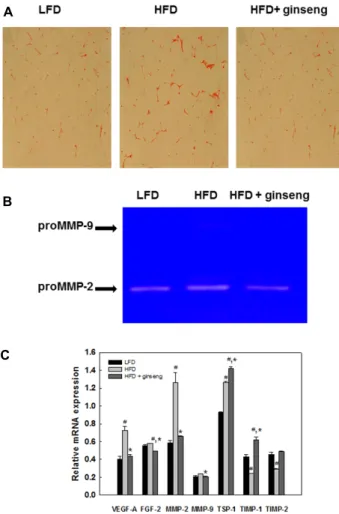
Inhibition of angiogenesis in growing adipose tissue and weight loss in obese mice are both associated with a reduc- tion in vascular density [14]. Blood vessel density of adipose tissue sections from ginseng-treated mice was much less than that from untreated obese mice (Fig. 6A). This finding is consistent with reports that adipose tissue mass is sensi- tive to angiogenesis inhibitors and can be regulated by the adipose tissue vasculature [10, 55, 81]. It has been suggested that ginseng exerts anti-angiogenic activities as a potential cancer chemopreventive agent [86]. The active ginsenosides including Rb1 and Rb3 inhibit the early step in angiogenesis and the chemoinvasion of endothelial cells, and they sup- press tumor metastasis in part due to inhibition of angio- genesis; the ginsenosides metabolite compound K exerts an- ti-angiogenic activity by inhibiting the migration and tube formation of endothelial cells [48, 87, 98, 102]. These results suggest that ginseng can reduce adipose tissue mass and body weight through its angiosuppressive actions.

MMPs are essential regulators of various phases of the

(11)

A

B

C

Fig. 6. Effects of ginseng on blood vessel density, MMP activity, and mRNA expression of genes involved in angiogenesis in adipose tissues of obese mice. (A) Histological analysis of the blood vessels in adipose tissue stained with an antibody against vWF. Adult male mice were fed a low fat diet (LFD), a high fat diet (HFD), or HFD supple- mented with 5% ginseng for 8 weeks. (B) Zymographic analysis of adipose tissue. Protein extracts from adipose tissues were applied to a gelatin-containing gel.

Gelatinolytic activity was measured by zymography. (C) mRNA expression of angiogenic factors, MMPs, and their inhibitors in adipose tissues in HFD-induced obese mice. All values are expressed as mean ± SD. # p < 0.05 versus LFD group. * p < 0.05 versus HFD group. Adapted from [61].

angiogenic process, indicating synergistic actions of angio- genesis and MMPs on the regulation of adipose tissue growth. MMPs can influence endothelial cell survival and proliferation by modifying the balance between angiogenic and anti-angiogenic molecules [34]. Both synthetic and en- dogenous MMP inhibitors inhibit angiogenic responses [90, 92]. Zymographic analyses revealed that administration of ginseng suppressed MMP-2 activity, because proMMP-2 ac-

tivity was markedly reduced in adipose tissues, although MMP-9 activity was not detectable (Fig. 6B). Moreover, MMP-2 activity was even lower in ginseng-treated group than in the low fat diet group, suggesting that other potential mechanisms may also be involved in the ginseng-mediated regulation of obesity. Similarly, ginseng decreases MMP ac- tivities; Rg3 inhibits MMP-2 and MMP-9 protein expression, and compound K suppresses MMP-9 protein expression in endothelial cells and human astroglioma cells [48, 51, 98, 102]. Recent studies suggest that MMPs play roles in the tissue remodeling events associated with adipogenesis.

These results indicate that the reduction in adipose tissue mass by ginseng may be due to reductions in MMP activities.

Angiogenic factors, such as VEGF-A and FGF-2, promote the proliferation and differentiation of endothelial cells with- in fat tissue [16, 52], whereas TSP-1 inhibits angiogenesis in vivo and impairs the migration and proliferation of cul- tured microvascular endothelial cells [2]. Adipocytes also produce MMPs and MMP inhibitors that are differentially expressed in adipose tissue in murine obesity models [9, 19, 71]. Ginseng treatment of high fat diet-induced obese mice decreased VEGF-A and FGF-2 mRNA levels, whereas gin- seng increased the mRNA levels of the anti-angiogenic agent TSP-1 in adipose tissues (Fig. 6C). Similarly, ginseng de- creased MMP-2 and MMP-9 mRNA levels but increased the levels of TIMP-1 and TIMP-2. These data indicate that gin- seng exerts a specific regulatory effect on genes involved in both angiogenesis and MMPs in adipose tissues.

In conclusion, these studies suggest that ginseng may in- hibit adipose tissue growth and obesity in nutritionally in- duced obese mice and that this process may be mediated in part through the inhibition of angiogenesis.

Conclusions

Obesity is a complex metabolic disorder that is deeply

associated with type 2 diabetes, dyslipidemia, hypertension,

atherosclerosis, stroke, hepatic steatosis, sleep apnea, gall-

bladder disease, and cancer. Emerging evidence suggests

that modulation of angiogenesis seems to have the potential

to reduce fat mass and impair the development of obesity

by regulating adipose tissue vasculature. Actually, anti-an-

giogenic agents including herbal extracts Ob-X and ginseng

could inhibit obesity as well as hepatic steatosis, dyslipide-

mia, and hyperglycemia without any toxic effects. Thus an-

giogenesis inhibitors may be an attractive pharmacological

(12)

Fig. 7. Regulation of obesity by angiogenesis inhibitors.

target for the treatment of obesity and related metabolic dis- orders (Fig. 7).

Acknowledgements

This work supported by the National Research Foundation of Korea (NRF) Grant funded by the Korea Government (MEST) (2012R1A1A3002100 and 2012R1A2A2A01004508), Korea.

References

1. Attele, A. S., Wu, J. A. and Yuan, C. S. 1999. Ginseng phar- macology: multiple constituents and multiple actions.

Biochem Pharmacol 58, 1685-1693.

2. Amstrong, L. C. and Bornstein, P. 2003. Thrombospondins 1 and 2 function as inhibitors of angiogenesis. Matrix Biol 22, 63-71.

3. Anand-Apte, B., Pepper, M. S., Voest, E., Montesano, R., Olsen, B., Murphy, G., Apte, S. S. and Zetter, B. 1997.

Inhibition of angiogenesis by tissue inhibitor of metal- loproteinase-3. Inves Ophthalmo Vis Sci 38, 817-823.

4. Armer, P. 2001. Regional differences in protein production by human adipose tissue. Biochem Soc Trans 29, 72-75.

5. Baillargeon, J. and Rose, D. P. 2006. Obesity, adipokines, and prostate cancer (review). Int J Oncol 28, 737-745.

6. Bergers, G., Brekken, R., McMahon, G., Vu, T. H., Itoh, T., Tamaki, K., Tanzawa, K., Thorpe, P., Itohara, S., Werb, Z.

and Hanahan, D. 2000. Matrix metalloproteinase-9 triggers the angiogenic switch during carcinogenesis. Nat Cell Biol 2, 737-744.

7. Bikfalvi, A., Klein, S., Pintucci, G. and Rifkin, D. B. 1997.

Biological roles of fibroblast growth factor-2. Endocr Rev 18, 26-45.

8. Bouloumie, A., Lolmede, K., Sengenes, C., Galitzky, J. and Lafontan, M. 2002. Angiogenesis in adipose tissue. Ann Endocrinol (Paris) 63, 91-95.

9. Bouloumie, A., Sengenes, C., Portolan, G., Galitzky, J. and

Lafontan, M. 2001. Adipocyte produces matrix metal- loproteinases 2 and 9: involvement in adipose differ- entiation. Diabetes 50, 2080-2086.

10. Bråkenhielm, E., Cao, R., Gao, B., Angelin, B., Cannon, B., Parini, P. and Cao, Y. 2004. Angiogenesis inhibitor, TNP-470, prevents diet-induced and genetic obesity in mice.

Circ Res 94, 1579-1588. 

11. Bukowiecki, L., Lupien, J., Follea, N., Paradis, A., Richard, D. and LeBlanc, J. 1980. Mechanism of enhanced lipolysis in adipose tissue of exercise-trained rats. Am J Physiol 239, 422-429

12. Cao, R., Brakenhielm, E., Wahlestedt, C., Thyberg, J. and Cao, Y. 2001. Leptin induces vascular permeability and syn- ergistically stimulates angiogenesis with FGF-2 and VEGF.

Proc Natl Acad Sci USA 98, 6390-6395.

13. Cao, Y. 2007. Angiogenesis modulates adipogenesis and obesity. J Clin Invest 117, 2362-2368.

14. Cao, Y. 2010. Adipose tissue angiogenesis as a therapeutic target for obesity and metabolic diseases. Nat Rev Drug Discov 9, 107-115.

15. Cao, Y., Sun, Z., Liao, L., Meng, Y., Han, Q., and Zhao, R. C. 2005. Human adipose tissue-derived stem cells differ- entiate into endothelial cells in vitro and improve postnatal neovascularization in vivo . Biochem Biophys Res Commun 332, 370-379.

16. Carmeliet, P., Ferreira, V., Breier, G., Pollefeyt, S., Kieckens, L., Gertsenstein, M., Fahrig, M., Vandenhoeck, A., Harpal, K., Eberhardt, C., Declercq, C., Pawling, J., Moons, L., Collen, D., Risau, W. and Nagy, A. 1996. Abnormal blood vessel development and lethality in embryos lacking a sin- gle VEGF allele. Nature 380, 435-439.

17. Castellot, J. J. Jr., Karnovsky, M. J. and Spiegelman, B. M.

1980. Potent stimulation of vascular endothelial cell growth by differentiated 3T3 adipocytes. Proc Natl Acad Sci USA 77, 6007-6011.

18. Celletti, F. L., Waugh, J. M., Amabile, P. G., Brendolan, A., Hilfiker, P. R. and Dake, M. D. 2001. Vascular endothelial growth factor enhances atherosclerotic plaque progression.

Nat Med 7, 425-429.

19. Chavey, C., Mari, B., Monthouel, M. N., Bonnafous, S., Anglard, P., Van Obberghen, E. and Tartare-Deckert, S.

2003. Matrix metalloproteinases are differentially expressed in adipose tissue during obesity and modulate adipocyte differentiation. J Biol Chem 278, 11888-11896.

20. Cho, C. H., Koh, Y. J., Han, J., Sung, H. K., Jong, L. H., Morisada, T., Schwendener, R. A., Brekken, R. A., Kang, G., Oike, Y., Choi, T. S., Suda, T., Yoo, O. J. and Koh, G. Y.

2007. Angiogenic role of LYVE-1-positive macrophages in adipose tissue. Circ Res 100, 47-57.

21. Christiaens, V. and Lijnen, H. R. 2006. Role of the fi- brinolytic and matrix metalloproteinase systems in develop- ment of adipose tissue. Arch Physiol Biochem 112, 254-259.

22. Claffey, K. P., Wilkison, W. O. and Spiegelman, B. M. 1992.

Vascular endothelial growth factor. Regulation by cell dif-

ferentiation and activated second messenger pathways. J

Biol Chem 267, 16317-16322.

(13)

23. Couillard, C., Mauriège, P., Imbeault, P., Prud'homme, D., Nadeau, A., Tremblay, A., Bouchard, C. and Després, J. P.

2000. Hyperleptinemia is more closely associated with adi- pose cell hypertrophy than with adipose tissue hyperplasia.

Int J Obes Relat Metab Disord 24, 782-788.

24. Crandall, D. L., Hausman, G. J. and Kral, J. G. 1997. A re- view of the microcirculation of adipose tissue: anatomic, metabolic, and angiogenic perspectives. Microcirculation 4, 211-232.

25. Croissandeau, G., Chrétien, M. and Mbikay, M. 2002.

Involvement of matrix metalloproteinases in the adipose conversion of 3T3-L1 preadipocytes. Biochem J 364, 739-746.

26. D'Amato, R. J., Loughnan, M. S., Flynn, E. and Folkman, J. 1994. Thalidomide is an inhibitor of angiogenesis. Proc Natl Acad Sci USA 91, 4082-4085.

27. Demeulemeester, D., Collen, D. and Lijnen, H. R. 2005.

Effect of matrix metalloproteinase inhibition on adipose tis- sue development. Biochem Biophys Res Commun 329, 105-110.

28. de Souza, C. J., Eckhardt, M., Gagen, K., Dong, M., Chen, W., Laurent, D. and Burkey, B. F. 2001. Effects of pioglita- zone on adipose tissue remodeling within the setting of obe- sity and insulin resistance. Diabetes 50, 1863-1871.

29. Dobson, D. E., Kambe, A., Block, E., Dion, T., Lu, H., Castellot, J. J. Jr. and Spiegelman, B. M. 1990. 1-Butyryl- glycerol: a novel angiogenesis factor secreted by differ- entiating adipocytes. Cell 61, 223-230.

30. Folkman, J. 1995. Angiogenesis in cancer, vascular, rheuma- toid and other disease. Nat Med 1, 27-31.

31. Friedman, J. M. and Halaas, J. L. 1998. Leptin and the regu- lation of body weight in mammals. Nature 395, 763-770.

32. Fujimoto, J., Sakaguchi, H., Aoki, I., Toyoki, H., Khatun, S.

and Tamaya, T. 2001. Inhibitory effect of ginsenoside-Rb2 on invasiveness of uterine endometrial cancer cells to the basement membrane. Eur J Gynaecol Oncol 22, 339-341.

33. Fukumura, D., Ushiyama, A., Duda, D. G., Xu, L., Tam, J., Krishna, V., Chatterjee, K., Garkavtsev, I. and Jain, R. K.

2003. Paracrine regulation of angiogenesis and adipocyte differentiation during in vivo adipogenesis. Circ Res 93, e88-97.

34. Gabison, E. E., Hoang-Xuan, T., Mauviel, A. and Menashi, S. 2003. Metalloproteinases and angiogenesis. Pathol Biol 51, 161-166.

35. Galardy, R. E., Grobelny, D., Foellmer, H. G. and Fernandez, L. A. 1994. Inhibition of angiogenesis by the matrix metal- loprotease inhibitor N-[2R-2-(hydroxamidocarbonymethyl)- 4-methylpentanoyl)]-L-tryptophan methylamide. Cancer Res 54, 4715-4718.

36. Gatto, C., Rieppi, M., Borsotti, P., Innocenti, S., Ceruti, R., Drudis, T., Scanziani, E., Casazza, A. M., Taraboletti, G. and Giavazzi, R. 1999. BAY 12-9566, a novel inhibitor of matrix metalloproteinases with antiangiogenic activity. Clin Cancer Res 5, 3603-3607.

37. Gillis, C. N. 1997. Panax ginseng pharmacology: a nitric ox- ide link? Biochem Pharmacol 54, 1-8.

38. Goldsmith, H. S., Griffith, A. L., Kupferman, A. and Catsim- poolas, N. 1984. Lipid angiogenic factor from omentum. J Am Med Assoc 252, 2034-2036.

39. Hausman, G. J. and Richardson, R. L. 2004. Adipose tissue angiogenesis. J Anim Sci 82, 925-934.

40. Hiraoka, N., Allen, E., Apel, I. J., Gyetko, M. R. and Weiss, S. J. 1998. Matrix metalloproteinases regulate neovasculari- zation by acting as pericellular fibrinolysins. Cell 95, 365-377.

41. Hiraoka, Y., Yamashiro, H., Yasuda, K., Kimura, Y., Inamoto, T. and Tabata, Y. 2006. In situ regeneration of adi- pose tissue in rat fat pad by combining a collagen scaffold with gelatin microspheres containing basic fibroblast growth factor. Tissue Eng 12, 1475-1487.

42. Hlatky, L., Hahnfeldt, P. and Folkman, J. 2002. Clinical ap- plication of antiangiogenic therapy: microvessel density, what it does and doesn’t tell us. J Natl Cancer Inst 94, 883–

43. Ho, Y. L., Li, K. C., Chao, W., Chang, Y. S. and Huang, 893.

G. J. 2012. Korean Red Ginseng Suppresses Metastasis of Human Hepatoma SK-Hep1 Cells by Inhibiting Matrix Metalloproteinase-2/-9 and Urokinase Plasminogen Activa- tor. Evid Based Complement Alternat Med 2012, 965846.

44. Hobson, B. and Denekamp, J. 1984. Endothelial proliferation in tumours and normal tissues: continuous labelling studies.

Br J Cancer 49, 405-413.

45. Hutley, L. J., Herington, A. C., Shurety, W., Cheung, C., Vesey, D. A., Cameron, D. P. and Prins, J. B. 2001. Human adipose tissue endothelial cells promote preadipocyte proliferation. Am J Physiol Endocrinol Metab 281, E1037- E1044.

46. Ingber, D., Fujita, T., Kishimoto, S., Sudo, K., Kanamaru, T., Brem, H. and Folkman, J. 1990. Synthetic analogues of fumagillin that inhibit angiogenesis and suppress tumour growth. Nature 348, 555-557.

47. Itoh, T., Tanioka, M., Yoshida, H., Yoshioka, T., Nishimoto, H. and Itohara, S. 1998. Reduced angiogenesis and tumor progression in gelatinase A-deficient mice. Cancer Res 58, 1048-1051.

48. Jeong, A., Lee, H. J., Jeong, S. J., Lee, H. J., Lee, E. O., Bae, H. and Kim, S. H. 2010. Compound K inhibits basic fibro- blast growth factor-induced angiogenesis via regulation of p38 mitogen activated protein kinase and AKT in human umbilical vein endothelial cells. Biol Pharm Bull 33, 945-950.

49. Jeong, S. and Yoon, M. 2009. Fenofibrate inhibits adipocyte hypertrophy and insulin resistance by activating adipose PPARalpha in high fat diet-induced obese mice. Exp Mol Med 41, 397-405.

50. Johnson, M. D., Kim, H. R., Chesler, L., Tsao-Wu, G., Bouck, N. and Polverini, P. J. 1994. Inhibition of angiogenesis by tissue inhibitor of metalloproteinase. J Cell Physiol 160, 194-202.

51. Jung, S. H., Woo, M. S., Kim, S. Y., Kim, W. K., Hyun, J.

W., Kim, E. J., Kim, D. H. and Kim, H. S. 2006. Ginseng saponin metabolite suppresses phorbol ester-induced matrix metalloproteinase-9 expression through inhibition of activa- tor protein-1 and mitogen-activated protein kinase signaling pathways in human astroglioma cells. Int J Cancer 118, 490-497.

52. Kawaguchi, N., Toriyama, K., Nicodemou-Lena, E., Inou,

K., Torii, S. and Kitagawa, Y. 1998. De novo adipogenesis

(14)

in mice at the site of injection of basement membrane and basic fibroblast growth factor. Proc Natl Acad Sci USA 95, 1062- 1066.

53. Kawaguchi, N., Xu, X., Tajima, R., Kronqvist, P., Sundberg, C., Loechel, F., Albrechtsen, R. and Wewer, U. M. 2002.

ADAM 12 protease induces adipogenesis in transgenic mice.

Am J Pathol 160, 1895-1903.

54. Kim, Y. M., An, J. J., Jin, Y. J., Rhee, Y., Cha, B. S., Lee, H. C. and Lim, S. K. 2007. Assessment of the anti-obesity effects of the TNP-470 analog, CKD-732 . J Mol Endocrinol 38, 455-465.

55. Kim, M. Y., Park, B. Y., Lee, H. S., Park, E. K., Hahm, J.

C., Lee, J., Hong, Y., Choi, S., Park, D., Lee, H. and Yoon, M. 2010. The anti-angiogenic herbal composition Ob-X in- hibits adipose tissue growth in obese mice. Int J Obes 34, 820-830.

56. Kissebah, A. H. 1997. Central obesity: measurement and metabolic effects. Diabetes Rev 5, 8-20.

57. Kuo, L. E. and Zukowska, Z. 2007. Stress, NPY and vascular remodeling: implications for stress-related diseases. Peptides 28, 435-440.

58. Kuri-Harcuch, W. and Green, H. 1978. Adipose conversion of 3T3 cells depends on a serum factor. Proc Natl Acad Sci USA 75, 6107-6109.

59. Kusaka, M., Sudo, K., Matsutani, E., Kozai, Y., Marui, S., Fujita, T., Ingber, D. and Folkman, J. 1994. Cytostatic in- hibition of endothelial cell growth by the angiogenesis in- hibitor TNP-470 (AGM-1470). Br J Cancer 69, 212-216.

60. Ledoux, S., Queguiner, I., Msika, S., Calderari, S., Rufat, P., Gasc, J. M., Corvol, P. and Larger, E. 2008. Angiogenesis associated with visceral and subcutaneous adipose tissue in severe human obesity. Diabetes 57, 3247-3257.

61. Lee, H., Park, D. and Yoon, M. 2013. Korean red ginseng ( Panax ginseng ) prevents obesity by inhibiting angiogenesis in high fat diet-induced obese C57BL/6J mice. Food Chem Toxicol 53, 402-408.

62. Lee, J., Chae, K., Ha, J., Park, B. Y., Lee, H. S., Jeong, S., Kim, M. Y. and Yoon, M. 2008. Regulation of obesity and lipid disorders by herbal extracts from Morus alba , Melissa officinalis , and Artemisia capillaris in high-fat diet-induced obese mice. J Ethnopharmacol 115, 263-270.

63. Lijnen, H. R. 2008. Angiogenesis and obesity. Cardiovasc Res 78, 286-93.

64. Lijnen, H. R., Christiaens, V., Scroyen, I., Voros, G., Tjwa, M., Carmeliet, P. and Collen, D. 2006. Impaired adipose tis- sue development in mice with inactivation of placental growth factor function. Diabetes 55, 2698-2704.

65. Lijnen, H. R., Demeulemeester, D., Van Hoef, B., Collen, D.

and Maquoi, E. 2003. Deficiency of tissue inhibitor of matrix metalloproteinase-1 (TIMP-1) impairs nutritionally induced obesity in mice. Thromb Haemost 89, 249-255.

66. Lijnen, H. R., Maquoi, E., Hansen, L. B., Van Hoef, B., Frederix, L. and Collen, D. 2002. Matrix metalloproteinase inhibition impairs adipose tissue development in mice.

Arterioscler Thromb Vasc Biol 22, 374-379.

67. Lijnen, H. R., Maquoi, E., Holvoet, P., Mertens, A., Lupu, F., Morange, P., Alessi, M. C. and Juhan-Vague, I. 2001.

Adipose tissue expression of gelatinases in mouse models of obesity. Thromb Haemost 85, 1111-1116.

68. Liu, L. and Meydani, M. 2003. Angiogenesis inhibitors may regulate adiposity. Nutr Rev. 61, 384-387.

69. Lü, J. M., Yao, Q. and Chen, C. 2009. Ginseng compounds:

an update on their molecular mechanisms and medical applications. Curr Vasc Pharmacol 7, 293-302.

70. Luo, Z., Diaco, M., Murohara, T., Ferrara, N., Isner, J. M.

and Symes, J. F. 1997. Vascular endothelial growth factor attenuates myocardial ischemia-reperfusion injury. Ann Thorac Surg 64, 993-998.

71. Maquoi, E., Munaut, C., Colige, A., Collen, D. and Lijnen, H. R. 2002. Modulation of adipose tissue expression of mur- ine matrix metalloproteinases and their tissue inhibitors with obesity. Diabetes 51, 1093-1101.

72. Morita, T., Shinohara, N. and Tokue, A. 1994. Antitumour effect of a synthetic analogue of fumagillin on murine renal carcinoma. Br J Urol 74, 416-421.

73. Mu, H., Ohashi, R., Yan, S., Chai, H., Yang, H., Lin, P., Yao, Q. and Chen, C. 2006. Adipokine resistin promotes in vitro angiogenesis of human endothelial cells. Cardiovasc Res 70, 146-157.

74. Neels, J. G., Thinnes, T. and Loskutoff, D. J. 2004. Angiogen- esis in an in vivo model of adipose tissue development.

FASEB J 18, 983-985.

75. Okuno, A., Tamemoto, H., Tobe, K., Ueki, K., Mori, Y., Iwamoto, K., Umesono, K., Akanuma, Y., Fujiwara, T., Horikoshi, H., Yazaki, Y. and Kadowaki, T. 1998. Troglita- zone increases the number of small adipocytes without the change of white adipose tissue mass in obese Zucker rats.

J Clin Invest 101, 1354-1361. 

76. O'Reilly, M. S., Boehm, T., Shing, Y., Fukai, N., Vasios, G., Lane, W. S, Flynn, E., Birkhead, J. R., Olsen, B. R. and Folkman, J. 1997. Endostatin: an endogenous inhibitor of an- giogenesis and tumor growth. Cell 88, 277-285.

77. O'Reilly, M. S., Holmgren, L., Shing, Y., Chen, C., Rosenthal, R. A., Moses, M., Lane, W. S., Cao, Y., Sage, E. H. and Folkman, J. 1994. Angiostatin: a novel angiogenesis inhibitor that mediates the suppression of metastases by a Lewis lung carcinoma. Cell 79, 315-28.

78. Pierleoni, C., Verdenelli, F., Castellucci, M. and Cinti, S.

1998. Fibronectins and basal lamina molecules expression in human subcutaneous white adipose tissue. Eur J Histochem 42, 183-188.

79. Planat-Benard, V., Silvestre, J. S., Cousin, B., André, M., Nibbelink, M., Tamarat, R., Clergue, M., Manneville, C., Saillan-Barreau, C., Duriez, M., Tedgui, A., Levy, B., Pénicaud, L. and Casteilla, L. 2004. Plasticity of human adi- pose lineage cells toward endothelial cells: physiological and therapeutic perspectives. Circulation 109, 656-663.

80. Powell, K. 2007. Obesity: the two faces of fat. Nature 447, 525-527.

81. Rupnick, M. A., Panigrahy, D., Zhang, C. Y., Dallabrida, S.

M., Lowell, B. B., Langer, R. and Folkman, M. J. 2002.

Adipose tissue mass can be regulated through the vasculature. Proc Natl Acad Sci USA 99, 10730-10735.

82. Sadowski, T., Dietrich, S., Koschinsky, F. and Sedlacek, R.

(15)

초록:비만에서의 혈관신생의 역할 윤미정*

(목원대학교 의생명·보건학부 의생명공학전공)

혈관신생은 모든 조직의 성장과 발달 , 그리고 상처회복 등에 매우 중요하다. 지방조직은 우리 몸에서 가장 혈관

이 발달된 조직으로서 각 지방세포들은 모세혈관에 둘러싸여 있으며 신생혈관들은 지방세포에 영양분과 산소를

공급한다 . 혈관의 내피세포들은 파라크린 신호경로, 세포외 성분, 세포들 간의 직접적인 작용을 통해 지방세포와

교류한다 . 활성화된 지방세포들은 VEGF, FGF-2, leptin, HGF와 같은 혈관신생인자들을 생성하며, 이들은 단독으

로 혹은 협력하여 혈관신생을 증가시키고 지방조직의 성장과 대사를 촉진한다 . 따라서 혈관신생 억제제들은 비만

과 비만관련 질환을 치료하는데 유용할 것으로 생각된다 .

2003. Matrix metalloproteinase 19 regulates insulin-like growth factor-mediated proliferation, migration, and adhe- sion in human keratinocytes through proteolysis of in- sulin-like growth factor binding protein-3. Mol Biol Cell 14, 4569-4580.

83. Saiki, A., Watanabe, F., Murano, T., Miyashita, Y. and Shirai, K. 2006. Hepatocyte growth factor secreted by cultured adi- pocytes promotes tube formation of vascular endothelial cells in vitro . Int J Obes (Lond) 30, 1676-1684.

84. Samad, F., Pandey, M. and Loskutoff, D. J. 1998. Tissue fac- tor gene expression in the adipose tissues of obese mice.

Proc Natl Acad Sci USA 95, 7591-7596.

85. Sang, Q. X. 1998. Complex role of matrix metalloproteinases in angiogenesis. Cell Res 8, 171-177.

86. Sato, K., Mochizuki, M., Saiki, I., Yoo, Y. C., Samukawa, K. and Azuma. I. 1994. Inhibition of tumor angiogenesis and metastasis by a saponin of Panax ginseng, ginsenoside-Rb2.

Biol Pharm Bull 17, 635-639.

87. Sengupta, S., Toh, S. A., Sellers, L. A., Skepper, J. N., Koolwijk, P., Leung, H. W., Yeung, H. W., Wong, R. N., Sasisekharan, R. and Fan, T. P. 2004. Modulating angio- genesis: the yin and the yang in ginseng. Circulation 110, 1219-1225.

88. Silverman, K. J., Lund, D. P., Zetter, B. R., Lainey, L. L., Shahood, J. A., Freiman, D. G., Folkman, J. and Barger, A.

C. 1998. Angiogenic activity of adipose tissue. Biochem Biophys Res Commun 153, 347-352.

89. Soldati, F. and Sticher, O. 1980. HPLC separation and quan- titative determination of ginsenosides from Panax ginseng, Panax quinquefolium and from ginseng drug preparations.

2nd communication. Planta Med 39, 348-357.

90. Stetler-Stevenson, W. G. 1999. Matrix metalloproteinases in angiogenesis: a moving target for therapeutic intervention.

J Clin Invest 103, 1237-1241.

91. Tam, J., Duda, D. G., Perentes, J. Y., Quadri, R. S., Fukumura, D. and Jain, R. K. 2009. Blockade of VEGFR2 and not VEGFR1 can limit diet-induced fat tissue expansion:

role of local versus bone marrow-derived endothelial cells.

PLoS One 4, e4974.

92. Van Hul, M. and Lijnen, H. R. 2011. Matrix metal- loproteinase inhibition impairs murine adipose tissue de-

velopment independently of leptin. Endocr J 58, 101-107.

93. Varzaneh, F. E., Shillabeer, G., Wong, K. L. and Lau, D.

C. 1994. Extracellular matrix components secreted by mi- crovascular endothelial cells stimulate preadipocyte differ- entiation in vitro . Metabolism 43, 906-912.

94. Visse, R. and Nagase, H. 2003. Matrix metalloproteinases and tissue inhibitors of metalloproteinases: structure, func- tion, and biochemistry. Circ Res 92, 827-839.

95. Voros, G., Maquoi, E., Demeulemeester, D., Clerx, N., Collen, D. and Lijnen, H. R. 2005. Modulation of angio- genesis during adipose tissue development in murine models of obesity. Endocrinology 146, 4545-4554.

96. Wellen, K. E. and Hotamisligil, G. S. 2003. Obesity-induced inflammatory changes in adipose tissue. J Clin Invest 112, 1785-1788.

97. Wilkison, W. O., Choy, L. and Spiegelman, B. M. 1991.

Biosynthetic regulation of monobutyrin, an adipocyte-se- creted lipid with angiogenic activity. J Biol Chem 266, 16886- 16891.

98. Xu, T. M., Cui, M. H., Xin, Y., Gu, L. P., Jiang, X., Su, M. M., Wang, D. D. and Wang, W. J. 2008. Inhibitory effect of ginsenoside Rg3 on ovarian cancer metastasis. Chin Med J 121, 1394-1397.

99. Xue, Y., Petrovic, N., Cao, R., Larsson, O., Lim, S., Chen, S., Feldmann, H. M., Liang, Z., Zhu, Z., Nedergaard, J., Cannon, B. and Cao, Y. 2009. Hypoxia-independent angio- genesis in adipose tissues during cold acclimation. Cell Metab 9, 99-109.

100. Yoon, J. H., Choi, Y. J., Cha, S. W. and Lee, S. G. 2012.

Anti-metastatic effects of ginsenoside Rd via inactivation of MAPK signaling and induction of focal adhesion formation. Phytomedicine 19, 284-292.

101. Yoon, M. and Kim, M. Y. 2011. The anti-angiogenic herbal composition Ob-X from Morus alba, Melissa officinalis, and Artemisia capillaris regulates obesity in genetically obese ob/ob mice. Pharm Biol 49, 614-619.

102. Yue, P. Y., Wong, D. Y., Wu, P. K., Leung, P. Y., Mak,

N. K., Yeung, H. W., Liu, L., Cai, Z., Jiang, Z. H., Fan,

T. P. and Wong, R. N. 2006. The angiosuppressive effects

of 20(R)- ginsenoside Rg3. Biochem Pharmacol 72, 437-445.

수치

Fig. 1. Schematic representation of angiogenesis. Angiogenesis is the formation of new blood vessels from pre-existing vessels by the proliferation and migration of differentiated endothelial cells.
Fig. 2. Regulation of adipose tissue angio- angio-genesis by multiple factors. A variety of cells in the adipose tissue,  includ-ing preadipocytes, adipocytes, and adipose stromal cells contributes to production of multiple angiogenic factors and inhibitor
Table 1. Anti-obesity effects of angiogenesis modulators in animal models
Fig. 3. Inhibitory effects of Ob-X on angiogenesis. (C) Matrigel plugs containing VEGF plus bFGF (control group) or VEGF plus bFGF plus Ob-X (Ob-X group) were  photo-graphed
+5

참조

관련 문서

Purpose: TThis study examined the effect of repetitive magnetic stimulation (RMS) on the viability and proliferative response of human adipose tissue‐derived stromal cells

Obesity and Breast Cancer: The Role of Crown-Like Structures in Breast Adipose Tissue in Tumor Progression, Prognosis, and

Adipose tissue which used to be simply known as a storage of surplus energy is now perceived as an independent and active endocrine organ, and various kinds

Increased adipose tissue plays an important role in the development of low-grade inflammation, which is characterized by cytokine production and stimulation of inflammatory cytokine

Key words : Human adipose tissue-derived mesenchymal stem cells (hADSCs), osteogenic differentiation, nuclear factor of activated T cells (NFAT5)..

Fig. Tube formation of adipose tissue-derived CD146 positive endothelial cells in DMEM, DMEM with osteogenic inductive agents, EGM-2, and EGM-2 with osteogenic inductive

In the present study, we collected adipose tissue-derived stem cells from adult patients with liver disease, placed them in artificial scaffolds, and implanted these scaffolds in

Normal and healthy adipose tissue harbors various types of anti- inflammatory immune cells such as M2-like macrophages (M2 MAC), eosinophils, helper T type 2 (T H 2) cells, regulatory