폐질환 치료제의 효율적인 신약개발을 위한 생체표지자 및 대리결과 변수
서정원·이병요·채정우·손추영·강원구*·채한정**·권광일# 충남대학교 약학대학, *대구카톨릭 대학교 약학대학, **전북대학교 의과대학
(Received December 24, 2009; Accepted December 27, 2009)
Biomarkers and Surrogate Endpoints for Development of New Drug on Pulmonary Disease
Jeong-Won Seo, Byung-Yo Lee, Jung-Woo Chae, Chu-Young Son, Wonku Kang*, Han-Jung Chae** and Kwang-il Kwon#
College of Pharmacy, Chungnam University, Daejeon 305-764, Korea
*College of Pharmacy, Catholic University of Daegu, Korea
**Departments of pharmacology, Chonbuk Natianal University Medical School, Jeonju, 560-182, Korea
Abstract
— Biomarkers are likely to be important in the study of various pulmonary diseases for many reasons. Research efforts in developing biomarkers and surrogate endpoints of lung diseases have resulted in the identification of new risk fac- tors and novel drug targets, as well as the establishment of treatment guidelines. Government agencies, academic research institutions, diagnostic industries, and pharmaceutical companies all recognize the importance of biomarkers in new drug development and advancing therapies to improve public health. In drug development, biomarkers are used to evaluate early signals of efficacy and safety, to select dose, and to identify the target population. Identification of suitable end points not only would help investigators design appropriate clinical trials but would assist clinicians in caring for this patient population.
Though the area of pulmonology has received much attention in the past decades, it still lags behind with regard to the development of biomarkers, particularly those of health effects and susceptibility. This review critically summarized several biomarker researches such as Evaluation of COPD Longitudinally to Identify Predictive Surrogate End-points (ECLIPSE) study with objectives of identifying the parameters that predict disease progression of COPD, as well as biomarkers that may serve as surrogate end-points.
Keywords □
pulmonary disease, biomarker, surrogate endpoint, critical path
노년층에서병원을찾는가장흔한이유중하나는급성호흡 기증상이며이와더불어만성호흡기질환이노년층에서신체기 능의저하
,
입원및사망률증가에중요한역할을한다.
국내의경우
60
세이상의사망자사인중사망률이최고인폐암을제외 하고도만성호흡기계질환이5
위를차지하고있어노인의호흡 기계질환에대한특성의이해및관리가향후의료영역에서중 요한위치를차지하리라는것은쉽게예측할수있으며,
이상기 온,
기후변화,
흡연등으로인하여폐렴과만성폐쇄성폐질환등 의폐질환환자가지속적으로증가하고있다는보도자료도있다.
통계청에따르면
2009
년4
월을기준으로호흡기계통질환으로인한사망자수는최근
5
년간7
만여명에이르며,
특히0~4
세영 유아는매년80
여명정도가호흡기계통질환으로사망했다. 65
세 이상노인의경우최근5
년간6
만3
천여명이사망한가운데이는전체호흡기질환으로인한사망자중
87.5%
를차지하는것 으로파악되었다.
이처럼호흡기질환이인구전체의사망률에 있어중요한위치를차지하고있으며,
다양한폐질환의진단과질병진행에따른적절한치료방법선택및기존의또는새로운 치료적간섭행위의총체적영향력평가를위하여이를정량적 으로평가할수있는생체표지자및대리결과변수의개발이필 요하다
.
기존의치료제및치료적간섭행위에대한영향력평가와함 께
,
새로운신약개발단계에서신약후보물질의질병에대한영향력평가방법을확립하기위하여국가적또는기업적차원에 서다양한질병에대한생체표지자의개발이활발하게이루어지
#본논문에관한문의는저자에게로
(
전화) 042-821-7310 (
팩스) 042-823-6781
(E-mail) [email protected]
고있다
.
최근신약개발추세는적어도10,000
개이상의후보물질중검색을통해하나의신약으로승인받기위해최소
15
년이상의긴시간이필요하며
,
개발비용역시10
억달러에달하 는천문학적으로많은비용이소요된다.
이처럼많은비용으로전임상 시험을 진행하지만
FDA
의IND(investigational new drug)
승인에통과되는약물은후보물질중10%
에불과하다.
1)매년신약개발을위해투자하는비용은증가하는반면신약의허 가는감소또는정체하는추세를보이고있으며
,
임상시험진행 을위해연구목적으로허가받은IND
약물의경우, 50%
이상이 임상3
상에서시험에실패하여드롭아웃(drop out)
되는실정이다
.
이러한현상은신약개발사업이저효율,
고비용산업이라는 평가를받는데결정적인역할을하고있다.
2)그리하여전세계 의제약회사는신약개발을위한R&D
생산성제고의필요성을절실히 느끼고 있으며
,
이러한 필요성에 따라 제약회사는biomarker
의개발및선정에많은노력을기울이고있다.
또미 국FDA
에서도critical path
라는개념을도입하여근거에기반한보다과학적이고효율적이며생산적인신약의평가방법개발에 주력하고있으며
, 2006
년‘Critical Path-Opportunities Report’
에서신약개발기간단축을위한주요전략으로바이오마커개발을 제시한후투자를확대하고있다
.
1)FDA
와NIH
는암환자의혈 액샘플에서바이오마커를탐색하는공동연구를진행하고있고, NIH
는‘medical research roadmap’
의발표와함께기초과학및임상의학양방향에서바이오마커분야연구에적극나서고있다
.
이처럼바이오마커개발은세계적인추세로특히발리데이션
(validation)
이용이한생체표지자의개발은효과적인신약개발에중추적인역할을할수있다
.
미국
NIH
의후원하에있는Biomarkers Definitions Working Groups(BDWG)
은생체표지자(biomarker)
를정상적인생리과정,
병태생리과정또는치료적간섭
(medical intervention)
에대하여 임상결과변수를대체할수있는가능성이있는약리학적반응의 지표로정의하며,
이바이오마커는객관적으로측정되고평가될수있는특성을가지고있다
.
바이오마커는환자의질병상태및 비정상적인생리상태를진단하는데사용할수있으며질병의단 계를분류하거나예후의표식자로사용할수있고,
임상적인변 화의예측및모니터링에적용할수있다.
또적합한생체표지자 의개발및선정은제약회사의R&D
기간중모핵최적화에있어서구조
-
활성상관관계나독성예측을용이하게하며,
임상시 험에서약물반응을미리파악함으로써피험자수를줄이고조 기에보다정확한가설을검증하고용량설정연구를가능하게 하는등의장점을제공할수있다.
3)2005
년에는15%
의의약품 연구개발에바이오마커가관여한것으로조사되었으며, 2010
년 까지65%
로늘어날것으로예상된다.
현재바이오마커시장은초기성장단계로임상개발을위한바이오마커발굴및검증에대
한투자는
2009
년까지지속적으로필요하며초기에는오히려바이오마커가기존의임상개발과정을보다복잡하게하여그기 간과비용이다소증가하는경향을보이지만그이후정립된바 이오마커발굴기술플랫폼과검증되고강력한바이오마커에의 해서임상개발비용및기간감소등으로그효율이현저하게 증가할것으로기대되며
, 2010~2015
년사이에는종양에, 2015
년이후에는뇌신경질환관련의약품및진단제개발에가장많 이응용될것으로기대된다
.
4)대리결과변수(surrogate endpoint)
는역학적
,
치료학적,
병태생리학적또는과학적인근거에의하 여임상적인이로움또는해로움을예측할수있을만한생체표 지자로임상결과변수를대체하여쓰일수있는생화학적표지자 로정의할수있으며,
임상시험에서efficacy
와toxicity
에대한정 보를제공할수있고,
이러한정보를바탕으로하여환자군에대 한임상적호전또는악화에대한평가를할수있다.
3)또맞춤약물요법을앞당기기위해서는임상치료적으로일괄적 으로적용하던지표보다는개별환자의질병상황과유전적특 성을반영한지표로서생체표지자를활용하는것이매우유용하 며
,
약물요법의최적화를위해질병상태와연계되어약물반응의 개인차를반영할수있는평가인자의연구와응용이필요하다.
그러나현재까지밝혀진생체표지자중대리결과변수로인정받 고있는생체표지자는약
30
여종으로극소수이며,
앞으로연구 가계속적으로이루어져대리결과변수로인정받을수있는생체 표지자가많이개발되어야한다.
많은연구결과들과임상시험들에서다양한폐질환과생체표지 자발굴에주목하고있지만임상결과변수를대리할수있는폐 질환의 바이오마커는 극소수로
, FDA
는Forced expiratory volume in one second(FEV
1)
을COPD
의mortality
에 대한surrogate endpoint
로 인정하고 있으며, cystic fibrosis lung disease
에서HRCT
가outcome surrogate
가될수있다고알려져있다
.
5)그러나COPD
와lung fibrosis
를제외한다른폐질환 에대해서는대리결과변수가아직까지제시되고있지않으며,
또이미알려진
COPD
의대리결과변수인FEV
1의경우,
질환의단편적인양상만을반영하며
,
질병의진행,
특히초기단계에서질 병진행을예측할수없다는한계가있다.
또서로다른병인을가지고있거나질병진행이서로다른환자에서도유사한
FEV
1값을가질수있으며
,
이때문에단순히spirometry
를이용한진 단은COPD
의characterization
에불충분하고부족하며COPD
의특성을더잘이해하기위해서는새로운
biomarker
의개발이필요하다
.
6)본논문에서는위에서언급한생체표지자와대리결과변수의 개념을대표적인폐질환에적용하여현재까지발견된폐질환의 생체표지자와대리결과변수에대하여정리하고
,
현재까지연구,
개발상황을평가하고자한다
.
또생체표지자와대리결과변수가다양한폐질환의진단과질병진행에따른적절한치료방법선택 및치료적간섭행위의총체적영향력평가를위하여사용될수
결과변수의연구
,
개발이더진행되어야함을인지시키고자한다.
Biomarker 의 발굴
생체표지자
(Biomarker)
와대리결과변수(surrogate endpoint)
의발굴및연구의의의
Biomarkers Definition Working Group(BDWD)
에서는생체표 지자와대리결과변수의총체적인영향력평가(global intervention
assessment)
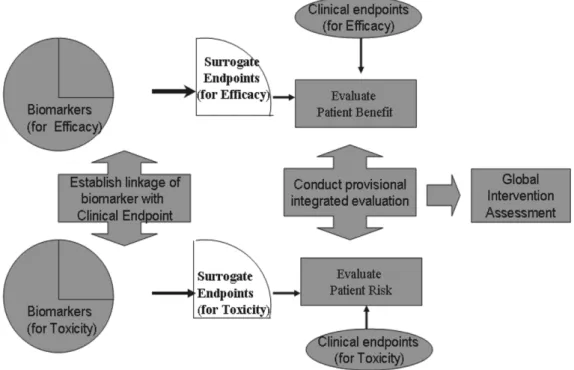
를위한개념적인모델을제시함으로써생체표지자및대리결과변수를통한임상시험시고려해야할사항에대한 정보를주고있다
(Fig. 1).
3)Fig. 1
에의하면임상결과변수와역학적
,
병태생리학적,
치료학적으로연관성을가진생체표지자는 임상시험에서효능(efficacy)
와독성(toxicity)
에대한정보를제공 할수있고,
이러한정보를바탕으로하여환자군에대한임상적호전또는악화에대한평가를할수있다
.
이렇게얻은데이터 를바탕으로하여총체적인영향력평가를할수있다.
3)FDA
및선진국의 최근신약개발의critical path
와model- based drug development
Critical path
− 매년신약개발을위한투자비용은증가하는반면신약의허가는감소또는정체하는추세로
, 2000
년을전후로이러한현상은더욱가속화되었으며신약물후보군발굴단계
FDA
는신약개발방법의효율성향상을위해기존의경험에의존한신약개발방식을탈피하여근거에기반한과학적이고효율 적인신약의개발
(model-based drug development)
을위한모든 방법및도구를critical path
라명명하고이에대한정보를제공 하고있다. ‘
생체표지자및질병모델의개발을통한진보된유효성
,
안전성평가기술의개발및적용’
을위한critical path
의 도구로써biomarker, PK/PD modeling
및임상시험설계등이 명시되어있다.
7)Model-based drug development
− 앞으로의신약개발과정에서효율성확보를위해서는성공적인임상시험수행및각개 발단계에서의시험성공률예측력확보가반드시필요하며
,
이를위해서기존의신약개발방식과는다른새로운관점의신약 개발접근이필요하다
.
이러한새로운관점의신약개발과정중중요한 부분이 모델 기반학적 신약개발
(model-based drug
development)
이다.
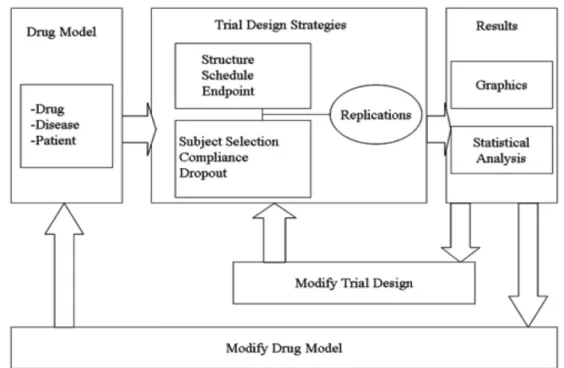
모델기반학적신약개발은전임상및임상시 험수행을위해수학적인모델을설정하고설정된모델을바탕 으로시뮬레이션을통해예측력을확보함으로써신약개발의결 정과정을보다 객관적으로만들어준다. Fig. 2
는모델기반학적 신약개발의연구흐름도로서기존의신약개발방식과는다르게 설정된모델을적극적으로활용하여예측력확보및시험디자인 의개발,
시험결과의해석등에사용하고,
얻어진결과를사용 하여보다견고한모델을확보함으로써재임상시험또는다른임Fig. 1 −
Relationship of biomarkers and surrogate endpoints and conceptual model for therapeutic intervention (BDWG).
3)상시험에보다많은사전정보를제공할수있다
.
8)Biomarker
및surrogate endpoint
의 적절한 사용 및modeling
과simulation
기술사용을통해얻을수있는효과2002
년미국제약협회(PhRMA)
회원사의R&D
비용은321
억달러였으며
, 2008
년까지매년8%
씩비용이증가한다고발표하 였다.
그리고2004
년도신약개발프로젝트중10%
가생체표지 자에의하여영향을받을것으로예측하였고, 2008
년에는50%
로예측하였다
.
비용면에서는생체표지자로인해2004
년15%
가비용을절감할수있으며
, 2008
년에는45%
까지비용절감에도움을받을것으로예상하였다
.
이러한계산으로예측할경우생체표지자의적극적인활용을통해비용을
23%(321
억달러기 준으로하여115
억달러절감)
이상절감하는경제적효과를얻 을수있다.
9)위와같은경제적측면뿐아니라임상가설의조기검증과조기에임상용량범위설정이가능하도록함으로써제
1
상및제2
상임상시험에서의안전성및유효성을과학적으로확보할수있는등시험기술적인측면에서긍정적인영향을줄 수있으며환자의반응성을정밀하게예측할수있어피험자수 를줄일수있는효과가있어임상시험에서가장큰문제로인 식되고있는피험자윤리에대한문제를부분적으로극복함으로 써임상시험의활성화를도모할수있다
.
10)생체표지자및대리결과변수의
validation
Surrogate endpoint validity
− 임상시험에일반적으로사용되기위해서는대리결과변수에사용하기위한생체표지자의데
이터의정확성
(accuracy)
및정밀성(precision)
을확보하여야한 다.
또대리결과변수로인정받기위해서는데이터의정확성과정밀성뿐아니라대리결과변수와임상결과변수사이에나타나는 현상이비슷한정도를의미하는
face validity
와임상결과에영향 을줄 수있는 변수들의 안정적인 상태에서와임상적치료(intervention)
에 따른 변화도 간의 상관성정도를 의미하는criterion validity,
대리결과변수와임상적결과사이에메커니즘 적인공통점을가지고있어야한다는construct validity
를가지고있는지평가하는
validation
이필요하다.
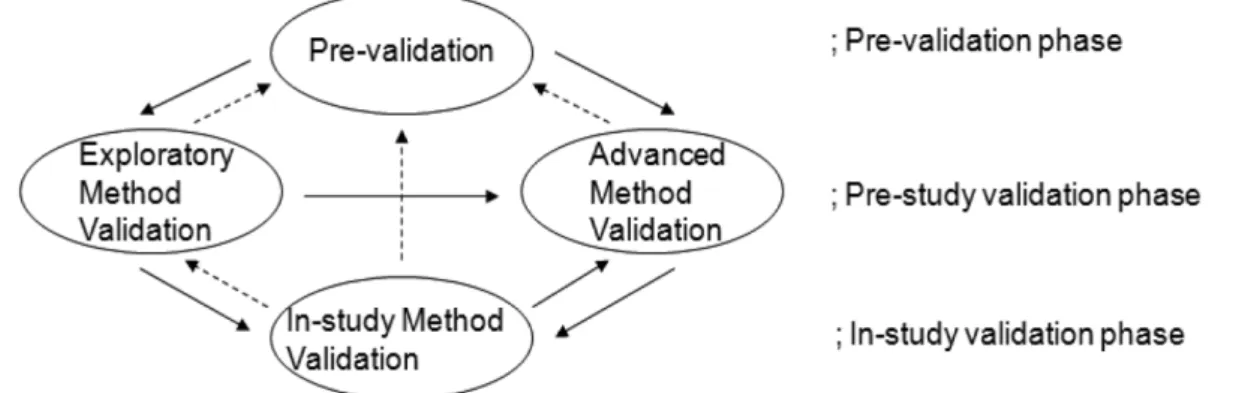
11)Fit-for-purpose validation
− 연구또는실험목적에적합한생체표지자를선정하기위해정성및정량법을표준화하고평가 하는과정을
Fit-for-purpose validation
이라고한다(Fig. 3).
12-15)Fig. 3
에서exploratory method validation
은빠른시간에생체표 지자를검색하기위해실험목적에적합한최소한의기준에근거 한validation
을의미한다. Advanced method validation
은추후 약물개발과정에서결정적인개발방향을제시하기위한validation
방법으로
exploratory method validation
에비하여엄격한기준에근거하여평가하는방법이다
.
Fit-for-purpose validation
확보를위한구성요소에는표준액 및시약에대한validation(
안정성및시약교체에따른효과등),
생체표지자 분석을 위한
target range
에서의validation, sen- sitivity,
검량선fitting
방법(linear, non-linear method
등),
희석효과의 측정
,
분석법의 정확성 및 정밀성 확보,
분석법의robustness
와reproducibility,
샘플의조작법과채취과정및방법,
저장법에대한
validation,
전과정의문서화과정등이포함된다.
Fig. 2 −
Research sequence model-based drug development.
8)Fit-for-purpose qualification
은임상적으로가치있는생체표지자개발을위하여생체표지자
,
대리결과변수,
임상결과변수간 의연관성을해석하는과정으로기존의생체표지자의단계를분석법의
validation
정도와임상결과변수와의연관성등을고려하여
exploration, demonstration, characterization, surrogacy
단 계로세분화하여설명할수있다.
16)Exploration
단계의생체표지자는연구및개발을위한
biomarker
로in vitro/pre-clinical
시험에서정보를주지만임상적인연관성은부족한경우를의미하 며가설의생성및검증에이용할수있고
, gene expression
이이단계에해당한다고할수있다
. Demonstration
단계의생체표지자는
preclinical study
에사용하기에충분한감도와특이성 을가지고있으며임상과의연계성이관련되어있으나임상시험 을통한재현성을확보하지는못한biomarker
로일차적인clinical evidence
로약물개발단계에서decision-making
의수단으로이용 될 수 있다. Characterization
단계의 생체표지자는 충분한preclinical
감도와특이성,
임상과의연계성이관련되어있고, 1
회이상의임상시험을통해재현성이확보된생체표지자로약물 의치료용량및부작용에대한판정과예방효과검토에모두적 용이가능한단계의
biomarker
이다. Surrogacy
단계의biomarker
는얻어진데이터를통해임상결과변수와생체표지자또는대리 결과변수간의관계를규명하여임상결과변수대신치환하여사 용할수있는생체표지자로신약의허가단계에서유용하게이용 될수있다
.
Biomarker
를메커니즘적으로분류하면Table I
과같이분류할수있으며
, validation
이확보될수있는후보surrogate marker
의경우임상적인상황에더욱근접할수록
(proximal) surrogacy
를인정받기수월하며
,
후보surrogate marker
로는최대한임상 에근접한biomarker
를선정하여야한다.
17-19)특정약물및특정intervention
에의하여영향을 받는biomarker
는특정약물 및intervention
에대한validation
을확보할수있으며,
임상적으로 근접한surrogate marker
가 선정되더라도 선정된surrogate marker
는그약물및intervention
에만specificity
가인정된다. (surrogate endpoint specificity)
다시 말하면,
다른 약물또는intervention
에의한biomarker
의변화가surrogacy
를인정받기 위해서는다시validation
하여specificity
를확보하여야한다.
위에언급된선행적문제및개념적모델을종합적으로고려 할경우해당질환및해당약물군에대한생화학적표지자및 대리결과변수선정을위한연구방법은
Fig. 4
와같은흐름도를Fig. 3 −
Research sequence of fit-for-purpose validation.
12)Fig. 4 −
Research sequence of surrogate endpoint.
19)Table I −
Classification of biomarkers
18)Type 0 Genotype or phenotype Distal
Type 1 Concentration of drug and/or metabolite Type 2 Target occupancy
Type 3 Target activation
Type 4 Physiological measures or laboratory tests Type 5 Disease processes
Type 6 Clinical scales Proximal
통해진행되어야한다
.
19)폐질환의
surrogate endpoint
설정및clinical validation
−폐질환약물의경우기전에근거한
PK/PD model
이제시된임상결과변수와연관성이큰
(proximal)
생체표지자는아직개발단계에있다
.
특히FDA
에서surrogacy
를인정받은바이오마커는COPD
의대리결과변수로임상결과변수와가장연관성이큰FEV
1이며
,
질병진행과직접연관성이적고질병진단및진행을평가하는데있어민감도가낮아다른생체표지자개발에주력하고 있는실정이다
.
폐질환의생체표지자
(Biomarker)
개요폐질환의생체표지자로는
mRNA level
에서와protein level
및 임상평가단계에서다양한marker
가제시되고있다.
또폐질환의특성상호기중의생체표지자도다양하게제시되고있으며기도
와폐의염증의평가및산화적손상기전은
asthma
와COPD
등의질환에있어중요한
mechanism
으로염증에대한호기중biomarker
와혈중biomarker
연구가활발하게진행되고있다.
폐질환의임상결과변수 − 폐질환의임상결과변수는폐기능측 정
(pulmonary function measurement),
흉부방사선사진스코어(chest radiography score),
호흡곤란(respiratory distress),
기관지과민반응
(bronchial hyperresponsiveness)
의경감,
삶의 질(Quality of life)
개선,
질환 중증도 스코어(illness severity score)
로설명할수있다.
대표적인폐질환의
biomarker
− 대표적인폐질환의biomarker
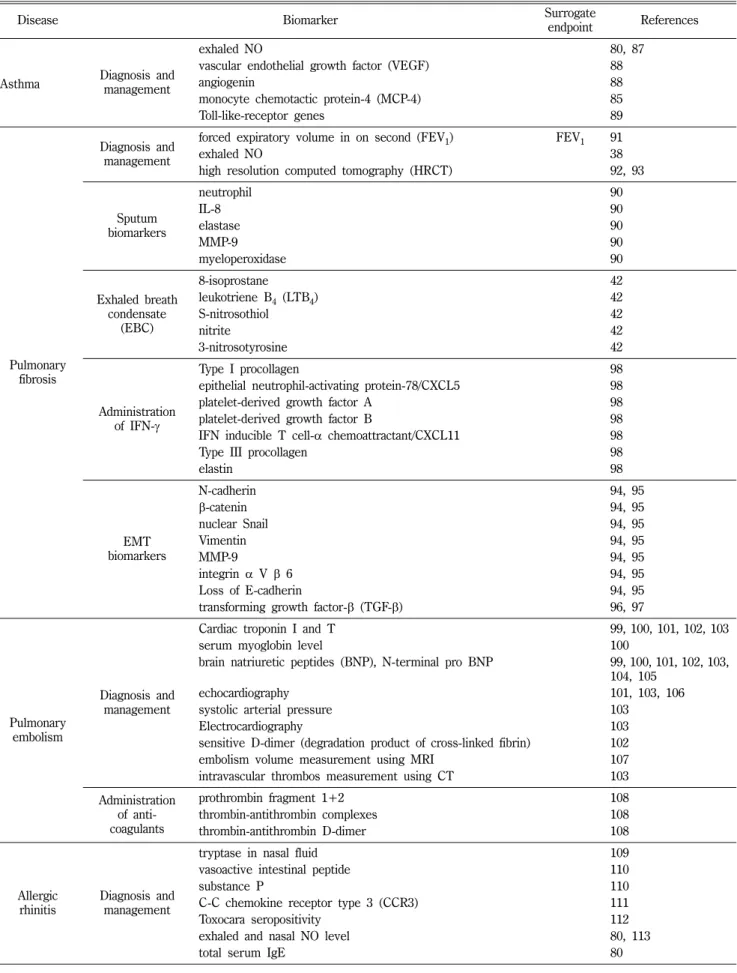
들을
Table II
에정리하였다.
만성폐쇄성폐질환
(Chronic obstructive pulmonary disease:
COPD)
− 만성폐쇄성폐질환은원인과병리가아직까지잘이해 되지 않는 질환으로forced expiratory volume in one second (FEV
1)
이진단과질병단계평가에사용된다.
5,6)미국FDA
는COPD
의mortality
에대한surrogate endpoint
로FEV
1을제시 하고있으나,
5)이생체표지자는질환의진단에있어서단편적인 특성만을반영하며,
특히초기단계에서질병의진행을예측할수없는한계점을가지고있다
.
6)또서로다른병인을가지고있거 나질병의진행이서로다른환자에서도유사한FEV
1값을보일 수있으며,
이때문에단순히spirometry
를이용해서는이질환의특성을잘규명할수없다
.
6)이런이유로장기적인COPD
의surrogate endpoint
설정을 위한대규모연구로Evaluation of COPD Longitudinally to Identify Predictive Surrogate End-
Table II −
Biomarkers of various pulmonary diseases
Disease Biomarker Surrogate
endpoint References
Chronic obstructive
pulmonary disease (COPD)
For diagnosis forced expiratory volume in on second (FEV
1) FEV
15, 6
imaging (chest CT) 6
Bronchial biopsy
Structural changes 20, 21
Increased infiltration of macrophages 20, 22
CD8+ T lymphocyte activation (interferon-
γ, inducible protein-
10, IL-9) 20, 22, 23, 24, 25, 26
chemokine receptor(CXC chemokine receptor 3) expression 20, 27 Increased recruitment of eosinophil and neutrophil at exacer-
bation 20
reduced CD4+ T cell 22
Bronchoalveolar lavage (BAL)
increased neutrophilic and eosinophilic inflammation (IL-8, IL-6,
TNF
α, MPO, eotaxin-1, ECP) 22
Increased numbers of neutrophil, lymphocyte, eosinophil 20 Increased inflammatory proteins (TNF
α, IL-8, MMP-9) in mac-
rophage 20, 28, 29
Increased expressions of eosinophil cationic protein, myelop-
eroxidase, and IL-8 as inflammatory mediators 20
Increased levels of tryptase and histamine 20, 30, 31
Sputum biomarkers
Increased numbers of neutrophil and eosionophil 20, 22, 32, 33 inflammatory mediator (IL-8, Gro
α, LT-B4, NE, MCP-1, HNL) 22
MMP-8, 9, 12 22
TNF
α22
IL-8, IL-6 20, 22, 35, 36, 37
Increased numbers of CD8+T cell 22, 34
Decreased CD4+ T cell 22
Exhaled gases Exhaled nitric oxide (eNO) 20, 22, 38, 39
Exhaled carbon oxide (eCO) 20, 40
hydrocarbons (ethane, pentane) 20, 41
endpoint
Chronic obstructive
pulmonary disease (COPD)
Exhaled breath condensate
(EBC)
hydroxyl peroxide in EBC 20, 38, 42, 43, 44
8-isoprostane 20, 22, 38, 42, 45, 46,
aldehydes 47 20, 48
malonaldehyde 20
nitrite 20, 42
nitrosothiol 20, 42, 49
pH 20, 50, 51
leukotriene B4 20, 22, 38, 42, 47, 52,
prostaglandin E2 53 20, 22, 38, 42, 52, 54
prostaglandin F2
α38
IL-6 20, 22, 46
Blood biomarker
C-reactive protein (CRP) 6, 20, 55, 56, 57, 58,
59, 60
fibrinogen 20, 55, 58
leukocytes 20, 58
platelet 20
TNF
α20, 58, 61, 62
Interleukin-6 20, 55, 59, 60, 63
Interleukin-8 20, 60
myeloperoxidase 60
Asthma
Sputum biomarkers
eosinophil 22, 64, 65, 67, 68, 69,
70, 71
eosinophil cationic protein 22, 70, 64, 65, 66, 71
eosinophil recruitment mediators (IL-5, eotaxin) 22, 73
neutrophil (MPO) 22, 72
TNF
α22, 71
BAL or biopsy
eotaxin 22, 74
monocyte-derived chemokine (MDC): CCL12 22, 27, 75, 76, 77
thymus- and activation-regulated chemokine (TARC): CCL17 22, 76, 77
IL-5, IL-3 as Th2 cytokine 22, 76, 77
neutrophil elastase (NE) 22, 78, 79
proinflammatory cytokine (IL-1
β, IL-5, IL-6, TNF
α) 22, 78, 79 anti-inflammatory cytokine (IL-10, IL-1ra, sTNF and MCP-1,
MIP-1
α, RANTES) 22, 78, 79
Exhaled breath biomarker
exhaled NO 22, 38, 80, 81, 82
exhaled CO 38
Hydroxyl peroxide in EBC 38, 42
Thromboxane B2 (TxB
2) 38, 42
Leukotrienes (LTB
4, LTC
4, LTD
4, LTE
4, LTF
4) 38, 42
cysteinyl leukotrienes 86
8-isoprostane 38, 42, 86
pH 42
S-nitrosothiol 42
nitrite 42
3-nitrosotyrosine 42
Blood biomarker
eotaxin 22, 83
IL-4 22
IL-5 22
thymus- and activation-regulated chemokine (TARC): CCL17 22
monocyte-derived chemokine (MDC): CCL12 22, 84
Monocyte chemotactic protein-4 (MCP-4): CCL13 22, 85
total serum IgE 22, 80
Table II −
Continued
Disease Biomarker Surrogate
endpoint References
Asthma Diagnosis and
management
exhaled NO 80, 87
vascular endothelial growth factor (VEGF) 88
angiogenin 88
monocyte chemotactic protein-4 (MCP-4) 85
Toll-like-receptor genes 89
Pulmonary fibrosis
Diagnosis and management
forced expiratory volume in on second (FEV
1) FEV
191
exhaled NO 38
high resolution computed tomography (HRCT) 92, 93
Sputum biomarkers
neutrophil 90
IL-8 90
elastase 90
MMP-9 90
myeloperoxidase 90
Exhaled breath condensate
(EBC)
8-isoprostane 42
leukotriene B
4(LTB
4) 42
S-nitrosothiol 42
nitrite 42
3-nitrosotyrosine 42
Administration of IFN-
γType I procollagen 98
epithelial neutrophil-activating protein-78/CXCL5 98
platelet-derived growth factor A 98
platelet-derived growth factor B 98
IFN inducible T cell-
αchemoattractant/CXCL11 98
Type III procollagen 98
elastin 98
biomarkers EMT
N-cadherin 94, 95
β