Effect of intracanal cryotherapy on postendodontic pain: a systematic review and meta-analysis of randomized controlled trials
Alpa Gupta
1, Vivek Aggarwal
2, Alka Gurawa
1, Namrata Mehta
1, Dax Abraham
1, Arundeep Singh
1, Sucheta Jala
1, Nishant Chauhan
11Department of Conservative Dentistry and Endodontics, Manav Racha Dental College, Faridabad, India
2Department of Conservative Dentistry and Endodontics, Faculty of Dentistry, Jamia Milia Islamia, New Delhi, India
This systematic review aimed to qualitatively and quantitatively evaluate the effectiveness of cryotherapy in the reduction of postendodontic pain. The review question was, "What will be the success rate of cryotherapy technique among human patients with postendodontic pain?”. The review protocol was framed according to the Preferred Reporting Items for Systematic Reviews and Meta-Analyses (PRISMA) checklist. Six studies were included in the review, and quantification of five studies was performed through a meta-analysis. In the forest plot representation of the studies comparing the control and cryotherapy groups in terms of the success rate in the management of postendodontic pain, the combined risk ratio (RR) was 0.80 (95% CI: 0.56 to 1.13) with a P value of 0.20. Based on the quantitative analysis, it can be suggested that intracanal cryotherapy does not play a significant role in reducing postendodontic pain.
Keywords: Cryotherapy; Endodontic Treatment; Postendodontic Pain; Randomized Controlled Trials.
This is an Open Access article distributed under the terms of the Creative Commons Attribution Non-Commercial License (http://creativecommons.org/licenses/by-nc/4.0/) which permits unrestricted non-commercial use, distribution, and reproduction in any medium, provided the original work is properly cited.
Received: September 25, 2020•Revised: January 11, 2021•Accepted: January 13, 2021
Corresponding Author:Alpa Gupta, Department of Conservative Dentistry and Endodontics, Manav Racha Dental College, Faridabad, Haryana, India Tel: +919050312010 E-mail: [email protected]
Copyrightⓒ 2021 Journal of Dental Anesthesia and Pain Medicine
INTRODUCTION
Routine dental check-ups are rare reasons for visiting a dentist. More often, it is the presence of pain that leads to an unscheduled visit to the dentist. Among all dental procedures, endodontic procedures are most commonly linked to significant postoperative pain as compared to other clinical procedures [1]. The most probable reasons for the occurrence of this pain are mechanical, chemical, and/or microbiological injuries to the tissues around the root of the tooth receiving root canal treatment (RCT) [2-5]. Such periapical injuries often lead to an inflammatory response known as “endodontic flare up”
[6]. Pain during and after endodontic treatment leads to distress to both the patient and the clinician and is often considered a standard of the clinician's skills [7]. The common factors affecting post-RCT pain include inadequate instrumentation of the canal system, extrusion of the irrigating solution, or the intracanal medicament.
This post-treatment pain can be avoided by carefully carrying out each step of the RCT, such as working length determination, proper cleaning and shaping of the canal, optimum use of irrigants, and disocclusion of the tooth.
Various other strategized protocols have been employed to decrease the pain incidence, including occlusal reductions, different mechanical techniques during glide path applications [8-11], and pharmacological means, such
Table 1. Combination of keywords for database search strategy
Database Keywords combination n
PubMed [“Cryotherapy” (MeSH) OR “Cryotherapy” (All fields) OR “Cold therapy” (All fields) AND “postoperative pain”(MeSH) OR “postoperative pain”(All fields) OR “postendodontic pain (All fields) OR “endodontics”(MeSH)
OR “endodontics” (All fields)]
1246
EbscoHost [“Cryotherapy” (MeSH) OR “Cryotherapy” (All fields) OR “Cold therapy” (All fields) AND “postoperative pain”(MeSH) OR “postoperative pain”(All fields) OR “post endodontic pain (All fields) OR “endodontics”(MeSH)
OR “endodontics” (All fields)]
39
Scopus [“Cryotherapy” (MeSH) OR “Cryotherapy” (All fields) OR “Cold therapy” (All fields) AND “postoperative pain”(MeSH) OR “postoperative pain”(All fields) OR “post endodontic pain (All fields) OR “endodontics”(MeSH)
OR “endodontics” (All fields)]
840
as long-acting anesthetic injections, antihistamines, non-steroidal anti-inflammatory drugs (NSAIDs), salicylic acid, acetaminophen, combinations of ibuprofen and acetaminophen, narcotic analgesics, combinations of narcotic analgesics and salicylic acid, and steroidal anti-inflammatory drugs [12,13]. A majority of these management strategies target inflammation by using analgesics such as NSAIDS. Active research about newer methods to decrease tissue trauma and inflammation is ongoing. Cryotherapy has gained popularity in recent times as a technique to reduce post-procedural pain. It is also known as cryosurgery and cryoablation if it is used instead of surgical procedures. In dentistry, cryotherapy has an established role in decreasing pain after periodontal surgeries, extractions, and implant surgeries [14]. It reduces the adherence of leukocytes to the capillary walls, subsequently reducing the number of migrating cells to the injured tissues and thus diminishing endothelial dysfunction, thereby reducing inflammation [14]. The initial physiological response of the tissue to cryotherapy is a local temperature drop that diminishes cell metabolism; hence, less oxygen is utilized. Furthermore, vasoconstriction occurs, which reduces blood flow and limits the inflammatory damage [15]. Additionally, it also affects peripheral nerve endings by reducing the activation threshold of the nociceptors in the tissues and the speed of pain impulse conduction. Cryotherapy produces a local anesthetic-like effect by lowering the conduction velocity of pain signals [16]. The role of cryotherapy in endodontics in the form of irrigating solutions has not been extensively documented. It can be used for inflamed periradicular
tissues by intracanal irrigation with a cold solution after instrumentation of the root canal system. The aim of this systematic review and meta-analysis was to qualitatively and quantitatively evaluate the effectiveness of cryotherapy in reducing postendodontic pain with the help of randomized controlled trials.
METHODS
1. Protocol and Registration
The protocol of the systemic review was framed using the PRISMA checklist. The prepared protocol was registered on the International Prospective Register of Ongoing Systematic Reviews (PROSPERO) with the acknowledgement registration number CRD-183893.
2. PICO question
The review question was formulated using the PICO framework of a systematic review defining population, intervention, comparison, and outcome. The formulated question was "What will be the success of cryotherapy technique among human patients on postendodontic pain?”.
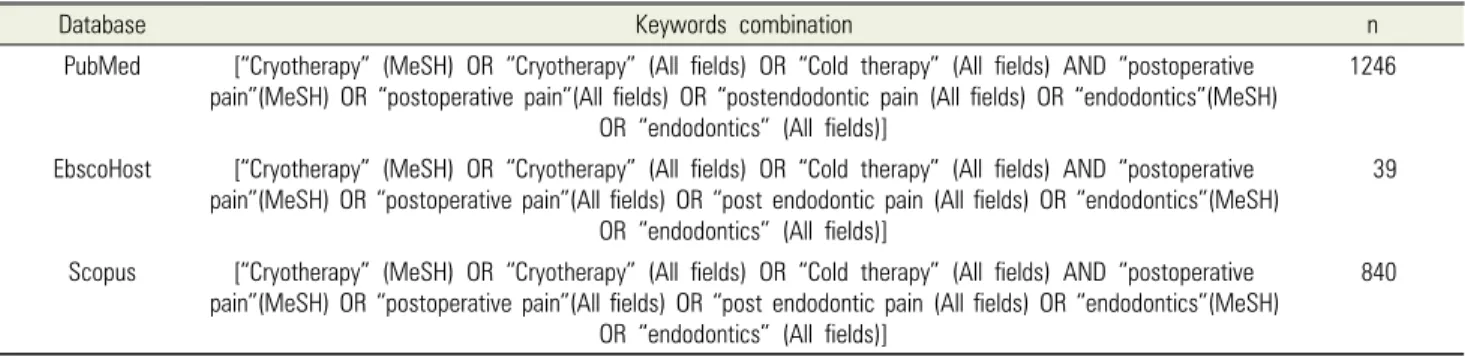
3. Search process and selection of studies A comprehensive literature search was performed using the following databases: Medline/PubMed, Scopus, and Ebsco host, along with manual search. Search was performed using a combination of keywords and the Boolean operators “AND” and “OR” (Table 1). The
Fig. 1. PRISMA flowchart
collected data were manually searched for identification and exclusion of duplicates.
4. Inclusion and exclusion criteria
Three investigators studied the titles and abstracts of all the articles that were identified through electronic and manual database searches. Articles that did not meet the inclusion criteria were excluded. All remaining articles were obtained and screened independently by three reviewers to reach a consensus. A criterion for the inclusion of studies was established:
1. All studies published from 1960 to May 2020 2. Clinical studies published in the English language 3. Adult human patients undergoing non-surgical RCT 4. Any vital and/or non-vital teeth of the maxillary or
mandibular arch undergoing non-surgical RCT 5. All studies should be randomized trials having both
control and experimental group Exclusion Criteria included:
1. Re-treatment cases
2. Presence of any systemic disease or allergic reaction 3. Studies reporting the effect of any medication on
postendodontic pain
4. Studies on pediatric patients
5. Studies involving severe periodontal diseases 6. Patients with immature apices or root resorption 7. Pregnant patients
8. Studies involving procedural errors or mishaps during root canal treatment
9. Studies involving teeth having roots with severe curvature
5. Quality assessment and data extraction
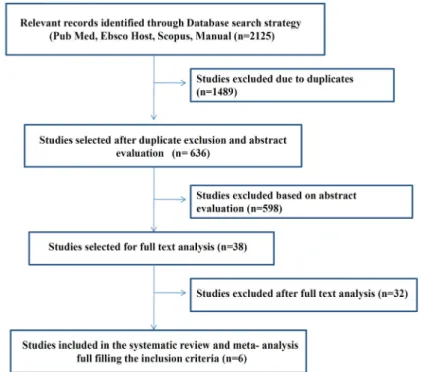
From the total database search, the relevant articles were manually searched and the bibliographies of relevant papers and review articles were also screened to extract the exact relevant data. Finally, the data were framed in the form of a PRISMA flowchart (Fig. 1).
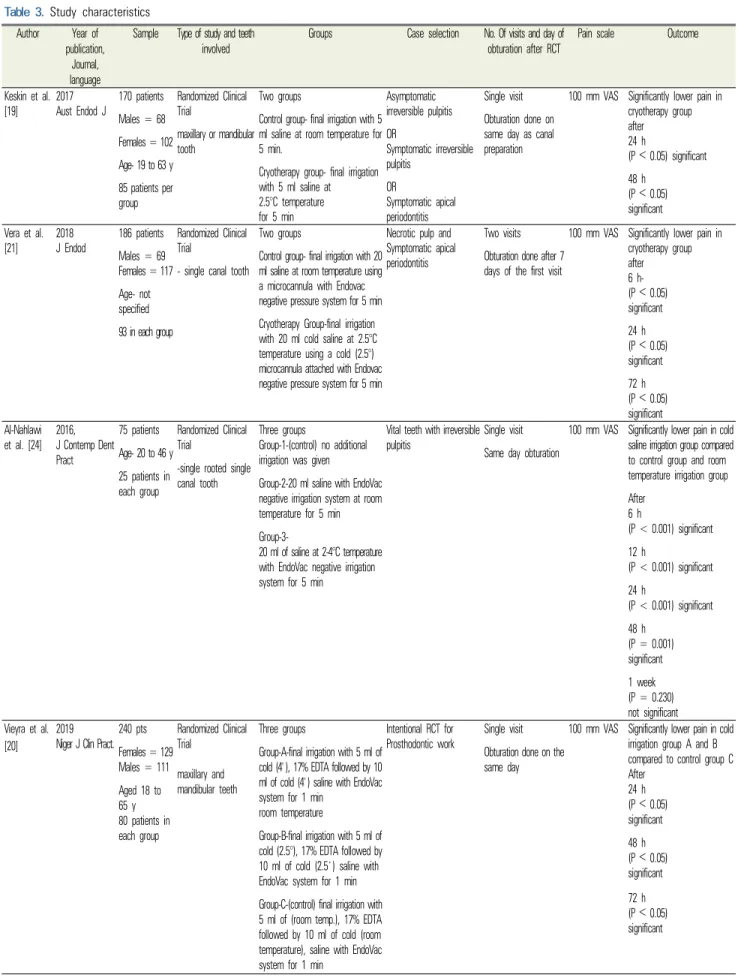
Two examiners extracted the data and analyzed each individual study using the following parameters: author (year)/ country, journal, language, age group, total patient size, sex, tooth type, sample size, groups involved, case selection, number of visits and the days after obturation, pain evaluation scale, and statistical results. Any disagree- ments between the two authors were resolved by a third author. The risk of bias assessment was performed using
Table 2. Post-operative pain assessment Author / Journal
Year of publication
Grouping 6 h 12 h 24 h 48 h 72 h 5 days 7 days
Al-Nahlawi T et al J Contemp Dent Pract.
2016 [24]
Group 1 Control Group 2 EndoVac (room
temperature) Group 3 Cryotherapy
56.3
44.7
13.0
53.6
47.4
13.0
53.6
47.40
13.0
45.84
40.16
28.0
- - 38.52
39.98
35.50
Gundogdu EC et al J Endod. 2018 [23]
Control Intracanal Cryotherapy Intra-oral Cryotherapy Extra-oral Cryotherapy
- - 77.76 ± 19.53
38.18 ± 19.19 22.00 ± 26.95 32.25 ± 31.30
- 57.24 ± 24.72
18.82 ± 22.53 12.10 ± 22.52 16.05 ± 18.33
40.81 ± 28.95 8.45 ± 12.58
3.14 ± 8.55 3.80 ± 6.83
34.24 ± 28.07 0.82 ± 2.92 0.33 ± 1.53 1.05 ± 2.46 Vera J et al
J Endod 2018 [21]
Control Cryotherapy
3.53 ± 1.9 1.59 ± 1.9
- 2.02 ± 1.5
0.46 ± 1.5
0.49 ± 0.8 0.25 ± 0.7
- - -
Vieyra JP et al Niger J Clin Pract.
2019 [20]
Group-A Cryotherapy 4 ̊
Group-B Cryotherapy 2.5 ̊
Group-C Control
- - 0.66 ± 0.83
0.88 ± 0.97
0.58 ± 0.82
0.25 ± 0.43
0.26 ± 0.60
0.23 ± O.44
0.04 ± 0.82
0.05 ± 0.97
0.02 ± 0.83
- -
Alharthi AA et al Saudi Dental Journal
2019 [22]
Group-1 Cryotherapy
Group-1 Room temp. irrigation
Group-3 Control
0.79 ± 1.37
1.15 ± 1.66
3.71 ± 2.99
- 0.43 ± 0.76
0.79 ± 1.37
3.00 ± 3.11
0.07 ± 0.27
0.14 ± 0.54
2.43 ± 2.94
- - -
the checklist given by the Joanna Briggs Institute Critical Appraisal Checklist for Randomized Control Trial [17].
For applying the risk of bias, 12 criteria were used. Two evaluators independently applied the risk of bias for all studies, followed by a discussion of each point. Any disagreement was resolved by a third examiner to reach a final consensus.
6. Outcomes
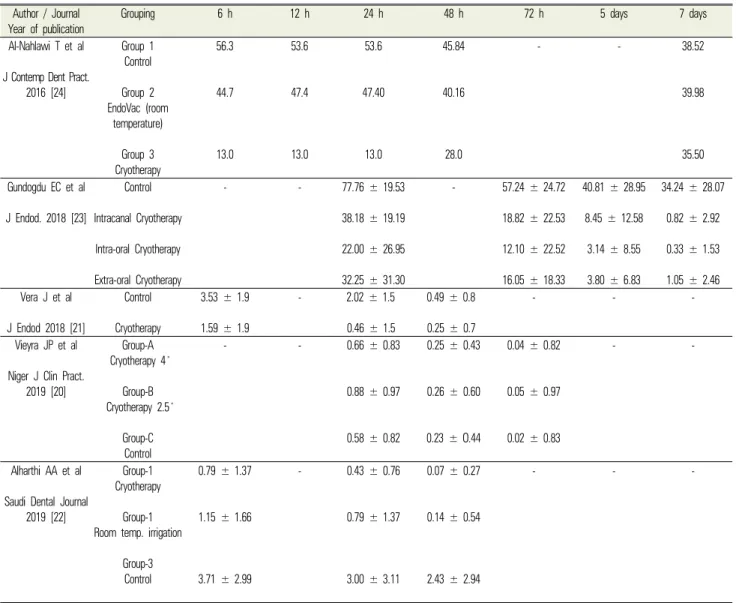
Success was defined as no or mild pain according to patient-reported pain scores, e.g., visual analog scale (VAS) [18], after RCT [19-21]. The other way was the evaluation and comparison of mean VAS scores of the control and cryotherapy groups to evaluate the
improvement in pain level [20-24] (Table 2).
RESULTS
The total number of relevant articles identified through the search strategy, through electronic and manual searches, was 2125. Duplicate articles were excluded from the analyses. After excluding duplicates, 636 articles were screened for abstract evaluation. Considering the strict inclusion and exclusion criteria, only six articles were included in the systematic review. Of these, five studies were included in the meta-analysis. Thirty-two articles were excluded after full-text reading.
Table 3. Study characteristics Author Year of
publication, Journal, language
Sample Type of study and teeth
involved Groups Case selection No. Of visits and day of
obturation after RCT Pain scale Outcome
Keskin et al.
[19] 2017
Aust Endod J 170 patients Males = 68 Females = 102 Age- 19 to 63 y 85 patients per group
Randomized Clinical Trial
maxillary or mandibular tooth
Two groups
Control group- final irrigation with 5 ml saline at room temperature for 5 min.
Cryotherapy group- final irrigation with 5 ml saline at 2.5°C temperature for 5 min
Asymptomatic irreversible pulpitis OR
Symptomatic irreversible pulpitis
OR
Symptomatic apical periodontitis
Single visit Obturation done on same day as canal preparation
100 mm VAS Significantly lower pain in cryotherapy group after
24 h
(P ˂ 0.05) significant 48 h
(P ˂ 0.05) significant Vera et al.
[21] 2018
J Endod 186 patients Males = 69 Females = 117 Age- not specified 93 in each group
Randomized Clinical Trial
- single canal tooth
Two groups
Control group- final irrigation with 20 ml saline at room temperature using a microcannula with Endovac negative pressure system for 5 min Cryotherapy Group-final irrigation with 20 ml cold saline at 2.5°C temperature using a cold (2.5°) microcannula attached with Endovac negative pressure system for 5 min
Necrotic pulp and Symptomatic apical periodontitis
Two visits Obturation done after 7 days of the first visit
100 mm VAS Significantly lower pain in cryotherapy group after
6 h- (P ˂ 0.05) significant 24 h (P ˂ 0.05) significant 72 h (P ˂ 0.05) significant Al-Nahlawi
et al. [24] 2016, J Contemp Dent Pract
75 patients Age- 20 to 46 y 25 patients in each group
Randomized Clinical Trial
-single rooted single canal tooth
Three groups
Group-1-(control) no additional irrigation was given
Group-2-20 ml saline with EndoVac negative irrigation system at room temperature for 5 min Group-3-
20 ml of saline at 2-4°C temperature with EndoVac negative irrigation system for 5 min
Vital teeth with irreversible pulpitis Single visit
Same day obturation
100 mm VAS Significantly lower pain in cold saline irrigation group compared to control group and room temperature irrigation group After
6 h
(P < 0.001) significant 12 h
(P < 0.001) significant 24 h
(P < 0.001) significant 48 h
(P = 0.001) significant 1 week (P = 0.230) not significant Vieyra et al.
[20]
2019 Niger J Clin Pract.
240 pts Females = 129 Males = 111 Aged 18 to 65 y 80 patients in each group
Randomized Clinical Trial
maxillary and mandibular teeth
Three groups
Group-A-final irrigation with 5 ml of cold (4 ̊), 17% EDTA followed by 10 ml of cold (4 ̊) saline with EndoVac system for 1 min
room temperature
Group-B-final irrigation with 5 ml of cold (2.5°), 17% EDTA followed by 10 ml of cold (2.5 ̊) saline with EndoVac system for 1 min Group-C-(control) final irrigation with 5 ml of (room temp.), 17% EDTA followed by 10 ml of cold (room temperature), saline with EndoVac system for 1 min
Intentional RCT for Prosthodontic work
Single visit Obturation done on the same day
100 mm VAS Significantly lower pain in cold irrigation group A and B compared to control group C After
24 h (P ˂ 0.05) significant 48 h (P ˂ 0.05) significant 72 h (P ˂ 0.05) significant
Gundogduet et al. [23]
2018 J Endod
100 patients Aged- >18 y 25 patients in each group
Randomized Clinical Trial
maxillary and mandibular molar teeth
Four groups
Control group- after irrigation with NaOCl and EDTA, final irrigation done with 20 ml saline at room temperature for 5 min
Intracanal cryotherapy-after irrigation with NaOCl and EDTA, final irrigation done with 20 ml cold saline (2.5°C) for 5 min
Intra-oral cryotherapy-
After final irrigation done with 20 ml saline at room temp. for 5 min, as in the control group, small ice packs covered with sterile gauze placed inside the mouth for 30 min Extra-oral cryotherapy- After final irrigation done with 20 ml saline at room temp. for 5 min, as in the control group, small ice packs covered with wrapped with 2 layers of paper towel placed extra-orally on the cheek surface for 30 min
Symptomatic apical periodontitis with vital pulp
Single visit Obturation on the same day
100 mm VAS All the cryotherapy groups shows significantly low postoperative pain (P < 0.05) than control group at 1stday (P < 0.01) significant 3rdday- (P < 0.05) significant 5thday- (P < 0.05) significant 7thday- (P < 0.05) significant
Alharthi et al.
[22]
2019 Saudi Dent J
105 patients Aged-18 to 50 years 35 patients per group
Randomized controlled trial
single rooted teeth
Three groups
Group 1- (cryotherapy) after BMP, final irrigation done with 10 ml cold (1.5 ̊-2.5 ̊C) saline for 5 min Group-2- (room temperature) after BMP, final irrigation done with 10 ml saline (room temp) for 5 min Group-3- (control group) after BMP no more irrigation was given.
Cases requiring RCT Single visit Obturation on the same day
100 mm VAS Significantly low postoperative pain in cryotherapy and room temperature irrigation group compared to control group but no significant difference in cryotherapy group and room temp. saline group after
6 h (P = 0.006) significant 24 h (P = 0.001) significant 48 h (P = 0.001) significant
1. Study characteristics
Six clinical studies, Keskin et al. (2016), Vera et al.
(2018), Alharthi et al. (2019), Al-Nahlawi et al. (2016), Vieyra et al. (2019), and Gundogdu et al. (2018) [19-24], reporting the success of cryotherapy technique in the control of postendodontic pain, were included in the final analysis. The individual characteristics of each study are described in Table 3.
2. Meta-analysis
The meta-analysis was performed using RevMan 5.3 software. Data from five studies were analyzed. The data were extracted and divided into two groups based on the characteristics of the effect size. Three studies [19-21]
evaluated the success rates, and the effect size was dichotomous/binary in nature. For each included study, random risk ratios were calculated using the Mantel- Haenszel method. The analysis involved studies comparing the control and cryotherapy groups in terms
Fig. 2. Forest plot representation of the binary data
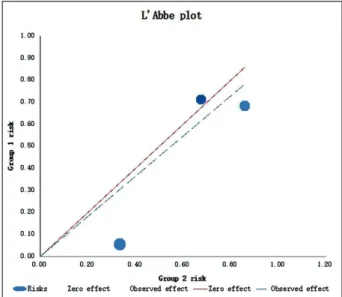
Fig. 3. L’Abbe plot of dichotomous studies of the success rate in the management of postendodontic
pain. Figure 2 shows the forest plot representation of the random-effect meta-analysis performed on the studies.
The combined risk ratio was 0.80 (95% CI: 0.56, 1.13).
The difference was not statistically significant (P = 0.20).
There was a high amount of statistical heterogeneity among the included studies (I2 = 87%, P < 0.05).
The L’Abbe plot was generated to evaluate statistical heterogeneity among studies with a dichotomous effect size (Fig. 3). The risk of success for the cryotherapy group is plotted on the y-axis, and the risk of success of the control group is plotted on the x-axis. The solid diagonal line represents the studies in which the risk of success did not differ between the groups. Studies above this line have a higher risk of success in the cryotherapy group than in the control group. The dashed line shows the estimated effects based on the analysis model. The studies below the solid line along with the dashed line show that the risk of success was higher in the control group than in the cryotherapy group. The scattered studies also showed a high level of heterogeneity among the studies.
The second meta-analysis included four studies that reported continuous data [20-23]. The meta-analysis utilized the mean difference as the effect size. Since the measuring scale was not uniform in different studies, the standardized mean difference was taken as an effect size variable. The calculations involved the division of the mean difference in each study by that study’s standard deviation to create an index (standardized mean difference). This index was comparable across the studies.
In the present analysis, the standardized mean difference was 0.54 (95% CI: -1.22 to 0.14). The difference was not statistically significant (P = 0.12). There was a high amount of statistical heterogeneity among the included studies (I2 = 94%, P < 0.05) (Fig. 4).
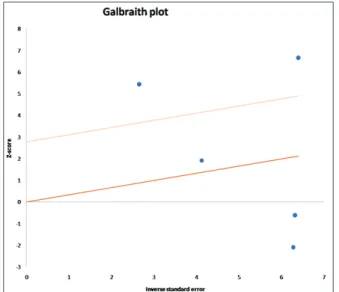
The heterogeneity in studies reporting continuous data was also evident in the Galbriath plot (Fig. 5). The plot is generated by plotting the result of the division of the effect size by its standard error on the y-axis and the inverse of the standard error on the x-axis. The studies are represented by dots, and a regression line is plotted in the center. Parallel to the regression line, two lines (at twice the standard deviation) create an interval. Most of the dots were expected to lie between the intervals.
The Galbriath plot of the included studies showed a high degree of heterogeneity.
Fig. 4. Forest plot representation of studies with continuous data
Fig. 5. Galbriath plot of studies with continuous data
Fig. 6. Funnel plot of dichotomous studies
Fig. 7. Funnel plot of studies with continuous data Funnel plots for studies in both groups were plotted
to assess the publication bias (Fig. 6, 7). The funnel plots were visually symmetrical, suggesting a lack of publication bias.
3. Risk of bias
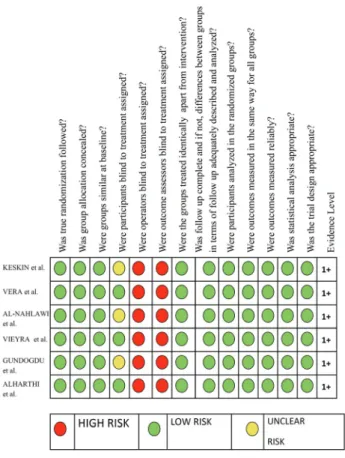
All studies had a low risk of bias [19-24]. For each study, the evidence level was determined according to the guidelines given by the National Services Scotland [25] (Fig. 4). All studies were randomized controlled trials with an evidence level of 1+ (Fig. 8).
4. Interpretation of studies
Keskin et al. (2016) [19] evaluated the efficacy of cold saline solution as the final irrigant on postoperative pain after a single-visit RCT in 175 vital teeth that were
randomly divided into two groups: the control group with room temperature saline irrigation and the cryotherapy group with 2.5°C 0.9% physiological saline solution
Fig. 8. Evidence level of included studies
irrigation for 5 minutes after completion of canal preparation. Pain was assessed using VAS at 24 and 48 hours after obturation. The results revealed a significant reduction in postendodontic pain levels in the 2.5°C cold saline irrigation group in comparison to the control group (P < 0.05).
Vieyra et al. (2019) [20] assessed the reduction in postoperative pain after a single sitting RCT using three different irrigation regimens at different temperatures. A total of 240 patients with vital teeth indicated for conventional RCT were selected for the study, and after root canal preparation, the final irrigation was performed with either 4°C or 2.5°C or room temperature 17% EDTA and 10 mL cold saline solution. Pain assessment was performed using VAS. The observed differences in the degree or duration of pain between the 4°C and 2.5°C groups were not statistically significant (P > 0.05).
However, the group of patients irrigated with room temperature EDTA showed a significantly higher occurrence of postendodontic pain than the other groups.
Vera et al. (2018) [21] studied the incidence and intensity of postoperative pain after cryotherapy irrigation during root canal treatment of teeth with pulpal necrosis and symptomatic apical periodontitis. A total of 210 single rooted teeth with symptomatic apical periodontitis and a preoperative VAS score > 7, were randomly divided into two groups: the control and cryotherapy experimental group after the completion of canal instrumentation. The final irrigation for the cryotherapy group was with 20 mL of 2.5°C saline solution for 5 minutes using EndoVac and for the control group was room-temperature saline solution. Postoperative pain was assessed at 6, 24, and 72 hours after obturation using VAS. There was a significant difference between the incidence and intensity of postoperative pain between the control and cryotherapy groups (P < 0.05).
Alharthi et al. (2019) [22], evaluated the efficacy of cold and room-temperature saline as a final irrigating solution for postoperative pain after endodontic treatment.
Vital and non-vital teeth of 105 patients, indicated for RCT, were randomly divided into three groups: The cold saline final irrigation group or cryotherapy group; the room- temperature normal saline final irrigation group;
the sodium hypochlorite (NaOCl) irrigation group which was termed as the control group. Postendodontic pain was assessed using the visual analog scale (VAS) at 6, 24, and 48 hours post-treatment. The results showed that the cryotherapy group exhibited the lowest postoperative pain at 6 h, 24 h, and 48 h after obturation. Overall, the control group showed the highest postendodontic pain, but the pain decreased with time in all groups. There was a significant difference in the postendodontic pain values among the three groups (P < 0.005).
Gundogdu et al. (2018) [23], evaluated the efficacy of intracanal, intraoral, and extraoral cryotherapy on postoperative pain in molars diagnosed with symptomatic apical periodontitis. One hundred teeth were randomly divided into four groups: control group, intracanal cryotherapy, intra-oral cryotherapy, and extra-oral cryo- therapy. Pain assessment was performed using VAS.
Postoperative pain was recorded at 1, 3, 5, and 7 days
after endodontic treatment. The cryotherapy groups exhibited significantly less percussion pain and less postoperative pain on all test days (P < 0.05).
Al-Nahlawi et al. (2016) [24] evaluated the effect of intracanal cryotherapy, applied using EndoVac, to 75 vital single-rooted teeth during a single-visit RCT. After initiating root canal preparation and irrigation, the teeth were randomly divided into three groups: the first group was the control group with no additional saline irrigation, the second group was irrigated using 20 mL of room temperature saline for 5 minutes via EndoVac, and the third group of patients was irrigated using 20 mL of 2 to 4°C cold saline for 5 minutes using EndoVac. Pain score assessment was performed using VAS at 6, 12, 24, 48 hours, and 7 days after canal obturation. Results revealed that VAS pain values after 6, 12, 24, and 48 hours in the cold saline irrigation group were lower than those of both saline irrigation at room temperature and the control group. The differences were statistically significant (P < 0.05).
DISCUSSION
Postoperative pain is an unpleasant and discomforting experience described by patients and reported with a high incidence rate in the range of 3-58% [26]. The most common factors influencing pain occurrence after RCT include improper instrumentation techniques, extrusion of the irrigant, intracanal dressing or apical debris from the apical foramen, hyperocclusion, missed root canal systems, and persistent presence of periapical pathology [13].
Postendodontic pain most often occurs during the first 24 to 48 hours after obturation, and usually recedes in the next few hours, although it can occasionally persist for several days [6]. According to studies by Albashaireh et al., there was no significant difference in the incidence of postendodontic pain between single and multiple-visit root canal treatments [27]. Irrigation is one of the most important steps for successful endodontic treatment.
However, according to Bashetty and Hegde, postoperative
pain 1-7 days after obturation revealed no association with the type of irrigating solution used [28].
Symptoms associated with pathological conditions such as symptomatic irreversible pulpitis, pulpal necrosis [29], and apical periodontitis can be associated with various attributes, such as changes in periapical pressure, chemical and microbiological inflammatory and pain mediators, and psychological factors [30]. Depending on the severity of these factors, patients tend to seek emergency dental care to manage the pain [31].
The present systematic review and meta-analysis highlight the role of cryotherapy in the reduction of postendodontic pain. Intracanal cryotherapy as an additional step can be easily included and implemented as part of the treatment protocol. It is a more feasible and comfortable option than patients using ice packs after treatment [23].
There is no unanimous decision regarding the optimal dosage for cryotherapy, as it varies depending on the nature of the tissue. When there is minimal fat and muscle [e.g., when applied to a finger], 3 to 5 minutes of cryo- therapy has been recommended. In most of the included studies, the time period for intracanal cryotherapy was maintained at 5 minutes. According to Vera et al. in 2015, irrigation of the root canals with a 2.5°C cold saline solution for 5 minutes reduced the external root surface temperature. A similar protocol was employed by various other authors as part of the framework for their respective studies [16].
The use of a negative apical pressure irrigation device has been shown to significantly reduce the incidence of postendodontic pain levels compared to traditional needle irrigation [32]. In 2018, Vera et al. used EndoVac, a negative pressure system, to eliminate the vapor lock effect and ensure continuous delivery of the cold irrigating solution to the apical third of the root canal [21]. Desai et al. and Gondim et al. reported a significant decrease in the periapical inflammatory response by optimally minimizing apical extrusion via the use of EndoVac [32,33].
According to various reports, the VAS scores
experienced and reported by patients who underwent single-visit endodontic treatment were low [19,20,22-24].
These results could be attributed to the criteria applied for inclusion of patients, since the teeth with abscess, necrosis, or failed RCT cases were excluded and aseptic protocol was followed to minimize the possibility of inter-appointment flare-ups [19]. In 2018, Vera et al.
conducted dual visit endodontic treatment and reported a low mean VAS score. This further demonstrates the lack of variation in postendodontic pain between single and multiple-visit treatments.
Teeth undergoing intentional RCT, for example, for prosthodontic work, may have a lower chance of experiencing postoperative pain compared to cases with irreversible pulpitis and symptomatic apical periodontitis.
Microorganisms are associated with the occurrence of postoperative pain after RCT, as pain typically results from acute inflammation of periradicular tissues.
Therefore, teeth with irreversible pulpitis and apical periodontitis are at a higher risk of developing post- operative pain [34,35]. Intracanal cryotherapy may be more effective in pain relief for apical periodontitis because of the decrease in inflammation and edema in the apical tissues by low-temperature irrigation methods [36].
The risk of bias assessment of all six included randomized control trials was low with an evidence level of 1+, suggesting their high quality and low publication bias. However, only five studies [19-23] were considered as part of the quantitative analysis. Three studies highlighted the success rate of patients in the form of the number of patients with no or mild pain out of the total number of patients involved in the control and experimental groups. Four studies interpreted the standardized mean difference [20-23]. The combined risk ratios (RRs) of the three studies included in the meta-analysis were 0.80 (95% CI: 0.56 to 1.13) with a P value of 0.20, which is insignificant. In another analysis, the standardized mean difference was 0.54 (95%
CI: -1.22 to 0.14) with P value 0.12. Thus, the quantitative results highlighted the less significant role of cryotherapy
in controlling postendodontic pain. The limitation of this review is that a small number of studies were included;
hence, more reliable clinical studies are encouraged to confirm the effect of cryotherapy on postendodontic pain.
AUTHOR ORCIDs
Alpa Gupta: https://orcid.org/0000-0003-2834-0608 Vivek Aggarwal: https://orcid.org/0000-0002-9792-4554 Alka Gurawa: https://orcid.org/0000-0002-1748-895X Namrata Mehta: https://orcid.org/0000-0002-4836-524X Dax Abraham: https://orcid.org/0000-0002-6870-6689 Arundeep Singh: https://orcid.org/0000-0003-2342-9486 Sucheta Jala: https://orcid.org/0000-0001-9680-3147 Nishant Chauhan: https://orcid.org/0000-0003-2418-8493
AUTHOR CONTRIBUTIONS
Alpa Gupta: Conceptualization, Data curation, Formal analysis, Funding acquisition, Investigation, Methodology, Project administration, Resources, Software, Supervision, Validation, Visualization, Writing – original draft, Writing – review & editing Vivek Aggarwal: Conceptualization, Data curation, Formal analysis,
Methodology, Project administration, Software, Supervision, Writing – review & editing
Alka Gurawa: Conceptualization, Data curation, Investigation, Methodology, Project administration, Supervision, Writing – original draft
Namrata Mehta: Conceptualization, Data curation, Formal analysis, Investigation, Methodology, Software, Supervision, Writing – original draft, Writing – review & editing
Dax Abraham: Conceptualization, Investigation, Methodology, Validation, Writing – review & editing
Arundeep Singh: Conceptualization, Investigation, Methodology, Validation, Writing – review & editing
Sucheta Jala: Data curation, Investigation, Methodology, Writing – review & editing
Nishant Chauhan: Data curation, Validation, Writing – review & editing
DECLARATION OF INTERESTS: The authors have no conflicts of interest to declare.
REFERENCES
1. Levin L, Amit A, Ashkenazi M. Post-operative pain and use of analgesic agents following various dental procedures.
Am J Dent 2006; 19: 245-7.
2. Sathorn C, Parashos P, Messer H. The prevalence of postoperative pain and flare-up in single- and multiple-visit endodontic treatment: a systematic review. Int Endod J 2008; 41: 91-9.
3. Ince B, Ercan E, Dalli M, Dulgergil CT, Zorba YO, Colak H. Incidence of postoperative pain after single- and multi-visit endodontic treatment in teeth with vital and non-vital pulp. Eur J Dent 2009; 3: 273-9.
4. Pochapski MT, Santos FA, de Andrade ED, Sydney GB.
Effect of pretreatment dexamethasone on postendodontic pain. Oral Surg Oral Med Oral Pathol Oral Radiol Endod 2009; 108: 790-5.
5. Attar S, Bowles WR, Baisden MK, Hodges JS, McClanahan SB. Evaluation of pretreatment analgesia and endodontic treatment for postoperative endodontic pain. J Endod 2008; 34: 652-5.
6. Siqueira JF Jr. Microbial causes of endodontic flare-ups.
Int Endod J 2003; 36: 453-63.
7. Pasqualini D, Mollo L, Scotti N, Cantatore G, Castellucci A, Migliaretti G, et al. Postoperative pain after manual and mechanical glide path: a randomized clinical trial. J Endod 2012; 38: 32-6.
8. Parirokh M, Rekabi AR, Ashouri R, Nakhaee N, Abbott PV, Gorjestani H. Effect of occlusal reduction on postoperative pain in teeth with irreversible pulpitis and mild tenderness to percussion. J Endod 2013; 39: 1-5.
9. Arslan H, Khalilov R, Doğanay E, Karatas E. The effect of various kinematics on postoperative pain after instrumentation: a prospective, randomized clinical study.
J Appl Oral Sci 2016; 24: 503-8.
10. Crout RJ, Koraido G, Moore PA. A clinical trial of long-acting local anesthetics for periodontal surgery.
Anesth Prog 1990; 37: 194-8.
11. Torabinejad M, Dorn SO, Eleazer PD, Frankson M, Jouhari B, Mullin RK, et al. Effectiveness of various medications on postoperative pain following root canal obturation. J Endod 1994; 20: 427-31.
12. Ryan JL, Jureidini B, Hodges JS, Baisden M, Swift JQ, Bowles WR. Gender differences in analgesia for endodontic pain. J Endod 2008; 34: 552-6.
13. Alves Vde O. Endodontic flare-ups: a prospective study.
Oral Surg Oral Med Oral Pathol Oral Radiol Endod 2010;
110: e68-72.
14. Laureano Filho JR, de Oliveira e Silva ED, Batista CI, Gouveia FM. The influence of cryotherapy on reduction of swelling, pain and trismus after third-molar extraction:
a preliminary study. J Am Dent Assoc 2005; 136: 774-8.
15. Capps SG, Mayberry B. Cryotherapy and intermittent pneumatic compression for soft tissue trauma. Athletic Ther Today 2009; 14: 2-4.
16. Vera J, Ochoa-Rivera J, Vazquez-Carcaño M, Romero M,Arias A, Sleiman P. Effect of intracanal cryotherapy on reducing root surface temperature. J Endod 2015; 41:
1884-7.
17. Joanna Briggs Institute. Joanna Briggs Institute Reviewers Manual. 2014th ed. Adelaide: Joanna Briggs Institute; 2014.
18. Hawker GA, Mian S, Kendzerska T, French M. Measures of adult pain: Visual Analog Scale for Pain [VAS pain], Numeric Rating Scale for Pain [NRS pain], McGill Pain Questionnaire [MPQ], Short-Form McGill Pain Questionnaire [SF-MPQ], Chronic Pain Grade Scale [CPGS], Short Form-36 Bodily Pain Scale [SF-36 BPS], and Measure of Intermittent and Constant Osteoarthritis Pain [ICOAP]. Arthritis Care Res 2011; 63: S240-52.
19. Keskin C, Özdemir Ö, Uzun İ, Güler B. Effect of intracanal cryotherapy on pain after single-visit root canal treatment.
Aust Endod J 2017; 43: 83-8.
20. Vieyra JP, J Enriquez FJ, Acosta FO, Guardado JA.
Reduction of postendodontic pain after one-visit root canal treatment using three irrigating regimens with different temperature. Niger J Clin Pract 2019; 22: 34-40.
21. Vera J, Ochoa J, Romero M, Vazquez-Carcaño M, Ramos-Gregorio CO, Aguilar RR, et al. Intracanal cryotherapy reduces postoperative pain in teeth with symptomatic apical periodontitis: A randomized multi- center clinical trial. J Endod 2018; 44: 4-8.
22. Alharthi AA, Aljoudi MH, Almaliki MN, Almalki MA, Sunbul MA. Effect of intra-canal cryotherapy on post-endodontic pain in single-visit RCT: A randomized controlled trial. Saudi Dent J 2019; 31: 330-5.
23. Gundogdu EC, Arslan H. Effects of various cryotherapy
applications on postoperative pain in molar teeth with symptomatic apical periodontitis: a preliminary randomized prospective clinical trial. J Endod 2018; 44: 349-54.
24. Al-Nahlawi T, Hatab TA, Alrazak MA, Al-Abdullah A.
Effect of intracanal cryotherapy and negative irrigation technique on postendodontic pain. J Contemp Dent Pract 2016; 17: 990-6.
25. Harbour R, Miller J. A new system for grading recommendations in evidence-based guidelines. BMJ 2001;
323: 334-6.
26. Sathorn C, Parashos P, Messer H. The prevalence of postoperative pain and flare-up in single- and multiple-visit endodontic treatment: a systematic review. Int Endod J 2008; 41: 91-9.
27. Albashaireh ZS, Alnegrish AS. Postobturation pain after single- and multiple-visit endodontic therapy. A prospective study. J Dent 1998; 26: 227-32.
28. Bashetty K, Hegde J. Comparison of 2% chlorhexidine and 5.25% sodium hypochlorite irrigating solutions on postoperative pain: a randomized clinical trial. Indian J Dent Res 2010; 21: 523-7.
29. Saad AY, Clem WH. An evaluation of etiologic factors in 382 patients treated in a postgraduate endodontic
program. Oral Surg Oral Med Oral Path 1988; 65: 91-3.
30. Seltzer S. Pain in endodontics. J Endod 2004; 30: 501-4.
31. Iqbal M, Kim S, Yoon F. An investigation into differential diagnosis of pulp and periapical pain: a Penn Endo database study. J Endod 2007; 33: 548-51.
32. Gondim E Jr, Setzer FC, Dos Carmo CB, Kim S.
Postoperative pain after the application of two different irrigation devices. J Endod 2010; 36: 1295-301.
33. Desai P, Himel V. Comparative safety of various intracanal irrigation systems. J Endod 2009; 35: 545-9.
34. Ali SG, Mulay S, Palekar A, Sejpal D, Joshi A, Gufran H. Prevalence of and factors affecting post-obturation pain following single visit root canal treatment in Indian population: a prospective, randomized clinical trial.
Contemp Clin Dent 2012; 3: 459-63.
35. AlRahabi MK. Predictors, prevention, and management of postoperative pain associated with nonsurgical root canal treatment: a systematic review. J Taibah Univ Med Sci 2017; 12: 376-84.
36. Sadaf D, Ahmad MZ, Onakpoya IJ. Effectiveness of Intracanal Cryotherapy in Root Canal Therapy: A Systematic Review and Meta-analysis of Randomized Clinical Trials. J Endod 2020; 46: 1811-23.