Pharmacopuncture for Acute peripheral facial paralysis:
A systematic review and meta-analysis of randomized controlled trials
Min-Sun Choi
1, Dong Il Kim
1, Su Hee Jang
21Department of Obstetrics & Gynecology, College of Korean Medicine, Dongguk University, Ilsan, Republic of Korea
2Department of Acupuncture & Moxibustion, Nasaret Korean Medical Hospital, Incheon, Republic of Korea Original Article
⋅Received:16 February 2015 ⋅Revised:16 June 2015 ⋅Accepted:22 June 2015
⋅Correspondence to:Su Hee Jang
Department of Acupuncture & Moxibustion, Nasaret Korean Medical Hospital, Incheon, Republic of Korea Inchoen Namdonggu Gansuk 2dong 207-1
Tel:+82-32-435-5111, Fax:+82-32-435-5115, E-mail:[email protected]
Objectives: This study aims to evaluate the efficacy of pharmacopuncture in the treatment of acute peripheral facial paralysis (APFP) through a meta-analysis of randomized controlled trials to assess the clinical evidence for pharmacopuncture as a treatment for PFP.
Methods: Literature was searched using databases. The search terms used were “pharmacopuncture,” “sweet BV,”
“apipuncture,” “apitoxin,” “injection acupuncture,” and “herbal acupuncture” in English and “bongchim,”
“bongyakchim,” and “yakchim” in Korean. The RevMan 5.2 program was used for meta-analysis.
Results: In all, 1902 studies were screened and the full texts of 219 articles were reviewed. Of these, nine studies were included in the systematic review and nine studies were included in the meta-analysis. Treatments utilizing bee venom, sweet bee venom (SBV), Soyeom, Calculus Bovis · Fel Ursi · Moschus (BUM), Hominis Placenta, and Suseunghwagang (SSHG) were observed in nine RCTs. In the forest plot, the diamond favors the PA treatment against the control treatment. (95% CI: 0.34 [0.08, 0.60], Z = 2.57, P = 0.01), which Our meta-analysis in RevMan 5.2 confirmed the significant efficacy of PA in treating APFP.
Conclusion: Our systematic review and meta-analysis suggest that treatments using Soyeom, bee venom, and BUM are effective in APFP and they reduce the duration of postauricular pain occurring at the acute stage of APFP.
However, due to small effect size, further investigation is needed.
Key Words : Acute peripheral facial palsy, pharmacopuncture, SBV, Bee venom, Soyeom, BUM.
Introduction
Acute peripheral facial paralysis (APFP) is a relatively common disease of the facial area. Its incidence varies from 20 to 30 cases per 100,000 people with the incidence increasing with age [1, 2].
In addition, it is the most common cause of unilateral facial paralysis, accounting for 60% to 75% of all cases of damage to the seventh cranial
nerve [2]. APFP is characterized by unilateral facial weakness and the inability to control movement in the facial muscles; other symptoms include loss of taste, hyperacusis, decreased salivation, and tear secretion. Acute facial pain radiating from the ear may precede the onset of other symptoms [3, 4].
Several studies provide increasing evidence of the beneficial effect of acupuncture and moxibustion as an adjunctive treatment for APFP [5-7]. In
pISSN 1010-0695•eISSN 2288-3339
conjunction with acupuncture and herbal medicine, pharmacopuncture (PA) is being used for the treatment of APFP. PA has been utilized in various types of disease as a complimentary method to conventional acupuncture treatment; however, no evidence shows its effectiveness for APFP.
Therefore, the aim of this systematic review and meta-analysis is to investigate the effect of PA as an adjunctive treatment given in conjunction with the conventional Korean medical treatment for APFP.
Methods
1. Data Sources and Searches
The literature search was performed separately on April 3, 2014 by two investigators, who are Korean medical doctors. Only results published in English or Korean were considered. Data were recorded and assessed using Microsoft Excel 2007. The following electronic databases were searched from inception through April 2, 2014: Pubmed, Elsevier-EMBASE, Cochrane Central Register of Controlled Tirals (CENTRAL) (The Cochrane Library), SCOPUS, Cumulative Index to Nursing and Allied Health Literature (CINAHL), Citation Information by National Institute of Informatics (CiNii), Korean-studies Information Service System (KISS), DBPIA, KoreaMed. We used the following terms in English:
pharmacopuncture, sweet bee venom, apipuncture, apitoxin, injection acupuncture, aquapuncture, herbal acupuncture. In Korean: bongchim, bongyakchim, yakchim, and suchim.
2. Study Selection
The study selection was performed independently by two investigators. Duplicate studies were excluded from the Excel database of articles by comparing the title, author, and year published.
Inappropriate studies were excluded by examining the title and the abstract.
1) Types of studies
Studies mentioning randomized controlled trials (RCTs) of PA for APFP were considered. Studies that did not mention random allocation method, non-randomized controlled trials (nRCTs), case studies, and experimental studies were excluded.
2) Types of participants
The patients selected were diagnosed with APFP, and their initial treatment began within ten days of onset.
3) Types of intervention
The interventions selected involved the PA of any ingredient to any injection point with no limit on the total dosage per injection per treatment session.
4) Control group
No restrictions were placed on the type of control.
Normal saline, conventional acupuncture treatments or various PA ingredients were included.
5) Types of outcome measurements
The outcome measure was set to the Yanagihara -system to assess APFP at the end of the fourth week as the primary outcome. The second and third week scores were also compared by grouping the trials according to the similar control groups. The VAS score for postauricular pain was examined at the end of the treatment session.
3. Data Extraction
Data extraction was performed independently by
two unblinded investigators, and discrepancies were
resolved through discussion. Data from the articles
were validated and extracted using a predefined data
extraction form. The study characteristics examined
were sample size, age range, intervention, treatment
duration, outcome, and result. The outcomes included
symptoms and adverse events.
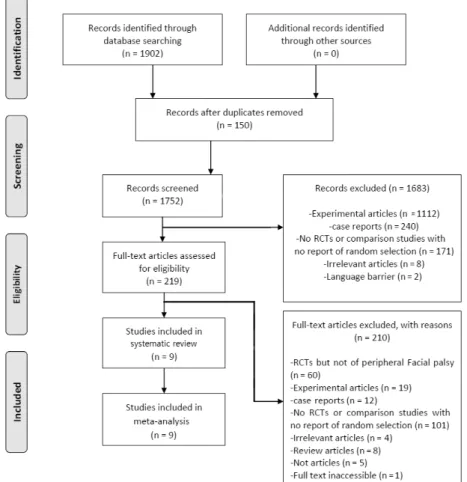
Fig. 1. PRISMA flowchart of study selection. RCTs: Randomized controlled trials.
4. Risk of Bias Assessment
Risk of bias (ROB) assessment was independently performed by the two reviewers, using the Cochrane Handbook for Systematic Reviews of Interventions [8]. In addition, the Jadad score [9] was used as a complimentary assessment. The reviewers had no disagreements regarding the risk of bias.
5. Data Synthesis: Estimation Statistics To summarize the effects of PA on outcomes, Review Manager (RevMan) (Version 5.2., Nordic Cochrane Centre, Cochrane Collaboration, Copenhagen) was used. The effect size was calculated as weighted
mean differences (WMDs) and a 95% confidence interval (95% CI). Random-effect models were employed to consider the possible clinical heterogeneity among the included studies using the chi-square test, the tau
2test, and Higgins I
2statistics [8]).
Results
1. Study Selection
The titles and/or abstracts of 1902 studies were
screened, and the full texts of 219 studies were
reviewed (Figure 1). Studies declared ineligible
based on their titles and/or abstracts were excluded.
Ineligible studies that were not filtered out during the title and/or abstract screening stage were found and removed after reviewing the full text. Of the 219 articles reviewed in full text, nine studies were identified for inclusion in the systematic review and meta-analysis [10-18]. Of the nine studies, four articles focusing on postauricular pain were included [10-12, 18].
2. Study description
1) Characteristics of included studies
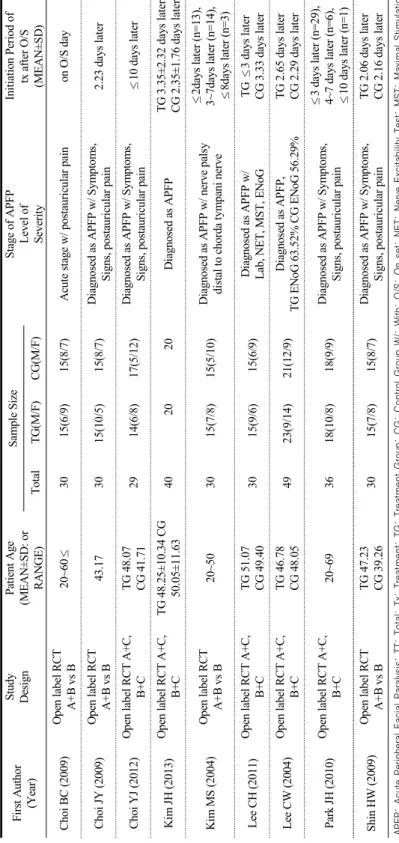
In all, nine studies were included for systematic review and meta-analysis. The summary of the included RCTs are presented in Table 1 and 2. All nine RCTs originated from the Republic of Korea, and all the trials adopted an open-label RCT, two-armed parallel group design. In all, 200 patients were included in these PA treatment trials. Of those, 76 patients were included in studies on the effect of PA on APFP with postauricular pain. None of the RCTs had a treatment group receiving PA as a single intervention. Instead, PA in all the trials was combined with conventional Korean medical treatments, including acupuncture, herbal medicine, and other physical therapies (e.g., silver spike point therapy (SSP), hot pack, interferential current therapy (ICT), cupping therapy, and facial massage and exercise). Overall, six different PA ingredients were studied. Soyeom, bee venom, Calculus Bovis · Fel Ursi · Moschus (BUM), sweet bee venom (SBV), Suseunghwagang (SSHG), and Hominis Placenta (HP) were used in the treatment group. In studies on APFP with postauricular pain, Soyeom, bee venom, and BUM were used in the treatment group.
Different types of controls were used in the studies.
Lee CW (2004) used a placebo controlled with normal saline. Four RCTs compared PA with conventional Korean medical treatment [10, 11, 14, 18]. Three RCTs compared PA treatments with different PA treatments [12, 15, 17]. Kim JH (2013)
compared PA with needle-embedding therapy, which is a unique method of acupuncture in which absorbable needles are left in the subcutaneous tissue in the affected region.
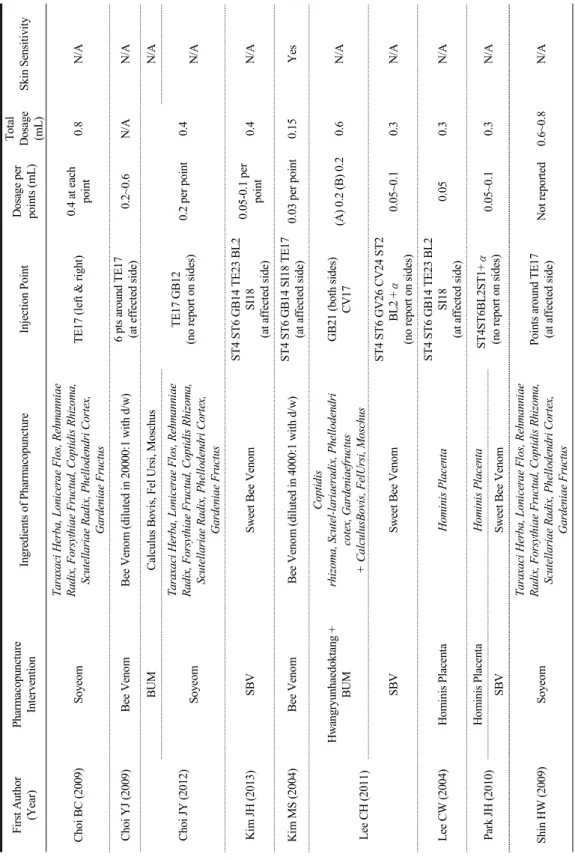
2) Characteristics of pharmacopuncture intervention Soyeom, Bee venom, BUM, SBV, SSHG, and Hominis Placenta have been studied (Table 3). Of nine studies, four trials used herbal formula compounds [10, 12, 15, 18]. Six trials used single-herb PA [11, 13-17]. Lee CH et al. (2011) compared single-herb with mixed-herb PA, and Choi YJ et al. (2012) compared mixed-herb PA with formulated ingredients. Of the 200 patients with APFP, 47 were treated with Soyeom, 83 were treated with bee venom, 14 were treated with BUM, 15 were treated with SSHG, and 41 were treated with Hominis Placenta. Of the 76 patients with postauricular pain, 47 were treated with Soyeom, 15 were treated with bee venom, and 14 were treated with BUM. All trials used 5~10 acupuncture points in the facial area; for one group, Lee CH et al.
(2011) included two acupuncture points not located on the face. Four trials studying postauricular pain chose TE17 as the injection point [13, 14, 22, 25].
Of these, Kim MS et al. (2004) was the only trial to report the assessment of skin sensitivity before the test for any allergic reaction and was the only trial to report any adverse events.
3) Outcome Measures
All the trials examined in this study used the
Yanagihara-system as the primary outcome (the
change of Yanagihara system). In addition, four
postauricular pain trials used VAS scores [13, 14,
25]. Kim JH et al. (2013) also used HBS. Choi BC
et al. (2009) did not report on the treatment duration
and only reported the end scores. Four trials reported
weekly scores and improvement rates for four weeks
of treatment [13-15, 17]. Lee CW et al. (2004)
reported weekly scores for five weeks of treatment
First Author (Year)
Study Design
Patient Age (MEAN±SD: or RANGE) Sample SizeStage of APFP Level of Severity
Initiation Period of tx after O/S (MEAN±SD)TotalTG(M/F)CG(M/F) Choi BC (2009)Open label RCT A+B vs B20~60≤3015(6/9)15(8/7)Acute stage w/ postauricular painon O/S day Choi JY (2009)Open label RCT A+B vs B43.173015(10/5)15(8/7)Diagnosed as APFP w/ Symptoms, Signs, postauricular pain2.23 days later Choi YJ (2012)Open label RCT A+C, B+CTG 48.07 CG 41.712914(6/8)17(5/12)Diagnosed as APFP w/ Symptoms, Signs, postauricular pain≤10 days later Kim JH (2013)Open label RCT A+C, B+CTG 48.25±10.34 CG 50.05±11.63402020Diagnosed as APFPTG 3.35±2.32 days later CG 2.35±1.76 days later Kim MS (2004)Open label RCT A+B vs B20~503015(7/8)15(5/10)Diagnosed as APFP w/ nerve palsy distal to chorda tympani nerve
≤2days later (n=13), 3~7days later (n=14), ≤8days later (n=3) Lee CH (2011)Open label RCT A+C, B+CTG 51.07 CG 49.403015(9/6)15(6/9)Diagnosed as APFP w/ Lab, NET, MST, ENoGTG ≤3 days later CG 3.33 days later Lee CW (2004)Open label RCT A+C, B+CTG 46.78 CG 48.054923(9/14)21(12/9)Diagnosed as APFP, TG ENoG 63.52% CG ENoG 56.29%TG 2.65 days later CG 2.29 days later Park JH (2010)Open label RCT A+C, B+C20~693618(10/8)18(9/9)Diagnosed as APFP w/ Symptoms, Signs, postauricular pain
≤3 days later (n=29), 4~7 days later (n=6), ≤10 days later (n=1) Shin HW (2009)Open label RCT A+B vs BTG 47.23 CG 39.263015(7/8)15(8/7)Diagnosed as APFP w/ Symptoms, Signs, postauricular painTG 2.06 days later CG 2.16 days later APFP: Acute Peripheral Facial Paralysis; TT: Total; Tx: Treatment; TG: Treatment Group; CG: Control Group W/: With; O/S: On set; NET; Nerve Excitability Test; MST: Maximal Stimulation Test; ENoG: Electronerography.
Table 1. General Characteristics of RCTs of Pharmacopuncture for APFP
First Author (Year)
InterventionConventional Treatment No of treatments/ durationTreatment Group (Regimen)Control Group (Regimen)A-TX, durationDecoctionPTW-med Choi BC (2009)Soyeom + Conventional TxConventional TxBID, 20 minsTIDSSP Facial Massage & Exercise ICT NegativeNot reportedTG NR CG 30tx for 2wks Choi JY (2009)Bee Venom + Conventional TxConventional TxBID, 20 minsTIDSSP Facial Massage & Exercise ICT Hot Spa NegativeNot reportedTG 3/wk for 3wks CG 7/wk for 3wks Choi YJ (2012)BUM + Conventional TxSoyeom + Conventional TxBID w/ Electroa-tx, NRTIDHot pack, Facial MassageNoTG 6/wk for 3wks CG 7/wk for 3wks Kim JH (2013)Needle-embedding (29G, 4mm) + Conventional Tx SBV + Conventional Tx
inpatients BID, outpatients 2-3/wk, 15 minsYesNot ReportedNot reported2~3/wk for 4wks Kim MS (2004)Bee Venom + Conventional TxConventional TxBID w/ Electroa-tx, 15 minsYesSSPNot reported1~3/wk for 4 wks Lee CH (2011)Ascending Kidney Water Descending Heart Fire Method + Conventional Tx
SBV + Conventional Tx inpatients BID, outpatients 2-3/wk, 15 minsYesNot ReportedYes1TG 2~3/wk for 4wks CG 8~12tx for 4wks Lee CW (2004)Hominis Placenta + Conventional Tx
Placebo (Normal Saline) + Conventional Tx inpatients QD, outpatients 2/wk, 20~30 mins YesE.S.T, Jolly Hot Pack, Facial Massage & Exercise Yes (Steroids, vessel dilator, antacid)
7~10tx for 7~10days for inpatients, 2/wk for 4wks for outpatients Park JH (2010)Hominis Placenta + Conventional TxSBV + Conventional Tx2~3/wkYesNot ReportedYes2TG 2~3/wk for 4wks CG 8~12tx for 4wks Shin HW (2009)Soyeom + Conventional TxConventional TxBID, 20 minsTIDSSP Facial Massage & Exercise Hot Spa ICT(some patients)Not reportedTG 3/wk for 3wks CG 7/wk for 3wks 1Steroids, vessel dilator, antiviral agents, artificial tears, eye ointment,2Steroids, vessel dilator, antiviral agents, vitamins, artificial tears, eye ointment. A-Tx: Acupuncture Treatment; PT: Physical Training; W-med: Western Medication; No: Number; Tx: Treatment; SSP: Silver Spike Point Therapy; ICT: Interferential Current Therapy; /wk: per Week; SBV: Sweet Bee Venom; BID: twice a day; TID: three times a day; QD: once a day; Mins: minutes; Electroa-tx: Electroacupuncture treatment; EST: Electrical Stimulation Therapy; P:Patients; NR:Not Reported.
Table 2. Treatment Characteristics of RCTs of Pharmacopuncture for APFP
First Author (Year)Pharmacopuncture InterventionIngredients of PharmacopunctureInjection PointDosage per points (mL) Total Dosage (mL)Skin Sensitivity Choi BC (2009)Soyeom
Taraxaci Herba, Lonicerae Flos, Rehmanniae Radix, Forsythiae Fructud, Coptidis Rhizoma, Scutellariae Radix, Phellodendri Cortex, Gardeniae Fructus
TE17 (left & right)0.4 at each point0.8N/A Choi YJ (2009)Bee VenomBee Venom (diluted in 20000:1 with d/w)6 pts around TE17 (at effected side)0.2~0.6N/AN/A Choi JY (2012)
BUMCalculus Bovis, Fel Ursi, Moschus TE17 GB12 (no report on sides)0.2 per point0.4
N/A Soyeom
Taraxaci Herba, Lonicerae Flos, Rehmanniae Radix, Forsythiae Fructud, Coptidis Rhizoma, Scutellariae Radix, Phellodendri Cortex, Gardeniae Fructus N/A Kim JH (2013)SBVSweet Bee VenomST4 ST6 GB14 TE23 BL2 SI18 (at affected side)
0.05-0.1 per point0.4N/A Kim MS (2004)Bee VenomBee Venom (diluted in 4000:1 with d/w)ST4 ST6 GB14 SI18 TE17 (at affected side)0.03 per point0.15Yes Lee CH (2011)
Hwangryunhaedoktang + BUM Coptidis rhizoma, Scutel-lariaeradix, Phellodendri cotex, Gardeniaefructus + CalculusBovis, FelUrsi, Moschus
GB21 (both sides) CV17(A) 0.2 (B) 0.20.6N/A SBVSweet Bee VenomST4 ST6 GV26 CV24 ST2 BL2 + α (no report on sides)0.05~0.10.3N/A Lee CW (2004)Hominis PlacentaHominis PlacentaST4 ST6 GB14 TE23 BL2 SI18 (at affected side)0.050.3N/A Park JH (2010)Hominis PlacentaHominis PlacentaST4ST6BL2ST1+ α (no report on sides) 0.05~0.10.3N/A SBVSweet Bee Venom Shin HW (2009)Soyeom
Taraxaci Herba, Lonicerae Flos, Rehmanniae Radix, Forsythiae Fructud, Coptidis Rhizoma, Scutellariae Radix, Phellodendri Cortex, Gardeniae Fructus Points around TE17 (at affected side)Not reported0.6~0.8N/A NR: Not Reported; N/A: Not Available; PA: Pharmacopuncture; PS: The Korean Society of Pharmacopuncture; SBV: Sweet Bee Venom.
Table 3. Materials used in pharmacopuncture in clinical trials.
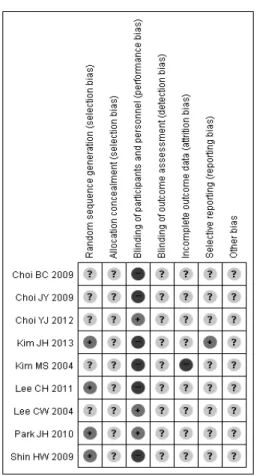
Fig. 3. The summary of risk of bias
Fig. 2. The risk of bias of included studies. +:
Low risk of bias; -: High risk of bias; ?:
Unclear.
but did not report improvement rates. Three trials reported only the initial and end scores and the improvement rates with VAS scores for the second, fourth, and sixth days of treatment [11, 12, 18]. Choi BC et al. (2009) reported scores from the seventh, fifteenth, and last days of treatment and the improvement rates with VAS scores for the third, fifth, and seventh days of treatment. The quality of life was not assessed in any of the trials examined.
Kim MS et al. (2004) was the only trial to report adverse events following the injection.
3. Risk of Bias Assessment
The Cochrane Handbook was used to assess the risk of bias to review the studies for methodological quality and the risk of bias [8]. Four trials used random sequence generation [13, 15, 17, 18]. None of the trials showed allocation concealment. Six trials had a high risk for performance bias. Only three trials had two parallel groups that used the same intervention techniques [12, 16, 17]. None of the trials showed detection bias, reporting bias, or any other bias. Kim MS et al. (2004) was at high risk for attrition bias because of drop-outs in the experimental group due to adverse events (Figures 2 and 3). According to the Jadad scoring system, all the trials were randomized in various ways and therefore received 1 point; however, only four trials
used appropriate methods [5, 13, 17, 18]. Three trials
used randomization codes [5, 13, 17]. Park JH et al.
Fig. 4. The forest plot of Yanagihara-system score by weekly treatment. All controls were conventional Korean medical treatments except for Kim JH (2013), which used the embed-needling technique.
(2010) tossed a coin to randomize. None of the trials used blinding, and three trials included drop-outs or withdrawals [13, 14, 15]. Thus, none of the trials obtained a score of 5, which indicates a high-quality RCT. Only two studies received a total score of 3 [13, 15]. Three studies received a score of 2 [14, 17, 18]. The rest of the trials received a score of 1.
None of the trials received a score of negative 1.
4. Outcome Results
The data extracted from the included studies were classified according to the weekly assessment results, with the fourth week used as the primary outcome in the analysis of efficacy (Figure 4). Only three studies that had conventional Korean medical treatment or normal saline as control were used for the primary outcome during the fourth week of treatment. The meta-analysis showed no heterogeneity among the
three studies. The result of primary outcome was significant with Relative Ratio (RR) = 0.35 (χ
2= 2.79, P=0.25, I
2=28%). The diamond in the forest plot was on the right side of the vertical line, but it did intersect with the line. We found 95% CI for -0.09 to 0.79 (Z=1.54, P=0.12), which meant that the PA treatment was better than the control treatment.
When comparing the primary outcome (fourth week
of treatment) with the secondary outcome (second
and third weeks of treatment), the data shows that
the diamond intersects with the line at the second
week of treatment, thus indicating that the result
does not favor PA. However, at the third week of
treatment, the diamond does not intersect with the
vertical line. Kim JH et al. (2013) used the
embedded-needling method of acupuncture and
showed that this method and PA are both effective
but with no significant differences. No heterogeneity
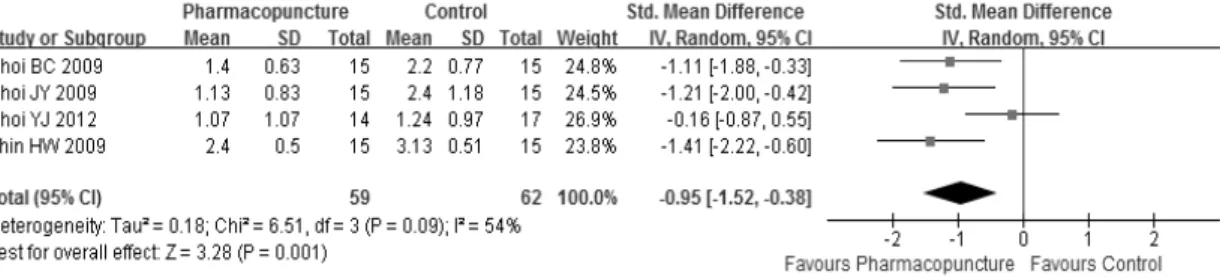
Fig. 5. The forest plot of VAS score on postauricular pain based on the sixth day of the treatment