Interventions for anesthetic success in symptomatic irreversible pulpitis: A network meta-analysis of randomized controlled trials
Gowri Sivaramakrishnan
1, Muneera Alsobaiei
1, Kannan Sridharan
21Dental Training Department, Ministry of Health, Bahrain
2Department of Pharmacology & Therapeutics, College of Medicine and Medical Sciences, Arabian Gulf University, Manama, Bahrai
Background: Local anesthetics alone or in combination with adjuncts, such as oral medications, have routinely been used for pain control during endodontic treatment. The best clinical choice amongst the vast numbers of agents and techniques available for pain control for irreversible pulpitis is unclear. This network meta-analysis combined the available evidence on agents and techniques for pulpal anesthesia in the maxilla and mandible, in order to identify the best amongst these approaches statistically, as a basis for future clinical trials.
Methods: Randomized trials in MEDLINE, DARE, and COCHRANE databases were screened based on inclusion criteria and data were extracted. Heterogeneity was assessed and odds ratios were used to estimate effects.
Inconsistencies between direct and indirect pooled estimates were evaluated by H-statistics. The Grading of Recommendation, Assessment, Development, and Evaluation working group approach was used to assess evidence quality.
Results: Sixty-two studies (nine studies in the maxilla and 53 studies in the mandible) were included in the meta-analysis. Increased mandibular pulpal anesthesia success was observed on premedication with aceclofenac + paracetamol or supplemental 4% articaine buccal infiltration or ibuprofen+paracetamol premedication, all the above mentioned with 2% lignocaine inferior alveolar nerve block (IANB). No significant difference was noted for any of the agents investigated in terms of the success rate of maxillary pulpal anesthesia.
Conclusion: Direct and indirect comparisons indicated that some combinations of IANB with premedication and/or supplemental infiltration had a greater chance of producing successful mandibular pulpal anesthesia.
No ideal technique for maxillary anesthesia emerged. Randomized clinical trials with increased sample size may be needed to provide more conclusive data. Our findings suggest that further high-quality studies are required in order to provide definitive direction to clinicians regarding the best agents and techniques to use for mandibular and maxillary anesthesia for irreversible pulpitis.
Keywords: Pain; Pulpitis; Root Canal Therapy.
This is an Open Access article distributed under the terms of the Creative Commons Attribution Non-Commercial License (http://creativecommons.org/licenses/by-nc/4.0/) which permits unrestricted non-commercial use, distribution, and reproduction in any medium, provided the original work is properly cited.
Received: September 24, 2019•Revised: November 5, 2019•Accepted: December 6, 2019
Corresponding Author:Gowri Sivaramakrishnan, Specialist Prosthodontist and Dental Tutor, Dental Training Department, Ministry of Health, Bahrain E-mail: [email protected]
Copyrightⓒ 2019 Journal of Dental Anesthesia and Pain Medicine
INTRODUCTION
Pain management is requisite for successful dental treatment. Local anesthetics alone or in combination with other agents are often used during endodontic treatment
of irreversible pulpitis [1,2]. Inflammatory mediators in pulpitis provoke pain responses and inflammation and successful anesthesia is achieved in less than 20% of cases under these circumstances [3]. Systematic reviews and meta-analysis have previously compared articaine and lignocaine [4,5], the effect of pre-operative analgesics
and those of inferior alveolar nerve block (IANB) [6,7], IANB with different agents and techniques [8], and the effect of supplemental infiltration [9]. The diversity of these reviews does not identify any single best agent and technique for the maxilla and mandible, and anesthetic failure has been a recurring concern. Consequently, clinicians have little evidence by which to direct care, and may resort to trial and error. Such inadequate pain control can lead to avoidance of dental care and fear of dental treatment.
Unfortunately, results from different meta-analysis fail to point to the best amongst various tested agents.
Lignocaine, which has been commercially available for more than 60 years and is commonly used, has been reported to be more successful when used with supplemental articaine infiltration [10,11]. However, articaine infiltration alone also produced successful anesthesia in individual studies [11-13]. Oral administration of non-steroidal anti-inflammatory drugs (NSAIDs) with lignocaine inferior alveolar block (IANB) has also been shown to improve anesthetic success [6,7]. Although patient-related factors, such as medical conditions, medi- cations for systemic conditions, anatomical factors, and psychological factors, such as fear and anxiety [1-3] play an important role, the agent and the technique that was used successful in the majority of the population should be the first option adopted by clinicians, to produce more predictable results.
In comparison to traditional meta-analysis, network meta-analysis (NMA) may offer improved understanding of the best agents and techniques to use for anesthesia for irreversible pulpitis. The NMA principle is used for direct as well as indirect comparisons between multiple treatments from individual trials, using the common comparator principle [14]. The methodology of NMA provides a means to gain insight into relations and comparisons among randomized controlled trials [14,15].
Hence, we performed an NMA to combine the available evidence on agents and techniques that produce successful pulpal anesthesia in the maxilla and mandible, in order to identify the best amongst these statistically,
to form the basis for future clinical trials.
METHODS
1. Information sources and search strategy
The protocol for this review was registered with PROSPERO (registration number CRD42017057700). A literature search was conducted in Medline (through PubMed), Cochrane CENTRAL, and Google Scholar databases, up to April 1, 2017. The search strategy used was ((((irreversible pulpitis) AND (endodontic (treatment OR therapy) OR root canal OR pulp therapy)) AND pain) AND (local (anesthesia OR anesthesia))). Only studies published in English language were considered. The reference lists from the identified articles were manually screened to identify other eligible studies. Manual searches were also conducted to identify missed studies.
Two authors carried out independent search and retrieved appropriate articles.
2. Eligibility criteria
The criteria for inclusion were randomized controlled trials conducted in adult patients of any age and sex, with any tooth/teeth diagnosed with symptomatic irreversible pulpitis, based on subjective methods such as a pain scale and/or objective testing, using heat, cold, or electric pulp testing, and requiring endodontic treatment. Studies comparing different local anesthetic agents; techniques of administration; combination of local anesthetics with other orally administered medications, such as analgesics, nitrous oxide, acupuncture, or others were included.
Traditional subjective methods of testing success of anesthesia included testing lip numbness, responsiveness of the mucosa to needle sticks, or simply commencing with the treatment and looking for a pain response [12,13]. Although objective methods, such as electric and heat/cold pulp testing are more reliable, they are more commonly used as diagnostic aids [1-4]. The primary outcome in the present meta-analysis was “no” or “mild”
pain during endodontic access or canal preparation,
measured using a visual analog scale (VAS), which is also subjective, or objective negative testing, using a pulp tester. This outcome was adopted as this was the primary outcome in the majority of the included studies. Studies conducted in children, pregnant and lactating women, patients with medical conditions, anxious patients on anti-anxiety medications, patients on any other medi- cations interfering with the action of local anesthetics or the drugs administered were excluded.
3. Study procedure and statistical considerations After a thorough literature search by both investigators independently, a pre-tested data extraction form was created and the following data were extracted from each eligible study: trial site, year, trial methods, participants, interventions, and outcomes. Disagreement between the investigators was resolved through discussion to consensus. The present review and NMA is presented as per the Preferred Reporting Items for Systematic Reviews and Meta-analysis (PRISMA) guidelines [16]. Risk-of- bias of the included randomized trials was assessed using the Cochrane risk-of-bias tool [17]. Heterogeneity between directly compared studies was assessed using Chi-square and I2 tests. The inverse variance hetero- geneity model was used, as it does not require any assumptions and is more robust than the random-effects model for both direct and indirect comparisons. Direct comparison estimates were derived by pooling the data from studies that compared the same intervention. Indirect comparison pooled estimates were derived by pooling the data between the studies through a common comparator.
The entire NMA was carried out using MetaXL. Odds ratios and 95% confidence intervals were used to estimate effects, as the outcome is a categorical variable.
Inconsistencies between the direct and indirect pooled estimates were evaluated by H-statistics, wherein a value of < 3 was considered as minimal, 3–6 as modest, and
> 6 as gross inconsistency. The Gradings of Recom- mendation, Assessment, Development and Evaluation (GRADE) working group approach was used to assess the quality of evidence [17].
RESULTS
1. Search results
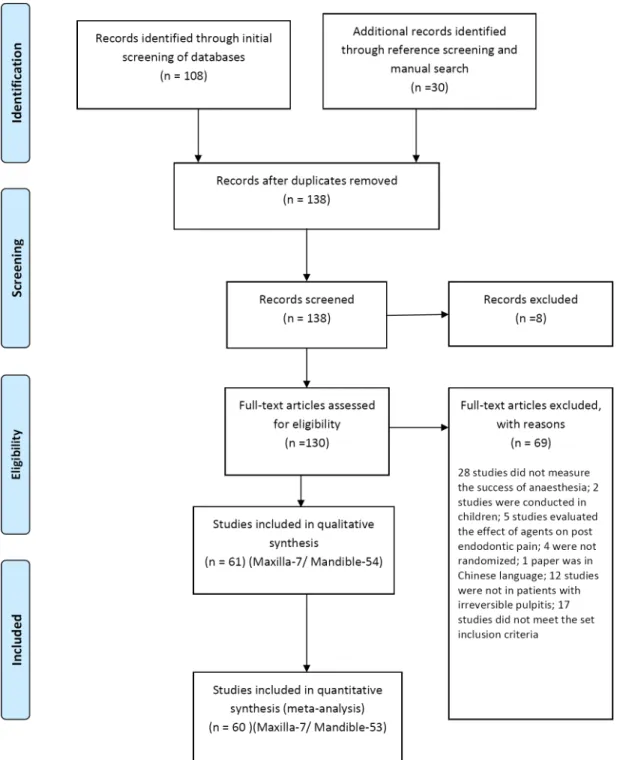
Sixty-two studies were considered for inclusion [18-79]; 53 studies involving 4465 patients investigated the mandible [18-70], eight studies involving 442 patients investigated the maxilla [71-78], and one study [79]
involving 51 patients included both maxillary and mandibular teeth. One study [48] was excluded because of disconnected network (the treatments included in this study [48] did not form a connected network, such that there was a path from each treatment to every other treatment within the whole network), and hence 61 studies were included in the final meta-analysis. The detailed search results are presented in Figure 1. Key characteristics of the included studies are represented in Table 1. Risk-of-bias assessment demonstrated low risk in all domains for most of the studies (Fig. 2).
2. Direct comparison: Pooled results for mandibular anesthetic techniques
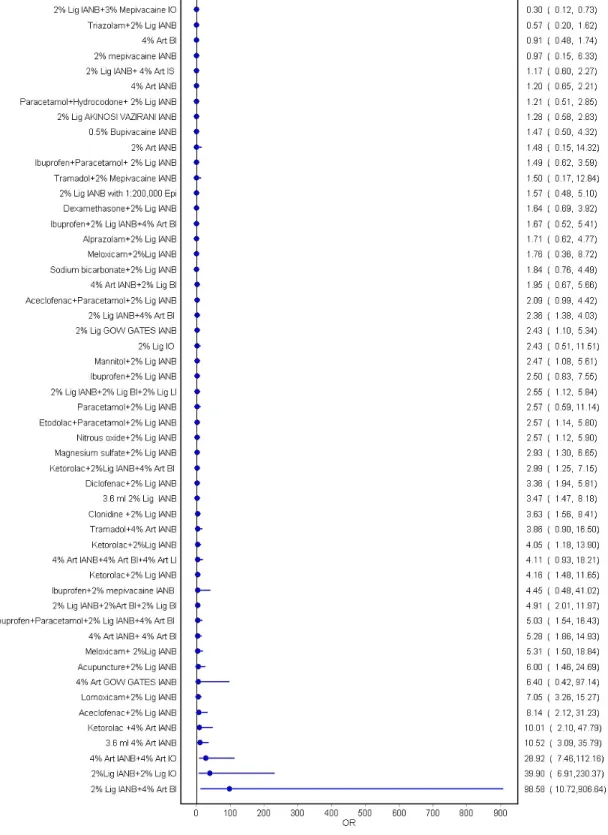
The pooled estimates (odds ratio) for comparison of different anesthetic techniques with 2% lignocaine IANB in the mandible are presented in Figure 3. The estimates are arranged in a forest plot from the top to bottom in decreasing order of outcome success. Increased likelihood of success was observed with
• pre-medication with aceclofenac + paracetamol (odds ratio: 2.09 [95% confidence interval, CI: 0.99, 4.42]) before administering 2% lignocaine IANB
• 2% lignocaine IANB + 4% articaine buccal infiltration (BI) (2.36 [1.38, 4.03])
Other significant interventions that performed better than 2% lignocaine IANB alone include: 2% lignocaine Gow–
Gates IANB (2.43 [1.10, 5.34]); mannitol + 2% lignocaine IANB (2.47 [1.08, 5.61]); 2% lignocaine IANB + BI + lingual infiltration (LI) (2.55 [1.12, 5.84]); etodolac + paracetamol before 2% lignocaine IANB (2.57 [1.14, 5.80]);
nitrous oxide with 2% lignocaine IANB (2.57 [1.12, 5.90]).
Other interventions (Fig. 3) also showed significant pooled
Fig. 1. PRISMA flow diagram
estimates; however, they were considered less precise due to their wider confidence intervals.
3. Indirect comparison: Pooled results for mandibular anesthetic techniques
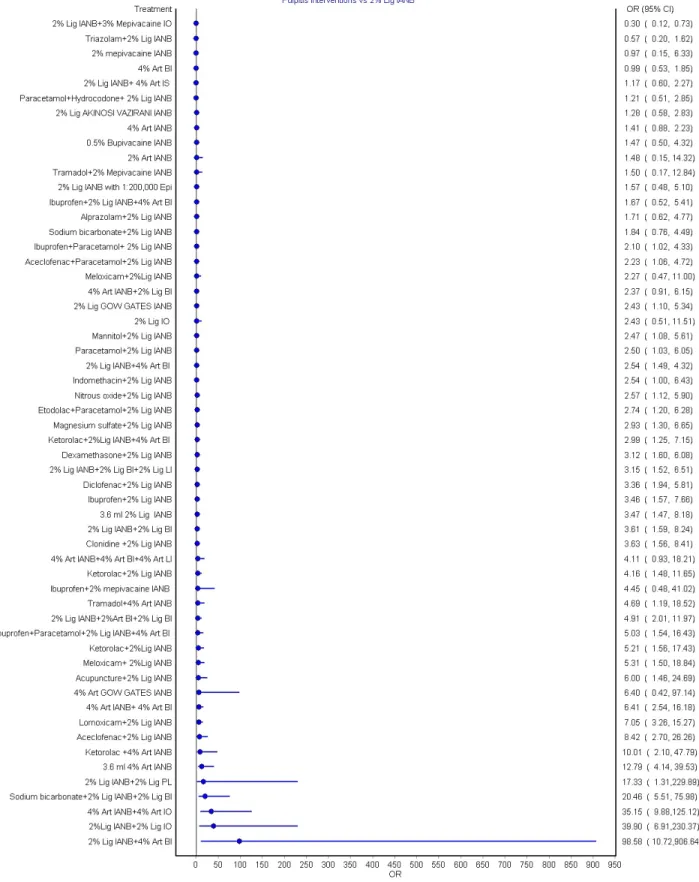
The indirect comparison pooled estimates were derived using common comparator principle and are shown in
Figure 4. The chances of increased success of anesthesia were observed with:
• pre-medication with ibuprofen + paracetamol before 2% lignocaine IANB (2.1 [1.02, 4.33]
• pre-medication with aceclofenac + paracetamol (2.23 [1.06, 4.72]) before 2% lignocaine IANB
Other interventions that performed better than 2%
Table 1. Key characteristics of included studies Study
NO
First author, year [reference]
Sample size/
population
Area of
anesthesia Symptomatic/
Asymptomatic Intervention Comparator Anesthetic
agent used Definition for anesthetic success Studies in the mandible
1 Click V,
2015 [18] 98 Mandibular molar or premolar
Symptomatic 60 patients received Gow–Gates
and BNB 38 patients received
Akinosi Vazirani and BNB
2% lignocaine with
1:100 000epinephrine access and instrument the tooth with no or mild pain, using VAS scale 2 Aggarwal,
2010 [19]
76 Mandibular molar
Symptomatic 27 patients received Gow-Gates, 25 received Vazirani-Akinosi
24 patients received IANB
4% articaine with 1:100 000 epinephrine
No pain or weak/mild pain during access and instrumentation, using VAS scale 3 Matthews,
2009 [20] 78 Mandibular molar or premolar
Symptomatic 55 patients received IAN and long
buccal and supplemental BI 23 patients received IANB and long buccal
2% lignocaine with 1:100 000 epinephrine.
Supplemental BI with 4% articaine with 1:100 000 epinephrine
No pain or weak/mild pain during access and instrumentation, using VAS scale
4 Aggarwal,
2011 [21] 98 Mandibular
molar Symptomatic 24 patients supplemental BI 4%
articaine with 1:100 000 ephinephrine.
26 patients with 1 mL/30 mg of ketorolac tromethamine 24 patients with 1 mL/4 mg of dexamethasone.
24 patients did not receive any supplemental infiltrations
All patients received IANB with 2%
lignocaine with 1:200 000 epinephrine
No pain or weak/mild pain during access and instrumentation using VAS scale
5 Razavian,
2013 [22] 40 Mandibular
posterior tooth
Symptomatic 20 patients received X tip IO
injection 20 patients received
IANB 2% lignocaine with
1:100 000 epinephrine No pain or weak/mild pain during access and instrumentation, using VAS scale
6 Webster, 2016 [23]
175 Mandibular molar or premolar
Symptomatic 75 patients received conventional IANB and intraseptal 1.4 mL 4%
articaine with 1:100 000 epinephrine
100 patients received IANB
2% lignocaine with 1:100 000 epinephrine
No pain or weak/mild pain during access and instrumentation, using VAS scale
7 Reisman,
1997 [24] 86 Mandibular
molar or premolar
Symptomatic 42 patients received IANB and IO
of 1.8 ml of 3% mepivacaine 44 patients received
IANB 2% lignocaine with
1:100 000 epinephrine No pain or weak/mild pain during access and instrumentation, using VAS scale
8 Parirokh, 2014 [25]
69 Mandibular molar
Mentioned as asymptomatic but
included patients with prolonged response to cold
test. Hence considered symptomatic
33 patients received IANB followed by BI and intraligamentary
36 patients received IANB
2% lignocaine with 1/80 000 epinephrine
No pain or weak/mild pain during access and instrumentation, using VAS scale
9 Aggarwal,
2009 [26] 87 Mandibular
molar Symptomatic 62 patients received IANB.
31 patients received supplemental infiltrations of 2% articaine with 1:200 000 epinephrine, and 31 patients received infiltrations of 2%
lignocaine with 1:200 000 epinephrine
25 patients received
IANB 2% lignocaine with
1:200 000 No pain or weak/mild pain during access and instrumentation, using VAS scale
10 Parirokh,
2010 [27] 82 Mandibular
molar Symptomatic 55 patients received IANB and BI 27 patients received
IANB 2% lignocaine
with 1:100 000 epinephrine
No pain or weak/mild pain during access and instrumentation, using VAS scale
11 Kanaa,
2012 [28] 100 Mandibular
molar or premolar
Symptomatic 25 patients received IANB and BI of 4% articaine with epinephrine 1:100 000
25 patients received IANB with periodontal ligament infiltration 25 patients received IANB with IO
25 patients received
IANB 2.0 mL of 2% lignocaine with 1:80,000 epinephrine
No response to the maximum stimulation (reading of 80) with the pulp tester
12 Aggarwal,
2014 [29] 63 Mandibular
molar Symptomatic 31 patients received IANB 2%
lignocaine with 1:80 000 epinephrine
32 patients received IANB 2% lignocaine with 1:200 000 epinephrine
Lignocaine Pulp access and canal instrumentation into the apical third with no or mild pain
13 Shadmehr,
2016 [30] 100 Mandibular
molar Symptomatic 50 received 2% lignocaine with
clonidine IANB 50 received 2%
lignocaine with epinephrine 1:80 000 IANB
2% lignocaine Ability to penetrate dentine, enter the pulp and advance instruments into the coronal part of the canal pulp without pain (VAS score of zero) or mild pain 14 Stanley,
2012 [31]
100 Mandibular molar or premolar
Symptomatic 50 patients received nitrous oxide/oxygen 6 L/min flow rate of 100% oxygen and IANB
50 patients received room air/oxygen and IANB
3.6 ml of 2% lidocaine with 1:100 000 epinephrine
No pain or weak/mild pain during access and instrumentation, using VAS scale
15 Jalali, 2015 [32]
40 Mandibular molar
Symptomatic 20 patients received acupuncture and IANB
20 patients received IANB only
2% lignocaine with 1:80 000 epinephrine
No pain or weak/mild pain during access and instrumentation, using VAS scale
16 Shetty, 2015 [33]
100 Mandibular premolar or
molar
Symptomatic 50 patients received 1 mL magnesium sulfate USP 50% and IANB
50 patients received 1 mL distilled water (placebo) and IANB
2% lignocaine with 1/80000 epinephrine
No pain or weak/mild pain during access and instrumentation, using VAS scale
17 Kreimer, 2012 [34]
106 Mandibular molar or premolar
Symptomatic 56 patients received 5 mL, 63.6 mg of lignocaine with 31.8 mg epinephrine plus 1.82 mL of 0.5 mol/L mannitol or 3-mL containing 76.4 mg of lignocaine with 36 mg epinephrine plus 1.1 mL of 0.5 mol/L mannitol
50 patients received the same without mannitol
Lignocaine with epinephrine
No pain or weak/mild pain during access and instrumentation,using VAS scale
18 Schellenberg,
2015 [35] 100 Mandibular molar or premolar
Symptomatic 50 patients received IANB buffered with 0.18 mEq/mL sodium bicarbonate
50 patients received
IANB 4% lignocaine with
1:100 000 No pain or weak/mild pain during access and instrumentation using VAS scale
19 Saatchi,
2016 [36] 100 Mandibular
first molar Symptomatic 50 patients received standard IANB
and BI with sodium bicarbonate 50 patients received
IANB 2% lignocaine with
1:80 000 epinephrine No pain or weak/mild pain during access and instrumentation, using VAS scale
20 Saatchi,
2015 [37] 80 Mandibular
posterior tooth
Symptomatic 40 patients received 0.18 mL 8.4%
sodium bicarbonate (8.4%
weight/volume, 50 mEq/50 mL buffered IANB
40 patients received 0.18 mL of sterile distilled water with IANB
2% lidocaine with 1:80
000 epinephrine No pain or weak/mild pain during access and instrumentation, using VAS scale
21 Dou L,
2013 [38] 80 Mandibular
molar Symptomatic 40 patients received IANB and BI of 0.9 mL of 4% articaine with 1:100 000 epinephrine
40 patients received IANB and BI and LI of 0.9 mL of 4%
articaine with 1:100 000 epinephrine
2% lignocaine containing 1:100 000 epinephrine
No pain or weak/mild pain during access and instrumentation, using VAS scale
22 Shahi,
2013 [39] 165 Mandibular
molar Mentioned as asymptomatic but
included patients with prolonged response to cold
test. Hence considered symptomatic
55 patients received 0.5 mg dexamethasone and 55 patients received 400 mg ibuprofen and IANB and BI
55 patients received placebo of lactose powder and IANB and BI
2% lignocaine containing 1:80000 epinephrine
No pain or weak/mild pain during access and instrumentation, using VAS scale
23 Shantiaee,
2016 [40] 69 Mandibular
first molar Symptomatic 23 patients received 7.5 mg of meloxicam; 23 patients received 600 mg of ibuprofen and IANB
23 patients received
placebo and IANB 2% lignocaine and
1:100 000 epinephrine No pain or weak/mild pain during access and instrumentation, using VAS
24 Aggarwal,
2010 [41] 69 Mandibular
molar Symptomatic 22 patients received 300 mg of ibuprofen, 23 patients received 10 mg of ketorolac and IANB
24 patients received placebo starch capsules and IANB
1.8 mL of 2% lignocaine with 1:200 000 epinephrine
No pain or weak/mild pain during access and instrumentation, using VAS scale
25 Jena,
2013 [42] 100 Mandibular
posterior teeth
Symptomatic 20 patients received ibuprofen (600 mg), 20 patients ketorolac (10 mg), 20 patients combination of etodolac with paracetamol (400 mg + 500 mg)and 20 patients combination of aceclofenac with paracetamol (100 mg + 500 mg) and IANB
20 patients were administered placebo with sugar coated pills and IANB
IANB 2% lignocaine with 1:200 000 epinephrine
No pain or weak/mild pain during access and instrumentation, using VAS scale
26 Parirokh,
2010 [43] 150 Mandibular
first and second molar
Symptomatic 50 patients received 600 mg ibuprofen and 60 patients received 75 mg indomethacin And IANB
50 patients received placebo of lactose powder and IANB
2% lignocaine with
1/80000 IANB No pain or weak/mild pain during access and instrumentation, using VAS scale
27 Simpson,
2011 [44] 100 Mandibular
molar or premolar
Symptomatic 50 patients received either 800 mg ibuprofen or 1000 mg acetaminophen and IANB and BI
50 patients received Placebo, IANB and BI
2% lignocaine with
1:100 000 No pain or weak/mild pain during access and instrumentation, using VAS scale
28 Fullmer, 2014 [45]
100 Mandibular molar or premolar
Symptomatic 50 patients received 1000 mg acetaminophen plus 10 mg hydrocodone and IANB
50 patients received placebo an IANB
2% lignocaine with 1:100 000
No pain or weak/mild pain during access and instrumentation, using VAS scale
29 Ianiro,
2009 [46] 40 Mandibular
molar Symptomatic 14 patients received 1,000 mg of acetaminophen only, 13 patientsreceived a combination of 1,000 mg of acetaminophen and 600 mg of ibuprofen and IANB
13 patients received
placebo and IANB 2% lignocaine with
1:100 000 epinephrine No pain or weak/mild pain during access and instrumentation, using VAS scale
30 Lindemann, 2008 [47]
58 Mandibular molar or premolar
Symptomatic 30 patients received sublingual triazolam 0.25 mg
28 patients received Placebo
2% lignocaine with 1:100 000 epinephrine IANB
No pain or weak/mild pain during access and instrumentation using VAS scale
31 Bigby,
2007 [48] 50 Mandibular
posterior teeth
Symptomatic 25 patients received 36 mg
meperidine and IANB 25 patients received
IANB 36 mg of lignocaine
with 18 g of epinephrine
No pain or weak/mild pain during access and instrumentation using VAS scale
32 Akhlagi,
2016 [49] 40 Mandibular
molar Symptomatic 20 received IANB and BI of 0.9 mL articaine. After 5 minutes, 20 patients received supplemental BI of 30 mg/mL ketorolac tromethamine
20 received the same and BI with normal saline
4% articaine 1:100 000
epinephrine No pain or weak/mild pain during access and instrumentation, using VAS scale
33 Yadav,
2015 [50] 150 Mandibular
first and/or second molar
Symptomatic 75 patients received standard IANB using 1.8 mL 4% articaine with 1:100 000 epinephrine
75 patients received standard IANB using 2% lignocaine with 1:80,000 epinephrine
Lignocaine and
articaine no pain or weak/mild pain during access and instrumentation using VAS scale
34 Saha,
2016 [51] 126 Mandibular
posterior teeth
Symptomatic Oral 10 mg ketorolac or 50 mg diclofenac, 84 patients received standard IANB
Oral placebo 42 patients received standard IANB injections
2% lignocaine containing 1:200 000 epinephrine
No pain or weak/mild pain during access and instrumentation, using VAS scale
35 Khademi,
2012 [52] 60 Mandibular
molar Symptomatic 30 patients 0.5 mg of alprazolam
and IANB 30 patients received
placebo and IANB 2% lignocaine with
1:100 000 epinephrine No pain or weak/mild pain during access and instrumentation, using VAS scale
36 Pedro-Munoz,
2016 [53] 42 Mandibular
molar Symptomatic 21 received submucosal 50 mg
tramadol and IANB 21 received placebo
and IANB 4% articaine with
1:100 000 epinephrine No pain or weak/mild pain during access and instrumentation, using VAS scale
37 Rodrıguez Wong,
2016 [54] 56 Mandibular
molar Symptomatic 28 patients received IANB with
tramadol 50 mg 28 patients received
IANB mepivacaine 2% 1 :
100 000 epinephrine No pain or weak/mild pain during access and instrumentation, using VAS scale
38 Prasanna,
2011 [55] 114 Mandibular
molar Symptomatic 38 patients received Oral diclofenac and 38 received lornoxicam and IANB
38 patients received
placebo and IANB 2% lignocaine
epinephrine No pain or weak/mild pain during access and instrumentation, using VAS scale
39 Sood,
2014 [56] 100 Mandibular
molar Symptomatic 50 patients received 4% Articaine
with 1:100 000 epinephrine 50 patients received 2% lignocaine with 1:80,000 epinephrine
Articaine and
lignocaine IANB No pain or weak/mild pain during access and instrumentation, using VAS scale
40 Tortamano,2009
[57] 40 Mandibular
molar Symptomatic 20 patients received IANB of 4%
articaine with 1:100 000 epinephrine
20 patients received IANB of 2%
lignocaine with 1:100 000 epinephrine
Articaine and
lignocaine IANB No pain or weak/mild pain during access and instrumentation, using VAS scale
41 Claffey,
2004 [58] 72 Mandibular
molar or premolar
Symptomatic 37 patients received 4% articaine
with 1:100 000 epinephrine IANB 35 patients received 2% lignocaine with 1:100 000 epinephrine IANB
Articaine and
lignocaine IANB No pain or weak/mild pain during access and instrumentation, using VAS scale
42 Allegretti,
2016 [59] 66 Mandibular
posterior teeth
Symptomatic 22 patients each received IANB of 4% or 2% mepivacaine with 1:100 000 epinephrine
22 patients received IANB 2% lignocaine with 1:100 000 epinephrine
Articaine, lignocaine or
mepivacaine No pain or weak/mild pain during access and instrumentation, using VAS scale
43 Ahmad,
2014 [60] 45 Mandibular
posterior teeth
Symptomatic 15 patients received 2% lignocaine with 1:80,000 epinephrine 15 patients received 4% Articaine with 1:100000 epinephrine
15 patients received 2% lignocaine with 1:200000 epinephrine
Articaine or lignocaine IANB on pain, supplementary BI with same
absence of pain after the administration of BI
44 Poorni,
2011 [61] 156 Mandibular
molar Symptomatic 52 patients received IANB with 4%
articaine with 1:100 000 epinephrine
52 patients received additional BI
52 patients received IANB with 2%
lignocaine with 1:100 000epinephrine
Articaine and
lignocaine No pain or weak/mild pain during access and instrumentation, using VAS scale
45 Sherman,
2008 [62] 40 Maxillary
molar Symptomatic 20 patients received 1.7 mL of articaine by a Gow–Gates or maxillary infiltration
20 patients received 1.8 mL of lignocaine by Gow–Gates block or maxillary infiltration
Articaine and
lignocaine No pain or weak/mild pain during access and instrumentation,using VAS scale
46 Rogers,
2014 [63] 100 Mandibular
molar Symptomatic 74 patients received IANB and supplemental BI using articaine or lignocaine
26 patients received
IANB 4% articaine with
1:100 000 epinephrine No pain or weak/mild pain during access and instrumentation, using VAS scale
47 Monteiro, 2014 [64]
50 Mandibular molar
Symptomatic 30 patients received IANB and BI of 4% articaine with 1 : 100 000
20 patients received IANB.
2% lignocaine with 1:100 000 epinephrine
Ability to access and instrument the tooth with no pain or no more than mild pain
48 Bigby,
2006 [65] 49 Mandibular
posterior teeth
Symptomatic 39 patients received IANB and long
buccal injections 10 patients received
IANB 4% articaine with
1:100 000 epinephrine No or mild pain upon endodontic access or initial
Instrumentation
49 Fan,
2009 [66]
60 Mandibular first molar
Symptomatic 30 IANB and additional BI 30 IANB and additional PDL injections
4% articaine/HCl with epinephrine 1:100 000
No pain or weak/mild pain during access and instrumentation using VAS scale
50 Visconti,
2016 [67] 43 Mandibular
molar Symptomatic 21 patients received IANB 2%
mepivacaine 22 patients received
IANB 2% lignocaine Mepivacaine and
lignocaine Accessed the pulp chamber without the patient reporting pain 51 Sampaio,
2012 [68] 70 Mandibular
molar Symptomatic 35 patients received 0.5%
bupivacaine with 1:200 000 epinephrine IANB
35 patients received 2% lignocaine with 1:100 000 epinephrine IANB
Bupivacaine and
lignocaine Accessed the pulp chamber without the patient reporting pain
52 Singla,
2015 [69] 147 Mandibular
first or second molar
Symptomatic 73 patients received standard IANB
and 1.8 ML BI 74 patients received standard IANB and 3.6 mL BI
4% articaine with
1:100 000 epinephrine No pain or weak/mild pain during access and instrumentation, using VAS scale
53 Abazarpoor,201
5 [70] 80 Mandibular
first molar Symptomatic 40 patients received 3.6 mL
articaine IANB 40 patients received 1.8 mL articaine IANB
4% articaine with
1:100 000 epinephrine Ability to undertake pulp access and canal instru- mentation into the apical third with no or mild pain Studies in the maxilla
1 Aggarwal,
2011 [71] 61 Maxillary first
molar Symptomatic 28 patients received PSA 33 patients received
BI 2% lignocaine
with 1:200 000 epinephrine
No pain or weak/mild pain during access and instrumentation using VAS
2 Mehrvarzfar,
2014 [72] 61 Maxillary
molars Symptomatic 31 patients received local infiltration
and 0.8 mL of fentanyl (40 μg). 30 patients received local infiltration and sterile normal saline solution
2% lignocaine, containing 1:80000 epinephrine
2 consecutive negative reading of EPT (maximum 80)
3 Elsharrawy,
2007 [73] 40 Maxillary
molars Symptomatic 20 patients received infiltration and intraligamental 0.4 mL fentanyl 0.05 mg/ml
20 patients received infiltration and intraligamental mepivacaine
1.8 mL of 2%
mepivacaine with 1:200 000 epinephrine
Success was recorded as ‘‘none’’ or
‘‘mild’’ pain.
4 Atasoy,
2014 [74] 50 Maxillary first
molar Symptomatic 25 patients received 4% articaine HCl + 1:100 000 epinephrine infiltration
20 patients received 4% articaine HCl + 1:100 000 Epinephrine bitartrate infiltration
Articaine Successful pulpal
anesthesia.
5 Srinivasan,
2009 [75] 40 Maxillary
posterior tooth
Symptomatic 20 patients received 4% articaine with epinephrine 1:100 000 infiltration
20 patients received 2% lignocaine with epinephrine 1:100 000 infiltration
Articaine and
lignocaine No pain or weak/mild pain during access and instrumentation using VAS scale
6 Hosseini,
2016 [76] 40 Maxillary first
molar Symptomatic 20 patients received BI of 1.8 mL of 4% articaine with 1:100000 epinephrine
20patients received BI of 1.8 mL 2%
lignocaine with 1:80000 epinephrine
Articaine Absence of pain or mild discomfort
7 Ramachandran,
2012 [77] 100 Maxillary first
molar Symptomatic Premedication with 1000 mg of paracetamol or 800 mg of ibuprofen, 100 mg aceclofenac and infiltration
Premedication with placebo and infiltration
2% lignocaine with
epinephrine 1:200 000 Absence of pain during access preparation and root canal
instrumentation 8 Kanna 2012 [78] 50 Maxillary
teeth Symptomatic 2.0 mL 4% articaine with 1:100
000 epinephrine BI 2% lidocaine with 1:80,000 epinephrine BI
Articaine and
lignocaine No response was obtained to the maximum stimulation (80 reading) of the pulp tester Study of both maxillary and mandibular teeth
1 Nusstein,
1998 [79] 51 Mandibular or maxillary molar or premolar
Symptomatic 26 patients received IANB or BI
in addition to IO 25 received conventional IANB or BI
2% lignocaine with 1:100 000 epinephrine.
No pain or weak/mild pain during access and instrumentation using VAS scale
IANB—inferior alveolar nerve block; BNB—buccal nerve block; BI—buccal infiltration; LI—lingual infiltration; VAS—visual analog scale; IO—intra-osseous;
PSA—posterior superior alveolar
lignocaine IANBalone were 2% lignocaine Gow–Gates IANB (2.43 [1.10, 5.34]); mannitol with 2% lignocaine IANB (2.47 [1.08, 5.61]); 4% articaine BI with 2%
lignocaine IANB (2.54 [1.49, 4.32]); nitrous oxide with CIANB (2.57 [1.12, 5.9]). The estimates of other interventions are presented in Figure 4. Although significant, they were considered less precise given their wider confidence intervals. Mild inconsistencies were observed for the pooled estimates between direct and indirect comparisons, with H values ranging between 1
and 1.5. Similarly, mild-to-moderate heterogeneity was observed.
4. Indirect comparison: Pooled results for maxillary anesthetic techniques
The indirect pooled estimates for the following interventions in comparison with 2% lignocaine BI in the maxilla is shown in Figure 5: adjuvant intra-osseous 2%
lignocaine; and 4% articaine BI and adjuvant fentanyl.
No significant difference in the success rate of maxillary
Fig. 2. Risk-of-bias of included studies.
anesthesia was observed with any of the above-mentioned approaches. Direct comparison was not attempted because of the small number of available studies. Mild to moderate heterogeneity was observed between direct and indirect comparisons using H-statistics and I2 tests. This indicated that the results obtained were dependable.
5. Grading the evidence
Grading of the evidence for key comparisons was carried out based on the assessment of indirectness, inconsistency, publication bias, and imprecision of the estimates. Very low quality of evidence was observed due to serious limitations in the precision of the estimates and because publication bias could not be assessed (Table 2).
DISCUSSION
This NMA attempted to identify the best agent and technique for successful local anesthesia in the maxilla and mandible in adult patients with symptomatic irreversible pulpitis undergoing endodontic treatment.
The results indicated that premedication with ibuprofen + paracetamol, or aceclofenac + paracetamol before IANB, or 2% lignocaine IANB + 4% articaine BI, produced the most successful anesthesia in the mandible.
No significant difference in the success rate of maxillary anesthesia was noted with the approaches tested due to the low number of available studies.
Reports indicate that the most commonly used,
conventional lignocaine IANB failed at a rate of 15–50%
[13]. The most common cause of failure was poor injection technique, followed by technical errors and anatomical variability, infection and inflammation, pathological processes, and psychological causes, such as fear, apprehension, or anxiety [1,13].
Although Gow–Gates and Akinosi–Vazirani techniques showed varied anesthetic success compared with IANB in previous studies [80-82], results from the present meta-analysis showed that the Gow–Gates approach performed better than the Akinosi technique or conven- tional IANB. This variability can be attributed to the experience of the dentist administering the nerve block.
Most dentists do not adopt this technique due to inadequate training and experience [81]. Overall, the Gow –Gates technique has been proven to have a higher likelihood of success in patients with varied anatomy, when performed by a skilled dentist. A recent study also reported increased success with a combination of the Gow –Gates technique and conventional IANB [83]. Results from previous randomized trials did not indicate significant differences in pain during injection using these techniques [83]. Other reported advantages of the adjuvant techniques, such as the Gow–Gates and Akinosi techniques, include a lower incidence of positive aspiration and decreased problems related to accessory innervation [80-83].
The use of supplemental buccal, lingual, intraosseous, and intraligamentary infiltrations as a means to deal with collateral nerve supply have also been tested in various
Fig. 3. Forest plot for direct comparison of treatments in the mandible
randomized controlled trials, and results from pooled estimates indicate higher success [84]. Pooled results from the present review also indicate that supplemental
infiltration produced better success rates. Specifically, the most successful anesthesia was produced with supple- mental 4% articaine BI, followed by 2% lignocaine BI
Fig. 4. Forest plot for indirect comparison of treatments in the mandible
and LI in the mandible. Infiltration alone has been recommended in the anterior mandibular region because
of the particular disadvantages of bilateral administration of blocks [84-87]. There is a paucity of data from
Fig. 5. Forest plot for indirect comparison of treatments in the maxilla
Table 2. Grading the quality of evidence for key comparisons using 2% lignocaine IANB for the success of anesthesia Outcomes
Illustrative comparative risks
(95% confidence intervals) Odds ratio (95% confidence
intervals)
Quality of the evidence (GRADE) Assumed risk1 Corresponding risk
Premedication with combined ibuprofen and paracetamol 348 per 1000 522 per 1000
(328 to 685) 2.1 [1.02, 4.33] ⊕⊝⊝⊝
very low2, 3, 4
2% lignocaine Gow–Gates 348 per 1000 564 per 1000
(383 to 743) 2.43 [1.1, 5.34] ⊕⊝⊝⊝
very low2, 3, 4
Premedication with paracetamol 348 per 1000 580 per 1000
(332 to 752)
2.5 [1.03, 6.05] ⊕⊝⊝⊝
very low2, 3, 4
Adjuvant 4% articaine BI 348 per 1000 581 per 1000
(432 to 683) 2.54 [1.49, 4.32] ⊕⊝⊝⊝
very low2, 3, 4 Adjuvant 2% lignocaine BI and 2% lignocaine LI 348 per 1000 639 per 1000
(464 to 754) 3.12 [1.6, 6.08] ⊕⊝⊝⊝
very low2, 3, 4
Premedication with ibuprofen 348 per 1000 634 per 1000
(460 to 808)
3.46 [1.57, 7.66] ⊕⊝⊝⊝
very low2, 3, 4
Premedication with ketorolac 348 per 1000 710 per 1000
(459 to 905) 5.21 [1.56, 17.43] ⊕⊝⊝⊝
very low2, 3, 4 1—Assumed risk was the median control group risk across the studies
2—Downgraded one level as publication bias could not be assessed
3—Downgraded one level for imprecision of the estimates, as evident by the wider confidence intervals 4—Downgraded one level for low sample size
Very low quality: Marked uncertain about the estimate.
randomized controlled trials on the use of infiltration alone in the anterior mandible. Most dentists consider supplemental infiltration as a means to manage the collateral nerve supply, as well as in cases of block failure, according to the studies included in the present review [21,22,32].
The commonly tested agents in the studies were articaine and lignocaine. Other agents, such as bupivacaine and mepivacaine, were tested in very few trials. Results from previous studies did not show significant differences between articaine and lignocaine IANB alone [4,5], although supplemental articaine infiltration was shown to
produce significant success [4,5]. Similar results were obtained in the present NMA, probably because most trials concentrated on articaine and lignocaine only. The safety profile of these drugs was reported to be similar, although articaine caused greater injection pain scores [4,5]. Other local anesthetic agents need to be studied in detail in randomized controlled trials to warrant any conclusion.
A meta-analysis on the success of IANB for teeth with irreversible pulpitis concluded that premedication with NSAIDs before IANB increased the efficacy of anesthesia [7]. Results from the present NMA specifically indicate
that the combination of ibuprofen + paracetamol and aceclofenac + paracetamol premedication before IANB produced the most successful anesthesia, as compared to the injection techniques alone. Other drugs that were used alone or in combination were piroxicam, naproxen, diclofenac, steroids, and benzodiazepines, prescribed 1 hour before the block. However, premedication with drugs has been tested mainly before IANB, and not in combination with any other techniques. The effect of premedication using oral drugs as a supplemental technique for pain control in irreversible pulpitis requires further investigation.
Most of the studies in the review used infiltration with or without an intraosseous injection technique. No conclusive evidence is available from the present review, mainly due to the limited number of available studies.
Individual study results indicated that dentists preferred infiltration techniques in the maxilla, due to the cancellous nature of the bone, covered by a thin cortical plate, which allows easier penetration of the anesthetic solution. Furthermore, maxillary blocks were technique- sensitive [86]. This is probably the reason for fewer available clinical trials on block anesthesia in the maxilla [86]. There is a need for future studies on different anesthetic agents and techniques to allow a firm conclusion to be drawn.
The study was limited by the small sample sizes in the included studies for evaluation of each of the interventions tested, which is evident from the wider confidence intervals. Increased sample sizes in the individual trials would likely narrow the confidence interval and provide a more compelling conclusion. This NMA suggested that future clinical trials should make a strong effort to increase sample size. Given the quality of evidence and the limitations of the individual studies, the pooled data obtained via NMA does not provide confident, conclusive guidance for clinicians. Although the literature indicates that the efficacy of anesthesia differs between symptomatic and asymptomatic pulpitis [87], this was not tested in the present review. All included trials addressed symptomatic pulpitis cases only.
Publication bias could not be assessed, and other vari- ables, such as psychological profile and characteristics of healthcare facilities, which may impact the outcome measures, were not considered.
In conclusion, the use of premedication with ibuprofen and paracetamol, or aceclofenac and paracetamol, prior to conventional 2% lignocaine IANB, or supplemental 4% articaine BI may produce the most successful anesthesia for mandibular teeth with irreversible pulpitis.
This meta-analysis could not identify the most favorable technique in the maxilla, because of limited number of available studies. NMA is a powerful tool that can help to identify the best possible technique by using mixed treatment comparisons in cases of limited clinical trials.
This NMA suggested that IANB with lignocaine alone may be unlikely to produce effective anesthesia in symptomatic irreversible pulpitis in the mandible, and that supplemental injections or premedication may improve the anesthetic success. Future randomized control trials should focus on the overall quality of the study, with larger sample sizes, which will more likely produce definitive conclusions.
AUTHOR ORCIDs
Gowri Sivaramakrishnan: https://orcid.org/0000-0002-5877-205X Kannan Sridharan: https://orcid.org/0000-0003-3811-6503
AUTHOR CONTRIBUTIONS
Gowri Sivaramakrishnan: Conceptualization, Data curation, Formal analysis, Funding acquisition, Investigation, Methodology Project administration, Resources, Software, Supervision, Validation, Visualization, Writing – original draft, Writing – review & editing Muneera Alsobaiei: Conceptualization, Data curation, Formal analysis, Methodology, Resources, Supervision, Visualization Kannan Sridharan: Conceptualization, Data curation, Software, Supervision, Writing – original draft, Writing – review & editing
CONFLICT OF INTEREST: None declared.
FUNDING: This research did not receive any specific grant from funding agencies in the public, commercial, or not-for-profit sectors
REFERENCES
1. Boyce RA, Kirpalani T, Mohan N. Updates of topical and local anesthesia agents. Dent Clin North Am 2016: 445-71.
2. Thomas R. How pain is controlled in endodontic therapy.
SAAD Dig 2015; 31: 32-7.
3. Virdee SS, Bhakta S, Seymour D. Effective anesthesia of the acutely inflamed pulp: part 2. Clinical strategies. Br Dent J 2015; 219: 439-45.
4. Kung J, McDonagh M, Sedgley CM. Does articaine provide an advantage over lignocaine in patients with symptomatic irreversible pulpitis? a systematic review and meta-analysis.
J Endod 2015; 41: 1784-94.
5. Su N, Li C, Wang H, Shen J, Liu W, Kou L. Efficacy and safety of articaine versus lignocaine for irreversible pulpitis treatment: A systematic review and meta-analysis of randomised controlled trials. Aust Endod J 2016; 42:
4-15.
6. Shirvani A, Shamszadeh S, Eghbal MJ, Marvasti LA, Asgary S. Effect of preoperative oral analgesics on pulpal anesthesia in patients with irreversible pulpitis-a systematic review and meta-analysis. Clin Oral Investig 2017; 21:
43-52.
7. Li C, Yang X, Ma X, Li L, Shi Z. Preoperative oral non-steroidal anti-inflammatory drugs for the success of the IANB in irreversible pulpitis treatment: a systematic review and meta-analysis based on randomized controlled trials. Quintessence Int 2012; 43: 209-19.
8. Corbella S, Taschieri S, Mannocci F, Rosen E, Tsesis I, Del Fabbro M. Inferior alveolar nerve block for the treatment of teeth presenting with irreversible pulpitis: a systematic review of the literature and meta-analysis.
Quintessence Int 2017; 48: 69-82.
9. Yadav S. Anesthetic success of supplemental infiltration in mandibular molars with irreversible pulpitis: A systematic review. J Conserv Dent 2015; 18: 182-6.
10. Brandt RG, Anderson PF, McDonald NJ, Sohn W, Peters MC. The pulpal anesthetic efficacy of articaine versus lidocaine in dentistry: a meta-analysis. J Am Dent Assoc 2011; 142: 493-504.
11. Kung J, McDonagh M, Sedgley CM. Does articaine provide an advantage over lidocaine in patients with symptomatic irreversible pulpitis? a systematic review and meta-analysis.
J Endod 2015; 41: 1784-94.
12. Bahcall J, Ashrafi S, Xie Q. The importance of obtaining a pulpal and periradicular diagnosis prior to restorative treatment. Compend Contin Educ Dent 2019; 40: 27-31.
13. St George G, Morgan A, Meechan J, Moles DR, Needleman I, Ng YL et al. Injectable local anesthetic agents for dental anesthesia. Cochrane Database Syst Rev 2018; 7: DC006487.
14. Li T, Puhan MA, Vedula SS, Singh S, Dickersin K. The Adhoc network meta-analysis methods meeting working group. BMC Med 2011; 9: 79.
15. Greco T, Biondi-Zoccai G, Saleh O, Pasin L, Cabrini L, Zangrillo A, et al. The attractiveness of network meta-analysis: a comprehensive systematic and narrative review. Heart Lung Vessel 2015; 7: 133-42.
16. Moher D, Liberati A, Tetzlaff J, Altman DG; The PRISMA Group. Preferred reporting items for systematic reviews and meta-analyses: the PRISMA statement. PLoS Med 2009; 6: e1000097.
17. Higgins JPT, Green S (editors). Cochrane handbook for systematic reviews of interventions. 5.1.0 edition. Available from www.cochrane-handbook.org (last accessed on 09 Feb 2017).
18. Click V, Drum M, Reader A, Nusstein J, Beck M.
Evaluation of the Gow-Gates and Vazirani-Akinosi techniques in patients with symptomatic irreversible pulpitis: a prospective randomized study. J Endod 2015;
41: 16-21.
19. Aggarwal V, Singla M, Kabi D. Comparative evaluation of anesthetic efficacy of Gow-Gates mandibular condu- ction anesthesia, Vazirani-Akinosi technique, buccal-plus- LIs, and conventional inferior alveolar nerve anesthesia in patients with irreversible pulpitis. Oral Surg Oral Med Oral Pathol Oral Radiol Endod 2010; 109: 303-8.
20. Matthews R, Drum M, Reader A, Nusstein J, Beck M.
Articaine for supplemental buccal mandibular infiltration anesthesia in patients with irreversible pulpitis when the inferior alveolar nerve block fails. J Endod 2009; 35: 343-6.
21. Aggarwal V, Singla M, Rizvi A, Miglani S. Comparative
![Table 1. Key characteristics of included studies Study NO First author, year [reference] Sample size/ population Area of anesthesia Symptomatic/](https://thumb-ap.123doks.com/thumbv2/123dokinfo/5268084.141562/5.918.95.829.142.1102/characteristics-included-studies-reference-sample-population-anesthesia-symptomatic.webp)