An experimental study on a high efficiency new cyclone train for inlet particles,
velocity and pressurized environments
Gye-Nam Kim, Mathuresh Narayan, Hui-Jun Won, Chong-Hun Jung, Won-Zin Oh Researcher, Korea Atomic Energy Research Institute, [email protected]
Korea Atomic Energy Research Institute, 150 Duckjin-dong, Yuseong-gu, Daejeon, Korea
Introduction
There was challenge to clean the hot cell frequently to help the researchers, those works at nuclear facility. Although, there are several ways and instruments are available for this purpose but due to their limitations, these instruments are not good enough for KAERI nuclear facilities Taejon, Korea. The major disadvantage of the industrial-scale cyclone is its relatively low efficiency for particles smaller than 5 µm in diameter [1,2]. Therefore, we have suggested a novel design/instrument in this regard. Their simple design, low maintenance costs, and adaptability to a wide range of operating conditions such as flow rate, temperature, and pressure make cyclones one of the most widely used to dust particles removal device. This study describes the performance and use of compact cyclone train with different flow rates and the effects of changing size of the vortex finder length.
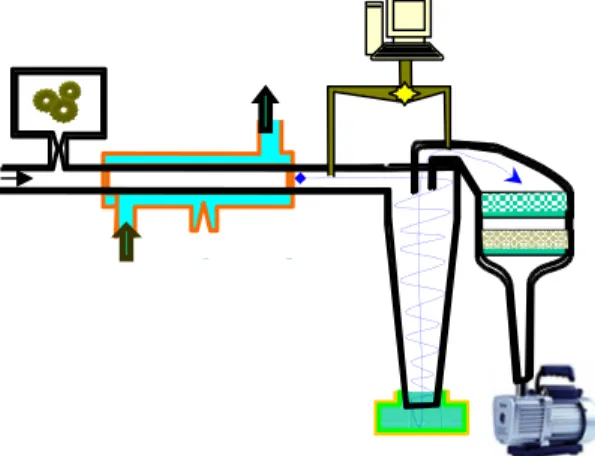
Fig 1. Perspective view of new Cyclone train.
Experimental
A perspective diagram of the installation and the details experimental apparatus is shown in Fig. 1. So far several scientists [3-4] study focused on the radial dimensions such as cyclone body diameter as well as the inner diameter of exit tube. But still these studies are not sufficient for evaluating the effects of flow rates on the mechanisms responding to particle deposition in cyclones. The cyclone used in this study was a standard Alexander high-efficiency geometry with a diameter of 76 mm and height of 125 mm. The
vortex finder length of the cyclone was varied from 28 to 75 mm by adjusting the position of a vane in the exit. The width and height of the inlet was 15 mm and 30 mm, respectively. The particles outlet diameter was similar the exit tube diameter. The test Al2O3 particles consisted mainly with the sizes of 0.3,
1.0, 2.0- 3.0, 5.0 and 10.0 µm. An Aerociser measured the size distribution of the particle. The particles were premixed and an electric vibratory feeder was used to introduce the particles at rates in the range of 2.44 to 4.89 g/min to the inlet through a nozzle. The air supply to the nozzle was at different pressure of 7 cm to 21cm H2O. The operational
parameters of the cyclones were varied to evaluate the collection efficiencies of the cyclones. The vortex finder diameters and lengths of the cyclone were prepared for use in the experiments, with various flow rate combinations, were measured by a mass flow controller, and pressure drop by a Magnehelic gauge. The humidity and temperature were measured by hygrometer and thermometer, respectively. The particle size distributions of samples from the inlet, the cyclone hopper, bag filter, and HEFA filter were analyzed by an Aerociser. High particles concentrations can affect performance.
Fig. 2. Cyclone dimensions.
Results and discussions H De B h Dc S a b k
Transactions of the Korean Nuclear Society Autumn Meeting Busan, Korea, October 27-28, 2005
0 2 4 6 8 10 20 40 60 80 100 Flow Rate 8 m/s Flow Rate 12 m/s Flow Rate 15 m/s Flow Rate 18 m/s Flow Rate 20 m/s C o ll e c ti o n e ff ic ie n c y ( % )
Particles diameter (micrometer) [a] Vortex finder 28 mm
0 2 4 6 8 10 20 40 60 80 100 Flow Rate 8 m/s Flow Rate 15 m/s Flow Rate 12 m/s Flow Rate 18 m/s Flow Rate 20 m/s [b] Vortex finder 49 mm C o ll e c ti o n E ff ic ie n c y ( % )
Particle Diameter (micrometer)
0 2 4 6 8 10 20 40 60 80 100 Flow Rate 8 m/s Flow Rate 12 m/s Flow Rate 15 m/s Flow Rate 18 m/s Flow Rate 20 m/s C o ll e c ti o n E ff ic ie n c y ( % )
Particle Diameter (micrometer)
[c] Vortex Finder 75 mm
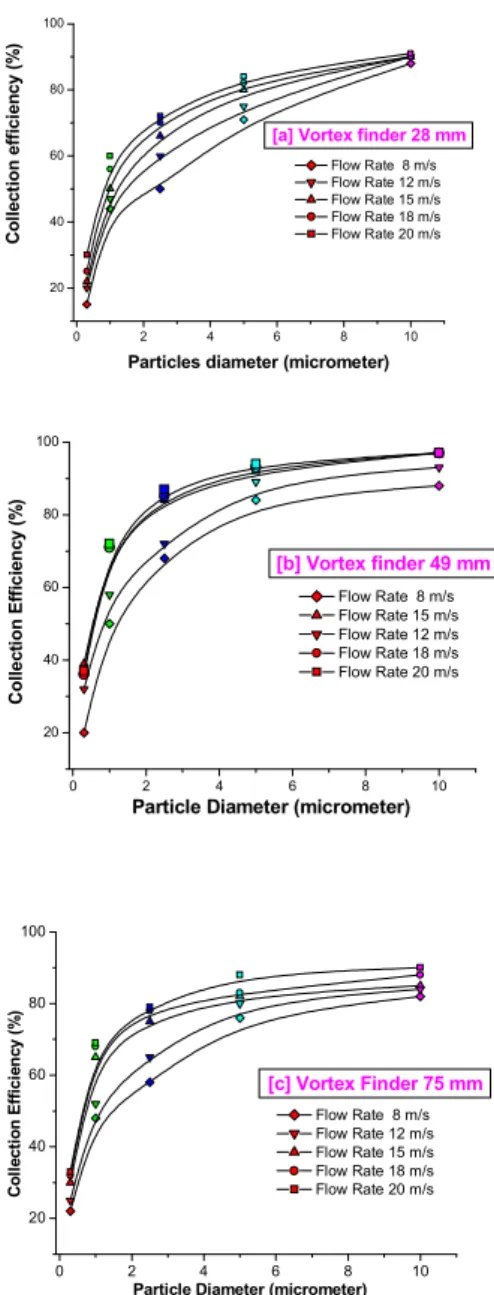
Fig. 3. Collection efficiency with the mixed particles concentration a) feed rate with different concentration Vs flow rate. b) Collection efficiency Vs average flow rates.
Initially the test cyclone was characterized by varying the inlet velocity, and particles concentration. Fig 3. Showed the efficiency changed with the concentration. For higher concentrations of feed particles, the smaller particles are better removed in the cyclone, either due to a limited carrying capacity of the gas or the sweeping effect of the larger amount of particles. The swirl velocity decreases with the increase in particles concentration. The 15 m/s flow rate was the best one for our cyclone train with the 49 mm optimal vortex finder length. When the inlet velocity of the cyclone was varied from 8 to 20 m/s, the average collection efficiency of the cyclone for 1.0 to 10 µm particles size was more than 85%. Over
15 m/s flow rate, was not shown much different in collection efficiency for bigger particles, but small size particle efficiency slightly decreased.
Varying the pressure of the cyclone chamber varied the inlet velocity from 8 to 20 m/s. The pressure drop was varied by varying the length of vortex finder as Fig 4.
10 15 20 5 10 15 20 25 P re s s u re d ro p ( c m o f w a te r) Flow Rate (m/s) Vortex finder 28 Vortex finder 49 Vortex finder 75
Fig.4. Pressure drop of the cyclone.
Namely, pressure drops increased with increase of vortex finder length and flow rate. Values of pressure drop in the manufactured cyclone were similar to those in general cyclone.
Conclusion
In this study, a small steel ness steel cyclone train, with optional vortex finder length, was employed to understand the effects of flow rate, on cyclone efficiency. Flow rate results showed a significant role in collection efficiency. The collection efficiency was changed with the change of vortex finder length. The 15 m/s flow rate was the best one for our cyclone train with the 49 mm optimal vortex finder length. The collection efficiency for 1 µm was more than 70% and for 10 µm was about 97%. The pressure drop was varied by varying the length of vortex finder
REFERENCES
1. Dirgo, J., Leith, D.; Cyclone collection efficiency: comparison of experimental results with theoretical predictions. Aerosol Sci. Technol. 4, 401 (1985). 2. Mothes, R., Loffler, F.; Prediction of particle removal in cyclone separators. Int. Chem. Eng. 28(2), 231 (1988). 3. Stairmand, C. J.; The design and performance of cyclone separators. Trans. Instn. Chem. Engrs. 29, 356-383 (1951).
4. Dirgo, J. and Leith, D.; Cyclone collection efficiency: comparison of experimental results with theoretical predictions. Aerosol Sci. technol. 4, 401- 411 (1985).