저작자표시-비영리-변경금지 2.0 대한민국 이용자는 아래의 조건을 따르는 경우에 한하여 자유롭게 l 이 저작물을 복제, 배포, 전송, 전시, 공연 및 방송할 수 있습니다. 다음과 같은 조건을 따라야 합니다: l 귀하는, 이 저작물의 재이용이나 배포의 경우, 이 저작물에 적용된 이용허락조건 을 명확하게 나타내어야 합니다. l 저작권자로부터 별도의 허가를 받으면 이러한 조건들은 적용되지 않습니다. 저작권법에 따른 이용자의 권리는 위의 내용에 의하여 영향을 받지 않습니다. 이것은 이용허락규약(Legal Code)을 이해하기 쉽게 요약한 것입니다. Disclaimer 저작자표시. 귀하는 원저작자를 표시하여야 합니다. 비영리. 귀하는 이 저작물을 영리 목적으로 이용할 수 없습니다. 변경금지. 귀하는 이 저작물을 개작, 변형 또는 가공할 수 없습니다.
MASTER’S THESIS
Fermented Coffee Selectively
Increased the Abundance of Prevotella
copri in the Human Gut
Gwangpyo Ko
Department of Biotechnology
GRADUATE SCHOOL
JEJU NATIONAL UNIVERSITY
MASTER’S THESIS
Fermented Coffee Selectively
Increased the Abundance of
Prevotella copri in the Human Gut
Gwangpyo Ko
(Supervised by Professor Tatsuya Unno)
Department of Biotechnology
GRADUATE SCHOOL
JEJU NATIONAL UNIVERSITY
Fermented
Coffee Selectively
Increased the
Abundance
of.
Prevotella copri
in
the
Human
Gut
Gwangpyo Ko
(Supervised
by
professor Tatsuya
Unno)
A
thesis
submitted
in
partial fulfillment
of
the
requirement for
the
degree
of
Master
of
Science
August,
2019
This thesis
has been examined and
approved.
Tatsuya Unno, ph.D,. College of Molecular Life Sciences, Life Sciences, Jeju National University
Department
of
Biotechnology
GRADUATE
SCHOOL
JEJU
NATIONAL
UNIVERSITY
Hyo Yeon Lee, ph.D,. College of Molecular Life Sciences, Life Sciences, Jeju National University
drC
Hoen
tsirn
Jae Hoon Kim, ph.D,. College of Molecular Life Sciences, Life Sciences, Jeju National University
I
CONTENT
CONTENT ... I LIST OF FIGURES... II LIST OF TABLES ... IV ABSTRACT ... 1 INTRODUCTION ... 2MATERIALS AND METHODS... 6
Manufacturing process composition analysis of fermented coffee ... 6
Experiment design ... 7
Fecal sampling and DNA extraction ... 8
Miseq preparation ... 8
Miseq data analysis ... 9
Statistical analyses ... 10
RESULTS AND DISCUSSION ... 11
Differences in the intestinal microbiota among subjects in this study ... 11
Effects of fermented coffee on the human gut microbiota ... 18
Metabolic changes correlated with Prevotella copri ... 25
CONCLUSION ... 34
ACKNOWLEDGMENT ... 35
II
LIST OF FIGURES
Figure 1. Results of analysis of fermented coffee ingredients: (A) Total polyphenol
contents (mg/L); (B) Total flavonid contents (mg/L); and (C) DPPH radical scavenging
activity ... 4
Figure 2. Tree for clustering human gut mirobial communities used in this study
(1week-2week) ... 12
Figure 3. Result of difference by cluster from LefSe data (1week-2week): (A) Bacterial
composition analysis at the genus level; and (B) NMDS (OTUs) with top 10 correlated
OTUs ... 15
Figure 4. Result of diference by cluster from LEfSe (1week-2week): (A) Bacterial
composition analysis at the phylum level; and (B) Bacterial composition analysis at
the Family level ... 17
Figure 5. Differentiation of human gut mirobiota type based on Prevotella spp.
abundance ... 21
Figure 6. Ratio of Prevotella spp. / Bacteroides spp by type: (A) Non-Prevotella type;
(B) Prevotella type (***p<0.001; Welch’s t-test) ... 22
Figure 7. Relative abundance of Prevotella copri in among Prevotella type subjects:
(A) all Prevotella tyep subjects; (B) subjects A and F (***p<0.001; Welch’s t-test) . 23
Figure 8. Prevotella copri comparision of relative abundance between IC (normal
coffee drinkers) and NC (non-normal coffee drinkers): (A) subjects with increased
III
LIST OF TABLES
Table 1. Chlorogenic acid, caffeic acid and caffeine content of fermented coffee ... 5
Table 2. Mixing ratio of fermented coffee ... 6
Table 3. Result of the subjects survey ... 13
Table 4. Percentage of differentially abundant OTUs ... 20
Table 5. Metabolic changes correlated with abundance of the Prevotella copri ... 26
Table 6. Subjects diet ... 30
Table 7. Metabolic changes correlated with abuncance of the Prevotella copri by
subjects diet ... 31
1
ABSTRACT
Fermented foods such as kimchi and yogurt are generally known to have beneficial
effects on our gut and interest in fermented foods are increasing, which increased a number of
fermented food products. And, coffee is a beverage extracted from processed coffee beans,
which had become one of the most widely consumed favorite drinks in the world. However, it
is known that excessive consumption of coffee can cause caffeinism, such as emotional anxiety,
nervousness, sleep disturbance, gastrointestinal disorders. Based on these results, the
Fermentation Industry (Sunchang, Korea) developed and commercialized coffee that ferments
coffee using Lactobacillus spp. and Bacillus spp. increases functionality and reduces the side
effects of coffee by lowering caffeine content.
In this study, we aimed to investigate the microbial ecology of the human gut
microbiota before and after drinking fermented coffee. Stool samples were collected three
times a week, for 6 weeks. During the first two weeks, a total of 20 subjects kept their normal
diet and had 2 cups of fermented coffee every day for the rest of 2 weeks. After drinking
fermentation coffee, a total of 20 subjects again kept their normal diet and non-drinking
fermentation coffee. Prevotella copri was increased by fermented coffee in subjects with low
abundance of Prevotella copri, and it was confirmed that increased Prevotella copri was
involved in various metabolism. In this study, however, the practical effect of metabolism
associated with increased Prevotella copri by fermented coffee was not evaluated. Therefore,
further experiments on the effect of Prevotella copri, which is increased by fermented coffee,
2
Introduction
Three out of five health foods selected by Health magazines in the U.S. in 2006 are
fermented foods and recently, as physiological activity by the fermentation has been known,
fermented foods are recognized worldwide as health functional foods(Park 2012). Especially
probiotics such as Lactobacillus spp. and Bacillus spp. have been defined as beneficial
microbes to the host (Fuller 1989). These beneficial effects includes the increase of pathogenic
microbial inhibition, anti-mutagenic and anti-cancer, growth-promoting factors, and immune
responses (Verschuere, Rombaut et al. 2000). In addition, these microbes have long been
directly and indirectly related to human life according to their characteristics, ranging from
fermented dairy products to spices, kimchi, fermented sausages, medicines, and feed additives
of livestock (Kim, Lee et al. 2009, Hong, Lim et al. 2013). Fermented foods have better flavor
than conventional food and produces bacteriocin, a microorganisms inhibition substance,
which is anti-microbial activity and produces a large amount of lactic acid, which acts as a
deterrent to the growth of the bacteria in the food (Matsumura, Takeuchi et al. 1997). Previous
studies have reported a reduction in mortality cardiovascular disease (CVD) and type 2
diabetes (T2D) by ingesting one of the fermented foods, yogurts (Soedamah-Muthu, Masset
et al. 2013, Chen, Sun et al. 2014, Tapsell 2015). Research on anti-diabetes and anti-obesity
effects of kimchi have also been reported (An, Lee et al. 2013). In fermentation of plant based
food, the expression of decarboxylase, glycosyl hydrolase, phenolic acid, and esterase
reductase increased by lactic acid bacteria to facilitate the conversion of phenolic compounds
such as flavonoid into biologically active metabolites (Filannino, Bai et al. 2015).
Coffee is a dicotyledonous plant belonging to the genus Rusbeaceae, and
commercially cultivated varieties can be largely divided into Coffea Arabica L. and Coffea
3
become one of the most widely consumed favorite foods in the world (Schilter, Cavin et al.
2001, Anderson and Smith 2002). It is known that coffee has free radical scavenging ability to
prevent cell damage because of higher antioxidant contents such as polyphenols, compared to
other foods (Borrelli, Visconti et al. 2002, Sánchez-González, Jiménez-Escrig et al. 2005). The
ingredients of coffee contain caffeine, trigonelline, and chlorogenic acid, which are known to
be effective to prevent or prevention of chronic diseases and extends the life (Van Dijk, Olthof
et al. 2009, Chu 2012). Especially, caffeine stimulates the central nervous or muscles, giving
a feeling of freshness or excitement, and restores energy level of the body or awareness (Corti,
Binggeli et al. 2002). However, it is known that excessive consumption of coffee can cause
caffeinism, such as emotional anxiety, nervousness, sleep disturbance, gastrointestinal
disorders (Greden 1974). Previous studies also have reported that caffeine increases blood
pressure and constricts blood vessels (Daniels, Molé et al. 1998, Mahmud and Feely 2001),
and causes side effects such as bone loss in women after menopause (Rapuri, Gallagher et al.
2001). Like this, coffee has a lot of controversies about being double-sidedness due to caffeine.
Coffee cherries are fermented to enhance functionality by effectively removing the
mucilage layer that covers the coffee beans before the drying process(Silva, Batista et al. 2008).
Moreover, it has been reported that additional fermentation with yeast increases antioxidants
such as polyphenols and flavonoids in coffee beans(Kwak, Jeong et al. 2018). Previously, the
Fermentation Industry (Sunchang, Korea) developed and commercialized a coffee using
Lactobacillus plantarum and Bacillus amyloliquefaciens, which increases its functionality and
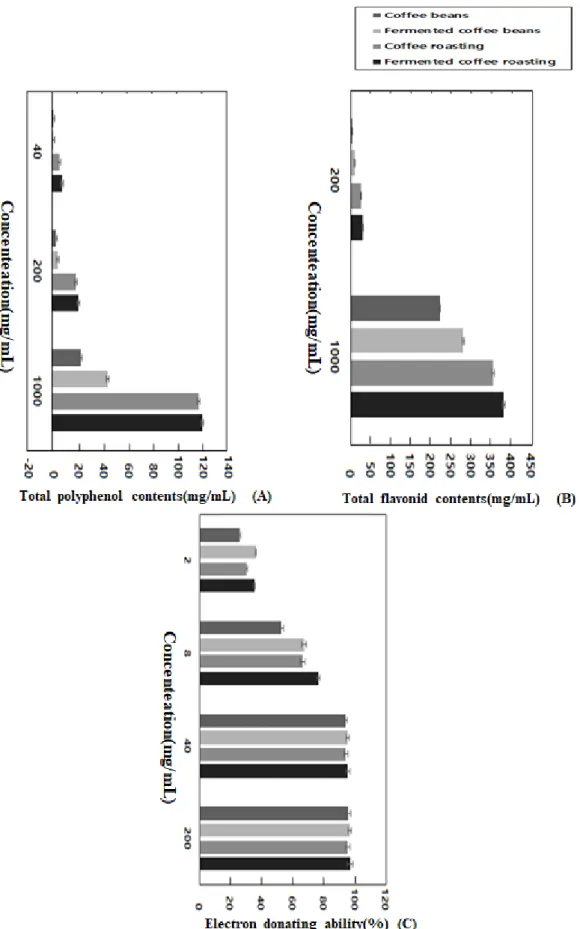
reduces the side effects of coffee by lowering caffeine content (Figure 1, Table 1). Therefore,
this study aims to objectively evaluate the change in intestinal microbial ecology by fermented
coffee, based on the previously explored biologically active compounds in fermented coffee
4
Figure 1. Results of analysis of fermented coffee ingredients: (A) Total polyphenol contents (mg/L); (B) Total
5
Table 1. Chlorogenic acid, caffeic acid and caffeine content of fermented coffee.
Samples
(mg/L)
Caffeine Caffeic acid Chrologenic acid
Fermented coffee roasting 819.69±11.49 24.81±1.31 736.57±6.67
Coffee roasting 875.38±29.04 24.55±0.17 640.10±22.84
Fermented Coffee beans 664.73±20.91 24.57±0.08 2660.17±47.48
Coffee beans 754.50±20.08 23.10±0.29 2332.04±21.11
6
MATERIALS AND METHODS
Manufacturing process composition analysis of fermented coffee
Coffee beans (Brazil, Colombia, Costarica, Kenya) were purchased from
woosungmf Inc. (Hwaseong, Korea). The coffee beans were soaked in water with a ratio of
1:1.5 for 1 hour and pressure-cooked at 121℃ for 30min. After that, the cooldown step was
carried out, and coffee was fermented using two kinds of microbes, Bacillus amyloliquefaciens
SRCM101368 (2%) and Lactobacillus plantarum SRCM100320 (2%). Brazilian coffee beans
were fermented using B. amyloliquefaciens, while Colombian, Costarica and Kenyan coffee
beans were fermented using L. plantarum. After fermentation, they was rinsed and then dried
in a heated-air dryer at 45℃ for 24 hours. Finally, Brazilian, Colombian, Costarica and Kenyan
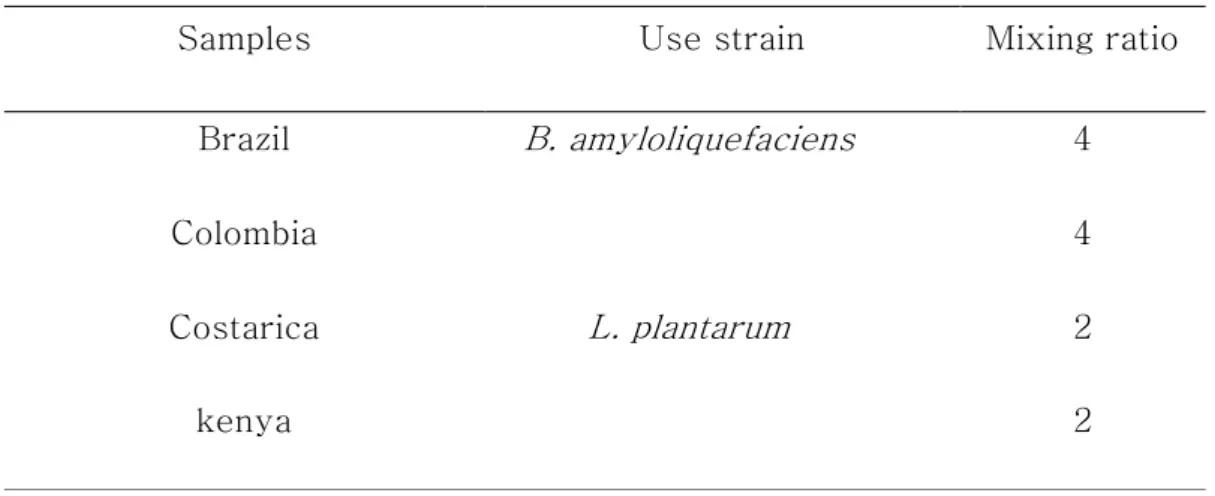
blended coffee beans were mixed with a ratio of 4:4:2:2 (Table 2).
Table 2. Mixing ratio of fermented coffee
Samples Use strain Mixing ratio Brazil B. amyloliquefaciens 4 Colombia L. plantarum 4 Costarica 2 kenya 2
7
Experiment design
In total, 20 subjects (10 men, 10 women) participated in the study and included who
normally consume ordinary coffee and those who do not. But one of the subject who get acute
enteritis during the experiment was excluded from the experiment. The study was approved
by the Bioethics Committee (IRB) of Jeju National University (JJNU-IRB-2017-035-002).
This clinical trial was performed for a total of 6 weeks and was divided into three
sessions per 2 weeks. In the first period, Subjects did not take fermented coffee for 2weeks
(1week-2week). And started at 3week by consuming fermented coffee two or more cups per
day till 4th week (3week-4week). During this period, when they were consuming fermented
coffee, normal coffee was prohibited. However, subjects who showed side effects after
consuming fermented coffee allowed to consume only one cup per day. The experiment of
fermented coffee was discontinued in 5week-6week.
The subjects were not receiving any treatment for hypertension, dyslipidemia or
diabetes and there was no chronic or acute enteritis, cancer, inflammatory diseases viral
infections event except for one subject in the present study. Subjects were prohibited from
consuming drugs, alcohol, stimulant foods, and health supplements as vitamins that could
affect the intestinal microbial ecology during the experimental period. During the period when
no fermented coffee was consumed, normal coffee consumption was permitted, and diet
information were received from the subjects during the experiment. The subject’s diet was
divided into nine categories: vegetable, fruit, grains, meat, fish, seafood, flour, instant foods,
and others, based on the main food in a meal. In addition, we measured BMI (Body Mass
Index) by receiving information regarding the height and weight of each subject. BMI was
8
criteria was applied in accordance with the World Health Organization of Asia-Pacific region
standards (Organization 2000, Who 2004).
Fecal sampling and DNA extraction
During the course of this study, we asked each subject to collect their feces two or
three times a week, and with an interval of at least one day for intestinal microbial ecology
analysis. Every fecal sample from each subject was collected using the OMNIgene-Gut kit
OMR-200 (DNA Genotek, Ontario, Canada), and only healthy feces were sampled as diluted
or more liquid containing fecal samples were rejected. Total DNA was extracted from 200ul
of feces using the MOBIO Power Fecal DNA isolation kit (MO BIO Laboratories Inc.,
Carlsbad, CA, USA).
Miseq preparation
V4 region of 16S rRNA gene was amplified by Polymerase Chain Reaction (PCR)
for microbial community analysis, and libary was produced in accordance with Miseq platform,
one of the Iluminosis Sequencing Platform through 2-step PCR. Briefly, first PCR was
performed using a KAPA HiFi HotStart ReadyMix PCR kit (Kapabiosystems, USA) as follows:
95°C for 3 min, 25 cycles of 95°C for 30 s, 55°C for 30 s, and 72°C for 30 s, and 72°C for 5
min. The obtained PCR products were further purified using a HiAccuBead (Accugene, Korea).
9
identification using PCR. The primers were removed in the same method as previously for
PCR product purification, and the final PCR product concentration of each sample was
measured by the Qubit assay (Invitrogen, USA). The final PCR products of all samples were
collected in an e-tube with the same concentration, and sequencing methods were performed
at Macrogen Inc. (Seoul, Korea).
Miseq data analysis
Sequence data obtained from MiSeq was analyzed by MOTHUR software on a
server (Dell PowerEdge R920, Memory 2TB, Hard 12TB) that we have in our laboratory
(Schloss, Westcott et al. 2009). Clustering was performed with 97% similarity using Opti.clust
and designated as operational taxonomic units (OTU). Each OTUs was classified to the
Species level according to the Green gene database (version 13.8). The distance between
samples was calculated using the Bray-Curtis method, one of the statistical methods, and
visualized using the MOTHUR "tree.shared" command. OTUs or Taxa with significant
differences between groups were investigated using the LefSe (Linear dissociant analysis
Effect Size) and community types were estimated using NMDS(Non-metric multidimensional
scaling) model of the MOTHUR (Segata, Izard et al. 2011, Holmes, Harris et al. 2012).
Metabolic changes correlated with bacteria were investigated using the “otu.association”
command, which calculates the correlation coefficient between Otu or Taxa and metadata of
the MOTHUR. At using this command, metadata used PICRUSt (Phylogenetic Investigation
of Communities by Reconstruction of Unobserved States) data, which is used to predict the
abundance of functional categories based on 16S rRNA (Langille, Zaneveld et al. 2013).
10
Statistical analyses
Data are expressed as mean ±Standard Error of the Mean (SEM). Statistical
significant differences were determined by Welch’s t-test of STAMP (Statistical analysis of metagenomics profiles) (White, Nagarajan et al. 2009).
11
RESULTS AND DISCUSSION
Differences in the intestinal microbiota among subjects in this study
Using the first two-week samples, types of gut microbiota in each subject were
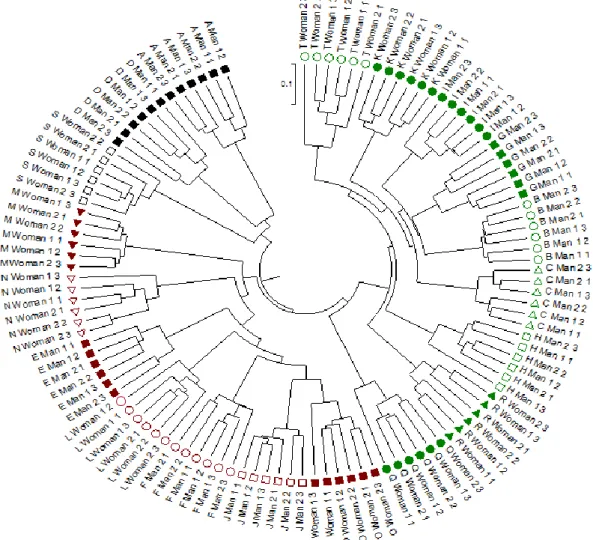
investigated. Results in Figure 2 suggest that gut microbiota of the subjects were divided into
three groups regardless of obesity and amount of coffee intake. Subject’s sex, BMI, height, weight and age were not associated with these clusters (Table 3).
Differentially abundant genera among the three clusters were identified using LEfSe
and summarized in Figure 3A. It has been reported that human gut microbiota can be largely
divided into Prevotella and Non-Prevotella type(Wu, Chen et al. 2011, Gorvitovskaia,
Holmes et al. 2016). Our results indicated that most of the Prevotella type human gut
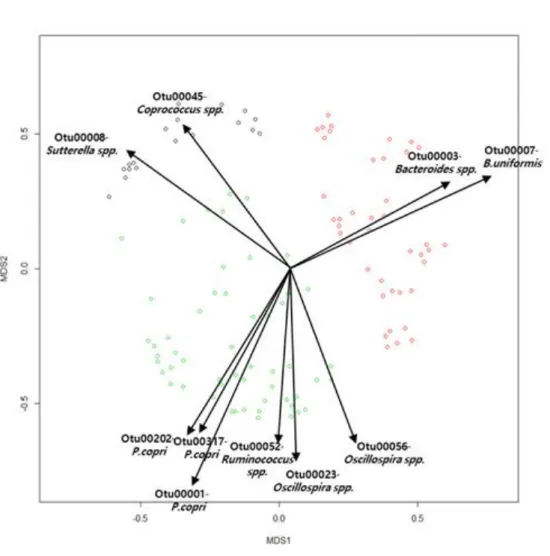
microbiota were in the Cluster III. NMDS analysis at the OTU level shows that Cluster I group
was correlated with the abundance of Coprococcus sp., and Sutterella sp.; Cluster II group
was correlated with the abundance of Bacteroides sp., and Bacteroides uniformis; and Cluster
III group was correlated with the abundance of Prevotella copri, Ruminococcus sp., and
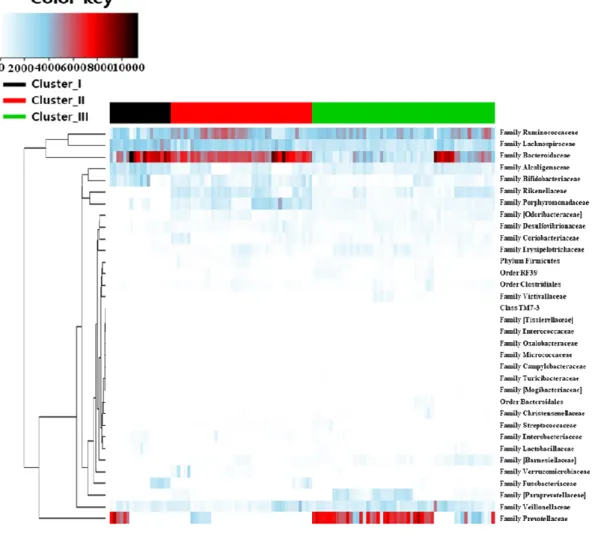
Oscillospira sp. (Figure 3B). At the phylum level, Cluster III group had more Bacteroidetes
and fewer Actinobacteria compared to other groups (Figure 4A). At the family level, the
12
Figure 2. Tree for clustering human gut mirobial communities used in this study (1week-2week).
13
Table 3. Result of the subject’s survey.
Subjects Age Sex Height Weight BMI Average daily intake of normal coffee(Cup) A 37 M 165 80 29.4 2 B 25 M 179 68 21.2 0 C 23 M 171 73 25.0 1 D 39 M 176 81 26.2 6 E 25 M 177 88 28.1 0 F 24 M 162 51 19.4 0 G 28 M 170 83 28.7 2 H 24 M 174 86 28.4 0 I 25 M 181 68 20.8 1 J 24 M 165 80 29.4 0 K 38 W 163 55 20.7 1 L 39 W 163 50 18.8 0 M 23 W 154 55 23.2 1 N 25 W 160 60 23.4 0 O 23 W 153 60 25.6 1 Q 24 W 163 58 21.8 2 R 22 W 163 65 24.5 1 S 22 W 161 55 25.1 0 T 28 W 158 49 19.6 0
14
15
(B)
Figure 3. Result of difference by cluster (1week-2week): (A) Bacterial composition analysis at the genus level (from LEfSe data); and (B) NMDS (OTUs) with top 10 correlated OTUs.
16
17
(B)
Figure 4. Result of difference by cluster from LEfSe data (1week-2week): (A) Bacterial composition analysis at the Phylum level; and (B) Bacterial composition analysis at the Family level.
18
Effects of fermented coffee on the human gut microbiota
It has been suggested that different types of gut microbiota may react differently to
certain substances such as fructooligosaccharides, sorghum arabinoxylan and corn
arabinoxylan (Chen, Long et al. 2017). Therefore, the effects of fermented coffee on human
gut microbiota may appear differently depending on the personal microbiota. OTUs that were
significantly increased during taking fermented coffee (3-4 week) as well as significantly
decreased after the termination of fermented coffee (5-6 week) were identified using LEfSe
and organized in the Table 4. Among these OTUs, Otu00018 and Otu00001 showed significant
increase more than 0.5% during taking fermented coffee (p<0.005).
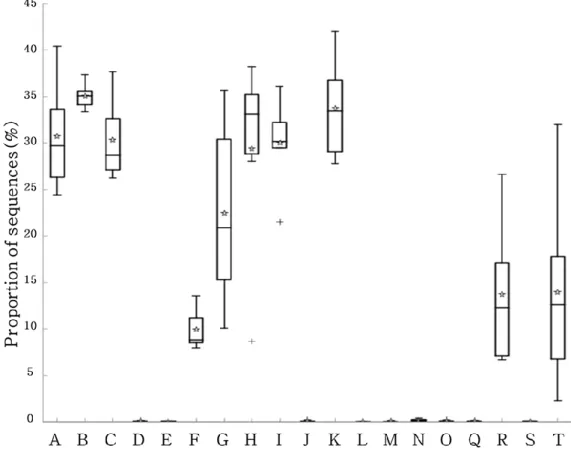
The abundance of Prevotella indicates 10 subjects (A, B, C, F, G, H, I, K, R, and T)
are Prevotella type (Figure 5), leaving other 9 subjects to be Non-Prevotella type. Results
from Figure 6 suggest that Non-Prevotella type subjects had significantly increased
Prevotella/Bacteroides ratio while drinking fermented coffee (P<0.05), whereas it did not
change for Prevotella type subjects. Previously, higher proportion of Prevotella/Bacteroides
was likely to get higher chance of weight-loss from dietary control(Lean, Astrup et al. 2018,
Hjorth, Blæ del et al. 2019). In contrast, it has been reported that obese people tend to have
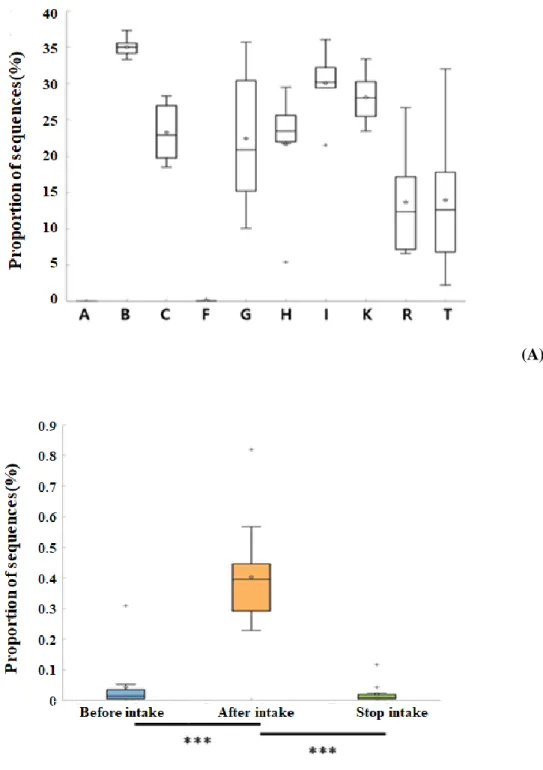
higher abundance of Prevotella(Hu, Park et al. 2015). Interestingly, two Prevotella type
subjects (A and F) whose abundance of Prevotella copri was very low also showed
significantly increase in the abundance of Prevotella copri during taking fermented coffee
(p<0.001) (Figure 7). For these reasons, our results suggest that fermented coffee increases the
abundance of Prevotella copri in those who have low abundance of Prevotella copri.
Thus we could confirm that Prevotella copri was increased by fermented coffee in
subjects who had a low abundance of Prevotella copri. However, previous studies have
reported that Preovtella is increased by normal-coffee(Jaquet, Rochat et al. 2009, Reichardt,
19
subjects who drink regular normal-coffee and those who did not drink at 1week-2week periods.
As a result, it was confirmed that there was no significant difference in Prevoetella copri in
both groups (Figure 8).In addition, we could confirm that the fermented coffee contains more
amount of biologically active substance than the non-fermented coffee (Figure 1, table 1).
Some previous study reported that Prevotella was increased in humans who consume red-wine
polyphenol and in the cattle fed flavonoid (Queipo-Ortuño, Boto-Ordóñez et al. 2012, Bi, Yang
et al. 2017). Therefore, it was confirmed that Prevotella copri was increased by fermented
coffee, not normal-coffee, and it is considered that biologically active substance of fermented
20 Table 4. Percentage of differentially abundant OTUs.
Group OTU Taxa
1week_2week (%) 3week_4week (%) 5week_6week (%) Cluster I Otu00018 Lachnospira spp. 3.16±0.57 5.37±0.56ab 3.31±0.4
Otu00001 Prevotella copri 0.01±0 0.57±0.05ab 0.02±0.01 Otu00007 Bacteroides uniformis 0.40±0.22 0.81±0.31 0.56±0.28 Otu00012 Dialister spp. 0.97±0.35 1.19±0.37 0.81±0.3 Otu00067 Family Rikenellaceae 0.00±0 0.35±0.03ab 0±0 Otu00032 Famly
[Barnesiellaceae] 0.00±0 0.28±0.03ab 0±0 Otu00068 Butyricimonas spp. 0.00±0 0.23±0.02ab 0±0 Otu00021 Sutterella spp. 0.00±0 0.23±0.02ab 0±0 Otu00005 Bacteroides plebeius 0.00±0 0.21±0.02ab 0±0 Otu00059 Haemophilus
parainfluenzae 0.21±0.07 0.43±0.13 0.21±0.07
Cluster II
Otu00001 Prevotella copri 0.03±0.01 0.65±0.03ab 0.02±0 Otu00012 Dialister spp. 0.67±0.16 0.85±0.16 0.73±0.15 Otu00021 Sutterella spp. 0.31±0.07 0.62±0.11ab 0.25±0.06
Otu00067 Family Rikenellaceae 0±0 0.23±0.01ab 0±0 Otu00075 [Eubacterium] biforme 0.4±0.16 0.44±0.16 0.33±0.14
Cluster III Otu00012 Dialister spp. 1.62±0.28 1.8±0.29 1.21±0.22 Otu00021 Sutterella spp. 1.74±0.3 2.23±0.32 1.47±0.24 Otu00024 Family Ruminococcaceae 0.53±0.18 0.57±0.21 0.25±0.1 Otu00057 Bacteroides coprophilus 0.44±0.13 0.6±0.14 0.36±0.11
21
22
(A)
(B)
Figure 6. Ratio of Prevotella / Bacteroides by type: (A) Non-Prevotella type; (B) Prevotella type (***p<0.001; Welch's t-test)
23
(A)
(B)
Figure 7. Relative abundance of Prevotella copri in among Prevotella type subjects: (A) All
24
(A)
(B)
Figure 8. Prevotella copri comparison of relative abundance between IC (normal coffee drinkers) and NC (non-normal coffee drinkers): (A) Subjects with increased Prevotella copri (B) Subjects who did not change Prevotella copri
25
Metabolic changes correlated with Prevotella copri
Result in Table 1.show that the metabolic correlated with Prevotella copri increased
in the 3week-4week period. The metabolic pathways were divided into 10 major metabolic
pathways. Metabolic with a PearsonCoef value of 0.7 or higher was confirmed to be Betalain
biosynthesis, Indole alkaloid biosynthesis, Isoflavonoid biosynthesis, Various types of
N-glycan biosynthesis.
Prevotella appears in large numbers in humans who eat mainly carbohydrate and
fiber(Chen, Long et al. 2017), and is reported as a microorganism that ferments
carbohydrate(Zhang, DiBaise et al. 2009). Based on this, carbohydrate metabolism is
considered positively correlated with Prevotella copri. Isoflavonoid biosynthesis uses
daidzein, one of the flavonoids(Atkinson, Frankenfeld et al. 2005, Andrés-Lacueva,
Medina-Remon et al. 2010). In previous studies, Prevotella increased in cattle ingested with
daidzein(Liang, Xu et al. 2018), and it was reported that intestinal microorganisms used this
substance(Rafii 2015), so it is considered that Prevotella copri has a positive correlation with
Isoflavonoid biosynthesis. Valine, leucine and, isoleucine are amino acids. prevotella copri is
reported to produce these substances(Pedersen, Gudmundsdottir et al. 2016), and our results
also confirmed that the synthesis of this substance is positively correlated with prevotella copri.
It is also reported that Prevotella copri produces succinic acid(Hayashi, Shibata et al. 2007).
This substance is used in butanoate metabolism(Browser, Model et al.), which suggests that
26
Table 5. Metabolic changes correlated with abundance of the Prevotella copri
Taxa KEGG_Pathways Metadata pearsonCoef Significance
Prevotella copri Amino Acid Metabolism Amino acid related enzymes 0.18 0.03
Amino Acid Metabolism Lysine degradation 0.22 0.01
Amino Acid Metabolism Tryptophan metabolism 0.21 0.02
Amino Acid Metabolism Valine, leucine and isoleucine biosynthesis 0.17 0.04 Amino Acid Metabolism Valine, leucine and isoleucine degradation 0.22 0.01 Biosynthesis of Other Secondary Metabolites Betalain biosynthesis 0.76 0.00 Biosynthesis of Other Secondary Metabolites Clavulanic acid biosynthesis 0.21 0.02 Biosynthesis of Other Secondary Metabolites Indole alkaloid biosynthesis 0.78 0.00 Biosynthesis of Other Secondary Metabolites Isoflavonoid biosynthesis 0.71 0.00
Carbohydrate Metabolism Butanoate metabolism 0.18 0.04
Carbohydrate Metabolism Glycolysis / Gluconeogenesis 0.17 0.04
Carbohydrate Metabolism Inositol phosphate metabolism 0.19 0.02
27
Table 5. Metabolic changes correlated with abundance of the Prevotella copri
Taxa KEGG_Pathways Metadata pearsonCoef Significance
Prevotella copri Carbohydrate Metabolism Pyruvate metabolism 0.19 0.02
Energy Metabolism Oxidative phosphorylation 0.18 0.04
Glycan Biosynthesis and Metabolism Peptidoglycan biosynthesis 0.17 0.04
Glycan Biosynthesis and Metabolism Various types of N-glycan biosynthesis 0.71 0.00
Lipid Metabolism Ether lipid metabolism 0.39 0.00
Lipid Metabolism Fatty acid biosynthesis 0.20 0.02
Lipid Metabolism Fatty acid metabolism 0.20 0.02
Lipid Metabolism Glycerophospholipid metabolism 0.18 0.03
Lipid Metabolism Lipid biosynthesis proteins 0.20 0.02
Lipid Metabolism Synthesis and degradation of ketone bodies 0.20 0.02
Metabolism of Cofactors and Vitamins Porphyrin and chlorophyll metabolism 0.23 0.01 Metabolism of Terpenoids and Polyketides Biosynthesis of type II polyketide products 0.21 0.01 Metabolism of Terpenoids and Polyketides Carotenoid biosynthesis 0.26 0.00
28
Table 5. Metabolic changes correlated with abundance of the Prevotella copri
Taxa KEGG_Pathways Metadata pearsonCoef Significance
Prevotella copri Metabolism of Terpenoids and Polyketides Tetracycline biosynthesis 0.19 0.03
Nucleotide Metabolism Pyrimidine metabolism 0.17 0.04
Xenobiotics Biodegradation and Metabolism Metabolism of xenobiotics by cytochrome P450 0.18 0.03
29
Prevotella copri has double-sidedness in terms of diabetes by butanoate metabolism
and Valine, leucine and isoleucine biosynthesis(Cani 2018). That is, Prevotella copri produces
succinic acid, a kind of short-chain fatty acid, to improve insulin resistance(De Vadder,
Kovatcheva-Datchary et al. 2014, De Vadder, Kovatcheva-Datchary et al. 2016), on the other
hand, it is produced BCAA(Valine, leucine and, isoleucine) to exacerbate insulin
resistance(Pedersen, Gudmundsdottir et al. 2016). However, recent studies have shown that
prevotella copri has a difference in correlation between carbohydrate catabolism and Valine,
leucine, and isoleucine biosynthesis according to the human diet(De Filippis, Pasolli et al.
2019). That is, Prevotella copri associated with a fiber-diet had a higher prevalence of the
carbohydrate catabolism, and associated with an omnivore diet had a higher prevalence of the
Valine, leucine and isoleucine biosynthesis. Based on these results, we investigated the ratio
of vegetable foods to animal foods through the diets investigated from subjects who had been
increased prevotella copri by fermented coffee (Table S4). The subjects were classified based
on the value of 1, and the Metabolic correlated with the Prevotella copri which was increased
during the 3week-4week periodbetween the two groups is shown in Table S5. That is, subjects
with a value of 1 or higher are groups that frequently eat vegetable foods compared to animal
foods, and those with a value of 1 or lower are groups that frequently eat animal foods
compared to vegetable foods The average of ingestion amount of excluding vegetable foods
and animal foods by group was flour: 13.5±2.8, 8.9±1.5; instance; 16.5±2.7, 13.6±2.9; others;
9.5±0.9, 15.7±2.6, and there was no significant difference in all (p>0.05). We cannot identify
carbohydrate catabolism in our data, but in the case of Valine, leucine and isoleucine
biosynthesis, similar to the findings described before, it has been confirmed that Prevella copri
is positively correlated with groups that consume animal products more frequently than plant
30
Table 6. Subjects diet
subjects vegetable fruit grain meat seafood fish flour instant others vegetable+fruit+grain /meat+seafood+fish J 1 0 23 15 0 3 19 24 10 1.33 O 24 1 20 32 1 3 13 13 7 1.25 F 6 0 26 22 1 5 16 17 8 1.14 S 2 2 52 46 3 7 6 12 10 1 D 0 1 21 18 7 2 4 16 19 0.81 M 0 2 26 41 0 1 12 24 9 0.67 E 0 0 11 19 1 2 7 20 10 0.5 A 1 4 9 20 6 8 7 5 24 0.41 Q 0 0 20 46 1 2 16 14 11 0.4 N 0 0 24 44 3 13 6 13 22 0.4 L 1 1 20 37 12 19 10 3 18 0.32
31
Table 7. Metabolic changes correlated with abundance of the Prevotella copri by subject’s diet
Subjects with Vegetable foods / Animal foods greater than 1
Taxa KEGG Pathway Metadata pearsonCoef Significance
Prevotella copri Amino Acid Metabolism Lysine degradation 0.33 0.02
Amino Acid Metabolism Tryptophan metabolism 0.37 0.01
Amino Acid Metabolism Valine, leucine and isoleucine degradation 0.32 0.02
Biosynthesis of Other Secondary Metabolites Betalain biosynthesis 0.81 0.00 Biosynthesis of Other Secondary Metabolites Clavulanic acid biosynthesis 0.31 0.03 Biosynthesis of Other Secondary Metabolites Indole alkaloid biosynthesis 0.83 0.00 Biosynthesis of Other Secondary Metabolites Isoflavonoid biosynthesis 0.59 0.00
Carbohydrate Metabolism Butanoate metabolism 0.29 0.04
Carbohydrate Metabolism Citrate cycle (TCA cycle) 0.31 0.03
Carbohydrate Metabolism Inositol phosphate metabolism 0.29 0.04
Glycan Biosynthesis and Metabolism Glycosphingolipid biosynthesis – lacto and neolacto series 0.86 0.00 Glycan Biosynthesis and Metabolism Various types of N-glycan biosynthesis 0.89 0.00
Lipid Metabolism Synthesis and degradation of ketone bodies 0.30 0.03
Metabolism of Terpenoids and Polyketides Carotenoid biosynthesis 0.40 0.00 Metabolism of Terpenoids and Polyketides Limonene and pinene degradation 0.29 0.04
32
Table 7. Metabolic changes correlated with abundance of the Prevotella copri by subject’s diet
Subjects with Vegetable foods / Animal foods less than 1
Taxa KEGG Pathway Metadata pearsonCoef Significance
Prevotella copri Amino Acid Metabolism Valine, leucine and isoleucine biosynthesis 0.23 0.03
Biosynthesis of Other Secondary Metabolites Betalain biosynthesis 0.73 0.00 Biosynthesis of Other Secondary Metabolites Indole alkaloid biosynthesis 0.76 0.00 Biosynthesis of Other Secondary Metabolites Isoflavonoid biosynthesis 0.79 0.00
Carbohydrate Metabolism Fructose and mannose metabolism 0.22 0.05
Carbohydrate Metabolism Glycolysis / Gluconeogenesis 0.22 0.04
Carbohydrate Metabolism Glyoxylate and dicarboxylate metabolism 0.23 0.04
Carbohydrate Metabolism Propanoate metabolism 0.23 0.03
Carbohydrate Metabolism Pyruvate metabolism 0.23 0.04
Glycan Biosynthesis and Metabolism Various types of N-glycan biosynthesis 0.63 0.00
Lipid Metabolism Ether lipid metabolism 0.49 0.00
Lipid Metabolism Fatty acid metabolism 0.25 0.02
Lipid Metabolism Glycerophospholipid metabolism 0.22 0.04
Metabolism of Cofactors and Vitamins Porphyrin and chlorophyll metabolism 0.27 0.01 Metabolism of Terpenoids and Polyketides Biosynthesis of siderophore group nonribosomal peptides 0.24 0.03
33
Table 7. Metabolic changes correlated with abundance of the Prevotella copri by subject’s diet
Taxa KEGG Pathway Metadata pearsonCoef Significance
Prevotella copri Metabolism of Terpenoids and Polyketides Biosynthesis of type II polyketide products 0.72 0.00
Metabolism of Terpenoids and Polyketides Carotenoid biosynthesis 0.25 0.02 Metabolism of Terpenoids and Polyketides Tetracycline biosynthesis 0.25 0.02 Xenobiotics Biodegradation and Metabolism Dioxin degradation 0.22 0.04
34
CONCLUSTION
Fermentation Industry (Sunchang, Korea) has developed coffee that ferments coffee
to lower the content of caffeine and increase the content of physiologically active substances,
thereby reducing side effects caused by caffeine. On this, we recruited subjects to investigate
intestinal microbial ecology that change by fermented coffee by comparing changing intestinal
microbial ecology when fermented coffee was consumed and fermented coffee was stopped.
As a result, Prevotella copri was increased by fermented coffee in subjects with low abundance
of Prevotella copri, and it was confirmed that increased Prevotella copri was involved in
various metabolism. In this study, however, the practical effect of obesity with ratio of
prevotella/bacteroides and metabolism associated with increased Prevotella copri by
fermented coffee was not evaluated. Therefore, further experiments on the effect of Prevotella
copri, which is increased by fermented coffee, on the human body are considered to be
35
Acknowledgment
This study was supported by Local Strategic Food Industry Promote Program,
Ministry of Agriculture, Food and Rural Affairs, Republic of Korea.This research was also supported, in part, by the Basic Science Research Program through the National Research Foundation of Korea (NRF) funded by the Ministry of Education (2016R1A6A1A03012862), and Traditional Culture Convergence Research Program through the National Research Foundation of Korea (NRF) funded by the Ministry of Science and ICT (NRF-2016M3C1B5907205). We are grateful to Sustainable Agriculture Research Institute (SARI) in Jeju National University for providing the experimental facilities
36
REFERENCES
An, S.-Y., et al. (2013). "Beneficial effects of fresh and fermented kimchi in prediabetic individuals." Annals of Nutrition and Metabolism 63(1-2): 111-119.
Anderson, K. A. and B. W. Smith (2002). "Chemical profiling to differentiate geographic growing origins of coffee." Journal of agricultural and food chemistry 50(7): 2068-2075.
Andrés-Lacueva, C., et al. (2010). Phenolic compounds: chemistry and occurrence in fruits and vegetables, Wiley-Blackwell: Iowa: 53-80.
Atkinson, C., et al. (2005). "Gut bacterial metabolism of the soy isoflavone daidzein: exploring the relevance to human health." Experimental biology and medicine 230(3): 155-170.
Bi, Y., et al. (2017). "Effects of dietary supplementation with two alternatives to antibiotics on intestinal microbiota of preweaned calves challenged with Escherichia coli K99." Scientific reports 7(1): 5439.
Borrelli, R. C., et al. (2002). "Chemical characterization and antioxidant properties of coffee melanoidins." Journal of agricultural and food chemistry 50(22): 6527-6533.
Browser, G., et al. "MetaCyc Pathway: succinate fermentation to butanoate."
Cani, P. D. (2018). "Human gut microbiome: hopes, threats and promises." Gut 67(9): 1716-1725.
Chen, M., et al. (2014). "Dairy consumption and risk of type 2 diabetes: 3 cohorts of US adults and an updated meta-analysis." BMC medicine 12(1): 215.
Chen, T., et al. (2017). "Fiber-utilizing capacity varies in Prevotella-versus Bacteroides-dominated gut microbiota." Scientific reports 7(1): 2594.
37
Chu, Y.-F. (2012). Coffee: emerging health effects and disease prevention, John Wiley & Sons.
Corti, R., et al. (2002). "Coffee acutely increases sympathetic nerve activity and blood pressure independently of caffeine content: role of habitual versus nonhabitual drinking." Circulation 106(23): 2935-2940.
Daniels, J. W., et al. (1998). "Effects of caffeine on blood pressure, heart rate, and forearm blood flow during dynamic leg exercise." Journal of Applied Physiology 85(1): 154-159.
De Filippis, F., et al. (2019). "Distinct genetic and functional traits of human intestinal Prevotella copri strains are associated with different habitual diets." Cell host & microbe 25(3): 444-453. e443.
De Vadder, F., et al. (2014). "Microbiota-generated metabolites promote metabolic benefits via gut-brain neural circuits." Cell 156(1-2): 84-96.
De Vadder, F., et al. (2016). "Microbiota-produced succinate improves glucose homeostasis via intestinal gluconeogenesis." Cell metabolism 24(1): 151-157.
Filannino, P., et al. (2015). "Metabolism of phenolic compounds by Lactobacillus spp. during fermentation of cherry juice and broccoli puree." Food microbiology 46: 272-279.
Fuller, R. (1989). "Probiotics in man and animals." The Journal of applied bacteriology 66(5): 365-378.
Gorvitovskaia, A., et al. (2016). "Interpreting Prevotella and Bacteroides as biomarkers of diet and lifestyle." Microbiome 4(1): 15.
Greden, J. F. (1974). "Anxiety or caffeinism: a diagnostic dilemma." American Journal of Psychiatry 131(10): 1089-1092.
38
Hayashi, H., et al. (2007). "Prevotella copri sp. nov. and Prevotella stercorea sp. nov., isolated from human faeces." International journal of systematic and evolutionary microbiology 57(5): 941-946.
Hjorth, M. F., et al. (2019). "Prevotella-to-Bacteroides ratio predicts body weight and fat loss success on 24-week diets varying in macronutrient composition and dietary fiber: Results from a post-hoc analysis." International Journal of Obesity 43(1): 149.
Holmes, I., et al. (2012). "Dirichlet multinomial mixtures: generative models for microbial metagenomics." PLoS One 7(2): e30126.
Hong, S. W., et al. (2013). "Denaturing gradient gel electrophoresis and culture-based analysis of the bacterial community in Cheonggukjang, a Korean traditional fermented soybean food from Gangwon province." Korean Journal of Food Science and Technology 45(4): 515-520.
Hu, H.-J., et al. (2015). "Obesity alters the microbial community profile in Korean adolescents." PLoS One 10(7): e0134333.
Jaquet, M., et al. (2009). "Impact of coffee consumption on the gut microbiota: a human volunteer study." International journal of food microbiology 130(2): 117-121.
Kim, J.-H., et al. (2009). "Storage-life and palatability extension of Betula platyphylla sap using lactic acid bacteria fermentation." Journal of the Korean Society of Food Science and Nutrition 38(6): 787-794.
Kwak, H. S., et al. (2018). "Effect of yeast fermentation of green coffee beans on antioxidant activity and consumer acceptability." Journal of Food Quality 2018.
Langille, M. G., et al. (2013). "Predictive functional profiling of microbial communities using 16S rRNA marker gene sequences." Nature biotechnology 31(9): 814.
Lean, M. E., et al. (2018). "Making progress on the global crisis of obesity and weight management." bmj 361: k2538.
39
Liang, H., et al. (2018). "Effect of daidzein on fermentation parameters and bacterial community of finishing Xianan cattle." Italian Journal of Animal Science 17(4): 950-958.
Mahmud, A. and J. Feely (2001). "Acute effect of caffeine on arterial stiffness and aortic pressure waveform." Hypertension 38(2): 227-231.
Martın, M., et al. (1999). "Characterization of arabica and robusta roasted coffee varieties and mixture resolution according to their metal content." Food chemistry 66(3): 365-370.
Matsumura, H., et al. (1997). "Construction of Escherichia coli–Bifidobacterium longum shuttle vector transforming B. longum 105-A and 108-A." Bioscience, biotechnology, and biochemistry 61(7): 1211-1212.
Organization, W. H. (2000). The Asia-Pacific perspective: redefining obesity and its treatment, Sydney: Health Communications Australia.
Park, K.-Y. (2012). "Increased health functionality of fermented foods." Food Industry and Nutrition 17(1): 1-8.
Pedersen, H. K., et al. (2016). "Human gut microbes impact host serum metabolome and insulin sensitivity." nature 535(7612): 376.
Queipo-Ortuño, M. I., et al. (2012). "Influence of red wine polyphenols and ethanol on the gut microbiota ecology and biochemical biomarkers." The American journal of clinical nutrition 95(6): 1323-1334.
Rafii, F. (2015). "The role of colonic bacteria in the metabolism of the natural isoflavone daidzin to equol." Metabolites 5(1): 56-73.
Rapuri, P. B., et al. (2001). "Caffeine intake increases the rate of bone loss in elderly women and interacts with vitamin D receptor genotypes." The American journal of clinical nutrition 74(5): 694-700.
40
Reichardt, N., et al. (2009). "Characterization of high molecular weight coffee fractions and their fermentation by human intestinal microbiota." Molecular nutrition & food research 53(2): 287-299.
Sánchez-González, I., et al. (2005). "In vitro antioxidant activity of coffees brewed using different procedures (Italian, espresso and filter)." Food chemistry 90(1-2): 133-139.
Schilter, B., et al. (2001). "Health effects and safety considerations." Coffee: Recent Developments: 165-183.
Schloss, P. D., et al. (2009). "Introducing mothur: open-source, platform-independent, community-supported software for describing and comparing microbial communities." Appl. Environ. Microbiol. 75(23): 7537-7541.
Segata, N., et al. (2011). "Metagenomic biomarker discovery and explanation." Genome biology 12(6): R60.
Silva, C. F., et al. (2008). "Succession of bacterial and fungal communities during natural coffee (Coffea arabica) fermentation." Food microbiology 25(8): 951-957.
Soedamah-Muthu, S. S., et al. (2013). "Consumption of dairy products and associations with incident diabetes, CHD and mortality in the Whitehall II study." British Journal of Nutrition 109(4): 718-726.
Tapsell, L. C. (2015). "Fermented dairy food and CVD risk." British Journal of Nutrition 113(S2): S131-S135.
Van Dijk, A. E., et al. (2009). "Acute effects of decaffeinated coffee and the major coffee components chlorogenic acid and trigonelline on glucose tolerance." Diabetes care 32(6): 1023-1025.
Verschuere, L., et al. (2000). "Probiotic bacteria as biological control agents in aquaculture." Microbiol. Mol. Biol. Rev. 64(4): 655-671.
41
White, J. R., et al. (2009). "Statistical methods for detecting differentially abundant features in clinical metagenomic samples." PLoS computational biology 5(4): e1000352.
Who, E. C. (2004). "Appropriate body-mass index for Asian populations and its implications for policy and intervention strategies." Lancet (London, England) 363(9403): 157.
Wu, G. D., et al. (2011). "Linking long-term dietary patterns with gut microbial enterotypes." Science 334(6052): 105-108.
Zhang, H., et al. (2009). "Human gut microbiota in obesity and after gastric bypass." Proceedings of the National Academy of Sciences 106(7): 2365-2370.