The Importance of Learning Language and Culture
Integration; Focused on TOEIC Reading Comprehension
Myeong-Hee Shin*
(Hannamn University)
Eunpyo Lee**
(Eulji University) Shin, Myeong-Hee & Lee, Eunpyo. (2012). The importance of learning language and culture integration; Focused on TOEIC reading comprehension.
English Language & Literature Teaching, 18(3), 207-221.
This study examines the importance of learning language and cultural integration in general English class focused on TOEIC reading comprehension. The understanding of cultural learning and learners’ cultural awareness has long been a subject of debate. This study was not only to analyze the improvement of students’ interest and reading comprehension ability of TOEIC through cultural learning, but also to ensure students who learn American culture overcome cross-cultural miscommunication and improve their English reading comprehension skills. Pre-post surveys and the pre-post TOEIC tests were used to measure language proficiency and American cultural knowledge to two groups: the experimental and control group. The results from the study were as follows: First, students had better TOEIC scores with improved motivation after understanding American culture relevant to the lessons. Second, reading comprehension skills with regards to TOEIC also improved, compared with the students who were not exposed to American culture due to lack of opportunity.
[cultural awareness/cross-cultural miscommunication/language proficiency]
I. INTRODUCTION
Most university students in Korea are required to take general English courses, which aims to develop their communicative skills in the English language during their first or second year, depending on the academic curriculums. Most universities have been
* First author
** Corresponding author
offering Test of English for International Communication (TOEIC) classes for freshmen students. This requirement enables the academic office to achieve two goals with one curriculum requirement; improving students’ English skills, a necessity in this globalized job market, and obtaining satisfactory TOEIC scores for future employment. The purpose of TOEIC is to evaluate international communication skills in English by using examples taken from real-life situations. TOEIC attempts to measure the functional ability to use English as a second language rather than the knowledge of English (Lee, Tae-hee: 2001). As for the reading component, it is intended to assess students’ understanding of written symbols and their meanings in a text. Furthermore, comprehension is not the same as translation; but a meaningful interaction between the reader and the text. Each reader’s comprehension may be different from the writer’s intention as their background knowledge of the text is also different. Reading comprehension may be varied as individual readers have different cultural environment and background knowledge (Lee, Eunpyo & Shin, Myeong-Hee: 2012). Hence many university English programs are putting more emphasis on TOEIC. Nevertheless, it is still very difficult for students to improve their English skills and TOEIC scores in a foreign language environment.
The language learner not only needs to acquire linguistic competence, but also the ability to use the English language in a socially acceptable manner. Consequently, understanding English is not limited to a working knowledge of the language form and structure, but also the understanding of pertinent communicative contexts. This paper focuses on cultural context because, without understanding the cultural context of a target language, meaningful communication can be a major challenge.To make sure the students who learn American cultures overcome cultural differences and improve their communicative skills effectively, I used the following questions in the present study as guidelines: (1) Does Cultural understanding improve motivation to study English? (2) Does cultural understanding help students develop more effective English communication skills? (3) Does cultural understanding improve English reading skill? In addition to fluency, one important part of English education should be to ensure that the students successfully experience various types of cross-cultural communication.
II. BACKGROUND
1. Language and CultureThe study of relationship between language and culture emerged with the development of modern linguistics in the 19th century. Learning a language implies accepting and understanding the culture. Saussure (1916) distinguished between langue
and parole, which one could delineated an approach to language learning dissociated
from the culture in which it is used. Hall’s statement (1959), “communication is culture and culture is communication,” is often used as a basis for affirming the undeniable link between language and culture. Sapir-Whorf (1956) pointed out that language is not an intermediate medium to convey one's thoughts, but to put one's thoughts into definite shapes. Language is a medium between cultural features, and it should be considered as such. Acquiring language proficiency without learning corresponding culture might be enough for survival and routine transactions (Byram, 1989), but communicative competence is incomplete without cultural understanding. Language cannot be learned or taught without introducing the culture of the community where it is used. Stern (1984) mentions three key concepts to reinforce the point: (1) Language is a part of culture, and must be approached with the same attitudes that govern our approach to learning as a whole. (2) Language conveys culture, so that the language teacher is also, by necessity, a teacher of culture. (3) Language is itself culturally conditioned attitudes and beliefs, which cannot be ignored in the language classroom (Stern, 1984). It is natural that people of one culture have a certain generalized mental image, which has been accumulated throughout their lives. Ultimately, language teachers must endeavor to teach the culture of the target language. The cultural component not only helps students understand foreign culture being taught, but inform them about the target culture, and enhances their capacity to develop their communicative capabilities.
Therefore, foreign language instructors need to be constantly on their guard to avoid taking one set of cultural values as universal. They need to be aware of diverse values that exist within any culture (Morgan & Cain, 2000).
2. Reading Comprehension in English
According to Goodman (1967), reading entails an interaction between language and thought. According to O’Malley and Chamot (1990), there are four principal strategies that have to be taught: inference, deduction, elaboration, and transfer. The inference strategy is used when readers use context to guess the meaning of unknown words, while the deduction strategy is used when readers use grammar rules to elicit the meaning of new orders. The elaboration strategy is used when students make decisions about possible meaning using prior background knowledge, and the transfer strategy is used when students apply their L1 knowledge to provoke the understanding of L2. However, the efficacy of using these reading strategies are different from person to person since their background knowledge, style, purpose of reading, L1 etc. are different (Kirby, 1988). As Rost (1990) points out that, "The differences in interpretation are due to social frames enacted for understanding and influence of interpretive communities." Most
readers predict quite effectively with access to the fewest number of available cues, using their background knowledge which is obtained in their society. The reading comprehension of TOEIC consists of three reading sections with a total of 100 questions. Among 100 questions, many of them tailored to ascertain students’ awareness about their thinking process; their background knowledge which strongly connects to the cultural knowledge they acquire in the society, with the ion of grammar comprehension questions.
III. RESEARCH METHOD
1. SubjectsDuring the spring semester of 2011, 120 students from the College of economics and business administration participated in the required English course for Practical English, a 2-credit-hour course that met 2 hours a week for 15 weeks. The sample of students chosen for the study was 120 freshmen, 60 served as a control group and 60 were placed in an experimental group. All students displayed a basic level of TOEIC comprehension with an average TOEIC score of around 640 out of 990. They had little exposure to American culture and few opportunities to meet people from English speaking countries. Before the experiment, both classes were surveyed to assess their general knowledge of the influence culture plays in American education.
The ratios of male and female students were 52%:48%. Table 1 shows the number of both genders in the control and experimental subjects.
TABLE 1
Demographic Information of Students
Group Male Female Average age
Control 33(53%) 27(47%) 20yrs
Experimental 29(47%) 31(53%) 20yrs Total(120) 62(52%) 58(48%) 20yrs
2. Data Analysis Procedure
Both groups were administered the pre-post survey and pre-post test-type TOEIC exercise. The survey was presented to the students to check their understanding of cultural differences and their knowledge level of the L2 culturebefore the experiment.
The test, a commercial TOEIC preparation exam, was based on the actual TOEIC test (with a similar degree of difficulty) by ETS, with 100 questions selected to follow the exact format used in the TOEIC test.
This paper shows both the procedures for learning culture in the experimental class and the skill sets used. In the pre survey, there were four major categories: 1) Students' level of contact with American Cultures. 2) Students' ways of learning cultural differences. 3) Teaching methods. 4) The level of previous cultural study. The questions were used to identify the students' level of comprehension and exposure to English culture. The surveys before and after the experiment were compared as a paired t- test.
This paper covers those areas of cultural contexts which were not mentioned or are briefly mentioned in TOEIC books. Both qualitative and quantitative surveys were conducted.
The statistic program, SPSS WIN(ver. 12) was used for the statistical data analysis for this paper. To compare the score gap between pre and post test, ×2-test and Paired t-test
were used. The ×2 test is calculated by finding the difference between each observed
factors, and the theoretical frequency for each possible outcome; squaring them, dividing each by the theoretical frequency, and taking the sum of the results. The ×2 test
probability of 0.05 or less is commonly interpreted as the higher justification.
IV. RESULTS AND DISCUSSION
1. Analysis of the Results of Motivation Improvement
Neither the control group nor the experimental group had much previous contact with the L2 culture. However, as illustrated on table 2, regarding the question, “How much American culture have you experienced?”, both groups’ show statistically significant responses as the p-value is 0.004 (p<0.05). The students in the experimental group felt they experienced and were exposed to American culture in their English language classrooms. Accordingly, the result is statistically significant.
Regarding the question, “How interested are you in American culture?” both groups are not statistically significant, as the p-value is 0.532 (p< 0.05). The student’s interest in both control and experimental group was similarly higher after the experiment. Accordingly, the result is not statistically significant.
TABLE 2
Students' Level of Contact with American Culture
(Unit: Mean±S.D.)
Questions Control Experimental T p-value 1. How much American culture have you
experienced? 1.23±0.53 1.36±0.71 3.013 0.004 2. How interested are you in American
culture? 2.24±0.86 2.31±0.96 0.629 0.532
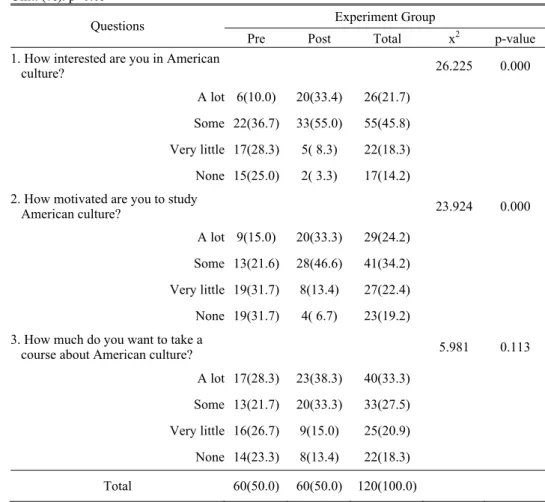
Table 3 illustrates the changes in the experimental group's answers after the experiment. In the post survey, the experimental group's level of interest was higher after the
experiment.
TABLE 3
Pre and Post Changes in Interest and Motivation
Unit: (%). p<0.05
Questions Experiment Group
Pre Post Total x2 p-value 1. How interested are you in American
culture? 26.225 0.000
A lot 6(10.0) 20(33.4) 26(21.7) Some 22(36.7) 33(55.0) 55(45.8) Very little 17(28.3) 5( 8.3) 22(18.3) None 15(25.0) 2( 3.3) 17(14.2) 2. How motivated are you to study
American culture? 23.924 0.000
A lot 9(15.0) 20(33.3) 29(24.2) Some 13(21.6) 28(46.6) 41(34.2) Very little 19(31.7) 8(13.4) 27(22.4) None 19(31.7) 4( 6.7) 23(19.2) 3. How much do you want to take a
course about American culture? 5.981 0.113 A lot 17(28.3) 23(38.3) 40(33.3)
Some 13(21.7) 20(33.3) 33(27.5) Very little 16(26.7) 9(15.0) 25(20.9) None 14(23.3) 8(13.4) 22(18.3) Total 60(50.0) 60(50.0) 120(100.0)
The p-value of response to the question: "How interested are you in American culture?" in the pre and post survey of the experimental group is 0.000; which, because it is smaller than p<0.05, is statistically significant. Also, the p-value to the question, "How motivated are you to study American culture?" in the pre and post survey, the p-value to the question of the experimental group is 0.000, which again illustrates the fact that the experimental group's result in the pre and post survey is statistically significant. The p-value of response to the question: "How much do you want to take a course about American culture?" is not statistically significant. The statistics support the theory that, after the cultural education, the experimental group's scores did increase.
As illustrated in table 3, 9(15%) students in the experimental group were interested in American culture in the pre survey; however, 20(33.3%) students were interested in American culture in the post survey. After the experiment, the students' interest about American culture was obviously higher. 2(3.33%) students in the experimental group stated that they were not interested in American culture. This result was lower than the pre-survey, which shows 15(25%) students in the experimental group indicated that they were not interested in American culture.
In the interview, they felt that English is a boring subject. Therefore, when they were given an assignment, they didn't feel like doing it because of lack of motivation. Gradually, they discovered it was interesting to search for materials about differences between Korean and American culture for the presentation.
2. Analysis of Improvement in Attitude and Communication Skills
The post survey illustrates that the experimental group's feeling of the importance of studying American culture had changed after the experiment. Table 4 illustrates the changes in the experimental group's answers after the experiment.
TABLE 4
The Importance of Studying American Culture (Experimental Group)
Unit: (%). p<0.05
Questions Pre Post Total x2 p 1.How helpful was studying American
culture in terms of understanding
American dramas, or movies? 5.981 0.113 a lot 9(15.0) 18(25.7) 27(20.8)
some 15(25.0) 20(28.6) 35(26.9)
very little 16(26.7) 15(21.4) 31(23.8)
2.How helpful was studying American
culture in terms of speaking English. 14.895 0.002 a lot 9(15.0) 19(31.7) 28(23.4)
some 13(21.6) 24(40.0) 37(30.8)
very little 19(31.7) 9(15.0) 28(23.3)
none 19(31.7) 8(13.3) 27(22.5)
3.How important is it to study
American culture in English class? 7.432 0.059 a lot 8(13.3) 15(25.0) 23(19.1)
some 6(10.0) 12(20.0) 18(15.0)
very little 18(30.0) 17(28.3) 35(29.2)
none 28(46.7) 16(26.7) 44(36.7)
Total 60(100.0) 60(100.0) 120(100.0)
The p-value of responses to the question: "How helpful was studying American culture in terms of understanding American dramas, or movies?" in the pre and post survey of the experimental group is 0.013, which is not statistically significant (p<0.05). In the post-interview some of the students in experimental group felt that understanding American movies or dramas is still very difficult. However, the p-value of responses to the question: "How helpful was studying American culture in terms of speaking English?" is statistically significant (p<0.05), but the question "How important is it to study American culture in English class?" is not.
TABLE 5
Understanding of Cultural Differences between Korea and America
Unit: (%). p<0.05
Questions Pre Post Total x2 p- value 1.How much do you think Korean and
American culture differ? 11.829 0.008 a lot 20(33.3) 27(45.0) 47(39.2)
some 19(31.7) 27(45.0) 46(38.3)
very little 16(26.7) 3( 5.0) 19(15.8) none 5( 8.3) 3( 5.0) 8( 6.7) 2.How much did you find that
understanding American culture helped understand our own culture better?
17.371 0.001
a lot 9(15.0) 24(40.0) 33(27.5)
some 13(21.7) 20(33.4) 33(27.5)
none 17(28.3) 8(13.3) 25(20.8) 3.How important is it to understand our
own culture when studying American
culture in English class? 9.866 0.020 a lot 19(31.7) 28(46.7) 47(39.2)
some 18(30.0) 24(40.0) 42(35.0)
very little 18(30.0) 6( 10.0) 24(20.0) none 5( 8.3) 2( 3.3) 7( 5.8)
Total 60(100.0) 60(100.0) 120(100.0)
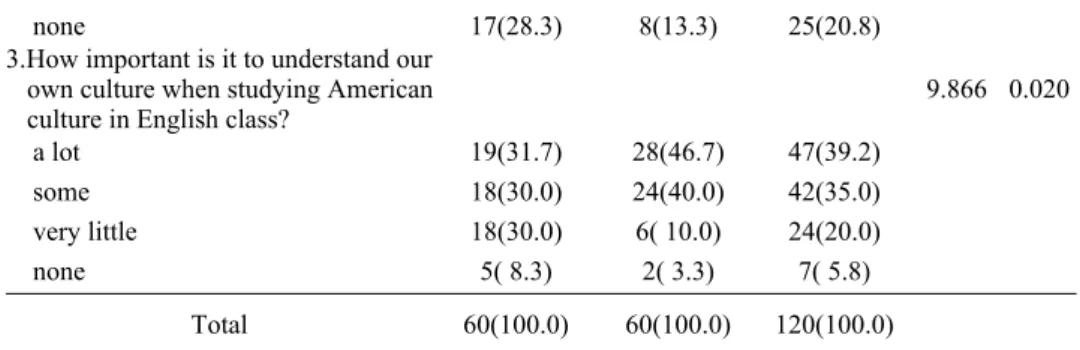
Table 5 illustrates the changes in the experimental group's answers after the experiment. In the post survey, the experimental group's understanding of cultural differences between Korea and America was higher after the experiment.
The p-value to the question, "How much do you think Korean and American culture differ?" in the pre and post survey of the experimental group is 0.008, which, because it is smaller than p<0.05, is statistically significant. Also The p-value of responses to the questions: "How much did you find that understanding American culture enabled you to better understand your own culture?" and "How important is it to understand your own culture when you studyAmerican culture in English class?" is statistically significant as the p-value is p<0.05.
In the pre-interview, students felt that understanding American culture is separate from English competence. Gradually, they came to realize that studying culture is helpful to their study of English and their ability to communicate effectively in the language. In addition, it helped students understand the differences between Korean and American cultures. Finally, understanding other cultures enhances our understanding of our own culture.
3. Analysis of the Results of the TOEIC Reading Test
A reading test was given twice, before and after the experiment, with both groups taking identical tests. In the pre test, the control group's average reading score was 340, while the experimental group's average reading score was 342. The pre scores in both groups were very similar.
After the experiment, however, the experimental group's average scores improved from 342 to 365, as illustrated in table 5. In order to control the primary factors of reading scores in both groups, the ANCOVA test was done. The result is statistically significant as the p-value is 0.025 (p<0.05).
TABLE 6
Average TOEIC Reading Score (Pre and Post Test)
(Unit : Mean±S.D.)
Questions Average TOEIC Reading Score F p-value R Squared Pre Post
Control Group 340±163.2 348± 75.2
1.944 0.025 0.393 Experiment Group 342±161.2 365± 43.2
As shown in table 6, although both groups' TOEIC scores were similar before the experiment with the control group at 340 and experimental group at 342, after the experiment the range was increased with the control group at 348 and experimental group at 365. That means cultural education effectively improved the students' reading skills.
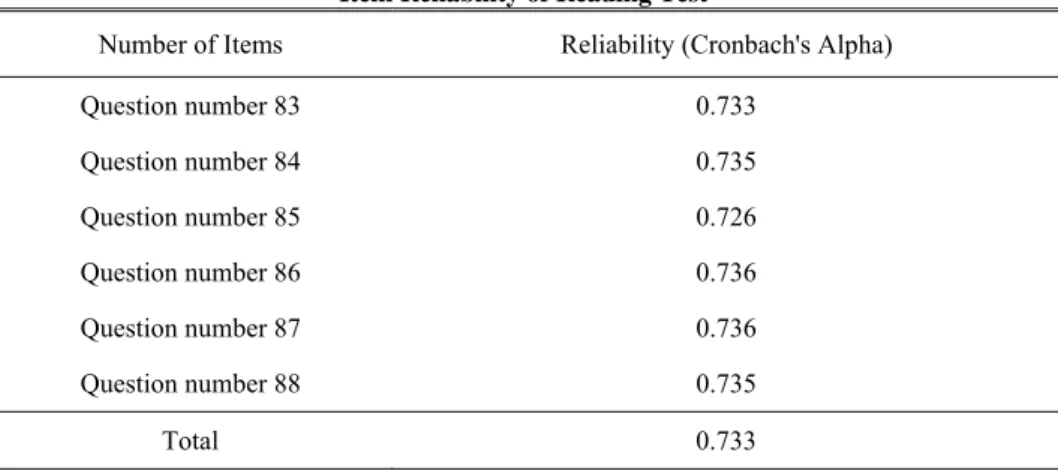
Table 6 illustrates the item’s reliability for ascertaining the value of the questions is meaningful (over 70 (0.700) % of reliability).
TABLE 7
Item Reliability of Reading Test
Number of Items Reliability (Cronbach's Alpha) Question number 83 0.733 Question number 84 0.735 Question number 85 0.726 Question number 86 0.736 Question number 87 0.736 Question number 88 0.735 Total 0.733
In case of the item differentiation, not all questions were meaningful. As expected, in responding to some questions, the experimental group chose the correct answers more often than the control group. However, in responding to other questions, the control group students also chose the correct answers without studying culture in class. This suggests that some questions' differentiation were not meaningful.
Questions 83, 84, and 85 are about job applications. Table 7 shows that the item differentiation of question number 83, "Who wrote the letter?", and 84, "What is
enclosed with this letter?" are not meaningful. 35 students in the experimental group chose the correct answer, and 32 students in the control group chose the correct answer. Hence, the p-value of responses to the question is not statistically significant. However, the item differentiation of question number 85, "How many years did the writer work for foreign affiliated companies?" is meaningful; 11 students in the control group chose the correct answer, while 36 students in experimental group chose the correct answer. The p-value to the question is statistically significant.
TABLE 8
Item Discrimination of Job Application
Unit: (%). p<0.05
Questions Control Experimental Total x2 p-value
V83 0.304 0.581 O 32(53.3) 35(58.3) 67(55.8) X 28(46.7) 25(41.7) 53(44.2) V84 1.200 0.273 O 27(45.0) 33(55.0) 60(50.0) X 33(55.0) 27(45.0) 60(50.0) V85 21.860 0.000 O 11(18.3) 36(60.0) 47(39.2) X 49(81.7) 24(40.0) 73(60.8) Total 60(100.0) 60(100.0) 120(100.0) TABLE 9
Item Discrimination of Buying Items
Unit: (%). p<0.05
Questions Control Experimental Total x2 p-value
V86 2.420 0.120 O 24(40.0) 32(54.2) 56(47.1) X 36(60.0) 27(45.8) 63(52.9) V87 5.829 0.016 O 29(48.3) 42(70.0) 71(59.2) X 31(51.7) 18(30.0) 49(40.8 V88 5.400 0.020 O 14(23.3) 26(43.3) 40(33.3) X 46(76.7) 34(56.7) 80(66.7) Total 60(100.0) 60(100.0) 120(100.0)
Table 9 shows that the item differentiation of question number 86, "How many desk and beds were ordered?" is not meaningful. Because 24 students in the control group and 32 students in the experimental group chose the correct answer. However, the item differentiation of question number 87, "How much money does Donald owe Duke Luxury Furniture?" and 88, "When is Donald required to pay for the order?" are meaningful. The p-value of those two questions is statistically significant as p<0.05.
The results of item differentiation illustrate that not only cultural understanding, but also other factors can affect the TOEIC score. Questions 86, 87, and 88 are about an invoice. The students in the experimental group were expected to be more familiar than the students in the control group because they had a relevant presentation in class during the experimental period. However, in case of question number 86, no discernible difference between the two groups was detected.
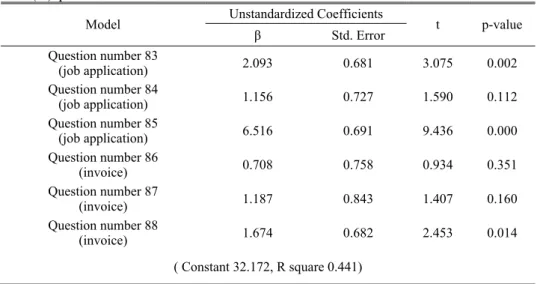
In order to discover the effects of each item on the overall score, a logistic multiple regression analysis was done. Table 24 illustrates R-square is 0.441(44.1%), and the p-value, except questions number 84, 86 and 87, is also significant.
TABLE 10
Logistic Multiple Regression Analysis of Reading Skill
Unit: (%). p<0.05
Model Unstandardized Coefficients t p-value β Std. Error Question number 83 (job application) 2.093 0.681 3.075 0.002 Question number 84 (job application) 1.156 0.727 1.590 0.112 Question number 85 (job application) 6.516 0.691 9.436 0.000 Question number 86 (invoice) 0.708 0.758 0.934 0.351 Question number 87 (invoice) 1.187 0.843 1.407 0.160 Question number 88 (invoice) 1.674 0.682 2.453 0.014 ( Constant 32.172, R square 0.441)
In the reading test after the experiment, because the students' scores in the experimental group were relatively higher than those of the students in the control group, cultural education appears to be an effective means of improving English reading skills.
V. CONCLUSION AND IMPLICATIONS
The results of the present study provide empirical evidence that cultural understanding does in effect help improve students' general English competence. As previously stated, the purpose of this study is to emphasize the importance of learning cultural context in the second language classroom and to support the idea that learning cultural context can effectively help students’ English comprehension. Being good at English means not only understanding vocabulary and grammar, but also understanding the culture in which the language has developed. The results suggest that if students were exposed to American culture and language, their experience with learning English would be much more effective.
Regarding the first research question, (1) "Does cultural understanding improve motivation to study English?" There was a considerable difference between the control and the experimental group. When answering the question in the pre survey, "How interested are you in American culture?", only a few students in either group answered "a lot". However, more than 3 times as many students in the experimental group answered "a lot" to the same question at the end of the semester, while the control group remained about the same. The figures indicated that the motivation to understand American culture raised 23.3% in the experimental group.
The same was true with the second research question, (2) "Does cultural understanding help effective English communication?" When answering the question, "How helpful was learning about American culture in terms of English skill?", twice as many students in the experimental group answered 'a lot" in the post-survey as opposed to the pre-survey.
(3) "Does cultural understanding improve English reading skills?" in the TOEIC test, the experimental group raised their average reading scores by 23 points.
In the control group, the students' motivation to study English and their English skills were slightly improved, but in the experimental group, the students' motivation to study English and their English skills improved considerably. Some of the students in the control group said in their interview that their motivation and listening and reading skills increased marginally as a result of simply participating in a class. However, the extent of their increase was not nearly as high as those in the experimental group.
In this paper, we have been examining the importance of cultural context and cultural education. This paper demonstrates the fact that interest, motivation, and English reading skills are measurably improved as a result of studying cultural education. In addition, cultural knowledge gave students a chance to appreciate the importance of understanding other cultures, and recognizing and understanding differences from culture to culture.
This study has the following potential limitations: The results of this study may not be applicable to all university students in Korea. Since this experiment is limited to the students in one school, there may be a few instances of overgeneralizations. The experiment period was not very long, so we did not have sufficient time to consider factors pertaining to the long-term effects or gradual changes in the students’ interest and motivation for their English study.
It will become ever more important for Koreans to improve their overall English communicative ability. Therefore it is becoming increasingly important for teachers to use every means possible to help their students by exploring new ways to interest and motivate their students. It is desirable that teachers consider cultural context when designing their classes in order to help students develop their interests and motivation. This will enable them to not only obtain satisfactory TOEIC scores, but develop their communicative competence in English.
REFERENCES
Byram, M.(1989), Foreign Language Education and Cultural Study. Language Culture and Curriculm1(1), 15-31.
Goodman, K. (1967). A psycholinguistic guessing game. Journal of the Reading Specialist,
6:126-135.
Hall, E.T. (1959) The Silent Language. Garden City, N.Y.: Doubleday and Company. Sapir, E. & Whorf, B. (1956) The Relation of Habitual Thought and Behavior to
Language In John B. Carroll, ed. Language, Thought & Reality. Cambridge:
Mass. MIT, 209.
Kirby, J.R. (1988) Style, Strategy, and Skill in Reading. In R.P. Achemeck(Ed.) Learning Style and Learning Strategies. New York: Plenum Press.
Lee, Eunpyo & Shin, Myeong-Hee.(2012) A Review of an Enhancement Course for College
Students’ Standardized English Test. English Language & Literature Teaching, 18(1), 153.
Lee, Tae-hee. (2001) How to Teach TOEIC Listening Comprehension Class. A
Collection of Papers: Kongju Communication Art College, Vol. 8, 325-357.
Morgan, C. & Cain, A. (2000). Foreign Language and Culture Learning from a Dialogic
Perspective. Clevedon, UK: Multilingual Matter.
O’Malley, J. M., Chamot, A. U., & Kupper, L. (1990). Listening comprehension strategies in second language acquisition. Applied Linguistics, 10(4), 418-437.
Rost, M. (1990). Listening. In R. Carter & D. Numan (Eds.), The Cambridge Guide to
Teaching English to Speakers of Other Languages (pp. 123-157), Cambridge:
Cambridge University Press.
Saussure, F. de. (1916) Cours de Linguistique Générale (5th
ed.). Paris: Payot
Stern, H. H. (1984) Fundamental Concepts of language Teaching, Oxford: Oxford University Press, 251.
Sapir, E. & Whorf, B.(1956) The relation of Habitual Thought and Behavior to
Language In John B. Carroll, ed. Language, Thought & Reality. Cambridge:
Mass. MIT, 209.
Examples in: English Applicable Language: English
Applicable Levels: Elementary, secondary and college
Eunpyo Lee
Eulji University
Department of Medicine 771-beongil 77 Gyerongro, Jung-gu
Daejeon, Korea, 301-832 Tel: (042) 259-1613
Email: [email protected]
Myeong-Hee Shin Hannam University
Department of Academic Research 133 Ojeong-dong, Daedeok-gu, Daejeon, Korea, 306-791 Tel: (042) 629-7451 Email: [email protected] Received in July, 2012 Reviewed in July, 2012