성 동진
, M.D.-St. Luke’s Hospital at St. Louis
내과 매칭
김성수 교수님
,
가장 높게 랭크한
St. Louis 지역 내과 프로그램으로 매칭 되었습니다 .
병원의
이름은 St. Luke's Hospital 입니다 . Washington Univ.
와 St. Louis Univ.
의대와 강한 Affiliation
을 가지고 있습니다 . 하나님께 감사드리고 교수님께도 감
사를 드립니다
. H1 비자도 받을 수 있게 되어 더욱 기쁩니다 .
갈 수록 극심해져가는 미국 레지던트 지원 경쟁에서 올해 많은 한국 선생님들이 고배
를 마셨습니다
. 99/99 같은 뛰어난 점수를 가지고 있어도 또는 10 군데 이상의 인
터뷰를 본 선생님들도 매칭에 실패하였습니다
. 하지만 교수님의 도움으로 2 년 전
리서치를 시작하기 위해 곤잘레스 교수님과 연락을 하게 되고 1 년 8 개월이라는 시
간동안 리서치 경력과 페이퍼는 물론이고 영어와 미국사람들과의 대인관계 기술도 늘
게 되어 인터뷰에서 좋은 인상을 남기고 올 수 있었습니다
.
교수님께 감사드리고 5 월에 찾아뵙고 다시 인사 드리겠습니다
.
성동진 드림
ongjin (Luke) Sung, M.D.
Postdoctoral Research Fellow, Physician Department of Ophthalmology
State University of New York at Buffalo Mailling address:
Medical Research (VAMC), 3495 Bailey Ave. Buffalo, NY 14215
(Cell Phone) 716-868-9146
(Fax) 716-862-6526
Fig 29-1Amphibolic intermediates formed from
the carbon skeletons of amino acids.
Figure 1 The insulin resistance syndrome. Insulin
resistance initially manifests itself as the constellation of symptoms that comprise the insulin resistance
syndrome (shown in the orange circle). Ultimately,
insulin resistance can evolve into a number of diseases (shown in the red circle).
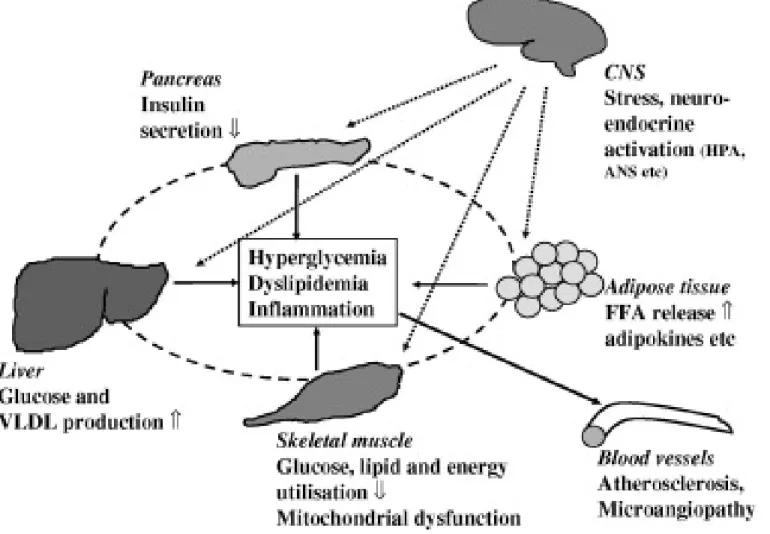
Fig. 1. Interplay between CNS and other tissues in the
pathophysiology of type 2 diabetes and the metabolic
syndrome. ANS, autonomic nervous system; FFA, free fatty
acids; HPA, hypothalamo–pituitary–adrenal system; VLDL,
very low density lipoprotein.
Figure 1. Metabolic Staging of Type 2 DiabetesType 2 diabetes is characterized by a progressive decrease in insulin action, followed by an inability of the β cell to
compensate for insulin resistance. Insulin resistance is the first lesion, due to interactions among genes, aging, and metabolic changes produced by obesity. Insulin resistance in visceral fat leads to increased fatty acid production, which
exacerbates insulin resistance in liver and muscle. The β cell compensates for insulin resistance by secreting more insulin. Ultimately, the β cell can no longer
The brain receives various forms of metabolic information from peripheral organs/tissues through humoral and neuronal pathways. These inputs are probably integrated and processed in the brain, leading to appropriate
systemic responses. Several signals, as therapeutic targets, are discussed in this article.
Scheme of the neuronal pathways involved in energy homeostasis.
Neuronal signals from WAT modulate hypothalamic leptin sensitivity,
thereby regulating feeding behavior. In addition, the liver transmits
information regarding excess energy to the brain via the afferent vagus,
thereby activating the sympathetic nervous system which in turn
enhances energy expenditure and lipolysis. The autonomic nervous
system, as exemplified by these neuronal circuits, plays important roles
in regulating energy metabolism.
Role of adipose tissue in peripheral insulin resistance. The fat cell is
essential to the regulation of glucose metabolism and energy homeostasis. Adipocytes of obese type 2 diabetics release FFA that alter muscle glucose uptake and increase hepatic glucose production. Normal adipocytes also release adipocytokines such as leptin and adiponectin which promote lipid combustion and stimulate insulin action in muscle and fat. Leptin also has central effects on food intake and peripheral insulin sensitivity. In obesity and type 2 diabetes, adiponectin secretion is decreased and there is
resistance to the action of leptin. In lipoatrophy, both leptin and adiponectin are low, and extreme insulin resistance develops. Finally, hypertrophied
adipocytes of obese people also release TNF-α and resistin which further exacerbate insulin resistance in peripheral tissues.
Structure of bilirubin diglucuronide (conjugated, "direct-reacting" bilirubin). Glucuronic acid is attached via ester linkage to the two propionic acid groups of bilirubin to form an acylglucuronide.
Conjugation of bilirubin with glucuronic acid. The glucuronate donor, UDP-glucuronic acid, is formed from UDP-glucose as
depicted. The UDP-glucuronosyltransferase is also called bilirubin-UGT.
No Significant Correlation Exists Between Core Promoter Mutations,Viral Replication, and Liver Damage in Chronic Hepatitis B Infection. Hepatology. 2000
Nov;32(5):1154-YOON KEUN CHUN,1 JEE YOUN KIM,1 HONG JUNG WOO,2 SOO MYUNG OH,2 INSUG KANG,1,2 JOOHUN
HA,1,2 AND SUNG SOO KIM1,21:
Phosphatidylinositol 3-Kinase Stimulates Muscle Differentiation by Activating p38 Mitogen-Activated Protein Kinase. BBRC, 24 September 2000, Pages 502-507
Yoon Keun Chuna, Jayoung Kima, Sijoong Kwona, Soon Hee Choia, Feng Honga, Kuen-ai Moona, Joung Mok Kima,
Sang Lim Choia, Bum Shik Kimb, Joohun Haa and Sung Soo Kima, 1
Effects of polyamine depletion by α-difluoromethylornithine on in vitro and in vivo biological properties of 4T1 murine mammary cancer cells .Breast Cancer Res Treat. 2008 Jan;107(1):33-40.
John Yoonkeun Jun1, James W. Griffith2, Richard Bruggeman3, Sharlene Washington1, Laurence M. Demers1, 3,
Michael F. Verderame1, 4 and Andrea Manni1
Department of Medicine, Pennsylvania State University College of Medicine, 500 University Drive, Hershey, PA, 17033, USA,
Nonobese, insulin-deficient Ins2Akita mice develop type 2 diabetes phenotypes including insulin resistance and cardiac
remodeling. Am J Physiol Endocrinol Metab. 2007 Dec;293(6):E1687-96.
Eun-Gyoung Hong,1,2 Dae Young Jung,1 Hwi Jin Ko,1 Zhiyou Zhang,1 Zhexi Ma,1John Y. Jun,1,3Jae Hyeong Kim,1
Andrew D. Sumner,4 Thomas C. Vary,1 Thomas W. Gardner,1,5 Sarah K. Bronson,1 and Jason K. Kim11Department
of Cellular and Molecular Physiology, Pennsylvania State University College of Medicine, Hershey, Pennsylvania;
2Department of Internal Medicine, Section of Endocrinology, Hallym University College of Medicine, Seoul, South Korea; 3Division of Endocrinology, Diabetes and Metabolism, 4Cardiology, and 5Ophthalmology, Department of Internal Medicine,