저작자표시 2.0 대한민국 이용자는 아래의 조건을 따르는 경우에 한하여 자유롭게
l 이 저작물을 복제, 배포, 전송, 전시, 공연 및 방송할 수 있습니다. l 이차적 저작물을 작성할 수 있습니다.
l 이 저작물을 영리 목적으로 이용할 수 있습니다. 다음과 같은 조건을 따라야 합니다:
l 귀하는, 이 저작물의 재이용이나 배포의 경우, 이 저작물에 적용된 이용허락조건 을 명확하게 나타내어야 합니다.
l 저작권자로부터 별도의 허가를 받으면 이러한 조건들은 적용되지 않습니다.
저작권법에 따른 이용자의 권리는 위의 내용에 의하여 영향을 받지 않습니다. 이것은 이용허락규약(Legal Code)을 이해하기 쉽게 요약한 것입니다.
Disclaimer
저작자표시. 귀하는 원저작자를 표시하여야 합니다.
의학석사 학위논문
Germline DNA-repair genes and HOXB13 mutations in Korean men
with metastatic prostate cancer
한국인 전이성 전립선암 환자에서 생식세포 DNA-복구 유전자와 HOXB13 돌연변이에 대한
연구
2023년 2월
서울대학교 대학원 의학과 비뇨기과학전공
국 하 림
Germline DNA-repair genes and HOXB13 mutations in Korean men
with metastatic prostate cancer
지도교수 변 석 수
이 논문을 의학석사 학위논문으로 제출함 2022년 10월
서울대학교 대학원 의학과 비뇨기과학전공
국 하 림
국하림의 석사 학위논문을 인준함 2023년 1월
위 원 장 이 학 종 (인)
부위원장 변 석 수 (인)
위 원 오 종 진 (인)
i
Abstract
Germline DNA-repair genes and HOXB13 mutations in Korean men
with metastatic prostate cancer
Ha Rim Kook Medicine, Urology The Graduate School Seoul National University
Background: Germline mutations in DNA-repair genes such as BRCA2 have been associated with prostate cancer (PC) risk.
However, the spectrum of these mutations was not investigated in Korean prostate cancer patients. We focused on the frequency of such mutations in patients with metastatic prostate cancer (mPC) in Korean men which has not been established.
Methods: We recruited 340 patients with metastatic prostate cancer who were unselected for family history of cancer. We isolated germline DNA and used whole genome sequencing method to assess the pathogenic/likely pathogenic variants (PVs/LPVs) in 26 DNA-repair genes and HOXB13, including 7 genes (ATM, BRCA1/2, CHEK2, BRIP1, PALB2, and NBN) associated with hereditary prostate cancer. Comparison to published Caucasian and Japanese cohorts were performed.
Results: A total of 28 PVs/LPVs were identified in 30 (8.8%) patients; mutations were found in 13 genes, including BRCA2 (15 men [4.4%]), ATM (2 men [0.6%]), NBN (2 men [0.6%], and BRIP1 (2 men [0.6%]). Only one patient had HOXB13 mutation (0.3%). Compared with the germline variant frequency of
ii
previously reported mPC study (11.8%), a slightly lower or similar occurrence was found in Korean mPC (8.8%). Additionally, the PVs/LPVs in DNA-repair genes tended to increase gradually as Gleason score (GS) increases (GS 7, 7.1%; GS 8, 8.5%; GS 9-10, 9.0%).
Conclusions: This study demonstrate a slightly lower or similar frequency of germline PVs/LPVs in Korean mPC patients than in previously reported germline PVs/LPVs in the Caucasian mPC studies. BRCA2 was also the most frequently mutated gene in Korean metastatic prostate cancer.
Keywords: Korean, Prostatic neoplasms, Rare pathogenic mutations, Genetics
Student Number: 2014-25042
iii
Table of Contents
Abstract ... i
Tables of Contents ... iii
Legends of Tables and Figures ... iv
Introduction ... 1
Materials & Methods ... 2
Results ... 4
Discussion ... 7
Conclusion ... 12
References ... 13
국 문 초 록... 30
iv
Legends of Tables and Figures
Table1. Clinical characteristics of mPC patients ... 17
Table 2. Variant significance classification from ClinVar ann otation ... 18 Table 3. PV/LPVs (n=28) in Korean mPC (n=30) ... 19
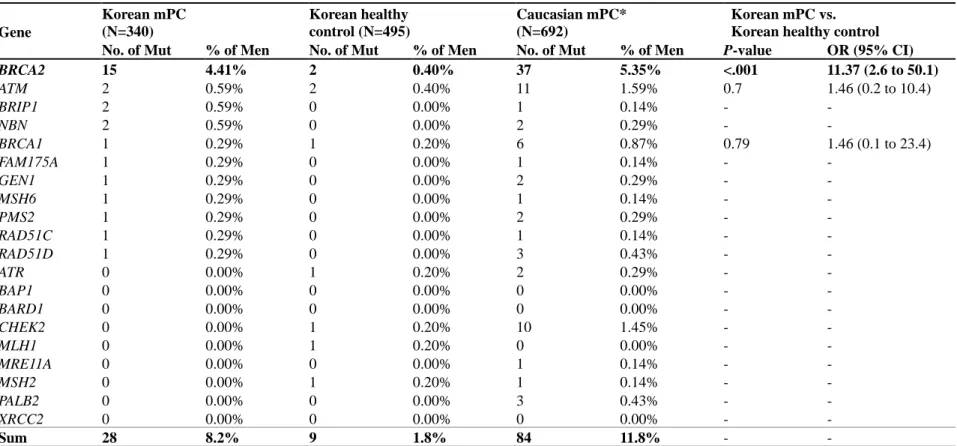
Table 4. Germline variant frequency comparison between K orean mPC (n=340), Korean healthy controls (n=495), and Caucasian mPC (n=692) ... 21
Table 5. Association tests between Korean mPC and Japan ese PC ... 22
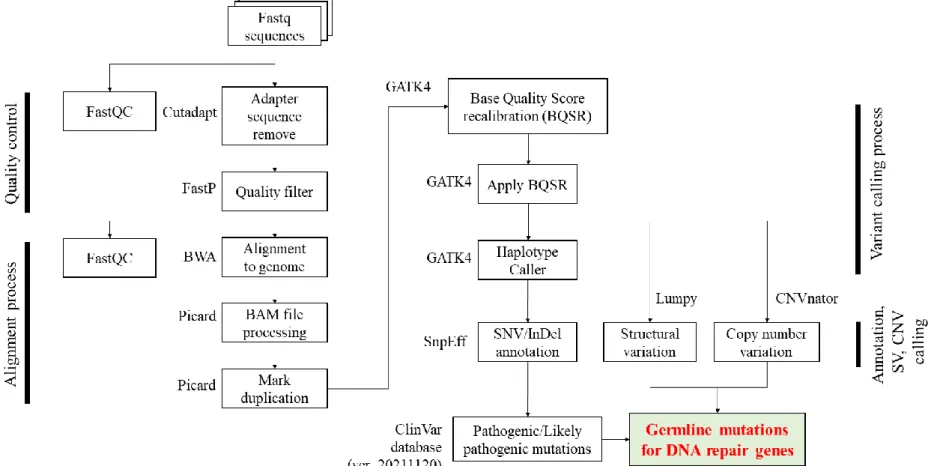
Figure 1. Whole genome analysis pipeline (Human referenc e genome GRCh38 : hg38) ... 23
Figure 2. Sequencing depth and Mapping rate for 340 Kore an mPC patients ... 24 Figure 3. Distribution of PV/LPVs in Korean mPC ... 25
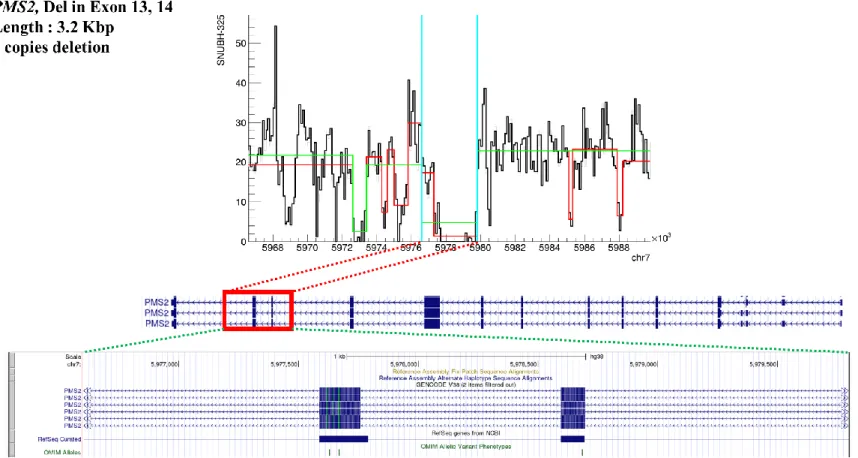
Figure 4. Location and signal profile of copy number variati on in PMS2, deletion found in exons 13 and 14 (length 3.2 Kbp). ... 26
Figure 5. Location and signal profile of copy number variati on in FAM175C, deletion found in exons 4 to 7 (length 6.1 Kbp). ... 27
Figure 6. Location and signal profile of copy number variati
on in RAD51C, deletion found in exons 6 to 9and 3’ untra
nslated region (UTR) (length 35 Kbp). ... 28
Figure 7. Association between Gleason Score and variant fr
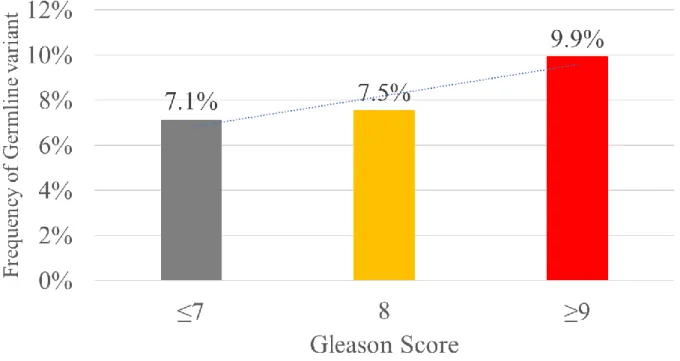
equency in Korean mPC cohort ... 29
1
Introduction
With considerable advances in identifying risk variants in the genomic landscape of prostate cancer (PC), germline mutation in nominal genes have garnered interest for prediction of cancer prognosis and treatment response. As such, recent guidelines instruct implementation of germline screening in men with high familial risk or early onset of PC based on results from large genome-wide association studies (GWAS)[1, 2]. Currently, genetic factors contribute to approximately 5 to 15% of all PC cases, especially in carriers of rare pathogenic mutations (RPMs) in DNA damage repair (DDR) genes such as BRCA1, BRCA2, ATM, and CHEK2[3]. Such patients with either germline or somatic pathogenic variants show differential response to treatment and have aggressive forms of the disease[4].
Amidst evidence that support genetic testing to identify high- risk patients and guide eligibility for active surveillance as well as provide individualized methods of treatment based on genomic imprints, reports on germline mutation of risk variants for PC in Asian population are limited. Multi-ethnic based GWAS summary statistics are conducted primarily in Caucasian and European men, and large proportions of PC-associated SNPs (single nucleotide polymorphisms) lack significance when compared to East Asian cohorts[5]. Men of Asian ancestry were found to have differential levels of SNP-based composite genetic risk scores compared to African and European men when using the same risk variants[1], implying the need for ethnic-specific analysis to achieve robust performance suitable for clinical implementation. Metastatic PC (mPC) in Asians deserve further evaluation, not only due to the increase in incidence but also due to Asian men harboring more adverse phenotypes[6]. The objective of this study was to identify the frequency of germline mutation in DDR genes & highly penetrant HOXB13 in patients with mPC in Korean populations.
2
Materials & Methods
Study population
Patient recruit and clinical data collection was conducted at from a single tertiary medical center (Seoul National University Bundang Hospital) as a prospective biobank approved by the Institutional Review Board (B-167/355-302). Informed consent was obtained for all subjects diagnosed for PC between 2008 and 2011. Clinical variables including age at diagnosis and metastasis, initial PSA, and Gleason scores (GS) were included. Histopathologic analysis was based on sextant transrectal ultrasound or MRI-fusion targeted biopsy as well as transurethral prostatectomy specimen, and radical prostatectomy (RP)-proven pathologic staging and grade were used. Total 340 patients treated or undergoing treatment for metastatic PC (mPC) were included. Allele frequency for healthy controls were obtained from 2 multicenter databases, Korean Variome Center (KoVariome) and Ulsan 10K Genomes Project (U10K). Total 495 healthy male controls were used (n=145 from KoVariome and n=350 from U10K).
Sequencing, variant calling & annotation
Selection of DDR genes were based on 20 genes from the pivotal study by Prichard et al. (2016), including ATM, ATR, BAP1, BARD1, BRCA1, BRCA2, BRIP1, CHEK2, FAM175A, GEN, MLH1, MRE11A, MSH2, MSH6, NBN, PALB2, PMS2, RAD61C, RAD51D, and XRCC2[3]. HOXB13 with 6 additional PC-associated DDR genes proven in previous literature (BLM, CDK12, CHEK1, FANCA, RAD51B, RAD54L). Whole genome sequencing was performed using DNBSEQ-T7 sequencing platform (MGI-Tech, Shenzhen, China), with 150bp (base pair) read length and average 38x depth of coverage. Samples were obtained from both saliva (n=11) and blood (n=329) and DNA extracted per manufacturer instructions.
Reads were aligned to human reference genome GRCh38 (hg38)
3
using the Burrows-Wheeler Aligner (BWA-MEM)[7], after quality filtration of raw FASTQ sequencing with FastQC and adapter sequence trimming with Cutadapt[8] (Figure 1). Fastp[9] quality filter were applied prior to alignment, and duplicate reads were removed with Picard v2.21.8[10]. GATK4 was used for Base Quality Score Recalibration and variant calling[11]. Annotations of SNV (single nucleotide variant) and indel (insertion-deletion mutations) were identified using SnpEff[12], and structural variants (SVs) and copy number variations (CNVs) using Lumpy[13] and CNVnator[14] frameworks, respectively. Pathogenic (PV) and likely-pathogenic variants (LPV) for SNV and indels were further annotated using the ClinVar database (ver. 20211120)[15]. Slightly low mapping rates when DNA was extracted via saliva (Figure 2), but no significant differences were observed in overall analysis.
Statistical analysis
Association and odd-ratio for case-controls and inter-cohort comparisons were conducted with Fisher’s exact and logistic regression analysis, respectively. Cochran-Armitage test was used for trend. All tests were two-sided with p-value less than 0.05 considered significant unless quoted otherwise. Statistical tests were performed using the R package (ver.4.0.5).
4
Results
Clinical characteristics
Median age at diagnosis and metastasis for patients with mPC were 68 and 71 years old, respectively (Table 1). Median PSA was 37.6±507.1 ng/ml, with 8.4% GS 7 (3+4 or 4+3), 28.2% GS 8, and 63.4% GS 9 or higher. Of all patients, 127 (37.4%) were de novo mPC with no previous treatment, whereas 212 (62.4%) were recurrent mPC (progressed from localized disease) with overt metastases detected at imaging (32.1%) or suspected for BCR (biochemical recurrence) after initial treatment with potential micro-metastases (30.3%). Family history was collected in 285 participants, of whom only 15 (5.3%) had a positive family history.
Nodal metastasis was identified in 48 (14.1%) patients who underwent RP.
Germline variant mutation in DDR genes and HOXB13
Results from the ClinVar annotation statistics for 26 DDR genes and HOXB13 are found in Table 2. Total 1,442 single nucleotide variants and 376 indels were identified, with the vast majority of variants corresponding to benign (BV), likely-benign (LBV) or unknown significance (VUS). Six SNVs and 12 indels were classified as PV/LPV, constituting 0.42% and 3.2% of all SNVs and indels, respectively. Six stop-gain and frameshift variants not identified from ClinVar were putatively considered as PV/LPVs and included in downstream analysis, and categorization conducted through InterVar[16] based on the ACMG (American College of Medical Genetics and Genomics) guideline[17] has been further noted in Table 3. Of all patients, 30 (8.8%) harbored total 28 PV/LPVs in 13 out of 20 genes (Table 3). Twenty-five variations were SNV and indels, and 3 variations were large deletions corresponding to CNVs and structural variants (SV). BRCA2 variants were most commonly observed (4.41%), followed by ATM,
5
BRIP1, NBN (each 0.59%), and BRCA1, FAM175A, GEN1, MSH6, PMS2, RAD51C, and RAD51D (each 0.29%) (Table 4, Figure 3).
CNV and SV analysis indicated 3 large putatively pathogenic deletions in PMS2, FAM175A, and RAD51C (Table 3, Figures 4-6).
In the patient with PMS2 mutation, copy number deletion was found in exons 13 and 14 with about 3 kbp deletion in a homozygous pattern (2 copy loss). FAM175A and RAD51C showed deletions in exons 6-9 to 3’ untranslated region (UTR) and exons 4-7, respectively, with both heterozygous deletion profiles (single copy loss). Small 30 to 40 bp deletions in the intron region of BRCA2 were identified, located at the 13th and 23rd introns in 3 and 11 patient samples, respectively.
Sub-analysis for variant frequency and clinicopathologic correlation showed a positive trend for increasing GS, with germline mutations in 7% and 10% of GS≤7 and ≥9 patients, respectively (Figure 7). Although statistical significance for trend was not achieved, the results confirm previous findings[18] that the frequency of PV/LPV increase with GS, suggesting that the degree of aggressiveness may be higher in men with pathogenic germline mutations.
Comparison analysis to different cohorts
Analysis of Korean healthy males (n=495) revealed 9 (1.8%) mutation variants in BRCA2, ATM, BRCA1, ATR, CHEK2, MLH1, and MSH2 in decreasing order (Table 4). BRCA2 mutation was significantly more likely to be present in Korean mPC compared to healthy counterparts (OR 11.37, p<0.001). ATM and BRCA1, considered PV for PC, was not significantly associated for increased risk for developing mPC (p=0.7 and 0.79, respectively). Further comparison to Caucasian mPC as reported by Pritchard et al.
(2016)[3] showed that while BRCA2 is the most frequently identified germline DDR mutation in both ethnicities, mutations in
6
ATM and CHEK2 which displayed 2nd and 3rd highest frequency in Caucasian mPC were not found or had very low frequency in Koreans. Overall variant frequency was also ultimately lower in Koreans compared to Caucasians with no overlap of PV/LPV germline variants, underlying an ethnic difference in genetic predisposition for mPC.
To further assess the germline variant profile of DNA repair genes within the East-Asian ethnicity, Korean mPC was compared to the germline carrier frequency reported in a large Japanese cohort[19] (Table 5). Eight genes including BRCA1/2 and ATM were compared, with BRCA2 commonly found to be most frequent in both studies. However, BRCA2 frequency in the Korean mPC cohort was approximately 4-times higher than that of the Japanese cohort, with gene-based association test showing the most significant p-value in the BRCA2 gene with overall statistical significance. Only 1 patient had HOXB13 mutation (Gly132Glu), which was 2nd most frequent in Japanese.
7
Discussion
Despite modifications in recent guidelines to support the use of genetic testing for assessment of germline mutations in men with high familial risk, evaluation amongst different racial and ethnic cohorts are lacking, with established literature suggesting varying genetic profiles depending on ancestry. Unlike previous studies in germline PC, we selected only men with proven metastatic cancer status to assess the linkage of germline DDR mutation with progression to mPC in the largest volume of Koreans to our knowledge. Approximately 9% of all mPC harbored at least one deleterious variant in DDR genes, with BRCA2 mutation most predominant. Three novel CNVs in PMS2, RAD51C, and FAM175A were identified, with higher GS patients showing a gradual increase in PV/LPV variant frequency. Comparison with healthy controls as well as Caucasian and Japanese cohorts indicate a distinct mutation profile in Korean mPC, further supporting the need for ethnic- specific appraisal of germline susceptibility in PC.
Germline mutations in DDR genes have especially been associated with increased risk for PC-mortality and early age at diagnosis[20] as well as GS reclassification during active surveillance[21], notably in BRCA1/2 and ATM carriers. Markedly high proportion of germline BRCA2 mutation in this study affirms previous literature suggesting localized BRCA2-mutant tumors harbor increased frequency of CNV than those without mutations[22]. Half of mutation carriers had variants in BRCA2, attesting to the hypothesis that BRCA2 aberrations may accelerate mutation as which occurs during hormone therapy, leading to aggressive, metastatic forms of the disease[23]. While BRCA1 and BRCA2 are both RPMs of importance as suggested in early literature, BRCA2 seems to play a more pivotal role in East Asian mPC. Study of germline PVs in more than 7000 Japanese
8
patients[19] lay further support, as PC patients were 5.6 times more likely to harbor BRCA2 mutation (p<0.001) but failed to show statistical significance for BRCA1 (p=0.06). However, PV carriers had increased risk of aggressive (GS≥8) tumors, which supports the upward trend for frequency of germline PVs from 7% in GS≤7 to nearly 10% in GS≥9 revealed from this study (Figure 7).
Surprisingly, no overlap of individual variants was observed when compared to the Caucasian cohort [3], with considerable difference in overall distribution of RPMs. Overall germline variant carriers in Korean mPC were over 2-fold higher than in Japanese PC cohort (6.76% vs. 2.88%), but this can be attributed to the relatively low percentage of mPC (M1) patients included in the latter study (8.0%, n=297) [19]. Further comparison to 139 mPC from a UK biobank with all European ancestry found only 1 shared variant in BRCA2 (p.Thr3085fs) out of 22 PV identified[24].
Mutation in ATM and CHEK2, found in relatively high frequency in Caucasian mPC, did not show significant overlap in Korean mPC nor increased mPC risk compared to Korean healthy controls (OR 1.46, p=0.79), with CHEK2 mutation found only in a healthy male. Lack of RPM distribution overlap aside from BRCA2 suggest that while germline mutation in DDR substantially increases risk for mPC, different genomic factors may drive carcinogenesis depending on ethnicity. A recent meta-analysis of germline RPMs further suggest that amidst the myriad of gene panels recommended in current guidelines, only BRCA2, ATM, NBN, CHEK2, and PALB2 show significant association with PC progression to lethal or metastatic disease[25]. HOXB13[26], while associated with high PC risk in European and Caucasian cohorts, was found in only 1 Korean patient with mPC despite being the 2nd most frequently observed in Japanese PC[19]. Gly132Glu variant, classified as VUS in ClinVar, seems to be specific in East Asian and Korean men[27]
and should be considered for ethnic-specific panels along with Gly135Glu [28]. Difference in germline PV profiles even when
9
compared to Japanese men of same East Asian ancestry provides evidence for a more tailored approach when assessing genetic risk, especially during the construction of risk scores from cancer- associated SNPs[29, 30], as population-based scores tend to outperform generalized, multiethnic models[31].
While family history was collected in 83.4% (285) participants, only 5% had a positive history of PC. This suggests that while familial PC history may contribute to PC development and must be adequately screened for cascade testing, it may not influence oncologic severity and likelihood for metastasis. Association analysis conducted in a Japanese cohort with 473 men of BRCA1/2 family history further support this hypothesis[32], as familial BRCA mutations failed to show any correlation to GS≥8 nor metastasis at diagnosis. Study of germline variants showed similar results, with family history failing to achieve statistical significance despite a relatively large sample size of combined 20,000 case and controls[19]. Only 9% in an earlier Korean study had 1st to 2nd degree family history of PC[27].
Of the 6 variants not reported in ClinVar, 4 were categorized as putative PV/LPV and 2 as VUS via InterVar (Table 3). Frameshift mutations considered VUS were absent from controls and potentially pathogenic based on the ACMG guidelines, but were found in GEN1 and RAD54L genes with little known mechanism of disease, and hence categorized as VUS. Interestingly, 30 to 40 bp mutations in the introns of BRCA2 were also identified in a relatively large portion of patients. The significance of such deletions in the 13th and 23rd introns are unknown, despite being found in 11 and 3 samples, respectively. Previous research has suggested that variants in the splicing site of intron 13 altered the maturation of mRNA and may play a role in breast and ovarian cancer[33], but no definite associations in PC can be made.
However, intronic variants newly discovered from GWAS studies
10
rather than conventional exome-based analyses have been linked to cellular signaling and differentiation that ultimately result in PC progression[34], and as such, these novel mutations may play a role in metastatic conversion. Also, the discovered intronic alterations may potentially correspond to transcription disruption and downstream loss-of-function in BRCA2[33, 35], though validation in large cohorts is required to assess functionality of such rare intronic variants. Findings from our research further support the need to study CNVs via whole-genome rather than exome- wide studies to evaluate whether these variants actually affect genomic pathogenesis in PC.
Our study is not without limitations. First, despite a relatively large cohort reported in Asian PC, the number of included participants in this study are modest to comprehensively represent populational burden and result in statistical significance. Also, this was a single institutional study, allowing the collection of well- conditioned data at the inevitable risk of selection bias. The overall frequency varies considerably compared to the results from the Japanese biobank, due to their inclusion of localized tumors which are much less likely to harbor germline mutations. Lastly, comparison to a previous Korean study of germline PV shows identical mutations in only 2 out of 6 PVs (c.658_659delGT in BRCA2 and c.395G>A in HOXB13), most likely due to the lack of variant coverage in the sample population. However, as only 297 patients mPC patients were included in a previous analysis of East Asian PC and 30 men in the earlier Korean cohort, our study best represents germline mutation of mPC in East Asia. To our knowledge, this is the first large whole genome sequencing study conducted in a Korean population which further allowed insight into structural variation, compared to conventional target sequencing. As such, novel CNVs were detected from this study, whose role in mPC pathogenesis need to be further discussed in future research.
Patients with germline mutations should be carefully monitored and
11
accurately stratified for early intervention rather than active surveillance[36].
Information on the populational distribution of germline DDR mutations have garnered further clinical significance as the Ministry of Food and Drug Safety have approved the use of olaparib in patients with mPC who have shown castration-resistance with first line androgen deprivation therapy in patients with BRCA mutation either somatic or germline. Therefore, patients with early identification of such mutations have the possibility of receiving treatment with PARP inhibitors, even before somatic mutation is identified via biopsy or surgical pathology. When the proband, i.e., initial mutation carrier, is identified, close relations and family members should undergo cascade testing for close observation and early cancer screening, as well as genetic counseling by specialized medical personnel, as harboring such mutations inevitability increase risk of disease occurrence and progression to aggressive types.
12
Conclusion
We successfully identified 26 DDR and HOXB13-related deleterious variants in 30 Korean men with aggressive mPC.
Germline PV/LPV profiles show comparable frequency of overall carriers (8.8%) but distinctly different distribution when contrasted to previous studies in European and even geographically nearby Japanese cohorts, with BRCA2 playing a dominant role. These results illustrate further evidence for population-based, ethnic- specific analyses for genetic testing as well as highlighting the potential differences that exist even in common East Asian ancestry.
These findings may further emphasize the importance of genomic background in Korean PC. Future combinatory efforts must be made in larger, multiethnic trials to identify PVs of variable importance depending on ancestry.
13
References
1. Conti DV, Darst BF, Moss LC, Saunders EJ, Sheng X, Chou A, et al. Trans-ancestry genome-wide association meta-analysis of prostate cancer identifies new susceptibility loci and informs genetic risk prediction. Nature genetics. 2021;53:65-75.
2. Network NCC. Prostate Cancer (Version 3.2022). 2022.
3. Pritchard CC, Mateo J, Walsh MF, De Sarkar N, Abida W, Beltran H, et al. Inherited DNA-Repair Gene Mutations in Men with Metastatic Prostate Cancer. N Engl J Med. 2016;375:443-53.
4. de Bono J, Mateo J, Fizazi K, Saad F, Shore N, Sandhu S, et al.
Olaparib for Metastatic Castration-Resistant Prostate Cancer. N Engl J Med. 2020;382:2091-102.
5. Carlaw KR, Woo HH. Evaluation of the changing landscape of prostate cancer diagnosis and management from 2005 to 2016.
Prostate Int. 2017;5:130-4.
6. Kimura T, Egawa S. Epidemiology of prostate cancer in Asian countries. Int J Urol. 2018;25:524-31.
7. Li H. Aligning sequence reads, clone sequences and assembly contigs with BWA-MEM. arXiv preprint arXiv:13033997. 2013.
8. Martin M. Cutadapt removes adapter sequences from high- throughput sequencing reads. EMBnet journal. 2011;17:10-2.
9. Chen S, Zhou Y, Chen Y, Gu J. fastp: an ultra-fast all-in-one FASTQ preprocessor. Bioinformatics. 2018;34:i884-i90.
10. Picard A. set of command line tools (in Java) for manipulating high-throughput sequencing (HTS) data and formats such as SAM/BAM/CRAM and VCF. 2018.
11. DePristo MA, Banks E, Poplin R, Garimella KV, Maguire JR, Hartl C, et al. A framework for variation discovery and genotyping using next-generation DNA sequencing data. Nat Genet.
2011;43:491-8.
12. Cingolani P, Platts A, Wang le L, Coon M, Nguyen T, Wang L, et al. A program for annotating and predicting the effects of single
14
nucleotide polymorphisms, SnpEff: SNPs in the genome of Drosophila melanogaster strain w1118; iso-2; iso-3. Fly (Austin).
2012;6:80-92.
13. Layer RM, Chiang C, Quinlan AR, Hall IM. LUMPY: a probabilistic framework for structural variant discovery. Genome Biol. 2014;15:R84.
14. Abyzov A, Urban AE, Snyder M, Gerstein M. CNVnator: an approach to discover, genotype, and characterize typical and atypical CNVs from family and population genome sequencing.
Genome Res. 2011;21:974-84.
15. Landrum MJ, Lee JM, Benson M, Brown GR, Chao C, Chitipiralla S, et al. ClinVar: improving access to variant interpretations and supporting evidence. Nucleic Acids Res. 2018;46:D1062-D7.
16. Li Q, Wang K. InterVar: Clinical Interpretation of Genetic Variants by the 2015 ACMG-AMP Guidelines. Am J Hum Genet.
2017;100:267-80.
17. Richards S, Aziz N, Bale S, Bick D, Das S, Gastier-Foster J, et al. Standards and guidelines for the interpretation of sequence variants: a joint consensus recommendation of the American College of Medical Genetics and Genomics and the Association for Molecular Pathology. Genet Med. 2015;17:405-24.
18. Helfand BT, Loeb S, Kan D, Catalona WJ. Number of prostate cancer risk alleles may identify possibly 'insignificant' disease. BJU Int. 2010;106:1602-6.
19. Momozawa Y, Iwasaki Y, Hirata M, Liu X, Kamatani Y, Takahashi A, et al. Germline Pathogenic Variants in 7636 Japanese Patients With Prostate Cancer and 12 366 Controls. J Natl Cancer Inst. 2020;112:369-76.
20. Na R, Zheng SL, Han M, Yu H, Jiang D, Shah S, et al. Germline Mutations in ATM and BRCA1/2 Distinguish Risk for Lethal and Indolent Prostate Cancer and are Associated with Early Age at Death. Eur Urol. 2017;71:740-7.
21. Carter HB, Helfand B, Mamawala M, Wu Y, Landis P, Yu H, et al.
Germline Mutations in ATM and BRCA1/2 Are Associated with
15
Grade Reclassification in Men on Active Surveillance for Prostate Cancer. Eur Urol. 2019;75:743-9.
22. Castro E, Jugurnauth-Little S, Karlsson Q, Al-Shahrour F, Pineiro-Yanez E, Van de Poll F, et al. High burden of copy number alterations and c-MYC amplification in prostate cancer from BRCA2 germline mutation carriers. Ann Oncol. 2015;26:2293-300.
23. Taylor RA, Fraser M, Rebello RJ, Boutros PC, Murphy DG, Bristow RG, et al. The influence of BRCA2 mutation on localized prostate cancer. Nat Rev Urol. 2019;16:281-90.
24. Mijuskovic M, Saunders EJ, Leongamornlert DA, Wakerell S, Whitmore I, Dadaev T, et al. Rare germline variants in DNA repair genes and the angiogenesis pathway predispose prostate cancer patients to develop metastatic disease. Br J Cancer. 2018;119:96- 104.
25. Shi Z, Lu L, Resurreccion WK, Yang W, Wei J, Wang Q, et al.
Association of germline rare pathogenic mutations in guideline- recommended genes with prostate cancer progression: A meta- analysis. Prostate. 2022;82:107-19.
26. Ewing CM, Ray AM, Lange EM, Zuhlke KA, Robbins CM, Tembe WD, et al. Germline mutations in HOXB13 and prostate-cancer risk.
N Engl J Med. 2012;366:141-9.
27. So MK, Ahn HK, Huh J, Kim KH. Germline pathogenic variants in unselected Korean men with prostate cancer. Investig Clin Urol.
2022;63:294-300.
28. Wei Y, Wu J, Gu W, Qin X, Dai B, Lin G, et al. Germline DNA Repair Gene Mutation Landscape in Chinese Prostate Cancer Patients. Eur Urol. 2019;76:280-3.
29. Song SH, Byun SS. Polygenic risk score for genetic evaluation of prostate cancer risk in Asian populations: A narrative review.
Investig Clin Urol. 2021;62:256-66.
30. Song SH, Kim E, Woo E, Kwon E, Yoon S, Kim JK, et al.
Prediction of clinically significant prostate cancer using polygenic risk models in Asians. Investig Clin Urol. 2022;63:0.
31. Na R, Ye D, Qi J, Liu F, Lin X, Helfand BT, et al. Race-specific
16
genetic risk score is more accurate than nonrace-specific genetic risk score for predicting prostate cancer and high-grade diseases.
Asian J Androl. 2016;18:525-9.
32. Ishiyama Y, Shimbo M, Iizuka J, Deshpande G, Tanabe K, Hattori K. Association between prostate cancer characteristics and BRCA1/2-associated family cancer history in a Japanese cohort.
PLoS One. 2020;15:e0244149.
33. Pensabene M, Spagnoletti I, Capuano I, Condello C, Pepe S, Contegiacomo A, et al. Two mutations of BRCA2 gene at exon and splicing site in a woman who underwent oncogenetic counseling.
Ann Oncol. 2009;20:874-8.
34. Jiang Y, Meyers TJ, Emeka AA, Cooley LF, Cooper PR, Lancki N, et al. Genetic Factors Associated with Prostate Cancer Conversion from Active Surveillance to Treatment. HGG Adv.
2022;3.
35. Vaz-Drago R, Custodio N, Carmo-Fonseca M. Deep intronic mutations and human disease. Hum Genet. 2017;136:1093-111.
36. Song SH, Kim JK, Lee H, Lee S, Hong SK, Byun SS. A single- center long-term experience of active surveillance for prostate cancer: 15 years of follow-up. Investig Clin Urol. 2021;62:32-8.
17 Table 1. Clinical characteristics of mPC patients
Characteristic No. (%)
Age at PC diagnosis, years
Median 68
SD 8.12
Age at Metastasis, years
Median 71
SD 8.86
Initial PSA
Median 37.6
SD 507.1
Gleason score
7 28 (8.41)
8 94 (28.23)
≥9 211 (63.37)
Disease type
de novo mPC 127 (37.4)
Recurrent mPC 212 (62.4) Oligometastatic 109 (32.1) BCR (micrometastatic) 103 (30.3)
Unknown 1 (0.3)
SD, standard deviation; mPC, metastatic prostate cancer; PSA, prostate-specific antigen; BCR, biochemical recurrence
18 Table 2. Variant significance classification from ClinVar annotation
Variant significance SNV % Indel %
Pathogenic 3 0.21% 11 2.93%
Pathogenic/Likely_pathogenic 1 0.07% 1 0.27%
Likely_pathogenic 2 0.14% 0 0.00%
Benign 1,045 72.47% 252 67.02%
Benign/Likely_benign 52 3.61% 30 7.98%
Conflicting_interpretations_of_pathogenicity 85 5.89% 13 3.46%
Likely_benign 131 9.08% 51 13.56%
Uncertain_significance 123 8.53% 18 4.79%
Total 1,442 100% 376 100%
19 Table 3. PV/LPVs (n=28) in Korean mPC (n=30)
Gene Allele change Amino acid change Consequence ClinVar No.
ATM c.5288_5289insGA p.Tyr1763fs FS PV, LPV 1
ATM c.9022C>T p.Arg3008Cys MS PV, LPV 1
BRCA1 c.2216_2217delAA p.Lys739fs FS PV 1
BRCA2 c.632-1G>T - SpV LPV 1
BRCA2 c.658_659delGT p.Val220fs FS PV 1
BRCA2 c.1399A>T p.Lys467* NS PV 2
BRCA2 c.2798_2799delCA p.Thr933fs FS PV 2
BRCA2 c.3744_3747delTGAG p.Ser1248fs FS PV 1
BRCA2 c.5073dupA p.Trp1692fs FS PV 1
BRCA2 c.5148T>G p.Tyr1716* NS PV* 1
BRCA2 c.5576_5579delTTAA p.Ile1859fs FS PV 1
BRCA2 c.5795_5799delATAAC p.His1932fs FS PV 1
BRCA2 c.6262delA p.Thr2088fs FS PV 1
BRCA2 c.7480C>T p.Arg2494* NS PV 1
BRCA2 c.8488-1G>A - SpV PV 1
BRCA2 c.9253delA p.Thr3085fs FS PV 1
BRIP1 c.1378_1379delGA p.Asp460fs FS PV 1
BRIP1 c.1203_1204delTG p.Ala402fs FS LPV* 1
FAM175A del exon 4-7 - Large del - 1
GEN1 c.606_618delAATACTTCTTGGC p.Ile203fs FS VUS* 1
HOXB13 c.395G>A p.Gly132Glu MS VUS 1
MSH6 c.3916_3920dupGCTAA p.Asn1307fs FS PV 1
NBN c.1523dupT p.Ser509fs FS LPV* 1
NBN c.585-2A>G - SpV LPV 1
20
PMS2 del exon 13-14 - Large del - 1
RAD51C del exon 6-9+3'UTR - Large del - 1
RAD51D c.212C>A p.Ser71* NS LPV* 1
RAD54L c.1650_1660dupGAAGCGAGCCA p.Lys554fs FS VUS* 1
SpV, splice variant; FS, frameshift; MS, missense; NS, nonsense, VUS, variant of uncertain significance; PV, pathogenic variant; LPV, likely pathogenic variant
*These variants do not exist in the ClinVar database but have been annotated via InterVar.
21
Table 4. Germline variant frequency comparison between Korean mPC (n=340), Korean healthy controls (n=495), and Caucasian mPC (n=692)
Gene
Korean mPC (N=340)
Korean healthy control (N=495)
Caucasian mPC*
(N=692)
Korean mPC vs.
Korean healthy control No. of Mut % of Men No. of Mut % of Men No. of Mut % of Men P-value OR (95% CI)
BRCA2 15 4.41% 2 0.40% 37 5.35% <.001 11.37 (2.6 to 50.1)
ATM 2 0.59% 2 0.40% 11 1.59% 0.7 1.46 (0.2 to 10.4)
BRIP1 2 0.59% 0 0.00% 1 0.14% - -
NBN 2 0.59% 0 0.00% 2 0.29% - -
BRCA1 1 0.29% 1 0.20% 6 0.87% 0.79 1.46 (0.1 to 23.4)
FAM175A 1 0.29% 0 0.00% 1 0.14% - -
GEN1 1 0.29% 0 0.00% 2 0.29% - -
MSH6 1 0.29% 0 0.00% 1 0.14% - -
PMS2 1 0.29% 0 0.00% 2 0.29% - -
RAD51C 1 0.29% 0 0.00% 1 0.14% - -
RAD51D 1 0.29% 0 0.00% 3 0.43% - -
ATR 0 0.00% 1 0.20% 2 0.29% - -
BAP1 0 0.00% 0 0.00% 0 0.00% - -
BARD1 0 0.00% 0 0.00% 0 0.00% - -
CHEK2 0 0.00% 1 0.20% 10 1.45% - -
MLH1 0 0.00% 1 0.20% 0 0.00% - -
MRE11A 0 0.00% 0 0.00% 1 0.14% - -
MSH2 0 0.00% 1 0.20% 1 0.14% - -
PALB2 0 0.00% 0 0.00% 3 0.43% - -
XRCC2 0 0.00% 0 0.00% 0 0.00% - -
Sum 28 8.2% 9 1.8% 84 11.8% - -
*Data for the Caucasian mPC cohort was retrieved from Pritchard et al. (2016).
22 Table 5. Association tests between Korean mPC and Japanese PC
Gene Korean mPC
(n = 340)
Japanese PCa cohort*
(n = 7,636)
Korean mPC vs.
Japanese PCa No. of
pathogenic variants
No. of carriers
Carrier frequency (%)
No. of carriers
Carrier frequency (%)
P-value OR (95% CI)
BRCA2 13 15 4.41% 83 1.09% <0.001 4.23 (2.32 to 7.21)
ATM 2 2 0.59% 37 0.48% 0.68 1.3 (0.20 to 4.28)
BRIP1 2 2 0.59% 6 0.08% 0.04 7.89 (1.04 to 35.68)
NBN 2 2 0.59% 3 0.04% 0.02 15.39 (1.78 to 101.57)
BRCA1 1 1 0.29% 14 0.18% 0.48 1.82 (0.08 to 9.11)
HOXB13 1 1 0.29% 61 0.80% 0.52 0.42 (0.02 to 1.87)
CHEK2 0 0 0.00% 12 0.16% - -
PALB2 0 0 0.00% 4 0.05% - -
Sum 21 23 6.76% 220 2.88% <0.001 2.46 (1.54 to 3.76)
*Data for the Japanese PC cohort was retrieved from Momozawa et al. (2020).
23
Figure 1. Whole genome analysis pipeline (Human reference genome GRCh38 : hg38)
24 Figure 2. Sequencing depth and Mapping rate for 340 Korean mPC patients
25 Figure 3. Distribution of PV/LPVs in Korean mPC
26
Figure 4. Location and signal profile of copy number variation in PMS2, deletion found in exons 13 and 14 (length 3.2 Kbp).
27
Figure 5. Location and signal profile of copy number variation in FAM175C, deletion found in exons 4 to 7 (length 6.1 Kbp).
28 Figure
6. Location and signal profile of copy number variation in RAD51C, deletion found in exons 6 to 9and 3’ untranslated region (UTR) (length 35 Kbp).
29
Figure 7. Association between Gleason Score and variant frequency in Korean mPC cohort
*Cochran-Armitage trend : p-value = 0.4717
30
국 문 초 록
한국인 전이성 전립선암 환자에서 생식세포 DNA-복구 유전자와 HOXB13 돌연변이에 대한 연구
서울대학교 대학원 의학과 비뇨기과학전공 국 하 림
서론: BRCA2와 같은 DNA-복구 유전자의 생식세포 돌연변이는 전립선 암 위험도와 관련되어 있다. 하지만 한국인 전립선암 환자에서 이러한 돌연변이의 범위에 대한 연구가 부족하다. 따라서 이번에 한국인 전이성 전립선암 환자에서 이러한 돌연변이의 빈도에 대한 연구를 진행하였다.
대상 및 방법: 암 가족력이 없는 전이성 전립선암 환자 340명을 모집하 여 생식세포 DNA를 추출하였고 전장 유전체 해독 기술을 이용하여 26 개의 DNA-복구 유전자와 HOXB13 돌연변이의 병원성 및 유사 병원성 변이형을 평가하였다(유전성 전립선암과 관련된 ATM, BRCA1/2, CHEK2, BRIP1, PALB2, NBN 포함). 기존 보고된 백인 및 일본인 코호트 연구와 비교하였다.
결과: 전체 28개의 병원성/유사 병원성 변이형이 30명(8.8%)의 환자에 서 발견되었다. BRACA2(15명 [4.4%]), ATM (2명 [0.6%]), NBN (2 명 [0.6%]), BRIP1 (2명 [0.6%])를 포함하여 전체 13개 유전자에서 돌연변이가 확인되었고 HOXB13 돌연변이 환자는 단 1명이었다. 기존 의 연구 결과(11.8%)와 비교하였을 때 한국인 전이성 전립선암 환자에 서 생식세포 변이형의 빈도는 약간 낮거나 비슷하였다(8.8%). 추가적으 로 DNA-복구 유전자의 병원성/유사 병원성 변이형은 Gleason score
31
(GS)에 따라 점진적으로 증가하는 경향을 보였다(GS 7, 7.1%; GS 8, 8.5%; GS 9-10, 9.0%).
결론: 한국인 전인성 전립선암 환자의 생식세포 병원성/유사 병원성 변 이형의 빈도는 기존 연구에서 보고된 백인의 변이형 빈도와 비교하였을 때 조금 낮거나 비슷한 것으로 보인다. BRCA2는 또한 한국인 전이성 전립선암 환자에서 가장 흔한 돌연변이 유전자로 확인되었다.
주요어: 한국인, 전립선암, 생식세포 돌연변이, 유전학 학번: 2014-25042