저작자표시-비영리-변경금지 2.0 대한민국 이용자는 아래의 조건을 따르는 경우에 한하여 자유롭게
l 이 저작물을 복제, 배포, 전송, 전시, 공연 및 방송할 수 있습니다. 다음과 같은 조건을 따라야 합니다:
l 귀하는, 이 저작물의 재이용이나 배포의 경우, 이 저작물에 적용된 이용허락조건 을 명확하게 나타내어야 합니다.
l 저작권자로부터 별도의 허가를 받으면 이러한 조건들은 적용되지 않습니다.
저작권법에 따른 이용자의 권리는 위의 내용에 의하여 영향을 받지 않습니다. 이것은 이용허락규약(Legal Code)을 이해하기 쉽게 요약한 것입니다.
Disclaimer
저작자표시. 귀하는 원저작자를 표시하여야 합니다.
비영리. 귀하는 이 저작물을 영리 목적으로 이용할 수 없습니다.
변경금지. 귀하는 이 저작물을 개작, 변형 또는 가공할 수 없습니다.
약학박사 학위논문
Nationwide Use of Antibiotics in Korean Ambulatory Pediatrics
국내 소아청소년 외래환자에서 항생제 사용 적절성 분석
2017 년 2 월
서울대학교 대학원
약학과 예방‧임상‧사회약학전공
송 윤 경
Abstract
Nationwide Use of Antibiotics in Korean Ambulatory Pediatrics
Yun-Kyoung Song College of Pharmacy, Clinical Pharmacy The Graduate School Seoul National University
1. Background
Information on the use of antibiotics in Eastern Asian children is limited. The objectives of this study were to evaluate the nationwide pattern of prescribing broad-spectrum antibiotics, and the potential appropriateness of antibiotic use for acute respiratory tract infections in Korean paediatric outpatients according to age groups and medical institutions.
2. Method
The population-based study used the national insurance reimbursement database in 2011. The study subjects were outpatients younger than 18 years old prescribed systemic antibiotics. Patterns of antibiotic prescription were compared according to diagnostic conditions, age groups, and medical institutions. The factors affecting broad-spectrum antibiotic prescriptions were also analysed. The potential appropriateness of antibiotic use for acute respiratory tract infections was evaluated based on clinical practice guidelines. The antibiotics were potentially appropriate if they were recommended as first/second- line agents.
3. Results
The data consisted of 70.7 million prescription records for 7.9 million paediatric outpatients. Broad-spectrum antibiotics comprised 78.5% of the prescriptions, with broad-spectrum penicillin such as amoxicillin/clavulanate being the most prescribed (50.2%). Factors associated with broad-spectrum antibiotic use were acute respiratory infections and younger age groups. A proportion of prescribed antibiotics for acute respiratory infections for which antibiotics are rarely indicated was 51.4%. Most of these
prescriptions were for and acute bronchitis with broad-spectrum antibiotics.
4. Conclusions
This study found that broad-spectrum antibiotics were commonly prescribed in Korean paediatric outpatients, and its potential misuse was frequent for acute respiratory diseases. Antibiotic use in children in Korea is inappropriately high. Additionally, broad spectrum antibiotics are used excessively.
keywords : Korean pediatric outpatients, antibiotic prescriptions, age groups, medical institutions; acute respiratory tract infections
Student Number : 2009-30467
Table of Contents
Chapter 1. Introduction ...1
1.1. Study Background ...1
1.2. Purpose of Research ...2
Chapter 2. Methods ...3
2.1. Data source and study subjects...3
2.2. Study antibiotics ...4
2.3. Analysis of prescribing pattern of broad-spectrum antibiotics ...5
2.4. Evaluation of the potential appropriateness for antibiotic use in ARTI ...6
Chapter 3. Results ...9
3.1. Population characteristics ...9
3.2. Prescribing patterns and risk factors of broad- spectrum antibiotics ...13
3.3. Antibiotic prescribing patterns and its potential appropriateness in ARTI...23
Chapter 4. Discussion ... 38
References ... 44
국문초록 ... 51
Tables
Table 1. General information on Korean paediatric outpatients prescribed antibiotics ... 10 Table 2. Prescription of frequently used antibiotics in Korean
paediatric outpatients according to age groups and medical institutions ... 16 Table 3. Factors associated with the prescription of broad- spectrum antibiotics in paediatric outpatients... 21 Table 4. Antibiotic prescription for paediatric outpatients with
acute respiratory tract infections ... 30 Table 5. Antibiotic prescription and its potential
appropriateness for paediatric outpatients with acute respiratory tract infections ... 32 Table 6. Antibiotic prescription for Korean paediatric
outpatients with acute respiratory tract infections 36
Figures
Figure 1. Broad-spectrum antibiotic prescription in Korean paediatrics... 15 Figure 2. Prescribing pattern of broad-spectrum antibiotics
for paediatric outpatients by age groups... 18 Figure 3. Prescribing pattern of broad-spectrum antibiotics
for paediatric outpatients by medical institutions 19 Figure 4. Disease-specific broad-spectrum antibiotic
prescription in Korean paediatrics... 20 Figure 5. Acute respiratory tract infections accounting for
antibiotic prescription in paediatric outpatients.
Abbreviations: AURI, acute upper respiratory infection (J00-J06); influenza (J09-J11);
pneumonia (J12-J18); ALRI, other acute lower respiratory infection (J20-J22); AOM, acute otitis media (H650, H651, H660) ... 26 Figure 6. Age-specific trend of population and prescribed
antibiotics in paediatric outpatients. Abbreviations:
ARTI, acute respiratory tract infection... 27 Figure 7. Distribution of acute respiratory diseases accounting
for antibiotic prescription by age groups; ALRI,
acute lower respiratory infection; AOM, acute otitis media. ... 28 Figure 8. Distribution of acute respiratory diseases accounting
for antibiotic prescription by medical institutions.
Abbreviations: AURI, acute upper respiratory infection; ALRI, acute lower respiratory infection;
AOM, acute otitis... 29 Figure 9. Strategies for the improvement of drug safety in
Korean paediatrics ... 43
Chapter 1.Introduction
1.1. Study Background
Antibiotics are one of the commonly used therapeutic agents for children.[1, 2] However, misuse of antibiotics is a contributing factor to the emergence of antibiotic-resistant bacteria, drug- related adverse events and costs to both patients and society.[3] In the United States and Europe, the overall amount of antibiotics prescribed to children is decreasing due to prudent prescribing of antibiotics.[4-6] However, systemic antibiotics still account for one-third of all prescriptions in pre-school children, and almost 50% are broad-spectrum antibiotics, which accelerates the rise of bacterial resistance to antibiotics.[5, 7]
The level of antibiotic use is relatively high in Eastern Asian countries such as China, Japan and Korea.[8-10] The Organization for Economic Cooperation and Development (OECD) reported that Koreans consumed 36% more antibiotics than the OECD’s average in 2011.[9, 11] The prescription for children was 3 times higher than that for adults.[9] Patterns of antibiotic use in Korean paediatrics with acute upper respiratory tract infections (AURI) were reported recently.[12] However, evaluation of broad- spectrum antibiotic use and analysis of other respiratory diseases
was not included, although the prescriptions for acute bronchitis is suggested as a valid quality indicator in the primary care setting.[13] Most of the studies in Korean paediatrics have used sample data collected from only 10% of the patients.[12, 14]
Because antibiotic prescription profile in Korea has age-related variability and differs from those in western countries,[1, 9]
knowledge of the current pattern is important to reduce its misuse in paediatrics and to guide the development of clinical guidelines.
Moreover, community-acquired antibiotic resistance is of particular concern due to its common transmission, it is necessary to analyse antibiotic use in outpatient setting.[3]
1.2. Purpose of Research
This study analyses the nationwide pattern of broad-spectrum antibiotic use in Korean paediatric outpatients according to age groups and medical institutions. Moreover, prescribing patterns and the potential appropriateness for use with acute respiratory tract infections (ARTIs) are also evaluated.
Chapter 2.Methods
2.1. Data source and study subjects
This population-based study was performed using the national insurance reimbursement claims database from Health Insurance Review & Assessment Service (HIRA) of Korea. HIRA is an independent and public insurance agency responsible for reviewing medical fees, evaluating whether the prescribed drugs are medically necessary commonly based on the indications and dosages in labels, and ultimately providing a national insurance coverage for more than 95% of Korean citizens.[12]
The study subjects were patients younger than 18 years old, who visited ambulatory care facilities from January 1 to December 31, 2011, and were prescribed systemic antimicrobial agents (oral route or injection) at least once based on drug category 610 (antibacterials) and 620 (chemotherapeutics such as sulfonamides) as listed in the Korean regulations.[15] The data included an unidentifiable code representing each individual, demographic data such as age and gender, primary diagnosis code, medical institution, and prescribed drug information included the brand and generic name, route of administration, etc.
Paediatric Patients Sample data by HIRA (HIRA-PPS) was also used to analyse the proportion of children prescribed antibiotics on
the number of paediatric outpatients with each condition in 2011. It contains the claim data for 10% of whole paediatric beneficiaries, which was constructed and validated using a gender- and age- stratified random sampling.
2.2. Study antibiotics
Among the antimicrobial agents, study antibiotics were limited to those of Anatomical Therapeutic Chemical (ATC) class J01 (antibacterials for systemic use).[6, 16] Others such as antiviral, antifungal, and antimycobacterium agents were excluded. Although some of the antibiotics do not have an ATC code, they were definitely classified as antibacterials as follows; ciclacillin (J01CA), cefteram (J01DD), kitasamycin (J01FA), balofloxacin (J01MA), and tosufloxacin (J01MA).[17-19]
Broad-spectrum antibiotics were defined based on antimicrobial activity as follows; broad-spectrum penicillins (antipseudomonal penicillins with extended spectrum such as piperacillin (J01CA12), ticarcillin (J01CA13) and combinations of penicillins, including beta-lactamase inhibitors (J01CR)), second to fourth-generation cephalosporins (J01DC, J01DD, and J01DE), carbapenems (J01DH), broad-spectrum macrolides such as azithromycin (J01FA10) and clarithromycin (J01FA09) and fluoroquinolones (J01MA).[7, 20]
2.3. Analysis of prescribing pattern of broad- spectrum antibiotics
Antibiotic prescriptions were analysed according to the primary diagnosis assigned at the visit and encoded by the International Classification of Diseases, tenth revision (ICD-10). The number of prescriptions and the percentage of broad-spectrum antibiotics were analysed for each diagnostic category, age group and medical institution. Classification of age groups followed the International Conference on Harmonisation guideline: infants/toddlers (0-23 months), children (2-11 years), and adolescents (12-17 years).[21] Medical institutions were classified according to Korean Medical Service Act: tertiary hospitals (≥ 20 medical specialists), general hospitals (≥ 100 beds and ≥ 7 medical specialists), hospitals (≥ 30 beds), primary care clinics (institutions primarily for outpatients), and public health centers (government-funded clinics).[22] Data were expressed as the number of prescriptions per 1000 patients.
In order to identify factors associated with broad-spectrum antibiotic prescriptions, a multivariable logistic regression was performed-. A stepwise selection approach was used to include variables simultaneously in the model if they were nominally associated (P < 0.05) with the prescription in univariable analysis.
Variables considered for inclusion were diagnostic condition, age
group, and medical institution.
2.4. Evaluation of the potential appropriateness for antibiotic use in ARTI
The prescribing pattern of antibiotics for ARTIs was assessed for AURI (J00-J06), influenza (J09-J11), pneumonia (J12-J18), other acute lower respiratory infection (ALRI, J20-J22) and acute otitis media (AOM, H650, H651, H660) according to age group and medical institution. An age-dependent trend of paediatric population was analysed using population census data.[23] An age-dependent proportion of prescribed antibiotics for ARTIs was also analysed.
Two subcategories were created to analyse the prescribing pattern of antibiotics as follows; ARTIs for which antibiotics are potentially indicated (i.e., acute sinusitis, J01; acute pharyngitis/tonsillitis, J02-J03; pneumonia due to Streptococcus pneumoniae, J13; pneumonia due to Haemophilus influenzae, J14;
other bacterial pneumonia, J15-J18; AOM), and ARTIs for which antibiotics are rarely indicated (i.e., acute nasopharyngitis, J00;
acute laryngitis/tracheitis/epiglottitis, J04-J05; other AURI, J06;
influenza, J09-J11; viral pneumonia, J12; acute bronchitis, J12;
acute bronchiolitis, J21; other ALRI, J22).[7, 24] It is potentially inappropriate to prescribe a drug for which the potential risks of
use outweigh the potential clinical benefits.[25] The number of paediatric outpatient visits for a disease was estimated using the information from HIRA (http://opendata.hira.or.kr), and the estimated prescription rate of antibiotics was calculated for each disease. Using the diagnostic codes and prescribed drug information in the claims database, the potential appropriateness of antibiotic use for a disease was evaluated based on clinical practice guidelines as follows; acute sinusitis, acute pharyngitis/tonsillitis, bacterial pneumonia, and AOM.[24, 26-30] The antibiotics were regarded as potentially appropriate if they were recommended as the first/second-line agents for paediatric outpatients, and potentially inappropriate if they were not recommended or the appropriateness was not defined.
The European Surveillance of Antimicrobial Consumption group (ESAC) proposed disease-specific APQI for paediatric outpatients.
The percentage of children with an URTI (J00, J02, J06), tonsillitis or AOM who received an antibiotic was analysed with the acceptable range of 0-20%. The proportion of recommended antibiotics suggested as the APQI should be between 80-100% in children with URTI or tonsillitis (i.e., beta-lactamase sensitive penicillins, J01CE) and with AOM (i.e., penicillins with extended spectrum, J01CA; beta-lactamase sensitive penicillins, J01CE).
The prescription percentage of quinolone (J01M) was also assessed with the acceptable rage of 0-5%.[13] Since prescription
rate of amoxicillin could be considered as a quality indicator for the antibiotic use in ARTIs, its statistical difference between the subcategories of ARTIs was also determined by a chi-square test.[13]
All analysis was performed using SAS version 9.2.
Chapter 3.Results
3.1. Population characteristics
As shown in table 1, 107 antibiotics were prescribed 70.7 million times to 7.9 million paediatric outpatients, which represents 8984 prescriptions/1000 patients per year. The median age was 4.0 years. Antibiotics were prescribed mainly to children (65.3%), but the most antibiotics per 1000 patients (16504 prescriptions) were prescribed for infants/toddlers. This was five times higher than that for adolescents. In 2011, 79.3% of the Korean children were prescribed antibiotics among the whole paediatric population of 9.9 million. The prevalence of antibiotic prescription was high in infants/toddlers (97.4%) and children (87.3%) compared to adolescents (65.3%; P < 0.01). Most prescriptions were obtained at local clinics (87.2%).
Most prescriptions were obtained at local clinics (87.2%).
Respiratory disease was the most prevalent disease (72.2%), among which 83.3% of the antibiotics were for acute diseases. The next most prevalent disease was an ear/mastoid process disease (16.0%), in which 54.5% of antibiotic prescriptions were for AOM.
The most antibiotic prescriptions per 1000 patients were for paediatrics with genitourinary (13293 prescriptions) or respiratory system diseases (11795 prescriptions).
Table 1. General information on Korean paediatric outpatients prescribed antibiotics
Characteristics No. of patients, thousands (%)
No. of
prescription, thousands (%)
Prescrip -tion rate a Gender
Boys 4105 (52.2) 37919 (53.7) 9237
Girls 3760 (47.8) 32738 (46.3) 8708
Age groups
Infants/toddlers 898 (17.1) 14813 (21.0) 16504 Children 4325 (49.3) 46127 (65.3) 10665 Adolescent 2642 (33.6) 9717 (13.8) 3678 Medical institutions
Tertiary hospitals 264 (2.7) 661 (0.9) 2499 General hospitals 845 (8.5) 3073 (4.3) 3637
Hospitals 953 (9.6) 5324 (7.5) 5587
Primary care clinics 7857 (79.2) 61592 (87.2) 7839 Public health
centers
1 (<0.1) 7 (<0.1) 7548
Conditions (ICD-10 code) Respiratory (J00- J99)
4327 (43.4) 51039 (72.2) 11795
Ear/mastoid process (H60- H96)
1556 (15.6) 11285 (16.0) 7253
Skin/subcutaneous tissue (L00-L99)
765 (7.7) 2132 (3.0) 2788
Certain 842 (8.4) 1530 (2.2) 1817
Characteristics No. of patients, thousands (%)
No. of
prescription, thousands (%)
Prescrip -tion rate a infections/parasitic
diseases (A00- B99)
Eye/adnexa (H00- H59)
877 (8.8) 1179 (1.7) 1344
Digestive system (K00-K94)
391 (3.9) 544 (0.8) 1391
Genitourinary system (N00-N99)
31 (0.3) 407 (0.6) 13293
Other 1174 (11.8) 2541 (3.6) 2164
Acute respiratory tract infections (ICD-10 code) Acute
nasopharyngitis (J00)
178 (1.4) 526 (1.1) 2948
Acute sinusitis (J01)
1692 (13.7) 6884 (14.1) 4068
Acute
pharyngitis/tonsilliti s (J02-J03)
2996 (24.2) 7846 (16.1) 2619
Acute
laryngitis/tracheitis (J04-J05)
545 (4.4) 1315 (2.7) 2415
Influenza (J09- J11)
22 (0.2) 45 (0.1) 2043
Pneumonia (J12- J18)
739 (5.6) 2797 (5.7) 3786
Characteristics No. of patients, thousands (%)
No. of
prescription, thousands (%)
Prescrip -tion rate a Acute bronchitis
(J20)
3726 (30.1) 17466 (35.9) 4688
Acute bronchiolitis (J21)
612 (4.9) 3101 (6.4) 5070
Other ARTI (J06, J22)
937 (6.7) 2534 (5.2) 2704
Acute otitis media (H650, H661, H659)
946 (7.6) 6156 (12.6) 6505
Total 7865 (100.0) 70657 (100.0) 8984
3.2. Prescribing patterns and risk factors of broad- spectrum antibiotics
Broad-spectrum antibiotics comprised 78.5% of the prescriptions for paediatrics, and broad-spectrum beta-lactams were commonly used (figure 1).
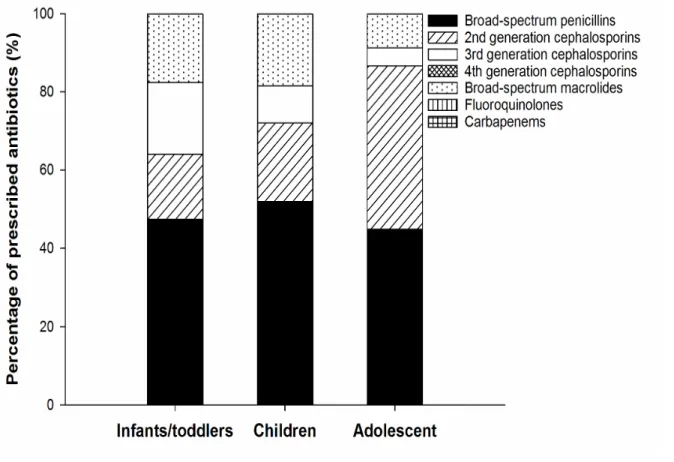
As shown in figure 2 and table 2, broad-spectrum penicillins were prescribed most frequently for younger patients (47.4% and 52.0% for infants/toddler and children, respectively). The prescription of third-generation cephalosporins increased as the patient age decreased (4.6%, 9.6% and 18.4% for adolescent, children and infants/toddler, respectively), while the second- generations was prescribed more for adolescents (41.8%) than for infants/toddler (16.7%) or children (20.0%). Broad-spectrum macrolides were prescribed more to younger patients (17.6% for infants/toddler) than adolescent (8.8%).
The prescription rate of broad-spectrum antibiotics among medical institutions was not statistically significant (78.0-87.9%, P
= 0.48; table 2). However, broad-spectrum penicillins were used more frequently in the smaller institutions. Health care providers in the large institutions tended to use second to fourth-generation cephalosporins, with the majority of them being the third- generation, and broad-spectrum macrolides (figure 3 and table 2).
Table 3 and figure 4 shows that only diagnostic conditions and
age groups were independently associated with broad-spectrum antibiotic prescription (P < 0.05). Broad-spectrum antibiotics were more likely to be prescribed for ARTIs for which antibiotics are potentially indicated (OR: 2.36 [95% CI: 1.30-4.27]) and ARTIs for which antibiotics are rarely indicated (OR: 2.17 [95% CI: 1.21- 3.89]), when compared to all other conditions. Infants/toddlers and children were more likely to receive them (OR: 1.96 [95% CI:
1.04-3.71] and OR: 1.82 [95% CI: 1.08-3.06]) than adolescents.
Figure 1. Broad-spectrum antibiotic prescription in Korean paediatrics
Table 2. Prescription of frequently used antibiotics in Korean paediatric outpatients according to age groups and medical institutions
Characteristics Percentage of broad-spectrum antibiotic prescription Percentage of narrow-spectrum antibiotic prescription
Amox/clav Cefaclor Cefpodoxime Clarithromycin Amoxicillin Roxithromycin
Total 38.2 13.0 4.0 11.6 9.9 4.1
Age group
Infants/toddlers 37.9 9.3 7.9 11.7 13.2 2.2
Children 40.9 12.2 3.4 12.9 9.8 4.1
Adolescent 26.0 22.8 0.8 5.4 5.6 7.0
Medical institution
Tertiary hospitals 21.1 5.0 11.8 14.3 3.9 7.4
General hospitals 24.1 5.7 13.6 16.9 5.1 4.6
Hospitals 35.0 10.3 6.9 13.6 11.2 1.9
Primary care clinics
39.4 13.7 3.1 11.2 10.1 4.3
Public health 46.6 10.7 5.1 11.9 6.5 2.1
Characteristics Percentage of broad-spectrum antibiotic prescription Percentage of narrow-spectrum antibiotic prescription
Amox/clav Cefaclor Cefpodoxime Clarithromycin Amoxicillin Roxithromycin centers
Abbreviations: Amox/clav, amoxicillin/clavulanate
Figure 2. Prescribing pattern of broad-spectrum antibiotics for paediatric outpatients by age groups
Figure 3. Prescribing pattern of broad-spectrum antibiotics for paediatric outpatients by medical institutions
Figure 4. Disease-specific broad-spectrum antibiotic prescription in Korean paediatrics
Table 3. Factors associated with the prescription of broad- spectrum antibiotics in paediatric outpatients
Independent variable No. of broad- spectrum antibiotics, thousands (%)
Adjusted OR of broad-spectrum antibiotics (95%
CI)
P value
Age group
Infants/toddlers 11978 (80.8) 1.96 (1.04-3.71)
Children 37052 (80.3) 1.82 (1.08-3.06) 0.04 Adolescent 6457 (66.6) 1.00 (reference)
Medical institution
Tertiary hospitals 519 (78.8) …a General hospitals 2590 (84.4) …a
Hospitals 4350 (81.7) …a 0.48
Primary care clinics
48023 (78.0) …a
Public health centers
6.5 (87.9) …a
Diagnostic condition ARTIs, antibiotics potentially
indicated
19593 (82.8) 2.36 (1.30-4.27)
ARTIs, antibiotics rarely indicated
19988 (79.9) 2.17 (1.21-3.89)
Other respiratory conditions for which antibiotics are not definitely
10049 (76.1) 1.66 (0.88-3.16) 0.02
Independent variable No. of broad- spectrum antibiotics, thousands (%)
Adjusted OR of broad-spectrum antibiotics (95%
CI)
P value
indicated
All other conditions 5858 (66.7) 1.00 (reference) Abbreviations: ARTI, acute respiratory tract infection
a Because medical institutions as an independent variable were not nominally associated (P ³ 0.05), the adjusted OR of broad-spectrum antibiotic use was not calculated.
3.3. Antibiotic prescribing patterns and its potential appropriateness in ARTI
Among ARTI, the leading diagnoses accounting for antibiotic prescription in paediatrics were ALRI (43.9%) and AURI (37.6%;
figure 5).
The rate of antibiotic prescription was greater in younger paediatric population than adolescent, compared to the size of the population. The proportion of antibiotics for ARTI was 75.9% for 1-year old infants compared to 43.0% for 17-year old adolescents (figure 6).
As shown in figure 7, younger patients were prescribed antibiotics mainly for ALRI (45.0% and 44.8% for infants/toddlers and children, respectively), while for adolescents antibiotics were prescribed for AURI (55.8%). The antibiotic prescriptions for AOM were higher for the younger patients, so the prescription accounts for 19.9% and 10.7% for infants/toddlers and children, respectively.
Among the medical institutions (figure 8), healthcare providers in hospitals and primary care clinics used antibiotics mainly for ALRI (roughly 48%) and AURI (roughly 33%). In tertiary hospitals, antibiotics were prescribed mainly for pneumonia (40.7%).
An estimated prescription rate for ARTIs for which antibiotics are potentially indicated was 87.1%, while that for ARTIs for which antibiotics are rarely indicated was 57.7% (table 4). More than one
antibiotic was prescribed per outpatient visit for the bacterial pneumonia and AOM.
Table 5 shows that a proportion of prescribed antibiotics for ARTIs for which antibiotics are rarely indicated (51.4%) was similar to that for ARTIs for which antibiotics are potentially indicated (48.6%). The paediatrics with AURIs were given mainly amoxicillin/clavulanate although its appropriateness was not determined in acute pharyngitis/tonsillitis. Clarithromycin was also used for acute sinusitis (9.7%), which it is not recommended.
Paediatrics having pneumonia by a specific pathogen were also prescribed broad-spectrum antibiotics although narrow-spectrum amoxicillin provides appropriate coverage. Among ARTIs, the antibiotics were most frequently prescribed for paediatrics with acute bronchitis, the antibiotic-unindicated disease (35.9%).
Amoxicillin/clavulanate (47.4% for nasopharyngitis) and clarithromycin (21.0% for bronchiolitis) were the most improperly prescribed antibiotics. The amoxicillin use in ARTIs for which antibiotics are potentially indicated (9.9%) was not significantly different from that in ARTIs for which antibiotics are rarely indicated (9.5%, P = 0.98; data not shown).
Table 6 shows that the adherence rate of antibiotic prescriptions to the national clinical guidelines was relatively high for sinusitis (58.8%) and AOM (65.0%), while that for tonsillitis was only 8.2%. As the European APQI, the percentage of children
prescribed antibiotics for URTI (35.1%), tonsillitis (81.8%) or AOM (95.7%) stayed significantly above than the range proposed by the ESAC. Moreover, the proportion of recommended prescriptions for URTI (< 0.1%), tonsillitis (< 0.1%) or AOM (13.4%) were significantly lower than the acceptable range. The prescription of quinolones was within the acceptable range (< 0.1%).
Figure 5. Acute respiratory tract infections accounting for antibiotic prescription in paediatric outpatients.
Abbreviations: AURI, acute upper respiratory infection (J00-J06); influenza (J09-J11); pneumonia (J12-J18); ALRI, other acute lower respiratory infection (J20-J22); AOM, acute otitis media (H650, H651, H660)
Figure 6. Age-specific trend of population and prescribed antibiotics in paediatric outpatients. Abbreviations: ARTI, acute respiratory tract infection
Figure 7. Distribution of acute respiratory diseases accounting for antibiotic prescription by age groups; ALRI, acute lower respiratory infection; AOM, acute otitis media.
Figure 8. Distribution of acute respiratory diseases accounting for antibiotic prescription by medical institutions.
Abbreviations: AURI, acute upper respiratory infection; ALRI, acute lower respiratory infection; AOM, acute otitis
Table 4. Antibiotic prescription for paediatric outpatients with acute respiratory tract infections
Diagnostic condition (ICD-10 code)
Estimated No. of outpatient visits, thousands
No. of antibiotic prescriptions, thousands (estimated %)
No. of broad- spectrum antibiotic prescriptions, thousands (%) Antibiotic-
indicated ARTIs
27150 23656 (87.1) 19593 (82.8)
Acute sinusitis (J01)
7361 6884 (93.5) 5784 (84.0)
Acute pharyngitis (J02)
5233 2109 (40.3) 1673 (79.3)
Acute tonsillitis (J03)
7209 5738 (79.6) 4661 (81.2)
Pneumonia due to S. pneumoniae (J13)
9 9 (101.8) 8 (92.3)
Pneumonia due to H. influenzae (J14)
4 4 (104.8) 4 (91.4)
Other bacterial pneumonia (J15- J18)
2262 2757 (121.9) 2342 (84.9)
Acute otitis media (H650/H661/H659)
5073 6156 (121.3) 5122 (83.2)
Diagnostic condition (ICD-10 code)
Estimated No. of outpatient visits, thousands
No. of antibiotic prescriptions, thousands (estimated %)
No. of broad- spectrum antibiotic prescriptions, thousands (%) Antibiotic-
unindicated ARTIs
43375 25014 (57.7) 19988 (79.9)
Acute
nasopharyngitis (J00)
4428 526 (11.9) 402 (76.5)
Acute laryngitis/
tracheitis (J04- J05)
2500 1315 (52.6) 1027 (78.1)
Other AURI (J06) 6546 1736 (26.5) 1332 (76.7) Influenza (J09-
J11)
154 45 (29.4) 37 (81.4)
Viral pneumonia (J12)
43 27 (61.7) 22 (83.1)
Acute bronchitis (J20)
24425 17466 (71.5) 13942 (79.8)
Acute bronchiolitis (J21)
4280 3101 (72.4) 2585 (83.4)
Other ALRI (J22) 998 798 (80.0) 641 (80.3)
Table 5. Antibiotic prescription and its potential appropriateness for paediatric outpatients with acute respiratory tract infections
Diagnostic condition (ICD-10 code)
No. of antibiotic prescriptions, thousands (%)
Appropriateness of the top 3 antibiotics for the
condition Top 3
antibiotics (%)
Appropri -ateness Antibiotic-indicated
ARTIs
23656 (48.6)
Acute sinusitis (J01)
6884 (14.1) Amox/clav (58.8)
R
Amoxicillin (9.8)
R
Clarithromycin (9.7)
N/R
Acute pharyngitis/
tonsillitis (J02- J03)
7846 (16.1) Amox/clav (47.5)
N/D
Cefaclor (17.0)
N/D
Amoxicillin (9.0)
R
Pneumonia due to S. pneumoniae (J13)
9 (< 0.1) Cefaclor (48.4)
R
Amox/clav (18.5)
N/D
Clarithromycin (17.7)
N/D
Diagnostic condition (ICD-10 code)
No. of antibiotic prescriptions, thousands (%)
Appropriateness of the top 3 antibiotics for the
condition Top 3
antibiotics (%)
Appropri -ateness Pneumonia due to
H. influenzae (J14)
4 (< 0.1) Amox/clav (40.2)
R
Cefaclor (34.2)
N/D
Clarithromycin (9.5)
N/D
Other bacterial pneumonia (J15- J18)
2757 (5.7) Clarithromycin (30.1)
R
Amox/clav (23.2)
R
Azithromycin (8.0)
R
Acute otitis media (H650·H661·
H659)
6156 (12.6) Amox/clav (51.7)
R
Amoxicillin (13.3)
R
Cefpodoxime (9.1)
R
Antibiotic-
unindicated ARTIs
25014 (51.4)
Acute
nasopharyngitis (J00)
526 (1.1) Amox/clav (47.4)
N/R
Amoxicillin (13.3)
N/R
Diagnostic condition (ICD-10 code)
No. of antibiotic prescriptions, thousands (%)
Appropriateness of the top 3 antibiotics for the
condition Top 3
antibiotics (%)
Appropri -ateness Cefaclor
(10.8)
N/R
Acute
laryngitis/tracheiti s (J04-J05)
1315 (2.7) Amox/clav (41.2)
N/R
Cefaclor (16.1)
N/R
Clarithromycin (10.8)
N/R
Other AURI (J06) 1736 (3.6) Amox/clav (44.4)
N/R
Cefaclor (14.6)
N/R
Amoxicillin (12.0)
N/R
Influenza (J09- J11)
45 (0.1) Amox/clav (38.5)
N/R
Cefaclor (13.5)
N/R
Clarithromycin (12.0)
N/R
Viral pneumonia (J12)
27 (0.1) Clarithromycin (19.9)
N/R
Amox/clav (16.7)
N/R
Diagnostic condition (ICD-10 code)
No. of antibiotic prescriptions, thousands (%)
Appropriateness of the top 3 antibiotics for the
condition Top 3
antibiotics (%)
Appropri -ateness Cefixime
(14.8)
N/R
Acute bronchitis (J20)
17466 (35.9) Amox/clav (38.3)
N/R
Clarithromycin (16.8)
N/R
Cefaclor (11.9)
N/R
Acute
bronchiolitis (J21)
3101 (6.4) Amox/clav (32.0)
N/R
Clarithromycin (21.0)
N/R
Cefaclor (11.9)
N/R
Other ALRI (J22) 798 (1.6) Amox/clav (45.5)
N/R
Clarithromycin (13.6)
N/R
Cefaclor (13.3)
N/R
Abbreviations: ARTI, acute respiratory tract infection; AURI, acute upper respiratory infection; ALRI, acute lower respiratory infection; Amox/clav, amoxicillin/clavulanate; R, recommended; N/R, not recommended; N/D, not defined
Table 6. Antibiotic prescription for Korean paediatric outpatients with acute respiratory tract infections
Diagnostic condition (ICD- 10 code)
National clinical practice guidelines
European antibiotic
prescribing quality indicators (APQI)
Percentage of recommended antibiotic prescription
Percentage of recommended antibiotic prescription
Percentage of quinolone prescription
Acute sinusitis (J01)
58.8 a - -
Acute upper respiratory infection (J00×J02×J06)
- < 0.1d < 0.1f
Acute tonsillitis (J03)
8.2 b < 0.1d < 0.1f
Acute otitis media (H650·
H661·H659)
65.0c 13.4e < 0.1f
a The clinical practice guidelines recommended amoxicillin/clavulanate for the treatment of acute sinusitis in paediatric patients.
b The clinical practice guideline recommended penicillin V or amoxicillin for the treatment of acute tonsillitis in paediatric patients.
c The clinical practice guideline recommended amoxicillin with or without
patients.
d The recommended antibiotics for paediatrics with acute upper respiratory infections or acute tonsillitis were beta-lactamase sensitive penicillins (J01CE) with the acceptable range of 80-100% as the European APQI.
e The recommended antibiotics for paediatrics with AOM were penicillins with extended spectrum (J01CA) or beta-lactamase sensitive penicillins (J01CE) with the acceptable range of 80-100% as the European APQI.
f The acceptable percentage of quinolone prescription in paediatrics with acute upper respiratory infections, acute tonsillitis or AOM was 0-5% as the European APQI.
Chapter 4.Discussion
To the best of our knowledge, this is the first study of overall antibiotic prescribing patterns, focusing on broad-spectrum antibiotics and evaluating their potential appropriateness in the whole paediatric outpatients in Eastern Asian countries hopping to reduce its misuse in paediatrics.
In our study, the number of antibiotic prescriptions per 1000 Korean paediatric outpatients was 8984 in a year, similar to results from the Korean paediatric sample data.[14] This exceeds that in the United States (592 prescriptions) and the United Kingdom (537 prescriptions).[5, 31] As the above statistics show, stringent efforts are needed to reduce unnecessary antibiotic use in Korean pediatric populations.
The inappropriate use of broad-spectrum antibiotics in paediatrics continues to be a major concern, in spite of little evidence that they provide greater therapeutic benefit than narrow spectrum antibiotics.[32] The prescription rate of amoxicillin for acute pharyngitis/tonsillitis was only 9.0% in Korean paediatrics.
This study showed that 78.5% of the antibiotics in Korean paediatric outpatients were broad-spectrum. The use was more frequent than that of other developed countries such as the United States (50%) or Germany (63%).[7, 33] Several valid features regarding broad-spectrum antibiotics were observed in this study.
First, the use was significantly greater in younger patients.
Similar trends were shown in other studies, although age classification varied.[4, 7] This finding is likely due to the entry of toddlers or children into the community setting such as daycare centers or kindergarten which increases exposure to causative pathogens.[2] The insufficient time for performing microbiological tests in ambulatory settings might contribute to physicians pursuing the broad-spectrum antibiotics.[34] The early exposure of young children to broad-spectrum antibiotics is problematic, because they represent a large reservoir for resistant organisms.
Second, the most widely prescribed antibiotics in Korean paediatrics were broad-spectrum beta-lactams, among which the broad-spectrum penicillins outnumbered second to fourth- generation cephalosporins as many as 1.5 times. The use of amoxicillin/clavulanate was significantly high in Korea compared to the other OECD countries in which amoxicillin was used most frequently.[1, 4, 33] This might be due to the increasing prevalence of beta-lactamase producing pathogens in Korea.[26] Moreover, high drug resistance of S. pneumoniae in Korean paediatrics (42.3%) compared to the United States (4.2%) or Europe (< 10%) might contribute to its prescription.[26, 35-37]
Third, the use of third-generation cephalosporins and broad- spectrum macrolides increased as patient age decreased, which was similar to other countries.[4, 6] These were used more often in the
large-sized institutions probably due to the higher severe infectious diseases in these centers. The clinical practice guidelines from the United States or Europe recommended that oral broad- spectrum cephalosporins and macrolides not be used due to S.
pneumoniae resistance.[24, 27] However, this is still controversial within the Korean guidelines.[26, 28]
The antibiotics were prescribed almost twice as often as expected for the paediatric ARTIs even in developed countries.[38]
In this study, the use for ambulatory paediatrics was highest for ARTIs, similar to usage in other OECD countries.[7, 33] Paediatrics in the United States were prescribed antibiotics mainly for AOM¸ a well-known appropriate disease for the prescription, but an increasing use of broad-spectrum antibiotics and higher rates of treatment failures observed with them is still problematic.[24, 38, 39] Korean paediatrics were mainly prescribed amoxicillin/
clavulanate for AOM although it was recommended as the second- line agent in the Korean guideline.[26]
Among ARTIs, a relatively low proportion of antibiotics was prescribed for representative viral infections such as the common cold or influenza. However, viral ALRIs, such as acute bronchitis, were still a primary driver of outpatient visit and inappropriate antibiotic use in Korean paediatrics, similar to findings for the entire Korean population.[9] In developed countries, the outpatient visit rate for acute bronchitis was low, however antibiotics were
frequently prescribed.[4, 38] Therefore, global multifaceted approaches such as the development of guidelines or educational campaigns for the appropriate management of viral ALRIs could contribute to the decrease of overall antibiotic use in paediatrics.[6]
To improve the drug safety in Korean paediatrics, the strategies should be made to prompte the appropriate drug in paediatrics and to strengthen the drug review for paediatrics. The related policies, researches and education should be improved as shown in figure 9.
There were some limitations that might affect the interpretation of our study. First, since we passively received the national reimbursement data, several factors such as diagnosis code might be missing or possibly misclassified, leading to an underestimation of potentially inappropriate antibiotic use. Second, it was impossible to quantify daily doses from the given data due to the discrepancy between prescribed quantity of medicine and actual dosing instructions. Finally, we were not able to identify whether the patient’s visit was an initial or a follow-up visit, and only a small amount of data was available for understanding the actual circumstance for prescribing the agent in the population.
In conclusion, antibiotic prescriptions for Korean paediatric outpatients are elevated, especially for broad-spectrum antibiotics for younger patients and for acute respiratory diseases regardless of appropriateness. Moreover, a significant number of antibiotics were used for ARTIs for which antibiotics are rarely indicated. The
antibiotic overuse and misuse is a global crisis,[40] but this study found that it was more serious for paediatric outpatients in Korea where few policies or antimicrobial stewardship programs have been applied, and few researches have been carried out to promote the appropriate use of antibiotics.
Figure 9. Strategies for the improvement of drug safety in Korean paediatrics
References
1. Clavenna A, Bonati M. Differences in antibiotic prescribing in paediatric outpatients. Arch Dis Child 2011;96(6):590-5.
2. de Hoog ML, Venekamp RP, van der Ent CK, et al. Impact of early daycare on healthcare resource use related to upper respiratory tract infections during childhood: prospective WHISTLER cohort study. BMC Med 2014;12:107-14.
3. Costelloe C, Metcalfe C, Lovering A, Mant D, Hay AD. Effect of antibiotic prescribing in primary care on antimicrobial resistance in individual patients: systematic review and meta- analysis. BMJ 2010;340(2):2096-96.
4. LE, Kleinman KP, Raebel MA, et al. Recent trends in outpatient antibiotic use in children. Pediatrics 2014;133(3):375-85.
5. Schneider-Lindner V, Quach C, Hanley JA, Suissa S. Secular trends of antibacterial prescribing in UK paediatric primary care. J Antimicrob Chemother. 2011;66(2):424-33.
6. Marra F, Patrick DM, Chong M, Bowie WR. Antibiotic use among children in British Columbia, Canada. J Antimicrob Chemother. 2006;58(4):830-9.
7. Hersh AL, Shapiro DJ, Pavia AT, Shah SS. Antibiotic Prescribing in Ambulatory Pediatrics in the United States.
Pediatrics 2011;128(6):1053-61.
8. Wang J, Wang P, Wang X, Zheng Y, Xiao Y. Use and
prescription of antibiotics in primary health care settings in China. JAMA Intern Med 2014;174(12):1914-20.
9. Sohn HS, Oh OH, Kwon JW, Lee YS. Higher systemic antibiotic consumption in a population of South Korea (2008 - 2009).
Int J Clin Pharmacol Ther. 2013;51(7):585-92.
10. Higashi T, Fukuhara S. Antibiotic Prescriptions for Upper Respiratory Tract Infection in Japan. Intern Med 2009;48(16):1369-75.
11. OECD, Health at a Glance 2011: OECD Indicators, OECD Publishing. 2011. http://dx.doi.org/10.1787/health_glance- 2011-en (accessed 30 Dec 2015).
12. Shin SM, Shin JY, Kim MH, Lee SH, Choi S, Park BJ.
Prevalence of antibiotic use for pediatric acute upper respiratory tract infections in Korea. J Korean Med Sci 2015;30(5):617-24.
13. Adriaenssens N, Coenen S, Tonkin-Crine S, Verheij TJ, Little P, Goossens H. European Surveillance of Antimicrobial Consumption (ESAC): disease-specific quality indicators for outpatient antibiotic prescribing. BMJ Qual Saf 2011;20:764- 72.
14. Shin JY, Kim MH, Shin SM, Lee SH, Park BJ. Dramatic decrease in fluoroquinolones in the pediatric population in Korea. Pharmacoepidemiol Drug Saf 2014;23(12):1320-24.
15. Korean Food and Drug Administration. Regulation on
Classification Code of Medicinal Products (Regulation No. 237).
http://www.mfds.go.kr/index/; 2011 (accessed 30 Dec 2015).
16. WHO Collaborating Centre for Drug Statistics Methodology, Oslo, Norway. http://www.whocc.no/atc_ddd_index (accessed 31 July 2016).
17. Micromedex® 2.0, (electronic version). Truven Health Analytics, Greenwood Village, Colorado, USA.
http://www.micromedexsolutions.com (accessed 31 July 2016).
18. Yamaguchi K, Ohno A, Takahashi S, et al. In vitro antibacterial activities of cefteram and other beta-lactam agents against recent clinical isolates. Jpn J Antibiot 1998;51(1):11-25.
19. Abuin S, Codony R, Compano R, Granados M, Prat MD.
Analysis of macrolide antibiotics in river water by solid-phase extraction and liquid chromatography-mass spectrometry. J Chromatogr A 2006;1114(1):73-81.
20. Steinman MA, Landefeld CS, Gonzales R. Predictors of broad- spectrum antibiotic prescribing for acute respiratory tract infections in adult primary care. JAMA 2003;289(6):719-25.
21. International Conference on Harmonisation. ICH Harmonised tripartite guideline E11: clinical investigation of medicinal products in the pediatric population. 2000.
http://www.ich.org/products/guidelines/efficacy/efficacy- single/article/clinical-investigation-of-medicinal-products-
in-the-pediatric-population.html (accessed 30 Dec 2015).
22. Ministry of Health and Welfare. Korean Medical Service Act (Act No. 10387).
http://law.go.kr/engLsSc.do?menuId=0&subMenu=5&query=
#liBgcolor7/;2011 (accessed 30 Dec 2015).
23. Ministry of Government Administration and Home Affairs.
Population census data.
http://rcps.egov.go.kr:8081/jsp/stat/ppl_stat_jf.jsp/; 2011 (accessed 30 Dec 2015).
24. Hersh AL, Jackson MA, Hicks LA. Principles of judicious antibiotic prescribing for upper respiratory tract infections in pediatrics. Pediatrics 2013;132(6):1146-54.
25. O’Sullivan DP, O’Mahony D, Parsons C, et al. A Prevalence Study of Potentially Inappropriate Prescribing in Irish Long- Term Care Residents. Drugs Aging 2013;30(1):39-49.
26. The Korean Otologic Society. Korean clincial practice guideline: otitis media in children 2014.
http://www.guideline.or.kr/guideline/guide/guide_renew.php/;
2014 (accessed 30 Dec 2015).
27. Chow AW, Benninger MS, Brook I, et al. IDSA clinical practice guideline for acute bacterial rhinosinusitis in children and adults. Clin Infect Dis 2012;54(8):72-112.
28. The Korean Rhinologic Society. Treatment guidelines for rhinosinusitis.
http://www.guideline.or.kr/guideline/guide/guide_renew.php/;
2005 (accessed 30 Dec 2015).
29. Shulman ST, Bisno AL, Clegg HW, et al. Clinical practice guideline for the diagnosis and management of group A streptococcal pharyngitis: 2012 update by the Infectious Diseases Society of America. Clin Infect Dis 2012;55(10):1279-82.
30. Bradley JS, Byington CL, Shah SS, et al. The management of community-acquired pneumonia in infants and children older than 3 months of age: clinical practice guidelines by the Pediatric Infectious Diseases Society and the Infectious Diseases Society of America. Clin Infect Dis 2011;53(7):25- 76.
31. Centers for Disease Control and Prevention. Office-related antibiotic prescribing for persons aged ≤ 14 years - United States, 1993–1994 to 2007–2008. The Morbidity and Mortality Weekly Report (MMWR), 2011:1153-85.
http://www.cdc.gov/nchs/ahcd/ahcd_scope.htm#namcs_scope (accessed 30 Dec 2015).
32. Williams DJ, Hall M, Shah SS, et al. Narrow vs broad- spectrum antimicrobial therapy for children hospitalized with pneumonia. Pediatrics 2013;132(5):1141-8.
33. Holstiege J, Garbe E. Systemic antibiotic use among children and adolescents in Germany: a population-based study. Eur J
Pediatr 2013;172(6):787-95.
34. Ceyhan M, Yildirim I, Ecevit C, et al. Inappropriate antimicrobial use in Turkish pediatric hospitals: A multicenter point prevalence survey. Int J Infect Dis. 2010;14(1):e55-e61.
35. Centers for Disease Control and Prevention. Active Bacterial Core Surveillance (ABCs) report, Emerging Infections Program Network, Streptococcus pneumoniae, 2011.
http://www.cdc.gov/abcs/reports-
findings/survreports/spneu11.pdf/; 2013 (accessed 30 Dec 2015).
36. Cho EY, Lee H, Choi EH, et al. Serotype distribution and antibiotic resistance of Streptococcus pneumoniae isolated from invasive infections after optional use of the 7-valent conjugate vaccine in Korea, 2006–2010. Diagn Microbiol Infect Dis. 2014;78(4):481-86.
37. European Centre for Disease Prevention and Control.
Antimicrobial resistance surveillance in europe 2012: annual report of the European Antimicrobial Resistance Surveillance Network (EARS-Net), 2013.
http://ecdc.europa.eu/en/publications/Publications/antimicrobial -resistance-surveillance-europe-2012.pdf/; 2013 (accessed 30 Dec 2015).
38. Kronman MP, Zhou C, Mangione-Smith R. Bacterial prevalence and antimicrobial prescribing trends for acute
respiratory tract infections. Pediatrics 2014;134(4):956-65.
39. McGrath LJ, Becker-Dreps S, Pate V, Brookhart MA. Trends in antibiotic treatment of acute otitis media and treatment failure in children, 2000-2011. PLoS One 2013;8(12):e81210.
40. Bell M. Antibiotic misuse: a global crisis. JAMA Intern Med 2014;174(12):1920-1.
국문초록
국내 소아청소년 외래환자에서 항생제 사용 적절성 분석
송 윤 경 약학과, 예방‧ 임상‧ 사회약학 전공 서울대학교 대학원
1. 서론
소아는 생리적으로 급변하는 시기이므로 연령과 성장 발달 정도에 따라 약물 투여에 대한 반응이 성인과 상이하다. 소아청소년에게 가장 흔히 처방되는 약물인 항생제는 오남용시 항생제 내성균주에 의한 감염증 및 약물이상반응 발현, 불필요한 보건의료비용 지출 등의 문제를 야기한다. 미국, 유럽 등 주요 선진국에서는 항생제 사용에 대한
교육·홍보로 전반적 항생제 사용량이 감소하고 있으나 여전히
소아청소년에의 그 사용은 증가하고 있는 추세이며 주로 광범위
항생제가 처방되고 있는 실정이다. 국내 항생제 오남용에 따른 내성균 증가 속도는 세계적으로 유례가 없을 만큼 빠르다. 국내 외래환자에서
항생제 처방률은 의약분업 시행 후 다소 감소하였지만 OECD
보건의료자료에 의하면 2009년 국내 항생제 사용량은 26.9
DDD/1000인/일로 OECD 평균(21.1 DDD/1000인/일)에 비해 높았으며 항생제 사용량에 대하여 OECD 국가 34개국 중 6위를 차지하였다.
특히 성인보다 소아‧청소년에게 항생제가 더 높은 비율로 처방되고
있어 항생제 처방율이 가장 높은 급성 상기도 감염증에서 국내 0- 9세의 소아에 대한 그 처방율이 다른 연령대에 비해 3-4배 정도 높게 나타났다
주요 선진국에서는 지역별 또는 국가적으로 소아‧청소년에서
항생제 사용에 대한 연구를 수행하여 이상과 같은 항생제 사용에 대한 올바른 가이드라인을 제시하였다. 그러나 항생제 내성율과 그 양상 및
1차 항생제 선택은 국가별로 상이하므로, 국내 소아‧청소년 환자에서의
항생제 처방률 감소 및 올바른 항생제 사용을 유도하기 위해 연령별, 요양기관별, 진단명별로 항생제 사용양상에 대한 정확한 자료가 필요한
실정이다. 또한 국내 소아‧청소년 환자에서 약물 사용 양상 분석을
통해 소아‧청소년에서 약물 사용의 적절성 평가가 필요하다.
이에 본 연구는 건강보험심사평가원 청구자료를 활용한 후향적
임상연구를 통하여 국내 소아‧청소년 외래환자에서 항생제 사용양상을
제형별, 성별, 연령별, 요양기관별, 질환별로 조사‧분석하고 급성 호흡기계 감염증에서의 항생제 처방 현황 분석 및 그 적절성 평가를 수행하고자 한다.
2. 연구방법
건강보험심사평가원 청구자료의 진료일을 기준으로 2011년 1월 1일 ~ 2011년 12월 31일까지 총 1개 년도의 상급종합병원, 종합병원,
병원, 의원 및 보건소에서 항생제를 처방받은 만 18세 미만의
소아‧청소년 외래환자의 청구자료를 자료원으로 사용하였다. 처방된
항생제는 「약제급여목록 및 급여상한금액표(보건복지부 고시 제2012-
143호)」에서 분류번호가 ‘610. 항생물질제제’ 및 ‘620.
화학료법제’에 해당하는 성분 중 WHO의 ATC (Anatomical
Therapeutic Chemical) 분류체계 ‘J01. Antibacterials for systemic use’에 해당하는 약물만을 연구대상으로 하였다. ATC 코드 중분류를 기준으로 broad-spectrum penicillins (antipseudomonal penicillins with extended spectrum such as piperacillin (J01CA12), ticarcillin (J01CA13) 및 combinations of penicillins, including beta-lactamase inhibitors (J01CR)), second to fourth-generation cephalosporins (J01DC, J01DD, J01DE), carbapenems (J01DH), broad-spectrum macrolides (azithromycin (J01FA10), clarithromycin (J01FA09)) 및 fluoroquinolones (J01MA) 항생제를 광범위 항생제로 구분하였고,
그 외의 항생제는 좁은 범위 항생제로 구분하여 분석하였다. 동
연구계획서는 서울대학교 생명윤리심의위원회의 심의를 통과하였다.
소아청소년 외래환자에서 항생제 사용현황을 연령별로 분석하기 위하여 International Conference on Harmonisation (ICH) 기준에 따라 영유아(0-23개월), 어린이(2-11세), 청소년(12-17세)으로 하여 분석하였다. 요양기관별로 분석하기 위하여 「의료법(법률 제10609호,
2011.4.28.)」의 기준에 따라 상급종합병원(≥20개 진료과목),
종합병원(≥100개 병상 및 ≥7개 진료과목), 병원(≥30개 병상),
의원(주로 외래환자를 대상으로 하는 의료기관) 및 보건기관으로 구분하였다. 동 연구에서는 질환별 항생제 처방현황을 분석하기 위하여
요양기관 방문시에 진단된 주상병만을 분석대상으로 하였다.
데이터베이스의 명세서일반내역(200) 및 수진자 상병내역(400)의
상병코드는 한국표준질병-사인분류(KCD-5)의 상병분류기호로
제시되어 있으며, 이를 동 연구의 분석에 활용하였다.
소아청소년 외래 환자에 대한 광범위 항생제 처방과 관련된
인구학적 및 임상적 요인을 확인하기 위하여 로지스틱 회귀분석을 시행하였다. 분석에 포함된 인구학적 요인과 임상적 요인은 다음과 같다.
이분항 분석시 각 요인과 광범위 항생제 처방간의 상관관계가
명목상으로 나타난 변수(P < 0.05)에 대해서만 로지스틱 회귀분석이 수행되었다. 모든 통계분석은 SAS® 프로그램 version 9.2을 사용하여 수행되었다.
급성 호흡기계 감염증을 급성상기도감염(J00-J06), 인플루엔자 (J09-J11), 폐렴(J12-J18), 급성하기도감염(J20-J22), 급성 중이염 (H650, H651, H660)와 같이 선정하여 소아청소년 외래 환자에서 이들 질환에 대한 총 항생제 처방 현황 및 연령별, 요양기관별 항생제 처방 양상을 분석하였다. 아울러 급성 호흡기계 감염증에 대한 항생제 처방의
적절성을 질환별로 나누어 항생제 사용이 적절한 급성 호흡기계
감염증(급성 부비동염(J01), 급성 인두염/편도염((J02-J03), 폐렴 연쇄구균에 의한 폐렴(J13), 인플루엔자균에 의한 폐렴(J14), 달리 분류되지 않은 세균폐렴(J15-J18), 급성 중이염) 및 항생제 사용이
적절하지 않은 급성 호흡기계 감염증(급성 비인두염(J00), 급성
후두염/기관염/후두개염(J04-J05), 기타 급성 상기도 감염(J06),
인플루엔자(J09-J11), 바이러스폐렴(J12), 급성 기관지염(J20), 급성 세기관지염(J21), 기타 급성 하기도감염(J22))으로 나누어 항생제 처방 현황 및 상위 3개의 다빈도 처방 성분명을 분석하였다.
3. 연구결과
만18세 미만 환자 7,865천명에게 총 70,657천건의 항생제 107개 성분이 처방되었으며, 이는 연간 1,000명의 환자에 대한 8,984건의 처방을 의미하였다. 항생제를 처방받은 소아청소년 연령의 중앙값은
4.0세였다. 연령별로는 어린이에게 연간 약 46백만건(65.3%)의
항생제가 처방되어 가장 많은 비율을 차지하였다. 그러나 연령군별
환자수를 고려하면 영유아에게 가장 많은 비율의 항생제
(16,504건/1,000명)가 처방되었고, 어린이에게의 처방율
(10,665건/1,000명)보다 높은 비율이었다. 아울러 청소년에 비해 영유아 및 어린이에서 항생제 처방율은 각각 약 5배 및 3배 정도 높았다. 요양기관별로는 의원에서의 항생제 처방건수가 각각 87%로 가장 많은 비율을 차지하였다.
항생제가 처방된 만18세 미만 환자의 주상병으로는 급성 호흠기계 질환을 포함하는 호흡기계 질환(J00-J100)이 80%(51,039천건)로 가장 많은 비율을 차지하였으며, 중이염을 포함하는 귀/꼭지돌기의 질환(H60-H96)에의 항생제 처방율도 16%(11,285천건)를 차지하였다.
피부/피부밑조직의 질환(L00-L100), 눈/부속기의 질환(H00-H59) 및 특정 감염성/기생충성 질환(A00-B99)에의 항생제 처방이 연간 전체 항생제 처방 중 각각 약 2-3%를 차지하였다.
국내 전체 만 18세 미만 외래환자에서 광범위 및 좁은범위 항생제 처방율은 각각 1,000명 환자 당 7,055건 및 1,929건으로 광범위
항생제의 처방이 유의하게 높았으며, 이는 전체 항생제 처방에서
78.5%를 차지하였다. 처방된 광범위 항생제 중에서는 amoxicillin/
clavulanate가 전체 항생제 처방의 38.2%로 가장 많이 처방되었으며 cefaclor가 다빈도(13.0%)로 처방되었고, clarithromycin (11.6%)이 처방율이 높았다. 좁은범위 항생제 중에는 amoxicillin이 전체 항생제 처방의 9.9%로 가장 많은 처방을 차지하였고 roxithromycin이 4.1%
처방되었다.
영유아 및 어린이에게는 broad-spectrum penicillins계 항생제가 가장 많이 처방되었으나(각각 47% 및 52%) 청소년에서는 second to fourth-generation cephalosporins가 약 46%로 broad-spectrum penicillins계 항생제(45%)와 유사한 빈도로 처방되었다. 광범위 항생제 중에서 병원, 의원 및 보건기관에서는 broad-spectrum penicillins계
항생제가 각각 45%, 52% 및 58%로 가장 많이 처방되었으나
상급종합병원 및 종합병원에서는 second to fourth-generation cephalosporins계 항생제 처방이 각각 50% 및 47%로 가장 많은 비율을 차지하였다. 또한 broad-spectrum macrolides 계열 항생제도 병원의 규모가 커질수록 많이 처방되는 경향을 보여 상급종합병원, 종합병원 및 병원에서는 그 처방율이 각각 21%, 23% 및 21%를 차지하였다.
로지스틱 회귀분석을 통해 국내 소아청소년 외래 환자의 인구학적,
임상적 요인과 광범위 항생제 처방과의 연관성을 분석한 결과,
요양기관의 차이는 광범위 항생제의 처방에 영향을 주지 않았다(p >
0.05). 연령별로는 청소년에 비해 영유아에서 1.96배(95% 신뢰구간 1.04-3.71), 어린이에서 1.82배(95% 신뢰구간 1.08-3.06) 광범위
항생제 처방의 odds가 높았다. 광범위 항생제는 항생제 처방의
적절성에 관계없이 급성호흡기계 질환에 유의하게 더 많은 비율로 처방되어, 항생제 사용이 적절한 급성 호흡기계감염증에는 2.36배(95%
신뢰구간 1.30-4.27), 그 사용이 적절하지 않은 급성호흡기계
감염증에는 2.17배(95% 신뢰구간 1.21-3.89) 광범위 항생제 처방의 odds가 높았다. 반면 항생제 사용의 적절성이 정의되지 않은 기타 호흡기계 질환의 경우 보정된 OR의 95% 신뢰구간이 1을 포함하고 있어 그 차이가 유의하지 않았다.
모든 연령군에서 급성 상하기도 감염증에 대부분의 항생제가
처방되었으나 영유아 및 소아의 경우 급성 하기도 감염증에의 처방이 더 많은 반면 청소년의 경우 급성 상기도 감염증에의 항생제 처방이 가장
큰 비율을 차지하였다. 또한 청소년에 비해 영유아 및 소아에서
폐렴에의 항생제 처방이 약 2.5배 정도 나타났다. 급성 중이염은 연령이 어릴수록 그 처방율이 급격히 증가하여 영유아에서 항생제 처방율이
어린이 및 청소년에 비해 각각 약 2배 및 4배 정도 높았다.
요양기관별로도 질환별 항생제 처방 양상에 차이가 있었다. 병원 및
의원급에서는 급성 상하기도 감염증이 항생제 처방의 대부분을
차지하였으나 병원의 규모가 커질수록 그 처방율은 감소하였다. 그러나
폐렴의 경우 의원급에서 그 처방율은 4.5%인데 비해 종합전문
병원에서는 전체 급성 호흡기계 질환에 대한 항생제 처방의 40.7%가 폐렴에 대한 처방이었다.
항생제 사용이 적절한 질환(48.6%)에 비해 항생제 사용이
적절하지 않은 호흡기계 질환에서의 항생제 처방율이 51.4%로 높게 나타났다. 급성 상기도 감염증(J00-J06)에 속하는 부비동염(J01), 인두염(J02), 편도염(J03)의 경우 amoxicillin/clavulanate가 약 50%
정도로 가장 많이 처방되었으며 좁은 범위 penicillin 계 항생제인 amoxicillin도 약10%의 처방을 차지하였다. 세균성 폐렴(J13-J18)에
대해서는 원인균에 따라 처방되는 항생제의 종류가 다양하였으나,
원인균이 명확한 폐렴에 대해서도 주로 광범위 항생제가 처방되었다.
항생제 사용이 적절하지 않은 호흡기계 질환에 대해서는 바이러스성 폐렴을 제외하고는 모든 질환에 대해 amoxicillin/clavulanate이 약40%
정도로 가장 다빈도로 처방되었다.
4. 결론
국내 소아청소년 외래 환자에서 전반적으로 광범위 항생제가
과다하게 처방되고 있었으며 이는 연령이 어릴수록 그 처방이 유의하게 증가하였고 호흡기계 질환에서 그 처방율이 높았다. 아울러 항생제 처방이 적절하지 않은 호흡기계 질환(중이염 포함) 및 그 적절성이 정의되지 않은 질환에 항생제가 부적절하고 과다하게 처방되고 있었다.
따라서 국내 소아청소년에서 항생제 처방율을 줄이고 그 적절성을 기하기 위한 국가적 차원의 항생제 관리 노력이 필요하다.
주요어 : 소아청소년 외래환자, 항생제, 연령군, 의료기관, 급성호흡기계 감염증
학 번 : 2009-30467