• 검색 결과가 없습니다.

An Innovative Wind Project on the Development of a 10 MW Class Superconducting Wind Power System Fully Sponsored by KEPCO

N/A
N/A
Protected

Academic year: 2021

Share "An Innovative Wind Project on the Development of a 10 MW Class Superconducting Wind Power System Fully Sponsored by KEPCO"

Copied!
5
0
0

로드 중.... (전체 텍스트 보기)

전체 글

(1)

An Innovative Wind Project on the Development of a 10 MW Class Superconducting Wind Power System Fully Sponsored by KEPCO

Hae-Jin Sung

Changwon National University

1. Introduction

In 2017, the Republic of Korea's new government has announced a new energy shift strategy in order to increase the rate of renewable energy, including offshore wind and a phasing out of nuclear and coal. The announcement was that the renewable energy would curve the 20% of total electricity energy demand by 2030. It means that approximately 65 GW from renewable energy has to be ready to enter into Korean power network.

Therefore, large-scale wind farm is one of the most promising energy sources and should be established in KEPCO transmission network to achieve the target of renewable energy [1].

A floating offshore wind turbine with a superconducting wind power generator is the most innovative proposal to constitute the large-scale and high-capacity wind farm. According to those reasons, KEPCO (Korea Electric Power Corporation) decided to support that proposed development plan with 6 M USD for 3 years [2].

This report describes global trends in superconducting wind generators and introduces an innovative wind project on the development of high-temperature superconducting (HTS) magnet, test facility, offshore floating system, and network connection technologies for 10 MW class wind power system fully supported by KEPCO.

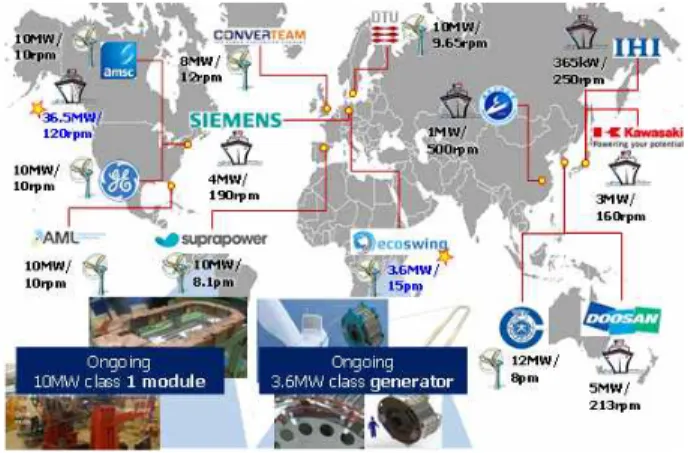
Fig. 1. Global trends of superconducting wind generators.

2. Global trends in

superconducting wind generators Fig. 1 shows the global trends of superconducting wind generators. In most cases, performance evaluation tests of the superconducting motors have been completed. However, in the case of the superconducting generators, the conceptual designs and prototypes are being developed.

SUPRAPOWER project is an EU FP7 program-funded research project, that started in December 2012 and was finished in May 2017.

It aims to provide an important breakthrough in offshore wind industrial solutions by designing an innovative, lightweight, robust, and reliable 10 MW class offshore wind turbine based on an MgB2 superconducting generator [3].

SUPRAPOWER developed a 10 MW

(2)

direct drive AC salient poles synchronous machine. A cryogen-free cooling system in a rotating configuration was designed. It consists of two parts: one modular cryostat per coil and a thermal collector cryostat that links all the modules. The heat is extracted by conduction by two stage G-M cryocoolers, which rotate jointly with the rotor.

EcoSwing has received funding from the European Union’s Horizon 2020 research for 4 years. The EU-funded EcoSwing project aims at demonstrating the world's first superconducting low-cost and lightweight wind turbine drive-train demonstrated on a large-scale wind turbine.

The original wind turbine is a 3.6 MW wind turbine with a 128 m rotor diameter, direct-drive permanent-magnet generator, and full power converter. In the project, the direct-drive permanent-magnet generator has been substituted for a high-temperature superconducting (HTS) generator.

EcoSwing has now ended on schedule.

The generator was successfully installed and connected to the grid. The generator and power converter reached target range +3 MW and operated during more than 650 h. According to schedule, EcoSwing has been switched-off for decommissioning on 25.4.2019 [4].

3. Importance and participants of the KEPCO project

The development of large wind turbines is a topic of great interest for the wind industry. The European Commission recognized the importance of the topic by including the development of efficient and market affordable technology for increasing wind penetration among the

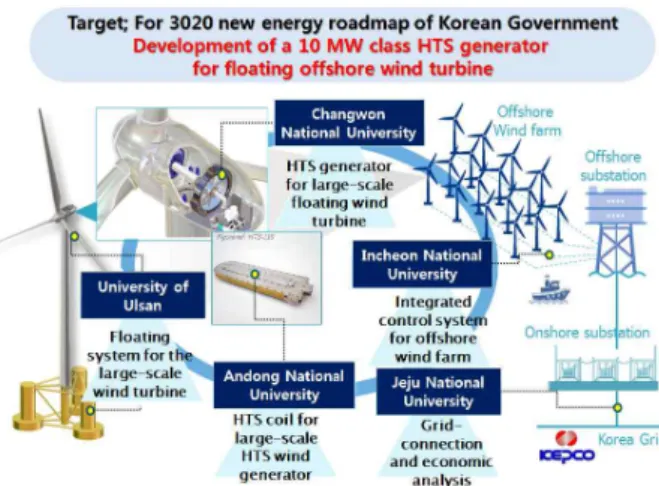
Fig. 2. Research and development objective in the project.

priorities of the H2020 program. In Asia, the governments of the Republic of Korea, China, Japan, Taiwan, Vietnam, and India have taken active steps to expand the wind turbine market and develop [5, 6]. The Republic of Korea’s new government announced a major shift toward renewables, including offshore wind, and a phasing out of nuclear- and coal-generated power in 2017. The announcement was that Korea would have a 20% renewable energy target by 2030. By 2030, the installation of wind power will reach up to 16.5 GW in which 12GW will be offshore wind

power. Furthermore, as

superconducting wind generators dramatically reduce the rare earth requirement (from 100 kg per MW in a conventional PM generator to about 100 grams of rare earth per MW in an HTS generator), economic dependence on countries which exclusively own these resources is avoided [7-15].

The aim of the project is to develop

a floating type offshore wind turbine

platform for 10 MW class large-scale

superconducting wind turbine in Korea

to achieve the renewable energy of

20% until 2030. This can be

achieved by creating turbines with

(3)

large rotor diameter and height, to maximize energy capture. In particular, we focus on ultra-high capacity superconducting wind power generator. The project is for three years and started in early March 2018. In the first year, a floating offshore wind power generation system using the HTS generator is designed, and HTS magnet as rotor pole of the HTS generator will be fabricated in the second year. In the final third year, the characteristics of the HTS magnet at high torque condition will be evaluated.

Total of 5 organizations which are Changwon National University, University of Ulsan, Jeju National University, Incheon National University, and Andong National University, are participating in this project as shown in Fig. 2.

Changwon National University is the lead organization of this project and aims to design the 10 MW HTS generator and to fabricate and test the HTS magnet of the generator.

University of Ulsan conducts analysis and test of a floating system technology for the offshore wind turbine with the HTS generator. In the cases of Jeju National University and Incheon National University, they develop models and grid connection technologies of floating offshore wind farm including the HTS generator. Andong National University analyzes mechanical-electrical characteristics of the HTS wire for the HTS generator and develop element technologies to improve HTS coil design performance.

The detail plans for the HTS generator of the floating offshore wind turbine as bellow;

In the 1

st

year, the 10 MW HTS generator and the module which is one pole including structures and cryostat

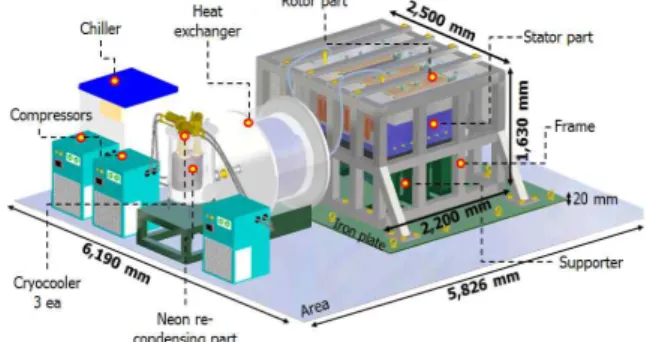
Fig. 3. Conceptual design structure of the PES for 10 MW HTS generator.

of the generator are designed in detail. In the 2

nd

year, the module is manufactured considering winding and insulation methods, cooling system and supports. In the 3

rd

year, the electromagnetic and mechanical characteristics of the manufactured module are measured. We also develop a performance evaluation system (PES) to test the magnet under torque condition as shown in Fig. 3. A major problem in terms of the large-scale HTS generators is the high torque and Lorentz force generated in the HTS coils of the generator. If the same characteristics (such as torque, force, and so on) as the full generator can be applied to the HTS coils through the construction of part of the full generator, the investment cost saving of the HTS generator is possible. The construction can also be used to evaluate and verify the HTS coils before mounting on the full generator. Therefore, we suggested the PES and will manufacture it for three years in the project.

4. Vision and future plan

The primary target of this project is

to design the final 10MW class HTS

(4)

wind generator and to test 3 HTS magnet poles of the generator with very strong torque as same as that between rotor and stator. After completing these target, real feasibility fabrication of HTS wind generator will be occurred after passing the evaluation of the next step. In the case of the floater, the real fabrication projects are already started and a few new big programs regarding offshore floating system are also on the planning stage.

At the next step, the industry related with generator or magnet has to participate the real fabrication project. Now, all participating institutes are universities. In order to move to the real fabrication level, universities only is not making a sense. And also, the fabrication only is not enough, so the full load test has to be carried out with proper rotating speed pattern.

According to the development level of large scale HTS wind generator, there needs at least 3 years to fabricate real scale 10 MW HTS wind generator. After that, the field test is also obviously required more than 2 years. Consequently, after 7 or 8 years, the commercially available HTS wind generator could be ready considering only the technical point of view. However, the industrialization means that both sides not only technically but also economically have to meet the proper requirements.

Technically the HTS magnet should withstand with extremely strong torque on the operation, but the economical remained worry is the price of HTS wire. Considering the width of HTS wire is 12 mm, totally more than 100 km length of wire is required to fabricate 10 MW class wind generator. Due to the recent

price of HTS wire, the benefit;

lightweight and small volume, of HTS wind generator is not enough value to overcome the demerit of fabrication cost. The price of HTS wind generator is not needed to be the same or cheaper price of conventional wind generator since the ultimate advantages of superconductivity.

However several times more expensive than that of the conventional is still unsolved and crucial problem against commercialization.

참고문헌

[1]Energy Ministry of Trade, Industry and Energy, Rep. Korea,

[Online]. Available:

http://english.motie.go.kr/en/pc/p hotonews/bbs/bbsList.do?bbs_cd_n

=1&bbs_seq_n=721

[2]Korea Electric Power Corporation (KEPCO), Rep. Korea, [Online].

A v a i l a b l e :

http://home.kepco.co.kr/kepco/EN/

main.do

[3]Modular, Cryogen-free, "Rotating cryogenic system utilized for 10 MW offshore superconducting wind turbine", SupraPOWER, MT-25, May. (2017)

[4]EcoSwing Project, [Online].

A v a i l a b l e :

https://ecoswing.eu/news-events [5]H. Polinder, F. F. A. van der Pijl,

G-J. de Vilder and P. J. Tavner,

"Comparison of Direct-Drive and Geared Generator Concepts for Wind Turbines," IEEE Trans.

Energy Conversion., vol. 21, pp.

725-733, Sep. (2006)

[6]H. Jung, C. G. Lee, S. C. Hahn

and S. Y. Jung, "Optimal Design

of a Direct-Driven PM Wind

(5)

Generator Aimed at Maximum AEP using Coupled FEA and Parallel Computing GA", Journal of Electrical Engineering &

Technology, vol.3, no.4, pp.552-558 (2008)

[7]A. McDonald, "Structural analysis of low speed, high torque electrical generators for direct drive renewable energy converters", Ph.D. dissertation, School of Engineering & Electronics, University of Edinburgh (2008) [8]N. Maki, T. Takao, S. Fuchino,

H. Hiwasa, M. Hirakawa, K.

Okumura, M. Asada, and R.

Takahashi, "Study of practical applications of HTS synchronous Machines", IEEE Trans.

Supercond., vol. 15, pp.

2166-2169, Jun. (2005)

[9]C. Lewis, and J. Muller, "A Direct Drive Wind Turbine HTS Generator", IEEE. Power Engineering Society General Meeting., pp. 1-8, Jun. (2007) [10]H. Ohsaki, M. Sekino, T. Suzuki,

and Y. Terao, "Design Study of Wind Turbine Generators using Superconducting Coils and Bulks", International Conf. Clean Electrical Power., pp. 479-484, Jun. (2009)

[11]A. B. Abrahamsen, N. Mijatovic, E. Seiler, T. Zirngibl, C. Traeholt, P. B. Norgard, N. F. Pedersen, N.

H. Andersen, and J. Ostergard,

"Superconducting wind turbine generators", Superconductor Science and Technology, vol.23, pp.1-8, Feb. (2010)

[12]C. Lewis, J. Muller, "A Direct Drive Wind Turbine HTS Generator", IEEE Power Engineering Society General Meeting 2007, pp.1-8, (2007) [13]Bang D, Polinder H, Shrestha G,

and Ferreira, "Review of generator systems for direct-drive wind turbines", Proc. 2008 European Wind Energy Conf., [Online].

A v a i l a b l e :

http://proceedings.ewea.org/ewec2 008/.

[14]Sung H, Kim G, Kim K, Jung S, Park M, Yu I, Kim Y, Lee H, and Kim A, "Practical design of a 10MW superconducting wind power generator considering weight issue", IEEE Trans. Appl.

Supercond., vol. 23, pp. 5201805 (2013)

[15]Kalsi S S, "Superconducting wind turbine generator employing MgB2 windings both on rotor and stator", IEEE Trans. Appl.

Supercond., vol.24, pp. 47-53 (2014)

저자이력 성해진(成楷振)

2008-2012년 창원대학교 메 카트로닉스공학부 전기공학과, 2012년-2018년 창원대학교 대학원 전기공학과

현재 창원대학교 차세대전력기

술응용연구센터 선임연구원

수치

Fig. 1. Global trends of superconducting wind generators.
Fig. 2. Research and development objective in the project.
Fig. 3. Conceptual design structure of the PES for 10 MW HTS generator.

참조

관련 문서

It can be generally classified as: metal lead, partially HTS lead (a combination between metal section and HTS section), full HTS lead - then combined with conduction cooled or