JKSCI
A Research Analysis of QR code based on big data in Korea
1)
Eun-ji Lee*, Soo Kyun Kim**
*Lecturer, Global Leadership College, Yonsei University, Seoul, Korea
**Professor, Dept. of Computer Engineering, Jeju National University, Jeju, Korea
[Abstract]
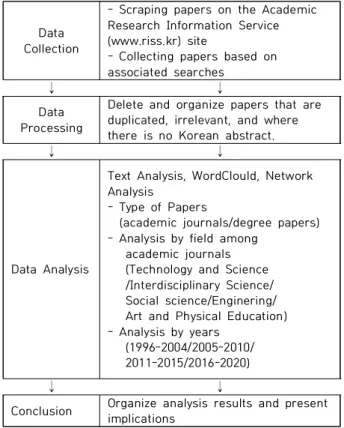
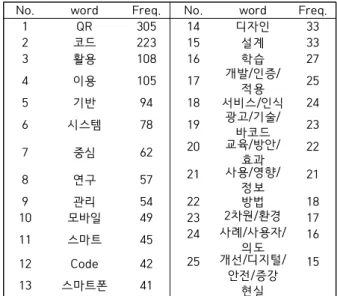
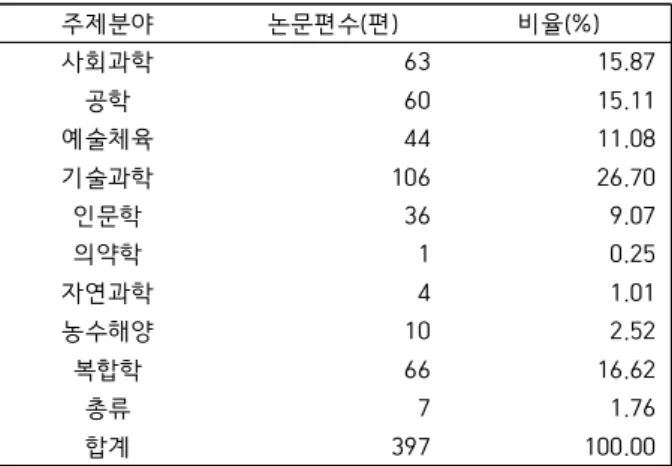
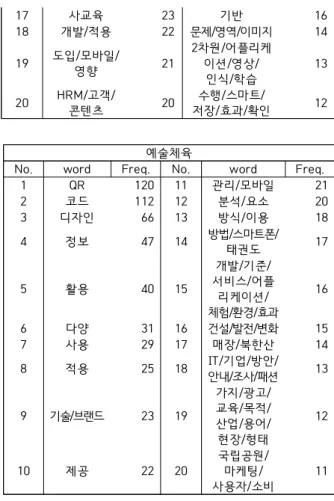
Recently, Information and Communication Technology and SMART Phone Technology have been rapidly developed. According to the increase of data use, the era of big data has come. With the approach of non-contact society, QR Codes are becoming inseparable in our lives. In this paper, we are trying to figure out the implications of QR Code research based on Big Data in Korea. The purpose of this study is to first examine the previous studies on "QR Code" and conduct an analysis on keywords by field using Big Data. Second, for data visualization WordCloud analysis and network analysis are performed on "QR Code" frequent keyword. Third, we would like to present the research direction to future researchers regarding "QR Code". In the results, First of all, research trends showed that research is on the rise and that various fields are being utilized. Second, the results of the analysis of frequent keyword resulted in similar results overall, with some differences depending on the field and year. Third, we found that the visualization results according to the frequent keyword were also analyzed in the same way as the frequent keyword analysis results. The practical implications of the theoretical findings are as follows. First, 'QR Code' needs to be studied as a means of information delivery, not as a technical aspect. Second, it can be seen that "QR Code" is developing reflecting social trends or issues. With both theoretical and practical implications, we are trying to provide the strategic ways of QR-code in future.
▸Key words: Big Data, QR Code, Text Ming, Word Cloud, Network Analysis
∙First Author: Eun-ji Lee, Corresponding Author: Soo Kyun Kim
*Eun-ji Lee ([email protected]), Global Leadership College, Yonsei University
**Soo Kyun Kim ([email protected]), Dept. of Computer Engineering, Jeju National University
∙Received: 2021. 08. 12, Revised: 2021. 09. 15, Accepted: 2021. 09. 15.
Copyright ⓒ 2021 The Korea Society of Computer and Information http://www.ksci.re.kr pISSN:1598-849X | eISSN:2383-9945