Antibacterial and Anti-inflammatory Effects of Essential Oil from the Magnolia kobus Flower
Jae-Yeul Lee1,2, Kwang-Hwan Jhee1 and Seun-Ah Yang3*
1Department of Applied Chemistry, Kumoh National Institute of Technology, Gumi 39177, Korea
2Institute of Natural Science, Keimyung University, Daegu 42601, Korea
3Department of Food Science and Technology, Keimyung University, Daegu 42601, Korea Received February 6, 2020 /Revised March 9, 2020 /Accepted March 9, 2020
Magnolia kobus is known to exert various biological effects, such as antioxidant and hypnotic activity.
In this study, we investigated the antimicrobial and anti-inflammatory activity of M. kobus essential oil extracted using steam distillation. Its antimicrobial activity was tested against Staphylococcus aureus, Escherichia coli, and Pseudomonas aeruginosa by the paper disk diffusion and minimum inhibitory con- centration (MIC) methods. Its anti-inflammatory activity was evaluated by measuring its inhibition ra- tio on the production of nitric oxide (NO) and PGE2 in lipopolysaccharide (LPS)-induced RAW264.7 cells. Its composition was analyzed by gas chromatography–mass spectrometry (GC-MS). The results showed that M. kobus essential oil exhibited excellent antibacterial activity against S. aureus, with a clear zone of 18 mm and an MIC value of 0.25 mg/ml. Its clear zones against P. aeruginosa and E.
coli were 14 mm and 17 mm, respectively, while its MIC values were 1 mg/ml and 0.5 mg/ml, respectively. The essential oil exhibited no cytotoxicity to the RAW264.7 cells at a concentration of 500 μg/ml while showing NO (37.7%) and PGE2 inhibition (24.0%). Its three main fragrance ingredients identified were 3-carene (77.07%), β-elemene (6.92%), and caryphyllene (2.86%). The results suggest that M. kobus essential oil has potential as a cosmetic functional material with antimicrobial and an- ti-inflammatory effects.
Key words : Anti-bacterial activity, anti-inflammation activity, essential oil, Magnolia kobus
*Corresponding author
*Tel : +82-53-580-5117, Fax : +82-53-580-5372
*E-mail : [email protected]
This is an Open-Access article distributed under the terms of the Creative Commons Attribution Non-Commercial License (http://creativecommons.org/licenses/by-nc/3.0) which permits unrestricted non-commercial use, distribution, and reproduction in any medium, provided the original work is properly cited.
Journal of Life Science 2020 Vol. 30. No. 3. 278~284 DOI : https://doi.org/10.5352/JLS.2020.30.3.278
서 론
외부에 노출된 피부는 적합한 세균 발육환경을 조성하여 태생기에는 무균적이었던 피부도 오염원에 의해 각종 세균이 존재하게 되고 이러한 균들은 피부 염증을 유발시키는 원인으 로 작용된다. 연구 보고에서 알려진 피부상재균으로 포도상구 균, 대장균, 녹농균 등이 대표적이며, 생활환경과 불규칙한 생 활 습관 등으로 인해 독성이 강한 물질을 방출함으로써 피부 염증을 초래하게 된다[30]. 또한 피부에 존재하는 피부상재균 은 많은 피부질환을 발생시킨다[5].
염증반응은 대식세포의 활성화에 기인하며, 세균의 외벽을 구성하는 lipopolysaccharide (LPS)를 대식세포 membrane의 toll like receptor 4 (TLR4)의 heterodimerization 형성으로 인 식하고, 세포 내 전사인자 중 nuclear factor-κB (NF-κB)의 활 성화를 유도한다[6]. 세포막 내의 활성화된 NF-κB가 세포 핵
으로 이동하여 염증성 inducible nitric oxide synthase (iNOS) 와 cyclooxygenase-2 (COX-2)의 유전자를 발현하게 되며, 염 증반응지표 물질인 nitric oxide (NO)와 prostaglandin E2
(PGE2)의 합성을 증진시켜 염증반응을 일으키게 된다[22].
피부염증을 최소화하기 위해 다양한 항균제가 개발되어 활 용되고 있다[8, 23]. 그러나 현재의 항균제는 인공적으로 합성 하여 사용되고 있고, 사용농도가 높을수록 효과적이나 목적하 는 기능 외에 피부질환 관련 부작용을 나타내어 안전성 문제 가 대두되고 있다. 또한, 장기간 사용할 경우 돌연변이 및 만성 독성을 유발시킨다는 연구도 있다[11, 18]. 이러한 문제들로 항균제보다 안전성과 부작용이 없는 천연소재를 이용한 천연 항균성 물질에 대한 연구 및 개발이 활발히 진행 중이다[9, 13, 28].
에센셜 오일은 강한 향을 가진 휘발성이 있는 천연 물질로 향이 있는 식물의 2차 대사산물이며 향수, 메이크업 화장품, 천연 약재 등에 이용되고 있다[4]. 또한 에센셜 오일은 우수한 항균력을 가지며[14, 17], 오일의 유효성분은 피부에 침투하여 피부의 노폐물을 제거해주고 피부 노화방지[26], 피부 재생 [12] 등의 효능을 가지고 있다.
목련(Magnolia kobus)은 목련과(Magnoliaceae)에 속하는 낙 엽관목으로서 한국, 일본 등지에 분포하며 주로 관상용으로 재배되고 있다. 목련 꽃은 잎보다 먼저 개화 하며, 꽃잎은 긴
타원형으로 백색이며, 기부는 연한 홍색이고 향기가 있다[20].
목련 꽃은 한방에서 신이(辛夷)라 불리며, 모세혈관 확장[4], 항염증 작용[27], 진통[27], 항균작용[19] 등이 있다고 알려져 있으며, 줄기 부위에서는 항염증[10, 24] 작용이 있다고 알려져 있으나, 목련 에센셜 오일을 이용한 연구보고는 거의 보고되 어 있지 않다. 따라서 본 연구에서는 다양한 기능성을 갖는 목련에서부터 추출된 에센셜 오일의 방향성 성분과 항균 및 항염증 활성을 검토하여 목련 에센셜 오일의 활용 가능성을 확인하고자 한다.
재료 및 방법
실험재료
Sulfanilamide, naphylethylenediamine, [3-(4,5-dimethylth- iazol-2-yl)-5(3-carboxymethonyphenol)-2-(4-sulfophenyl)- 2H-tetrazolium] (MTT), phosphate buffer saline (PBS), LPS, Nω-nitro-L-arginine methyl ester (L-NAME)는 Sigma-aldrich (St. Louis, USA)에서 구입하였으며, sodium nitrate (NaNO3), dimethyl sulfoxide (DMSO), phosphoric acid, agar powder, peptone은 Daejung Chemicals & Metals (Siheung, Korea)에 서 구입하였으며, beef extract는 DB biosciences (New jersey, USA)에서 구입하였으며, PGE2 ELISA kit는 Cayman Chemical Co. (Ann Arbor, USA)에서 구입하였다. 본 실험에 서 사용된 꽃 부위의 목련 에센셜 오일은 ㈜스킨메이트 (Bucheon, Korea)로부터 구매하여 사용하였다.
균 배양
본 연구에 사용된 균은 Staphylococcus. aureus (KCTC 1927), Escherichia coli (KCTC 2571)은 미생물자원센터(KCTC)에서 구입하여 사용하였으며, Pseudomonas aeruginosa (KCCM 11266) 는 한국미생물보존센터(Korean Culture Center of Microor- ganisms, KCCM, Seoul, Korea)에서 구입하여 사용하였다. 모 든 균주는 nutrient broth (0.3% beef extract, 0.5% peptone with distilled water)를 사용하여 shaking incubator (HB-201 SF, Hanbaek scientific technology, Korea)에서 37℃, 180 rpm 조건 하에서 배양, 실험하였다. S. aureus, E. coli, 그리고 P.
aeruginosa를 106 CFU/ml 접종하여 shaking incubator에서 24 시간, 100 rpm의 조건 하에서 배양하고, 다시 106 CFU/ml 접종 후 4시간 동일한 조건에서 배양하여 사용하였다.
항균 활성 측정
목련 에센셜 오일의 항균활성은 paper disk diffusion meth- od를 이용하여 확인하였다[16, 23]. 각 균을 NB agar 배지에 도말 한 후(107 CFU/ml), 멸균된 6 mm paper disk (Advan- tech, Tokyo, Japan)를 배지 위에 위치시키고 각 시료를 10 μl (무게비 1, 2.5, 5, 10 μg)를 가하여 잘 흡수되게 한 후 배양하였
다. 배양 후 디스크 주위의 생육저해환의 지름(mm)을 측정하 여 항균활성을 비교하였다.
항균력의 정량적인 평가를 위하여 최소저해농도(minimum inhibitory concentration, MIC)법으로 최소저해농도를 측정 하였다[3]. 각 균을 1x10⁶ CFU/ml으로 희석하여 test tube에 2 ml를 분주하고, 목련 에센셜 오일의 농도를 10, 25, 50, 100, 250, 500, 1,000, 2,500 및 5,000 μg/ml의 최종농도로 37℃에서 24시간 배양 후, NB agar배지에 도말하여 균의 생육여부를 확인하여 최소저해농도를 정하였다.
세포 배양
본 연구에 사용된 마우스 대식세포(RAW264.7 macrophage cell)는 한국세포주은행(KCLB, Seoul, Korea)에서 분양 받아 사용하였다. RAW264.7 macrophage cell은 dulbeco modified eagle’s medium (Welgene, Korea)에 10% fatal bovine serum (Welgene, Korea) 및 1% penicillin-streptomycin을 첨가하여 사용하였다. 배양 조건은 37℃, 5% CO2 incubator 조건에서 배양 하였으며, 2일 간격으로 계대 배양을 하였다.
세포 생존율 측정
RAW264.7 macrophage cell을 96-well plate에 1×10⁵ cell/
well로 분주하고 37℃, 5% CO2 incubator 조건 하에서 24시간 배양 후, 목련 에센셜 오일(10, 50, 100, 250, 500 μg/ml)을 처리 하였다. 24시간 배양 후, 0.5 mg/ml의 농도로 MTT를 첨가하 여 37℃에서 4시간 동안 반응시킨 후, 상층액을 제거하였다.
생성된 formazan을 DMSO를 이용하여 용해시킨 다음 multi plate reader (VERSAmax, Innotech, Korea)를 이용하여 550 nm에서 흡광도를 측정하여 대조군에 대한 세포 생존율을 백 분율로 표시하였다.
산화질소(Nitric oxide, NO) 생성 측정
목련 에센셜 오일의 항염증 효과를 알아보기 위하여, LPS를 처리하여 염증이 유도 된 대식세포의 NO 생성억제능을 Griess reagent (1% sulfanilamide, 0.1% naphylethylenedi- amine, 2.5 % phosphoric acid with distilled water) 를 이용하 여 측정하였다[8, 15]. 먼저, 96-well plate에 RAW264.7 macro- phage cell을 1×10⁵ cell/well로 분주하고 37℃, 5% CO2 in- cubator 조건 하에서 24시간 배양하였다. 배양된 cell에 LPS를 500 ng/ml의 농도로 희석된 배지로 처리한 후 목련 에센셜 오일(10, 50, 100, 250, 500 μg/ml)을 처리하였다. 24시간 배양 후 상층액 100 μl를 96-well plate에 옮긴 후 Griss regent 100 μl를 첨가하여 10 분간 반응 후, multi-plate reader을 사용하여 540 nm에서 측정하였다. 산화질소 생성양은 NaNO3를 표준 으로 사용하여 검량선을 작성하여 계산하였으며, positive control로 iNOS의 활성을 저해함으로써 NO의 생성을 억제하 는 저해제로 L-NAME (250 μM)을 사용하였다.
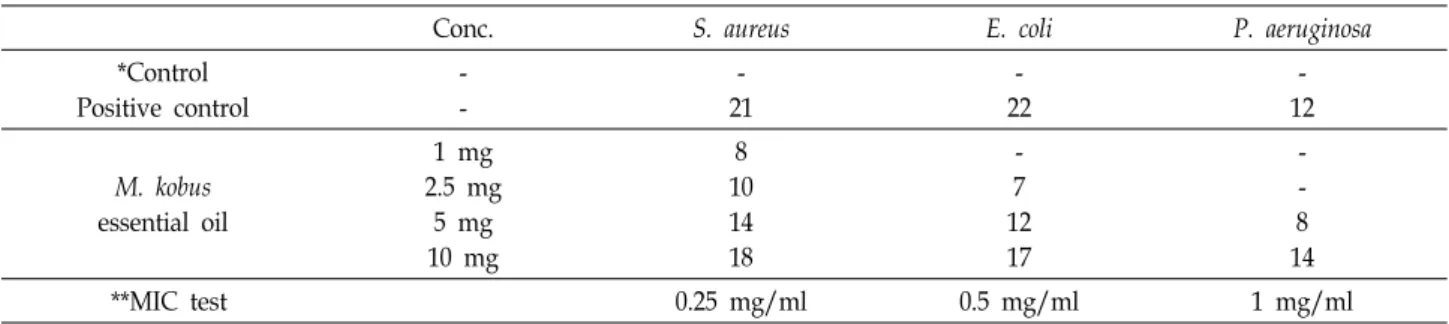
Table 1. Paper disk diffusion method and MIC test of Magnolia kobus essential oil against three strains
(Clear zone diameter: mm)
Conc. S. aureus E. coli P. aeruginosa
*Control Positive control
- -
- 21
- 22
- 12
M. kobus essential oil
1 mg 2.5 mg
5 mg 10 mg
8 10 14 18
- 7 12 17
- - 8 14
**MIC test 0.25 mg/ml 0.5 mg/ml 1 mg/ml
* Control: DMSO, positive control: chloramphenicol (S. aureus, E. coli), 2-phenoxyethanol (P. aeruginosa)
** MIC test: minimum inhibitory concentration test
Fig. 1. Paper disk diffusion method of Mangolia kobus essential oil against each bacteria. (A) S. aureus, (B) E. coli, (C) P. aeruginosa.
The lowercase letters in the figure represent the following: a; control, b; positive control, c; 1 mg, d; 2.5 mg, e; 5 mg, f;
10 mg, respectively. The red circles in the figure indicated the clear zone. Chloramphenicol 0.1 mg was used as a positive for E. coli, S. aureus, and 2-phenoxyethanol 0.1 mg was used for P. aeruginosa, respectively.
PGE2 생성 측정
목련 에센셜 오일의 PGE2의 분비 억제를 효소결합면역반 응법(Enzyme Linked Immunosorbent Assay; ELISA)으로 측 정하였다. 96-well plate에 RAW264.7 macrophage cell을 1×10⁵ cell/well로 분주하고 37℃, 5% CO2 incubator 조건 하 에서 24시간 배양하였다. 배양된 cell에 LPS를 500 ng/ml의 농도로 희석된 배지로 처리한 후 목련 에센셜 오일(10, 50, 100, 250, 500 μg/ml)을 처리하였다. 24시간 배양 후 상층액 50 μl를 PGE2 ELISA kit를 이용하여 PGE2의 양을 측정하였다. PGE2의 양은 PGE2 standard solution를 표준으로 사용하여 검량선을 작성하여 계산하였다.
GC-MS 분석
목련 에센셜 오일의 성분 분석을 위한 gas chromatog- raphy-mass selective detector (GC-MSD) 분석은 Column - DB5MS (0.25 μm X 0.25 mm, 60 m)을 사용하여 실시하였다.
80℃에서 분당 5℃로 승온하고 200℃부터는 분당 10℃로 승온 하여 250℃에서 유지하였다. 시료 주입구 온도는 80℃로 하였 고, carrier 가스는 헬륨을 사용하여 1 ml/min 속도로 흘려 보냈다. GC-MSD로 각 peak의 total ion chromatography (TIC)를 얻은 후 Wiley/NBS library를 사용하여 목련 에센셜
오일의 성분을 분석하였으며, 내부 표준물질로 사용된 n-bu- tyl benzene의 피크 면적을 기준으로 각 성분의 함량을 산출하 였다.
통계학적 분석
본 실험에서 얻어진 결과에 모든 값은 3회 이상의 반복실험 의 측정값의 평균±표준오차로 나타내었으며, 실험 결과 값에 대한 통계적 분석은 Student’s t-test를 이용하여 분석하였으 며, p 값이 0.05 이하이면 유의성이 있다고 판단하였다.
결과 및 고찰
목련 에센셜 오일의 항균활성 측정
목련 에센셜 오일의 항균 활성을 측정하기 위해 paper disk diffusion method와 미생물 최소저해농도법의 결과를 Fig. 1 과 Table 1에 나타내었다. S. aureus에 대한 다양한 농도의 목련 에센셜 오일(1, 2.5, 5, 10 mg)을 처리한 군에서는 각각 8, 10, 14, 18 mm의 생육저지환이 나타났다(Fig. 1A). E. coli에서는 낮은 함량의 목련 에센셜 오일(1 mg)에서 생육저지환이 나타 나지 않았으며, 높은 농도의 목련 에센셜 오일(2.5, 5, 10 mg)을 처리한 군에서 각각 7, 12, 17 mm의 생육저지환이 나타났으며
A
B
C
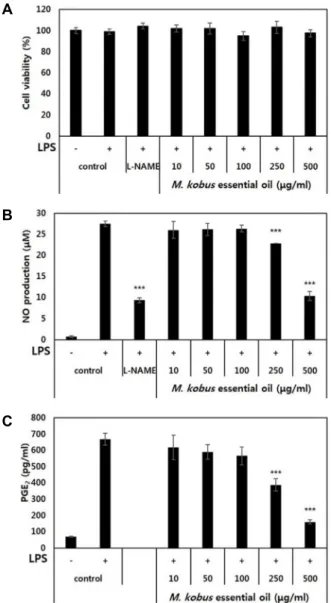
Fig. 2. Anti-inflammatory activity of Magnolia kobus essential oil depends on concentration, (A) cell viability of RAW264.7 macrophage by Magnolia kobus essential oil, (B) nitric ox- ide (NO) production of LPS-stimulated RAW264.7 mac- rophage by Magnolia kobus essential oil, (C) prosta- glandin (PGE2) production of LPS-stimulated RAW264.7 macrophage by Magnolia kobus essential oil. The value represents mean ± SD of three different experiments. L- NAME was used as a positive control (*p<0.05, **p<0.01, and ***p<0.001).
Table 2. Phytocompounds identified in the Magnolia kobus es- sential oil by GC-MS
R. time Area (%) Name of compound
5.787 9.830 10.998 11.189 11.308 12.561 12.845 15.694 20.760 21.037 22.014 22.113 22.931 23.28 23.537 23.781 23.933 24.316 26.103
3.45 0.32 0.68 0.32 0.92 0.37
*77.07 0.62 0.55
*6.92
*2.86 0.29 0.83 0.33 0.80 1.00 1.16 1.02 0.47
Butanoic acid (blank) β-Pinene β-Ocimene Eucalyptol β-Ocimene 2-Furanmethanol
3-Carene α-Pinene Copaene β-Elemene Caryophyllene α-Bergamotene α-Caryophyllene
β-Patchoulene Germacrene D β-Helmiscapene α-Helmiscapene δ-Amorphene Bicyclo[5.2.0]nonane, 4- methylene-2,8,8-trimethyl-2-vinyl-
*Bold letter indicated the high content of compounds in Magmo- lia kobus essential oil.
(Fig. 1B), P. aeruginosa의 경우, 목련 에센셜 오일을 1, 2.5 mg 의 함량을 처리한 군에서는 생육저지환이 보이지 않았고, 높 은 농도의 목련 에센셜 오일(5, 10 mg)을 처리한 군에서 각각 8, 14 mm의 생육저지환이 나타났다(Fig. 1C). 이는 gram pos- itive 균주인 S. aureus에 대한 항균 활성이 gram negative 균주 인 E. coli와 P. aeruginosa에 대한 항균활성보다 더 높음을 알 수 있다. S. aureus에 대한 MIC는 0.25 mg/ml, E. coli의 MIC는 0.5 mg/ml, P. aeruginosa의 MIC는 1 mg/ml로 나타났다
(Table 1).
목련 에센셜 오일의 세포 독성 및 항염증 활성
목련 에센셜 오일에 대한 항염증 효과를 확인하기 위하여 LPS로 염증이 유도된 RAW264.7 macrophage 의 세포독성 및 NO와 PGE2 생성 억제를 확인하였다(Fig. 2). 목련 에센셜 오일 의 세포독성은 MTT assay를 이용하여 확인하였다. 목련 에센 셜 오일은 500 μg/ml 농도에서 세포 생존율이 97.55%로 측정 되어 고동도 처리에서도 세포 생존에 영향을 미치지 않아 목 련 에센셜 오일의 RAW264.7 macrophage에 대한 독성이 없음 을 확인할 수 있었다(Fig. 2A). 따라서, 목련 에센셜 오일이 macrophage에 대해 세포독성에 영향을 미치지 않은 농도인 500 μg/ml 이하의 다양한 농도에서 실험을 진행하였다. 대식 세포가 LPS로 자극 될 때 iNOS와 COX-2가 발현되어 NO 및 PGE2를 생성하게 되고 활성 산소 결합종에 의해 염증반응을 나타난다. 따라서 항염증 효능을 확인하는 biomarker로써 LPS에 의해 과생성된 대식세포의 NO 및 PGE2 생성 억제를 측정하는 방법이 일반적이다. 따라서 본 연구에서는 목련 에 센셜 오일의 항염증 효과를 확인하기 위해 LPS로 과생산된 대식세포의 NO와 PGE2 생성 억제를 확인하였다. 그 결과, 목 련 에센셜 오일의 농도별(10, 50, 100, 250, 500 μg/ml) 처리에 대한 NO 생성은 250 μg/ml 이상의 농도 영역에서 농도의존 적, 유의적으로 NO 생성이 억제되는 것으로 나타났으며, 500
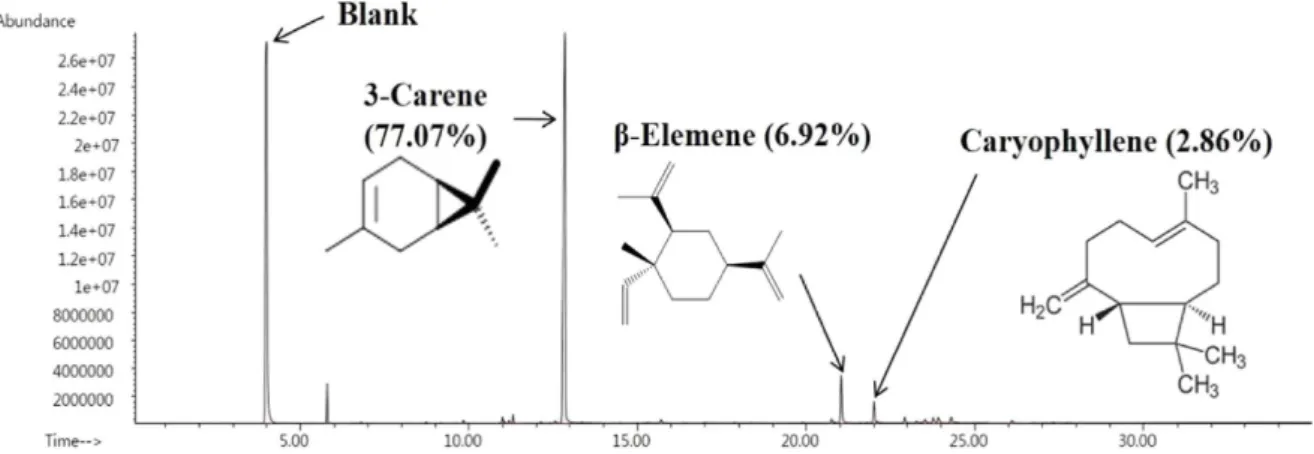
Fig. 3. GC-MS chromatogram of Magnolia kobus essential oil.
μg/ml의 농도에서 63.23%의 NO 생성 억제를 확인할 수 있었 다. 양성 대조군인 L-NAME에서는 세포 독성이 없었으며, NO 생성은 대조군과 비교하여 약 65.9% 감소됨을 확인하였다 (Fig. 2B). 그리고 목련 에센셜 오일의 처리 농도(10, 50, 100, 250, 500 μg/ml)에 대한 PGE2생성은 250 μg/ml 이상 농도의 영역에서 농도의존적으로 PGE2 생성이 억제되는 것으로 나타 났으며, 500 μg/ml의 농도에서 75.97%의 PGE2 생성 억제를 확인할 수 있었다(Fig. 2C).
목련 에센셜 오일의 방향성분 분석
목련 에센셜 오일을 GC-MS를 이용하여 분석한 결과는 Fig.
3과 Table 2에 나타내었다. 총 18종의 화학성분이 분석되었으 며, 화학 성분 중 77.07%의 비율로 함유되어 가장 높은 함량을 나타낸 3-carene은 cyclohexene및 cyclopropane ring으로 이 루어진 monoterpene으로 항염증 효능을 가진다고 알려져 있 다[2]. 두 번째로 높은 6.92% 함량을 나타낸 β-elemene은 항균 력을 가지며[1, 29], 그리고 2.86%의 비율로 세 번째로 높은 함량을 나타낸 caryophyllene은 항균력 및 항염증 효능을 가 진다고 알려져 있다[21, 25]. 그 이외에는 β-pinene, β-ocimene, eucalyptol, 2-furanmethanol, copaene, α-berganotene, β- patchoulene, germacrene D, β-helmiscapene, α-helmisca- pene, δ-amorphene, bicyclo[5.2.0]nonane 등이 분석되었다.
이 결과를 토대로 목련 에센셜 오일은 피부 상재균에 대한 항균효과 및 피부 염증 억제에 효과를 가짐을 확인할 수 있었 으며, 피부염증 억제제 및 항균제로써의 화장제제 활용이 가 능할 것이라고 생각된다.
감사의 글
본 연구는 2019년도 정부(교육부)의 재원으로 한국연구재 단의 지원을 받아 수행된 기본연구지원사업(SGER) (No. 2018 R1D1A1A02048746)으로 이루어졌으며, 이에 감사드립니다.
The Conflict of Interest Statement
The authors declare that they have no conflicts of interest with the contents of this article.
References
1. Arunkumark, V. and Paridhavi, M. 2013. Evaluation of the components and antimicrobial activity of volatile oil from Zanthoxylumlimonella fruit. Int. J. Pharm. Bio. Sci. 4, 777-787.
2. Burt, S. 2004. Essential Oils: Their antibacterial properties and potential applications in foods—a review. Int. J. Food Microbiol. 94, 223-253.
3. Chae, J. W., Jo, B. S., Joo, S. H., Ahn, D. H., Chun, S. S.
and Cho, Y. J. 2012. Biological and antimicrobial activity of Vaccinium oldhami fruit. J. Kor. Soc. Food Sci. Nutr. 41, 1-12.
4. Choi, K. S., Shin, K. O., Chung, K. H., Kim, Y. H. and Huh, S. M. 2012. The effect of Goroshoe (Acer mono max.) seed oil, and Magnolia denudata seed oil on the lipid profile in serum in mice. Kor. J. Food Nutr. 25, 770-778.
5. Ha, Y. M., Lee, B. B., Bae, H. J., Je, K. M., Kim, S. R., Choi, J. S. and Choi, I. S. 2009. Anti-microbial activity of grapefruit seed extract and processed sulfur solution against human skin pathogens. J. Life Sci. 19, 94-100.
6. Hoshino, K., Takeuchi, O., Kawai, T., Sanjo, H., Ogawa, T., Takeda, Y., Takeda, K. and Akira, S. 1999. Cutting edge:
toll-like receptor 4 (TLR4)-deficient mice are hypores- ponsive to lipopolysaccharide: evidence for TLR4 as the LPS gene product. J. Immun. 162, 3749-3752.
7. Im, D. Y. 2012. Volatile compounds analysis of essential oil extracted from dried Taraxacum coreanum. Kor. J. Aesthet.
Cosmetol. 10, 797-801.
8. Jeoung, Y. J., Choi S. Y., An, C. S., Jeon, Y. H., Park, D.
K. and Lim, B. O. 2009. Comparative effect on anti-in- flammatory activity of the Phellinus linteus and Phellinus lin- teus grown in germinated brown rice extracts in murine macrophage RAW 264.7 cells. Kor. J. Med. Crop. Sci. 17, 97- 101.
9. Ji, K. H., Kim, D. K. and Kim, Y. T. 2017. Antimicrobial
and antifungal activities of Lisianthus (Eustoma grandiflorum) essential oil. J. Life Sci. 27, 430-434.
10. Kang, J. S., Lee, K. H., Lee, H., Ahn, J. M., Han, S. B. and Kim, H. M. 2008. Antiinflammatory activity of methanol ex- tract isolated from stem bark of Magnolia kobus. Phytother.
Res. 22, 883-888.
11. Kim, B. R., Yoo, J. H., Jung, S. G. and Lee, S. Y. 2012. Inhibi- tory effect of organic acids and natural occurring anti- microbials against Staphylococcus aureus isolates from vari- ous origins. J. Food Hyg. Saf. 27, 449-455.
12. Kim, D. Y., Won, K. J., Yoon, M. S., Hwang, D. I., Yoon, S. W., Park, J. H., Kim, B. Y. and Lee, H. M. 2015. Chrysanthe- mum boreale Makino essential oil induces keratinocyte pro- liferation and skin regeneration. Nat. Prod. Res. 29, 562-564.
13. Kim, I. H., Kim, J. K. and Lee, J. H. 2016. Antimicrobial and antioxidant effects of functional healthy drinks from some medicinal herbs and coffee mixture. J. Life Sci. 26, 1225-1231.
14. Kim, J. H., Kim, M. J., Choi, S. K., Bae, S. H., An, S. K. and Yoon, Y. M. 2011. Antioxidant and antimicrobial effects of lemon and Eucalyptus essential oils against skin floras. J. Soc.
Cosmet. Sci. Kor. 37, 303-308.
15. Kim, J. Y., Park, S. J., Yun, K. J., Cho, Y. W., Park, H. J.
and Lee, K. T. 2008. Isoliquiritigenin isolated from the roots of Glycyrrhiza uralensis inhibits LPS-induced iNOS and COX-2 expression via the attenuation of NF-κB in RAW 264.7 macrophages. Eur. J. Pharmacol. 584, 175-184.
16. Kim, K. E., Park, S. K. and Cho, I. Y. 2016. Exploring syner- gistic effect among essential oils in antibacterial action.
Convergence 14, 547-553.
17. Kim, M. S. and Soon, H. J. 2012. Antimicrobial effects of essential oil on acnes strains. J. Kor. Soc. Esthe. Cosm. 7, 32-36.
18. Kim, S. S., Hyun, J. M., Kim, K. S., Park, K. J., Park, S. M.
and Choi, Y. H. 2013. Influence of essential oil in ‘Shiranuhi’
immature fruit on antioxidant and antimicrobial activities.
Kor. J. Med. Crop. Sci. 21, 493-497.
19. Kim, Y. G. 1999. Studies on the Antimicrobial activities of the extractives from Magnolia (Magnolia kobus DC. var. bor ealis Sarg.). J. Kor. Wood Sci. Technol. 27, 105-114.
20. Kim, Y. G., Watanabe, N., Sano, Y., Uraki, Y. and Sano, Y.
1998. Extractives of kitakobusi Magnolia kobus DC. Var. bor-
ealis sarg. Ш: antibacterial and antifungal activity of extractives. Hokkaido University Collection of Scholarly and Academic Papers 55, 63-73.
21. Kolundžić, M., Grozdanić, N. Đ., Dodevska, M., Milenković, M., Sisto, F., Miani, A. and Kundaković, T. 2016. Antibacte- rial and cytotoxic activities of wild mushroom Fomes fo- mentarius (L.) Fr., Polyporaceae. Ind. Crop. Prod. 79, 110-115.
22. Lee, J. Y., Yoo, D. H., Jeng, Y. S., Joo, S. H. and Chae, J.
W. 2018. Verification of anti-inflammatory activities of the ethanol extracts of Glechoma hederacea var. longituba in RAW 264.7 cells. J. Life Sci. 28, 429-434.
23. Lee, M. J., Kim, G. P., Kim, S. H., Choung, N. H. and Yim, M. H. 1997. Antimicrobial activity of extract from gall-nut and red-grape Husk. J. Kor. Soc. Food Sci. Nutr. 10, 174-179.
24. Lee, S. S. and Lee, H. J. 2010. Studies on antimicrobial and antioxidative activities of extracts from Magnoliaceae. J. Kor.
Wood Sci. Technol. 38, 579-586.
25. Mohammed, G. J., Omran, A. M. and Hussein, H. M. 2016.
Antibacterial and phytochemical analysis of Piper nigrum us- ing gas chromatography–mass spectrum and fourier-trans- form infrared spectroscopy. Int. J. Pharmacogn. Phytochem.
Res. 8, 997-996.
26. Mori, M., Ikeda, N., Kato, Y., Minamino, M. and Watabe, K. 2002. Inhibition of elastase activity by essential oils in vitro. J. Cosmet. Dermatol. 1, 183-187.
27. Nho, J. W., Hwang, I. G., Joung, E. J., Kim, H. Y., Chang, S. J. and Jeong, H. S. 2009. Biological activities of Magnolia denudata Desr. flower extracts. J. Kor. Soc. Food Sci. Nutr. 38, 1478-1484.
28. Park, S. H., Kim, K. B. W. R., Kim, M. J., Choi, J. S., Cho, Y. J. and Ahn, D. H. 2017. Antimicrobial activity of extracts from different parts and essential oil from Pinus densiflora on skin pathogens. J. Life Sci. 27, 646-651.
29. Srinivasan, S. and Priya, V. 2019. Phytochemical screening and GC-MS analysis of Cyperus dubius, Rottb. (Cyperaceae).
J. Med. Plants Stud. 7, 89-98.
30. Yi, M. R., Jeon, A. L., Kang, C. H. and Bu, H. J. 2016.
Antioxidant, antimicrobial and anti-inflammatory activities of essential oil from Erigeron annuus L. flower. Appl. Sci.
Converg. Technol. 33, 717-725.
초록:목련 꽃 에센셜 오일의 항균 및 항염증 활성
이재열1,2․지광환1․양선아3*
(1금오공과대학교 응용화학과, 2계명대학교 자연과학연구소, 3계명대학교 식품가공학과)
목련은 항산화효과와 진정작용과 같은 다양한 효능을 가진 것으로 알려져 있다. 본 연구에서는 목련 에센셜오 일의 항균 활성 및 항염증 활성을 검증하고자 한다. 목련 에센셜 오일은 증류법으로 추출한 것을 사용하였으며, 항균 활성은 S. aureus와 E. coli, P. aeruginosa에 대하여 paper disk diffusion법과 최소저해농도(minimum in- hibitory concentration, MIC) 값을 측정하여 확인하였다. 목련 에센셜 오일은 S. aureus 균주에 대하여 18 mm의 clear zone형성과 0.25 mg/ml의 MIC 값을 나타내는 우수한 항균효과를 보였다. P. aeruginosa 균주와 E. coli 균주 는 clear zone 형성이 각각 14 mm와 17 mm로 나타났다. 또한, MIC값은 각각 1 mg/ml와 0.5 mg/ml로 측정되었 다. 항염증 활성은 LPS 유도된 RAW264.7 세포에서 nitric oxide (NO)와 PGE2의 생성억제율을 조사하였다. 목련 에센셜 오일, 500 μg/ml의 농도에서 RAW264.7세포에 대한 세포 독성은 나타내지 않았지만, NO (37.7%)와 PGE2
(24.0%)억제를 보였다. GC-MS를 이용하여 목련 에센셜 오일을 분석하였다. 목련 에센셜 오일의 3 가지 주요 방향 제 성분은 3-carene (77.07%), β-elemene (6.92%) 및 caryphyllene (2.86%)로 분석되었다. 이러한 결과는 목련 에센 셜 오일이 항균 및 항염증 효과를 갖는 화장품 기능성 물질로서 잠재력을 가지고 있음을 시사한다.