• 검색 결과가 없습니다.

Changes in phytoestrogen contents and antioxidant activities during fermentation of soybean-powder milks prepared from different soybean cultivars by Lactobacillus plantarum P1201

N/A
N/A
Protected

Academic year: 2021

Share "Changes in phytoestrogen contents and antioxidant activities during fermentation of soybean-powder milks prepared from different soybean cultivars by Lactobacillus plantarum P1201"

Copied!
10
0
0

로드 중.... (전체 텍스트 보기)

전체 글

(1)

보 문

Changes in phytoestrogen contents and antioxidant activities during fermentation of soybean-powder milks prepared from different soybean cultivars by Lactobacillus plantarum P1201

Chung Eun Hwang

1

, Md. Azizul Haque

1

, Jin Hwan Lee

2

, Min Ju Ahn

1

, Hee Yul Lee

1

, Byong Won Lee

3

, Yu-Young Lee

3

, Choonwo Lee

3

, Byung Joo Kim

3

, Ji-Yong Park

3

, Eun-Yeong Sim

3

, Dong Hoon Lee

4

, Jong Min Ko

5

, Hyun Tae Kim

5

, and Kye Man Cho

1

*

1

Department of Food Science, Gyeongnam National University of Science and Technology, Jinju 52725, Republic of Korea

2

Division of Research Development and Education, National Institute of Chemical Safety (NICS), Ministry of Environment, Daejeon 34111, Republic of Korea

3

Department of Central Area, Crop Science, National Institute of Crop Science (NICS), Rural Development Administration (RDA), Suwon 16429, Republic of Korea

4

Department of Anatomy and Convergence Medical Science, School of Medicine, Gyeongsang National University, Jinju 52727, Republic of Korea

5

Department of South Area, Crop Science, National Institute of Crop Science (NICS), Rural Development Administration (RDA), Miryang 50424, Republic of Korea

Lactobacillus plantarum P1201에 의한 콩 품종별 콩-분말 두유 발효 과정에서의 식물성 에스트로젠 함량과 항산화 활성의 변화

황정은

1

・ 모하메드 아지줄 하크만

1

・ 이진환

2

・ 안민주

1

・ 이희율

1

・ 이병원

3

・ 이유영

3

・ 이춘우

3

・ 김병주

3

・ 박지영

3

・ 심은영

3

・ 이동훈

4

・ 고종민

5

・ 김현태

5

・ 조계만

1

*

1

경남과학기술대학교 식품과학부,

2

환경부 화학물질안전원,

3

농촌진흥청 중부작물부,

4

경상대학교 해부학교실,

5

농촌진흥청 남부작물부

(Received October 5, 2015; Revised June 21, 2016; Accepted June 21, 2016)

ABSTRACT: This study evaluated the changes of phytoestrogen contents and antioxidant activities of soybean-powder milk (SPM) prepared from yellow soybean during fermentation with Lactobacillus plantarum P1201. In consequence, the levels of total phenolic and isoflavone-aglycone contents, ABTS and DPPH radical-scavenging activities, and FRAP assay values increased, while isoflavone-glycoside contents decreased during fermentation. The highest levels of daidzein, glycitein, and genistein were present in the Daepung SPM at concentrations of 177.92, 20.64, and 106.14 µg/g, respectively after 60 h of fermentation. Moreover, Daepung SPM showed the highest DPPH radical-scavenging activity of 48.54%, an ABTS radical-scavenging activity of 99.25%, and a FRAP assay value of 0.84 at the end of fermentation. The fermented Daepung SPM possessed highest isoflavone aglycone contents and antioxidant activities, which can be utilized for the development of functional foods.

Key words: Lactobacillus plantarum P1201, antioxidant activity, phytoestrogen, soybean cultivars, soybean powder milk

*For correspondence. E-mail: [email protected] Tel.: +82-55-751-3272; Fax: +82-55-751-3279

Soybeans are consumed worldwide as an important protein source to complement grain protein, especially in Asian

countries. They are enriched with isoflavones, anthocyanins, saponins, lipids, and oligosaccharides (Kim et al., 2011).

Lactic fermentation reduced the stachyose and raffinose contents

and transformed β-glucoside-, acetyl-, and malonyl-glycoside

isoflavones in soymilk into aglycones, the bioactive form of the

(2)

isoflavones (Wang et al., 2003). In fact, isoflavone-conjugated glycosides are converted to aglycones under acidic or alkaline conditions or by the action of β-glycosidase. Interestingly, the aglycones became the predominant form of isoflavones in soymilk after fermentation (Chien et al., 2006). In addition, it has been found that fermentation enhanced the antioxidant and antimutagenic activity of soymilk (Wang et al., 2006; Lee et al., 2014).

Probiotics are viable microorganisms that confer health benefits to the host once consumed in adequate amounts.

Lactobacillus, which is a normal inhabitant of the human colon, has been associated with probiotic properties (Lye et al., 2009). In previous study, we reported that Lactobacillus plantarum P1201 showed 58.14% and 62.22% survival rates after exposing 4 h at acid and gastric acid conditions (pH 2.5) (Hwang et al., 2014). In addition, the bioconversion of the isoflavone of Neulchan soybean milk and soybean powder milk by the potential probiotic L. plantarum P1201 resulted in the enhanced levels of total phenolic content and antioxidant activities during fermentation (Hwang et al., 2014).

Therefore, L. plantarum P1201 fermentation may serve as a useful tool to develop soybean powder milk as a probiotic dietary adjunct. Although several studies have been reported on the changes of phytoestrogen contents during fermentation with probiotics (Chien et al., 2006; Wang et al., 2006; Seo et al., 2013), there are very few reports on the biotransformation of phytoestrogen in soybean powder milk (SPM) from various soybean cultivars during fermentation with probiotic lactobacilli.

Among the several varieties, the cultivation of yellow soybeans is much more prevalent in Korea; these are used to prepare the soybeanbased foods. In this study, the SPM of yellow soybean cultivars, namely, Saedanbaek, Daewon, Daepung, Neulchan, Taekwang, Sunyu, Whanggeum, and Daemang, were prepared and fermented with the potential probiotic Lactobacillus plantarum P1201. In addition, the content of the twelve isoflavones and other characteristics (pH, acidity, β-glucosidase activity, total phenolic content, and antioxidant activity) of the SPM during fermentation with L. plantarum P1201 were analyzed. The Daepung SPM possessed highest total phenolic contents, isoflavone aglycones and antioxidant activity at the end of fermentation compared with the SPM of the other soybean cultivars tested.

Materials and Methods

Soybeans, microorganism, medium, and chemicals The yellow soybean (YS) cultivars, Saedanbaek, Daewon, Daepung, Neulchan, Taekwang, Sunyu, Whanggeum, Daemang, were collected from the National Institute of Crop Science (Korea) in 2011. A potential probiotic Lactobacillus plantarum P1201 that was previously isolated from a fermented beverage of plant extract was used as the starter organism for the fermentation (Hwang et al., 2014). Twelve authentic isoflavones were purchased as previously described by Lee et al. (2013) Glacial acetic acid, Folin-Ciocalteu phenol reagent, 2,2-diphenyl- 1-picrylhydrazyl (DPPH), 2,2-azinobis (3-ethyl-benzothiazoline- 6-sulfonic acid) diammonium salt (ABTS), potassium persulfate, ferric chloride, sodium acetate, and 2,4,6-tripyridyl-s-triazine (TPTZ) were purchased from Sigma-Aldrich Chemical Co.

HPLC-grade H

2

O, methanol, and acetonitrile were purchased from Fisher Scientific. All other reagents were of analytical grade.

Soy powder milk (SPM) preparation and fermentation Yellow soybeans from different cultivars were ground for 3 min and passed through an 80 mesh sieve. A 10 g sample of soybean powder was mixed with 100 ml of a 2% (w/v) sucrose solution in different containers. This mixture, which we called soybean powder milk (SPM) was then sterilized in an autoclave at 121°C for 15 min. The SPMs were allowed to stand for 1 h at 35 ± 2°C to cool down. The P1201 strain was grown in MRS broth at 30 ± 2°C for 48 h. Then, the SPMs were inoculated with 5% (v/v) of the strain P1201 and fermented at 35 ± 1°C for 60 h and sampling were carried out at 0, 12, 24, 36, 48, and 60 h.

The fermented SPM samples were stored at -70°C until analysis.

Estimation of pH, titratable acidity, and β -glucosidase activity

The pH values of the fermented SPM samples were measured

using a pH meter (MP 200), while titratable acidity was deter-

mined by titration with a 0.01 N NaOH solution and expressed

as lactic acid (%) according to the methods previously described

by Hwang et al. (2014) and Lee et al. (2013). The β-glucosidase

(3)

activity of L. plantarum P1201 during fermentation of SPM was determined by measuring the rate of hydrolysis of p-nitrophenyl β-D-glucopyranoside (pNPG) (Sigma Chemical Company) according to the method previously described by Hati et al. (2015) with some modifications. At first, the culture was activated at 5% (v/v) in the MRS media at 35°C for 24 h, thereafter was adapted by two successive transfers at 5% (v/v) into SPM and incubated at 35°C for 24 h. Finally, the culture was inoculated at 5% (v/v) into 100 ml of SPM and incubated at 35°C for 60 h. Then 500 μl of 5 mM pNPG (prepared in 100 mM sodium phosphate buffer, pH 7) was added to 5 ml aliquots of each sample and incubated at 35°C for 30 min. The reaction was stopped by the addition of 250 μl of cold 200 mM sodium carbonate. The resulting mixture was centrifuged at 14,000 × g for 30 min and filtered through a 0.45-µm Millipore (Schleicher

& Schuell, GmbH). The amount of p-nitrophenol released was measured using a Thermospectronic GENESYS 20 spectro- photometer (Thermoscientific) at 410 nm. One unit of enzyme activity was defined as the amount of β-glucosidase that released 1 nmol p-nitrophenol from pNPG ml/min at 35°C under the assay conditions.

Isoflavone extraction and analysis

A one gram sample of the dry powder from each YS cultivar was separately mixed with 10 ml of 50% methanol, followed by shaking at 320 rpm at room temperature for 12 h. The super- natants (MeOH extracts) were collected and filtered through a 0.45-µm Millipore PVDF filter (Schleicher & Schuell, GmbH).

For HPLC (Agilent Co.) analysis, 20 µl of the methanol extracts were separately injected into a C

18

(4.6 × 150 mm, 5 µm, Merck) column with a column temperature setting of 30°C. The isoflavone fractions were eluted and analyzed according to the method previously described by Lee et al. (2013).

Total phenolic contents (TPCs)

A 0.5-ml SPM extract was mixed with 0.5 ml of a 25%

Na

2

CO

3

solution and 0.25 ml of Folin-Ciocalteu reagent in the test tube and was kept at 30°C for 1 h. The absorbance of the mixtures was measured at 750 nm. Simultaneously, the standard curve of the TPCs was made using gallic acid solutions (0, 50, 100, 250, and 500 mg/L). Finally, the gallic acid equivalent

(GAE) was used to quantify the TPCs in the SPM sample extracts (Lee et al., 2013).

Measurement of antioxidant activities

The antioxidant activity of the SPM extracts was measured by ABTS and DPPH radical-scavenging activity and the FRAP (ferric reducing antioxidant power) assay according to the methods previously described by Hwang et al. (2014) and Lee et al. (2013).

Results and Discussion

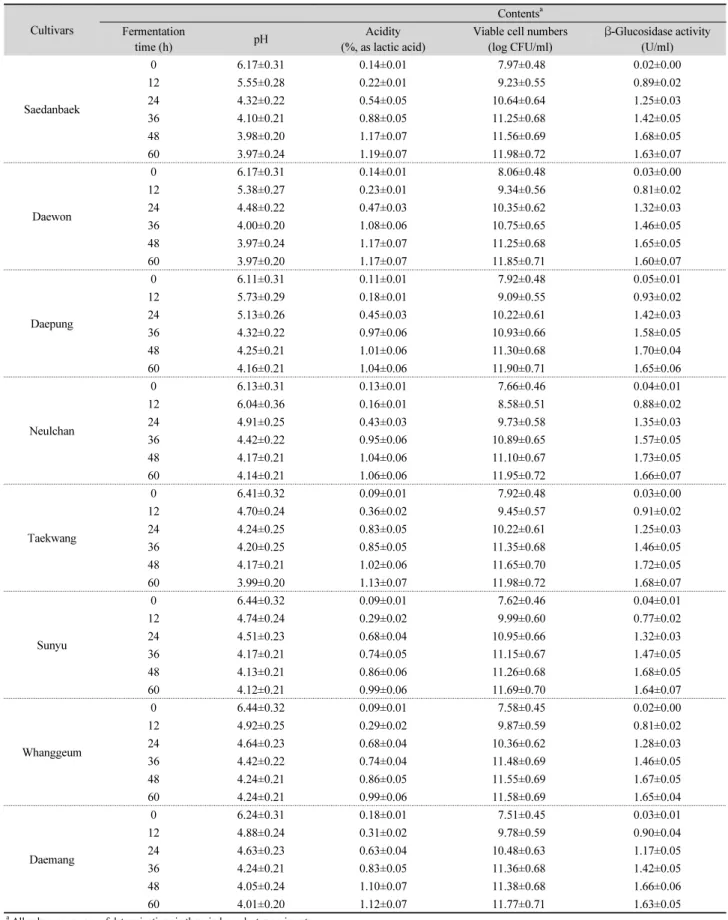
pH, titratable acidity, and β -glucosidase activity The changes of pH, acidity, and β-glucosidase activity in the SPM during fermentation with L. plantarum P1201 are shown in Table 1. As the result, decrease in pHs was observed during the first 12 h; thereafter, the pH values were moderately decreased from 12 to 48 h, then the pH values were kept relatively constant from 48 to 60 h of fermentation. In contrast, the titratable acidity in the SPMs was gradually increased up to 48 h, but a minor change in titratable acidity was observed from 48 to 60 h of fermentation. The viable cell numbers continuously increased during the fermentation of SPMs. Also, the β-glucosidase activity increased greatly until 48 h, thereafter they decreased until 60 h.

The amount of acid produced in the soymilk depends on the types of organism involved (Chun et al., 2008b). In a related study, L. plantarum have been reported to produce L-3-(4- hydroxyphenyl) lactic acid and L-indole-3-lactic acid (Suzuki et al., 2013). Thus L. plantarum P1201 generated the lactic acid during SPM fermentation, consequently reducing the pH in the SPMs. An appropriate acid concentration is one of the most important factors to ensure good quality in fermented yoghurt.

As a matter of fact, commercial yoghurts were reported to have

a pH range of 4.2 to 4.4 (Pinthong et al., 1980). It is important

to note that the pH ranges found in the current study are

consistent with the pH ranges found in the commercial yoghurt

and with soy-yoghurt that was fermented with L. plantarum

P1201 (Hwang et al., 2014). The L. plantarum P1201 used in

this study exhibited different levels of β-glucosidase activity in

(4)

Table 1. Change of pH, acidity, and β-glucosidase activity in soy powder milk from different yellow soybean cultivars during fermentation

Cultivars

Contents

a

Fermentation

time (h) pH Acidity

(%, as lactic acid)

Viable cell numbers (log CFU/ml)

β-Glucosidase activity (U/ml)

Saedanbaek

0 6.17±0.31 0.14±0.01 7.97±0.48 0.02±0.00

12 5.55±0.28 0.22±0.01 9.23±0.55 0.89±0.02

24 4.32±0.22 0.54±0.05 10.64±0.64 1.25±0.03

36 4.10±0.21 0.88±0.05 11.25±0.68 1.42±0.05

48 3.98±0.20 1.17±0.07 11.56±0.69 1.68±0.05

60 3.97±0.24 1.19±0.07 11.98±0.72 1.63±0.07

Daewon

0 6.17±0.31 0.14±0.01 8.06±0.48 0.03±0.00

12 5.38±0.27 0.23±0.01 9.34±0.56 0.81±0.02

24 4.48±0.22 0.47±0.03 10.35±0.62 1.32±0.03

36 4.00±0.20 1.08±0.06 10.75±0.65 1.46±0.05

48 3.97±0.24 1.17±0.07 11.25±0.68 1.65±0.05

60 3.97±0.20 1.17±0.07 11.85±0.71 1.60±0.07

Daepung

0 6.11±0.31 0.11±0.01 7.92±0.48 0.05±0.01

12 5.73±0.29 0.18±0.01 9.09±0.55 0.93±0.02

24 5.13±0.26 0.45±0.03 10.22±0.61 1.42±0.03

36 4.32±0.22 0.97±0.06 10.93±0.66 1.58±0.05

48 4.25±0.21 1.01±0.06 11.30±0.68 1.70±0.04

60 4.16±0.21 1.04±0.06 11.90±0.71 1.65±0.06

Neulchan

0 6.13±0.31 0.13±0.01 7.66±0.46 0.04±0.01

12 6.04±0.36 0.16±0.01 8.58±0.51 0.88±0.02

24 4.91±0.25 0.43±0.03 9.73±0.58 1.35±0.03

36 4.42±0.22 0.95±0.06 10.89±0.65 1.57±0.05

48 4.17±0.21 1.04±0.06 11.10±0.67 1.73±0.05

60 4.14±0.21 1.06±0.06 11.95±0.72 1.66±0.07

Taekwang

0 6.41±0.32 0.09±0.01 7.92±0.48 0.03±0.00

12 4.70±0.24 0.36±0.02 9.45±0.57 0.91±0.02

24 4.24±0.25 0.83±0.05 10.22±0.61 1.25±0.03

36 4.20±0.25 0.85±0.05 11.35±0.68 1.46±0.05

48 4.17±0.21 1.02±0.06 11.65±0.70 1.72±0.05

60 3.99±0.20 1.13±0.07 11.98±0.72 1.68±0.07

Sunyu

0 6.44±0.32 0.09±0.01 7.62±0.46 0.04±0.01

12 4.74±0.24 0.29±0.02 9.99±0.60 0.77±0.02

24 4.51±0.23 0.68±0.04 10.95±0.66 1.32±0.03

36 4.17±0.21 0.74±0.05 11.15±0.67 1.47±0.05

48 4.13±0.21 0.86±0.06 11.26±0.68 1.68±0.05

60 4.12±0.21 0.99±0.06 11.69±0.70 1.64±0.07

Whanggeum

0 6.44±0.32 0.09±0.01 7.58±0.45 0.02±0.00

12 4.92±0.25 0.29±0.02 9.87±0.59 0.81±0.02

24 4.64±0.23 0.68±0.04 10.36±0.62 1.28±0.03

36 4.42±0.22 0.74±0.04 11.48±0.69 1.46±0.05

48 4.24±0.21 0.86±0.05 11.55±0.69 1.67±0.05

60 4.24±0.21 0.99±0.06 11.58±0.69 1.65±0.04

Daemang

0 6.24±0.31 0.18±0.01 7.51±0.45 0.03±0.01

12 4.88±0.24 0.31±0.02 9.78±0.59 0.90±0.04

24 4.63±0.23 0.63±0.04 10.48±0.63 1.17±0.05

36 4.24±0.21 0.83±0.05 11.36±0.68 1.42±0.05

48 4.05±0.24 1.10±0.07 11.38±0.68 1.66±0.06

60 4.01±0.20 1.12±0.07 11.77±0.71 1.63±0.05

a
All values are means of determinations in three independent experiments.

(5)

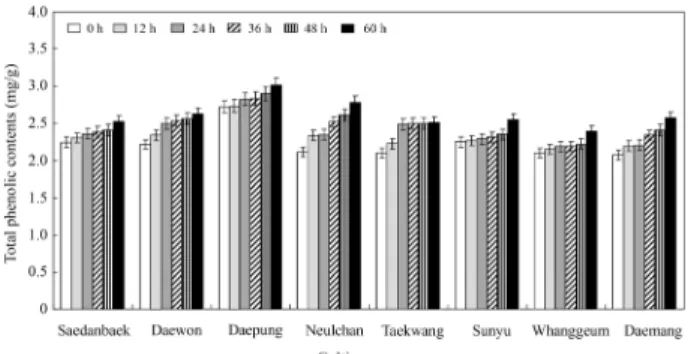
Fig. 1. Change of total phenolic contents of soy powder milk prepared from yellow soybean cultivars during fermentation with L. plantarum P1201. All values are means of determinations in three independent experiments.

SPMs during their growth under optimal conditions. The β -glucosidase activity of L. plantarum P1201 rapidly increased during the first 12 h of SPMs fermentation, reaching to the range of 0.77 ± 0.02 to 0.93 U/ml of SPM (Table 1). Then it increased gradually with longer fermentation time until 48 h, thereafter slightly decreased. A reasonable explanation for this can be that the lowered pH and/or phenolic compounds concentration might interfere with the β-glucosidase activity during SPMs fermentation. Previously, L. plantarum KFRI00144 (Pyo et al., 2005) and L. paraplantarum KM (Chun et al., 2008a) have been proven to produce β-glucosidase during soymilk fermentation, which is a good agreement with the current study.

Changes of the TPCs during SPM fermentation The TPCs increased during the fermentation of eight SPMs (Fig. 1). Before fermentation the SPM of Daepung was noted to exhibit a TPC of 2.72 mg/g, but at 24, 48, and 60 h of fermentation, the TPC was increased to 2.82, 2.89, and 3.01 mg/g, respectively. It is important to mention that the highest level of TPC was obtained in the SPM of the Daepung soybean at the end of fermentation compared to the other soybeans tested. This result indicates that genetics may be an important factor, as all eight soybean cultivars consistently showed remarkable differences in TPC throughout the testing period.

It was reported that the TPCs could be attributed to the enrichment of compounds with stronger electrondonating ability, including intrinsic antioxidants and reducing powers by lactic acid bacteria fermentation and isoflavone aglycones (Zhao and

Shah, 2014). Therefore, catalyzing the release of the TPCs from the SPM during fermentation may lead to an increase in the content of those compounds, as shown in Fig. 1. Hwang et al. (2014) previously reported that the TPCs were increased in the SPM of Neulchan during fermentation with L. plantarum P1201. The above results suggested that L. plantarum P1201 is a strong potential probiotic for the biotransformation of SPM biopolymers into beneficial phenolics.

Changes of the isoflavone profile during SPM fer- mentation

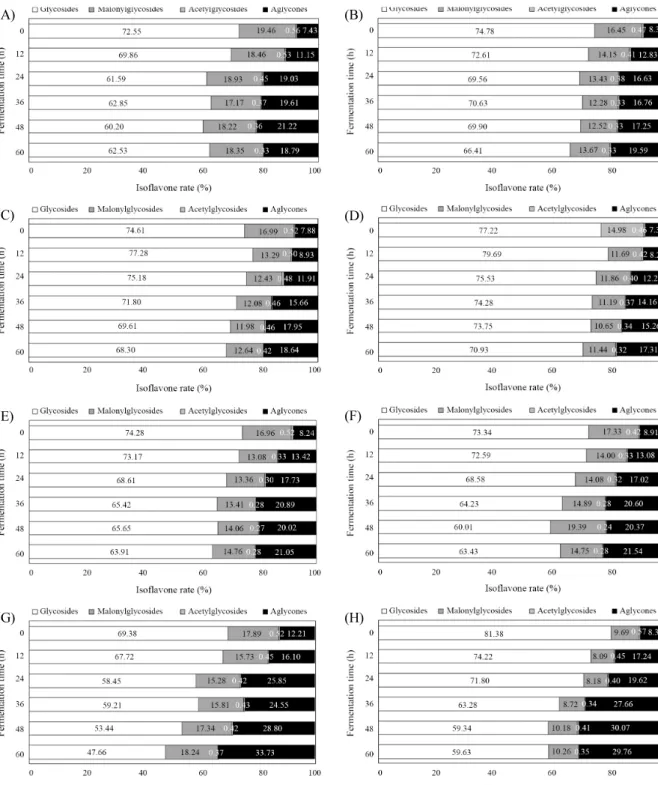
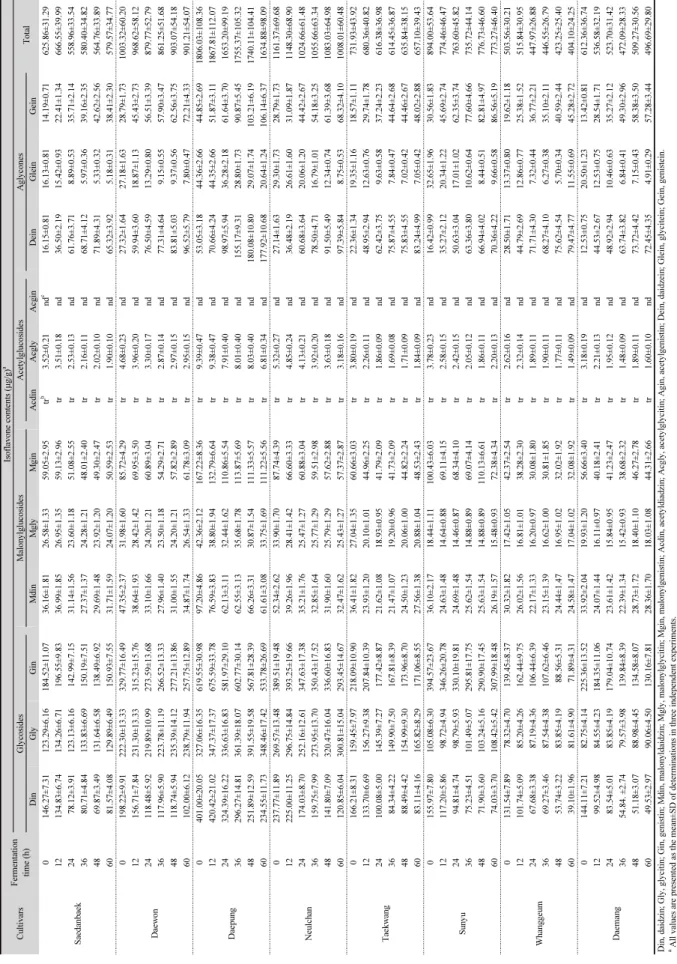
The isoflavone-glycosides (β- and malonyl of daidzin and genistin) were decreased slowly, which was accompanied by the accumulation of aglycones (daidzein and genistein) during the fermentation of SPM by L. plantarum P1201 (Fig. 2 and Table 2). In the SPM of Saedanbaek and Daemang, the isoflavone aglycones contents increased gradually at 48 h of fermentation, but slightly decreased at 60 h (Fig. 2A and H). On the other hand, the isoflavone-aglycone contents of the other six SPMs increased linearly up to 60 h of fermentation (Fig. 2).

In particular, the isoflavone-aglycone contents in the SPM of Daepung increased about to approximately 2.4 fold of their initial amounts (0 h, 7.88%), but the isoflavone-glycoside contents decreased from 74.61% to 68.30% at 60 h of fermen- tation (Fig. 2C). In this study, the total isoflavones were the sum of the concentrations of all of the detected total aglycones, β-glycosides, acetylglycosides, and malonylglycosides. Prior to fermentation, the total isoflavones in the SPM were the highest in Daepung at 1,806.03 μg/g, followed by Neulchan (1,161.37 μg/g), Daewon (1,003.32 μg/g), Sunyu (894.00 μg/g), Taekwang (731.93 μg/g), Saedanbaek (625.86 μg/g), Daemang (612.36 μg/g), and Whanggeum (503.56 μg/g). In particular, the isoflavone-glycosides, such as daidzin, and genistin, decreased from 401.0 to 234.55, and 619.55 to 533.78 μg/g, while isoflavone-aglycones (daidzein and genistein) increased from 53.05 to 177.92 and 44.85 to 106.14 μg/g in the Daepung SPM at 60 h of fermentation, respectively (Table 2). The level of the glycitein was slightly decreased during fermentation. It is important to note that a similar pattern of changes in the isoflavone profile was observed in the SPM of the other seven soybean cultivars tested throughout the fermentation process.

The decreased level of glycitein was observed during the

(6)

(A)

(C)

(E)

(G) (H)

(F) (D) (B)

Fig. 2. Changes of different types of isoflavones in soy powder milk made from different yellow soybean cultivars during fermentation with L. plantarum P1201. (A) SPM of Saedanbaek, (B) SPM of Daewon, (C) SPM of Daepung, (D) SPM of Neulchan, (E) SPM of Taekwang, (F) SPM of Sunyu, (G) SPM of Whanggeum, and (H) SPM of Daemang.

fermentation of soymilk with L. plantarum P1201 (Hwang et al., 2014). Moreover, a minor change in the malonylglycosides and acetylglycosides as observed throughout the fermentation.

In this study, the total isoflavone content decreased by

fermentation processing in the SPM of the all eight yellow

soybean cultivars (Table 2). It was reported that the isoflavone

(7)

Ta b le 2 . C h an ge of i so fl avo n e c o n ten ts o f soy p ow d er m il k f ro m d if fe ren t yel low s o yb ea n cu lt iva rs d u ri n g f er m en ta ti on C ulti v ar s Fe rme nta ti o n time (h)

Isof la vo ne c o nte nts ( µ g/ g)

a

Gly co si d es M alony lgl u coside s A cet y lgl u co si d es Agl y cone s Tota l Din Gly Gin Mdi n Mg ly Mg in Ac d in Ac gl y Ac gi n De in Gl ei n Ge in S aed an b aek

0 146 .27 ±7 .31 12 3. 2 9± 6. 1 6 184 .52 ±1 1. 0 7 36 .16 ±1 .81 2 6. 5 8± 1. 3 3 59.05± 2.95 tr

b

3 .52 ±0 .21 nd

c

16 .15 ±0 .81 16.13± 0.81 14 .19 ±0 .71 62 5. 8 6± 31.29 1 2 134 .83 ±6 .74 13 4. 2 6± 6. 7 1 19 6. 5 5± 9. 8 3 36 .99 ±1 .85 2 6. 9 5± 1. 3 5 59.13± 2.96 tr 3. 5 1± 0. 1 8 nd 36 .50 ±2 .19 15.42± 0.93 22 .41 ±1 .34 66 6. 5 5± 39.99 2 4 78 .12 ±3 .91 12 3. 1 3± 6. 1 6 14 2. 9 9± 7. 1 5 31 .14 ±1 .56 2 3. 6 0± 1. 1 8 51.08± 2.55 tr 2. 5 3± 0. 1 3 nd 61 .76 ±3 .71 8.89± 0.53 35 .71 ±2 .14 55 8. 9 6± 33.54 3 6 80 .71 ±4 .84 13 3. 8 3± 6. 6 9 15 0. 1 9± 7. 5 1 27 .37 ±1 .37 2 4. 2 8± 1. 2 1 48.01± 2.40 tr 2. 1 6± 0. 1 1 nd 68 .71 ±4 .12 5.97± 0.36 39 .16 ±2 .35 58 0. 4 0± 34.82 4 8 69 .87 ±3 .49 13 1. 6 4± 6. 5 8 13 8. 4 9± 6. 9 2 29 .69 ±1 .48 2 3. 9 2± 1. 2 0 49.30± 2.47 tr 2. 0 2± 0. 1 0 nd 71 .89 ±4 .31 5.33± 0.32 42 .62 ±2 .56 56 4. 7 6± 33.89 6 0 81 .57 ±4 .08 12 9. 8 9± 6. 4 9 15 0. 9 3± 7. 5 5 31 .71 ±1 .59 2 4. 0 7± 1. 2 0 50.59± 2.53 tr 1. 9 0± 0. 1 0 nd 65 .32 ±3 .92 5.18± 0.31 38 .41 ±2 .30 57 9. 5 7± 34.77 D aew o n

0 198 .22 ±9 .91 222 .30 ±1 3. 3 3 329 .77 ±1 6. 4 9 47 .35 ±2 .37 3 1. 9 8± 1. 6 0 85.72± 4.29 tr 4. 6 8± 0. 2 3 nd 27 .32 ±1 .64 27.18± 1.63 28 .79 ±1 .73 100 3. 3 2± 60.20 1 2 156 .71 ±7 .84 231 .30 ±1 3. 3 3 315 .23 ±1 5. 7 6 38 .64 ±1 .93 2 8. 4 2± 1. 4 2 69.95± 3.50 tr 3. 9 6± 0. 2 0 nd 59 .94 ±3 .60 18.87± 1.13 45 .43 ±2 .73 96 8. 6 2± 58.12 2 4 118 .48 ±5 .92 219 .89 ±1 0. 9 9 273 .59 ±1 3. 6 8 33 .10 ±1 .66 2 4. 2 0± 1. 2 1 60.89± 3.04 tr 3. 3 0± 0. 1 7 nd 76 .50 ±4 .59 13.29± 0.80 56 .51 ±3 .39 87 9. 7 7± 52.79 3 6 117 .96 ±5 .90 223 .78 ±1 1. 1 9 266 .52 ±1 3. 3 3 27 .96 ±1 .40 2 3. 5 0± 1. 1 8 54.29± 2.71 tr 2. 8 7± 0. 1 4 nd 77 .31 ±4 .64 9.15± 0.55 57 .90 ±3 .47 86 1. 2 5± 51.68 4 8 118 .74 ±5 .94 235 .39 ±1 4. 1 2 277 .21 ±1 3. 8 6 31 .00 ±1 .55 2 4. 2 0± 1. 2 1 57.82± 2.89 tr 2. 9 7± 0. 1 5 nd 83 .81 ±5 .03 9.37± 0.56 62 .56 ±3 .75 90 3. 0 7± 54.18 6 0 102 .00 ±6 .12 238 .79 ±1 1. 9 4 257 .75 ±1 2. 8 9 34 .87 ±1 .74 2 6. 5 4± 1. 3 3 61.78± 3.09 tr 2. 9 5± 0. 1 5 nd 96 .52 ±5 .79 7.80± 0.47 72 .21 ±4 .33 90 1. 2 1± 54.07 D aep u n g

0 4 01.00± 20 .05 327 .06 ±1 6. 3 5 619 .55 ±3 0. 9 8 97 .20 ±4 .86 4 2. 3 6± 2. 1 2 1 67.22± 8.36 tr 9. 3 9± 0. 4 7 nd 53 .05 ±3 .18 44.36± 2.66 44 .85 ±2 .69 1 806 .03 ±1 08.36 1 2 4 20.42± 21 .02 347 .37 ±1 7. 3 7 675 .59 ±3 3. 7 8 76 .59 ±3 .83 3 8. 8 0± 1. 9 4 1 32.79± 6.64 tr 9. 3 8± 0. 4 7 nd 70 .66 ±4 .24 44.35± 2.66 51 .87 ±3 .11 1 867 .81 ±1 12.07 2 4 3 24.39± 16 .22 336 .63 ±1 6. 8 3 581 .97 ±2 9. 1 0 62 .13 ±3 .11 3 2. 4 4± 1. 6 2 1 10.86± 5.54 tr 7. 9 1± 0. 4 0 nd 98 .97 ±5 .94 36.28± 2.18 61 .64 ±3 .70 165 3. 2 0± 99.19 3 6 2 96.27± 14 .81 361 .39 ±1 8. 0 7 602 .77 ±3 0. 1 4 62 .55 ±3 .13 3 5. 6 8± 1. 7 8 1 13.87± 5.69 tr 8. 0 1± 0. 4 0 nd 155 .17 ±9 .31 28.80± 1.73 90 .87 ±5 .45 1 755 .37 ±1 05.32 4 8 2 51.89± 12 .59 391 .55 ±1 9. 5 8 567 .81 ±2 8. 3 9 66 .26 ±3 .31 3 0. 8 7± 1. 5 4 1 11.33± 5.57 tr 8. 0 3± 0. 4 0 nd 1 80.08± 10 .80 29.07± 1.74 103 .21 ±6 .19 1 740 .11 ±1 04. 41 6 0 2 34.55± 11 .73 348 .46 ±1 7. 4 2 533 .78 ±2 6. 6 9 61 .61 ±3 .08 3 3. 7 5± 1. 6 9 1 11.22± 5.56 tr 6. 8 1± 0. 3 4 nd 1 77.92± 10 .68 20.64± 1.24 106 .14 ±6 .37 163 4. 8 8± 98.0 9 N eu lch an

0 2 37.77± 11 .89 269 .57 ±1 3. 4 8 389 .51 ±1 9. 4 8 52 .34 ±2 .62 3 3. 9 0± 1. 7 0 87.74± 4.39 tr 5. 3 2± 0. 2 7 nd 27 .14 ±1 .63 29.30± 1.73 28 .79 ±1 .73 116 1. 3 7± 69.68 1 2 2 25.00± 11 .25 296 .75 ±1 4. 8 4 393 .25 ±1 9. 6 6 39 .26 ±1 .96 2 8. 4 1± 1. 4 2 66.60± 3.33 tr 4. 8 5± 0. 2 4 nd 36 .48 ±2 .19 26.61± 1.60 31 .09 ±1 .87 114 8. 3 0± 68.90 2 4 174 .03 ±8 .70 252 .16 ±1 2. 6 1 347 .63 ±1 7. 3 8 35 .21 ±1 .76 2 5. 4 7± 1. 2 7 60.88± 3.04 tr 4. 1 3± 0. 2 1 nd 60 .68 ±3 .64 20.06± 1.20 44 .42 ±2 .67 102 4. 6 6± 61.48 3 6 159 .75 ±7 .99 273 .95 ±1 3. 7 0 350 .43 ±1 7. 5 2 32 .85 ±1 .64 2 5. 7 7± 1. 2 9 59.51± 2.98 tr 3. 9 2± 0. 2 0 nd 78 .50 ±4 .71 16.79± 1.01 54 .18 ±3 .25 105 5. 6 6± 63.34 4 8 141 .80 ±7 .09 320 .47 ±1 6. 0 4 336 .60 ±1 6. 8 3 31 .90 ±1 .60 2 5. 7 9± 1. 2 9 57.62± 2.88 tr 3. 6 3± 0. 1 8 nd 91 .50 ±5 .49 12.34± 0.74 61 .39 ±3 .68 108 3. 0 3± 64.98 6 0 120 .85 ±6 .04 300 .81 ±1 5. 0 4 293 .45 ±1 4. 6 7 32 .47 ±1 .62 2 5. 4 3± 1. 2 7 57.37± 2.87 tr 3. 1 8± 0. 1 6 nd 97 .39 ±5 .84 8.75± 0.53 68 .32 ±4 .10 100 8. 0 1± 60.48 T aek w an g

0 166 .21 ±8 .31 15 9. 4 5± 7. 9 7 218 .09 ±1 0. 9 0 36 .41 ±1 .82 2 7. 0 4± 1. 3 5 60.66± 3.03 tr 3. 8 0± 0. 1 9 nd 22 .36 ±1 .34 19.35± 1.16 18 .57 ±1 .11 73 1. 9 3± 43.92 1 2 133 .70 ±6 .69 15 6. 2 7± 9. 3 8 207 .84 ±1 0. 3 9 23 .93 ±1 .20 2 0. 1 0± 1. 0 1 44.96± 2.25 tr 2. 2 6± 0. 1 1 nd 48 .95 ±2 .94 12.63± 0.76 29 .74 ±1 .78 68 0. 3 6± 40.82 2 4 100 .08 ±5 .00 14 5. 3 9± 7. 2 7 17 7. 4 2± 8. 8 7 21 .62 ±1 .08 1 8. 9 3± 0. 9 5 41.79± 2.09 tr 1. 8 6± 0. 0 9 nd 62 .42 ±3 .75 9.63± 0.58 37 .24 ±2 .23 61 6. 3 8± 36.98 3 6 84 .34 ±4 .22 14 9. 9 0± 7. 5 0 16 7. 8 1± 8. 3 9 21 .47 ±1 .07 1 9. 2 0± 0. 9 6 41.73± 2.09 tr 1. 6 9± 0. 0 8 nd 75 .87 ±4 .55 7.84± 0.47 44 .64 ±2 .68 61 4. 4 5± 36.87 4 8 88 .49 ±4 .42 15 4. 9 9± 9. 3 0 17 3. 9 6± 8. 7 0 24 .50 ±1 .23 2 0. 0 6± 1. 0 0 44.82± 2.24 tr 1. 7 1± 0. 0 9 nd 75 .83 ±4 .55 7.02± 0.42 44 .46 ±2 .67 63 5. 8 4± 38.15 6 0 83 .11 ±4 .16 16 5. 8 2± 8. 2 9 17 1. 0 6± 8. 5 5 27 .56 ±1 .38 2 0. 8 8± 1. 0 4 48.53± 2.43 tr 1. 8 4± 0. 0 9 nd 83 .24 ±4 .99 7.05± 0.42 48 .02 ±2 .88 65 7. 1 0± 39.43 Sun y u

0 155 .97 ±7 .80 10 5. 0 8± 6. 3 0 394 .57 ±2 3. 6 7 36 .10 ±2 .17 1 8. 4 4± 1. 1 1 1 00.43± 6.03 tr 3. 7 8± 0. 2 3 nd 16 .42 ±0 .99 32.65± 1.96 30 .56 ±1 .83 89 4. 0 0± 53.64 1 2 117 .20 ±5 .86 9 8. 7 2± 4. 9 4 346 .26 ±2 0. 7 8 24 .63 ±1 .48 1 4. 6 4± 0. 8 8 69.11± 4.15 tr 2. 5 8± 0. 1 5 nd 35 .27 ±2 .12 20.34± 1.22 45 .69 ±2 .74 77 4. 4 6± 46.47 2 4 94 .81 ±4 .74 9 8. 7 9± 5. 9 3 330 .10 ±1 9. 8 1 24 .69 ±1 .48 1 4. 4 6± 0. 8 7 68.34± 4.10 tr 2. 4 2± 0. 1 5 nd 50 .63 ±3 .04 17.01± 1.02 62 .35 ±3 .74 76 3. 6 0± 45.82 3 6 75 .23 ±4 .51 10 1. 4 9± 5. 0 7 295 .81 ±1 7. 7 5 25 .62 ±1 .54 1 4. 8 8± 0. 8 9 69.07± 4.14 tr 2. 0 5± 0. 1 2 nd 63 .36 ±3 .80 10.62± 0.64 77 .60 ±4 .66 73 5. 7 2± 44.14 4 8 71 .90 ±3 .60 10 3. 2 4± 5. 1 6 290 .90 ±1 7. 4 5 25 .63 ±1 .54 1 4. 8 8± 0. 8 9 1 10.13± 6.61 tr 1. 8 6± 0. 1 1 nd 66 .94 ±4 .02 8.44± 0.51 82 .81 ±4 .97 77 6. 7 3± 46.60 6 0 74 .03 ±3 .70 10 8. 4 2± 5. 4 2 307 .99 ±1 8. 4 8 26 .19 ±1 .57 1 5. 4 8± 0. 9 3 72.38± 4.34 tr 2. 2 0± 0. 1 3 nd 70 .36 ±4 .22 9.66± 0.58 86 .56 ±5 .19 77 3. 2 7± 46.40 W h an g geu m

0 131 .54 ±7 .89 7 8. 3 2± 4. 7 0 13 9. 4 5± 8. 3 7 30 .32 ±1 .82 1 7. 4 2± 1. 0 5 42.37± 2.54 tr 2. 6 2± 0. 1 6 nd 28 .50 ±1 .71 13.37± 0.80 19 .62 ±1 .18 50 3. 5 6± 30.21 1 2 101 .74 ±5 .09 8 5. 2 0± 4. 2 6 16 2. 4 4± 9. 7 5 26 .02 ±1 .56 1 6. 8 1± 1. 0 1 38.28± 2.30 tr 2. 3 2± 0. 1 4 nd 44 .79 ±2 .69 12.86± 0.77 25 .38 ±1 .52 51 5. 8 4± 30.95 2 4 67 .68 ±3 .38 8 7. 1 9± 4. 3 6 10 6. 4 4± 6. 3 9 22 .17 ±1 .33 1 6. 2 0± 0. 9 7 30.08± 1.80 tr 1. 8 9± 0. 1 1 nd 71 .71 ±4 .30 7.32± 0.44 36 .77 ±2 .21 44 7. 9 7± 26.88 3 6 69 .27 ±3 .46 8 7. 5 4± 4. 3 8 10 7. 6 2± 6. 4 6 23 .15 ±1 .39 1 6. 6 2± 1. 0 0 30.81± 1.85 tr 1. 9 0± 0. 1 1 nd 68 .27 ±4 .10 6.27± 0.38 35 .10 ±2 .11 44 6. 5 5± 26.79 4 8 53 .74 ±3 .22 8 3. 8 5± 4. 1 9 8 8. 5 6± 5. 3 1 24 .44 ±1 .47 1 6. 9 5± 1. 0 2 32.02± 1.92 tr 1. 7 7± 0. 1 1 nd 75 .62 ±4 .54 5.70± 0.34 40 .59 ±2 .44 42 3. 2 5± 25.40 6 0 39 .10 ±1 .96 8 1. 6 1± 4. 9 0 7 1. 8 9± 4. 3 1 24 .58 ±1 .47 1 7. 0 4± 1. 0 2 32.08± 1.92 tr 1. 4 9± 0. 0 9 nd 79 .47 ±4 .77 11.55± 0.69 45 .28 ±2 .72 40 4. 1 0± 24.25 D aem an g

0 144 .11 ±7 .21 8 2. 7 5± 4. 1 4 225 .36 ±1 3. 5 2 33 .92 ±2 .04 1 9. 9 3± 1. 2 0 56.66± 3.40 tr 3. 1 8± 0. 1 9 nd 12 .53 ±0 .75 20.50± 1.23 13 .42 ±0 .81 61 2. 3 6± 36.74 1 2 99 .52 ±4 .98 8 4. 5 5± 4. 2 3 184 .35 ±1 1. 0 6 24 .07 ±1 .44 1 6. 1 1± 0. 9 7 40.18± 2.41 tr 2. 2 1± 0. 1 3 nd 44 .53 ±2 .67 12.53± 0.75 28 .54 ±1 .71 53 6. 5 8± 32.19 2 4 83 .54 ±5 .01 8 3. 8 5± 4. 1 9 179 .04 ±1 0. 7 4 23 .61 ±1 .42 1 5. 8 4± 0. 9 5 41.23± 2.47 tr 1. 9 5± 0. 1 2 nd 48 .92 ±2 .94 10.46± 0.63 35 .27 ±2 .12 52 3. 7 0± 31.42 3 6 5 4. 8 4. ±2 .74 7 9. 5 7± 3. 9 8 13 9. 8 4± 8. 3 9 22 .39 ±1 .34 1 5. 4 2± 0. 9 3 38.68± 2.32 tr 1. 4 8± 0. 0 9 nd 63 .74 ±3 .82 6.84± 0.41 49 .30 ±2 .96 47 2. 0 9± 28.33 4 8 51 .18 ±3 .07 8 8. 9 8± 4. 4 5 13 4. 5 8± 8. 0 7 28 .73 ±1 .72 1 8. 4 0± 1. 1 0 46.27± 2.78 tr 1. 8 9± 0. 1 1 nd 73 .72 ±4 .42 7.15± 0.43 58 .38 ±3 .50 50 9. 2 7± 30.56 6 0 49 .53 ±2 .97 9 0. 0 6± 4. 5 0 13 0. 1 6± 7. 8 1 28 .36 ±1 .70 1 8. 0 3± 1. 0 8 44.31± 2.66 tr 1. 6 0± 0. 1 0 nd 72 .45 ±4 .35 4.91± 0.29 57 .28 ±3 .44 49 6. 6 9± 29.80 D in , d aid zin ; G ly , gl y ci ti n ; G in , g en is ti n ; M d in , m al o n y ld aid zin ; M gl y , m al o n y lgl y ci ti n ; M gi n , m al o n y lg en is ti n ; A cd in , acety ld iad zin ; A cgl y , acet y lgl y ci ti n ; A gi n , acety lg en is ti n ; D ein , d aid zein ; G lein , g ly cit ei n ; G ei n , gen is tei n .

a

A ll v al u es ar e p res en ted as th e m ean ± S D o f d et erm in ati o n s i n t h ree i n d ep en d en t ex p er im en ts .

b

t r: t race (< 0 .0 0 2 μ g/ g) .

c

nd: n ot de te cte d.

(8)

(A)

(B)

(C)

Fig. 3. Change of antioxidant activities of soy powder milk from yellow soybean cultivars during fermentation with L. plantarum P1201. (A) DPPH radical-scavenging activity, (B) ABTS radical-scavenging activity, (C) FRAP assay.

evels in soybean-containing foods, such as fermented soymilk decreased depending on the processing conditions (Hati et al., 2015). Pham and Shah (2007) reported that the total isoflavone- glycoside content in soymilk supplemented with skim powder decreased by approximately 27% from an initial 148.81 mg/100 g to 40.44 mg/100 g after 24 h of fermentation by Bifidobacterium animalis. In fact, most isoflavones in soybean are present in the glycoside form, and they are converted into aglycones during fermentation by microbial β-glycosidase activity (Marazza et al., 2009; Chen et al., 2010). Several studies have showed that lactic acid bacteria with β-glucosidase activity are able to increase the aglycone content during soymilk fermentation (Otieno et al., 2006; Donkor and Shah, 2008). Therefore, β- glycosidases of L. plantarum P1201 might be involved in enhancing the bioconversion of isoflavone glycosides into aglycone content in SPMs during fermentation. In this study, the bioconversion of daidzin and genistin in SPMs were ranged between 41.5% to 70.3% and 13.85% to 48.45%, at 60 h of fermentation. Previously, the bioconversion rates of daidzin and genistin in soymilk from Neulchan soybean cultivar with L. plantarum P1201 were 52.5% and 40.43%, respectively, but these were 23.3% and 13.6% in case of SPM (Hwang et al., 2014). The bioconversion of daidzin and genistin in soymilk with L. plantarum TWK10 were found to be 99.61% and 99.8% (Cheng et al., 2013). The basic difference between SPM and soymilk composition is that the SPM contains soybean powder (fibrous solid) that might retain more polyphenolic compounds compared to the soymilk. As the results, β-glucosidase action might be interfered with those polyphenolic compounds that caused lower bioconversion of β-glycosides during SPM fermentation. The hydrolyzing capacity of β-glucosidase for isoflavone glucosides could be different depending on the sources of microorganisms, growth medium, substrate specificity, and presence of isozymes (Pyo et al., 2005; Wang et al., 2006).

Thus, the bioconversion rate of β-glycosides to aglycone in SPMs should be varied according to the substrate/soybean cultivar variation.

Change of antioxidant activities during SPM fermen- tation

The antioxidant activity of the fermented SPM extracts was analyzed according to the DPPH and ABTS radical-scavenging

activity and the FRAP assay (Fig. 3). The DPPH radical- scavenging activity in the SPM of all cultivars tested in this study increased linearly throughout the period of fermentation:

Saedanbaek, from 28.03% to 35.21%; Daewon, from 30.76%

to 41.14%; Daepung, from 41.41% to 48.54%; Neulchan, from 34.75% to 45.13%; Taekwang, from 26.76% to 38.16%;

Sunyu, from 27.56% to 37.95%; Whanggeum, from 26.36% to

36.55%; Daemang from 23.71% to 41.09%, respectively, as

shown in Fig. 3A. In particular, the DPPH radical-scavenging

activities in the SPM of Saedanbaek, Daewon, Daepung,

Neulchan, Taekwang, Sunyu, Whanggeum, and Daemang increased

from 28.03% to 35.21%, 30.76% to 41.14%, 41.41% to

48.54%, 34.75% to 45.13%, 26.76% to 38.16%, 27.56% to

37.95%, 26.36% to 36.55%, and 23.71% to 41.09% at the end

(9)

of the fermentation, respectively (Fig. 3A). This result suggested that the hydrogen-donating activities were increased in SPM after fermentation. It is important to note that the SPM of the Daepung cultivars showed the highest DPPH radical-scavenging activity of all of the cultivars tested.

The levels of the ABTS radical-scavenging activity in all of the SPMs also increased to 75.93% (Saedanbaek), 77.93%

(Daewon), 99.25% (Daepung), 95.50% (Neulchan), 75.69%

(Taekwang), 91.00% (Sunyu), 80.87% (Whanggeum), and 84.75% (Daemang) at 60 h of fermentation (Fig. 3B). Like the DPPH radical-scavenging activity, the SPM of the Daepung cultivar has shown the highest ABTS radical-scavenging activity of any of the SPMs examined. In addition, the FRAP assay values were maximally obtained in the SPMs as 0.71 (Saedanbaek), 0.73 (Daewon), 0.84 (Daepung), 0.77 (Neulchan), 0.74 (Taekwang), 0.76 (Sunyu), 0.69 (Whanggeum), and 0.73 (Daemang) at 60 h fermentation (Fig. 3C). In addition, the FRAP assay value in the SPM of the Daepung cultivar was greater than those of the other soybean cultivars examined.

Co-cultivation of the mould with L. plantarum DSM 20174 resulted in a significant enhancement in the antiradical activity such as ABTS

·+

and DPPH

·-

-scavenging activity of tempeh.

Both scavenging activities were correlated with the level of soluble phenols obtained in corresponding extracts (Starzynska- Janiszewska et al., 2014). Previously, some studies on isoflavones have reported that they had a low scavenging potential for DPPH radicals, with only half those of α-tocopherol and epicatechin (Chien et al., 2006). However, several studies revealed that phenolic compounds were responsible for the antioxidant activities of soybean seed, soy paste and soy curd (Chung et al., 2011; Youn and Chung, 2012). Juan and Chou (2010) reported that the combined isoflavone and phenolic content accounted for nearly all of the in vitro antioxidant activity of black soybean extract. Therefore, it is expected that the high antioxidant activity of the fermented SPM from yellow soybean cultivars might be related to the markedly higher total phenolic and isoflavone aglycone content achieved during fermentation. An intake of antioxidants as supplements or foods may help prevent the human body from cellular damage or diseases mediated by free radicals (Suzuki et al., 2013).

Thus, the SPMs from yellow soybeans enriched with antioxidants can be considered as a probiotic dietary adjunct.

In all of the soybean cultivars, the total phenolic and isoflavone-aglycone contents were markedly increased, while the isoflavone-glycosides were decreased during the SPM fermentation. Importantly, at 60 h of fermentation, the total phenolic content, total isoflavone content, and antioxidant activities were higher in the SPM of Daepung than those of the other soybean cultivars examined. It is supposed that this might be related to the higher total phenolic and isoflavone-aglycone contents achieved during fermentation. Of considerable impor- tance is the fact that the SPM of Daepung soybean displayed the highest levels of daidzein and genistein after 60 h of fermentation. The SPMs extract from yellow soybean cultivars could be used as a potential source of natural antioxidants in foods.

적 요

본 연구는 노란콩 8품종(새단백, 대원, 대풍, 늘찬, 태광, 선 유, 황금, 및 대망)에 대해 Lactobacillus plantarum P1201 균주 를 이용하여 콩-분말 두유 발효 중 식물성 에스트로겐 및 항산 화 활성 변화를 측정하였다. 그 결과, 발효가 진행되는 동안 isoflavone-glycoside는 감소하였고, total phenolic 및 isoflavone- aglycone 함량과 DPPH와 ABTS 라디칼 소거활성 및 FRAP 환 원력은 증가하였다. 특히 대풍콩-분말 두유는 발효 60시간 후 daidzein, glycitein, 및 genistein 함량이 각각 177.92, 20.64, 및 106.14 µg/g으로 다른 콩 품종들보다 가장 높은 것으로 나타났 으며 또한 대풍콩-분말 두유는 발효 후 DPPH 라디칼 소거활 성은 48.54%, ABTS 라디칼 소거활성은 99.25% 및 FRAP 환 원력은 0.84로 가장 높게 나타났다. 따라서 대풍콩-분말 두유 는 aglycone 함량이 높고 우수한 항산화 활성을 나타내므로 기 능성 식품 개발에 이용될 수 있을 것으로 기대된다.

Acknowledgements

This study was financial supported by “Cooperative Research

Program for Agriculture Science & Technology Development

(PJ01133902)”, Rural Development Administration (RDA),

Republic of Korea.

(10)

References

Chen, T.R., Su, R.Q., and Wei, Q.K. 2010. Hydrolysis of isoflavone phytoestrogen in soymilk fermented by Lactobacillus and Bifidobacterium cocultures. J. Food Biochem. 34, 1–12.

Cheng, C.P., Tsai, S.W., Chiu, C.P., Pan, T.M., and Tsai, T.Y. 2013.

The effect of probiotic fermented soymilk on enhancing the NO-mediated vascular relaxation factors. J. Sci. Food Agric. 93, 1219 –1225.

Chien, H.L., Huang, H.Y., and Chou, C.C. 2006. Transformation of isoflavone phytoestrogens during the fermentation of soymilk with lactic acid bacteria and bifidobacteria. Food Microbiol. 23, 772 –778.

Chun, J.Y., Jeong, W.J., Kim, J.S., Lim, J.K., Park, C.S., Kwon, D.Y., Choi, I.D., and Kim, J.H. 2008a. Hydrolysis of isoflavone glucosides in soymilk fermented with single or mixed cultures of Lactobacillus paraplantarum KM, Weissella sp. 33, and Enterococcus faecium 35 isolated from humans. J. Microbiol.

Biotechnol. 18, 573 –578.

Chun, J.Y., Kim, J.S., and Kim, J.H. 2008b. Enrichment of isoflavone in soymilk by fermentation with single and mixed cultures of Streptococcus infantarius 12 and Weissella sp. 4. Food Chem.

109, 278 –284.

Chung, I.M., Seo, S.H., Ahn, J.K., and Kim, S.H. 2011. Effect of processing, fermentation, and aging treatment to content and profile of phenolic compounds in soybean seed, soy curd and soy paste. Food Chem. 127, 960 –967.

Donkor, O.N. and Shah, N.P. 2008. Production of β-glucosidase and hydrolysis of isoflavone phytoestrogens by Lactobacillus acidophilus, Bifidobacterium lactis and Lactobacillus casei in soymilk. J. Food Sci. 73, 15 –20.

Hati, S., Vij, S., Singh, B.P., and Mandal, S. 2015. β-Glucosidase activity and bioconversion of isoflavones during fermentation of soymilk. J. Sci. Food Agric. 95, 216–220.

Hwang, C.E., An, M.J., Lee, H.Y., Lee, B.W., Kim, H.T., Ko, J.M., Baek, I.Y., Seo, W.T., and Cho, K.M. 2014. Potential probiotic Lactobacillus plantarum P1201 to produce soy-yogurt with enhanced antioxidant activity. Korean J. Food Sci. Technol. 46, 556 –565.

Juan, M.Y. and Chou, C.C. 2010. Enhancement of antioxidant activity, total phenolic and flavonoid content of black soybean by solid state fermentation with Bacillus subtilis BCRC 14715. Food Microbiol. 27, 589–591.

Kim, H.G., Kim, G.W., Oh, H., Yoo, S.Y., Kim, Y.O., and Oh, M.S.

2011. Influence of roasting on the antioxidant activity of small black soybean (Glycine max L. Merrill). LWT-Food Sci Technol.

44, 992 –998.

Lee, L.S., Choi, E.J., Kim, C.H., Kim, Y.B., Kum, J.S., and Park, J.D.

2014. Quality characteristics and antioxidant properties of black and yellow soybeans. Korean J. Food Sci. Technol. 46, 757 –761.

Lee, J.H., Lee, B.W., Kim, B., Kim, H.T., Ko, J.M., Baek, I.Y., Seo, W.T., Kang, Y.M., and Cho, K.M. 2013. Changes in phenolic

compounds (isoflavones and phenolic acids) and antioxidant properties in hjgh-protein soybean (Glycine max L., cv. Saedanbaek) for different roasting conditions. J. Korean Soc. Appl. Biol.

Chem. 56, 605 –612.

Lye, H.S., Kuan, C.Y., Ewe, J.A., Fung, W.Y., and Liong, M.T. 2009.

The improvement of hypertension by probiotics: effects on cholesterol, diabetes, renin and phytoestrogens. Int. J. Mol. Sci.

10, 3755 –3775.

Marazza, J.A., Garro, M.S., and de Giori, G.S. 2009. Aglycone production by Lactobacillus rhamnosus CRL981 during soymilk fermentation. Food Microbiol. 26, 333 –339.

Otieno, D.O., Ashton, J.F., and Shah, N.P. 2006. Evaluation of enzymatic potential for biotransformation of isoflavone phyto- estrogen in soymilk by Bifidobacterium animalis, Lactobacillus acidophilus and Lactobacillus casei. Food Res. Int. 39, 394 –407.

Pham, T.T. and Shah, N.P. 2007. Biotransformation of isoflavone glycosides by Bifidobacterium animalis in soymilk supplemented with skim milk powder. J. Food Sci. 72, 316–324.

Pinthong, R., Macrae, R., and Rothwell, J. 1980. The development of a soya-based yoghurt. J. Food Technol. 15, 647–652.

Pyo, Y.H., Lee, T.C., and Lee, Y.C. 2005. Effect of lactic acid fermentation on enrichment of antioxidant properties and bioactive isoflavones in soybean. J. Food Sci. 70, S215 –S220.

Seo, M.H., Kim, B.N., Kim, K.R., Lee, K.W., Lee, C.H., and Oh, D.K.

2013. Production of 8-hydroxydaidzein from soybean extract by Aspergillus oryzae KACC40247. Biosci. Biotechnol. Biochem.

77, 1245 –1250.

Starzynska-Janiszewska, A., Stodolak, B., and Mickowska, B. 2014.

Effect of controlled lactic acid fermentation on selected bioactive nutritional parameters of tempeh obtained from unhulled common bean (Phaseolus vulgaris) seeds. J. Sci. Food Agric. 94, 359 – 366.

Suzuki, Y., Kosaka, M., Shindo, K., Kawasumi, T., Kimoto-Nira, H., and Suzuki, C. 2013. Identification of antioxidants produced by Lactobacillus plantarum. Biosci. Biotechnol. Biochem. 77, 1299 –1302.

Wang, Y.C., Yu, R.C., and Chou, C.C. 2006. Antioxidant activities of soymilk fermented with lactic acid bacteria and bifidobacteria.

Food Microbiol. 23, 128 –135.

Wang, Y.C., Yu, R.C., Yang, H.Y., and Chou, C.C. 2003. Sugar and acid contents in soymilk fermented with lactic acid bacteria alone or simultaneously with bifidobacteria. Food Microbiol.

20, 333 –338.

Youn, K.S. and Chung, H.S. 2012. Optimization of the roasting temperature and time for preparation of coffee-like maize beverage using the response surface methodology. LWT-Food Sci. Technol. 46, 305–310.

Zhao, D. and Shah, N.P. 2014. Changes in antioxidant capacity,

isoflavone profile, phenolic and vitamin contents in soymilk

during extended fermentation. LWT-Food Sci. Technol. 58, 454 –

462.

수치

Table 1. Change of pH, acidity, and  β-glucosidase activity in soy powder milk from different yellow soybean cultivars during fermentation Cultivars Contents a Fermentation  time (h) pH Acidity  (%, as lactic acid)
Fig. 1. Change of total phenolic contents of soy powder milk prepared  from yellow soybean cultivars during fermentation with L
Fig. 2. Changes of different types of isoflavones in soy powder milk made from different yellow soybean cultivars during fermentation with L
Table 2. Change of isoflavone contents of soy powder milk from different yellow soybean cultivars during fermentation CultivarsFermentation time (h)
+2

참조

관련 문서

This study compared the total phenolic contents and antioxidant activities of two seaweed cultivars, Undaria pinnatifida (UP) and Capsosiphon fulvescens (CF), subjected

Contents of theanine and total free amino acids were the highest at WJ (14.11, 23.62 mg/g, respectively), but decreased thereafter. Antioxidant activities were higher in JJ

Moreover, fermented soybean extracts had higher contents of isoflavone aglycones, including daidzein, glycitein, and genistein than non-fermented soybean extracts as well as

Abstract In this study, we evaluated changes in physicochemical properties, total phenol and isoflavone contents, and antioxidant activity during soymilk fermentation by a