• 검색 결과가 없습니다.

Long Lesion의 관동맥 협착에서 Long Stent - 3

N/A
N/A
Protected

Academic year: 2022

Share "Long Lesion의 관동맥 협착에서 Long Stent - 3"

Copied!
7
0
0

로드 중.... (전체 텍스트 보기)

전체 글

(1)

Original Articles Korean Circulation J 1998;;;;28((((4))))::::553-559

Long Lesion의 관동맥 협착에서 Long Stent

- 3가지 다른 Stent의 비교 -

연세대학교 의과대학 심장내과학교실,

1

포천중문대학교 의과대학 분당차병원 심장내과학교실,

2

동아대학교 의과대학 내과학교실

3

최동훈

1

·심원흠

1

·고충원

1

·홍범기

1

·조승연

1

김동수

1

·권혁문

1

·장양수

1

·김태용

1

·이남호

1

Coronary Stenting for Long Lesions::Comparison of Three Different Types of Stent

Donghoon Choi, MD

1

, Won-Heum Shim, MD

1

, Choong Won Goh, MD

1

, Bumkee Hong, MD

1

, Seung-Yun Cho, MD

1

, Dong-Soo Kim, MD

1

, Hyuckmoon Kwon, MD

1

,

Yangsoo Jang, MD

1

, Taeyong Kim, MD

2

and Namho Lee, MD

3

1

Department of Internal Medicine, Yonsei University College of Medicine, Seoul,

2

Department of Internal Medicine, Pocheon Joongmun College of Medicine, Seoul,

3

Department of Internal Medicine, Kwandong University College of Medicine, Kangnung, Korea

ABSTRACT

Background:Coronary stenting is known to reduce the rates of restenosis in focal lesions, but the efficacy of stents for long lesions have not been thoroughly defined. To evaluate the immediate and follow-up results of three different types of stents in lesions longer than 20mm, consecutive series of patients (pts) were reviewed.

Methods:Between February 1996 and January 1997, 123 patients (male 68.3%, mean age 57±10 years) with a total of 130 lesions underwent long stent:stenting. Excluding multiple stents and unplanned use for acute closure fifty-three pts (56 lesions) were treated with the Microstent Ⅱ (M-Ⅱ);30 pts (31 lesions) received the Less Shortening Wallstent (WA);and 40 pts (43 lesions) were treated by the Gianturco-Roubin

Ⅱ stent (GR-Ⅱ). Results:With the clinical success defined as <30% residual stenosis without death, CABG, Q-wave MI was achieved in 93% with the MⅡ, 94% with the WA and 95% with the GR-Ⅱ. Stent thrombosis occurred 0% in M-Ⅱ, 1.5% in WA and 2.3% in GR-Ⅱ. Clinical success and stent thrombosis rates were not different between the three types of stents. Follow-up (FU) quantitative angiography was obtained from 34 pts (64%) in M-Ⅱ, 25 lesions (83%) in WA and 26 pts (65%) in GR-Ⅱ after 6 months. Restenosis rate defined as <50% diameter stenosis at FU was 26% in M-Ⅱ, 32% in WA and 38% in GR-Ⅱ;there was no significant difference between the three stents. Target lesion revascularization (TLR) defined as CABG or target lesion PTCA at FU was 17.6% in M-Ⅱ, 12% in WA and 23.1% in GR-Ⅱ. Restenosis rate correlated closely with lesion length (p-value=0.03, Odds ratio=1.096) and small post-stent luminal diameter (p-value

=0.002, Odds ratio=0.063) in a mu-ltivariable analysis. Conclusion:Coronary stenting for long lesions can be safely performed with acceptable complication rates using any of the three types of stents. Restenosis and late outcome was not related to type of stent. ((((Korean Circulation J 1998;28((((4)))):553-559))))

KEY WORDS:Long lesion·Long stent·MicrostentⅡ·Less Shortening Wallstent·Gianturco-RoubinⅡ stent.

논문접수일:1997년 12월 26일 심사완료일:1998년 4월 27일

교신저자:최동훈, 120-752 서울 서대문구 신촌동 134번지 연세대학교 의과대학 심장내과학교실 전화:(02) 361-7071, 7049・전송:(02) 393-2041

E-mail:cdhlyj@yumc.yonsei.ac.kr

(2)

서 론

관동맥질환의 치료에 있어서 stent 삽입술은 풍선확장 성형술의 단점인 급성폐쇄, suboptimal result 등을 극복 할 수 있을 뿐 아니라,

1-3)

재협착의 빈도 또한 낮출 수 있 는 것으로 보고되고 있어

4)5)

많은 종류의 stent가 개발, 시술되고 있다. 그러나 짧은 병변에 비해서 긴 병변은 관 동맥확장성형술에서 낮은 초기 성공률을 보이고 급성폐쇄 가 잘 생기는 것으로 알려져 있다.

6-8)

또한 재협착률도 높다고 알려져 있다.

9-14)

특히 여러 개의 스텐트를 겹쳐 서 넣은 경우 subacute stent thrombosis가 잘 생기고 재협착률도 높다는 보고도 있다.

15)16)

최근에 이러한 긴 병변에 적합한 긴 stent가 개발되어 임상에서 시술되는 예가 증가되고 있다. 이에 본 연구에서는 긴병변(20 mm 이상)에서 stent 삽입술의 기술적인 측면에 대해서 알아 보고, stent 삽입술후 초기 결과 및 6개월 추적 혈관조영 술을 통한 재협착률에 대하여 알아보고자 하였다.

대상 및 방법

대 상

1996년 2월부터 1997년 1월까지 연세대학교 의과 대학 세브란스병원 심장내과에서 긴 병변에 long stent 를 시술 받았던 123명의 환자를 대상으로 하였다. 이 때 병변의 길이가 길어서 두개의 stent를 겹쳐 삽입한 경우는 제외하였고, 급성내막박리로 long stent를 삽입 한 경우도 제외시켰다. 시술 전에 모든 환자에게 시술 에 대한 서면 동의를 받은 후 시술을 시행하였다. 모든 환자는 stent 삽입술후 1개월, 3개월째 외래를 방문하 였고, 증세가 없는 경우에는 6개월째 입원하여 추적 관 동맥조영술을 받는 것을 원칙으로 하였다. 총 123명의 환자에게 130개의 stent가 시술되었다. 대상환자의 남 녀 비는 남자 84명(68.3%), 여자 39명(31.7%)이었 고, 평균연령은 57±10세 였다. 평균 6.5 2.3개월 후 추적 관동맥조영술을 시행 받았는데 환자의 증세와는 상관없이 시행되었으며, 추적 관동맥조영술을 거부한 38명의 환자를 제외한 85명의 환자에게 시행되었다 (69%). 관동맥조영술상 stent의 재협착은 stent 내경 의 50% 이상인 협착으로 정의하였다. Target lesion

revascularization(TLR)은 stent 삽입술후 추적관찰 기간 중에 관동맥우회로술을 시행 받았거나 경피적 경혈 관 관동맥확장술을 다시 시행 받은 경우로 정의하였다.

스텐트 시술방법 및 약물요법

Stent 삽입은 표준시술 방법으로 시술하였고, 주로 8F 유도도자 및 175 cm의 0.014 inch의 유도철선을 이용 하였으며, stent 삽입 후 필요한 경우에는 다른 풍선도자 를 이용하여 재확장을 하였다. 고압력 풍선확장술은 st- ent 삽입 후 관동맥조영술상 stent 확장이 미흡하다고 판단되었거나 잔존협착이 있는 경우에는 표준혈관과 같 은 크기의 non-compliant balloon catheter를 사용하여 시행되었으며 잔존협착이 없거나 stent의 확장이 충분하 다고 판단되었을 때는 시행하지 않았다. Stent 시술전후 의 약물투여는 급성심근경색을 제외한 경우에 aspirin (100 mg po qd), ticlopidine(250 mg po bid)을 시술 2

~3일 전부터 시작하여 ticlopidine은 stent 삽입 후 4주 까지 사용하였고, aspirin은 계속해서 사용하였다. 시술 중에는 heparin 10,000 단위를 정주하였고, activating clotting time(ACT)을 측정하여 시술도중 ACT가 300 sec 이상이 되도록 heparin을 추가 투여하였다. 병변내 에 혈전이 있거나, 내막박리 등의 합병증으로 인하여 혈 전이 생길 위험이 높은 경우에는 시술 후 24시간 동안 heparin을 시간당 1,000 단위로 연속 점적하였다.

자료의 분석 및 통계

시술전후의 관상동맥 협착의 정도는 관동맥내 니트 로글리세린을 투여한 후 촬영한 것을 이완기에 유도도 자의 empty catheter를 기준으로 electric caliper를 이용하여 측정하였다. 표준혈관의 직경, 최소 관동맥 직경 및 병변의 길이를 각각 측정하였다. 통계 처리는 연속변수를 평균±표준편차로 표현하였고, 각 결과간의 비교는 Chi-square test와 logistic regression anal- ysis를 시행하였다.

결 과

임상양상

임상진단은 급성심근경색 32예(24%), 불안정형 협

(3)

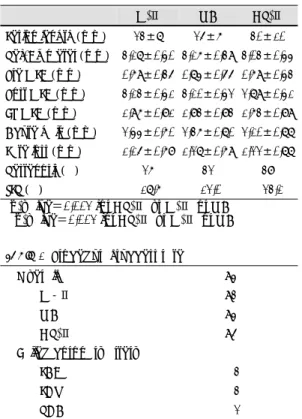
심증은 58예(45%), 안정형 협심증은 40예(31%)였 다. 위험인자는 당뇨병이 25%, 고혈압이 51%, 흡연 이 55% 그리고 총콜레스테롤 치가 220 mg/dl 이상으 로 정의했을 때 고콜레스테롤혈증을 보이는 환자가 25%였다(Table 1).

관동맥 조영소견

관동맥조영술상 단일혈관 질환이 51예(39%), 다혈 관 질환이 79예(61%)의 분포를 보였다. 또한 병변의 분포는 좌전하행지 53병변, 좌회선지 23병변, 우관동 맥 51병변, 좌주간동맥 1예 그리고 이식 복제정맥이 2 예였다(Table 2). 삽입한 stent는 Microstent Ⅱ가 56개, less shortening Wallstent가 31개 그리고 Gi- anturco-Roubin Ⅱ stent가 43개였다(Table 3). 시 술에 사용된 stent의 크기는 M-Ⅱ는 구경이 3.0 mm인 경우가 67.9%, WA는 구경이 3.5 mm인 경우가 54.8%

그리고 GR-Ⅱ는 3.0 mm인 경우가 65.1%였다. Stent 의 길이는 M-Ⅱ는 평균 28.3±2.7 mm, WA는 33.9±

9.3 그리고 GR-Ⅱ는 40 mm였다(Table 4). 병변의 길 이는 M-Ⅱ가 23±7 mm, WA가 25±6 mm 그리고 GR-Ⅱ가 30±10 mm로 GR-Ⅱ가 다른 두 stent에 비 해서 조금더 긴 병변에 삽입된 것을 알 수 있었다(p- value=0.002). 표준혈관의 크기는 M-Ⅱ가 3.17±

0.40, WA가 3.16±0.39, GR-Ⅱ가 3.03±0.44였다.

시술 전 최소혈관 내경은 M-Ⅱ가 0.69±0.35, WA가 0.74±0.55, GR-Ⅱ가 0.69±0.43 였다. 시술 후 관 동맥 최소혈관 내경은 M-Ⅱ가 3.13±0.41, WA가 3.10±0.42, GR-Ⅱ가 2.79 ±0.41로 GR-Ⅱ가 다른 두 stent에 비해서 작았다(p-value=0.002). 또한 추 적 혈관조영술상 최소혈관 내경은 M-Ⅱ가 1.96±

0.81, WA가 1.83±0.83, GR-Ⅱ가 1.63±0.89로 GR-Ⅱ가 다른 두 집단보다 작은 경향이 있었으나 통 계적인 의의는 없었다. Acute gain은 M-Ⅱ가 2.44±

0.60, WA가 2.36±0.70, GR-Ⅱ가 2.10±0.52로 세 stent간의 차이는 없었다. Late loss는 M-Ⅱ는 1.15

±0.68, WA는 1.27±0.69, GR-Ⅱ는 1.22±0.77로 stent간의 차이는 없었다(Table 5).

시술성공률 및 급성 합병증

전체 시술성공률은 94%로 7예가 병변부위에 stent 삽입의 실패였고, 1예에서 시술 후 급성혈전증이 생겼 던 경우이다. M-Ⅱ가 93%, WA가 94% 그리고 GR-

Table 2. Angiographic charactersitics of the lesions

Number (%) Angiographic diagnosis

One vessel disease 51 (39) Two vessel disease 40 (31) Triple vessel disease 38 (29)

Left main 1 ( 1)

Lesion sites

LAD 53 (41)

LCX 23 (18)

RCA 51 (39)

Graft vessels 2 ( 1)

Left main 1 ( 1)

Table 3. Types of stent

Number (%)

Microstent Ⅱ 56 (43.1)

Less shorting Wallstent 31 (23.8) Gianturco-Roubin Ⅱ stent 43 (33.1)

Table 1. Clinical characteristics of the patients

Number (%) Sex (male/female) 84(68.3)/39(31.7)

Age 57 ± 10

Risk factors

Diabetes mellitus 33 (25)

Hypertension 66 (51)

Hypercholesterolemia (> 220 mg%) 33 (25)

Smoking 71 (55)

Clinical diagnosis

Stable angina 40 (31) Unstable angina 58 (45)

Acute MI 32 (24)

Table 4. Stent size and lengt h

M-Ⅱ WA GR-Ⅱ

Number (%)

Diameter (mm)

3.0 38 (68) 11 (35) 28 (65) 3.5 14 (25) 17 (55) 12 (28) 4.0 4 ( 7) 2 ( 7) 3 ( 7) 4.5 0 ( 0) 1 ( 3) 0 ( 0) Length (mm)

Mean±SD 28.3±2.7 33.9±9.3 40±0

(4)

Ⅱ가 95%로 세 stent간의 시술성공률에 차이는 없었 다. 실패한 경우를 혈관별로 살펴보면 좌전하행지가 3예, 좌회선지가 3예 그리고 우관동맥이 2예였다(Ta- ble 6). 급성 합병증은 심낭압전이 1예에서 있었고 stent 혈전증이 5예(3.8%)에서 있었는데 이중 급성 이 1예, 아급성이 4예였다. Stent 혈전증은 M-Ⅱ가 한 예도 없었고, WA가 2예 그리고 GR-Ⅱ가 3예였 다(Table 7).

추적 관찰결과

평균 6.5±2.3개월 후 추적 관동맥조영술을 시행했는 데 123명중 85명에서 추적관찰이 가능하였다(69%).

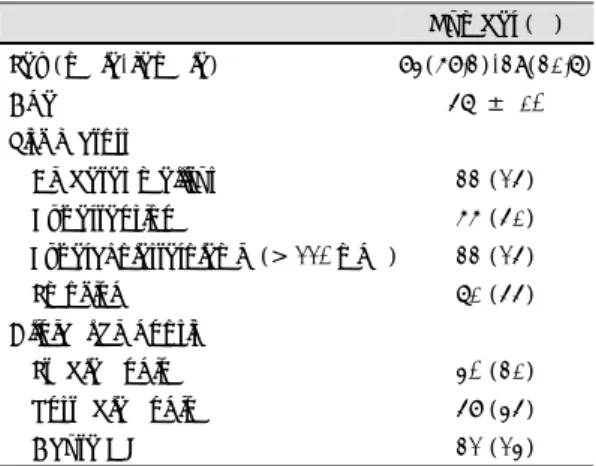
M-Ⅱ는 64%(34명 / 53명), WA는 83%(25명 / 30 명), GR-Ⅱ는 65%(26명 / 40명)이었다. 재협착은 85 명중 27명의 환자에서 있어서 32%의 재협착률을 보였 다. 각 stent 별 재협착률은 M-Ⅱ는 26%, WA는 32%, GR-Ⅱ는 38%로 차이를 보이지 않았다. TLR은 M-Ⅱ는 17.6%, WA는 12%, GR-Ⅱ는 23.1%로 세 군간에 유의한 차이를 보이지는 않았다(Table 5). 재 협착률에 영향을 미치는 인자는 다중 회귀분석상 stent

삽입 후 최소혈관 내경(p-value=0.002, Odds ratio

=0.063)과 병변의 길이(p-value=0.03, Odds ratio

=1.096)로 밝혀졌다. 즉 stent 삽입 후 최소혈관 내경 이 1 mm 증가시 재협착률이 0.063배 감소하고, 반대 로 1 mm 감소시 재협착이 15.87배 잘 생기는 것을 알 수 있었다. 또 병변의 길이가 1 mm 커질 때 마다 재협착이 1.096배로 증가하는 것을 의미한다.

고 안

관동맥 병변의 길이가 길수록 경피적 관동맥성형술 초기 성공률이 떨어지고 급성폐쇄가 많이 생긴다는 것 은 잘 알려진 사실이다.

6-8)

즉 1980년 ACC / AHA에 서 병변의 특성에 따라서 type A, B, C로 나누었는데 병변의 길이가 10~20 mm인 type B 병변은 시술시 중간정도의 위험이 있고 성공률도 중간정도이며, 병변 이 20 mm 이상인 type C 병변인 경우에는 성공률이 낮고 합병증의 위험이 높은 것으로 되어 있다. 특히 balloon catheter의 길이가 병변보다 짧은 것을 사용하 는 경우에 내막박리가 잘 생겨서 이로 인한 급성폐쇄가 많다. 또한 긴 병변에서의 관동맥성형술은 재협착률도 높다고 알려져 있는데,

9-14)

특히 여러 개의 스텐트를 겹쳐서 넣은 경우 subacute stent thrombosis가 잘 생 기고 재협착률도 높다는 보고도 있다.

15)16)

긴 병변이 경피적 관동맥풍선확장술후 높은 재협착률을 보이는 것은, 짧은 병변에 비해서 긴 병변이 경피적 관동맥성 형술후 많은 평할근 세포가 손상을 받고 많은 혈소판의 부착을 유발하기 때문이라고 설명할 수 있겠다.

12)13)

Table 5. Angiographic results

M-Ⅱ WA GR-Ⅱ Lesion length (mm)* 23±7 25±6 30±10 Ref. Diameter (mm) 3.17±0.40 3.16±0.39 3.03±0.44 Pre MLD (mm) 0.69±0.35 0.74±0.55 0.69±0.43 Post MLD (mm)** 3.13±0.41 3.10±0.42 2.79±0.41 FU MLD (mm) 1.96±0.81 1.83±0.83 1.63±0.89 Acute gain (mm) 2.44±0.60 2.36±0.70 2.10±0.77 Late loss (mm) 1.15±0.68 1.27±0.69 1.22±0.77

Restenosis (%) 26 32 38

TLR (%) 17.6 12.0 23.1

* p-value=0.002 for GR-Ⅱ vs M-Ⅱ or WA

** p-value=0.002 for GR-Ⅱ vs M-Ⅱ or WA

Table 6. Procedural success rate

Overall 94 %

M-Ⅱ 93 %

WA 94 %

GR-Ⅱ 95 %

Failed coronary artery

LAD 3 LCX 3 RCA 2

Table 7. Procedure related complications

Number (%) Acute closure 1 (0.7) Subacute closure 4 (3.1) Stent migration 0 Q-myocardial infarction 0

Emergency CABG 0

Bleeding requiring transfusion 0

Table 8. Factors affecting restenosis in multiple logistic

regression analysis

P-value Odds ratio Post-stent MLD 0.002 0.063 Lesion length 0.03 1.096
(5)

또한 몇몇 연구에서 긴 병변과 죽상동맥경화반이 두꺼 운 혈관은 내막박리의 빈도가 높고, 그러므로 더 심한 혈관 손상을 받는다고 보고하고 있다.

22)23)

최근에는 긴 병변에 Wallstent를 삽입 후 아급성 stent 혈전으로 의심되는 급사가 4.5%에서 있었다는 보고도 있었다.

17)

그러나 최근에 long balloon catheter가 개발되었고, 이렇게 긴 병변에 long balloon catheter를 이용하여 풍선확장술의 성공률을 높였다는 보고도 있다.

18)19)

또 한 이러한 긴 병변에서 single long stent를 사용하여 초기 시술성공률을 높이고, 시술에 따르는 합병증을 줄 일 수 있었다는 보고도 있다. 재협착률도 35%로 긴 병 변에서 다른 기구에 의한 시술에 비해서 재협착률을 줄 였다고 보고하고 있다.

20)21)

본 연구에서도 94%의 높 은 성공률을 보였는데 이는 다른 외국의 보고와 일치하 는 결과를 보여주고 있다. 본 연구에서는 대부분의 병 변에서 긴 풍선도자를 사용하여 성공적으로 병변을 확 장할 수 있었다. 긴 풍선도자는 짧은 풍선도자에 비해 서 비교적 균등하게 확장 압력이 혈관의 병변부위와 죽 상반/정상혈관 접합부에 주어지는 기전으로 병변을 확 장하는 것으로 알려졌는데, 내막 박리가 적게 일어나면 서 짧은 풍선도자에 비해서 높은 성공률을 보이는 것으 로 알려져 있다.

8)19)

각 stent 별로 살펴보면 성공률이 각각 93%, 94%, 95%로 차이가 없슴을 알 수 있다. St- ent를 병변부위에 삽입하는데 실패했던 7예에서는 다 른 종류의 stent를 사용하여서 시술하는데 성공하였고 1예에서는 시술 후 24시간 내에 혈전증이 발생하여 시 술 실패로 분류하였다. 실패한 경우를 시술 혈관에 따라 서 살펴보았으나 역시 차이를 보이지 않았다. Stent 혈전 증은 총 5예(3.8%)에서 있었는데 이는 본 기관에서 최근에 보고한 짧은 병변에서 stent 삽입술 후 혈전증 의 빈도(1.2%)와 비교해 볼 때 약간 높은 편으로 stent 가 길기 때문에 관동맥내에 정확히 부착하는데 어려움 이 있어서 혈전증이 일반적인 짧은 stent에 비하여 높 은 것으로 사료된다. 혈전증이 생긴 5명중 3명에서는 재풍선확장술을 시행하여 성공적인 치료를 하였다. 최 근에 국내에서도 다양한 종류의 stent가 도입되어서 각 각의 병변에 맞는 stent가 시술되고 있는데 특히 stent 의 길이가 매우 다양해서 병변의 길이에 맞추어 한 개 의 stent로 긴 병변을 시술하는 것이 가능해졌다.

본 연구에서도 M-Ⅱ는 24 mm, 30 mm 짜리를 사 용했고, WA는 24 mm 부터 56 mm 까지의 다양한 길

이의 stent를 사용했으며, GR-Ⅱ는 40 mm 짜리의 stent를 사용했다. 이러한 다양한 종류의 stent 간에 시술 성공률 및 시술에 따른 합병증 그리고 재협착률에 어떤 차이가 있는지에 대해서 비교한 연구가 1995년 과 1996년에 발표되었는데, 본 연구와 유사한 재협착 률을 보였다. 그러나 본 연구에서의 제한점은 혈관조영 술 추적관찰율이 69%로 낮기 때문에 추적조영술상의 재협착율을 확실하게 말하는 것에 약간의 무리가 따르 는 것으로, 향후 더 많은 환자를 대상으로 해서 추적관 찰율을 높이는 것이 중요하겠다. 또한 3가지 다른 stent 사이의 시술에 따른 성공률, 합병증의 빈도 그리 고 재협착률에 있어서는 차이를 보이지 않았지만 GR-

Ⅱ stent가 타 stent에 비교해서 풍선확장술 후 최소직 경이 가장 작은 것으로 나타났다.

21)24)

본 연구에서는 M-Ⅱ나 GR-Ⅱ에 비해서 WA가 직경이 큰 stent로 삽입된 경우가 많았는데 이는 아마도 직경이 큰 혈관에 다른 stent에 비해서 WA를 선호한 경향이 있기 때문 으로 사료된다. Stent의 길이를 비교해 보면 다른 stent에 비해서 GR-Ⅱ stent가 길고 병변의 길이도 통계적으로 의의 있게 길어서 재협착률이 높을 것으로 생각되었으나 큰 차이를 보이지 않았다. 시술 전 최소 혈관 내경은 세 stent 사이에 차이를 보이지 않았으나, stent 삽입 후 최소혈관 내경이 GR-Ⅱ stent에서 작 았는데 이는 다른 외국의 보고와 같다. 이는 아마도 GR-Ⅱ가 다른 두 stent에 비해서 낮은 radial force 때문에 recoil이 잘 생기기 때문으로 사료된다. 그러나 late loss가 다른 stent와 차이가 없어서 추적 혈관조영 술상 최소혈관 내경은 차이가 없었던 것으로 생각된다.

재협착률에 영향을 미치는 인자는 다중 로지스틱 회귀분

석상 stent 삽입 후 최소혈관 내경(p-value=0.0015,

Odds ratio=0.063)과 병변의 길이(p-value=0.035,

Odds ratio=1.096)로 나타났다. 결론적으로 긴 병변

에서 long stent의 삽입은 높은 초기성공률을 보이고

비교적 낮은 합병증을 보여주었다. 또한 본 연구에서

사용되었던 3가지 다른 종류의 stent 사이에서는 시술

성공률과, 재협착률에 차이를 보이지 않았다. 그러므로

각각의 병소의 특성에 맞추어서 가장 적절한 stent를

삽입하는 것이 중요하겠고, 역시 긴 병변에서도 stent

삽입술 후 stent apposition을 최상의 상태로 하여서

최소혈관내경을 크게 하는 것이 재협착을 줄일 수 있는

최선의 방법이라고 사료된다.

(6)

요 약

연구배경:

짧은 병변에서 관동맥 stent 삽입술이 관동맥풍선확 장술에 비해서 재협착률을 낮춘다는 것은 잘 알려진 사 실이다. 그러나 긴 병변에서의 stent 삽입술의 유용성 에 대해서는 알려진 바가 적다. 이에 저자 등은 20 mm 이상의 긴 관동맥 병변에서 세가지 다른 stent를 삽입하고 초기결과와 6개월 후 추적 혈관조영술 결과 를 알아보고자 하였다.

방 법:

1996년 2월부터 1997년 1월까지 연세대학교 의과 대학 세브란스병원에서 long stent삽입술을 시행받은 123 명의 환자(남자 68.3%, 평균나이 57±10세), 130 병소를 대상으로 하였다. 이중 Microstent-Ⅱ가 시술 된 환자는 53명(56병소), less shorting Wallstent 가 시술 된 환자가 30명(31병소), Gianturco-Roubin stent-Ⅱ가 삽입된 환자가 40명(43병소)였다. 두개이 상의 stent를 겹쳐서 삽입한 경우와 급성내막박리로 long stent를 삽입한 경우는 연구대상에서 제외시켰다.

결 과:

1) 잔여협착이 50% 미만이고 시술 후 사망, 관동맥 우회로술 그리고 Q-wave 심근경색이 발생하지 않은 경우를 임상적인 성공이라고 정의하였을때 M-Ⅱ는 93%, WA는 94%, GR-Ⅱ는 95%의 성공률을 보였다.

Stent 혈전증이 M-Ⅱ는 0%, WA는 1.5%, GR-Ⅱ는 2.3%에서 있었다. 임상적인 성공률과 시술 후 stent 혈전증은 세 stent간에 차이를 보이지 않았다.

2) 평균 6.5개월 추적 혈관조영술은 M-Ⅱ는 34 / 53명(64%), WA는 25 / 30명(83%), GR-Ⅱ는 26 / 40명(65%)에서 시행되었다. 재협착의 빈도는 M-Ⅱ 는 26 %, WA는 32%, GR-Ⅱ는 38%였다. 추적관찰 기간중에 관동맥우회로술 및 관동맥성형술을 시행 받 은 경우는 M-Ⅱ는 17.6%, WA는 12%, GR-Ⅱ는 23.1%로 차이를 보이지 않았다.

결 론:

긴 병변에서 long stent의 삽입은 비교적 안전하고 효과적으로 시술할 수 있는 것으로 생각된다. 또한 세 가지 다른 종류의 stent 사이에서 재협착률과 임상경과 에 차이를 보이지 않았다.

중심 단어 :긴 병변・긴 스텐트・재협착..

REFERENCES

1)

George BS, Voohees Ⅲ WD, Roubin GS, et al. Multic-

enter investigation of coronary stenting to treat acute or threatened closure after percutaneous transluminal cor- onary angioplasty : Clinical and angiographic outcomes.

J Am Coll Cardiol 1993 ; 22 : 135-42.

2)

Hermann HC, Buchbinder M, Cleman MW, et al. Eme-

rgent use of balloon-expandable coronary artery stenting for failed percutaneous transluminal coronary angiopl- asty. Circulation 1992 ; 86 : 812-9.

3)

Maiello L, Colombo A, Gianrossi A, McCanny R, Finci L. Coronary stenting for treatment of acute or threatened

closure following dissection after coronary balloon angi- oplasty. Am Heart J 1993 ; 125 : 1570-7.

4)

Fischman DL, Leon MB, Baim DS, Schatz RA, Savage MP, Penn I, et al. A randomized comparison of coronary

stent placement and balloon angioplasty in the treatment of coronary artery disease. N Eng J Med 1994 ; 331 : 496- 501.

5)

Serruys PW, de Jaegere P, Kiemeneij F, Macaya C, Ru- tsch W, Heyndrickx G, et al. A comparison of balloon

expandable stent implantation with balloon angioplasty in patients with coronary artery disease. N Engl J Med 1994 ; 331 : 489-95.

6)

Tan K, Sulke N, Taub N, Sowton E. Clinical and lesion

morphologic determinants of coronary angioplasty succ- ess and complications : Current experience. J Am Coll Cardiol 1995 ; 25 : 855-65.

7)

Myler R, Shaw R, et al. Lesion morphology and coro-

nary angioplasty : Current experience and analysis. J Am Coll Cardiol 1992 ; 19 : 1641-52.

8)

Zidar JP, Tenaglia AN, Jackman JD, et al. Improved ac-

ute results for PTCA of long coronary lesions using long angioplasty balloon cathters. J Am Coll Cardiol 1992;

19 : 34A.

9)

Hirshfeld JW Jr, Schwartz JS, Jugo R, et al. Restenosis

after coronary angioplasty : A multivariate statistical mo- del to relate lesion and procedure variables to restenosis.

J Am Coll Cardiol 1991 ; 18 : 647-56.

10)

Bourassa MG, Lesperance J, Eastwood C, Schwartz L, Cote G, Kazim F, Hudon G. Clinical, physiological, an-

atomic and procedural factors predictive of restenosis af- ter percutaneous transluminal coronary angioplasty. J Am Coll Cardiol 1991 ; 18 : 368-76.

11)

Yamaguchi T. Risk factors for later restenosis after suc-

cessful coronary angioplasty : Mitsui Memorial Hospital experience. J Cardiol 1991 ; 21 : 43-52.

12)

Rensing BJ, Hermans WR, Beatt KJ, et al. Angiogra-

phic risk factors of luminal narrowing after coronary bal-loon angioplasty using balloon measurements to reflect stretch and elastic recoil at the dilatation site. Am J Car-diol 1993 ; 69 : 584-91.

13)

Rensing BJ, Hermans WR, Vos J, et al. Luminal narro-

wing after percutaneous trasluminal coronary angioplasty.

A study of clinical, procedural, and lesional factors rel-

ated to long-term angiographic outcome. Circulation

1993 ; 88 : 975-85.

(7)

14)

Bauters C, Lablanche JM, Leroy F, et al. Morphological

changes of coronary stenosis after repeated balloon angioplasties : A quantitative angiographic study. Cathet Cardiovasc Diagn 1991 ; 24 : 158-60.

15)

Hall P, Nakamura S, Maiello L, Blengino S, Martini G, Finci L, Colombo A. Factors associated with late angi-

ographic outcome after intravascular ultrasound guided Palmaz-Schatz coronary stent implantation : A multivar- iate analysis. J Am Coll Cardiol February Special Issue ; 1995, p.36A.

16)

Tamura T, Kimura T, Nosaka H, Nobuyoshi M. Predi-

ctors of restenosis after Palmaz-Schatz stent implantation.

Circulation 1994 ; 90 : I-324.

17)

Gambhir DS, Sudha R, Trehan V, Jain R, Singh S, Kaul UA, Arora R. Immediate and six-month outcome of self-

expanding Wallstent for long lesions in native coronary arteries. Indian Heart Journal 1997 ; 49 : 53-9.

18)

Brymer JF, Khaja F, Kraft PL. Angioplasty of long or

tandem coronary artery lesions using a new longer ball- oon dilatation catheter : A comparative study. Cathet Ca- rdiovasc Diagn 1991 ; 23 : 84-8.

19)

Savas V, Puchrowicz S, Williams L, Grines CL, O’Neill WW. Angioplasty outcome using long balloons in high-

risk lesions. J Am Coll Cardiol 1992 ; 19 : 34A.

20)

Maiello L, Hall P, Nakamura S, Blengino S, Finci L, Martini G, Colombo A. Results of stent implantation for

diffuse coronary disease assited by intravascular ultras- ound. J Am Coll Cardiol February Special Issue ; 1995.

p.156A.

21)

Yokoi H, Nobuyoshi M, Nosaka H, Kimura T, Yokoi H, Hamasaki N, Nakagawa Y, Tamura T, Nakano Y, Hay- ashi F. Coronary stenting for long lesions

( lesion leng- th > 20 mm ) in native coronary arteries : comparison of three different types of stent. Circulation 1996 ; 94 ( Suppl

Ⅰ): I-685.

22)

Zollikofer C, Chain J, Salomonowitz E, Runge W, Bru- ehlman W, Castaneda-Zuniga W, Amplatz K. Percutan-

eous transluminal angioplasty of the aorta. Radiology 1984 ; 151 : 355-63.

23)

Ellis SG, Roubin GS, King III SB, Weintraub JS, Tho- mas RG, Cox WR. Angiographic and clinical predictors

of acute closure after native vessel coronary angioplasty.

Circulation 1988 ; 77 : 372-9.

24)

Akira I, Hall P, Maiello L, Blengino S, Finci L, Ferraro M, Martini G, Colombo A. Coronary stenting of long

lesions ( greater than 20 mm ): A matched comparison of

different stents. Circulation 1995 ; 92 : I-688.

수치

Table 2. Angiographic charactersitics of the lesions  Number (%)  Angiographic diagnosis
Table 7. Procedure related complications  Number (%)  Acute closure  1 (0.7)  Subacute closure  4 (3.1)  Stent migration  0  Q-myocardial infarction  0  Emergency CABG  0

참조

관련 문서

Pathways of global GHG emissions (GtCO 2 eq/yr) in baseline and mitigation scenarios 2 . for different long-term concentration levels (upper panel) and

In order to defeat these problems and enhance patient’s convenience, we designed fluidal lipid matrix (FLM) for long-acting injection that can maintain the long efficacy

ƒ When the long-chain molecules in a polymer are cross-linked in a three dimensional arrangement the structure in effect becomes three-dimensional arrangement, the structure

The 5 day-long training program was held from May 22

Effect of caloric restriction on the expression of PGC-1 and PPARs mRNA in liver of Otsuka Long-Evans Tokushima Fatty Rats.. Long-lived growth hormone

Although there was a trend for a greater decline in quantitative HBsAg titers in the group that achieved HBeAg seroclearance, the difference in the kinetics of qHBsAg

The conventional method of long distance face recognition uses reconstruction method turning face images of long distance with low resolution into

Three small identical spheres A, B, and C, which can slide on a horizontal, frictionless surface, are attached to three 200-mm-long strings, which are tied to a ring G. Which