• 검색 결과가 없습니다.

JAK/STAT Pathway Modulates on <italic>Porphyromonas gingivalis</italic> Lipopolysaccharide- and Nicotine-Induced Inflammation in Osteoblasts

N/A
N/A
Protected

Academic year: 2021

Share "JAK/STAT Pathway Modulates on <italic>Porphyromonas gingivalis</italic> Lipopolysaccharide- and Nicotine-Induced Inflammation in Osteoblasts"

Copied!
6
0
0

로드 중.... (전체 텍스트 보기)

전체 글

(1)

RESEARCH ARTICLE

Received: January 3, 2017, Revised: January 23, 2017, Accepted: January 23, 2017 ISSN 1598-4478 (Print) / ISSN 2233-7679 (Online)

Correspondence to: Sang-im Lee

Department of Dental Hygiene, College of Health Science, Dankook University, 119 Dandae-ro, Dongnam-gu, Cheonan 31116, Korea Tel: +82-41-550-1492, Fax: +82-41-559-7934, E-mail: [email protected]

Copyright © 2017 by Journal of Dental Hygiene Science

조골세포에서 Porphyromonas gingivalis

Lipopolysaccharide와 니코틴에 의한 염증에 대한 JAK/STAT Pathway의 역할

한양금ㆍ이인수

1

ㆍ이상임

2†

대전보건대학교 치위생과,

1

한남대학교 생명·나노과학대학 생명시스템과학과,

2

단국대학교 보건과학대학 치위생학과

JAK/STAT Pathway Modulates on Porphyromonas gingivalis Lipopolysaccharide- and

Nicotine-Induced Inflammation in Osteoblasts

Yang-keum Han, In Soo Lee 1 , and Sang-im Lee 2†

Department of Dental Hygiene, Daejeon Health Science College, Daejeon 34504,

1

Department of Biological Sciences and Biotechnology, College of Life Science and Nano Technology, Hannam University, Daejeon 34430,

2
Department of Dental Hygiene, College of Health Sciences, Dankook University, Cheonan 31116, Korea

Bacterial infection and smoking are an important risk factors involved in the development and progression of periodontitis. However, the signaling mechanism underlying the host immune response is not fully understood in periodontal lesions. In this study, we determined the expression of janus kinase (JAK)/signal transducer and activator of transcription (STAT) on Porphyromonas gingivalis lipopolysaccharide (LPS)- and nicotine-induced cytotoxicity and the production of inflammatory mediators, using osteoblasts. The cells were cultured with 5 mM nicotine in the presence of 1 μg/ml LPS. Cell viability was determined using MTT assay. The role of JAK on inflammatory mediator expression and production, and the regulatory mechanisms involved were assessed via enzyme-linked immunosorbent assay, reverse transcription-polymerase chain reaction, and Western blot analysis. LPS- and nicotine synergistically induced the production of cyclooxgenase-2 (COX-2) and prostaglandin E

2

(PGE

2

) and increased the protein expression of JAK/STAT. Treatment with an JAK inhibitor blocked the production of COX-2 and PGE

2

as well as the expression of pro-inflammatory cytokines, such as tumor necrosis factor-α, interleukin-1β (IL-1β), and IL-6 in LPS- and nicotine-stimulated osteoblasts. These results suggest that JAK/STAT is closely related to the LPS- and nicotine-induced inflammatory effects and is likely to regulate the immune response in periodontal disease associated with dental plaque and smoking.

Key Words: JAK/STAT pathway, Nicotine, Periodontitis, Porphyromonas gingivalis lipopolysaccharide

Introduction

Periodontitis is an infectious disease, and pathogenic bacteria are the driving force lead to periodontal tissue

breakdown 1) . The degradation of the soft and hard tissues

of the periodontium results from both the colonization of

tooth surfaces by certain Gram-negative anaerobic bac-

teria, such as Aggregatibacter actinomycetemcomitans 2,3)

(2)

and Porphyromonas gingivalis 4) , and the host response to its accumulation 5) . In dental plaque, lipopolysaccharide (LPS) from the cell wall of Gram-negative bacteria induces the production of bone-absorbing cytokines, such as interleukin (IL)-1, IL-6, interferon (IFN)-α, and tumor necrosis factor (TNF)-α 6-8) , and of prostaglandin E 2

(PGE 2 ) 9) .

Smoking is also an important risk factor in the progression of periodontitis 10) . Nicotine, a major com- ponent of tobacco smoke, influences the periodontopathic processes and has been detected on the subgingival plaque and in the gingival crevicular fluid of smokers 11) . Previous reports demonstrated that nicotine inhibited growth of gingival fibroblasts and production of fibronectin and collagen, and promoted collagen breakdown 12) . Nicotine has been shown to increase the release of IL-6 by cultured murine osteoblasts 13) and changes in IL-6, IL-10, and IFN-γ levels by treated with nicotine in mice 14) .

Although inflammation is an essential component of the host response to microbial challenge and various oral conditions, excessive secretion of inflammatory mediators results in loss of alveolar bone and connective tissue attachment around teeth, which are the hallmarks of destructive periodontal disease 15) . Therefore, the regula- tion of inflammatory mediators by intracellular mechanisms and the balance of pro-instead of anti-inflammatory activity will ultimately determine the severity and extent of sup- porting tissue destruction in gingivitis and periodontitis 16,17) . Many cytokines that participate on periodontium damage such as ILs or IFNs signal through janus kinase (JAK)/signal transducer and activator of transcription (STAT) signal transduction. It is that activation of these pathways is essential for the signaling of cytokines and other stimuli, which regulates inflammatory gene expression.

The JAK/STAT pathway is the attractive targets of various cytokines which are regarded to have biologically significant roles in chronic periodontal disease 18,19) . Other recent study has shown that activations of STAT3 and 5 were noted on the ligature model of experimental perio- dontitis 20) .

However, the intracellular signaling mechanisms con- trolling the inflammatory network in periodontal disease are still poorly understood. Thus, the object of this

research was to investigate the role of JAK/STAT on LPS- and nicotine-induced inflammatory mediators in osteo- blast cells.

Materials and Methods

1. Cell culture

A murine pre-osteoblastic cell line, MC3T3-E1, was purchased from American Type Culture Collection (Manassas, VA, USA) and cultured in α-minimal essential medium containing 10% fetal bovine serum, 100 U/ml penicillin, and 100 μg/ml streptomycin. The cells were stimulated with 1 μg/ml highly purified P. gingivalis LPS (Invivogen, San Diego, CA, USA) and nicotine 1, 2, or 5 mM (Sigma-Aldrich Chemical Co., St. Louis, MO, USA) for 24 hours. Other tissue culture reagents were from Gibco TM /Life Technologies (Carlsbad, CA, USA). JAK inhibitor was purchased from EMD Chemicals (Gibbs- town, NJ, USA).

2. Cell cytotoxicity assay

The cytotoxicity was determined by a 3-(4,5-dimethyl- thiazol-2-yl)-2,5-diphenyl tetrazolium bromide (MTT;

Sigma-Aldrich Chemical Co.) assay. Cells seeded on 96-well microplates at 1×10 4 cells/well were incubated with LPS (from P. gingivalis) and nicotine for the indicated time period. Medium was removed and then incubated with 100 μl MTT solution for 4 hours.

Absorbance was measured in a microplate reader (Bio- Rad, Hercules, CA, USA) at 595 nm.

3. Enzyme-linked immunosorbent assay (ELISA) The concentrations of cyclooxgenase-2 (COX-2) and PGE 2 in the culture supernatants were determined using a commercially available ELISA kit (R&D Systems, Min- neapolis, MN, USA). Triplicate assays were carried out on each specimen, and the data were converted to pg/ml.

4. RNA extraction, reverse transcriptase-polymerase chain reaction (RT-PCR)

Total RNA was extracted from cells using Trizol

(Invitrogen, Carlsbad, CA, USA) according to the manu-

facturer’s instructions. Reverse transcription of the RNA

(3)

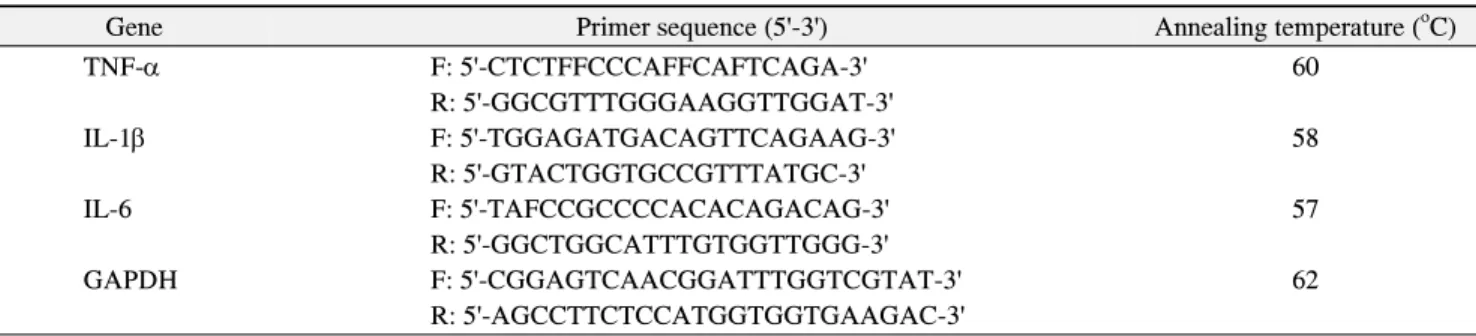
Table 1. Sequences of Oligonucleotide Primer Used for RT-PCR Analysis

Gene Primer sequence (5'-3') Annealing temperature (

o

C)

TNF-α F: 5'-CTCTFFCCCAFFCAFTCAGA-3' 60

R: 5'-GGCGTTTGGGAAGGTTGGAT-3'

IL-1β F: 5'-TGGAGATGACAGTTCAGAAG-3' 58

R: 5'-GTACTGGTGCCGTTTATGC-3'

IL-6 F: 5'-TAFCCGCCCCACACAGACAG-3' 57

R: 5'-GGCTGGCATTTGTGGTTGGG-3'

GAPDH F: 5'-CGGAGTCAACGGATTTGGTCGTAT-3' 62

R: 5'-AGCCTTCTCCATGGTGGTGAAGAC-3'

RT-PCR: reverse transcription-polymerase chain reaction, F: forward, R: reverse, TNF-α: tumor necrosis factor-α, IL-1β:

interleukin-1β, IL-6: interleukin-6, GAPDH: glyceraldehyde-3-phosphate dehydrogenase.

was performed using AccuPower RT PreMix (Bioneer, Daejeon, Korea). A total of 1 μg of RNA and 20 pmol primers were preincubated at 70℃ for 5 minutes, and then transferred to a mixture tube. The reaction volume was 20 μl. cDNA synthesis was performed at 42 o C for 60 minutes, followed by RT inactivation at 94 o C for 5 minures. Thereafter, the RT-generated DNA (2∼5 μl) was amplified using AccuPower PCR PreMix (Bioneer).

Thirty cycles of amplification were run in a DNA thermal cycler (Roche Diagnostics, Mannheim, Germany). Primer sequences and PCR conditions are detailed in Table 1.

PCR products were subjected to electrophoresis on 1.5%

agarose gels and visualized with SYBR Safe.

5. Western blotting assay

The treated cells were washed with phosphate buffer saline and cytosolic and nuclear protein extracts were prepared using 1× RIPA buffer (Santa Cruz Biotech- nology, CA, USA) supplemented with a protease inhibitor cocktail. Protein concentrations were determined using the Bradford assay (Bio-Rad) as per the manufacturer's protocol. Proteins (30 μg) were mixed with an equal volume of 2× sodium dodecyl sulfate (SDS) sample buffer, boiled for 5 minutes, and then resolved by SDS-polyacrylamide gel electrophoresis (12% acrylamide) and transferred to polyvinylidene fluoride membrane, immobilon-P (Millipore Co., Milford, MA, USA). The membrane was blocked with 5% skim milk in tris- buffered saline, 0.1% tween 20 for 1 hour at room temperature and incubated with primary antibodies (1:1,000) and horseradish peroxidase-conjugated secondary

antibodies. Protein bands were detected using an enhanced chemiluminescence system (Amersham Biosciences, Buckinghamshire, UK) according to the manufacturer’s instructions, and exposed to X-ray film. All other antibody was bought from Santa Cruz Biotechnology (Heidel-berg, Germany), unless indicated otherwise.

6. Statistical analysis

All experiments in this research were performed three times to test the reproducibility of the results, and represen- tative findings are shown. Differences among groups were analyzed using one-way analysis of variance with the IBM SPSS Statistics ver. 20.0 (IBM Co., Armonk, NY, USA).

All values were expressed as means±standard deviations, and differences were considered significant at p<0.05.

Results

1. Effects of LPS and nicotine on cytotoxicity and production of COX-2/PGE 2

We first assessed the effects of LPS and nicotine on cell viability via MTT assay. MC3T3-E1 cells exposed to different concentrations of LPS and nicotine for various lengths of time showed a dose-dependent reduction in cell viability compared with control cells (Fig. 1A). Next, we examined the time course of LPS and nicotine-induced changes in COX-2/PGE 2 production. Co-treatment with LPS (1 μg/ml) and nicotine (5 mM) resulted in a time- dependent increase of COX-2 and PGE 2 secretion, with maximal induction after 18 or 24 hours of incubation (Fig.

1B, 1C).

(4)

Fig. 1. Effects of lipopolysaccharide (LPS) and nicotine on cytotoxicity and production of cyclooxgenase-2 (COX-2)/prostaglandin E

2

(PGE

2

) in osteoblasts. Cells were incubated with the indicated concentrations of Porphyromonas gingivalis LPS and nicotine for 24 hours. Cell cytotoxicity was determined by MTT (A), and production of COX-2 and PGE

2

levels were determined by enzyme-linked immunosorbent assay (B, C). Data were obtained from three independent experiments. Values are mean±standard deviation of three experiments.

a

Statistically significant difference compared with control (p<0.05).

Fig. 2. Effects of lipopolysaccharide (LPS) and nicotine on the janus kinase (JAK)/signal transducer and activator of tran- scription (STAT) activation in osteoblasts. Cells were incubated for 60 minutes with the indicated concentrations of LPS and nicotine. The levels of protein expression were determined by Western blotting. The data presented are representative of three independent experiments.

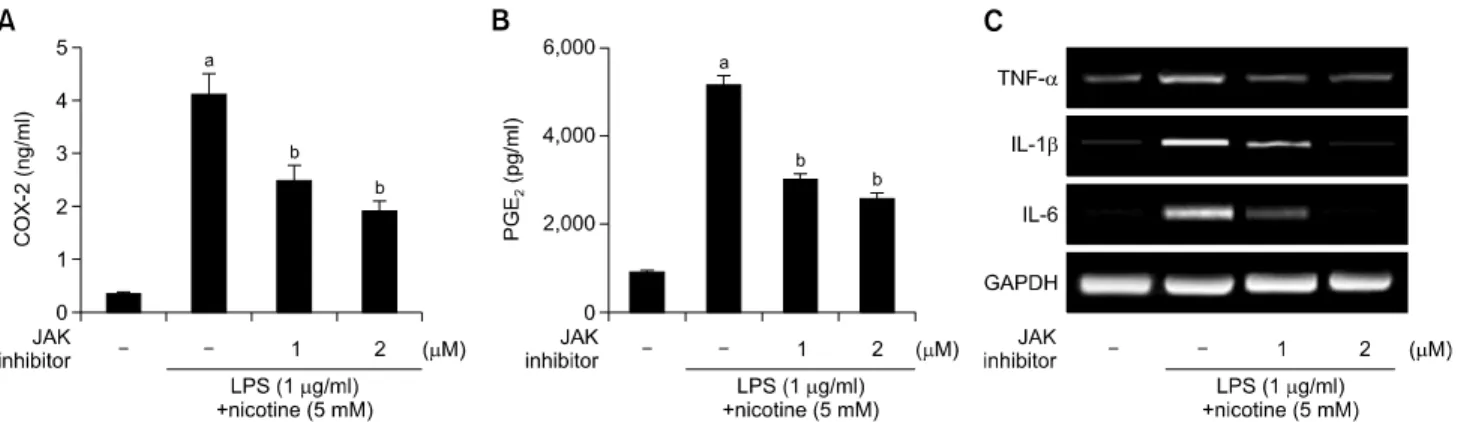
2. Involvement of JAK/STAT pathway on LPS and nicotine-induced inflammatory mediator expression Since JAK/STAT as a major transcription factor regulating inflammatory gene expression, we determine whether LPS and nicotine could activate JAK/STAT in association with its COX-2 and PGE 2 upregulation. As shown in Fig. 2, LPS and nicotine treatment caused increased JAK accumulation in MC3T3-E1 cells. In addition, TNF-α, IL-1β, and IL-6 are major inflammatory cytokines in periodontitis, we investigated these cytokines was affected by JAK/STAT pathway. As shown in Fig. 3, JAK inhibitors significantly decreased mRNA expression of LPS and nicotine-induced TNF-α, IL-1β, and IL-6 in dose dependent manner.

Discussion

Periodontal diseases are chronic inflammation charac- terized by destruction of tooth-supporting soft and hard tissues. Host immune and inflammatory responses are the main causes of promoting the progression of periodontal diseases 5) . Although previous studies reported that the biological activity of a variety of cytokines may be directly relevant to periodontal destruction 1,15) , the molecular mecha- nisms of these effects have not been fully elucidated.

In the present study, it is that demonstrated that P.

gingivalis LPS and nicotine can directly stimulate

production of COX-2, PGE 2 , TNF-α, IL-1β, and IL-6 in

vitro. COX-2 is induced by inflammation, and is re-

sponsible for the synthesis of PGE 2 , which causes pain and

periodontal destruction 9,21) . Furthermore, previous studies

have reported that these mediators could initiate soft tissue

degradation, osteoclast differentiation, and bone

resorption, which are typical symptoms of periodontal

disease 7,8,16) . Remarkably, the limited production of these

mediators may reduce the inflammatory cell chemotaxis

and suppress the destruction and disintegration of perio-

dontium 22) . Therefore, pharmaceutical inhibition of the

(5)

Fig. 3. Effects of janus kinase (JAK) inhibitor on expression of lipopolysaccharide (LPS) and nicotine-induced inflammatory mediators in osteoblasts. Cells were pretreated for 2 hours with JAK inhibitor, and then incubated with the indicated concentrations of LPS and nicotine for 24 hours. The levels of expression were determined by enzyme-linked immunosorbent assay (A, B) and reverse tran- scription-polymerase chain reaction (C). The data presented are representative of three independent experiments.

a

Statistically sig- nificant difference compared with control (p<0.05).

b

Statistically significant difference compared with LPS and nicotine (p<0.05).

COX-2: cyclooxgenase-2, PGE

2

: prostaglandin E

2

, TNF-α: tumor necrosis factor-α, IL-1β: interleukin-1β, GAPDH: glyceraldehyde 3-phosphate dehydrogenase.

production of inflammatory mediators may be an effective strategy for treating periodontal diseases.

In addition, recent studies have demonstrated that signal transduction pathways closely involved in inflammation or osteoclast differentiation include the MAPK pathway, nuclear factor kappa B pathway, JAK/STAT and nuclear factor of activated T cells c1 activation 19,23,24) . JAK/STAT pathway is essential for the signaling of cytokines, which contribute to the progression of various inflammatory diseases 19,25,26) . This pathway can influence the release of various genes with pro-inflammatory activity, such as INF-γ, TNF-α, IL-1, IL-4, IL-6, and IL-10 18,20) . We demon- strated that treatment with JAK inhibitor down-regulated LPS and nicotine-induced inflammatory mediators, sug- gesting that JAK/STAT pathway might play a critical role in these responses.

These results suggest that LPS and nicotine induced COX-2 and PGE 2 production via the JAK/STAT pathway in osteoblasts. Based on these findings, we propose that JAK as an inflammatory mediator represents a important preventive or therapeutic target in periodontitis.

Summary

Although periodontal diseases has been regarded as the result of hyper-immune or inflammatory responses to Bacterial infection and smoking, are rather poor activators

and/or suppressors of the host immune response. JAKs is a key family of cytoplasmic tyrosine kinases, and JAK/STAT pathway have affects a considerable number of genes expression with pro-inflammatory activity in various inflammatory diseases. The present study was designed to clarify the relationship in signaling mechanism on COX-2 and PGE 2 production in relation to LPS and nicotine. After stimulation with LPS and nicotine, ELISA, RT-PCR, and Western blot experiments were performed to evaluate the effects of these stimulation on the production of in- flammatory mediators and activation of signaling pathway.

In conclusion, our study provides evidence for the P.

gingivalis LPS as the major pathogenic factor and nicotine as cytotoxic agent of chronic periodontitis can cause alveolar bone resorption. Additionally, regulation of targeted JAK/

STAT pathway during inflammation by modulating inflammatory mediator levels in osteoblasts, which may provide a potential therapy for the patients with this disease.

Acknowledgements

The present research was conducted by the research fund of Daejeon Health Science College in 2016.

References

1. Page RC: The role of inflammatory mediators in the

(6)

pathogenesis of periodontal disease. J Periodont Res 26:

230-242, 1991.

2. Zambon JJ, Christersson LA, Slots J: Actinobacillus actinomycetemcomitans in human periodontal disease.

Prevalence in patient groups and distribution of biotypes and serotypes within families. J Periodontol 54: 707-711, 1983.

3. Hwang SJ, Kim YK, Yang SJ, Cho HJ: Influence of smoking on matrix metalloproteinase-9 in the gingival crevicular fluid.

J Dent Hyg Sci 11: 339-344, 2011.

4. Darveau RP: The oral microbial consortium's interaction with the periodontal innate defense system. DNA Cell Biol 28: 389-395, 2009.

5. Ji S, Choi YS, Choi Y: Bacterial invasion and persistence:

critical events in the pathogenesis of periodontitis? J Periodontal Res 50: 570-585, 2015.

6. Madianos PN, Bobetsis YA, Kinane DF: Generation of inflammatory stimuli: how bacteria set up inflammatory responses in the gingiva. J Clin Periodontol 32 Suppl 6:

57-71, 2005.

7. Ohlrich EJ, Cullinan MP, Seymour GJ: The immuno- pathogenesis of periodontal disease. Aust Dent J 54 Suppl 1:

S2-S10, 2009.

8. Prabhu A, Michalowicz BS, Mathur A: Detection of local and systemic cytokines in adult periodontitis. J Periodontol 67:

515-522, 1996.

9. Shoji M, Tanabe N, Mitsui N, et al.: Lipopolysaccharide enhances the production of nicotine-induced prostaglandin E2 by an increase in cyclooxygenase-2 expression in osteoblasts. Acta Biochim Biophys Sin (Shanghai) 39:

163-172, 2007.

10. Bergström J: Tobacco smoking and chronic destructive periodontal disease. Odontology 92: 1-8, 2004.

11. Apatzidou DA, Riggio MP, Kinane DF: Impact of smoking on the clinical, microbiological and immunological parameters of adult patients with periodontitis. J Clin Periodontol 32:

973-983, 2005.

12. Alpar B, Leyhausen G, Sapotnick A, Gunay H, Geurtsen W:

Nicotine-induced alterations in human primary periodontal ligament and gingiva fibroblast cultures. Clin Oral Investig 2:

40-46, 1998.

13. Kamer AR, El-Ghorab N, Marzec N, Margarone JE 3rd, Dziak R: Nicotine induced proliferation and cytokine release in osteoblastic cells. Int J Mol Med 17: 121-127, 2006.

14. Makino A, Yamada S, Okuda K, Kato T: Nicotine involved in periodontal disease through influence on cytokine levels.

FEMS Immunol Med Microbiol 52: 282-286, 2008.

15. Liu YC, Lerner UH, Teng YT: Cytokine responses against periodontal infection: protective and destructive roles.

Periodontol 2000 52: 163-206, 2010.

16. Graves DT, Cochran D: The contribution of interleukin-1 and tumor necrosis factor to periodontal tissue destruction. J Periodontol 74: 391-401, 2003.

17. Berglundh T, Donati M: Aspects of adaptive host response in periodontitis. J Clin Periodontol 32 Suppl 6: 87-107, 2005.

18. Roberts FA, McCaffery KA, Michalek SM: Profile of cytokine mRNA expression in chronic adult periodontitis. J Dent Res 76: 1833-1839, 1997.

19. Chaves de Souza JA, Nogueira AV, Chaves de Souza PP, et al.: SOCS3 expression correlates with severity of inflam- mation, expression of proinflammatory cytokines, and activation of STAT3 and p38 MAPK in LPS-induced inflammation in vivo. Mediators Inflamm 2013: 650812, 2013.

20. Garcia de Aquino S, Manzolli Leite FR, Stach-Machado DR, Francisco da Silva JA, Spolidorio LC, Rossa C Jr: Signaling pathways associated with the expression of inflammatory mediators activated during the course of two models of experimental periodontitis. Life Sci 84: 745-754, 2009.

21. Noguchi K, Ishikawa I: The roles of cyclooxygenase-2 and prostaglandin E2 in periodontal disease. Periodontol 2000 43:

85-101, 2007.

22. Lee SI, Yu JS: NFATc mediates lipopolysaccharide and nicotine-induced expression of iNOS and COX-2 in human periodontal ligament cells. J Dent Hyg Sci 15: 753-760, 2015.

23. Lee SK, Chung JH, Choi SC, et al.: Sodium hydrogen sulfide inhibits nicotine and lipopolysaccharide-induced osteoclastic differentiation and reversed osteoblastic differentiation in human periodontal ligament cells. J Cell Biochem 114:

1183-1193, 2013.

24. Lee SI: The role of NFATc1 on osteoblastic differentiation in human periodontal ligament cells. J Dent Hyg Sci 15:

488-494, 2015.

25. Starr R, Hilton DJ: Negative regulation of the JAK/STAT pathway. Bioessays 21: 47-52, 1999.

26. Schindler CW: Series introduction. JAK-STAT signaling in

human disease. J Clin Invest 109: 1133-1137, 2002.

수치

Table  1.  Sequences  of  Oligonucleotide  Primer  Used  for  RT-PCR  Analysis
Fig.  1.  Effects  of  lipopolysaccharide  (LPS)  and  nicotine  on  cytotoxicity  and  production  of  cyclooxgenase-2  (COX-2)/prostaglandin  E 2   (PGE 2 )  in  osteoblasts
Fig. 3. Effects of janus kinase (JAK) inhibitor on expression of lipopolysaccharide (LPS) and nicotine-induced inflammatory mediators  in osteoblasts

참조

관련 문서

Abstract: Lipopolysaccharide (LPS)-induced inflammatory responses in the HaCaT keratinocyte cell line produce proin- flammatory cytokines, such as interleukin-1α(IL-1α), tumor

In the key factors in the development of inflammatory diseases, Pro-inflammatory cytokines such as tumor necrosis factor-alpha (TNF-) α and interleukin-1 beta (IL-1β) contribute

TG-2 activity and nuclear factor (NF)-κB were measured in lung tissue homogenate.. Tumor necrosis factor (TNF)-α, interleukin (IL)-1β, IL-6, myeloperoxidase (MPO),

No significant difference in changes of inflammatory cytokines in serum after taking Optibiol ® , according to age groups; IL=interleukin; TNF-α=tumor necrosis

ABSTRACT The present study aimed to show that pro-inflammatory cytokines [tumor necrosis factor TNF-α, interferon IFN-γ, and interleukin IL-1β] synergistically induce the production