[
논 문] 한국재료학회지
Kor. J. Mater. Res.
Vol. 17, No. 4 (2007)
236
†
Corresponding author
Pyroelectric Characteristics of 0-3 PbTiO 3 /P(VDF/TrFE) Nanocomposites Thin Films for Infrared Sensing
Sung-Yeol Kwon
†
Department of Electrical Control and Instrumentation Engineering, Pukyong National University, San 100 Young-Dong, Nam-Gu, Pusan, 608-739, Korea
(2006년 9월 11일 받음, 2006년 12월 12일 최종수정본 받음)
Abstract 0-3PbTiO
3
/P (VDF/TrFE) nanocomposites thin films for passive pyroelectric infrared sensor have been fabricated by two-step spin coating technique. 65 wt% VDF and 35 wt% TrFE was formed to a P(VDF/
TrFE) powder Nano size pbTiO
3
powder was used. 0-3 connectivity of PbTiO
3
/P(VDF/TrFE) composites film is achieved and also observed by SEM photography successfully. The dielectric constant, and pyroelectric coefficient measured and compared with P (VDF/TrFE). A very low dielectric constant (13.48 at 1 kHz) and high enough pyroelectric coefficient (3.101 nC/cm
2·k at 50
oC) neasured. This nanocomposites can be used for a new pyroelectric infrared sensor for better performance.
Key words PbTiO
3
/P(VDF/TrFE), Nanacomposites, Pyroelectric.
1. Introduction
This study made a composite showing higher pyro- electric characteristic than P(VDF/TrFE) by putting nono- size PbTiO
3
, which is ceramic, into P(VDF/TrFE) poloyer that is used as the material of pyroelectric infrared sensors. Pyroelectricity is the electrical response of a material to change in temperature. It is found in dielectric materials containing spontaneous or frozen polarization resulting from oriented dipoles.
1,2,5) Nowadays, thermal pyroelectric infrared sensor materials include TGS (Triglycine Sulphate) single crystal, LiTaO
3
, PbTiO
3
, PZT, PLT and PVDF (polyvinylidene fluoride) as well as its copolymer.
Ferroelectric polymers offer many advantages over ceramic and single crystal materials. They are easily fabricated into large sheets and can be cut or bent into complex shapes without damage to the film. Therefore, since in 1969 Kawai made the first observation of pyroelectricity in uniaxially-drawn and poled PVDF, ferro- electric polymers have been intensively investigated.
1-4,6-14)
The copolymer was formed using 67 mol% vinylidene fluoride (VDF) and 33 mol% trifluoroethylene (TrFE) supplied by Piezotech S. A., France in powder. To make a composite film, newly developed nano-size PbTiO
3
ceramic powder was used. A 9.0 ml 2-butanone (Methyl-
Ethyl Ketone) at 80
oC was used as a solvent. During the process, the sample solution is heated up to 80
oC.
After P(VDF/TrFE) was completely dissolved, the solution was cooled down to room temperature. Then PbTiO
3
powder was mixed with the P(VDF/TrFE) solution. The powder in the mixture was dispersed in an ultrasonic bath for an hour to produce a composite suspension.
6)
Agglomerations that were not broken up by ultrasonic agitation settled on the bottom and were discarded.
The amount of PbTiO
3 powder was adjusted for making 0.13 and 0.10 ceramic volume fraction factor.
Then the solution was spun on an Al bottom electrode.
The spin coating was performed with two different combinations of spinning rates and times in succession:
{(500 rpm, 2 sec.) and (5000 rpm, 30 sec.)}. The first combination was slow and short, thus allowing the solution to spread over the whole substrate. The second com- bination is faster and longer, thus allowing us to obtain the desired thickness. An advantage of this two-step spinning is the uniformity of the film thickness. The thickness of the film is measured by an alpha stepper (Tencor Co.). The resulting thickness was a 2.6 µm.
The dielectric and pyroelectric properties of the composite film were investigated for a pyroelectric infrared sensor.
2. Results and Discussion
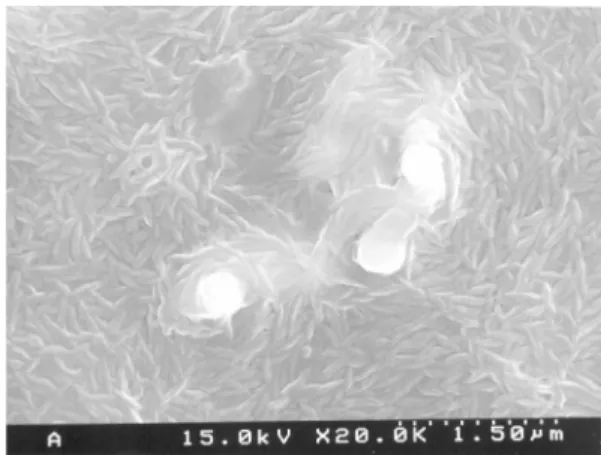
Fig. 1 shows a SEM microphotograph of PbTiO
3 powder