The American Society of Diabetes defined periodontal disease as the sixth com- plication of diabetes in 1997;1,2Diabetes raises the risks of developing periodontal disease and affects its severity.3,4 Individuals with diabetes tend to have higher values for indices of plaque, dental calculus, and gingival inflammation, and deeper periodontal pockets.5As compared to healthy people, more individuals with diabetes are likely to have more extensive,6xerostomia,7and dental caries.8,9 They are frequently in greater need of periodontal treatment and prophylactic procedures.10 Abrupt periodontal destruction and more severe periodontitis are observed in individuals with uncontrolled diabetes compared to individuals with well controlled blood glucose level.11,12
Regular oral health education performed by dental hygienists significantly
The Effect of Intensive Oral Hygiene Care on Gingivitis and Periodontal Destruction in Type 2 Diabetic Patients
Hee-Kyung Lee,
1Sang-Hee Choi,
1Kyu Chang Won,
2Anwar T. Merchant,
3Keun-Bae Song,
4Seong-Hwa Jeong,
6Sung-Kook Lee,
5and Youn-Hee Choi
4Departments of 1Dentistry, 2Internal Medicine, College of Medicine, Yeungnam University, Daegu, Korea; 3Department of Epidemiology and Biostatistics, Center for Research in Nutrition and Health Disparities, Arnold School of Public Health, University of South Carolina, Columbia, USA; 4Department of Preventive Dentistry, School of Dentistry, 5Department of Preventive Medicine, School of Medicine, Kyungpook National
University, Daegu; 6 Faculty of Health Science, Daegu Haany University, Gyeongsan, Korea.
Purpose:This study aimed to investigate the effects of oral hygiene care by oral professionals on periodontal health in type 2 diabetes mellitus patients. Materials and Methods: Diabetic participants were recruited at a university hospital and matched at a 1:1 ratio by age and gender, and randomly allocated into intervention (40 people) and control groups (35 people). Tooth brushing instruction, oral health education, and supra-gingival scaling were implemented in all patients at baseline. This program was repeatedly conducted in intervention patients every month for 6 months, and twice at baseline and the sixth month in the control. Oral health was measured by decayed, missing, and filled teeth (DMFT), plaque index, calculus index, bleeding index, patient hygiene performance (PHP) index, tooth mobility, Russel’s periodontal index, and community periodontal index (CPI). Diabetes-related factors, oral and general health behaviors, and sociodemographic factors were interviewed as other confounding factors. An analysis of covariance (ANCOVA) was used with SPSS for Windows 14.0. Results:At baseline, there were no significant differences between the two groups in average of periodontal health (calculus index, bleeding index, Russel’s periodontal index, CPI, and tooth mobility), diabetes-related factors (fasting blood glucose, postprandial blood glucose, and HbA1c), and in distribution of sociodemographic factors and health behaviors. In intervention group, plaque index, dental calculus index, bleeding index, and PHP index were reduced fairly and steadily from the baseline. There were significant differences in plaque index, dental calculus index, bleeding index, PHP index, and Russel’s periodontal index between the two groups at sixth month after adjusted for baseline status. Conclusion:
Intensive oral hygiene care can persistently improve oral inflammation status and could slow periodontal deterioration.
Key Words : Dental prophylaxis, oral hygiene, periodontal diseases, type 2 diabetes mellitus
Received: September 18, 2008 Revised: November 7, 2008 Accepted: November 17, 2008
Corresponding author: Dr. Youn-Hee Choi, Department of Preventive Dentistry, School of Dentistry, Kyungpook National University, 188-1 Samdeok-dong 2-ga, Jung-gu, Daegu 700-412, Korea.
Tel: 82-53-660-6871, Fax: 82-53-423-2947 E-mail: [email protected]
∙The authors have no financial conflicts of interest.
© Copyright:
Yonsei University College of Medicine 2009
INTRODUCTION
improved plaque index, dental calculus index and commu- nity periodontal index (CPI) compared to simple education with printed materials for studies of individuals with diabetes and periodontal disease.13,14Stringent oral hygiene combined with periodontal surgery substantially reduced periodontal pocket depth.15,16Oral health education signifi- cantly reduced gingival sulcus fluid, CPI and plaque index in diabetic individuals with moderate and severe periodon- tal disease.13 In individuals with well-controlled diabetes, periodontal treatment modalities, ranging from supragingi- val therapy to non-surgical periodontal treatment, improved periodontal problems without any adverse effects on diabetes when examined after 4 months of the treatment.5 Therefore, it is essential to treat and prevent the periodontal diseases in diabetic patients. To date, few studies have examined in the longer term the effects of regular supra- gingival care and oral health education among individuals with diabetes.
We, therefore, conducted this study to examine the changes of oral hygiene status and severity of periodontitis by performing intensive oral hygiene care at a 1-month interval for six months in individuals with diabetes.
Study population
The study design and protocol were reviewed and appro- ved by Yeungnam University Hospital Institutional review board and consent was obtained from the participants.
Consenting individuals with Type 2 diabetes were recruited from the Department of Internal Medicine at Yeungnam University Hospital, located in Daegu City, from Novem- ber 2005 to April 2006. Participants were referred by their endocrinologist to the department of dentistry to receive intensive oral health care after a trained interviewer exp- lained the program to them and obtained informed consent.
Participants were randomly assigned to intervention and control groups by order of outpatient visits. In both groups, age and gender were matched at a ratio of 1:1. Finally, 40 patients were included in each group. Five people in the control group were lost to follow up for six months. The final sample size was 75 people.
People in the intervention group were asked to visit once a month to receive regular oral hygiene care for six months.
In the control group, there were only two examinations; at baseline and sixth months. Well-controlled diabetic patients referred by an endocrinologist were included in this study.
The endocrinologist defined individuals with diabetes as well-controlled, based on review of participants’ medical records and clinical criteria regarding HbA1c, and compli- ance with medication use. They were excluded if they had
less than 8 functional teeth in their mouth, had taken antibiotics in the previous six months, or had other general health problems such as cardiovascular, liver, and kidney diseases, or other systemic conditions; including immu- nologic or psychiatric disorders.
Oral examination
At the first visit, a trained dentist conducted an oral exami- nation, and examined full-mouth intra-oral radiographs, which provided information regarding Russel’s perio- dontal index and the level of alveolar bone resorption.17 The examining dentist was blinded to all clinical measu- rements prior to the assessment. Assessments of perio- dontal health status included the number of decayed teeth (DT), number of missing teeth (MT), the number of filled teeth (FT), decayed missing and filled teeth (DMFT) index, tooth mobility, CPI,18Russel’s periodontal index, papillary bleeding index, dental plaque index, dental cal- culus index, and patient hygiene performance (PHP) index.19In addition, self-perceived oral health, discomfort in oral cavity, oral health behaviors (smoking, toothbrush frequency, and regular dental visits) were obtained using a self-administered questionnaire. A smoker was defined as an individual who answered ‘yes’ to the question, “Do you smoke now?”.
Intensive oral hygiene care program
At baseline, both intervention and control groups received oral health education that included instructions on tooth brushing and the use of oral health aids (inter-proximal brushes or/and dental floss) from a trained dental hygienist, and received oral health educational brochures. The hygienist then conducted scaling for supra-gingival calculus under the supervision of a trained dentist. All the procedures (oral examination, full-mouth X-ray, education, and supra- gingival scaling) were repeated monthly for the intervention group and at the end of six months for the control group.
Diabetes-related factors and other information
Information regarding blood glucose level, Oral Glucose Tolerance Test (OGTT), and HbA1Cwere obtained from the medical records transferred from the Department of Internal Medicine, which had been supervised by endocri- nologist. Other diabetes-related factors, including the experi- ence of oral health education as a diabetic patient, diabetes duration, the number of hospital visits for diabetes, the experience of education for managing diabetes, and the type of diabetic treatment, were obtained by questionnaire by the dental hygienist.
A self-administered questionnaire was provided to investigate the sociodemographic factors (age, gender, education, and household income), and general health
MATERIALS AND METHODS
behavior (smoking, drinking, physical activity).
Statistical analysis
To confirm comparativeness between the intervention and
control groups, the distributions of sociodemographic factors, general health behaviors, oral health behaviors at baseline were compared and tested by chi-square test. If the expected frequency was less than 5, Fisher’s exact test was Table 1. Socio-Demographic Distributions and General Health Behaviors between Control and Intervention Groups at the Baseline
Characteristics & Total Control Intervention
p value
Health behavior N (%) N (%) N (%)
Age (yrs) 0.5223*
Total 75 (100.0) 35 (100.0) 40 (100.0)
< 45 20 (26.7) 12 (34.3) 8 (20.0)
45 - 54 21 (28.0) 9 (25.7) 12 (30.0)
55 - 64 25 (33.3) 11 (31.4) 14 (35.0)
> 65 9 (12.0) 3 (8.6) 6 (15.0)
Gender 0.6552�
Total 75 (100.0) 35 (100.0) 40 (100.0)
Male 47 (62.7) 21 (60.0) 26 (65.0)
Female 28 (37.3) 14 (40.0) 14 (35.0)
Education (yrs) 0.7591�
Total 75 (100.0) 35 (100.0) 40 (100.0)
≤ 12 33 (44.0) 15 (42.9) 18 (45.0)
13 - 14 27 (36.0) 14 (40.0) 13 (32.5)
> 14 15 (20.0) 6 (17.1) 9 (22.5)
Occupation 0.9671�
Total 70 (100.0) 33 (100.0) 37 (100.0)
Yes 38 (54.3) 18 (54.5) 20 (54.1)
No 32 (45.7) 15 (45.5) 17 (45.9)
Income (10,000 won / month) 0.5851�
Total 71 (100.0) 35 (100.0) 36 (100.0)
< 100 12 (16.9) 5 (14.2) 7 (19.4)
100 - 199 19 (26.8) 8 (22.9) 11 (30.6)
200 - 299 23 (32.4) 14 (40.0) 9 (25.0)
≥ 300 17 (23.9) 8 (22.9) 9 (25.0)
Smoking 0.5197�
Total 72 (100.0) 33 (100.0) 39 (100.0)
Yes 20 (27.8) 11 (33.3) 9 (23.1)
No 40(55.6) 16 (48.5) 24 (61.5)
Ex-smoker 12 (16.7) 6 (18.2) 6 (15.4)
Drinking 0.1452�
Total 69 (100.0) 31 (100.0) 38 (100.0)
Yes 29 (42.0) 16 (51.6) 13 (34.2)
No 40 (58.0) 15 (48.4) 25 (65.8)
Regular exercise 0.3353�
Total 70 (100.0) 31 (100.0) 39 (100.0)
Yes 55 (78.6) 26 (83.9) 29 (74.4)
No 15 (21.4) 5 (16.1) 10 (25.6)
*p value by Fisher’s exact test.
�p value by chi-square test.
done. In addition, the averages of dental caries status, periodontal health, and diabetes-related variables at baseline were also compared and tested using t-test.
To examine the effect of intensive oral hygiene care program, the analysis of covariance (ANCOVA) was imple- mented to test the differences in periodontal indices after adjusting for baseline values except CPI. SPSS for Windows 14.0 was used for statistical analysis.
The mean age of patients was 52.2 years and all of them were aged 30 years or older. The proportion of male pati- ents was 62.7%. The proportion of patients whose education level was below that of high school graduates was 44.0%, and this was the highest figure. The proportion of patients who had an occupation was 54.3%. The proportion of pati-
RESULTS
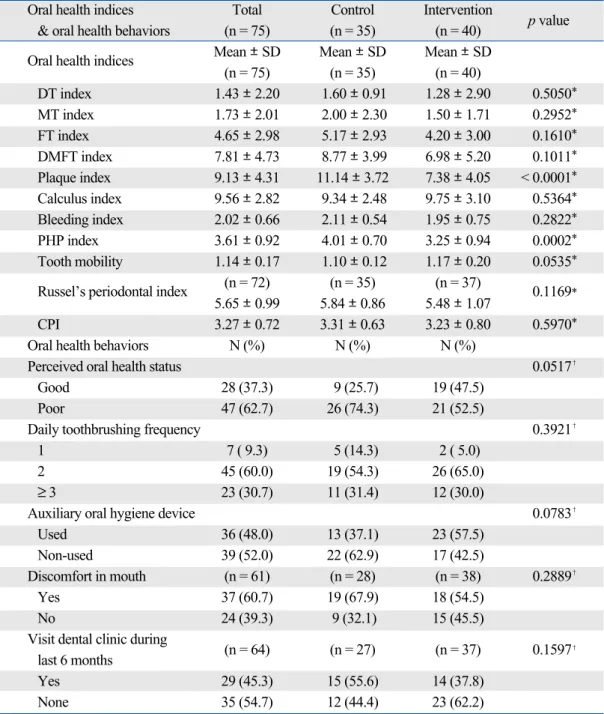
Table 2. Oral Health Status between Control and Intervention Groups at the Baseline
Oral health indices Total Control Intervention
p value
& oral health behaviors (n = 75) (n = 35) (n = 40) Oral health indices Mean
±
SD Mean±
SD Mean±
SD(n = 75) (n = 35) (n = 40)
DT index 1.43
±
2.20 1.60±
0.91 1.28±
2.90 0.5050*MT index 1.73
±
2.01 2.00±
2.30 1.50±
1.71 0.2952*FT index 4.65
±
2.98 5.17±
2.93 4.20±
3.00 0.1610*DMFT index 7.81
±
4.73 8.77±
3.99 6.98±
5.20 0.1011*Plaque index 9.13
±
4.31 11.14±
3.72 7.38±
4.05 < 0.0001* Calculus index 9.56±
2.82 9.34±
2.48 9.75±
3.10 0.5364* Bleeding index 2.02±
0.66 2.11±
0.54 1.95±
0.75 0.2822*PHP index 3.61
±
0.92 4.01±
0.70 3.25±
0.94 0.0002*Tooth mobility 1.14
±
0.17 1.10±
0.12 1.17±
0.20 0.0535* Russel’s periodontal index (n = 72) (n = 35) (n = 37)0.1169*
5.65
±
0.99 5.84±
0.86 5.48±
1.07CPI 3.27
±
0.72 3.31±
0.63 3.23±
0.80 0.5970*Oral health behaviors N (%) N (%) N (%)
Perceived oral health status 0.0517�
Good 28 (37.3) 9 (25.7) 19 (47.5)
Poor 47 (62.7) 26 (74.3) 21 (52.5)
Daily toothbrushing frequency 0.3921�
1 7 ( 9.3) 5 (14.3) 2 ( 5.0)
2 45 (60.0) 19 (54.3) 26 (65.0)
≥ 3 23 (30.7) 11 (31.4) 12 (30.0)
Auxiliary oral hygiene device 0.0783�
Used 36 (48.0) 13 (37.1) 23 (57.5)
Non-used 39 (52.0) 22 (62.9) 17 (42.5)
Discomfort in mouth (n = 61) (n = 28) (n = 38) 0.2889�
Yes 37 (60.7) 19 (67.9) 18 (54.5)
No 24 (39.3) 9 (32.1) 15 (45.5)
Visit dental clinic during
(n = 64) (n = 27) (n = 37) 0.1597�
last 6 months
Yes 29 (45.3) 15 (55.6) 14 (37.8)
None 35 (54.7) 12 (44.4) 23 (62.2)
CPI, community periodontal index.
*p value by chi-square test.
�p value by t-test.
ents who responded that their mean monthly household income ranged between KRW 2,000,000 and KRW 2,990,000 was 32.4%. There were no significant differ- ences in baseline characteristics between the two groups (Table 1).
Regarding oral health at baseline, the average of DMFT index was 7.81, and the values of plaque index, dental calculus index and PHP index, indicating oral hygiene status, were 9.13, 9.56, and 3.61, respectively (higher value on the indices indicating worse oral health). The values of bleeding index, tooth mobility, periodontal index (PI) and CPI, indicating the status of periodontal disease, were 2.02, 1.14, 5.65 and 3.27, respectively. These results suggest that most of the patients (87%) who were enrolled in the current study had some periodontal disease. At baseline, plaque index and PHP index were significantly higher in the control group but other factors associated with oral health showed no significant differences between the two groups (Table 2).
In terms of diabetic information, the mean level of fasting blood glucose, 2 hour post-prandial blood glucose, and HbA1cwere 159.9 mg/dL, 256.7 mg/dL, and 7.7%, res- pectively. There were no significant differences in means for these three values between the two groups (159.5 mg/dL
vs. 160.4 mg/dL; 263.4 mg/dL vs. 249.1 mg/dL; and 7.9%
vs. 7.5%) (Table 3). Other diabetes-related factors includ- ing experience of oral health education as a diabetic patient, diabetes duration, the number of hospital visits for diabetes, and the type of diabetic treatment were not signi- ficantly different between the two groups at baseline (not shown in the table).
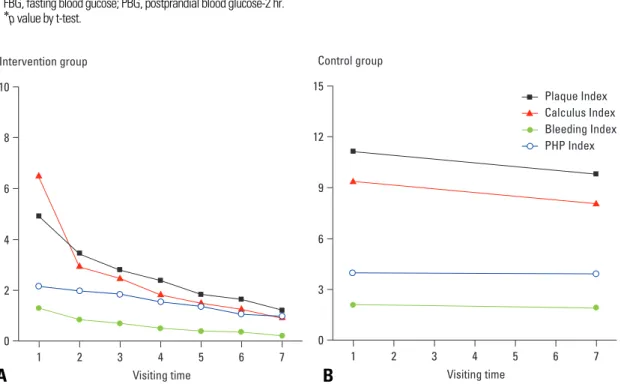
Fig. 1 represents the changes of oral hygiene status depending on the follow-up period in both groups and shows the crude effect of intensive oral hygiene care. In the intervention group, all the parameters such as plaque index, dental calculus index, bleeding index, and PHP index fairly reduced from the baseline and the pattern seemed to persist over time. In contrast, there was slight improvement of the oral hygiene status in control group.
To examine the effects of the program, the differences of all measured indices between the two groups at 6 months were tested after adjusted for the baseline status using ANCOVA (Table 4). There were significant differences in plaque index, dental calculus index, bleeding index, PHP index, and Russel’s periodontal index. However, tooth mobility and CPI did not show any significant differences between the two groups as well as DT, MT, FT, and DMFT index.
Table 3. Diabetes Mellitus Indices between Control and Intervention Groups at the Baseline
Total Control Intervention
p value*
(n = 75) (n = 35) (n = 40)
FBG (mg / dL) 159.9
±
43.8 160.4±
44.8 159.5±
43.5 0.9261 PBG (mg / dL) - 2 hr 256.7±
77.0 249.1±
80.1 263.4±
74.5 0.4264HbAlc(%) 7.7
±
1.6 7.5±
1.2 7.9±
1.9 0.3156FBG, fasting blood gucose; PBG, postprandial blood glucose-2 hr.
*p value by t-test.
0
1 2 3 4 5 6 7
2 4 6 8 10
Intervention group
Visiting time
0
1 2 3 4 5 6 7
3 6 9 12 15
Control group
Visiting time
Plaque Index Calculus Index Bleeding Index PHP Index
Fig. 1. Trends of oral hygiene indices for (A) the intervention and (B) control group at follow-up periods.
A B
Oral hygiene care, that included tooth brushing instruction (TBI) through supra-gingival scaling at a month interval for six months implemented by dental hygienist supervised by a dentist and an endocrionologist, dramatically improved gingival health in individuals with well-controlled type 2 diabetes. Furthermore, the periodontal destruction assessed by Russel’s periodontal index tended to be slowed down by this program. This study provides empirical evidence that intensive oral hygiene care (oral health education plus supra-gingival scaling) without any periodontal therapy improves gingival health, and may prevent progression of periodontitis in well-controlled diabetes. Therefore, the present results emphasize the importance of oral prophylaxis for individuals with diabetes.
In diabetic people, the management of periodontal disease is more important.20 If advanced glycation end products (AGEs) are accumulated within the body of individuals with diabetes, and these materials promote the chemotaxis and phagocytosis of mononuclear leukocytes and polymorphonuclear leukocytes. This leads to the pathologic changes of subgingiva or the further aggrava- tion of inflammation of the periodontium. The materials that are produced by Gram-negative bacteria further facilitate the infection pathway within the body in the
periodontium under this pathologic condition.21,22It is, therefore, essential to initiate intensive oral health care as earliest as possible.23Some previous studies24-27 have emphasized that non-surgical periodontal treatment and/or subgingival scaling in individuals with diabetes improved periodontal health and another study proved that periodontal treatment with root planning, subgingival curettage, and extractions as a therapy, if needed, improved glycemic control.28On the other hand, oral hygiene care without periodontal surgery has positive effects in both patients with type 2 diabetes and type 1 diabetes.13,14,29
The self-recognition of their oral health in diabetes can affect periodontal treatment outcomes.10A recent study13 showed the effect of oral hygiene instruction, resulting in a significant reduction of CPI among type 2 diabetic patients with mild and moderate periodontitis. In this study, however, CPI was not significant but Russel’s periodontal index was. These results suggest that well managed oral hygiene care can improve periodontal health as well as oral hygiene itself and retard periodontal destruction. It is plausible that metabolically well-controlled diabetics as well as healthy control patients respond to non-surgical periodontal therapy.5
One of the important results from the present study was the steadily persistent effect of intensive care on gingival health and periodontal destruction for six months. Accord- ing to previous studies,5,20,30a short-term monitoring period Table 4. Oral Health Status between Control and Intervention Groups after 6 Months
Oral health indices Total Control Intervention
p value
(n = 75) (n = 35) (n = 40)
DT index 1.44
±
2.18 1.57±
0.92 1.33±
2.89 0.1045*MT index 1.85
±
2.12 2.11±
2.45 1.63±
1.79 0.8815*FT index 4.67
±
2.97 5.17±
2.93 4.23±
2.97 0.4908*DMFT index 7.96
±
4.75 8.86±
4.04 7.18±
5.22 0.4006*Plaque index 5.56
±
4.91 9.83±
4.05 1.83±
0.90 < 0.0001* Calculus index 4.48±
3.91 8.06±
2.83 1.35±
0.74 < 0.0001* PHP index 2.62±
1.42 3.96±
0.85 1.46±
0.45 < 0.0001* Bleeding index 1.06±
0.96 1.92±
0.68 0.32±
0.33 < 0.0001* Tooth mobility 1.16±
0.18 1.14±
0.15 1.18±
0.20 0.5612* Russel’s periodontal index (n = 72) (n = 35) (n = 37)0.0151*
5.83
±
0.86 5.91±
0.78 5.75±
0.92 CPI2 10 (13.3%) 4 (11.4%) 6 (15.0%) 0.8837�
3 39 (52.0%) 19 (54.3%) 20 (50.0%)
4 26 (34.7%) 12 (34.3%) 14 (35.0%)
Mean
±
SD 3.21±
0.66 3.23±
0.65 3.20±
0.69 0.6377*CPI, community periodontal index.
*p value by ANCOVA.
�p value by chi-square test.
DISCUSSION
of approximately 2-3 months following oral health care was effective in improving periodontal status and in pre- venting aggravation of periodontal tissue, evidenced by based on the decreased periodontal pocket or periodontal index. The current study indicated that more frequent oral hygiene care results in better periodontal health.
One of the limitations of the current study is that our patients cannot be considered as the representative of total type 2 diabetic people in Korea, because for convenience the patients were recruited from individuals with diabetes who visited a university hospital and then voluntarily ex- pressed their interest in participating in the oral health care program on their endocrinologist’s recommendation.
However, participants were randomly assigned to the inter- vention and control groups, which were similar according to the parameters which we evaluated, except plaque index and PHP index. The oral hygiene status in the intervention group might have been a little better at baseline. This situation would underestimate the effects of the inter- vention on oral hygiene status at follow-up. It can, there- fore, be inferred that our study design remains valid for assessing the effect of oral health care on periodontal health. The current study, therefore, demonstrated that the intensive oral health care could improve the oral health status, consequently preventing the aggravation of perio- dontal disease, although individuals with diabetes had poor oral hygiene status and most of them were affected with periodontal disease. Second, the participants were com- paratively well-controlled type 2 diabetic people. The result of this study can not be applied to people who are type 1 diabetic, or have poor glycemic control. Further studies are needed on different type and/or status of diabetic patients. Third, we could not in practice follow the control group people every month only to examine their oral health. Two measurements at baseline and the sixth month may not provide enough information as a control, compared with intervention group. Nevertheless, we were able to find out that there was no significant improvement on gingival health, and that there was a fair amount of periodontal destruction in the control group.
In the current study, intensive oral health care as an intervention, such as oral health education, TBI, and supra- gingival scaling, was repeatedly implemented at one- month intervals for six months in well-controlled type 2 diabetic group. The plaque index, dental calculus index, PHP index, bleeding index, and Russel’s periodontal index improved compared to controls. These results indicate that the oral hygiene status was persistently enhanced and the perio-dontal deterioration was reduced by intensive oral hygiene care. Therefore, oral hygiene care program is necessary to remove oral inflammation and prevent type 2 diabetes from periodontal complication.
This research was supported by the Yeungnam University research grants in 2007.
1. Mealey BL, Oates TW; American Academy of Periodontology.
Diabetes mellitus and periodontal diseases. J Periodontol 2006;
77:1289-303.
2. American Diabetes Association. Complication of diabetes in the United States. https://www.diabetes.org/diabetes-statistics/
complications.jsp. Accessed in 2007. 9. 1.
3. Emrich LJ, Shlossman M, Genco RJ. Periodontal disease in non- insulin-dependent diabetes mellitus. J Periodontol 1991;62:123- 31.
4. Sandler HC, Stahl SS. Prevalence of periodontal disease in a hospitalized population. J Dent Res 1960;39:439-49.
5. Christgau M, Palitzsch KD, Schmalz G, Kreiner U, Frenzel S.
Healing response to non-surgical periodontal therapy in patients with diabetes mellitus: clinical, microbiological, and immu- nologic results. J Clin Periodontol 1998;25:112-24.
6. Seppälä B, Seppälä M, Ainamo J. A longitudinal study on insulin- dependent diabetes mellitus and periodontal disease. J Clin Periodontol 1993;20:161-5.
7. Dodds MW, Yeh CK, Johnson DA. Salivary alterations in type 2 (non-insulin-dependent) diabetes mellitus and hypertension.
Community Dent Oral Epidemiol 2000;28:373-81.
8. Hintao J, Teanpaisan R, Chongsuvivatwong V, Ratarasan C, Dahlen G. The microbiological profiles of saliva, supragingival and subgingival plaque and dental caries in adults with and without type 2 diabetes mellitus. Oral Microbiol Immunol 2007;
22:175-81.
9. Taylor GW, Manz MC, Borgnakke WS. Diabetes, periodontal diseases, dental caries, and tooth loss: a review of the literature.
Compend Contin Educ Dent 2004;25:179-84,186-8,190; quiz 192.
10. Sandberg GE, Sundberg HE, Wikblad KF. A controlled study of oral self-care and self-perceived oral health in type 2 diabetic patients. Acta Odontol Scand 2001;59:28-33.
11. Ainamo J, Lahtinen A, Uitto VJ. Rapid periodontal destruction in adult humans with poorly controlled diabetes. A report of 2 cases.
J Clin Periodontol 1990;17:22-8.
12. Tsai C, Hayes C, Taylor GW. Glycemic control of type 2 diabetes and severe periodontal disease in the US adult population. Com- munity Dent Oral Epidemiol 2002;30:182-92.
13. Almas K, Al-Lazzam S, Al-Quadairi A. The effect of oral hygiene instructions on diabetic type 2 male patients with periodontal diseases. J Contemp Dent Pract 2003;4:24-35.
14. Karikoski A, Ilanne-Parikka P, Murtomaa H. Oral self-care among adults with diabetes in Finland. Community Dent Oral Epidemiol 2002;30:216-23.
15. Westfelt E, Rylander H, Blohmé G, Jonasson P, Lindhe J. The effect of periodontal therapy in diabetics. Results after 5 years. J Clin Periodontol 1996;23:92-100.
16. da Cruz GA, de Toledo S, Sallum EA, Sallum AW, Ambrosano GM, de Cássia Orlandi Sardi J, et al. Clinical and laboratory evaluations of non-surgical periodontal treatment in subjects with
ACKNOWLEDGEMENTS
REFERENCES
diabetes mellitus. J Periodontol 2008;79:1150-7.
17. Fischer R, Hackl P, Moser F, Schuh E. [Description and results of a training plan for the use of the Russel-Index for an epidemio- logical study.] Osterr Z Stomatol 1974;71:449-58.
18. Ainamo J, Barmes D, Beagrie G, Cutress T, Martin J, Sardo- Infirri J. Development of the World Health Organization (WHO) community periodontal index of treatment needs (CPITN). Int Dent J 1982;32:281-91.
19. Löe H. The Gingival Index, the Plaque Index and the Retention Index Systems. J Periodontol 1967;38 Suppl:610-6.
20. Miller LS, Manwell MA, Newbold D, Reding ME, Rasheed A, Blodgett J, et al. The relationship between reduction in periodontal inflammation and diabetes control: a report of 9 cases. J Perio- dontol 1992;63:843-8.
21. Grossi SG, Genco RJ. Periodontal disease and diabetes mellitus:
a two-way relationship. Ann Periodontol 1998;3:51-61.
22. Scannapieco FA. Position paper of The American Academy of Periodontology: periodontal disease as a potential risk factor for systemic diseases. J Periodontol 1998;69:841-50.
23. Jones JA, Miller DR, Wehler CJ, Rich SE, Krall-Kaye EA, McCoy LC, et al. Does periodontal care improve glycemic control?
The Department of Veterans Affairs Dental Diabetes Study. J
Clin Periodontol 2007;34:46-52.
24. Badersten A, Nilvéus R, Egelberg J. Effect of nonsurgical perio- dontal therapy. I. Moderately advanced periodontitis. J Clin Periodontol 1981;8:57-72.
25. Lowenguth RA, Greenstein G. Clinical and microbiological res- ponse to nonsurgical mechanical periodontal therapy. Periodontol 2000 1995;9:14-22.
26. Al-Mubarak S, Ciancio S, Aljada A, Mohanty P, Ross C, Dandona P. Comparative evaluation of adjunctive oral irrigation in diabetics.
J Clin Periodontol 2002;29:295-300.
27. Campus G, Salem A, Sacco G, Maida C, Cagetti MG, Tonolo G.
Clinical effects of mechanical periodontal therapy in type 2 diabetic patients. Diabetes Res Clin Pract 2007;75:368-9.
28. Stewart JE, Wager KA, Friedlander AH, Zadeh HH. The effect of periodontal treatment on glycemic control in patients with type 2 diabetes mellitus. J Clin Periodontol 2001;28:306-10.
29. Britto LR, Katz J, Guelmann M, Heft M. Periradicular radiograp- hic assessment in diabetic and control individuals. Oral Surg Oral Med Oral Pathol Oral Radiol Endod 2003;96:449-52.
30. Smith GT, Greenbaum CJ, Johnson BD, Persson GR. Short-term responses to periodontal therapy in insulin-dependent diabetic patients. J Periodontol 1996;67:794-802.