Received: 27 February, 2014 Revised: 31 May, 2014 Accepted: 10 June, 2014 Corresponding author: Hang Jin Kim
Barun Clinic, 79-81, Rowe street Eastwood, NSW 2122, Australia Tel: 62-02-821-7340 Fax: 62-02-821-7340 E-mail: [email protected]
This is an Open-Access article distributed under the terms of the Creative Commons Attribution Non-Commercial License (http://creativecommons.org/licens es/by-nc/3.0) which permits unrestricted non-commercial use, distribution, and reproduction in any medium, provided the original work is properly cited.
Copyright © 2014 Korean Academy of Physical Therapy Rehabilitation Science
http://dx.doi.org/10.14474/ptrs.2014.3.1.13 Phys Ther Rehabil Sci
pISSN 2287-7576 2014, 3 (1), 13-19
eISSN 2287-7584 www.jptrs.org
A pilot study of augmented reality-based postural control training in stroke rehabilitation
Yu Hyung Parka, Chi Ho Leea, Hang Jin Kimb
aDepartment of Physical Therapy, Rehabilitation Medicine Center, Bobath Memorial Hospital, Seongnam, Republic of Korea
bBarun Clinic, New South Wales, Australia
Objective: The purpose of this study was to determine the effects of Augmented Reality-based Postural Control (ARPC) training on balance and gait function in patients with stroke.
Design: Single-blind randomized controlled trial.
Methods: Twenty participants who experienced a stroke were enrolled in the study and randomly assigned to the ARPC (n=10) or control group (n=10). Subjects in both groups received conventional physical therapy for 60 min per session, 5 days per week, for 4 weeks. In addition, subjects in the ARPC group received ARPC training for 30 min per day, 3 days per week, for 4 weeks. The participants watched established normal postural control patterns on a head-mounted display and repeated the movements in ARPC training. Outcome measurements were assessed using the Berg Balance Scale (BBS) and 10-Meter Walk Test (10MWT) before and after 4 weeks of training.
Results: Of the 20 randomized participants, only 18 completed the 4-week training program. The ARPC group showed sig- nificant improvement in the BBS and 10MWT after training (p<0.05). Meanwhile, the control group did not exhibit improvement in either variable. In addition, the ARPC group showed significantly greater improvement than the control group in the 10MWT (p<0.05), whereas no significant difference was observed between the groups for the BBS.
Conclusions: The results of this study confirmed the benefits of ARPC training on dynamic balance and functional gait ability.
Additionally, this study may provide evidence supporting the use of an ARPC training program for improving balance and gait ability in patients after a chronic stroke.
Key Words: Balance, Gait, Postural balance, Stroke, Virtual reality
Introduction
Stroke causes neurological damage, altering walking and functional movement. Approximately two-thirds of hospi- talized patients who experienced a stroke cannot walk [1].
The majority of stroke survivors experience walking diffi- culty that restricts community mobility [2], whereas some patients with recovered walking ability after a stroke con- tinue to display limited endurance and reduced ability to adapt to tasks and environmental constraints [3,4]. Several studies identified gait deviations that are consistent with im- paired gait patterns in the paretic limb and related compen-
satory strategies [5,6]. This compensatory action restricts functional walking recovery [7]. Therefore, improving walking ability is one of the most important rehabilitation goals of patients after a stroke [8].
In addition, compared to a normal person in the same age group, an individual who experienced a stroke exhibits in- creased body sway because of reduced stability. In partic- ular, decreases in the movement of the center of gravity due to asymmetric weight bearing result in postural imbalance, which markedly compromises a patient’s ability to walk af- ter a stroke [9]. Postural problems are also common in pa- tients after a stroke, and they can limit the rate of recovery of
walking and functional independence [10]. Loss of postural control has been recognized as a major health problem in pa- tients after a stroke, resulting in a high incidence of falls dur- ing rehabilitation [11]. Appropriate postural control for im- proved locomotion, gait, and balance is the most essential factor for successful stroke rehabilitation [12].
Clinical interventions applied to help patients recover their impaired walking ability and balance via postural con- trol after a stroke include aquatic exercise [13], treadmill walking [3], task-oriented training [14], rhythmic auditory stimulation [15], and dual motor task training [16].
Recently, the application of virtual reality systems in stroke rehabilitation has attracted considerable attention [17].
Regarding the virtual reality-based rehabilitation of postural control, a number of systems that create virtual realities with 2D and 3D graphics using devices such as head-mounted de- vices and the Cave Automated Virtual Environment system have been developed [18].
Virtual reality systems that enable the acquisition of vari- ous skills in simulated environments similar to reality are being developed as motor functions measurement and ther- apeutic tools [19]. Virtual reality systems utilize interactive simulations that allow users to experience situations as sim- ilar to reality as possible via computer hardware and soft- ware [20]. In addition to virtual reality, augmented reality systems that blend computer graphic images into real scenes are being developed and applied in various fields.
Augmented reality is a type of virtual reality, and it features computer interface technology that merges a graphic entity generated by a computer with the real world to provide addi- tional information similar to what the user views in the real world.
In previous studies, virtual reality combined with exercise was found to improve Berg Balance Scale (BBS) and 10-Meter Walk Test (10MWT) performance [21], and You et al. [22] observed improvement in locomotion and motor as- sessment scores compared with the control after training with a virtual reality system that included stepping up and down, dodging a virtual shark, and snowboarding. In other studies, virtual reality-based balance training improved bal- ance [17] as well as walking speed and community walking time [23] in patients who experienced a stroke.
By maximizing the interaction between the user’s senses and the real world, augmented reality provides a user with information that both helps him/her accomplish tasks in the real world and enhances a sense of immersion and reality compared with previous postural control exercise [24,25].
Despite the high predictive value of postural control and virtual reality concerning functional outcomes after stroke, the determinants of augmented reality combined with pos- tural control have not yet been extensively studied in pa- tients after a stroke.
Therefore, the purpose of this study was to investigate the effect of Augmented Reality-based Postural Control (ARPC) training on the dynamical balance and functional gait ability of patients who experienced a stroke.
Methods
SubjectsTwenty potential subjects from the stroke unit of a re- habilitation hospital or Bobath Memorial Hospital were recruited. Participants were randomly assigned to either the ARPC (n=10) or control group (n=10) via simple random- ization which selection of a white or black stone before the start of the pretest: black stone were assigned to ARPC group and white were assigned to control group. The in- clusion criteria for participants were a diagnosis of stroke at least 6 months prior to the start of the study and the ability to walk more than 10 m independently without using any assis- tive device. Participants were excluded if they had any mus- culoskeletal disease that interferes with balance and walking performance, other neurological problems such as Parkinsonism or vascular dementia, and communication and cognitive deficits as tested by the Korean-Mini Mental State Examination (score <24 of 30).
The present study was approved by the Sahmyook University Institutional Review Board (SYUIRB 2011- 005). All participants were given an explanation of the ob- jective of the study and its requirements, and all those who participated provided their written informed consent.
Procedures
This study was a single-blind, randomized, controlled trial. The experimental group underwent ARPC training to improve balance and gait ability, and the control group com- pleted a conventional physical therapy program.
The ARPC environment was implemented using a server computer mounted with a camera and an Super Video Graphics Array head-mounted display (HMD) (i-visor, fx601; Dae-Yang E&C Co., Daejeon, Korea, 2008) consist- ing of an 800×600 resolution display connected to an ul- tra-mobile personal computer (NT-Q1U; Samsung, Tianjin, China, 2007) for the patients. The two computers were
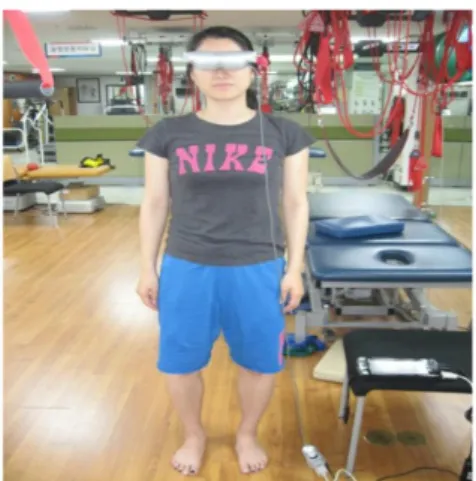
Figure 1. The augmented reality device head gear.
equipped for wireless signal exchange. The virtual reality used in the ARPC program included videos of postural con- trol training instructing patients to perform ideal postural control motions. The HMD was designed to show two views. The modeled movement was shown on one side, and the movement was shown on the other side. The patient could watch the modeled movement and listen to a recorded sound to compare the normal movement with his/her own movement (Figure 1). The ARPC training was designed to be adjustable to match the subject’s ability to minimize sub- stitution and ensure safety. In addition, after turning on the HMD, the patients were given 5 min to familiarize them- selves with the ARPC program before the start of the experi- ment [25,26]. Once the participants matched more than 80%
of the normal postural control patterns, they moved on to the next step.
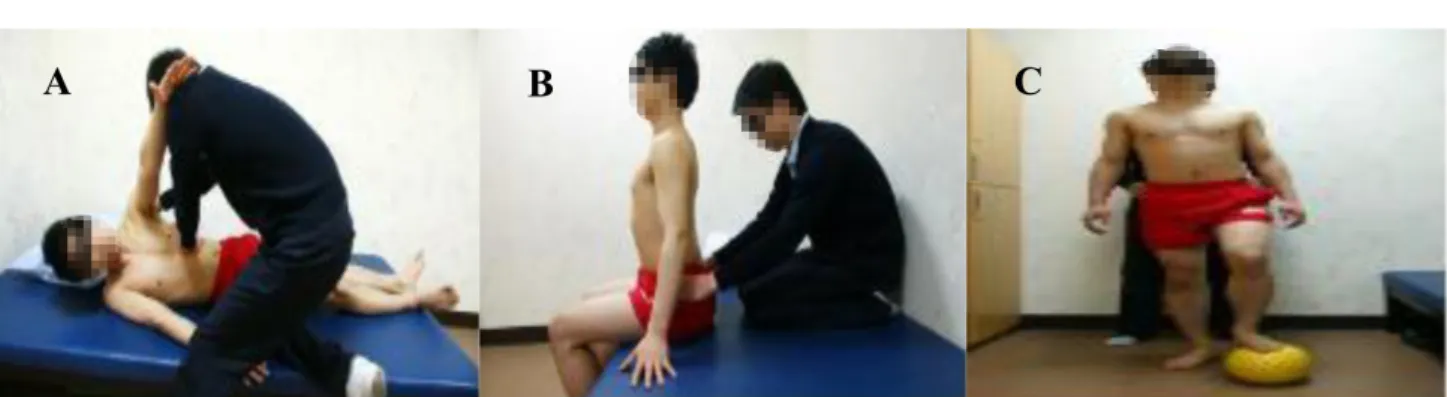
Fundamentally, the ARPC program consisted of exercise performed in three positions, namely lying, sitting, and standing. First, for the lying position, core exercise was per- formed in a supine position, and after trunk rotation exercise using upper extremity movements, the patients transitioned to a seated position (Figure 2A). Second, in the seated posi- tion, the patients performed segmented movement of the trunk and pelvis and weight-bearing exercise using func- tional tasks on stable or unstable ground (Figure 2B). Third, in the standing position, the patients performed a squat ex- ercise to strengthen the muscles of the lower extremities and single-leg exercise by controlling the trunk and pelvis (Figure 2C). In addition, the participants performed task training using an exercise ball to increase dynamic balance [27,28].
Outcome measures
In both groups, balance was assessed using the BBS, and functional gait ability was evaluated using the 10MWT, both before and after the intervention. The BBS was developed to measure balance among people with impaired balance func- tion by assessing the performance of functional tasks. It is an instrument with excellent intra-rater and inter-rater reli- ability (intraclass correlation cofficient=0.99 and 0.98, re- spectively), and it is used to evaluate the effectiveness of in- terventions and provide quantitative descriptions of func- tional ability in clinical practice and research. The BBS con- sists of 14 items, each of which is scored on a scale of 0-4 points and summed to provide a total score between 0 and 56 points. A higher score indicated better balance ability [29,30].
The 10MWT is a commonly used measure for assessing walking speed. It requires a 14-m path that includes 2 m each for acceleration and deceleration. To minimize the effects of acceleration and deceleration, walking speed was measured over the middle 10 m of the 14-m walkway. The subject was asked to walk 10 m from a standing position at his/her pre- ferred speed. Time was recorded using a stopwatch, and the number of steps taken was counted. The test was conducted three times, and the average time was used for the analysis.
The inter-rater and intra-rater reliability were high (r=
0.89-1.00) [31,32].
Data analysis
The SPSS Statistics 17.0 program (SPSS Inc., Chicago, IL, USA) was used for statistical analyses. The Shapiro- Wilk test was used to determine the general properties and variables of the subjects. A paired t-test was used for com- parisons of the pretest and posttest results within each group, and an independent t-test was performed to analyze changes of dependent variables between the groups. p<0.05 de- noted statistical significance.
Results
Of the 20 randomized participants, 18 completed the 4-week training program. Regarding patient withdrawal in the ARPC group, one participant was discharged from the hospital, and another participant was excluded due to low participation rates (<80%). The general characteristics of the subjects in the ARPC group included a mean age of 47.38 years, a mean height of 164.25 cm, a mean weight of
Figure 2. Postural control training program. (A) Trunk control training involving reaching with the arm on the paretic side. (B) Anterior and posterior tilting control training of the pelvis in the seated position. (C) Weight-bearing training on the paretic side using a single-leg standing position.
Table 1. Demographic characteristics and baseline data of the subjects (N=18)
ARPC group (n=8) Control group (n=10) t/x p
Sex (male/female) 6/2 (75/25) 6/4 (60/40) 0.450 0.502
Age (y) 47.38 (13.44) 53.50 (12.43) −1.003 0.331
Weight (kg) 68.25 (8.08) 62.30 (10.93) 1.281 0.218
Height (cm) 164.28 (5.90) 165.40 (7.69) −0.348 0.732
Time since stroke (mo) 11.38 (3.96) 11.30 (4.86) 0.035 0.972
Side of lesion right/left 3/5 (37.5/62.5) 7/3 (70/30) 1.901 0.168
Type of stroke (infarction/hemorrhage) 5/3 (62.5/37.5) 6/4 (60.40) 0.012 0.914
BBS (score) 44.75 (5.45) 41.30 (5.66) 1.307 0.210
10MWT (cm/s) 54.71 (21.11) 42.17 (23.49) 1.176 0.257
Values are presented as n (%) or mean (SD).
ARPC: Augmented Reality-based Postural Control program, BBS: Berg Balance Scale, 10MWT: 10-Meter Walk Test.
Table 2. Comparison of balance and gait parameters within and between the groups (N=18)
ARPC group (n=8) Control group (n=10) tb
BBS (score) Pre 44.75 (5.45) 41.30 (5.66)
Post 49.88 (6.50) 43.10 (6.08)
Pre - Post −5.13 (3.44) −1.80 (4.02) −1.855
ta 3.75* 2.445
10MWT (cm/s) Pre 54.71 (21.11) 42.17 (23.49)
Post 76.32 (26.92) 48.13 (32.53)
Pre - Post −21.61 (10.72) −5.97 (12.61) −2.791**
ta −5.703* −1.496
Values are presented as mean (SD).
ARPC: Augmented Reality-based Postural Control program, BBS: Berg Balance Scale, 10MWT: 10-Meter Walk Test.
aPaired t-test, bIndependent t-test.
*p<0.05, **p<0.01.
68.25 kg, and a mean onset time of 11.38 months, compared to values of 53.50 years, 165.40 cm, 62.30 kg, and 11.30 months, respectively, in the control group. There were no significant differences in these variables between the groups before training (Table 1).
Table 2 presents the clinical outcomes (BBS and
10MWT) of the participating patients. The ARPC group showed a significant improvement in the BBS score from 44.75±5.45 before treatment to 49.88±6.50 after treatment (p<0.05), whereas the 10MWT speed was improved from 54.71±21.11 cm/s before treatment to 76.32±26.92 cm/s af- ter treatment (p<0.05). Conversely, neither value was sig-
nificantly improved by treatment in the control group.
The ARPC group exhibited significantly greater im- provement than the control group in the 10MWT speed (p
<0.05), whereas no significant difference was found be- tween the groups for the BBS score.
Discussion
The purpose of this study was to investigate the effects of ARPC training on balance and gait of patients who experi- enced a stroke.
In previous research on the BBS, Noh et al. [13] assigned 25 patients who experienced a stroke to either an ex- perimental group with hydrotherapy treatment or a control group with general physical therapy. According to their re- sult, the BBS score was significantly different between the groups because of a 7.6-point improvement in the hydro- therapy group (p<0.05). Srivastava et al. [33] utilized a force plate with visual feedback for 40 subjects who experi- enced a stroke for balance training. Their result illustrated that the BBS score was significantly improved from 34.94 points before training to 46.85 points after training (p
<0.05). Although six subjects withdrew from the study, the BBS score increased from 34.93 points before training to 48.44 points after training, illustrating a significant differ- ence in a follow-up test after 3 months (p<0.05). In this study, ARPC training significantly increased the BBS score (p<0.05). In a study reported by Eng et al. [34], patients who previously experienced a stroke felt most comfortable when they moved their weight laterally. However, the sub- jects felt the most discomfort when they moved their weight anteriorly. Patients who experienced a stroke have difficulty with anterio-posterior weight bearing, and an improvement of weight bearing affects the BBS score [13]. More specifi- cally, an increase of the BBS score is associated with im- provements of muscular strength in a paralyzed lower limb [35]. In this study, the improvement of the BBS score was af- fected by the muscular strength of the paralyzed lower limb.
In the study, the participants performed various activities, including side-lying exercises to improve the stability and mobility of the pelvis, trunk rotation to increase core stabil- ity, lateral weight bearing via posture movement from side lying to sitting, anteroposterior weight bearing with se- lective movement of the pelvis while sitting, and core stabil- ity and postural tone exercises while standing to improve the muscular strength of the paralyzed lower limb. According to our results, ARPC improved the dynamic balance of patients
who experienced a stroke.
This study investigated the effect of ARPC training on functional gait, with a change of gait velocity determined by the 10MWT. In previous research using this test, Regnaux et al. [36] evaluated treadmill gait training for 20 min in 10 pa- tients who experienced a stroke via weight bearing on the non-paralyzed ankle. Their result revealed a significant in- crease in gait velocity from 0.33 m/s before training to 0.39 m/s after training (p<0.05). In a follow-up test, gait speed was maintained at 0.42 m/s in the treadmill gait training group (p<0.05). Yang et al. [23] randomly assigned 24 pa- tients who experienced a stroke to an experimental group consisting of virtual reality-based treadmill training or a control group consisting of treadmill training. Their results indicated a significant increase in the 10MWT speed in the experimental group (from 0.69 m/s to 0.85 m/s, p<0.05), and the speed was maintained at 0.86 m/s after 1 month in a follow-up test (p<0.05). Although the training method used in this study significantly improved gait speed in the 10MWT in the experimental group (p<0.05), no significant difference was observed in the control group. Gait velocity was associated with the severity of stroke, asymmetry of step length [5], and a compensative mechanism for correc- tion of a defect [37], and dynamic balance as assessed by the BBS was associated with the 10MWT, cadence, and step length [22]. In this study, ARPC training included items that led to increased weight bearing by the non-paralyzed lower limb and the accomplishment of learning of sequential gait.
Increases in dynamic balance, gait velocity concerning spa- tiotemporal variables, and step length were helpful. It ap- pears that ARPC training increased weight bearing by the paralyzed lower limb and postural control during walking.
These changes may have promoted significant improve- ments in the 10MWT. Based on these results, the functional gait ability of patients who experienced a stroke could be en- hanced by ARPC training.
Some of the limitations of this study include external val- idity, or the generalizability of the study. There were only 18 participants who participated in the complete study, and some participants felt dizziness when they saw the screen with wearing HMD gear. Therefore, further studies should be considered those limitations including sample size and sufficient time to offset dizziness.
This study investigated the effect of ARPC training on the balance and gait of patients who experienced a stroke. The results of this study indicated that ARPC improved dynamic balance and functional gait ability. In addition, the program,
which featured real-time feedback support, appears to be more effective than video games such as the Nintendo and X-box. These results indicate that ARPC training is suitable for patients who experienced a stroke. Further research is needed to develop and propagate diverse ARPC training programs, and we will need to compare real-time feedback systems with a variety of game methods.
References
1. Jørgensen HS, Nakayama H, Raaschou HO, Olsen TS. Recovery of walking function in stroke patients: the Copenhagen Stroke Study. Arch Phys Med Rehabil 1995;76:27-32.
2. Keenan MA, Perry J, Jordan C. Factors affecting balance and ambulation following stroke. Clin Orthop Relat Res 1984;(182):
165-71.
3. Chen G, Patten C, Kothari DH, Zajac FE. Gait deviations asso- ciated with post-stroke hemiparesis: improvement during tread- mill walking using weight support, speed, support stiffness, and handrail hold. Gait Posture 2005;22:57-62.
4. Lamontagne A, Fung J. Faster is better: implications for speed-intensive gait training after stroke. Stroke 2004;35:
2543-8.
5. Balasubramanian CK, Bowden MG, Neptune RR, Kautz SA.
Relationship between step length asymmetry and walking per- formance in subjects with chronic hemiparesis. Arch Phys Med Rehabil 2007;88:43-9.
6. Chen CL, Chen HC, Tang SF, Wu CY, Cheng PT, Hong WH. Gait performance with compensatory adaptations in stroke patients with different degrees of motor recovery. Am J Phys Med Rehabil 2003;82:925-35.
7. Michaelsen SM, Dannenbaum R, Levin MF. Task-specific train- ing with trunk restraint on arm recovery in stroke: randomized control trial. Stroke 2006;37:186-92.
8. Bohannon RW, Horton MG, Wikholm JB. Importance of four variables of walking to patients with stroke. Int J Rehabil Res 1991;14:246-50.
9. Perry J, Garrett M, Gronley JK, Mulroy SJ. Classification of walking handicap in the stroke population. Stroke 1995;26:
982-9.
10. Pedersen PM, Wandel A, Jørgensen HS, Nakayama H, Raaschou HO, Olsen TS. Ipsilateral pushing in stroke: incidence, relation to neuropsychological symptoms, and impact on rehabilitation.
The Copenhagen Stroke Study. Arch Phys Med Rehabil 1996;
77:25-8.
11. Nyberg L, Gustafson Y. Fall prediction index for patients in stroke rehabilitation. Stroke 1997;28:716-21.
12. Feigin L, Sharon B, Czaczkes B, Rosin AJ. Sitting equilibrium 2 weeks after a stroke can predict the walking ability after 6 months. Gerontology 1996;42:348-53.
13. Noh DK, Lim JY, Shin HI, Paik NJ. The effect of aquatic therapy on postural balance and muscle strength in stroke survivors--a randomized controlled pilot trial. Clin Rehabil 2008;22:966-76.
14. Thielman GT, Dean CM, Gentile AM. Rehabilitation of reaching after stroke: task-related training versus progressive resistive exercise. Arch Phys Med Rehabil 2004;85:1613-8.
15. Thaut MH, Leins AK, Rice RR, Argstatter H, Kenyon GP, McIntosh GC, et al. Rhythmic auditory stimulation improves gait more than NDT/Bobath training in near-ambulatory patients early poststroke: a single-blind, randomized trial. Neurorehabil Neural Repair 2007;21:455-9.
16. Pellecchia GL. Dual-task training reduces impact of cognitive task on postural sway. J Mot Behav 2005;37:239-46.
17. Burdea GC. Virtual rehabilitation--benefits and challenges.
Methods Inf Med 2003;42:519-23.
18. Lloréns R, Colomer-Font C, Alcañiz M, Noé-Sebastián E.
BioTrak virtual reality system: effectiveness and satisfaction analysis for balance rehabilitation in patients with brain injury.
Neurologia 2013;28:268-75.
19. Kang YJ, Ku J, Han K, Kim SI, Yu TW, Lee JH, et al.
Development and clinical trial of virtual reality-based cognitive assessment in people with stroke: preliminary study. Cyberpsy- chol Behav 2008;11:329-39.
20. Rizzo AA, Buckwalter JG. Virtual reality and cognitive assess- ment and rehabilitation: the state of the art. Stud Health Technol Inform 1997;44:123-45.
21. McEwen D, Taillon-Hobson A, Bilodeau M, Sveistrup H, Finestone H. Virtual reality exercise improves mobility after stroke: an inpatient randomized controlled trial. Stroke 2014;45:
1853-5.
22. You SH, Jang SH, Kim YH, Hallett M, Ahn SH, Kwon YH, et al.
Virtual reality-induced cortical reorganization and associated lo- comotor recovery in chronic stroke: an experimenter-blind randomized study. Stroke 2005;36:1166-71.
23. Yang YR, Tsai MP, Chuang TY, Sung WH, Wang RY. Virtual re- ality-based training improves community ambulation in in- dividuals with stroke: a randomized controlled trial. Gait Posture 2008;28:201-6.
24. Milgram P, Takemura H, Utsumi A, Kishino F. Augmented Reality: a class of displays on the reality-virtuality continuum.
SPIE 1995;2351:282-91.
25. Azuma R, Baillot Y, Behringer R, Feiner S, Julier S, Maclntyre B.
Recent advances in augmented reality. IEEE Comput Graph Appli 2001;21:34-47.
26. Mihalik JP, Kohli L, Whitton MC. Do the physical characteristics of a virtual reality device contraindicate its use for balance as- sessment? J Sport Rehabil 2008;17:38-49.
27. Gjelsvik B. The bobath concept in adult neurology. Stuttgart;
New York: Thieme Medical Publishers; 2007.
28. Pollock A, Baer G, Pomeroy V, Langhorne P. Physiotherapy treatment approaches for the recovery of postural control and lower limb function following stroke. Cochrane Database Syst Rev 2003;(2):CD001920.
29. Muir SW, Berg K, Chesworth B, Speechley M. Use of the Berg Balance Scale for predicting multiple falls in community-dwell- ing elderly people: a prospective study. Phys Ther 2008;88:449- 59.
30. Steffen TM, Hacker TA, Mollinger L. Age- and gender-related test performance in community-dwelling elderly people:
Six-Minute Walk Test, Berg Balance Scale, Timed Up & Go Test, and gait speeds. Phys Ther 2002;82:128-37.
31. van Herk IE, Arendzen JH, Rispens P. Ten-metre walk, with or without a turn? Clin Rehabil 1998;12:30-5.
32. Dalgas U, Severinsen K, Overgaard K. Relations between 6 mi-
nute walking distance and 10 meter walking speed in patients with multiple sclerosis and stroke. Arch Phys Med Rehabil 2012;93:1167-72.
33. Srivastava A, Taly AB, Gupta A, Kumar S, Murali T. Post-stroke balance training: role of force platform with visual feedback technique. J Neurol Sci 2009;287:89-93.
34. Eng JJ, Chu KS, Kim CM, Dawson AS, Carswell A, Hepburn KE. A community-based group exercise program for persons with chronic stroke. Med Sci Sports Exerc 2003;35:1271-8.
35. Weiss A, Suzuki T, Bean J, Fielding RA. High intensity strength
training improves strength and functional performance after stroke. Am J Phys Med Rehabil 2000;79:369-76.
36. Regnaux JP, Pradon D, Roche N, Robertson J, Bussel B, Dobkin B. Effects of loading the unaffected limb for one session of loco- motor training on laboratory measures of gait in stroke. Clin Biomech (Bristol, Avon) 2008;23:762-8.
37. De Quervain IA, Simon SR, Leurgans S, Pease WS, McAllister D. Gait pattern in the early recovery period after stroke. J Bone Joint Surg Am 1996;78:1506-14.