• 검색 결과가 없습니다.

Molecular Cloning and Characterization of Bovine CYP26A1 Promoter

N/A
N/A
Protected

Academic year: 2021

Share "Molecular Cloning and Characterization of Bovine CYP26A1 Promoter"

Copied!
8
0
0

로드 중.... (전체 텍스트 보기)

전체 글

(1)

Molecular Cloning and Characterization of Bovine CYP26A1 Promoter

Inseok Kwak*

Department of Biological Science, Silla University, Busan 617-738, Korea

Received November 30, 2015 /Revised December 9, 2015 /Accepted December 12, 2015

The retinoic acid (RA) plays an important role in the growth and development of many cells, and bio- active RA concentration is regulated by several enzymes, including CYP26A1. The expression of the CYP26A1 gene is regulated by RA, and the CYP26A1 gene is one of the candidates for RA-responsive genes. Although CYP26A1 genes are cloned from several animals, cloning of the CYP26A1 gene from cows has not been reported yet. The promoter region of CYP26A1 from cows was cloned by PCR and analyzed by sequence alignment with human and mouse CYP26A1. The RA-responsive element (RARE), DR-5 (TGAACTttgggTGAACT), was located in this region and was perfectly conserved. The promoter region of bovine CYP26A1, which contains DR-5, was ligated to the luciferase reporter gene on transient transfection assays. The expression of CYP26A1-Luc promoter was activated by ATRA treatment in lung-derived mtCC cells. Co-transfection with RAR-α or -β with ATRA significantly acti- vates the expression of CYP26A1-Luc promoter; however, it was less effective with either RAR-γ or RXR-γ. In addition, the endogenous gene expressions measured by Q-RT-PCR in mtCC cells were not significantly affected by ATRA treatment for 2 days; however, the expression of the endogenous CYP26A1 gene was diminished sharply at day 3 with ATRA treatment. In conclusion, the promoter region of bovine CYP26A1 contains conserved DR-5 RARE, which functions as a binding site for RAR- α or –β, and it is involved in the regulation of CYP26A1 gene expression and the control of RA sig- naling in mtCC cells.

Key words : ATRA, CYP26A1, RAR, RARE (responsive element), RXR

*Corresponding author

*Tel : +82-51-999-6307, Fax : +82-51-999-5176

*E-mail : [email protected]

This is an Open-Access article distributed under the terms of the Creative Commons Attribution Non-Commercial License (http://creativecommons.org/licenses/by-nc/3.0) which permits unrestricted non-commercial use, distribution, and reproduction in any medium, provided the original work is properly cited.

Journal of Life Science

2016 Vol. 26. No. 1. 42~49 DOI : http://dx.doi.org/10.5352/JLS.2016.26.1.42

Introduction

Retinoic acid (RA) is a member of family of retinoid, which is derived from retinol or vitamin A. RA is also a member of steroid hormone, a small lipophilic molecule, and it cannot be synthesized in any animal and is derived from food [32]. RA is an important biological regulator of gene expression and is involved in the growth and development of the cells as well as cell death [21, 25]. RA is also a critical regulator of embryo development [2, 17, 30] and RA gen- erated anterior and posterior axis by acting as an inter- cellular signal during early embryonic stages [2, 9]. Some RAs are now in uses in cosmetic ingredient as antioxidant in anti-aging products [27], and RAs are used in treating dermatological problems such as acne and wrinkles [20].

RAs also can be used in cancer therapy and chemo-

prevention as therapeutic drug [10]. One of the retinoic acid, called all-trans-retinoic acid (ATRA) can be used in a wide range of tumors including lung cancer [1, 4, 10]. The other form of retinoic acid, 9-cis retinoid is also used in the treat- ment of Kaposi’s sarcoma and breast cancers [1, 18].

RA is the bioactive metabolite of vitamin A (retinol) and RA is synthesized from retinol via enzymatic reactions. First oxidation of retinol to retinaldehyde is mediated by alcohol dehydrogenases (ADHs) or retinol dehydrogenases (RDHs) and then a second oxidation of retinaldehyde to retinoic acid is mediated by retinaldehyde dehydrogenases (RALHDs) [9, 26, 34] (Fig. 1A). Bioactive RA in excess amounts could be harmful to cells and the oxidation of RA is needed to de- grade as biologically inactive form [32, 34]. Enzymes that metabolize excess retinol to prevent toxicity include three cytochrome P450 (CYP) enzymes known as CYP26A1, CYP26B1 and CYP26C1 [2, 34]. The oxidative metabolism of RA by CYP enzymes helps to maintain a proper concen- tration of RA for the critical RA signaling within the cells [13, 24].

The CYP26A1 plays an important role in the clearance

of bioactive RA by catalyzing the oxidation of ATRA to

4-oxo-RA, inactive forms of metabolite of RA [29, 32] (Fig.

(2)

A

B

Fig. 1. (A) Metabolism of retinoic acid (RA). RA is synthesized from retinol via enzymatic reactions including alcohol dehydrogenases (ADHs) and aldehyde dehydrogenases (RALHDs). CYP26A1 metabolize excess RA to prevent toxicity by catalyzing the oxidation of ATRA to 4-oxo- RA, inactive forms of RA. (B) Summary of transcrip- tional activation of retinoid target gene. Binding of reti- noid to RAR in cytoplasm allow translocation of RAR to nucleus, where it binds to RARE DR-5 as a dimer for the transcription of a retinoid responding genes (See text for detail).

1A). The expression of CYP26A1 gene was regulated by RA including ATRA and thus CYP26A1 is belong to a member of RA regulated genes and in this way RA signaling is tight- ly regulated within cells and tissues [24, 29]. The action of RA is determined after binding to their receptor, retinoic acid receptor (RAR) and retinoid X receptor (RXR) [3, 25].

RAR and RXR, as transcription factors, are belong to families of nuclear receptors that bind a specific sequences of DNA and regulate transcription of target genes [8, 11] (Fig. 1B).

This superfamily has three major functional domains for the ligand binding, the activation domain and the DNA binding domain (DBD) [3, 8]. The DBD of RAR and/or RXR binds to the upstream sequences of RA responsive genes in the

nucleus [5, 7]. RA acts as a ligand to activate transcription of target genes by the binding of RAR/ RXR as a dimer to the specific sequences of DNA called retinoic acid re- sponse elements (RARE) [3, 7, 12]. One of this RARE se- quences contains a direct repeat (DR) of the consensus hex- amer motif of AGGTCA separated by 5 base-pairs (bp) spacer as the DR-5 or it contains a direct repeat of TGACCT (complementary sequence of AGGTCA) with a spacer of 5 bp as in the reverse orientation [3, 5, 7, 12] (Fig. 1B). Many genes which are regulated by RA are carrying a RARE in the promoter region of DNA and the ligand bound RARs or RXRs could activate the transcription of target genes by biding to this RARE motif [7, 12]. The CYP26A1 gene is in- duced by RA treatment and it is known that the RARE motif is located within the promoter region as a DR-5 in this gene [13, 15, 16] (Fig. 1A).

The RAR is a nuclear receptor and transcription factor which is activated by all-trans retinoic acid or 9-cis retinoic acid [8, 14]. There are three types of RAR (RAR-alpha, -beta, and -gamma). RAR-β gene is known as a RA responding gene and a DR-5 RARE motif in the promoter region of the RAR-β gene is responsible for the biding of RAR [7, 12].

The promoter regions of CYP26A1 from cow was cloned and sequences were compared with other animals to find a con- served RARE as a binding site for RAR. The promoter region of CYP26A1 from cow which contain RARE DR-5 motif was ligated to the luciferase reporter gene to study the functional role of ATRA in the expression of CYP26A1 gene. The func- tional role of DR-5 RARE motif as a binding site for RAR or RXR for the expression of bovine CYP26A1 gene was ex- amined by the expression of reporter gene in mtCC cells after ATRA treatment. The mtCC cells, which were origi- nated from mouse lung tumor, specifically derived from Clara cell specific lung cancer [23], were used for the tran- sient transfection assays. Although there are many studies for the roles of RA in lung and lung cancer, there is very limited information for the expression of CYP26A1 in lung and lung origin cell lines. This CYP26A1 promoter construct with DR-5 will be helpful for the understanding of func- tional role of CYP26A1 gene in the lung. The expression of this reporter gene was further analyzed by the co-trans- fection of RAR/RXR with ATRA treatment to understand the molecular mechanism of RA signal system in the lung.

In addition, the endogenous CYP26A1 gene expressions by

ATRA treatment was analyzed by Q-RT-PCR in order to in-

vestigate the role of ATRA for the expression of CYP26A1

(3)

gene in lung cell lines.

Materials and Methods

Molecular cloning of the bovine CYP26A1 promoter region

Bovine genomic DNA fragments were isolated from tissue samples from local market in order to clone and charac- terized the chromosome region of CYP26A1 promoter.

Genomic DNA isolations were prepared by using QIAprep Dneasy Blood and Tissue Kit (QIAGEN, Valencia, CA, USA) using 25 mg of bovine meat samples as recommended proto- col by the manufacturer. Using isolated genomic DNA from above samples, PCR (45 s at 95°C, 45 s at 60°C, and 1 min at 72°C; 35 cycles) was performed for the cloning of bovine CYP26A1 promoter. The amplification products from each PCR reaction were analyzed by electrophoresis in the 1%

agarose gel. The sequences of oligonucleotide primers (BIONEER, Daejeon, Korea) used for PCR were as follows:

forward primer, 5'-GGACCTTCCAAGACTTCAGGA-3' and reverse primer, 5'- GACTTCCCGCGCCACC -3 which yield 629 bp region of promoter of bovine CYP26A1. The se- quences of 629 bp region of promoter of bovine CYP26A1 were obtained (Macrogen, Seoul, Korea) after several rounds of PCR using different samples of genomic DNA. Positive clones were obtained after ligation of these amplified pro- moter region of CYP26A1 from bovine samples into pGEM-T Easy Vector (Promega, Madison, WI, USA). Sequence data from upstream of the coding region of CYP26A1 genes from human and mouse were retrieved from NCBI (www.ncbi.

nlm.nih.gov) using GenBank index number as GI: 192807295 for human and GI: 52851568 for mouse gene and sequences were aligned using ClustalW2 program (www.ebi.ac.uk/

Tools/clustalw2/index.html).

Plasmid construct for the transient transfection assays

The promoter region of bovine CYP26A1 obtained above was ligated to the firefly luciferase reporter gene, the pGL3-Basic Luc (Promega, Madison, WI, USA). After se- lection of a positive clone containing both bovine CYP6A1 gene and the pGL3-Basic Luc, a plasmid construct was iso- lated by using Plasmid mini extraction kit (BIONEER, Daejeon, Korea). This construct was used to observe the ef- fect of ATRA and its retinoid receptors for the expression of bovine CYP26A1 in vitro transient transfection assays by

using mtCC cells [23].

Cell culture and transient transfection assays ATRA and antibiotics were obtained from Sigma Chemi- cal Co. (St. Louis, MO, USA). RPMI-1640 (phenol red-free), Hanks' balanced salt solution (HBSS), Minimal essential me- dium (MEM), McCoy's 5A Medium, Dulbecco's modified Eagle medium (DMEM), were purchased from Gibco BRL (Gaithersburg, MD, USA). Fetal bovine serum (FBS), trypsin, and antibiotic-antimycotic (ABAM) were obtained from Sigma Chemical Co. (St. Louis, MO, USA).

Mouse transformed Clara Cells (mtCC) cells [23] used for transient transfection assays were provided by Dr. Francesco J. DeMayo at Baylor College of Medicine, Houston, TX, USA.

MtCC cells were cultured at 37

o

C in a humidified atmos- phere with 5% CO2 in Dulbecco’s modified Eagle’s medium (DMEM) containing 10% fetal calf serum (FCS), penicillin (100 IU/ml), and streptomycin (0.1 mg/ml). MtCC cells were grown to 60-70% confluency on 24 well culture dishes and transfected with a mixture of 0.5 μg reporter plasmids and 5 ul of the Superfect transfection reagent (QIAGEN, Valen- cia, CA, USA) as recommended by the manufacturer. For co-transfection assays with RARs or RXR, the cells were transfected with a 50 ng of expression vector and empty eu- karyotic expression vector was used as a control in co-trans- fection studies. Transfected cells were incubated for 3 hr and then washed with DMEM to remove the transfecting agent.

Cells were then fed with DMEM with 10% FCS and in- cubated for 24 hr at 37

o

C. The cells were harvested, centri- fuged for 5 minutes, and re-suspended in 10 ul of passive cell-lysis buffer (Promega, Madison, WI, USA). The cell de- bris was cleared by centrifugation and protein concentration was measured using Bradford reagent (Bio-Rad, Hercules, CA, USA). Luciferase (Luc) activities were measured by lu- minescent signals using a commercial kit (Promega, Madison, WI, USA) according to the manufacturer's protocol and normalized per ug of the protein. All transfection ex- periments were carried out in replicates of three and re- peated at least three times.

RNA isolation and quantitative real-time RT-PCR

Total RNA was extracted from mtCC cells using the

Qiagen (Valencia, CA) RNeasy total RNA isolation kit. The

quantitative real-time RT-PCR analysis was conducted on

RNA isolated from mtCC cells and expression levels of

CYP26A1 were measured by real-time RT-PCR according to

(4)

A

B

C

Fig. 2. (A) The DNA sequence of the 629 bp of proximal promoter region of bovine CYP26A1 gene. RARE as DR-5, which is underlined and bold, indicates the sequence for the binding site RAR or RXR and RARE is the retinoic acid response element.

TATAAA, a binding site for TATA binding protein (TBP), is also underlined, (B) The DNA sequence alignment of the promoter region of bovine (Bos), human (Homo) and mouse (Mus) CYP26A1 genes. DR5 represents the direct repeat of a hexamer sequence of TGAACT separated by 5 base pairs and DR-5 and TATA box sequence are highlighted and underlined. DR-5 is located just upstream of the putative TATA box sequence, (C) The DNA sequence alignment of the DR-5 motif in cow, human and mouse CYP26A1 genes. RARE DR-5 motif, highlighted and underlined, is perfectly identical among cow, human and mouse CYP26A1 genes. Mismatched sequences are indicated as underlined.

manufacturer's instructions. The RT-PCR was performed us- ing One-Step RT-PCR Universal Master Mix reagent and real time probes and primers was purchased from Applied Biosystems (Foster City, CA, USA). Standard curves were generated by serial dilution of a preparation of total RNA

isolated from mtCC cells. All real-time RT-PCR results were

normalized against 18S RNA. All quantitative real-time

RT-PCR experiments were carried out in replicates of three

and repeated at least three times.

(5)

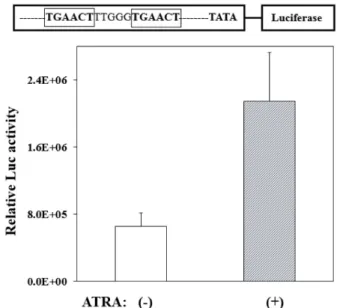
Fig. 3. Effect of ATRA on the transcriptional activity of bovine CYP26A1. Mouse transformed Clara cells (mtCC) were used for transient transfection assays for the expression of the bovine CYP26A1. CYP26A1 gene expression by ATRA treatment (10 uM) was measured by the Luc ac- tivities of CYP26A1-Luc reporter plasmid.

Results and Discussion

Cloning and characterization of the bovine CYP26A1 promoter region

It is known that CYP26A1 gene is responsible for the en- zymatic breakdown of RA and the expression of CYP26A1 gene is regulated by its own substrate RA and thus CYP26A1 gene is one of candidates for RA regulated genes [24, 29, 30]. RA, as a member of steroid hormone, binds to its re- ceptor and this binding of RA receptor to the DNA of RA responding genes occurs at specific sequences of RA re- sponse elements known as RARE [8, 11(Fig. 1B)]. The clon- ing of CYP26A1 gene from several animals are reported and RARE was identified in the promoter region of human and mouse CYP26A1 gene [15, 29]. However, cloning of the pro- moter region of CYP26A1 from cow was not reported yet.

The promoter regions of CYP26A1 from cow were amplified by genomic PCR and cloned to study the role of the RA and its retinoid receptors. The amplified PCR product of the promoter region of bovine CYP26A1 contains 629 bp with a conserved TATA box in their 3’ end (Fig. 2A). Sequence data from 629 bp of bovine CYP26A1 promoter were used for the sequence alignment with human and mouse se- quence of CYP26A1 promoter and revealed 79% (454/572) similarity with human gene and 90% (198/220) similarity with mouse gene (Fig. 2B). However, sequence alignment with Bubalus bubalis (water buffalo) CYP26A1 gene (GI:

594101314) revealed 99% (620/629) similarity (data not shown). Sequence alignment of bovine CYP26A1 with hu- man and mouse genes exhibited only 198 bp region of the promoter among three animals showed highly significant homology (>79%) and 72 bp sequence within 198 bp region exhibited a 97% sequence homology between cow, mouse and human sequences (Fig. 2B). Further analysis of this 72 bp sequence of CYP26A1 promoter region revealed that there is a RARE motif with DR-5 (TGAACTTTGGG- TGAACT) which consist of a direct repeat of a hexamer se- quence of TGAACT separated by 5 base pairs (DR-5) in the proximal promoter region (Fig. 2C). It is located just up- stream of the putative TATA box sequence and this RARE DR-5 motif is perfectly identical among cow, human and mouse CYP26A1 genes (Fig. 2C), suggesting that the DR-5 is a functionally important motif for the regulation of CYP26A1 gene expression. The DR-5 might serve as RARE for the binding site of RA receptors and several genes that are regulated by RA are known to carry DR-5 RARE motif

within the promoter region of the target genes [15, 16].

Regulation of CYP26A1 gene expression by ATRA in the mtCC cells

A 629 bp region of bovine CYP26A1 promoter obtained above was ligated to a luciferase reporter gene in order to understand molecular mechanism of the RARE DR-5 motif of this gene (Fig. 3). This CYP26A1-reporter construct was transiently transfected into mtCC cells which are Clara cell specific cell line originated from mouse Clara cell specific lung cancer [23]. Treatment of ATRA (10 μM) in mtCC cells resulted in a 3 fold increase in Luc activity derived from the transcription of the bovine CYP26A1 gene (Fig. 3).

Similar results were obtained when cells were exposed to ATRA at concentration of 1 μM (data not shown). It suggests that ATRA has a significant effect on the transcription of bovine CYP26A1 gene in transient transfection system when the lung mtCC cells were used and the up-regulation of bo- vine CYP26A1 gene is dependent on the ATRA treatment.

Co-transfection of RAR and RXR were performed to analyze

the function of the RARE DR-5 motif of the bovine CYP26A1

gene in mtCC cells and the effects of ATRA treatment were

examined in the presence of RARs (RAR-α, -β, or -γ) or RXR-

γ expression vectors. The co-transfection of RAR-α with

ATRA treatment (10μM) resulted in a significant increase (7

(6)

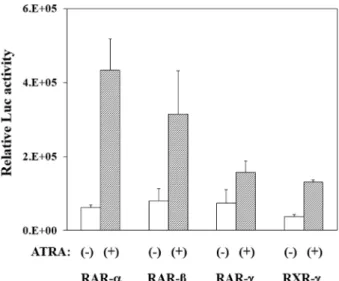
Fig. 4. Transcriptional activation of bovine CYP26A1 by differ- ent isoforms of retinoid receptors. The effects of ATRA treatment (10 uM) mtCC lung cell line on the expression of bovine CYP26A1 were examined in the presence of RARs (RAR-α, -β, or -γ) or RXR-γ expression vectors.

Fig. 5. The effects of ATRA on the endogenous CYP26A1 gene expressions in mtCC cells. Endogenous CYP26A1 gene expressions were measured with ATRA treatment in a time dependent manner by quantitative RT-PCR. The medium containing ATRA (10 μM) was replaced with fresh ATRA at every day for three days in mtCC cells.

fold increase) and co-transfection of RAR-β with ATRA treatment (10 μM) also exhibited 5 fold increase in bovine CYP26A1 transcriptional activity (Fig. 4). However, the co-transfection of RAR-γ or RXR-γ with ATRA treatment (10 μM) resulted in less significant increase (2-3 fold increase) in the same lung cells (Fig. 4). These results suggest the dif- ferential regulation of bovine CYP26A1 occurs by different types of RAR isoforms. Especially up-regulation of this gene by RAR-α or RAR-β might be a result of specific and prefer- ential binding to DR-5 RARE motif. It could be also ex- plained by differential specificity of ligand in the binding of different types of retinoic receptor isoforms [7, 12, 15, 16].

The 692 bp of the bovine CYP26A1 promoter might be re- sponsible for the up-regulation of CYP26A1 gene by the binding of RAR-α and RAR-β to the conserved DR-5 motif in the presence of ATRA. Results with mutations of this DR-5 motif and different types of ligands are needed for the clear answer for the specific role of DR-5 in retinoid sig- nal in lung cells.

In order to confirm the relationship between ATRA and the expression of CYP26A1 gene in lung originated mtCC cells, quantitative RT-PCR analysis was performed for en- dogenous CYP26A1 gene expression by replacing the me- dium with ATRA at every day. Endogenous CYP26A1 gene expressions were measured with ATRA treatment in a time dependent manner without co-transfection of any types of retinoid receptor. Results of quantitative RT-PCR assay ex-

hibited that expression of the endogenous CYP26A1gene was slightly increased at first day and slightly decreased at second day by the ATRA treatment (10 μM) in mtCC cells (Fig. 5). However, the expression of endogenous CYP26A1 gene was diminished sharply at three days by the con- tinuous exposure to ATRA (10μM) in lung mtCC cells (Fig.

5). The molecular mechanism for the repression of endoge- nous CYP26A1 expression by 3 days ATRA treatment could not be explained clearly in this point. Retinoid treatment might suppress cancers of many tissues including lung tu- mor and ATRA, as the most active form of RA, is currently used as a chemotherapy drug [19, 28]. It is also known that ATRA is involved in the process of programmed cell death (also known as apoptosis) in certain types of tumor cells [21, 33]. The levels of gene expression of the CYP26A1 may play a role in apoptosis by controlling RA metabolism [33].

In addition, higher levels of CYP26A1 gene expression were observed in various tumors [6, 31]. However, the molecular mechanism responsible for the CYP26A1 expression in dif- ferent types of tumors remains unclear [6, 14, 22]. As men- tioned, very limited information is available for the ex- pression of CYP26A1 in lung and lung cancer. MtCC cells could be a good model system to study the function of CYP26A1 gene in RA signal in vitro. The expression of CYP26A1 reporter construct was activated and exhibited a high responsiveness to RA treatment in these cells (Fig. 3 and 4) and also the endogenous expression of CYP26A1gene was observed when the cells are treated with ATRA (Fig.

5).

In summary, CYP26A1 gene is belong to a family of RA

(7)

responding genes which their expression is directly con- trolled by ATRA. The 629 bp of the promoter region of bo- vine CYP26A1 was cloned and sequence analysis revealed that the RARE as DR-5 is located in this region. This func- tional DR-5 might serve as a biding site for RAR-α or RAR-β for the expression of CYP26A as ATRA dependent way in mtCC cell. Continuance treatment of ATRA for three days decreased endogenous CYP26A1 gene expression in mtCC cells and it suggests that RA signal is a critical regulator of CYP26A1 gene in lung mtCC cells. In conclusion, DR-5 RARE motif in bovine CYP26A1 gene was confirmed as es- sential regulatory elements required for the expression of CYP26A1 to control RA metabolism in mtCC cells.

Acknowledgement

Author deeply thanks to Dr. Francesco J. DeMayo at Baylor College of Medicine, Houston, TX USA for providing mtCC cells and expression vectors used in this research.

References

1. Aboulafia, D. M., Norris, D., Henry, D., Grossman, R. J., Thommes, J., Bundow, D., Yocum, R. C. and Stevens, V.

2003. 9-cis-retinoic acid capsules in the treatment of AIDS-related Kaposi sarcoma: results of a phase 2 multi- center clinical trial. Arch. Dermatol. 139, 178-186.

2. Abu-Abed, S., Dollé, P., Metzger, D., Beckett, B., Chambon, P. and Petkovich, M. 2001. The retinoic acid-metabolizing enzyme, CYP26A1, is essential for normal hindbrain pat- terning, vertebral identity, and development of posterior structures. Genes Dev. 15, 226-240.

3. Aranda, A. and Pascual, A. 2001. Nuclear hormone re- ceptors and gene expression. Physiol. Rev. 81, 1269-1304.

4. Arrieta, Ó., Hernández-Pedro, N., Fernández-González- Aragón, M. C., Saavedra-Pérez, D., Campos-Parra, A. D., Ríos-Trejo, M. Á., Cerón-Lizárraga, T., Martínez-Barrera, L., Pineda, B., Ordóñez, G., Ortiz-Plata, A., Granados-Soto, V.

and Sotelo, J. 2011. Retinoic acid reduces chemotherapy-in- duced neuropathy in an animal model and patients with lung cancer. Neurology 77, 987-995.

5. Baes, M., Gulick, T., Choi, H. S., Martinoli, M. G., Simha, D. and Moore, D. D. 1994. A new orphan member of the nuclear hormone receptor superfamily that interacts with a subset of retinoic acid response elements. Mol. Cell. Biol.

14, 1544-1552.

6. Bushue, N. and Wan, Y. J. 2010. Retinoid pathway and can- cer therapeutics. Adv. Drug. Deliv. Rev. 62, 1285-1298.

7. Chambon, P. 1996. A decade of molecular biology of retinoic acid receptors. FASEB J. 10, 940-954.

8. Chawla, A., Repa, J. J., Evans, R. M. and Mangelsdorf, D.

J. 2001. Nuclear receptors and lipid physiology: Opening the

X-files. Science 294, 1866-1870.

9. Duester, G. 2008. Retinoic acid synthesis and signaling dur- ing early organogenesis. Cell 134, 921-931.

10. Freemantle, S. J., Spinella, M. J. and Dmitrovsky, E. 2003.

Retinoids in cancer therapy and chemoprevention: promise meets resistance. Oncogene 22, 7305-7315.

11. Germain, P., Iyer, J., Zechel, C. and Gronemeyer, H. 2002.

Co-regulator recruitment and the mechanism of retinoic acid receptor synergy. Nature 415, 187-192.

12. Glass, C. K. 1994. Differential recognition of target genes by nuclear receptor monomers, dimers, and heterodimers.

Endocr. Rev. 15, 391-407.

13. Gomaa, M. S., Yee, S. W. and Milbourne, C. E. 2007.

"Homology model of human retinoic acid metabolising en- zyme cytochrome P450 26A1 (CYP26A1): active site archi- tecture and ligand binding". J. Enzyme Inhib. Med. Chem. 21, 361-369.

14. Klaassen, I., Brakenhoff, R. H., Smeets, S. J., Snow, G. B.

and Braakhuis, B. J. 2001. Metabolism and growth inhibition of four retinoids in head and neck squamous normal and malignant cells. Br. J. Cancer 85, 630-635.

15. Loudig, O., Babichuk, C., White, J., Abu-Abed, S., Mueller, C. and Petkovich, M. 2000. Cytochrome P450RAI (CYP26) promoter: a distinct composite retinoic acid response ele- ment underlies the complex regulation of retinoic acid metabolism. Mol. Endocrinol. 14, 1483-1497.

16. Loudig, O., Maclean, G. A., Dore, N. L., Luu, L. and Petko- vich, M. 2005. Transcriptional co-operativity between dis- tant retinoic acid response elements in regulation of CYP26A1 inducibility. Biochem. J. 392, 241-248.

17. Maden, M. 2000. The role of retinoic acid in embryonic and post-embryonic development. Proc. Nutr. Soc. 59, 65-73.

18. Maeng, S., Kim, G. J., Choi, E. J., Yang, H. O., Lee, D. S.

and Sohn, Y. C. 2012. 9-Cis-retinoic acid induces growth in- hibition in retinoid-sensitive breast cancer and sea urchin embryonic cells via retinoid X receptor α and replication factor C3. Mol. Endocrinol. 26, 1821-1835.

19. Mongan, N. P. and Gudas, L. J. 2007. Diverse actions of retinoid receptors in cancer prevention and treatment.

Differentiation 75, 853-870.

20. Orfanos, C. E., Zouboulis, C. C., Almond-Roesler, B. and Geilen, C. C. 1997. Current use and future potential role of retinoids in dermatology. Drugs 53, 358-388.

21. Osanai, M. and Petkovich, M. 2005. Expression of the reti- noic acid-metabolizing enzyme CYP26A1 limits pro- grammed cell death. Mol. Pharmacol. 67, 1808-1817.

22. Ozpolat, B., Mehta, K., Tari, A. M. and Lopez-Berestein, G.

2002. All-trans-retinoic acid-induced expression and regu- lation of retinoic acid 4-hydroxylase (CYP26) in human pro- myelocytic leukemia. Am. J. Hematol. 70, 39-47.

23. Ray, M. K., Chen, C. Y., Schwartz, R. J. and DeMayo, F.

J. 1996. Transcriptional regulation of a mouse Clara cell-spe-

cific protein (mCC10) gene by the NKx transcription factor

family member thyroid transcription factor 1 and cardiac

muscle-specific homeobox protein (CSX). Mol. Cell. Biol. 16,

2056-2064.

(8)

초록:소 CYP26A1 유전자 프로모터의 molecular cloning 및 특성

곽인석*

(신라대학교 의생명과학대학 생명과학과)

레티노산(RA)는 많은 유형의 세포에서 성장 및 발달에 중요한 역할을 수행하며 생체 활성화에 적합한 RA의 농도는 CYP26A1 등 여러 가지 효소에 의해 조절된다. CYP26A1의 발현은 RA에 의해서 조절되며 CYP26A1는 RA에 반응하는 유전자 중 하나이다. CYP26A1 유전자 클로닝은 여러 동물에서 보고되어 있지만, 소에서 CYP26A1 유전자의 클로닝은 아직 보고되지 않았다. 소로부터 CYP26A1의 프로모터 부위를 중합효소 연쇄반응을 이용하여 클로닝 한 후 다른 동물과 염기 서열 비교분석 결과 RARE DR-5 (TGAACTttgggTGAACT)의 존재를 확인하였고, DR-5의 염기서열은 분석한 종 에서 완전히 일치하였다. DR-5 motif를 함유한 소의 CYP26A1 프로모 터 부위를luciferase리포터 유전자에 결합한 후 transient transfection에 의해 promoter 발현을 분석하였다. 폐 유 래 세포주인 MTCC 세포에서 CYP26A1 promoter의 발현은 ATRA의 처리에 의하여 촉진되었다. CYP26A1 유전 자의 발현은 ATRA 의존적으로 RAR-α 및 RAR-β에 의하여 현저하게 촉진되었다. 그러나 RAR-γ나 RXR-γ는 CYP26A1 발현에 별다른 영향을 미치지는 않았다. 또한 MTCC 세포주가 생산하는 내인성 CYP26A1 유전자 발현 을 Q-RT-PCR로 분석한 결과 1-2일간의 ATRA 처리에 의해서는 현저한 영향을 받지 않으나, 3일 동안 ATRA를 처리한 샘플에서는 CYP26A1의 발현이 현저하게 감소하였다. 결론적으로, 소의 CYP26A1유전자의 프로모터 부위 에 존재하는 DR-5 RARE는 RAR-α 및 RAR-β의 결합부위로 작용하여 MTCC 세포에서 CYP26A1 유전자 발현 조절과 RA signal의 조절에 관여하는 것을 확인하였다.

24. Ray, W. J., Bain, G., Yao, M. and Gottlieb, D. I. 1997. CYP26, a novel mammalian cytochrome P450, is induced by retinoic acid and defines a new family. J. Biol. Chem. 272, 18702- 18708.

25. Rohwedel, J., Guan, K. and Wobus, A. M. 1999. Induction of cellular differentiation by retinoic acid in vitro. Cells Tissues Organs 165, 190-202.

26. Ross, A. C. and Zolfaghari, R. 2011. Cytochrome P450s in the regulation of cellular retinoic acid metabolism. Annu.

Rev. Nutr. 31, 65-87.

27. Rossetti, D., Kielmanowicz, M., Vigodman, S., Hu, Y., Chen, N., Nkengne, A. O. T., Fischer, D., Seiberg, M. and Lin, C.

2011. A novel anti-ageing mechanism for retinol: induction of dermal elastin synthesis and elastin fibre formation. Int.

J. Cosmet. Sci. 33, 62-69.

28. Tang, X. H. and Gudas, L. J. 2011. Retinoids, retinoic acid receptors, and cancer. Annu. Rev. Pathol. 6, 345-364.

29. Thatcher, J. E. and Isoherranen, N. 2009. The role of CYP26 enzymes in retinoic acid clearance. Expert Opin. Drug Metab.

Toxicol. 5, 875-886.

30. Uehara, M., Yashiro, K., Mamiya, S., Nishino, J., Chambon, P., Dolle, P. and Sakai, Y. 2007. CYP26A1 and CYP26C1 co- operatively regulate anterior-posterior patterning of the de-

veloping brain and the production of migratory cranial neu- ral crest cells in the mouse. Dev. Biol. 302, 399-411.

31. Van Heusden, J., Wouters, W., Ramaekers, F. C., Krekels, M. D., Dillen, L., Borgers, M. and Smets, G. 1998. The anti- proliferative activity of all-trans-retinoic acid catabolites and isomers is differentially modulated by liarozole-fumarate in MCF-7 human breast cancer cells. Br. J. Cancer 77, 1229-1235.

32. Yamamoto, Y., Zolfaghari, R. and Ross, A. C. 2000.

Regulation of CYP26 (cytochrome P450RAI) mRNA ex- pression and retinoic acid metabolism by retinoids and diet- ary vitamin A in liver of mice and rats. FASEB J. 14, 2119- 2127.

33. Zhang, H., Satyamoorthy, K., Herlyn, M. and Rosdahl, I.

2003. All-trans retinoic acid (atRA) differentially induces apoptosis in matched primary and metastatic melanoma cells --a speculation on damage effect of atRA via mitochon- drial dysfunction and cell cycle redistribution. Carcinogenesis 24, 185-191.

34. Zhang, M., Chen, W. G., Smith, S. M. and Napoli, J. L. 2001.

Molecular characterization of a mouse short chain de-

hydrogenase/reductase active with all-trans-retinol in intact

cells, mRDH1. J. Biol. Chem. 276, 44083-44090.

수치

Fig.  2.  (A)  The  DNA  sequence  of  the  629  bp  of  proximal  promoter  region  of  bovine  CYP26A1  gene
Fig.  3.  Effect  of  ATRA  on  the  transcriptional  activity  of  bovine  CYP26A1.  Mouse  transformed  Clara  cells  (mtCC)  were  used  for  transient  transfection  assays  for  the  expression  of  the  bovine  CYP26A1
Fig.  4.  Transcriptional  activation  of  bovine  CYP26A1  by  differ- differ-ent  isoforms  of  retinoid  receptors

참조

관련 문서

In addition, the expression of REDD1 was increased when Huh7 cells were treated with PA, and overexpression of REDD1 affected cell survival and lipid

In this study, the expression profiles of miRNAs were compared and analyzed for establishment of miRNAs related cancer cell growth inhibition in normal human oral

The expression of reporter genes driven by the ZAT1 promoter was observed in the tissues undergoing maturation such as border cell of root cap, endodermis,

The labial surfaces of 24 extracted bovine incisors were used. For the ground enamel, flat enamel surfaces at labial aspect were ground. However, for

Sesn2-luciferase transactivation was determined in the lysates of HEK293 cells transfected with an Nrf2 expression construct along with either a Sesn2 (pGL4-phSESN2)

 Often found connected to other molecules on the outsides of cells --- cellular recognition, cell signaling, cell

4 > Effects of Taro on COX-2 expression and iNOS expression(hot water) in human thyroid cancer cells. The cells were pretreated for 48hours with either

of mineralized cancellous bone allograft(Puros) and anorganic bovine bone matrix(Bio-oss) for sinus augmentation: Histomorphometry at 26 to 32 weeks after