• 검색 결과가 없습니다.

Autophagy and Oral Cancer

N/A
N/A
Protected

Academic year: 2021

Share "Autophagy and Oral Cancer"

Copied!
7
0
0

로드 중.... (전체 텍스트 보기)

전체 글

(1)

Autophagy and Oral Cancer

Seung Hwa Son

1

and Eun-Jung Kim

2

*

1

Department of Dental hygiene, Gangdong College, Eumseong, Chungbuk 27600, Korea

2

Department of Biomedical Laboratory Science, Sangji University, Wonju 26339, Korea

Received July 29, 2017 /Revised August 28, 2017 /Accepted August 28, 2017

Autophagy plays an important role in cellular homeostasis and survival for cell recycling and various stresses within the cell. Recent studies have shown that autophagy activity modulates the expression of oncogene and tumor suppressor genes, leading to the development or suppression of cancer.

Induction of autophagy is involved in preventing cancer development in normal cells and plays an important role in prompting a specific cell death mechanism in cancer cells with damaged cell death function. It is also known that autophagy inhibition increases the therapeutic efficacy by sensitizing cancer cells that are resistant to chemotherapy. However, the role of autophagy has not yet been fully understood in cancer treatment. Oral squamous cell carcinoma accounts for more than 90% of oral cancer and is the sixth most common cancer in the world. The incidence of oral cancer has increased by 50% over the last 20 years and the mortality rate is over 40% within 5 years after the onset. In oral cancers, the role of autophagy are described to look for tumor inhibitory in the early stages of tumor formation, like other cancers, indicating the dual functions involved in tumor cell survival in- clude tumor progression stages. This review summarizes the various roles of autophagy in cancer cells and suggests the possibility of autophagy as a promising target for effective oral cancer therapy.

Key words : Autophagy, cancer therapy, oral squamous cell carcinoma

*Corresponding author

*Tel : +82-33-738-7683, Fax : +82-33-738-7683

*E-mail : [email protected]

This is an Open-Access article distributed under the terms of the Creative Commons Attribution Non-Commercial License (http://creativecommons.org/licenses/by-nc/3.0) which permits unrestricted non-commercial use, distribution, and reproduction in any medium, provided the original work is properly cited.

Journal of Life Science 2017 Vol. 27. No. 8. 958~964 DOI : https://doi.org/10.5352/JLS.2017.27.8.958

Introduction

In 1963, de Duve presented the term autophagy, which is derived from the Greek words ‘auto’ and ‘phagy’ sense

‘self’ and ‘eating’, to describe the happening of obvious in- tracellular, membranous vesicles that included degraded cy- toplasmic material [44]. Autophagy has been shown to play an important role in maintaining homeostasis and cellular integrity in normal cells. In addition to these physiological conditions, it has been found to be involved in a variety of pathological manners, and there is a growing interest in its role as an important regulator in the growth and treat- ment of malignant tumors [36, 44]. Autophagy is a self-di- gestive progression that confirms the lysosomal degradation of superfluous or damaged organelles and misfolded pro- teins [22]. Depending on the pathway to the lysosomes, three different autophagy types are well-defined: microautophagy, chaperone-mediated autophagy and macroautophagy [29].

This review specially focuses on macroautophagy, which is henceforth simply named autophagy. Autophagy begins with the formation of double membrane vesicles, known as autophagosomes, which surround cytoplasmic components.

The autophagosomes then merge with lysosomes where the isolated contents experience degradation and recycling [11].

Many studies on the cellular biologic mechanisms of autoph- agy in recent decades have been implicated in both human health and disease. Autophagy is significant for the elimi- nation of damaged or long-lived proteins and organelles in all cells. Autophagy defects are related with susceptibility to genomic damage, metabolic stress, and tumorigenesis in mice demonstrating a role for autophagy in tumor sup- pression [32]. This deficiency of autophagy is known to play an important role in the pathology of many diseases. For example, autophagy dysregulation is associated with the de- velopment of a variety of diseases, including degenerative brain diseases such as Parkinson's disease or Alzheimer's disease, congenital muscular disorders such as pemphigus, congenital heart disease and various types of cancer [23, 30].

However, the role of autophagy in cancer is more complex,

sometimes leading to cancer and in others it seems to inhibit

cancer. Several results suggest that autophagy may act as

a tumor suppressor in the early stage of tumor development,

but it may contribute to the survival of the tumor if the cell

- Review -

(2)

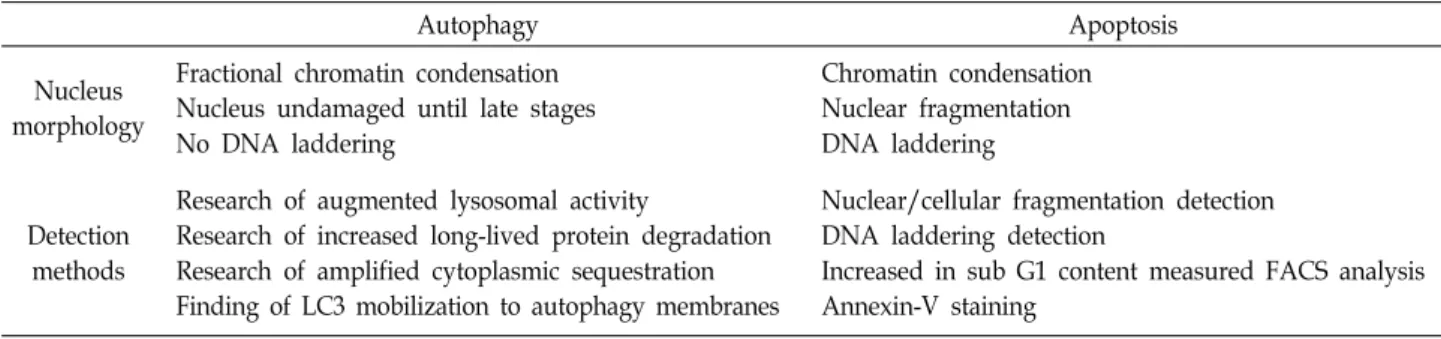
Table 1. Comparison of autophagy and apoptosis among programmed cell death

Autophagy Apoptosis

Nucleus morphology

Fractional chromatin condensation Nucleus undamaged until late stages No DNA laddering

Chromatin condensation Nuclear fragmentation DNA laddering

Detection methods

Research of augmented lysosomal activity

Research of increased long-lived protein degradation Research of amplified cytoplasmic sequestration Finding of LC3 mobilization to autophagy membranes

Nuclear/cellular fragmentation detection DNA laddering detection

Increased in sub G1 content measured FACS analysis Annexin-V staining

becomes malignant and developed. Hormone therapy, che- motherapy, and radiation therapy, which are used in the treatment of cancer, often cause autophagy, which acts as a survival response and contributes to depressing the poten- tial cancer cure rate [18, 24]. In contrast, there is also an observation that cancer cells that are resistant to apoptosis will be able to suggest a new anti-cancer strategy through overexpression of autophagy. Thus, it is the major problem to decide how best to use autophagy to maximize the effect of cancer treatment due to the role of contradictory autoph- agy in the development and treatment of cancer.

Oral cancer incidence has been reported to account for 2-5% of all malignant tumors that occur in the human, and 2-3% of all cancer deaths are caused by oral cancer mortality [20]. The most common type of oral cancer is oral squamous cell carcinoma (OSCC), which accounts for about 80-90%

[27]. Treatment of oral malignancies includes surgical re- section, radiotherapy and chemotherapy, and immunother- apy. For progressive carcinoma, combined therapy with sur- gery and radiation therapy or chemotherapy is being per- formed to increase the survival rate [19]. The 5-year survival rate of oral cancer is upgraded by the study and develop- ment of the treatment, and the survival rate is increased when the disease is found early and treated properly [19].

For this reason, basic research data are urgently required for the early detection and early treatment of oral cancer, and the better quality of life of the patient.

In this review, we describe autophagy's newest findings and express how autophagy behaves in the process of cancer development and growth. In particular, we will discuss the possibility of autophagy as an alternative to new cancer ther- apy in situations of oral cancer treatment.

Comparison of programmed cell death Based on the morphology of cell death by Clarke, 4 types

of cell death have been suggested, and so far programmed cell death has been studied in detail [14, 9]. The first type, known as type I or apoptosis, is known to be regulated by the caspase family due to the formation of so-called apop- totic bodies, which characterize cell types such as cell shrink- age, chromatin condensation, nucleosomal DNA degrada- tion and fragmentation. The second type, called type II or autophagic cell death is characterized by the formation of an autophagic vesicle in the cell and degradation of intra- cellular macromolecule similar to the lysosomal system.

When autophagosome formation is stimulated, some chro- matin condensation appears similar to apoptosis, but it is established as autophagy, which means self-eating by induc- ing apoptosis without detecting DNA fragmentation (Table 1). The third type is type III, which is defined as non- lysosomal vesiculate degradation. Type III programmed cell death is known as type IIIA and type IIIB, and is classified into nonlysosomal degradation and cytoplasmic type of de- generation [9]. Methods for evaluating type II or autophagic cell death systems have been developed, including micro- scopic observation of cell morphology, degradation assay for long-lived proteins, and monodansylcadaverine [14].

The process of autophagy

Previously known apoptosis, necrosis only deals with the

death of whole cells, but autophagy is a new type of pro-

grammed cell death which is related to the death and re-

generation of intracellular organelles such as mitochondria

and endoplasmic reticulum. In other words, it has been

thought that the intracellular organelles in the human are

maintained in a static state at normal periods, but it has been

revealed that the intracellular organelles constantly die and

regenerate even when the cells are kept static. Through this

procedure, the old and degenerated intracellular organelles

are eliminated and become a necessary nutrient source to

(3)

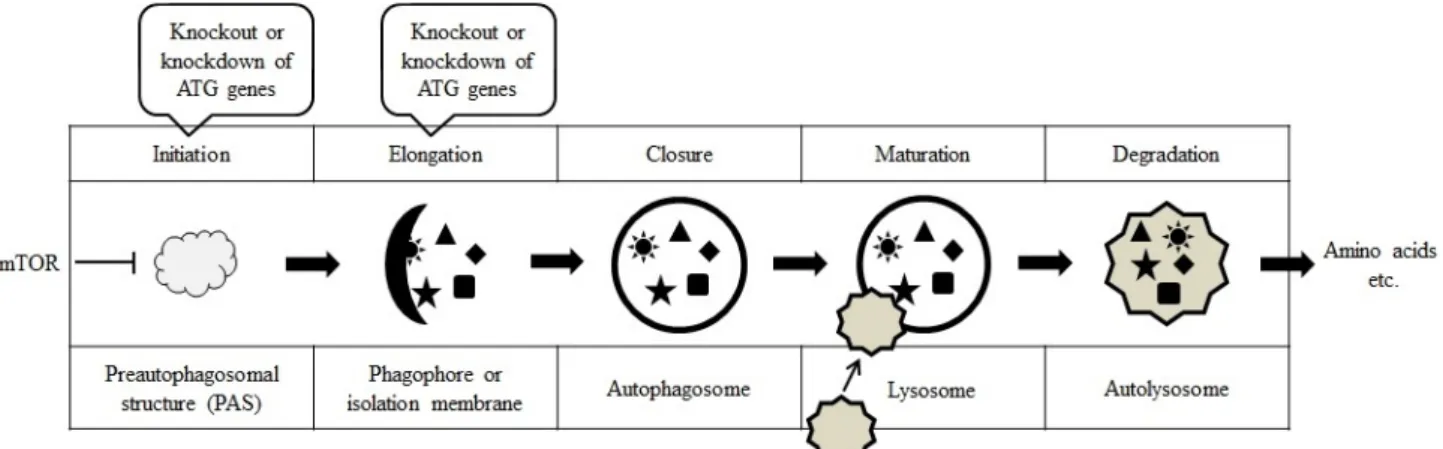
Fig. 1. Five stages in the formation of autolysosome during autophagy.

regenerate new intracellular organelles, thus forming a cycle in which new cells are regenerated [39]. Some of the cyto- plasm, including organelles, is surrounded by a phagophore or isolation membrane to arrange an autophagosome. The external membrane of the autophagosome consequently melts with the lysosome, and the internal material is de- graded in the autolysosome. Amino acids and other small molecules formed through autophagy degradation are re- cycled back to the cytoplasm or used for energy production [30, 45]. Hence, autophagy is a complex process, which can be divided into five stages: initiation, elongation, closure, maturation, and degradation (Fig. 1). At each stage, several autophagy-related genes (ATGs) are closely coordinated [18, 30]. More than 35 ATGs regulating various processes in au- tophagosome formation were found on yeast genetic screens [18]. ATGs were originally found in yeast, but almost ATGs now have heterologous homologous genes in mammalian cells. In fact, since autophagy is activated for cell survival, it is likely to increase tumor cell survival in many cases and stimulate tumorigenesis. In many other cases, however, a strong death signal that transcends this survival advantage kills the tumor cells and eventually inhibits the tumor. From an objective point of view, it is reasonable to assume that autophagy is in the process of cell death but not directly contributing to cell death [37]. Although autophagy does not make cell death by itself, there is a sight that autophagy promotes cell death as a necessary process in situations where it is associated with signals that induce other cell deaths.

Autophagy as a therapeutic target in cancer In cancer, autophagy has a diversity of functions, includ-

ing the removal of unnecessary substances and the supply

of nutrients, depending on the genotype and stage of the

cancer [7, 37, 43, 45]. The understanding of the diversity of

autophagy under these conditions is very significant in the

development of cancer drugs. Increasing the activity of au-

tophagy may lead to cancer suppression. Autophagy plays

an important role in maintaining the genetic stability by pre-

venting the transformation of normal cells into cancer cells,

inhibiting the development of cancer, and removing the

damaged cellular organelles so as not to generate active oxy-

gen [12]. On the other hand, recent studies have shown that

the activity of autophagy is regulated by the expression of

oncogene and tumor suppressor genes and cancer is either

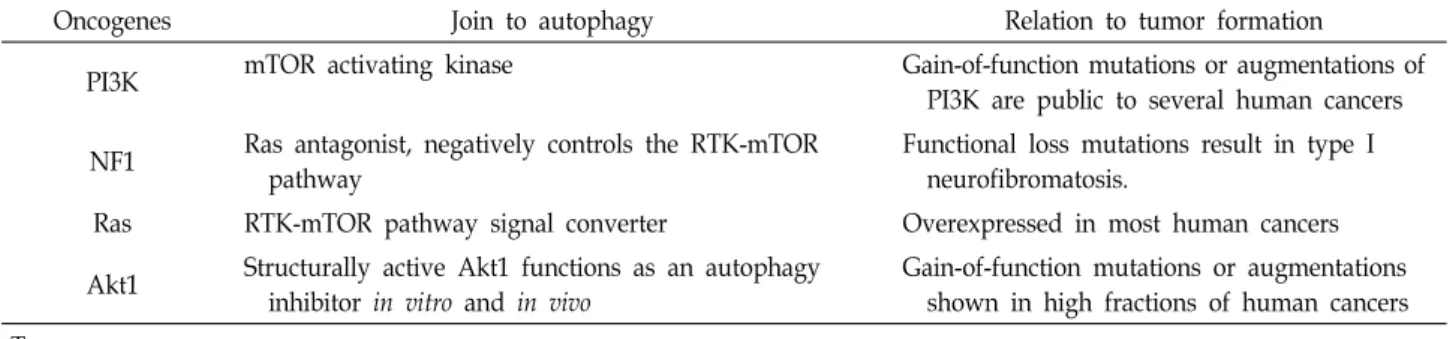
developed or inhibited (Table 2). In particular, the mamma-

lian target of rapamycin (mTOR) kinase, which is known

to be an autophagy inhibitor in human cells, inhibits the

activity of autophagy by maintaining hyperphosphorylation

in the protein necessary for the initiation of the autophagic

cascade [13]. Conversely, mTOR expression was suppressed

in stress conditions such as nutrient insufficiency and au-

tophagy activity was reported to increase. NF-1, PI3K, and

Ras have been known as oncogenes that regulate the ex-

pression of these mTORs. Although Ras inhibits autophagy

as a signal transducer in the RTK-mTOR pathway, neuro-

fibromin-1 (NF-1), an antagonist of Ras, is predictable to in-

crease the autophagy by inhibiting the RTK-mTOR pathway,

but a clear mechanism has been described not [38]. Bec-1

as a tumor suppressor is a major modulator of autophagy,

suggesting that when the expression of Bec-1 is promoted,

smARF regulates p53 and activates autophagy independent

of the RTK-mTOR pathway [25, 26, 34, 42]. Therefore, it can

be summarized that oncogene and tumor suppressor control

autophagy by several signaling. It is proposed that autoph-

(4)

Table 2. Patterns of autophagy directive by oncogenes and tumor suppressor genes

Oncogenes Join to autophagy Relation to tumor formation

PI3K mTOR activating kinase Gain-of-function mutations or augmentations of

PI3K are public to several human cancers NF1 Ras antagonist, negatively controls the RTK-mTOR

pathway

Functional loss mutations result in type I neurofibromatosis.

Ras RTK-mTOR pathway signal converter Overexpressed in most human cancers

Akt1 Structurally active Akt1 functions as an autophagy inhibitor in vitro and in vivo

Gain-of-function mutations or augmentations shown in high fractions of human cancers Tumor suppressor

genes Join to autophagy Relation to tumor formation

p53 Cellular p53 exerts tonic inhibition of autophagy Nuclear p53 transactivates autophagy-stimulating factors

Mutations in more than 50% of all human tumors

Bec-1 Crucial modulator of autophagy Brain tumors are characterized by decreased expression of Bec-1

smARF By releasing Bex-1 as a Bcl-X

L

mediated inhibition, it probably promotes autophagy independent of p53

Mutated or missing in various types of human cancer

agy may be an attractive scheme for future cancer treatment approach by studying inhibitor or activator for gene and protein expression and signaling.

Since the mechanism and function of autophagy asso- ciated with cancer is caused by an inclusive variety of path- ways, the possibility of developing an anticancer drug tar- geting autophagy is considered to be unlimited. Autophagy is mainly activated in hypoxia and stress states of cancer.

Consequently, it is expected that the use in combination with various anticancer agents and autophagy activating sub- stances will further maximize the therapeutic effect [11, 17].

In addition, the use of an inhibitor for the regulator inhibit- ing the autophagy system described above may be useful for the development of various anticancer adjuvants.

Inhibition of cancer cell growth in chronic myelogenous leu- kemia cells caused by the combination of 3-methyladenine (3-MA), a known inhibitor of class III phosphoinositide 3-kinase (PI3K), and suberoylanilide hydroxamic acid (SAHA), a known histone deacetylase inhibitor, has been tes- tified [6]. According to other studies, autophagy was in- hibited in cancer cells showing resistance to radiation [3].

The effect of autophagy-activating substances on radiation tolerant cancer is expected to inhibit tolerance.

Autophagy in oral squamous cell carcinoma

The oral cancer is one among the common malignancies in numerous parts of the world. Around 90% of these diag-

nosed cases are OSCC [1]. OSCC results due to a compli- cated interaction between several environmental and genetic factors and is thus a complex multistage course [35]. Even though abundant has been found about autophagy and its role in several carcinomas, not much has been found about the portion it plays in OSCC.

A current immunohistochemical study of 195 oral squ- amous cell cancers revealed higher levels of cytoplasmic p62, suggesting damaged autophagy, and its correlation with re- duced general and disease specific survival [10]. A high level of autophagy-related protein light chain 3 (LC3)-II was found in these patients, suggesting augmented basal levels of autophagy may be associated to autophagy re-activation in later advanced stage cancers. This has been revealed in other cancers such as melanoma and backs the concept of an autophagy contradiction [10]. Tumors of the head and neck are highly heterogeneous cancers with variable genetic mutations contribute toward tumorigenesis [21]. However, some consistencies in somatic aberrations have been shown by well-known genomic sequencing [5]. Some of these aber- rations are in processes which are identified to play an im- portant role in autophagy. Phosphoinositide-3-kinase, cata- lytic, alpha polypeptide (PIK3CA) gene is generally mutated in head and neck cancers and stimulation of PI3K and down- stream effectors have been found to promote autophagy [5].

It has been also demonstrated that despite the absence

of cytotoxicity, oral cancer cells experience inhibited pro-

liferation following Porphyromonas gingivalis (P. gingivalis)

(5)

infection, compared to non-infected control cells [8]. P. gingi- valis, a main etiologic micro-organism of chronic perio- dontitis, settles inside the tumor microenvironment of pa- tients with oral cancer. Apoptosis could not explain inhibited proliferation in infected cells as only some of cells had the sub-G1 DNA content expressive of apoptosis. Conversely, P. gingivalis induced significant accumulation of oral cancer cells in the G1 phase with a reduction in S phase [8]. This phenomenon is in contrast to the continuous growth that appears in non-infected cells. In the blockade of autophagy pathway via 3-MA, P. gingivalis failed to suppress the cell cycle or arrest the cell cycle in the G1 phase. This suggests that P. gingivalis induced cell proliferation by inducing au- tophagy and disrupting the cell cycle [8]. Recent studies have shown that 2'-benzoyloxycinnamaldehyde(BCA) in- duces apoptosis and autophagy in p53 null cells, human Oral Squamous Carcinoma YD-10B cells, and inhibits cell proliferation [15]. Previous studies have revealed that au- tophagy promotes apoptosis leading to cell death, while au- tophagy inhibits apoptosis and is involved in cell survival [28]. In another study, p53 mutation and c-myc amplification were observed in OSCC [33]. Various cells have been re- ported that have been exposed to have mutations in p53 and caspases to enhance resistance to apoptotic stress and a mul- ti-targeting strategy against tumor cells [40, 41, 46]. This sug- gests that the opportunity for cancer treatment will increase.

Most cancers that are resistant to chemotherapy, including specific oral cancers, have demonstrated autophagy to avoid cell death. The system of autophagy and apoptosis is in- versely related, but their molecular association is much more complex and requires further evaluation [16, 31]. Some stud- ies have used agents other than 3-MA to encourage apopto- sis directly or indirectly by inhibiting cellular autophagy. Bai et al. used G15, an antagonist to G protein-coupled receptor 30 (GPR30), a recognized cancer cell proliferator to induce apoptosis in OSCC [4]. Apicidin, a histone deacetylase in- hibitor, was used to initiate apoptosis in OSCC cells [2].

Autophagy slows down and interferes with the develop- ment of various therapies to reduce and eliminate cancerous tumors. Lymphocyte-induced autophagy has been shown to help survival of cancer cells [1]. Autophagy is induced by radiation therapy to a large amount beyond the limits of carcinoma cells, leading to autophagy-mediated cell death.

Therefore recognizing the molecules mediating autophagy may help as therapeutic agents by either directly or in- directly inducing apoptosis in chemotherapy resistant can-

cers cells containing oral cancer.

Conclusions

Autophagy is a programmed cell death type II, known as self-eating, which induces cell death by forming an au- to-phagosome within a cell. Generally autophagy action is tumor suppression and tumor formation, which reports dual function. The role of tumor suppression is to remove the damaged mitochondria by several factors, thereby alleviat- ing oxidative stress or eliminating various risk factors and suppressing the cancerous phenomenon. However, most tu- mor cells are known to undergo tumorigenesis by activating autophagy as a mechanism for survival in conditions such as limited nutrition, hypoxia and radiation exposure. Recent studies have stated that autophagy inhibitors have been used in combination with anticancer drugs to stimulate apoptosis and improve the therapeutic effect. However, the molecular mechanism for the regulation and role of autoph- agy in tumors has not been fully revealed. Furthermore, the autophagy inhibition may be more involved in the survival of tumor cells, so more vigorous research is required in the future.

References

1. Adhauliya, N., Kalappanavar, A. N., Ali, I. M. and Annigeri, R. G. 2016. Autophagy: A boon or bane in oral cancer. Oral Oncol. 61, 120-126.

2. Ahn, M. Y., Ahn, S. G. and Yoon, J. H. 2011. Apicidin, a histone deaceylase inhibitor, induces both apoptosis and au- tophagy in human oral squamous carcinoma cells. Oral Oncol. 47, 1032-1038.

3. Apel, A., Herr, I., Schwarz, H., Rodemann, H. P. and Mayer, A. 2008. Blocked autophagy sensitizes resistant carcinoma cells to radiation therapy. Cancer Res. 68, 1485-1494.

4. Bai, L. Y., Weng, J. R., Hu, J. L., Wang, D., Sargeant, A.

M. and Chiu, C. F. 2013. G15, a GPR30 antagonist, induces apoptosis and autophagy in human oral squamous carcino- ma cells. Chem. Biol. Interact. 206, 375-384.

5. Cancer Genome Atlas Network. 2015. Comprehensive ge- nomic characterization of head and neck squamous cell carcinomas. Nature 517, 576-582.

6. Carew, J. S., Nawrocki, S. T., Kahue, C. N., Zhang, H., Yang, C., Chung, L., Houghton, J. A., Huang, P., Giles, F. J. and Cleveland, J. L. 2007. Targeting autophagy augments the an- ticancer activity of the histone deacetylase inhibitor SAHA to overcome Bcr-Abl-mediated drug resistance. Blood 110, 313-322.

7. Choi, K. S. 2012. Autophagy and cancer. Exp. Mol. Med. 44,

(6)

109-120.

8. Cho. T. J., Wee, S. W., Woo, V. H., Choi, J. I., Kim, S. J., Shin, H. I., Lee, J. H. and Park, H. R. 2014. Porphyromonas gingivalis-induced autophagy suppresses cell proliferation through G1 arrest in oral cancer cells. Arch. Oral Biol. 59, 370-378.

9. Clarke, P. G. 1990. Developmental cell death: morphological diversity and multiple mechanisms. Anat. Embryol. (Berl) 181, 195-213.

10. Cosway, B. and Lovat, P. 2016. The role of autophagy in squamous cell carcinoma of the head and neck. Oral Oncol.

54, 1-6.

11. Degenhardt, K., Mathew, R., Beaudoin, B., Bray, K., Ander- son, D., Chen, G., Mukherjee, C., Shi, Y., Gelinas, C., Fan, Y., Nelson, D. A., Jin, S. and White, E. 2006. Autophagy promotes tumor cell survival and restricts necrosis, in- flammation, and tumorigenesis. Cancer Cell 10, 51-64.

12. Denton, D., Xu, T. and Kumar, S. 2015. Autophagy as a pro-death pathway. Immunol. Cell Biol. 93, 35-42.

13. Galluzzi, L., Vicencio, J. M., Kepp, O., Tasdemir, E., Maiuri, M. C. and Kroemer, G. 2008. To die or not to die: that is the autophagic question. Curr. Mol. Med. 8, 78-91.

14. Gozuacik, D. and Kimchi, A. 2004. Autophagy as a cell death and tumor suppressor mechanism. Oncogene 23, 2891-2906.

15. Kim, H. W. and Kim, S. A. 2014. Cinnamaldehyde derivative, 2'-benzoyloxycinnamaldehyde (BCA), Induces Apoptosis and Autophagy in Human Oral Squamous Carcinoma YD-10B Cells. Kor. J. Oral. Maxillofac. Pathol. 38, 247-256 16. Jiang, L. C., Xin, Z. Y., Deborah, B., Zhang, J. S., Yuan, D.

Y., Xu, K., Liu, X. B., Jiang, H. Q., Fan, Q. C., Zhang, B.

and Li, K. Y. 2015. Inhibition of autophagy augments apop- tosis in human oral squamous cell carcinoma under nutrient depletion. J. Oral Pathol. Med. 44, 361-366.

17. Karantza-Wadsworth, V., Patel, S., Kravchuk, O., Chen, G., Mathew, R., Jin, S. and White E. 2007. Autophagy mitigates metabolic stress and genome damage in mammary tumori- genesis. Genes Dev. 21, 1621-1635.

18. Kimmelman, A. C. 2011. The dynamic nature of autophagy in cancer. Genes Dev. 25, 1999-2010.

19. Klug, C., Berzaczy, D., Voracek, M. and Millesi, W. 2008.

Preoperative chemoradiotherapy in the management of oral cancer: a review. J. Craniomaxillofac. Surg. 36, 75-88.

20. Kujan, O., Glenny, A. M., Duxbury, J., Thakker, N. and Sloan, P. 2005. Evaluation of screening strategies for improv- ing oral cancer mortality: a Cochrane systematic review. J.

Dent. Educ. 69, 255-265.

21. Leemans, C. R., Braakhuis, B. J. and Brakenhoff, R. H. 2011.

The molecular biology of head and neck cancer. Nat. Rev.

Cancer 11, 9-22.

22. Levine, B. and Klionsky, D. J. 2004. Development by self-di- gestion: molecular mechanisms and biological functions of autophagy. Dev. Cell 6, 463-477.

23. Levine, B. and Kroemer, G. 2008. Autophagy in the patho- genesis of disease. Cell 132, 27-42.

24. Li, Y. J., Lei, Y. H., Yao, N., Wang, C. R., Hu, N., Ye, W.

C., Zhang, D. M. and Chen, Z. S. 2017. Autophagy and mul-

tidrug resistance in cancer. Chin. J. Cancer 36, 52.

25. Liang, C., Lee, J. S., Inn, K. S., Gack, M. U., Li, Q., Roberts, E. A., Vergne, I., Deretic, V., Feng, P., Akazawa, C. and Jung, J. U. 2008. Beclin1-binding UVRAG targets the class C Vps complex to coordinate autophagosome maturation and en- docytic trafficking. Nat. Cell. Biol. 10, 776-787.

26. Liang, X. H., Jackson, S., Seaman, M., Brown, K., Kempkes, B., Hibshoosh, H. and Levine, B. 1999. Induction of autoph- agy and inhibition of tumorigenesis by beclin 1. Nature 402, 672-676.

27. Lo-Muzio, L., Santarelli, A., Panzarella, V., Campisi, G., Carella, M., Ciavarella, D., Di-Cosola, M., Giannone, N. and Bascones, A. 2007. Oral squamous cell carcinoma and bio- logical markers: an update on the molecules mainly in- volved in oral carcinogenesis. Minerva. Stomatol. 56, 341-347.

28. Martin-Ezquerra, G., Salgado, R., Toll, A., Gilaberte, M., Baro, T., Alameda, Q., F., Yebenes, M., Sole, F., Garcia-Muret, M.

and Espinet, B. 2010. Multiple genetic copy number alter- ations in oral squamous cell carcinoma: study of MYC, TP53, CCDN1, EGFR and ERBB2 status in primary and metastatic tumours. Br. J. Dermatol. 163, 1028-1035.

29. Mizushima, N., Levine, B., Cuervo, A. M. and Klionsky, D.

J. 2008. Autophagy fights disease through cellular self- digestion. Nature 45, 1069-1075.

30. Mizushima, N., Yoshimori, T. and Levine, B. 2010. Methods in mammalian autophagy research. Cell 140, 313-326.

31. Patil, S., Rao, R. S. and Raj, A. T. 2015. Dual role of autoph- agy in oral cancer. J. Int. Oral Health 7, i-ii.

32. Qu, X., Yu, J., Bhagat, G., Furuya, N., Hibshoosh, H., Troxel, A., Rosen, J., Eskelinen, E. L., Mizushima, N., Ohsumi, Y., Cattoretti, G. and Levine, B. 2003. Promotion of tumori- genesis by heterozygous disruption of the beclin 1 autoph- agy gene. J. Clin. Invest. 112, 1809-1820.

33. Ravikumar, B., Sarkar, S., Davies, J. E., Futter, M., Garcia- Arencibia, M., Green-Thompson, Z. W., Jimenez- Sanchez, M., Korolchuk, V. I., Lichtenberg, M., Luo, S., Massey, D.

C., Menzies, F. M., Moreau, K., Narayanan, U., Renna, M., Siddiqi, F. H., Underwood, B. R., Winslow, A. R. and Rubinsztein, D. C. 2010. Regulation of mammalian Autoph- agy in physiology and pathophysiology. Physiol. Rev. 90, 1383-1435.

34. Reef, S. and Kimchi, A. 2008. Nucleolar p19ARF, unlike mi- tochondrial smARF, is incapable of inducing p53-independent autophagy. Autophagy 4, 866-869.

35. Roepman, P., Wessels, L. F., Kettelarij, N., Kemmeren, P., Miles, A. J., Lijnzaadm, P., Tilanus, M. G., Koole, R., Hordijk, G. J., van der Vliet, P.C., Reinders, M. J., Slootweg, P. J.

and Holstege, F. C. 2005. An expression profile for diagnosis of lymph node metastases from primary head and neck squ- amous cell carcinomas. Nat. Genet. 37, 182-186.

36. Rosenfeldt, M. T. and Ryan, K. M. 2009. The role of autoph- agy in tumour development and cancer therapy. Expert Rev.

Mol. Med. 11, e36.

37. Rosenfeldt, M. T. and Ryan, K. M. 2011. The multiple roles of autophagy in cancer. Carcinogenesis 32, 955-963.

38. Shaw, R. J. and Cantley, L. C. 2006. Ras, PI(3)K and mTOR

(7)

초록:자가포식작용과 구강암

손승화

1

․김은정

2

*

(

1

강동대학교 치위생학과,

2

상지대학교 임상병리학과)

Autophagy는 세포 내에서 세포의 재활용과 다양한 스트레스에 세포 homeostasis와 survival에 중요한 역할을 한다. 최근 연구에서는 autophagy 활성이 oncogenes과 tumor suppressor genes의 발현이 조절됨으로써 암이 발 달되거나 억제됨이 보고되고 있다. Autophagy의 유도는 정상세포에서는 암 발생을 예방하는데 관여하며, 손상된 세포사멸 기능을 가진 암세포에서는 특정세포사멸기전을 유발하는데 중요한 역할을 한다. 또한 autophagy 억제 는 항암약물과 치료법에 저항을 나타내는 암세포를 민감하게 만들어 치료효능을 증가시킨다고 증명되고 있다.

그러나 cancer 치료에서의 autophagy의 역할은 아직까지 완전히 이해되지 않았다. Oral squamous cell carcinoma (OSCC)는 구강암의 90% 이상을 차지하고 있으며, 전세계적으로 6th 가장 흔한 암중의 하나로, 최근 2배 이상 증 가하고 있으며 높은 mortality rate를 보이고 있다. 구강암에서의 autophagy의 역할은 다른 암들과 마찬가지로 종양형성의 초기 단계 동안 종양억제성을 보이나, 종양진행 동안은 종양세포 생존에 관여하는 두 가지의 기능을 나타내는 것으로 보고되고 있다. 본 리뷰에서는, 암에서의 autophagy의 조절에 대한 다양한 역할을 요약하고, 이 를 바탕으로 효과적인 암 치료를 위한 유망한 target으로 autophagy의 가능성을 제시하고자 한다.

signalling controls tumour cell growth. Nature 441, 424-430.

39. Singletary, K. and Milner, J. 2008. Diet, autophagy, and can- cer: a review. Cancer Epidemiol. Biomarkers Prev. 17, 1596- 1610.

40. Soung, Y. H., Lee, J. W., Kim, S. Y., Jang, J., Park, Y. G., Park, W. S., Nam, S. W., Lee, J, Y., Yoo, N. J. and Lee, S.

H. 2005. CASPASE-8 gene is inactivated by somatic muta- tions in gastric carcinomas. Cancer Res. 65, 815-821.

41. Soussi, T. and Lozano, G. 2005. p53 mutation heterogeneity in cancer. Biochem. Biophys. Res. Commun. 331, 834-842.

42. Tasdemir, E., Maiuri, M. C., Galluzzi, L., Vitale, I., Djavaheri- Mergny, M., D'Amelio, M., Criollo, A., Morselli, E., Zhu, C., Harper, F., Nannmark, U., Samara, C., Pinton, P., Vicencio, J. M., Carnuccio, R., Moll, U. M., Madeo, F., Paterlini-Brechot, P., Rizzuto, R., Szabadkai, G., Pierron, G.,

Blomgren, K., Tavernarakis, N., Codogno, P., Cecconi, F and Kroemer, G. 2008. Regulation of autophagy by cytoplasmic p53. Nat. Cell. Biol. 10, 676-687.

43. White, E. 2012. Deconvoluting the context-dependent role for autophagy in cancer. Nat. Rev. Cancer 12, 401-410.

44. Yang, Z. and Klionsky, D. J. 2010. Eaten alive: a history of macroautophagy. Nat. Cell Biol. 12, 814-822.

45. Yang, Z. and Klionsky, D. J. 2010. Mammalian autophagy:

core molecular machinery and signaling regulation. Curr.

Opin. Cell Biol. 22, 124-131.

46. You, J., He, Z., Chen, L., Deng, G., Liu, W., Qin, L., Qiu,

F. and Chen, X. 2010. CH05-10, a novel indinavir analog,

is a broad-spectrum antitumor agent that induces cell cycle

arrest, apoptosis, endoplasmic reticulum stress and autoph-

agy. Cancer Sci. 101, 2644-2651.

수치

Table  1.  Comparison  of  autophagy  and  apoptosis  among  programmed  cell  death
Fig.  1.  Five  stages  in  the  formation  of  autolysosome  during  autophagy.
Table  2.  Patterns  of  autophagy  directive  by  oncogenes  and  tumor  suppressor  genes

참조

관련 문서

CK17: Cytokeratin 17; IHC: Immunohistochemistry; OSCC: Oral squamous cell carcinoma; p53: Protein 53; PD-L1: Programmed cell death ligand 1; TCs: Tumor cells; TILs:

Induction of apoptosis and G2/M cell cycle arrest by cordycepin in human prostate carcinoma LNCap cells. Cordycepin induces apoptosis and autophagy in human

We found that ex- posure of squamous cell carcinoma-4 (SCC-4) and squamous cell carcinoma-9 (SCC-9) human oral can- cer cells to DHA induced growth inhibition in a dose-

In summary, we showed that (1) compound K induces autophagy as well as apoptosis in HCT-116 colon cancer cells; (2) inhibition of apoptosis or autophagy restores cell viability

Gene therapy with wild type p53 in thyroid carcinoma cells in culture that had a p53 mutation showed that it (a) induced growth arrest (not apoptosis),(51) (b) increased

Furthermore, to find out the role of Beclin-1, one of essential autophagy regulating protein, in a dysregulated state of autophagy and apoptosis in SLE T cells, we used

CDDP inhibit growth and induce apoptosis and autophagy of ovarian cancer cells through ROS generation in A2780/s. (A) Intracellular

Since defects in apoptosis are often observed in many solid tumor cells and can increase the resistance of tumor cells to various conventional cancer therapies, the