• 검색 결과가 없습니다.

The Influence of Unfavorable Aortoiliac Anatomy on Short-Term Outcomes after Endovascular Aortic Repair

N/A
N/A
Protected

Academic year: 2021

Share "The Influence of Unfavorable Aortoiliac Anatomy on Short-Term Outcomes after Endovascular Aortic Repair"

Copied!
7
0
0

로드 중.... (전체 텍스트 보기)

전체 글

(1)

ISSN: 2233-601X (Print) ISSN: 2093-6516 (Online)

Received: January 23, 2018, Revised: March 8, 2018, Accepted: March 22, 2018, Published online: June 5, 2018

Corresponding author: Jae Hang Lee, Department of Thoracic and Cardiovascular Surgery, Dongguk University Ilsan Hospital, 27 Dongguk-ro, Ilsandong-gu, Goyang 10326, Korea

(Tel) 82-31-961-7284 (Fax) 82-31-961-7287 (E-mail) [email protected]

© The Korean Society for Thoracic and Cardiovascular Surgery. 2018. All right reserved.

This is an open access article distributed under the terms of the Creative Commons Attribution Non-Commercial License (http://creativecommons.org/

licenses/by-nc/4.0) which permits unrestricted non-commercial use, distribution, and reproduction in any medium, provided the original work is properly cited.

The Influence of Unfavorable Aortoiliac Anatomy on Short-Term Outcomes after Endovascular Aortic Repair

Jae Hang Lee, M.D., Jin-Ho Choi, M.D., Eung-Joong Kim, M.D., Ph.D.

Department of Thoracic and Cardiovascular Surgery, Dongguk University Ilsan Hospital

Background: Endovascular aortic repair (EVAR) is widely performed to treat infrarenal abdominal aortic aneurysms (AAAs), and related techniques and devices continue to be developed. Although continuous at- tempts have been made to perform EVAR in patients with unfavorable aortic anatomy, the outcomes are still controversial. This study examined the short-term outcomes of EVAR for the treatment of infrarenal AAAs in patients with a ‘hostile’ neck and unfavorable iliac anatomy. Methods: Thirty-eight patients who underwent EVAR from January 2012 to December 2017 were enrolled in this study. A hostile neck was defined based on neck length, angulation, the presence of an associated thrombus, or a conical shape. Unfavorable iliac anatomy was considered to be present in patients with a short common iliac artery (<15 mm) or the pres- ence of aneurysmal changes. Results: No perioperative mortality was recorded. No significant differences were found depending on the presence of a hostile neck, but aneurysmal sac shrinkage was significantly less com- mon in the group with unfavorable iliac anatomy (p=0.04). A multivariate analysis performed to analyze the risk factors for aneurysmal progression revealed only unfavorable iliac anatomy to be a risk factor (p=0.02).

Conclusion: Patients with unfavorable aortic anatomy showed relatively satisfactory short-term outcomes after EVAR. No difference in the surgical outcomes was observed in patients with a hostile neck. However, un- favorable iliac anatomy was found to inhibit the shrinkage of the aneurysmal sac.

Key words: 1. Aneurysm 2. Aorta 3. Abdominal

4. Endovascular procedures

Introduction

Endovascular aortic repair (EVAR) is a popular treatment for abdominal aortic aneurysms (AAAs) be- cause it is less invasive than open procedures, re- quires a shorter hospital stay, facilitates a rapid re- covery, and is associated with lower postoperative mortality and morbidity [1,2]. However, EVAR re- quires life-long follow-up because reinterventions are often needed due to endoleak, stent migration, and

device failure. In addition, aneurysmal progression, in which the aneurysmal sac enlarges, can cause a late rupture [3,4].

EVAR can be performed in patients with un- favorable anatomy, but the likelihood of incomplete EVAR is higher in patients with inappropriate geome- try in the proximal aortic neck and iliac arteries. In particular, the effectiveness of EVAR in patients with a ‘hostile’ neck is controversial because of the possi- bility of type 1a endoleak [5]. New techniques, such

https://doi.org/10.5090/kjtcs.2018.51.3.180

(2)

as chimneys and fenestrated or branched EVAR, have been designed, and new devices, such as endoan- chors, have been introduced; however, they may not be available in all countries, depending on local cir- cumstances [6,7].

Patients with unfavorable iliac anatomy may show incomplete outcomes after undergoing EVAR. In par- ticular, serious adverse events, such as buttock clau- dication, ischemic colitis, sexual dysfunction, and spi- nal cord injury, can occur when patients with an iliac aneurysm undergo internal iliac artery (IIA) emboli- zation [8,9]. New instruments (e.g., the iliac branched device) and new methods (e.g., the sandwich techni- que) have been developed. However, procedures us- ing these innovations are still technically demanding and cannot exclude the possibility of endoleak or guarantee long-term patency [10].

This study examined the short-term outcomes of EVAR in patients with a hostile neck and unfavorable iliac anatomy, as well as the risk factors for aneur- ysmal sac enlargement after EVAR.

Methods

1) Study design and patient population

This was a single-center, retrospective, observa- tional study based on a review of patients’ medical records. A total of 51 patients with infrarenal AAA visited Dongguk University Ilsan Hospital from January 2012 to December 2017. Ten of them underwent open surgery and 41 underwent EVAR. Two patients with a ruptured AAA and 1 with an infected AAA were excluded. In total, 38 patients were enrolled in this study.

This study was approved by the Institutional Review Board of Dongguk University Ilsan Hospital.

Individual patient consent was waived because this study did not interfere with patient treatment, and the database was designed so that individual patients could not be identified.

2) Variables of interest

The patients’ demographics (age and gender), risk factors (hypertension, diabetes mellitus, coronary ar- tery disease, history of a cerebrovascular accident, and chronic kidney disease), preoperative medi- cations (antiplatelet agents and statins), preoperative computed tomographic findings (maximum aneurysm

diameter, proximal neck abnormalities [i.e., length, angulation, and the presence and shape of a throm- bus], and iliac artery abnormalities [i.e., length and diameter]) were examined. The clinical course (mor- tality and morbidity, intensive care unit [ICU] and hospital stay, and incidence of post-implantation syn- drome) and follow-up radiologic findings (aneurysmal sac growth and endoleak) were also recorded for each patient.

3) Perioperative procedure

EVAR was performed in all patients under general anesthesia. Prophylactic antibiotics (first-generation cephalosporin) were administered 30 minutes before the incision, and heparin (body weight [kg]×100 units) was administered intravenously. With respect to the approach, a bilateral or unilateral inguinal in- cision was performed without a preclosing device.

After exposing the femoral artery, a purse-string su- ture was performed using 5-0 Prolene, and the de- vice was engaged using the Seldinger technique. If an iliac aneurysm was observed, concomitant IIA embo- lization was performed using detachable coils. All pa- tients were hydrated with normal saline from 1 day prior to surgery to the day after surgery, and 1,200 mg of acetylcysteine was administered to patients with chronic kidney disease who did not undergo he- modialysis from 1 day before surgery to the day af- ter surgery. Aspirin (100 mg) was administered starting at 1 day post-surgery. A single surgeon per- formed the surgical procedures.

4) Imaging review

Computed tomographic angiography (CTA) with a 2-mm thickness was performed in all patients before surgery. The presence of a hostile neck and/or un- favorable iliac anatomy was reviewed on pre- operative CTA. A hostile neck was considered present if any of the following features were present: (1) short neck: a distance between the most caudal renal artery and the aneurysmal sac of less than 10 mm;

(2) angulated neck: an aortic angle of 60

o

or more

within 30 mm from the most caudal renal artery; (3)

neck thrombus: a thrombus of more than 50% of the

cross-sectional area was observed in the proximal

neck; or (4) conical shape: a diameter of more than

2 mm with gradual neck dilation within the first 10

mm distal to the most caudal renal artery.

(3)

Table 1. Patients’ baseline characteristics and perioperative clinical data (n=38)

Characteristic Value

Age (yr) 75.6±8.5

Male gender 28 (74)

Hypertension 28 (74)

Diabetes mellitus 7 (18)

Coronary artery disease 8 (21)

Cerebrovascular accident 9 (24)

Chronic kidney disease 3 (8)

Antiplatelet agent use 22 (58)

Statin use 18 (47)

Diameter of aneurysm (mm) 56.7±9.1 Intensive care unit stay (hr) 22.3±13.4

Hospital stay (day) 9.6±11.9

Values are presented as mean±standard deviation or number of patients (%).

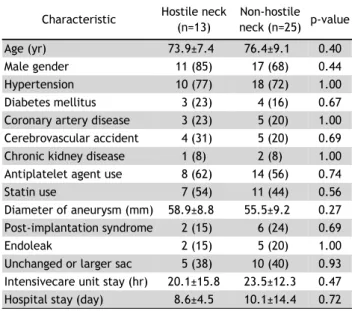
Table 3. Comparison of the patients’ characteristics and clinical data between those with and without hostile neck

Characteristic Hostile neck (n=13)

Non-hostile neck (n=25) p-value

Age (yr) 73.9±7.4 76.4±9.1 0.40

Male gender 11 (85) 17 (68) 0.44

Hypertension 10 (77) 18 (72) 1.00

Diabetes mellitus 3 (23) 4 (16) 0.67

Coronary artery disease 3 (23) 5 (20) 1.00 Cerebrovascular accident 4 (31) 5 (20) 0.69 Chronic kidney disease 1 (8) 2 (8) 1.00 Antiplatelet agent use 8 (62) 14 (56) 0.74

Statin use 7 (54) 11 (44) 0.56

Diameter of aneurysm (mm) 58.9±8.8 55.5±9.2 0.27 Post-implantation syndrome 2 (15) 6 (24) 0.69

Endoleak 2 (15) 5 (20) 1.00

Unchanged or larger sac 5 (38) 10 (40) 0.93 Intensivecare unit stay (hr) 20.1±15.8 23.5±12.3 0.47 Hospital stay (day) 8.6±4.5 10.1±14.4 0.72 Values are presented as mean±standard deviation or number of patients (%).

Table 2. Categories of hostile neck (n=13)

Type No. of patients (%)

Neck length <10 mm 3 (23)

Angulation >60

o

5 (38)

Thrombus >50% 3 (23)

Conical shape 3 (23)

Unfavorable iliac anatomy was defined as the pres- ence of either of the following features: (1) iliac aneurysm: a common iliac artery (CIA) diameter greater than 30 mm; or (2) a short CIA: a CIA length less than 15 mm. With respect to aneurysmal growth, the patients were classified according to whether they showed a lower maximal diameter on the last postoperative follow-up CTA in comparison to the preoperative CTA findings. The maximal diam- eter was measured as the largest minor axis of the elliptical aneurysm in the axial image.

5) Statistical analysis

Continuous variables are reported as mean±stand- ard deviation, and dichotomous variables are reported as counts and percentages. For continuous variables, the Student t-test was conducted if the variable was normally distributed, whereas the Mann-Whitney U-test was used for non-normally distributed vari- ables. The chi-square test was used for categorical variables. To examine the risk factors for aneurysmal changes, multivariate analysis was performed using a stepwise logistic regression model. IBM SPSS for

Windows ver. 19.0 (IBM Corp., Armonk, NY, USA) was used for all statistical analyses, and p-values less than 0.05 were considered to indicate statistical significance.

Results

Table 1 lists the patients’ characteristics and their perioperative clinical data. No cases of perioperative mortality or major complications occurred. Type 2 and 1a endoleaks were noted in 6 patients and 1 pa- tient, respectively. Open conversion was not per- formed, and limb occlusion occurred in 2 patients af- ter surgery; a thrombectomy and stent insertion were performed on the next day. The maximal aortic diameter, mean length of stay in the ICU, and post- operative length of stay in the hospital were 56.7±9.1 mm, 22.3±13.4 hours, and 9.6±11.9 days, respectively.

Endurant (Medtronic Vascular, Santa Rosa, CA, USA), AFX2 (Endologix Inc., Irvine, CA, USA), and Excluder (WL Gore and Associates, Flagstaff, AZ, USA) were used as the endograft for 34 patients, 3 patients, and 1 patient, respectively.

A hostile neck was observed in 13 patients, as

shown in Table 2. Five patients showed an angula-

tion of 60

o

or more, and 3 patients each had a short

neck, large amount of mural thrombus, and a conical

(4)

Table 4. Categories of unfavorable iliac anatomy (n=15)

Type No. of patients (%)

Iliac aneurysm >30 mm 11 (73)

Short common iliac artery <15 mm 4 (27)

Coil embolization 8 (53)

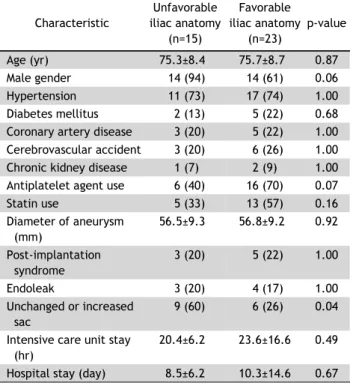
Table 5. Comparison of the patients’ characteristics and clinical data between those with and without unfavorable iliac anatomy

Characteristic

Unfavorable iliac anatomy

(n=15)

Favorable iliac anatomy

(n=23)

p-value

Age (yr) 75.3±8.4 75.7±8.7 0.87

Male gender 14 (94) 14 (61) 0.06

Hypertension 11 (73) 17 (74) 1.00

Diabetes mellitus 2 (13) 5 (22) 0.68

Coronary artery disease 3 (20) 5 (22) 1.00 Cerebrovascular accident 3 (20) 6 (26) 1.00 Chronic kidney disease 1 (7) 2 (9) 1.00 Antiplatelet agent use 6 (40) 16 (70) 0.07

Statin use 5 (33) 13 (57) 0.16

Diameter of aneurysm (mm)

56.5±9.3 56.8±9.2 0.92

Post-implantation syndrome

3 (20) 5 (22) 1.00

Endoleak 3 (20) 4 (17) 1.00

Unchanged or increased sac

9 (60) 6 (26) 0.04

Intensive care unit stay (hr)

20.4±6.2 23.6±16.6 0.49

Hospital stay (day) 8.5±6.2 10.3±14.6 0.67 Values are presented as mean±standard deviation or number of patients (%).

Table 6. Multivariate analysis of the risk factors for sac enlarge- ment after endovascular aortic repair

Predictor

Univariate

analysis Multivariate analysis

p-value p-value Odds ratio (95%

confidence interval)

Age 0.81

Male gender 0.26 0.51 1.90 (0.28 –12.84) Hypertension 0.26 0.24 3.05 (0.48 –19.58) Diabetes mellitus 0.68

Coronary artery disease 0.69 Cerebrovascular

accident

0.44

Chronic kidney disease 0.55 Antiplatelet agent use 0.38

Statinuse 0.21 0.07 4.83 (0.87 –26.73)

Diameter of aneurysm 0.99

Hostile neck 0.93

Unfavorable iliac anatomy

0.04 0.02 7.66 (1.37 –42.82)

Post-implantation syndrome

0.44

Endoleak 0.40 0.35 2.69 (0.34 –21.49)

shape. One patient showed a 9-mm short neck with a severe angulation of 70

o

, and a type 1a endoleak occurred in that patient.

Table 3 compares the results of the patients with and without a hostile neck. No significant difference was observed between the 2 groups in terms of the patients’ prior history or maximal diameter, and there were no differences in the incidence of endo- leak or sac growth. No significant difference in the postoperative clinical course was observed between the 2 groups.

Unfavorable iliac anatomy was defined based on 2 criteria. As shown in Table 4, 11 patients had an iliac aneurysm and 4 patients had a short CIA. IIA embolization was performed in 8 patients, unilateral embolization in 7 patients, and bilateral embolization

with a 2-week interval in 1 patient. Embolization was not performed in patients with a IIA occlusion or those who were determined to have a sponta- neous IIA occlusion due to a deployed stent-graft.

Table 5 compares the results of the 2 groups de- fined according to iliac anatomy. No case of type1b endoleak was observed. More males showed un- favorable iliac anatomy, but this tendency was not statistically significant (p=0.06). Prior medical history and the incidence of endoleak were similar in the 2 groups, whereas a significant difference was observed in the growth of the aneurysmal sac (p=0.04). No significant difference was observed in the length of the postoperative ICU stay or the length of the hospi- tal stay.

Risk factors for aneurysmal sac growth were ana- lyzed, as listed in Table 6. Multivariate analysis re- vealed unfavorable iliac anatomy to be the only risk factor (odds ratio, 7.66; 95% confidence interval, 1.37–42.82; p=0.02). The interval between surgery and the last follow-up CTA was 11.3±13.5 months.

Discussion

Since the first report of EVAR by Parodi et al. [11]

(5)

in 1991, this technique has become a popular first-line treatment of AAA. In many centers, the trend to perform EVAR rather than open surgery has increased, with various attempts to carry out inter- ventions beyond the instructions for use (IFU) sug- gested by the manufacturers. In most cases, an aortic neck >15 mm in length, <28 mm in diameter, and with an angulation <60

o

are suggested in the IFU, and a distal landing zone >15 mm in length and

<22 mm in diameter is recommended. Nonetheless, a variety of techniques and devices have been devel- oped because many patients diagnosed with AAA do not fit these criteria.

The neck anatomy of an aneurysm is the most critical variable for performing EVAR successfully.

Numerous studies have shown that a hostile neck anatomy leads to poor outcomes [12]. In these stud- ies, a short neck and an angulated neck were risk factors for type 1a endoleak, and these patients showed a poor prognosis. Nevertheless, Schanzer et al. [13] reported that many physicians and inter- ventionists performed EVAR beyond IFU in the real world.

Many techniques have been designed to overcome a hostile neck. Typical examples include chimney EVAR (ChEVAR) and fenestrated EVAR (fEVAR).

Antoniou et al. [14] reported a 91% technical success rate with a 13% incidence of type 1a endoleak after ChEVAR. Moulakakis et al. [15] reported a 100% pri- mary technical success rate with a 14% incidence of type 1 endoleak. They claimed that ChEVAR could be a treatment option for high-risk patients. Tambyraja et al. [16] reported the outcomes of 29 patients who underwent fEVAR, demonstrating no 30-day mortality but a 38% rate of reintervention. New devices, such as endoanchors and endostaples, have been in- troduced, but these products cannot be used in all countries due to variations in reimbursement guide- lines. Currently, these products can be used in Korea to a very limited extent.

In this study, cases of a hostile neck were man- aged only by traditional methods, such as the in- sertion of an additional cuff or repetitive ballooning.

Although no patient underwent ChEVAR or fEVAR, and a balloon-expandable stent was not used in any patient, there was only 1 case of type 1a endoleak.

This reflects the fact that open surgery was per- formed on patients who were young or had a jux-

tarenal AAA with a hostile neck, as mentioned previously. Four patients with a hostile neck under- went open surgery during the same period. In our hospital, open surgery was performed selectively in patients with a hostile neck, particularly when a short and angulated neck was found simultaneously.

EVAR was preferred if the proximal neck was short but the angulation was not severe, or if the angula- tion was severe, but the neck was long. In this study, 1 patient who underwent EVAR had a short and an- gulated neck but could not undergo open surgery be- cause of a co-morbidity and old age.

An iliac aneurysm has been reported to occur in approximately 20% of patients who undergo AAA re- pair and in up to 40% of cases of iliac artery ectasia [17]. In the IFU of most manufacturers, the in- dications of EVAR related to the iliac artery include an iliac diameter of no more than 22 mm and a length no less than 15 mm. Because the risk of rup- ture is increased if the maximal diameter is more than 35 mm in an isolated CIA aneurysm, the aneur- ysm was sometimes excluded after sacrificing the IIA.

Internal iliac embolization is a relatively common procedure in patients with a short CIA. In such cases, complications, such as buttock claudication, ischemic colitis, erectile dysfunction, and spinal cord injury, have been reported [8,9]. Therefore, iliac branched devices have been developed for commercialization, but they are unavailable in Korea. Currently, chim- ney, snorkel, and sandwich techniques are available in Korea. DeRubertis et al. [18] reported that the pa- tency of the external iliac artery and IIA was 95%

and 88%, respectively, among 22 patients who un- derwent the sandwich technique. In addition, they re- ported relatively favorable outcomes, with 1 case of type 1b endoleak and 3 cases of type 2 endoleak without any buttock claudication in the surgical areas.

In the present study, 8 out of the 15 patients who had unfavorable iliac anatomy underwent iliac artery embolization, and no procedure was performed for revascularization, such as sandwich or chimney tech- niques. Type 1b endoleak did not occur and no other severe complications, such as ischemic colitis, erectile dysfunction, and spinal cord injury, were observed.

Buttock claudication was observed in 3 patients, and

the symptoms disappeared during follow-up in 1 of

these patients. A bilateral short CIA was observed in

(6)

1 patient who underwent open surgery with an ab- dominal aortic replacement.

The short-term outcomes of EVAR were favorable, but the long-term outcomes are still uncertain. The fundamental reason for this is that EVAR leaves the aneurysmal sac in place so that the blood supply can be sustained within this sac, which can be enlarged.

This can cause a late rupture, and this possibility re- quires life-long follow up. In the authors’ hospital, postoperative CTA is performed before discharge in all patients, and CTA is repeated 3 months after sur- gery in patients with endoleak. In patients without endoleak, CTA is performed 6 months and 1 year af- ter surgery. In addition, if sac enlargement is sus- pected, CTA is performed every 6 months thereafter;

otherwise, CTA is performed annually. Schanzer et al.

[13], who examined the outcomes of a 5-year fol- low-up period, warned that sac enlargement occurred in 41% of patients who underwent EVAR. In other studies, an 8%–10% incidence of late sac enlarge- ment after 3 years of follow-up was reported [19].

The most common risk factor for aneurysmal sac growth is endoleak. Types 1 and 3 endoleak require immediate reintervention because they cause late sac enlargement. Type 2 endoleak shows mostly benign features, although a report of persistent type 2 endo- leak causing aneurysm related-death has been pub- lished [20]. Nevertheless, the main causes of late sac enlargement are types 1 and 3 endoleak, which are closely related to unfavorable anatomy.

In this study, endoleak occurred in 7 patients, but it was not determined to be an inhibitory factor for sac shrinkage. This may result from the fact that we only analyzed short-term outcomes, which is the ma- jor limitation of this study. Additional limitations of this study include the fact that this was a retro- spective study, and a relatively small number of pa- tients were enrolled. Finally, the ambiguity of the op- erative indications for open surgery and EVAR may be another limitation. Therefore, a study with a long-term follow-up and large patient sample is re- quired to determine the safety of EVAR in patients with unfavorable aortoiliac anatomy.

In conclusion, favorable short-term outcomes can be anticipated for EVAR performed in patients with unfavorable aortic anatomy. However, caution is needed when treating patients with an iliac aneur- ysm or short CIA, because these were revealed to be

risk factors for inhibited aneurysmal sac shrinkage.

Conflict of interest

No potential conflict of interest relevant to this ar- ticle was reported.

Acknowledgments

This study was supported by a Grant of the Samsung Vein Clinic Network (Daejeon, Anyang, Cheongju, Cheonan; Fund no. KTCS04-105).

References

1. Greenhalgh RM, Brown LC, Kwong GP, Powell JT, Thompson SG; EVAR trial participants. Comparison of en- dovascular aneurysm repair with open repair in patients with abdominal aortic aneurysm (EVAR trial 1), 30-day op- erative mortality results: randomised controlled trial.

Lancet 2004;364:843-8.

2. Prinssen M, Verhoeven EL, Buth J, et al. A randomized tri- al comparing conventional and endovascular repair of ab- dominal aortic aneurysms. N Engl J Med 2004;351:1607-18.

3. Lederle FA, Freischlag JA, Kyriakides TC, et al. Long-term comparison of endovascular and open repair of abdominal aortic aneurysm. N Engl J Med 2012;367:1988-97.

4. De Bruin JL, Baas AF, Buth J, et al. Long-term outcome of open or endovascular repair of abdominal aortic aneurysm.

N Engl J Med 2010;362:1881-9.

5. Stather PW, Sayers RD, Cheah A, Wild JB, Bown MJ, Choke E. Outcomes of endovascular aneurysm repair in patients with hostile neck anatomy. Eur J Vasc Endovasc Surg 2012;44:556-61.

6. Mastracci TM, Eagleton MJ, Kuramochi Y, Bathurst S, Wolski K. Twelve-year results of fenestrated endografts for juxtarenal and group IV thoracoabdominal aneurysms.

J Vasc Surg 2015;61:355-64.

7. Perdikides T, Melas N, Lagios K, et al. Primary endoanchor- ing in the endovascular repair of abdominal aortic aneur- ysms with an unfavorable neck. J Endovasc Ther 2012;19:

707-15.

8. Farahmand P, Becquemin JP, Desgranges P, Allaire E, Marzelle J, Roudot-Thoraval F. Is hypogastric artery embo- lization during endovascular aortoiliac aneurysm repair (EVAR) innocuous and useful? Eur J Vasc Endovasc Surg 2008;35:429-35.

9. Karch LA, Hodgson KJ, Mattos MA, Bohannon WT, Ramsey DE, McLafferty RB. Adverse consequences of internal iliac artery occlusion during endovascular repair of abdominal aortic aneurysms. J Vasc Surg 2000;32:676-83.

10. Verzini F, Parlani G, Romano L, De Rango P, Panuccio G,

(7)

Cao P. Endovascular treatment of iliac aneurysm: con- current comparison of side branch endograft versus hypo- gastric exclusion. J Vasc Surg 2009;49:1154-61.

11. Parodi JC, Palmaz JC, Barone HD. Transfemoral intra- luminal graft implantation for abdominal aortic aneurysms.

Ann Vasc Surg 1991;5:491-9.

12. Sternbergh WC 3rd, Carter G, York JW, Yoselevitz M, Money SR. Aortic neck angulation predicts adverse out- come with endovascular abdominal aortic aneurysm repair. J Vasc Surg 2002;35:482-6.

13. Schanzer A, Greenberg RK, Hevelone N, et al. Predictors of abdominal aortic aneurysm sac enlargement after endo- vascular repair. Circulation 2011;123:2848-55.

14. Antoniou GA, Schiro A, Antoniou SA, et al. Chimney techni- que in the endovascular management of complex aortic disease. Vascular 2012;20:251-61.

15. Moulakakis KG, Mylonas SN, Avgerinos E, et al. The chim- ney graft technique for preserving visceral vessels during endovascular treatment of aortic pathologies. J Vasc Surg 2012;55:1497-503.

16. Tambyraja AL, Fishwick NG, Bown MJ, Nasim A, McCarthy

MJ, Sayers RD. Fenestrated aortic endografts for juxtare- nal aortic aneurysm: medium term outcomes. Eur J Vasc Endovasc Surg 2011;42:54-8.

17. Armon MP, Wenham PW, Whitaker SC, Gregson RH, Hopkinson BR. Common iliac artery aneurysms in patients with abdominal aortic aneurysms. Eur J Vasc Endovasc Surg 1998;15:255-7.

18. DeRubertis BG, Quinones-Baldrich WJ, Greenberg JI, Jimenez JC, Lee JT. Results of a double-barrel technique with commercially available devices for hypogastric pres- ervation during aortoilac endovascular abdominal aortic aneurysm repair. J Vasc Surg 2012;56:1252-60.

19. Hobo R, Buth J; EUROSTAR collaborators. Secondary inter- ventions following endovascular abdominal aortic aneur- ysm repair using current endografts: a EUROSTAR report.

J Vasc Surg 2006;43:896-902.

20. El Batti S, Cochennec F, Roudot-Thoraval F, Becquemin JP.

Type II endoleaks after endovascular repair of abdominal

aortic aneurysm are not always a benign condition. J Vasc

Surg 2013;57:1291-7.

수치

Table 3. Comparison of the patients’ characteristics and clinical  data between those with and without hostile neck
Table 6. Multivariate analysis of the risk factors for sac enlarge- enlarge-ment after endovascular aortic repair

참조

관련 문서

Therefore depending on the size of the fracture in the veneering porcelain, intraoral repair methods using surface treatment and composite resins may

Popular music in the lives of youth and popular music occupies a large portion of the preference for youth is high throughout the survey were more clearly. Survey for

Popular music can be easily acceptable without any special knowledge, and it gives sensitive influence to the younger generation because of a strong

(A) Before repair of RCT shows fatty degeneration of supraspinatus (stage 2) and infraspinatus (stage 3) muscle and atrophy (Grade 2) (B) After 18months later

treat wide wide wide wide necked necked necked necked aneurysms aneurysms aneurysms aneurysms that that that that selection selection selection selection of of

- Example) Suppose that a new product or facility is proposed and that the criterion for success is a 10 percent rate of return on the investment for a 5-year life of the

§ Even when a process is demand constrained (utilization is less than 100%), waiting time for service can be substantial due to variability in the arrival and/or service

Because it is more difficult to design PID controllers for a MIMO process than for a SISO process that there is an interaction between the different