Highlights
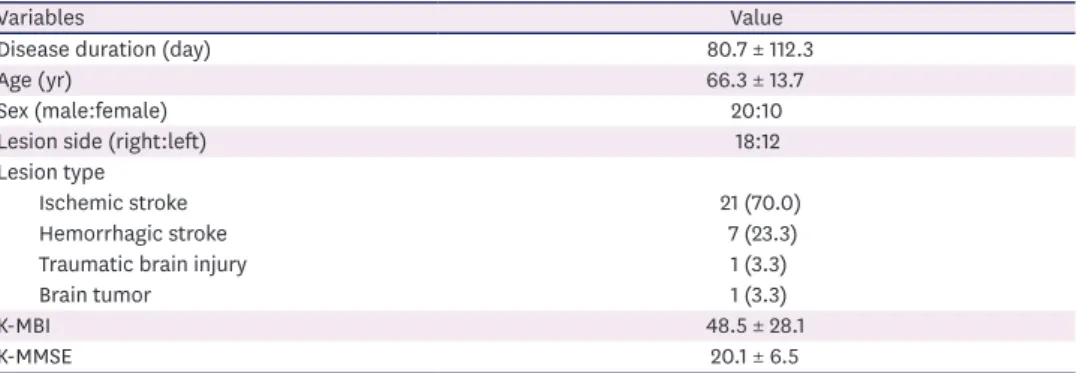
• The Korean version of the Kessler Foundation Neglect Assessment Process (KF-NAP) has high validity.
• The Korean version of the KF-NAP shows high intra- and inter-rater reliability.
Brain Neurorehabil. 2017 Sep;10(2):e10 https://doi.org/10.12786/bn.2017.10.e10 pISSN 1976-8753·eISSN 2383-9910
Clinical Research
Revised: Aug 31, 2017 Accepted: Jul 19, 2017 Accepted: Sep 4, 2017 Correspondence to Jongmin Lee
Department of Rehabilitation Medicine, Konkuk University School of Medicine and Konkuk University Medical Center, 120-1 Neungdong-ro, Gwangjin-gu, Seoul 05030, Korea.
Tel: +82-2-2030-5345 Fax: +82-2-2030-5379 E-mail: [email protected]
Bo-Ram Kim, Eun Hwa Jeong, Mooyeon Oh-Park, Kyungjae Lee, Hyuntae Kim, Seung Don Yoo, Taeim Yi, MinYoung Kim, Jongmin Lee
Reliability and Validity of the
Korean Kessler Foundation Neglect Assessment Process
Brain & NeuroRehabilitation
Copyright © 2017. Korea Society for Neurorehabilitation i
ABSTRACT
Objective: To develop the Korean version of the Kessler Foundation Neglect Assessment Process (KF-NAP), which enables a more functional assessment of unilateral spatial neglect, by first translating it into Korean and then statistically standardizing it.
Methods: Two rehabilitation specialists translated the KF-NAP into Korean. The entire process of administering the Korean KF-NAP to 30 patients with brain disease was video- recorded. Five occupational therapists from 4 university hospitals nationwide evaluated the 30 video-recorded examination cases. We analyzed inter- and intra-reliabilities of the Korean KF-NAP using the intraclass coefficient and Pearson correlation coefficient. Internal consistency reliability of the assessment categories was also examined using Cronbach's alpha coefficient.
Results: For the construct validation study, the Korean KF-NAP was strongly correlated with the Albert's test and letter cancellation test (r ≥ 0.8; p < 0.05). The intraclass correlation coefficients for the first and second assessments of the Korean KF-NAP were 0.973 and 0.982, respectively, showing high reliability (p < 0.05). The intra-rater reliabilities exceeded 0.9 (p <
0.05), and Cronbach's alpha coefficient exceeded 0.8, showing internal consistency reliability.
Conclusion: The Korean KF-NAP is a reliable and valid instrument for assessing hemispatial neglect symptoms in patients with brain diseases.
Keywords: Perceptual Disorders; Brain Diseases; Translations
INTRODUCTION
Unilateral spatial neglect is a disorder of spatial attention that affects spatial perception, mental imagery, and motor action planning and execution. It occurs as a result of brain diseases such as stroke, with about 50% of all cases involving a right brain injury and 30% involving a left brain injury [1-3]. Patients with unilateral spatial neglect show inaccurate and slow responses
Clinical Research
Revised: Aug 31, 2017 Accepted: Jul 19, 2017 Accepted: Sep 4, 2017 Correspondence to Jongmin Lee
Department of Rehabilitation Medicine, Konkuk University School of Medicine and Konkuk University Medical Center, 120-1 Neungdong-ro, Gwangjin-gu, Seoul 05030, Korea.
Tel: +82-2-2030-5345 Fax: +82-2-2030-5379 E-mail: [email protected]
Copyright © 2017. Korea Society for Neurorehabilitation
This is an Open Access article distributed under the terms of the Creative Commons Attribution Non-Commercial License (https://
creativecommons.org/licenses/by-nc/4.0) which permits unrestricted non-commercial use, distribution, and reproduction in any medium, provided the original work is properly cited.
ORCID iDs No ORCID iD Conflict of Interest
The authors have no potential conflicts of interest to disclose.
Bo-Ram Kim,1 Eun Hwa Jeong,2 Mooyeon Oh-Park,3,4 Kyungjae Lee,5 Hyuntae Kim,1 Seung Don Yoo,6 Taeim Yi,7 MinYoung Kim,8 Jongmin Lee1
1 Department of Rehabilitation Medicine, Konkuk University School of Medicine and Konkuk University Medical Center, Seoul, Korea
2Department of Occupational Therapy, Far East University, Eumseong, Korea
3 Department of Physical Medicine and Rehabilitation, New Jersey Medical School, Rutgers, The State University of New Jersey, Newark, NJ, USA
4Kessler Institute for Rehabilitation, West Orange, NJ, USA
5Department of Audiology and Speech-Language Pathology, Catholic University of Daegu, Daegu, Korea
6 Department of Rehabilitation Medicine, Kyung Hee University Hospital at Gangdong, Kyung Hee University College of Medicine, Seoul, Korea
7Deptment of Rehabilitation Medicine, Bundang Jesaeng General Hospital, Seongnam, Korea
8Department of Rehabilitation Medicine, CHA Bundang Medical Center, CHA University, Seongnam, Korea
Reliability and Validity of the
Korean Kessler Foundation Neglect
Assessment Process
to contralateral stimuli and have difficulty not only with personal hygiene, ambulation, and wheelchair manipulation, but also with reading and social interaction due to hampered motor action [4,5]. For this reason, patients with spatial neglect have poorer rehabilitation outcomes, higher safety risks during their hospital stay, and longer hospital stays for rehabilitation than those without spatial neglect [6,7]. Objective and consistent assessment of unilateral spatial neglect is highly critical in rehabilitation medicine, because the ultimate goal of rehabilitation is to improve the patient's competence for daily living by enhancing functional capacity and ameliorating the environment. Hence, an instrument that enables an accurate assessment of the severity and changes of unilateral spatial neglect is essential to meet the goals of rehabilitative therapy and to facilitate communication among patients and medical staff.
However, functional assessment of daily living activities for elucidating hemispatial neglect has been neglected in Korea, as demonstrated by a study examining the trends of purpose- specific assessment tools used by Korean occupational therapists [8]. According to this study, the line bisection test was the most popular (47.9%) for the diagnosis of hemispatial neglect in Korea, followed by the Albert's test (36.8%). The Behavioral Inattention Test, a functional test, was rarely used (2.6%), and the Catherine Bergego Scale (CBS) was not included in the list. These paper-based tests, while widely used in clinical practice, have limitations in the evaluation of functional performance of spatial neglect on the activities of daily living, and may underdiagnose auditory or proprioceptive spatial neglect [9]. CBS has been proposed for these functional assessments and CBS has been used to assess functional aspects, mental imageries, and motor performance as well as personal (body surface), peripersonal (within arm's reach), and extrapersonal function [10]. However, CBS has not been widely applied in clinical practice in Korea because the evaluation guidelines and scoring standards for each subscale are not presented objectively [8].
The Kessler Foundation Neglect Assessment Process (KF-NAP) is an assessment tool for unilateral spatial neglect that was developed by the Kessler Foundation. The KF-NAP addresses the limitations of the CBS, and assesses the perception of left and right space and asymmetrical behaviors by directly observing patients while they voluntarily explore space with eye and head movements in their daily lives. The KF-NAP has been reported to not only assess daily living functions, but also the presence and severity of spatial neglect, and to predict independent functional outcomes at discharge [11]. Thus, we aimed to develop the Korean version of the KF-NAP, which enables a more functional assessment of unilateral spatial neglect, through Korean translation followed by statistical standardization.
MATERIALS AND METHODS
Participants
Thirty patients with brain disease, including stroke and traumatic brain injury, who had spatial neglect symptoms and were diagnosed at the Konkuk University Medical Center were enrolled in the study. The mean age of the participants was 66.3 ± 13.7 years, with 20 men and 10 women. We enrolled 7 patients with cerebral hemorrhage, 21 with cerebral infarction, 1 with traumatic brain injury, and 1 with a brain tumor (Table 1). All patients were cognitively and linguistically capable of understanding the examiner's questions and instructions. We excluded patients who were incapable of performing a 2-stage or higher command because of severe cognitive dysfunction, patients who were incapable of performing daily living activities, and patients with hemianopia.
2/7 https://doi.org/10.12786/bn.2017.10.e10
Korean KF-NAP Brain & NeuroRehabilitation
https://e-bnr.org
Development of the Korean KF-NAP
Two rehabilitation specialists individually translated the English version into Korean. Both were familiar with the English language, and 1 of them had lived in the United States for more than 10 years and was bilingual in both English and Korean. After this, 1 rehabilitation specialist who did not participate in the first round of translations and a bilingual linguist with native proficiency in English and Korean discussed and analyzed the differences between the 2 translations and integrated them into a single copy. The copy was back-translated by an English- native bilingual translator and sent to the original developers to identify any discrepancies with the original KF-NAP to finalize the Korean version of the KF-NAP.
Preparation of video material to assess the Korean KF-NAP
The entire process of administering the Korean KF-NAP to 30 patients was video-recorded to conduct statistical verification and to use as education material in the future. Each video comprised the 10 criteria of the KF-NAP, which are as follows: limb awareness, personal belongings, dressing, grooming, gaze orientation, auditory attention, navigation, collisions, meals, and cleaning after meals. The video took about 20 minutes per case. As per the Korean KF-NAP evaluation guidelines, the entire process was conducted in the patient's ward, a place familiar to the patient. One occupational therapist delivered the questions and instructions, and the patient's responses were recorded. The patient or the patient's family was fully briefed about the entire process prior to the assessment, and consent for video recording was obtained.
Analysis of the reliability and validity of the Korean KF-NAP
The 30 videos were evaluated in the assessment of the Korean KF-NAP by 5 occupational therapists from 4 university hospitals nationwide. Anyone who participated in the
preparation of the videos was excluded from performing these assessments. The assessment guidelines of the Korean KF-NAP were included in the video material to teach the viewers about the assessment categories and scoring method. All evaluators recorded the Korean KF-NAP scores for the 30 patients in the videos and performed a reassessment of the same videos after 2 months. Inter-rater reliability and intra-rater reliability of the 5 occupational therapists from different institutions were tested using the intraclass correlation coefficient (ICC) and Pearson correlation coefficient. Further, the internal consistency reliability of the assessment categories was examined using Cronbach's alpha coefficient. Validity was tested by performing the Albert's test and letter cancellation test, 2 makeshift tests for unilateral spatial neglect. These results were compared with those of the Korean KF-NAP using the Pearson correlation coefficient.
Table 1. Clinical characteristics of participants (n = 30)
Variables Value
Disease duration (day) 80.7 ± 112.3
Age (yr) 66.3 ± 13.7
Sex (male:female) 20:10
Lesion side (right:left) 18:12
Lesion type
Ischemic stroke 21 (70.0)
Hemorrhagic stroke 7 (23.3)
Traumatic brain injury 1 (3.3)
Brain tumor 1 (3.3)
K-MBI 48.5 ± 28.1
K-MMSE 20.1 ± 6.5
Values are mean ± standard deviation or number (%).
K-MBI, Korean-Modified Barthel Index; K-MMSE, Korean Mini-Mental State Examination.
During the Albert's test, the patient is instructed to mark the middle of 36 straight lines that are drawn on the left-, middle-, and right-side (12 each) of a piece of A4 paper, and percent deviation is calculated by counting how many lines on the lesion side are omitted [12]. For the letter cancellation test, consonants are embedded within multiple letters on a piece of paper, and the patient must locate the target consonant. Two or more omissions on the lesion side indicate unilateral spatial neglect [13]. The KF-NAP assesses the patient's asymmetrical behavioral patterns during 10 routine daily activities (i.e., limb awareness, personal belongings, dressing, grooming, gaze orientation, auditory attention, navigation, collisions, meals, and cleaning after meals). Each item is scored as 0 (no neglect), 1 (mild neglect), 2 (moderate neglect), or 3 (severe neglect). In the case of omitted categories, the final score is calculated according to the following equation:
Final score = total score/number of assessed categories × 10
The severity of neglect is determined (absent, mild, moderate, or severe) based on the final score [11]. Statistical analysis was performed using SPSS 17.0 (SPSS Inc., Chicago, IL, USA).
Statistical significance was set at p < 0.05.
RESULTS
Validity analysis
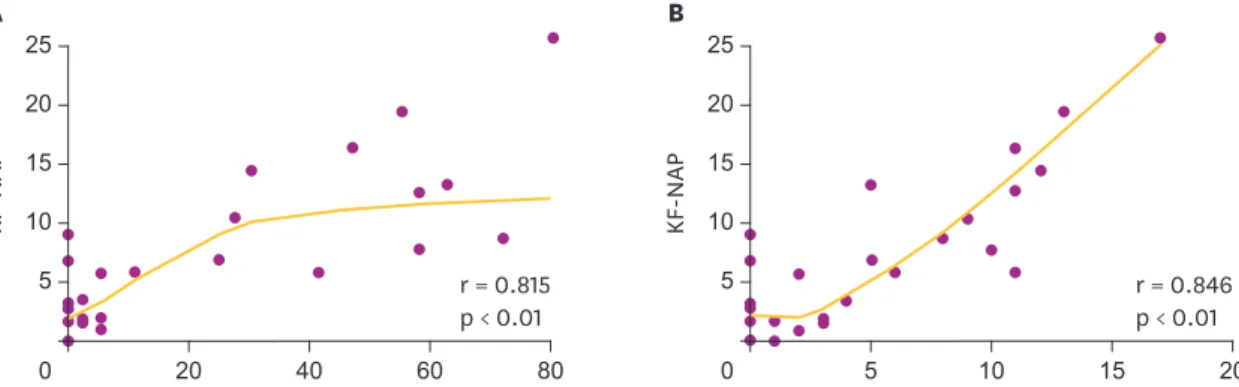
The results of the Korean KF-NAP were strongly correlated (r ≥ 0.8) with the results of the Albert test and letter cancellation test, 2 makeshift tests for hemispatial neglect (p < 0.05; Fig. 1).
Reliability analysis Inter-rater reliability
Five occupational therapists who work in different institutions performed 2 rounds of each category of the Korean KF-NAP, and inter-rater reliability of these results was analyzed using the ICC. Details are shown in Table 2. The ICCs for the first and second assessments of the Korean KF-NAP were 0.973 and 0.982, respectively, showing high reliability (p < 0.05; Table 2).
Intra-rater reliability
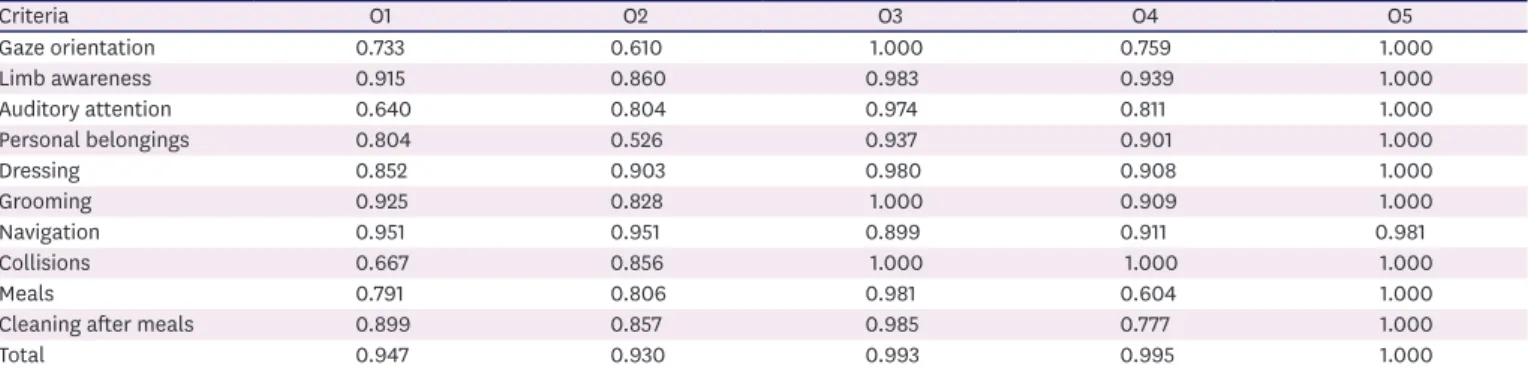
Table 3 shows the intra-rater reliability (Pearson correlation coefficient) for the 2 rounds of assessment of the categories of the KF-NAP results obtained by the 5 occupational therapists.
All 5 occupational therapists displayed very high intra-rater reliability as assessed using the
4/7 https://doi.org/10.12786/bn.2017.10.e10
Korean KF-NAP Brain & NeuroRehabilitation
https://e-bnr.org
0 20 40 60 80
25
r = 0.815
p < 0.01 r = 0.846
p < 0.01 A
KF-NAP
20 15 10 5
0 5 10 20
25 20 15 10 5
15
KF-NAP
B
Fig. 1. Correlation of Korean KF-NAP with (A) the Albert's test and (B) the letter cancellation test.
KF-NAP, Kessler Foundation Neglect Assessment Process.
Pearson correlation coefficients for the KF-NAP scores exceeding 0.9 (p < 0.05; Table 3).
However, some therapists showed low intra-rater consistency for some categories.
Internal consistency
All categories of the Korean KF-NAP showed high internal consistency, with Cronbach's alpha coefficient exceeding 0.8 (Table 4).
DISCUSSION
Visual/sensation tests or paper-and-pencil tests, such as line bisection and cancellation tests, are widely used to assess hemispatial neglect in rehabilitation medicine. Although these Table 2. Inter-rater reliability measured by the ICC
Criteria First assessment Second assessment
ICC p value ICC p value
Gaze orientation 0.894 < 0.05 0.905 < 0.05
Limb awareness 0.970 < 0.05 0.970 < 0.05
Auditory attention 0.919 < 0.05 0.917 < 0.05
Personal belongings 0.842 < 0.05 0.834 < 0.05
Dressing 0.936 < 0.05 0.942 < 0.05
Grooming 0.955 < 0.05 0.948 < 0.05
Navigation 0.984 < 0.05 0.919 < 0.05
Collisions 0.929 < 0.05 0.808 < 0.05
Meals 0.952 < 0.05 0.837 < 0.05
Cleaning after meals 0.951 < 0.05 0.929 < 0.05
Total 0.973 < 0.05 0.982 < 0.05
ICC, intraclass correlation coefficient.
Table 3. Test-retest reliability measured by correlation coefficients
Criteria O1 O2 O3 O4 O5
Gaze orientation 0.733 0.610 1.000 0.759 1.000
Limb awareness 0.915 0.860 0.983 0.939 1.000
Auditory attention 0.640 0.804 0.974 0.811 1.000
Personal belongings 0.804 0.526 0.937 0.901 1.000
Dressing 0.852 0.903 0.980 0.908 1.000
Grooming 0.925 0.828 1.000 0.909 1.000
Navigation 0.951 0.951 0.899 0.911 0.981
Collisions 0.667 0.856 1.000 1.000 1.000
Meals 0.791 0.806 0.981 0.604 1.000
Cleaning after meals 0.899 0.857 0.985 0.777 1.000
Total 0.947 0.930 0.993 0.995 1.000
O1, occupational therapist 1; O2, occupational therapist 2; O3, occupational therapist 3; O4, occupational therapist 4; O5, occupational therapist 5.
Table 4. Internal consistency reliability of each category of the Korean KF-NAP
Criteria Cronbach's alpha coefficient (n = 10)
Gaze orientation 0.879
Limb awareness 0.876
Auditory attention 0.901
Personal belongings 0.901
Dressing 0.877
Grooming 0.878
Navigation 0.878
Collisions 0.916
Meals 0.882
Cleaning after meals 0.894
KF-NAP, Kessler Foundation Neglect Assessment Process.
tests are clinically popular, they have limitations in assessing unilateral spatial neglect in patients' daily living, and it is difficult to diagnose unilateral spatial neglect related to auditory, proprioceptive, or motor functions [11]. For this reason, the tests used to confirm the presence of hemispatial neglect in the clinical setting have a low sensitivity, and clinicians show low consistency in their assessments [14]. Thus, behavioral assessments are needed to assess the clinical manifestations of hemispatial neglect in patients' daily lives so as to comprehensively examine various mechanisms and types of hemispatial neglect [15]. In a study assessing hemispatial neglect following a stroke, Azouvi et al. [14] reported that functional assessment of daily living activities, such as the CBS, had higher sensitivity than paper-and-pencil tests, including the bell test, figure copying, clock drawing, line bisection, reading, and writing.
The KF-NAP is an assessment tool for hemispatial neglect developed by the Kessler
Foundation by modifying and complementing the CBS [11]. Because this tool was developed for use in the western countries, adaptation and standardization for use in Korea is needed.
Assessment instruments that have been verified in one country are not useful in other countries when the same tool is simply used in a different language; such tools must be translated and modified in relation to the language and culture of the country before usage [16]. Therefore, for functional assessment of hemispatial neglect in daily life, we translated the KF-NAP into Korean, verified the inter-rater and intra-rater reliability of the translated version for standardization, and found that the resulting Korean KF-NAP is a highly reliable tool. Reliability was tested by analyzing the agreement of the raters' assessment results for each category. As those who instructed, interpreted, or executed the Korean KF-NAP, the raters assessed each category after understanding the assessment guidelines. Because the occupational therapists who performed the Korean KF-NAP only read the assessment guidelines before conducting the assessment and did not receive the same training for KF-NAP because they work in different institutions, the high consistency of test-retest results and high agreement among the raters suggest that there was a good understanding of the guidelines, which are sufficient to administer the test easily. However, in the test-retest reliability analysis, gaze orientation, personal belongings, auditory attention, collision, and meals in 1 of the 5 therapists showed a moderate correlation with Cronbach's alpha coefficient of 0.5–0.7.
This may be due to the difference between the interpretation of the degree of reaction or the determination of the short-time image rather than the analysis of the patient's behavior during the whole evaluation time. Since most of the evaluators' scores showed a strong correlation, a more accurate assessment could be made if the guideline was fully understood. Furthermore, a comparison with the results of paper tests for hemispatial neglect revealed that the Korean KF-NAP has high validity and that it does not in any way fall short of the traditional paper tests in diagnosing hemispatial neglect. Overall, this suggests that the Korean KF-NAP could serve as another useful tool in the assessment of hemispatial neglect resulting from brain diseases.
In conclusion, we developed the Korean KF-NAP by translating the KF-NAP and statistically verifying it. Our findings suggest that the Korean KF-NAP enables an objective and
comprehensive assessment of hemispatial neglect in Korean patients with brain diseases.
REFERENCES
1. Denes G, Semenza C, Stoppa E, Lis A. Unilateral spatial neglect and recovery from hemiplegia: a follow- up study. Brain 1982;105:543-552.
PUBMED | CROSSREF
6/7 https://doi.org/10.12786/bn.2017.10.e10
Korean KF-NAP Brain & NeuroRehabilitation
https://e-bnr.org
2. Ringman JM, Saver JL, Woolson RF, Clarke WR, Adams HP. Frequency, risk factors, anatomy, and course of unilateral neglect in an acute stroke cohort. Neurology 2004;63:468-474.
PUBMED | CROSSREF
3. Stone SP, Halligan PW, Greenwood RJ. The incidence of neglect phenomena and related disorders in patients with an acute right or left hemisphere stroke. Age Ageing 1993;22:46-52.
PUBMED | CROSSREF
4. Akinwuntan AE, Feys H, De Weerdt W, Baten G, Arno P, Kiekens C. Prediction of driving after stroke: a prospective study. Neurorehabil Neural Repair 2006;20:417-423.
PUBMED | CROSSREF
5. Galletta EE, Campanelli L, Maul KK, Barrett AM. Assessment of neglect dyslexia with functional reading materials. Top Stroke Rehabil 2014;21:75-86.
PUBMED | CROSSREF
6. Wee JY, Hopman WM. Comparing consequences of right and left unilateral neglect in a stroke rehabilitation population. Am J Phys Med Rehabil 2008;87:910-920.
PUBMED | CROSSREF
7. Wilkinson D, Sakel M, Camp SJ, Hammond L. Patients with hemispatial neglect are more prone to limb spasticity, but this does not prolong their hospital stay. Arch Phys Med Rehabil 2012;93:1191-1195.
PUBMED | CROSSREF
8. Yoo EY, Jung MY, Park SY, Choi EH. Current trends of occupational therapy assessment tool by Korean occupational therapist. J Korean Acad Occup Ther 2006;14:27-37.
9. Goedert KM, Chen P, Botticello A, Masmela JR, Adler U, Barrett AM. Psychometric evaluation of neglect assessment reveals motor-exploratory predictor of functional disability in acute-stage spatial neglect.
Arch Phys Med Rehabil 2012;93:137-142.
PUBMED | CROSSREF
10. Bergego C, Azouvi P, Samuel C, Marchal F, Louis-Dreyfus A, Jokic C, et al. Validation d'une échelle d'évaluation fonctionnelle de l'héminégligence dans la vie quotidienne: l'échelle CB. Ann Readapt Med Phys 1995;38:183-189.
CROSSREF
11. Chen P, Chen CC, Hreha K, Goedert KM, Barrett AM. Kessler Foundation Neglect Assessment Process uniquely measures spatial neglect during activities of daily living. Arch Phys Med Rehabil 2015;96:869- 876.e1.
PUBMED | CROSSREF
12. Keller I, Schindler I, Kerkhoff G, von Rosen F, Golz D. Visuospatial neglect in near and far space:
dissociation between line bisection and letter cancellation. Neuropsychologia 2005;43:724-731.
PUBMED | CROSSREF
13. Uttl B, Pilkenton-Taylor C. Letter cancellation performance across the adult life span. Clin Neuropsychol 2001;15:521-530.
PUBMED | CROSSREF
14. Azouvi P, Samuel C, Louis-Dreyfus A, Bernati T, Bartolomeo P, Beis JM, et al. Sensitivity of clinical and behavioural tests of spatial neglect after right hemisphere stroke. J Neurol Neurosurg Psychiatry 2002;73:160-166.
PUBMED | CROSSREF
15. Halligan PW, Fink GR, Marshall JC, Vallar G. Spatial cognition: evidence from visual neglect. Trends Cogn Sci 2003;7:125-133.
PUBMED | CROSSREF
16. Guillemin F, Bombardier C, Beaton D. Cross-cultural adaptation of health-related quality of life measures:
literature review and proposed guidelines. J Clin Epidemiol 1993;46:1417-1432.
PUBMED | CROSSREF